Hodges' Model: Welcome to the QUAD: review

Hodges' model is a conceptual framework to support reflection and critical thinking. Situated, the model can help integrate all disciplines (academic and professional). Amid news items, are posts that illustrate the scope and application of the model. A bibliography and A4 template are provided in the sidebar. Welcome to the QUAD ...

Showing posts with label review. Show all posts

Wednesday, June 24, 2026

Independent report - Ockenden review into maternity services at Nottingham University Hospitals NHS Trust

FINAL REPORT: 

'This independent review of maternity services at the Nottingham University Hospitals NHS Trust (NUH) considered the quality of care relating to newborn, infant and maternal harm at the trust.

This report covers the findings, conclusions and essential actions of this independent review of maternity services.

Based on a review of over 2,500 family cases that formed part of this investigation, the final report outlines:

  • local actions for learning that staff at the trust must do
  • system-wide learnings
  • immediate and essential actions to improve maternity and neonatal care

The Independent Maternity Review (known as the Ockenden review) was led by Donna Ockenden and involved a multi-professional team of more than 160 reviewers. The review team held individual meetings with over 500 families, and more than 830 current and former staff at NUH engaged with the review.'


https://assets.publishing.service.gov.uk/media/6a3bb59c4c7605ab567238ec/ockenden-report-review-of-maternity-services-nottingham-university-hospitals-nhs-trust-e-lay.pdf

https://www.ockendenmaternityreview.org.uk/

individual
|
INTERPERSONAL
: SCIENCES             
humanistic ------------------------------- mechanistic
SOCIOLOGY : POLITICAL   
|
group
 

listening

 
 Communication
Processes 
Health Systems
mothers
families
experience
LISTENING
staffing
funding

Previously: 'maternity' : 'risk' : 'safety' : 'compassion'

Monday, May 25, 2026

ii Book: 'Complexity in Health Care - A Paradigm Shift for Clinical Practice'

I didn't have time to finish reading Frankel et al. before WCCS26. This book has an index which was very useful, to efficiently check certain points. It is amazing the number of books without an index.

Chapter 1 is 'Guiding Principles' and links really well with the index. At two pages it is brief and yet also constitutes Part 1. 

Part II The Clinical Situation, continues an introductory thread. Chapter 2 The “Clinical Situation”: An Introduction to Its Structure and Complexity is what attracted me to the book. At five pages, there was more in this vein. I looked ahead and found that the chapters all seemed short. Checking the book's web page, 50 chapters in 270 pages, so just over 5 pages and well referenced too.

Initially, you might feel short-changed, of course, I didn't with a review copy. But don't worry. You are in patient- person-centred hands here. Sometimes content matters. The three authors work and are researchers in psychiatry. For me, the guiding principles and part II provide a handshake with the index. The person here then, is given a literary hug. Immediately, there is a link between the variables of care and the structure of a case (or caseness). 

'But importantly that "structure" is dynamic changing over time. We classify variables as "clinical" as they are brought into play for the purpose of treatment, i.e., the goal of healing.

The clinician is not just challenged to unravel this complicated situation but also to represent the patient accurately, including his or her "human" elements as represented by temperament and personal attitudes. What are the patient's essential needs. tolerances, preferences? Yet, there is even more to know about each patient. Does she have children? What is her financial status, her ethnicity? What are her attitudes about medical professionals. Does she believe in medicine, or even in science?

Beware! None of these factors are dispensable when trying to understand a patient. Just try to leave out a few and you are left with a gutted rendering of that person, not a living human being.' p.7. 

(and continued in fragmented form below ...)

individual
|
INTERPERSONAL : SCIENCES
humanistic ------------------------------- mechanistic
SOCIOLOGY : POLITICAL
|
group
'The result even when this level of detail, is available may still be an anemic version of the patient. 
 
Traditionally a medical patient is subjected to an extensive workup that includes a mental status examination, in addition to a detailed past and present history, ... 

... and an extensive "review of (organ) systems.

Now add the multiplicity of problems, psychiatric and systemic medical, from which the patient suffers. ...

Multiplicity may include systemic medical, psychiatric, social, financial, and lack of access to health providers.' p.7.


'From this description it seems logical that complex patients presenting with mixed medical-psychiatric disorders be managed with an ongoing collaborative approach delivered by a multispecialty team. Included may be a primary care physician, psychiatrist, and/or psychotherapists. One or more of the collaborating professionals may be a nurse practitioner and/or a physician's assistant.' p.7
I will return to the 'logical' in the final quoted paragraph above. The author's declare their intent from the outset, and by the literature-to-date they achieve this (may I please add? 'in spades!').
 
Over the years and as raised on W2tQ, several colleagues and contacts have asked "Where is the book on Hodges' model?" Not to sound weird, but this book asks that same question through some challenges to the usual 'medical' text. There are several lessons to take away here, even if only to keep a dream alive. While the physical size of a textbook, its practical appeal and stance makes it appear as something to pop in your top shirt/jacket pocket. A pocket guide: quite an impression just 10-20 pages in, and in this digital age.
 
As you would expect from mental health practitioners - psychiatrists - psychotherapists, interpersonal, subjective-objective and intersubjective factors are integral to how complexity is defined and measured. In Chapter 2, pp.11-12 there is mention and reference to the Value-Based Integrated Case Management Complexity Assessment Grid:
Specker, S., Andrew, R., Drexler, E., Koithan, E., Thurber, S., & Frankel, S. (2026). Development of the Self-Administered Health Complexity Screening Instrument. Professional case management, 31(2), 81–89. https://doi.org/10.1097/NCM.0000000000000845
I will check this instrument as I complete this review. As noted on April 9th this book was published in 2023, so I remain grateful to Daniela and colleagues at SpringerNature for the review copy (which also enjoyed WCCS!).

More to follow ...

Steven A. Frankel, Steven D. Thurber, James A. Bourgeois (2023) Complexity in Health Care: A Paradigm Shift for Clinical Practice. Cham. Switzerland: Springer. ISBN: 978303114948.

Wednesday, April 22, 2026

BCS SPECIALIST GROUP ON ARTIFICIAL INTELLIGENCE (SGAI) - Ethical and Legal Aspects of AI

The next in our series of free evening virtual seminars will be on Wednesday May 6th from 6 p.m. to 7.30 p.m. (UK time). The topic will be Ethical and Legal Aspects of AI.
 
The speakers will be

  • Prof. Bernd Stahl (University of Nottingham) on 'Artificial Intelligence for a Better Future - An Ecosystem Perspective on the Ethics of AI'
  • Prof. Dr. Griet Verhenneman (Ghent University, Belgium) on 'Patch Day in Brussels: How the EU AI Act ran into the unusual scenario of reform prior to application' and
  • Dr Uchenna Nnawuchi (Sheffield University) on 'The “Why” being Algorithmic Decision Making: Explainability as the Backbone of AI Governance'.
The seminar will be chaired by Dr. Carlisle George (Middlesex University).
 
The virtual seminar series is free and open to all. For further details and for the zoom link to use go to https://bcs-sgai.org/seminars/2026-05-06/.
 
Details of future SGAI events will be placed on the website at https://bcs-sgai.org as they become available. To register to be sent information about future SGAI events by email go to https://www.bcs-sgai.org/register/.
 
Max Bramer
Chair, BCS SGAI
----------------------------------------------------
Chair, British Computer Society Specialist Group on Artificial Intelligence
Emeritus Professor, School of Computing, University of Portsmouth, UK
http://www.maxbramer.org

My source: BCS SGAI list

Thursday, April 09, 2026

Book: 'Complexity in Health Care - A Paradigm Shift for Clinical Practice'

This book was published in 2023, so I am most grateful to Daniela and colleagues at SpringerNature for the review copy. My reading will also inform both the presentation I've to deliver, and the learning during the conference's three days and the rest of a visit to Morocco.

With a 15 minute talk and 5 minutes for questions, I have 15 slides. The final one, is a listing of sources, plus this book:

1. Estrada, E., Submitted (2026) Emergent Geometry in Complex Systems from Relational Dynamics. I. The Classical Setting.
https://ifisc.uib-csic.es/en/publications/emergent-geometry-in-complex-systems-from-relation/
2. Napoli, P.H., Fischer, B., Salati Marcondes de Moraes, G.H. et al. (2026). When complexity does not mean chaos: nonlinear dynamics of entrepreneurial ecosystems. J Technol Transf  https://doi.org/10.1007/s10961-025-10314-7
3. Hylin MJ, Kerr AL, Holden R. Understanding the Mechanisms of Recovery and/or Compensation following Injury. Neural Plast. 2017;2017:7125057. doi: 10.1155/2017/7125057. Epub 2017 Apr 20. PMID: 28512585; PMCID: PMC5415868.
4. Zanin, M., Papo, D. (2020) Assessing functional propagation patterns in COVID-19. Chaos, Solitons & Fractals 138, 109993
5. Braithwaite J, Ellis LA, Churruca K, et al. Complexity Science as a Frame for Understanding the Management and Delivery of High Quality and Safer Care. 2020
6. Bergström, J., & Dekker, S. W. A. (2014). Bridging the Macro and the Micro by Considering the Meso: Reflections on the Fractal Nature of Resilience. Ecology and Society, 19(4), art22. https://doi.org/10.5751/ES-06956-190422
7. Rickles, D., Hawe, P., & Shiell, A. (2007). A simple guide to chaos and complexity. Journal of Epidemiology & Community Health, 61(11), Article 11. https://doi.org/10.1136/jech.2006.054254
8. Miller, K. (2007). From Fears of Entropy to Comfort in Chaos: Arcadia, The Waste Land, Numb3rs, and Man’s Relationship With Science. Bulletin of Science, Technology & Society, 27(1), 81-94.
9. Frankel, Steven & Thurber, Steven & Bourgeois, James. (2023). Complexity in Health Care: A Paradigm Shift for Clinical Practice. Cham: Springer. 10.1007/978-3-031-14949-8.

Also pointing to the bibliography in the sidebar and the template link. 

More to follow ...

Wednesday, January 21, 2026

v Book: Bill Ross - 'Order and the Virtual'

'The Philosophy and Science of Deleuzian Cosmology'

Systemists will find much here: 'principle of least action', 'principle of least resistance', equilibrium, open / closed systems, and entropy. A useful question is posed: 'Is complexity increasing? Is that average complexity across the universe; or the complexity of the most complex object? Deleuzes's Difference and Repetition is quoted:

'The values of implication are centres of envelopment. These centres  are not the intensive individuating factors themselves, but they are their representatives within a complex whole in the process of explication. ...' (p.255-6)'

Reading this I immediately thought of Bohm, who followed shortly after (still in Chapter 1!). In chapter 1, 'Chaos' could be read as Cosmos, hence the term rolling them together - chaosmos. This is the tract from which existence and becoming arise (re-reading). Deleuze's awareness of physics and quantum theory and its influence on his work is discussed, with chapter 2 providing continuity reaching to Leibniz (and 'The Calculating God'), also contributing is 'the complete concept', 'principle of sufficient reason', 'intensive individuating factors' and 'principle of identity of indiscernibles', for example. Even while the context is metaphysics (and it is not!), (for me) this seemingly presages a comprehensive health assessment:

'The necessity in question is the necessary inclusion of all predicates pertaining to an individual in the complete concept of that individual.' p.24.

A reason to look up Lautman's philosophy is that it - 

'... entails a dialectic; a dialectic comprised of the movement of Ideas. While a given theory may achieve the desired tractability of the paradoxical element in question, this can only be the provisional resolution of the problem. This does not imply that the paradoxical element is in itself resolved; it retains its disruptive powers, its `remainder` within the explanatory framework, which will itself once again redistribute, redeploy, in an inevitable encounter with the next explanatory framework. In this sense (a sense which Deleuze embellishes), the 'problem' and the 'solution' are profoundly different in kind to question and answer. Whereas an answer might be understood to put a question to rest, the solution cannot resolve the problem finally.'


Plato's perpetual questioning wins the day and night (that is 24 hour care). This is why, for me Hodges' model is powerful - "Nursing: Be the difference"^ - and more relevant than ever:

INDIVIDUAL
|
 INTERPERSONAL    :     SCIENCES               
HUMANISTIC --------------------------------------  MECHANISTIC      
SOCIOLOGY  :   POLITICAL 
|
GROUP

Self-Knowledge/Care
Literacies
Reasoning*

KNOWLEDGE - FACTS ...
Self-Knowledge for
Self-care
Dialectic*
Guided discovery
Perpetual questioning

Education
Government provision
Access for all
Voice(s): being heard*


Ross explains that Deleuze is not limited to the realm of mathematics: 

and: 'By Ideas, we do not mean models whose mathematical entities would only be copies, but in the true Platonic Idea sense of the term, the structural schemas acccording to which effective theories are organised.'

Is the 'paradoxical agent' at work here, now a digitalized homonculus ready to preside acting as a superior dialectic that runs over the stream of conciousness? Hodges' model is a conceptual framework and ever-ready (we hope) aide-mémoire:

'Problems are always dialectical; the dialectic has no other sense, nor do problems have any other sense. What is mathematical (or physical, biological, psychical or sociological) are the solutions' (DR, 179).' (p.43).

In Hodges' model, the solutions are fixed in time, for what is (usually) an ongoing situation and context. Certain results in mathematics may be fixed, appear as a standing wave, but the flux, dyanamic remains. And, with it noise that is incessant and increasingly political.

This is a challenging, but rewarding read. 

^Have constant regard for representation, creation, being, becoming and how this affects and impacts (the) becoming.

Many thanks to Edinburgh University Press for my review copy.

More to follow here ...

Bill Ross (2024) Order and the Virtual: The Philosophy and Science of Deleuzian Cosmology. Edinburgh: Edinburgh University Press.
https://edinburghuniversitypress.com/book-order-and-the-virtual.html

Monday, January 19, 2026

iv Book: Bill Ross - 'Order and the Virtual'

'The Philosophy and Science of Deleuzian Cosmology'

Systemists will find much here: 'principle of least action', 'principle of least resistance', equilibrium, open / closed systems, and entropy. A useful question is posed: 'Is complexity increasing? Is that average complexity across the universe; or the complexity of the most complex object? Deleuzes's Difference and Repetition is quoted:

'The values of implication are centres of envelopment. These centres  are not the intensive individuating factors themselves, but they are their representatives within a complex whole in the process of explication. ...' (p.255-6)'

Reading this I immediately thought of Bohm, who followed shortly after (still in Chapter 1!). In chapter 1, 'Chaos' could be read as Cosmos, hence the term rolling them together - chaosmos. This is the tract from which existence and becoming arise (re-reading). Deleuze's awareness of physics and quantum theory and its influence on his work is discussed, with chapter 2 providing continuity reaching to Leibniz (and 'The Calculating God'), also contributing is 'the complete concept', 'principle of sufficient reason', 'intensive individuating factors' and 'principle of identity of indiscernibles', for example. Even while the context is metaphysics (and it is not!), (for me) this seemingly presages a comprehensive health assessment:

'The necessity in question is the necessary inclusion of all predicates pertaining to an individual in the complete concept of that individual.' p.24.

There are several 'completes' to be unwound, and so better understood. Ross provides a key. This isn't a book to read and pass-on to a student, second-hand bookshop. It really deserves re-reading, mandatory here - to get hold of the ideas and interplay of Deleuze, Ross's understanding and it must be said interpretation, that also calls upon Dan Smith's Essays on Deleuze, (EUP) and directly Leibniz's work. 

'The complete concept idea of predication is furnished to map faithfully onto these principles concerning the nature of things.' p.26.

The expanse of thought and literature from across the channel, 'French Theory' has long tempted, teased and taunted (not-quite as severely as mathematics!). At least here you can get a sense of the traffic in thought and ideas. Deleuze is difficult (in-/compossibilities, kuklos exothen ...), until you relate: becoming over being, difference over identity, and creation over representation. Order and the Virtual helps in this task. Delueze is 'embedded' in the mechanics of complexity, and mathematics, but Deleuze and Ross can see - across - to the humanities (virtual and actual). 

'Lastly, while mathematical concepts are frequently adopted to illuminate Deleuze's argument, they should not be taken as metaphorically representative of processes in the world; this would be to ignore the broadside and extended attack on representation as a mode of thinking as such which occupies so much of Difference and Repetition. Rather, they serve as a particularly direct example of the differential processes to which all phenomena - natural, social, psychological are subject. In an unambiguous sense, it is eminently possible for problems prompting a mathematical response to express themselves in altogether different domains - natural, social, etc. The problem is, so to speak, a common root of all domains.' p.39.

Still grappling, I noted integration, actualization, parity of esteem, maths - the linear and non-linear. It seems Deleuze was challenged by the question of integration. Leibniz's contribution of the calculus is acknowledged. History and even the present remain preoccupied with finding boxes. Ross explains how for Deleuze, we should not discount turbulent phenomena that cannot be simply integrated, written off as random disorder.

If we associate complication, with implication and explication, do we invite two-fold (as a minimal - keyhole) 'surgery': (re-)constructive and destructive? Thank you Mr Ross. I see now, how the (infinity →) continuum will not be exhausted. Exploring axioms for Hodges' model, and what is axiomatic, I must check Albert Lautman's model of dynamic structuration, especially when set (against / with?) the problematic mode:

'The two modes relate to each other dialectically - a period of exploration followed by the resulting period of axiomatisation. Deleuze recognises both modes and their respective utility, but for his philosophy the problematic mode is by far the more important.' p.41.

Do our boxes still have a purpose? To tame the situation - at hand/mind/virtual?

More to follow here ...

Bill Ross (2024) Order and the Virtual: The Philosophy and Science of Deleuzian Cosmology. Edinburgh: Edinburgh University Press. 
https://edinburghuniversitypress.com/book-order-and-the-virtual.html

Tuesday, January 13, 2026

iii Book: Bill Ross - 'Order and the Virtual'

'The Philosophy and Science of Deleuzian Cosmology'

My book 'reviews' are unconventional in that they are not journal fare (format and quality-wise...); the book, or my reading of it - invariably refers to Hodges' model. I could argue that is not my fault, but a quality, something built in to the model. Anyway, what of the physical book itself?

The cover image is a marvel: Stone Quartet 1 by Patrick Haughton. 
[ Did someone say 'quartet'!* 😉]

Cover design by www.paulsmithdesign.com

Typeset in 10.5/13 Sabon, the fonts and styling through the book is clear, and easy to read (without regard to the technical content). The paper is thick, the quality contributing to a high contrast. 

The contents:

Abbreviations
Preface by Robin Durie and David Webb
1. Chaos
2. Entropy and the Complete Concept in Leibniz and Deleuze
3. Order
4. Order as Complexity
5. Sufficient Reason as Dissymmetry and the Evolutionary Paradigm

Conclusion
Notes
Bibliography
Index

The EUP website only lists four chapters for Order and the Virtual, but the book clearly has five. The conclusion is similarly omitted online: running from pp.175-181, I wish I'd written it.

That nursing and healthcare practice are bound up in philosophical considerations, values and ethics is fairly obvious. Care dilemmas would arise, calling for a multidisciplinary approach, and cross-disciplinary advice. Through this book, Bill Ross keeps highlighting for me, the way that once the uniform is donned, or the clock denotes an inbetweenness '0900-1700' for community staff, philosophy goes on the back-burner. The heat of the issue, and first rule of first-aid is felt, but it is not the primary concern. There is an international group of scholars for philosophy in nursing (and journal), but practitioners have, by definition - a job to do. If time is chaos and complexity (or appears as), then in health it is continuity, avoiding disruption and more often trying to 'heal' it.

Although Hodges' model presents as a symmetry; it is anything but. If we wish to symmetry-break, Hodges' model may assist. The flux and dynamics of care [insert your context] means that Hodges' model constantly changes its shape, form. Not as an objective statement, but an interpretation. Bill Ross's discussion on Nietzchean chaos and the superior principle of sufficient reason, demands and rewards a close reading (as does the whole text). Whether it is chaos, equilibrium, law and possibility cognitive - conceptual spaces invite ergodic (a cyclic) exploration. The mix of Deleuze and Leibniz's system makes for complex ideas, one probably needs to swim in. The book's first chapters are deep, technical but also inviting. There are encouraging links to psychotherapeutic thought, in the philosophy of difference, and how this is recognised, and change negotiated.

The scale is cosmological, with a section on ergodicity; and (inevitably) time, as per the quotation (p.10):

'Everything which happens and everything which appears is correlated with orders of differences: differences of level, temperature, pressure, tension, potential, difference of intensity. Carnot's principle says this in one way, Curie's principle in another, Gilles Deleuze (DR, 222)' (DR - Difference and Repetition).
There is a ponderous sense when assessment is routinized: assessment must be comprehensive. Do: tick all the boxes. Don't miss anything! How many levels of assessment should there be? If you want this number of assessments, what should I leave out? It is fascinating how we can frame time, not just 'set' against the axes of  Hodges' model, but a product of lifestyle, bio-physics, and even bio-psycho-social-politics. Is back to Earth - back to the individual? Not now. Contrast chronological and pathological time and not just for humanity. Ross follows Deleuze, Poincare, Neitzche and others in the long-term diagnosis of the universe, no less. A heat-death: the anti-fever. Now there's the collective, while in mental health, a diagnosis (or two ...) is still (often) contested, at least on twitter/X.

'The distinction for me is that metaphysics lives in that plane above where the concepts are not tied specifically to one field, but remain free to mobilise the salient questions as they play out among several fields.' p.15.

I don't think this just applies to metaphysics, but the extent (now) to which problems (clinical and generally) are multi- inter- and transdisciplinary (Ross acknowledges the pragmatic). Otherwise, with each step across a disciplinary boundary, our concepts lose their meaning, and the ergodic action (the around and around, back and forth ... our models and frameworks) is more akin to a drunken random-walk.

More to follow ...

Bill Ross (2024) Order and the Virtual: The Philosophy and Science of Deleuzian Cosmology. Edinburgh: Edinburgh University Press. 
https://edinburghuniversitypress.com/book-order-and-the-virtual.html

*And is that the fifth domain floating above?

The preface is titled 'Playing Cortázarian Hopscotch':
https://en.wikipedia.org/wiki/Hopscotch_(Cort%C3%A1zar_novel)

There is also a brief  'Series Editor's Preface'

Friday, May 02, 2025

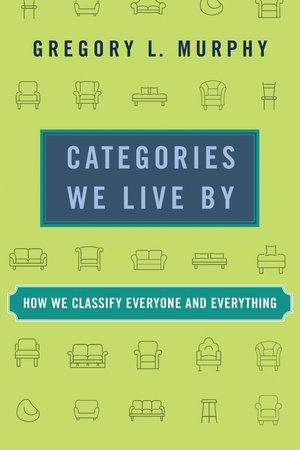
Book review iii: 'Categories we live by'

In thinking about (with?) Hodges' model, I often feel there is a flip-flop nature to where exactly concepts sit; or more accurately the perspective (care/knowledge domain) from which they are viewed.

Murphy introduces dual-character concepts, 'which are things that have both a prototype (or rule) and an ideal.' p.30. and quotes from:

Knobe J, Prasada S, Newman GE. Dual character concepts and the normative dimension of conceptual representation. Cognition. 2013 May;127(2):242-57. doi: 10.1016/j.cognition.2013.01.005. Epub 2013 Mar 1. PMID: 23454798.
Do dual character concepts operate at varied levels, and in their association (semantic) proximity - relationship to other concepts? All this changing according to context.

Murphy explores the dual category nature of people who claim to be scientists, but are really following a hobbyhorse. That is not lost on me. Others, a baker is following scientific principles while not technically being a scientist p.31. The discussion on art - artists is also informative; turn the page, and that on RINOs - Republican In Name Only - is very timely! There are the problems that science itself can contribute. If you don't know your oxeye daisy from osedaxes you can find out here: fascinating. 

'Health' is dual category in a great many respects (and with a chapter to follow). Many have been and will continue to be discussed here:
  • person :: service-centredness
  • parity of esteem (mental - physical)
  • confusion - dementia :: delirium (infection, dehydration)
  • mental capacity :: best interests
  • community care :: 'in care'
  • clinical risk - positive risk taking
  • healthcare :: social care
There's a need for careful deliberation too as does this apply to any situation in which there is a smell of  dichotomy: good, or bad?

Chapter 3 'Categories in the World and in the Head' helps straight away - declaring a false dichotomy. For me, it's worth revisiting natural categories, natural kinds and essential categories and psychological essentialism. Get these right and surely that's a useful toolkit, or more accurately - first aid kit?

I'm grateful for the placeholder essence (p.46) from:
Medin, D. L., & Ortony, A. (1989). Psychological essentialism. In S. Vosniadou & A. Ortony (Eds.), Similarity and analogical reasoning (pp. 179–195). Cambridge University Press. https://doi.org/10.1017/CBO9780511529863.009
'Psychological essentialism should not be equated with the classical view that concepts are representations of classes of objects that have singly necessary and jointly sufficient conditions for membership. ... More generally, we propose that the knowledge representations people have for concepts may contain what might be called an essence placeholder. There are several possibilities for what is in such placeholder. In some cases, but by no means in all, it might be filled with beliefs about what properties are necessary and sufficient for the thing to be what it is. In other cases it might be filled with a more complex, and possibly more inchoate, "theory" of what makes the thing the thing that it is (see Murphy & Medin,1985). It might, additionally, contain the belief (or a representation of the belief) that there are people, experts, who really know what makes the thing the thing that it is, or scholars who are trying to figure out exactly what it is. Just as with theories, what the placeholder contains may change, but the placeholder remains.' pp.184-185.
Hodges' model provides four placeholders. In reading and watching videos on category theory, it appears there is a role for 'placeholders'. I realise the applications - contexts differ, but analogies are powerful too.

Regards, classification as an exercise in convenience, despite the emphasis upon evidence, how often even in clinical matters does it come down to convenience? More to follow on this.

I've never wanted Hodges' model to be a grab-bag for keywords, concepts - categories! So it helps ease that concern, in chapter 4 to see words and categories contrasted. I always wondered about the media's preoccupation with the Inuit and 'snow'. 'Salient' is here as expected in 'Language, Culture and Categories' and with the Sapir-Whorf hypothesis p.53. And, of course, nursing and everything else relies on language p.57. Prof. Murphy's mention of children figuring out when it comes to language, and adults just how crazy it - the rules - can seem. While impossible, by definition, I had this thought of toddlers instigating a class action to get things put right. I like the way Murphy reaches across cultures for answers, highlighting the field of ethnobiology p.61. The appeal of this is exaggerated as it stretches across Hodges' model diametrically [sociology - sciences]. I'm still on the look out for models possessed of an 'otherness', that retain legitimacy, validity where and for whom they are employed. (There is much to debate there still.) The objective and subjective dimensions also loom large. I remember a meeting concerned with nursing terminology 1990s, with reflection on the terms used for injection across the UK. That in itself demonstrated wide regional variations that also give pause for thought.

More to follow, with Part 2 'case studies'.

Murphy, Gregory L. Categories we live by: how we classify everyone and everything. Cambridge, MA: The MIT Press, 2024.

Many thanks to MIT Press for the review copy.

See also:

Categories are destiny' Freud p.6. of 'Categories we live by'


Monday, April 28, 2025

Book review: 'Categories we live by' ii

In that first post I felt a bit guilty getting bogged down in the introduction, and not really saying much about the book itself.

Well, Chapter 1 is the 'Introduction' so that is great, and as you may be I am swept up by what's between the covers. Speaking of which, this is an effective design, and green colour; especially for a northern reading in March - May.

The book is slim considering the topic, 164 pages, plus just over a page of notes, four and a half of references and an index. It is, I think a slightly larger format paperback but fits well in the hands for outdoors reading. The fonts and layout are clear.

Murphy's style is straightforward and readable. It is not technical, but includes terms such as classification, nomenclature, and domain [ ;-) ]. The division into two parts, lends itself to a wide readership, the second part providing case studies giving the book a pragmatic, practical emphasis. I'll post again about chapters 6 & 7 on Psychodiagnostic Categories; and Categories and Power respectively (brief, but a joy!).


Before moving on from the Intro, Murphy explains how the same category may be thought of in different ways at different times' and encourages us to be 'critical of our categories'. p.12. This stands out for me. Especially being suitably equipped to critique our categories as we use them.

Chapter 2 on The Classical Tradition, has a natural starting point; describing Aristotle (with his book Categories), essences, definitions with properties that are necessary and sufficient p.14-15.
'Necessity: If it's in the category, it has the features,
Sufficiency: If it has the features, it's in the category.' p.15.

I was prompted to reflect on relations and identities here. While I suggested the book is not technical, there is a important point about dictionaries and the definitions we seek there. We should remember that many members of the public would still rely on what is the classical way to create, confirm category membership: there must be a rule.

Wittgenstein follows pp.17-20, but I took note of:
'The problem is that necessity and sufficiency are in tension with each
other. As you make the list of properties longer and longer, it's more likely
to be sufficient but less likely to be necessary. Forming a list of features that
are both necessary and sufficient is usually impossible.' p.19.
I pencilled in (Eleanor) Rosch on p.13, and on page 21 her contribution to the destruction of the classical world is described; with other researchers. The book is well referenced, without being intrusive. Murphy provides specific pointers, suggesting further reading and skipping a chapter. Helpful, given how precious time is these days.

There is a critical invitation on page 13: 

'Want to start an argument with someone? Ask them whether a stove is a kitchen utensil or nursing is a science.'

I wonder if nursing theory colleagues in the United States and globally have already responded?

More to follow - surely!

Murphy, Gregory L. Categories we live by: how we classify everyone and everything. Cambridge, MA: The MIT Press, 2024.

Many thanks to MIT Press for the review copy.

Thursday, February 20, 2025

Book review: #5 - Handbook on the Ethics of AI

If there is an overall theme to the book it is - rather inevitably -   anthropomorphism. Some argue it is consequential in nature due to the risks we are running. Sandry's chapter 10 Anthropomorphism and its Discontents begins by highlighting duality, dichotomies, and  oppositions that instantly come into effect in this emerging  theoretical, practical and policy field. If a term anthropomorphic can be 'loaded' this one carries extra baggage: history, religion, natural, aesthetic, philosophy, physical, existential. The dual issue of making a machine that looks human; versus, machines that could deceive humans (used remotely today and in situ in the future?) is considered. In our interacting with AI Tech, I found intention (and attention) of specific interest. Sandry seeks definitions, starting with dictionaries, the discussion is helpful across arts too. The reader is left well briefed and technically too: intrinsic and extrinsic forms, the role of the intentional stance, 3-factors. ...

Health is not a primary focus of the book. The index does not list health, medicine, nursing, at least not where they may be expected. The index is comprehensive but I wonder if it could be improved. Care is suggested through social robotics (p.147). Design figures again, anthropomorphically of course (p.147). Specific attention to ethics and Taking Care With Language are given (sections 6-7). I scribbled! again about care for tech - in the material, energy, and production 'costs' in an ecological sense. SUVs annoy me (sorry!) are they all necessary? On language, I thought back to McDermott D (1985) Artificial Intelligence Meets Natural Stupidity, In MIND DESIGN, Haugeland J (Ed), MIT Press, London, p.144-145:


Balance in subjectivity and objectivity of stances and resulting content / conclusions can be difficult to achieve and represent. The latter section prompts respond to frustration with the term anthropomorphism. I found myself in a couple's lounge, as a community mental health nurse, acutely aware of the role of proxies in dementia care; as Sandry described Paula Sweeney's 'fictional dualism' (8, 150). Hodges' model fits well here too, regards anxiety. To socialbots, I added carebots. There seems potential in sociomorphing.

As noted previously, reflection and relation-al points litter the text. In Jecker's chapter 11 A Relational Approach to Moral Standing for Robots and AI this is more explicit. Jecker refers to care of others - as animals too. In computer science and seeking to retain a socio-technical perspective, I've seen potential in capability and maturity frameworks. Section 2 provides some discussion of the former. One of the first words I looked up in the index was isomorphic. It wasn't listed but I found reference to it on page 157: '... a community of robots psychologically isomorphic to to human beings that share our psychology ...'. Maths is a focus here, even though I must try to utilise AI to aid my learning and understanding. This is - must be an outcome of reading HEoAI.

The section on (self-)counsciousness is engaging and not limited (again) to machine intelligence. Subjectivity arises again. I wrote a note re. the precautionary principle, my 'prompt' the ethical principle. A gift was dicovered in 3. A CONCEPTUAL REFLECTION and within 3.2 Relational Ethics, preceded by the potential of Kant, utilitarian and vurtue ethics. While not wishing to virtue signal I've long speculated on how other cultures could inform nursing theory and models of care. Jecker incorporates the African philosophy of ubuntu in relational ethics. Student's would enjoy this, especially as Jecker (Source: Author) provides tables laying out the ethical approaches and robot & AI capabilities. This can also encompass older adults and care contexts with social robots. Nussbaum's capabilities applied to human development is also adopted here - another useful reminder:

(And, once again I recall Nussbaum's talk on Aristotle.) In post #4 I wrote of the rubbish scene in the film A.I. Artificial Intelligence, but it's here (p.166) that I wrote the note. There is so much I'm skimming over - believe it not.

The conclusion in mentioning a hybrid future consisting of both humanistic and mechanistic agents appears to find an additional theoretical and practical ally in Hodges' model?


Chapter 12 by Navas is AI Ethics, Aesthetics, Art and Artistry visits the history and philosophy of this subject too, esp. from 1700s. With Žižek and Deleuze there is much prepatory reading for would-be undergrads - and general readers keen to have an awareness of contemporary issues. There is quite a triad here - disassembled - across several sections. I have quoted from the volume many times, but p.179 concerns empathy: 
'Empathy challenges the ongoing optimization of technology, because it takes time to exercise it. A person needs time to think about whatever issue, situation, thing, or person they may empathize with. In other words, empathy is essential for humans to understand and figure their relation to others and their surroundings. Empathy, if practiced reflexively, can lead to critical thinking. which may not lead to clear results but the activity may and often does end in "wasted" time if framed under the drive for efficiency, which is clearly something Al is designed to achieve. And lastly, empathy, because it has been foundational to art, is also part of art's long-term resistance against capitalism's exponential dependence on speed of production. At the core of AI ethics, then, we find speed of production and consumption coming in conflict with human existence itself. Humans are proving to be inefficient actors in the very system they built for their own benefit, which obsessively demands faster cultural activity from people, which (to be blunt) translates to an unapologetic and incessant desire for profit.' pp.179-180.
Section 6 on creativity AND speed is fascinating, especially as human-machine (brain) interfaces develop apace. Concerned as I am with what is a metacognitive tool, 8 Metacreativity formed the conclusion of chapter 12. The notes refer to generative coding which has come up in various webinars.

Silent Running: Film
Briefly, chapter 13 covers AI and the Environment. It is amazing (or not) how in a few sentences your mind can be changed? From "Really!" upon reading 'species culling', to this being explained in the crown-of-thorns starfish (hence COTSbot) and the toll on coral in Queensland. There are robots-for-ecology. I smiled returning to Silent Running's Dewey, Huey, and Louie becoming reality. Facinating point in: what is collective must be recognised in terms of causation. Appropriatly, PEAS is an acronym: probalistic weather event attribution studies are a reality in conjunction with remote sensing and tracking.

Drones are also developing apace, and applied robotics - tree-climbing. Less reassuring (adding to nature's precarity?) are artificial insects to undertake pollination; more positively reducing the impact of chemical and toxic spills. Simulation for training is well established in medicine and nursing; section 2.3 addresses this were PEAS form super-ensembles of data (I like that). PEAS can also have a role in determining an evidence-base and demonstrating it is hoped provenance for that evidence in the movement of populations, for example, climate refugees. In conflicts, human rights and justice, forensic architecture is of course well established: Forensic Architecture (Care Forensics?)

The summative nature in closing chapter 13 is a helpful approach which I will possibly try to duplicate.

Socio-technical approaches are found in chapter 14 Uses and Abuses of AI Ethics by Frank & Klincewicz. Understandably, boundaries play a large role, as you would expect in deliberating value and values, moral patients and agents. The Collingridge dilemma is discussed, regards putting in place controls for a technology while it is still in development, otherwise control may be lost (p.213). Diversity, a story of the moment - closes out this chapter. There is a 'nice' continuity across chapters to
15 The (Un)bearable Whiteness of AI Ethics by Syed Mustafa Ali et al. (the first note highlights the format is a dialogue). The (colonial) politics of north-SOUTH are duly noted and Africa (section 4). Section 8 points to technological (and health) colonialism. I take as a positive that the 'hyphen' also has a place (S.10).

The Savage Mind

Again related, as per the book's structured parts, chapter 16 Ethics beyond Ethics: AI, Power, and Colonialism by Kim prompts the reader to revisit the concepts of 'other', alterity even if 'understood'. I pencilled 'Savage Mind' here. Machines are posited as the colonial other. There will be a repeated argument as in response to humankind's going back to the moon (to stay) and on to Mars. We should sort Earth out first. So too for inclusion and the machines. What about the people who are excluded, disenfranchised and increasingly so? I wondered (previously) if (even) more could be made a transparency? Noting the word subaltern, it appears this has suddenly been attributed to Ukraine? On disability and ableism reminded also of radio history and 'Does He Take Sugar?'

The statement: 'Machines are perceived as distant - temporally, spatially, or socially - and different from human culture.' p.234. Is, so true.

INDIVIDUAL
|
      INTERPERSONAL    :     SCIENCES               
HUMANISTIC  --------------------------------------  MECHANISTIC      
 SOCIOLOGY  :    POLITICAL 
|
GROUP
cognitive - conceptual
'spaces'
distance:
time, space
human cultures
societies
difference


'Binary-opposition' and the need to think outside of this is acknowledged. And as if (perhaps) to stress both distance and proximity, I wrote 'mobius' in the margin (p.238). Hutchings (2015) sounds a valuable reference: 'Ethical Encounters - Encountering Ethics'. The books I've read contribute to evidence to revalidate my nurse registration. I realise I've sold-myself short in listing the book's titles. Although not discussed here the remaining chapters are excellent critical reading at a time when diversity, equality and inclusion policies are being rolled-back and undone. I will highlight these:

  • 17 Disabling AI: Biases and Values Embedded in Artificial Intelligence (quoted in 'Do you fit the description?')
  • 18 The AI Imaginary: AI, Ethics and Communication
  • 19 Feminist Ethics and AI: A Subfield of Feminist Philosophy of Technology
  • 20 Buddhism and the Ethics of Artificial Intelligence
  • 21 Queering the Ethics of AI

In chapter 16 'Ethics beyond Ethics...' just before the conclusion I will carry forward a sentence -
'Forming an identity requires that "I identify something or someone beyond me" - with one or more categories persons, non-human others, acts, ideals, values, or social systems' (p.243).
- and the points following, and end there.

Many thanks to David J. Gunkel (Editor), the many contributors, and Edward Elgar Publishing Ltd for my copy. I have greatly enjoyed and learned much from reading this book.

Handbook on the Ethics of Artificial Intelligence. David J. Gunkel (ed.). Cheltenham, UK: Edward Elgar Publishing Ltd. ISBN: 978 1 80392 671 1245
https://www.e-elgar.com/shop/gbp/handbook-on-the-ethics-of-artificial-intelligence-9781803926711.html


Images:
Silent Running 
https://cdna.artstation.com/p/assets/images/images/016/839/904/large/david-eagan-screenshot001.jpg?1553673214
The Savage Mind
https://en.wikipedia.org/wiki/File:The_Savage_Mind_(first_edition).jpg

Related previous posts: 'general + AI'

*That early streak of competitiveness was clearly educated out of me.

Sunday, February 16, 2025

Book review: #4 - Handbook on the Ethics of AI

Chapter 7 is no doubt one of the engine rooms of this book. In AI Ethics and Machine Ethics, John-Stewart Gordon follows preceding authors citing Nyholm and others. This probably helps the overall coherence of the book, and underlines what is a dynamic and emerging field. Reading 'What is AI ethics?' (p.98), I made a note about our humanity's cognitive house-keeping (and other life-forms?) executed through sleep, the ability to unlearn, and forget. Efforts to mitigate machine bias are provided in a list 1-5 (p.100). As observed previously, this author is also thinking on their feet (and very well too) with 'Source: Author's own' in a figure for the systemic place of machine ethics and another (table) 7.1 'Four approaches to machine ethics'.

3.4 considers the challenges involved in developing ethical AI systems. As in healthcare, we see where the (problem of) 'many hands' emerges from:
'Developing ethical AI systems requires collaboration between computer scientists, ethicists, and other stakeholders, which can be challenging due to differences in expertise, terminology, and perspectives. Computer scientists bring technical expertise to the table, while ethicists provide insights on moral principles and values that should guide AI behavior. However, these experts often operate within their own domains and may lack a common language to effectively communicate and collaborate. 
Other stakeholders, such as policymakers, industry professionals, and end-users, also play vital roles in shaping the ethical development of AI systems. They bring diverse perspectives, needs and expectations that need to be considered and balanced during the design, implementation, and regulation of AI technologies. For instance, policymakers are responsible for creating guidelines and regulations that ensure the safe and responsible use of AI, while industry professionals must adhere to these standards and navigate the practical challenges of integrating ethical considerations into their AI-driven products and services.' p.104.
The solution includes having interdisciplinary and ethnically diverse teams, cross-disciplinary training, and a more holistic and comprehensive approach to AI development. Unintended consequences (a news item today (13th Feb 2025) are discussed, the dual-use nature of AI and technological 'delivery' surveillance acting for good and potentially ill (China's - Social Credit Point System).

AI ethics is also itself apparently a conceptual framework (p. 99,107).

What is permitted by law in a State clearly varies. Chapter 8 deals with From Ethics to Law: Why, When, and How to Regulate AI. Collingridge is another recurring citation, and presents a dilemma no-less (Section 3. p.116); one to follow up  (Coeckelbergh too, chap 9). I've always felt that some knowledge of social and economic history is a good foundation. History is reflected here in resort to 'masterly inactivity' (p.118) and regulatory approaches - as debated this past week at an AI Action Summit in France. 

I can still recall the sense of competition in having time in the sandpit at infants school.* Software developers will use sandboxes to develop and revise code in an isolated environment, before it goes live, or wild. With AI the book refers to mishaps, projects that have gone wrong. We need to take care regards the nature of the 'sandboxes' that are used. In a way this speaks to the utility of Hodges' model as a resource for lifelong learning, a learner being fully socialised into a profession and its evolving disciplines:

INDIVIDUAL
|
      INTERPERSONAL    :     SCIENCES               
HUMANISTIC  --------------------------------------  MECHANISTIC      
 SOCIOLOGY  :    POLITICAL 
|
GROUP
box
sand-
box
box

I had to look up the CREEPER (Curbing Realistic Exploitative Electronic Pedophilic Robots) ACT (p.121). We are accustomed to outsourcing, and its perverse effects facilitated through globalisation, with nations transferring their pollution - plastics, and e-wastes. There are efforts as Chesterman writes to limit outsourcing to AI in terms of the decisions (pp.122-123). I enjoyed the nods to Isaac Asimov too. 

Gellers in chapter 9 AI, Design, and More-than-Human Justice provides another cylinder to drive the text not just forward but acknowledges the future for all: organic and inorganic. Gellers is argues for attention to AI and justice, not merely the moral and legal status of AI. Reading of  'communities of justice' (p.128) the established notion of 'communities of practice' or the collective of users - socio-technically. Gellers highlights our being in the anthropocene and how the environment and nature is figuring in law. So, not just legal questions for humans but natural 'things' and entities also (posted previously: Person & Sense of Place: A River runs through it ...).


INDIVIDUAL
|
      INTERPERSONAL    :     SCIENCES               
HUMANISTIC  --------------------------------------  MECHANISTIC      
 SOCIOLOGY  :    POLITICAL 
|
GROUP
person-
[what >]
'Who'
-hood (p.129)

algorithmic
collective

communities of practice
justice

communities of justice

I don't think we are there yet? Even, accepting that built-in obsolescence is an established and legal thing. But AI could turn materialism on its head. Looking at the materials, metals, rare earth elements ... that goes in how long do they last and how are the materials recovered? AI, computing desperately needs the doughnut economy, must epitomize the doughnut. Looking for a place to live, you notice the way probably quite serviceable bathrooms and kitchens are ripped out. The suites on a skip. That is quite a scene on the rubbish tip in the film: 'A.I. Artificial Intelligence'. The amount of energy in total production and materials is still not wholly valued, even before other values are 'added'? The focus on design here is integral to such questions. It has brought me to care design, and care architecture. Socio-technical aspects are highlighted again by Gellers (for me, as noted on W2tQ, that hyphen matters). 

Unsurprisingly, Descartes also figures in this chapter, section -Technology in the anthropocene:

'First, for philosophers of technology, the Anthropocene obliterates the nature/culture divide intrinsic to Cartesian thinking (Conty, 2017) that altered the course of history by rebranding technical objects as artificial and thus divorced from nature (Hui, 2017).' p.131.
It is encouraging that there is now recognition that 'we are nature too'. While we can record thought - brain activity on an EEG, from the outset (school studies of biology, then human biology) I've always associated intelligence, mind, thought, emotion, hope, dreams and cognition .. with the intra- interpersonal domain. If you adopt a socio-technical approach (overview - mindset) then invariably the technosphere will straddle the HUMANISTIC <-> MECHANISTIC axis of Hodges' model:
'So far, I hope to have established that technology plays a prominent, if complicated, role in the Anthropocene. But how does this relate to justice? Technology's relationship to ecological systems holds important implications for determining who belongs to communities of justice. To begin, the Earth system consists of interrelated biological, physical, and mental "worlds" (Kotzé, 2020, p. 80). The mental world, also referred to as the "technosphere," is an autonomous amalgamation of energy, communication, transportation, and financial systems, along with cities, governments, factories, farms, and other built systems and their constituent parts (Haff, 2014, P. 127). Technological artifacts such as AI are therefore part of the technosphere.' p.132.

Hodges' model: axes and care domains

We read of robots-in-ecology and robots-for-ecology. I was reminded of the SF film 'Silent Running' here. The real merit and encouragement for me in Geller's contribution, is section 4 which compares how we can approach more-than-human justice. Total eclipses are supposed to be rare, irrespective of what they might portend, now AI, the climate and life on Earth keep eclipsing each other: thus far partially. 4.1 Multispecies justice - Peter Singer really is ahead of his time (chapter 11 - here!); following socio-ecological justice 4.2, we arrive at planetary justice. Note (in Hodges' model) the 'distance' of what is generally deemed social and where the ecological in reality - physically resides. In the margin I'd scribbled 'Less a case of "take me to your leader" and more a case of "show me all your cards!"'. The synthesis and closing section on the design of robots specifically for more-than-human-justice helps here by including relationality, intersectionality and and contexts. 'Design justice' is something the book prompts me to carry forward (p.137).

One final post on HEoAI to follow ...

Handbook on the Ethics of Artificial Intelligence. David J. Gunkel (ed.). Cheltenham, UK: Edward Elgar Publishing Ltd. ISBN: 978 1 80392 671 1245
https://www.e-elgar.com/shop/gbp/handbook-on-the-ethics-of-artificial-intelligence-9781803926711.html

Related previous posts: 'general + AI'

*That early streak of competitiveness was clearly educated out of me.

Wednesday, February 12, 2025

Book review #3: Handbook on the Ethics of AI

I've started several 'gap' lists, including a draft post or two. Seeking to help bridge the theory-practice gap is an original purpose for Hodges' model.

Friedman's chapter 5 Responding to the (techno) Responsibility Gap(s). It is almost as if Friedman's title is parameterised. We could insert the domains of Hodges' model (plus, spiritual - safeguarding!) in there. Then there is the magic of languages, for responsibility substitute accountability and do a deep-dive applying Hodges' model in a specific domain. Friedman notes it is not entirely accurate to talk of a single "responsibility gap". Can this provide evidence for the situated potentiality of Hodges' model's and role in fostering situational awareness? Although there is an ongoing roll-back of CSR - corporate social responsibility, I scribbled in the margin:

INDIVIDUAL
|
      INTERPERSONAL    :     SCIENCES               
HUMANISTIC  --------------------------------------  MECHANISTIC      
 SOCIOLOGY  :    POLITICAL 
|
GROUP
user
user
user
corporate

Of course, 'user' still applies in the political domain, as we are all citizens; users of the State (note also the socio-technical utility of keeping the 'user' in sight). There is also personal ethics, and the legal duty of care - as a nurse (in my case) and for a member of the public. Discussion on notions of responsibility, in light of AI, especially self-driving vehicles, and autonomous machines (weapons) is much needed. Regulatory gaps are recognised; amid current news of debate on the degree of regulation of national and international financial systems. Nyholm's four-fold formulation on responsibility is invaluable as examples are provided. There is a reference to nine notions of responsibility, and the link to accountability and retribution.  I like Friedman's  discussion of responses to responsibility gaps as; optimists - technological approach; human-centred and hybrid approaches; plus pessimists (4.3). The latter includes debate and campaigns to 'stop the killer robots'. Did this chapter, have a positive effect in extending thoughts about events in the middle east? There are two points here I will return to in the final post.

For students, Schwarz's chapter 6 takes readers back to a literally pivotal development in ethical thought and debate: Trolleyology, with the addition of algorithms and killer robots. What Searle's Chinese Room (noted p.276 here) argument is to AI; so trolley-based dilemmas are to ethics. A point made by Schwarz, referring to the development of subsequent variations. (Following on from #2, Brian Magee's interviews with John Searle on philosophy of language and Wittgenstein are also well worth a listen.) Schwarz's chapter (and the whole book) could be read in preparation for an undergraduate course: computing, law, policy, philosophy, and ethics, for example. The challenge of determining responsibility and accountability "the problem of many hands" (p.71), is not limited to AI. This is a global issue in achieving justice for many previously healthy, competent, quite 'ordinary' people.

The question posed above, applies "equally"(!) here too: 3. mathematical morality for war. Ever since reading of argumentation through the Open University and other sources, I'm sure this is applicable to Hodges' model (with its 'own' algebra)? I'm no mathematician but the book provoked excitement rather than anxiety as I read: 'Principle of Permissible Harm (PPH) and probabilistic reasoning - with formulae (pp.88-89). There are some important (imho) 'take-away' messages here, but I don't want to spoil things. Nurses need mathematical skills, in drug calculations and are assessed on the same. Statistics are used in research, of course but maths is hardly the primary motivation for entry into the care professions: 
'Designing technologies in a way that takes into account broader human-centric values is an important and laudable approach to responding to new and emerging technologies in any arena. It cannot, however, serve as a substitute for moral deliberation and the act of taking moral responsibility for harmful acts, especially when lives are at stake. Reducing this to a mathematical problem ignores everything that cannot be captured in discrete numerical terms or as data points. And in situations where people and their lives become nothing more than data points, non-computational aspects, such as relational or embodied dimensions of human life, are marginalized if not entirely obscured. The real world is not reducible to binary logic, it is rife with contested, contradictory, and clashing values that might all be equally relevant It is complex in ways that cannot always be neatly captured or mathematically modeled. In other words, ethics cannot be "solved."' p.91.
More to follow ...

Handbook on the Ethics of Artificial Intelligence. David J. Gunkel (ed.). Cheltenham, UK: Edward Elgar Publishing Ltd. ISBN: 978 1 80392 671 1245

https://www.e-elgar.com/shop/gbp/handbook-on-the-ethics-of-artificial-intelligence-9781803926711.html


Related previous posts: 'general + AI'