Hodges' Model: Welcome to the QUAD: fractal

Hodges' model is a conceptual framework to support reflection and critical thinking. Situated, the model can help integrate all disciplines (academic and professional). Amid news items, are posts that illustrate the scope and application of the model. A bibliography and A4 template are provided in the sidebar. Welcome to the QUAD ...

Showing posts with label fractal. Show all posts

Tuesday, April 21, 2026

WCCS26: World Conference on Complex Systems 20-22nd April

It was good that today I could relax a little sooner than I expected with my presentation delivered over lunch time instead of 1730. To recap, at the 6th edition conference theme of:

“Navigating Contemporary Complexity:
Transdisciplinary Approaches to Economic, Social, Political, and Environmental Challenges”

- my talk (I added "Hodges' model" in the slides):

'Hodges’ model: PRESENTING a UNIVERSAL and SIMPLE CONCEPTUAL WORKBENCH to SITUATE and ENCOMPASS COMPLEXITY'

This after arriving back from a conference dinner near Marrakech at 0100, but the event at Chez Ali was different and most enjoyable. 

I'm conscious that unlike other speakers I (still!) did not have 'data' to share and discuss. Equations have been necessary over the first two days. But overall all sessions have proved accessible. From comments received Hodges' model was understood and deemed relevant. One delegate noted how the visual nature of Hodges' model was apparent, the illustrations revealed the model more clearly than a verbal description the evening before.

There were two questions. I eventually recalled awareness of Franco Basaglia, the Italian pioneer of community mental health and mental health law in Italy. Another questions concerned were I though the arts, drama and culture sit, or fit in Hodges' model? I suggested a search of the blog for posts tagged 'art', 'theatre', or 'culture'; with a warning that it can be a bit of a rabbit-hole.

Discussion, in-sessions and outside have proved refreshing, and not just as a welcome change from 'world news'. There were reminders too of early career researchers, professionals, and policymakers and the need to phone home.

While I pack for a transfer to Marrakech tomorrow afternoon, I will reflect and look to add more here.

In adition to data, I need new angles so I am not self-plagiarizing; hence the attempt to see Hodges' model as a mathematical object.

Many thanks to the WCCS26 Committee for being able to participate and share this model made in the 20th century for the challenges of the 21st.

More to follow and in the meantime, you can read the programme yourself.

Thursday, March 26, 2026

Is there such a thing as the holistic bandwidth of 'resilience'?

In preparing my presentation for World Conference on Complex Systems 2026 (WCCS26) next month^, I am reading:

Bridging the Macro and the Micro by Considering the Meso: Reflections on the Fractal Nature of Resilience

ABSTRACT. We pursued the following three interconnected points: (1) there are unexplored opportunities for resilience scholars from different disciplines to cross-inspire and inform, (2) a systems perspective may enhance understanding of human resilience in health and social settings, and (3) resilience is often considered to be fractal, i.e., a phenomenon with recognizable or recurring features at a variety of scales. Following a consideration of resilience from a systems perspective, we explain how resilience can, for analytic purposes, be constructed at four scales: micro, meso, macro, and cross-scale. Adding to the cross-scale perspective of the social-ecological field, we have suggested an analytical framework for resilience studies of the health field, which incorporates holism and complexity by embracing an ecological model of cognition, something supported by empirical studies of organizations in crisis situations at various spatial as well as temporal scales.  

Key Words: human resilience; organizational resilience; resilience; resilience engineering; societal resilience 

Since the turn of the millennium, it appears 'resilience' has exploded across the media, and literature. As a result, it has also been viewed negatively by mental health service advocates, and activists as they decry the run-down state of formal services. The 'recovery model', undoubtedly closely associated with personal resilience is not the only answer.

This paper is helpful, in several respects but specifically to illustrate the idea of how Hodges' model can frame holistic bandwidth, across its care / knowledge domains.

INDIVIDUAL
|
    INTERPERSONAL    :     SCIENCES               
HUMANISTIC --------------------------------------  MECHANISTIC      
SOCIOLOGY  :   POLITICAL 
|
GROUP

individual - emotional - mental
resilience


resilience engineering

human & societal resilience

organizational resilience


I think the answer is yes. 

But, what do you think (h2cmng AT yahoo.co.uk)?

Bergström, J., & Dekker, S. W. A. (2014). Bridging the Macro and the Micro by Considering the Meso: Reflections on the Fractal Nature of Resilience. Ecology and Society, 19(4), art22.
https://doi.org/10.5751/ES-06956-190422
 
See also:
Jones P. (2014) Using a conceptual framework to explore the dimensions of recovery and their relationship to service user choice and self-determination. International Journal of Person Centered Medicine. Vol 3, No 4, (2013) pp.305-311.  
 
Previously: 'complexity' : 'resilience' : 'holistic bandwidth' : 'fractal'

^Fingers x'd!

Tuesday, January 13, 2026

iii Book: Bill Ross - 'Order and the Virtual'

'The Philosophy and Science of Deleuzian Cosmology'

My book 'reviews' are unconventional in that they are not journal fare (format and quality-wise...); the book, or my reading of it - invariably refers to Hodges' model. I could argue that is not my fault, but a quality, something built in to the model. Anyway, what of the physical book itself?

The cover image is a marvel: Stone Quartet 1 by Patrick Haughton
[ Did someone say 'quartet'!* 😉]

Cover design by www.paulsmithdesign.com

Typeset in 10.5/13 Sabon, the fonts and styling through the book is clear, and easy to read (without regard to the technical content). The paper is thick, the quality contributing to a high contrast. 

The contents:

Abbreviations
Preface by Robin Durie and David Webb
1. Chaos
2. Entropy and the Complete Concept in Leibniz and Deleuze
3. Order
4. Order as Complexity
5. Sufficient Reason as Dissymmetry and the Evolutionary Paradigm

Conclusion
Notes
Bibliography
Index

The EUP website only lists four chapters for Order and the Virtual, but the book clearly has five. The conclusion is similarly omitted online: running from pp.175-181, I wish I'd written it.

That nursing and healthcare practice are bound up in philosophical considerations, values and ethics is fairly obvious. Care dilemmas would arise, calling for a multidisciplinary approach, and cross-disciplinary advice. Through this book, Bill Ross keeps highlighting for me, the way that once the uniform is donned, or the clock denotes an inbetweenness '0900-1700' for community staff, philosophy goes on the back-burner. The heat of the issue, and first rule of first-aid is felt, but it is not the primary concern. There is an international group of scholars for philosophy in nursing (and journal), but practitioners have, by definition - a job to do. If time is chaos and complexity (or appears as), then in health it is continuity, avoiding disruption and more often trying to 'heal' it.

Although Hodges' model presents as a symmetry; it is anything but. If we wish to symmetry-break, Hodges' model may assist. The flux and dynamics of care [insert your context] means that Hodges' model constantly changes its shape, form. Not as an objective statement, but an interpretation. Bill Ross's discussion on Nietzchean chaos and the superior principle of sufficient reason, demands and rewards a close reading (as does the whole text). Whether it is chaos, equilibrium, law and possibility cognitive - conceptual spaces invite ergodic (a cyclic) exploration. The mix of Deleuze and Leibniz's system makes for complex ideas, one probably needs to swim in. The book's first chapters are deep, technical but also inviting. There are encouraging links to psychotherapeutic thought, in the philosophy of difference, and how this is recognised, and change negotiated.

The scale is cosmological, with a section on ergodicity; and (inevitably) time, as per the quotation (p.10):

'Everything which happens and everything which appears is correlated with orders of differences: differences of level, temperature, pressure, tension, potential, difference of intensity. Carnot's principle says this in one way, Curie's principle in another, Gilles Deleuze (DR, 222)' (DR - Difference and Repetition).
There is a ponderous sense when assessment is routinized: assessment must be comprehensive. Do: tick all the boxes. Don't miss anything! How many levels of assessment should there be? If you want this number of assessments, what should I leave out? It is fascinating how we can frame time, not just 'set' against the axes of  Hodges' model, but a product of lifestyle, bio-physics, and even bio-psycho-social-politics. Is back to Earth - back to the individual? Not now. Contrast chronological and pathological time and not just for humanity. Ross follows Deleuze, Poincare, Neitzche and others in the long-term diagnosis of the universe, no less. A heat-death: the anti-fever. Now there's the collective, while in mental health, a diagnosis (or two ...) is still (often) contested, at least on twitter/X.

'The distinction for me is that metaphysics lives in that plane above where the concepts are not tied specifically to one field, but remain free to mobilise the salient questions as they play out among several fields.' p.15.

I don't think this just applies to metaphysics, but the extent (now) to which problems (clinical and generally) are multi- inter- and transdisciplinary (Ross acknowledges the pragmatic). Otherwise, with each step across a disciplinary boundary, our concepts lose their meaning, and the ergodic action (the around and around, back and forth ... our models and frameworks) is more akin to a drunken random-walk.

More to follow ...

Bill Ross (2024) Order and the Virtual: The Philosophy and Science of Deleuzian Cosmology. Edinburgh: Edinburgh University Press. 
https://edinburghuniversitypress.com/book-order-and-the-virtual.html

*And is that the fifth domain floating above?

The preface is titled 'Playing Cortázarian Hopscotch':
https://en.wikipedia.org/wiki/Hopscotch_(Cort%C3%A1zar_novel)

There is also a brief  'Series Editor's Preface'

Saturday, January 10, 2026

Book: Bill Ross - 'Order and the Virtual' ii

'The Philosophy and Science of Deleuzian Cosmology'

Now I can say: "This year, Hodges' model will be presented at WCCS 6th World Conference on Complex Systems", so current reading needs to match this project. And, it does. In spades, in fact c/o and with thanks to Edinburgh University Press. Look at chapter 1! 'Chaos' with Mandelbrot fractals, smooth space drawing from Deleuze and Guattari's A Thousand Plateaus. For readers unfamiliar with the Deleuzian oeuvre, abbreviations of texts that feature in Bill Ross's book Order and the Virtual are listed (xii) and includes key sources by Michel Serres, Henri Bergson and Alfred North Whitehead. This works as you mentally take a note, of work to lookup. Almost twenty years ago, I related some ideas of Michel Serres to Hodges' model:

Jones, P. (2008) Exploring Serres’ Atlas, Hodges’ Knowledge Domains and the Fusion of Informatics and Cultural Horizons, IN Kidd, T., Chen, I. (Eds.) Social Information Technology Connecting Society and Cultural Issues, Idea Group Publishing, Inc. Chap. 7, pp. 96-109. 

Ross discusses the extent and proximity of Deleuze's thought to chaos, complexity theory and science more generally as identified by commentators. Now up to chapter 4, it would have helped to have a look at the bibliography at the book's end. Deleuze saw how his work resonated with chaos theory. Steve Strogatz's book (now in a 3rd edition):

Strogatz, S.H. (2015) Nonlinear Dynamics and Chaos: With Application to Physics, Biology, Chemistry and Engineering. 2nd edition. Perseus Books Publishing, Cambridge. 

- explains in the introduction how 'home computing' contributed to the aesthetic appeal of fractals, which could display incredible patterns derived from seemingly simple mathematics. Even though, the programs often required many hours of running to deliver their results.

In the late 1980s I was fascinated with a subscription to Fractal Report:

https://stephen.shawweb.co.uk/Fractalreportindex.html

The relevance for me of Order and the Virtual is apparent on page 1, Deleuze and Guattari's thought having an immediate transdisciplinary application, crossing boundaries, and the creation of regions of bifurcation. Ross connects Deleuze's thought and Ilya Prigogine & Isabelle Stengers' text:

Order Out of Chaos: Man's New Dialogue with Nature. London: Heinemann, 1984 

Ross is encouraging (to me and for Hodges' model), as he notes how the notions may be inexact, but they are nonetheless rigorous. Spanning as they do, philosophy, science - what is scientific(? - itself a boundary - demarcation) and artistic. I've often thought of Hodges' model as filled with folds, and multiple bifurcations. It looks like Bill Ross is going help me to isolate several, and possibly make my search more efficient (the latter really would assist). The memorial event held in Manchester last September was revalatory. Since the early 2000s I'd grown to  really appreciate the availability of books by Michel Serres. I was not aware of the force behind the Clinamen Press, which Bill Ross established in 1999. 'Clinamen' is a useful concept too, which I have encountered previously, through Serres and Lucretius. 

Readers new to philosophy, sociology and the development of ideas must often grapple with a new and specific vocabulary. This is a primary purpose of such texts. On page 2 the springboard is sprung, the Event is key in Deleuzian scholarship. The Event is a force for creative and disruptive force for thought,  idea generation and creativity. The Event is experienced in our current 'realities' of: time and space (Kronos) where things are actualised, and the virtual (Aion) - the pure Event. This lack of hesitation is welcome. Our 'virtual' world quickly provides access to reading:

parrhesia 27 · 2017 · 1-12
extract from the birth of physics
michel serres, translated by david webb, with an introduction by bill ross
https://parrhesiajournal.org/wp-content/uploads/2023/10/parrhesia27_serres.pdf

Where you have bifurcations, you have convergences and divergences, stasis, state - stasis or not, paths, a series and metrics. We are reminded that science is not just about theory - metaphysics, it is, sleeves rolled-up about doing too; as I've noted in subsequent reading. As 'chaos' predicts, there is no let up,  the Choasmos, quickly follows. I'm thinking of a 'situation' clinically as a rollercoaster - 'constant displacement' seeking a difference, and repetition, the ravages of alcohol, dementia, low mood, psychosis, obsession and compulsive 'states'. The chaosmos is central in Hodges' model, although as both continua and oppositions. Ross explains how Deleuze's chaosmos is not necessarily scientific, but belongs to the ancient cosmologies of the Greeks (p.3). I thought of flux here. 'Parity' is not just a physical metric, but a quality that acts, seeks resolution - equilibrium(?) - between the mental chaos and physical chaos.*

Thinkers like Deleuze 'trap' words, concepts, in boxes, drawing from other other sources (for chaosmos - with Guattari again); then they can be examined and tested for their scope, application, meaning and association. Hodges' model provides a trap, for any situation. Not as specific as a physicist's ion (or Penning) trap, but the model can act as a series of holistic traps. To provide a metric of holistic bandwidth.

*Of course, equilibrium is never found - until the 'End'; such is the nature of flux. 

More to follow...

Bill Ross (2024) Order and the Virtual: The Philosophy and Science of Deleuzian Cosmology. Edinburgh: Edinburgh University Press. https://edinburghuniversitypress.com/book-order-and-the-virtual.html
Sunday, September 22, 2024

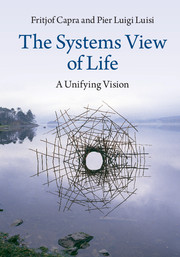
Book: [iii] 'The Systems View of Life - A Unifying Vision'

The Systems View of Life -
A Unifying Vision


Part 2 addresses the title - the rise of systems thinking.

The part - whole distinction is not only the root of the reductionism - holism and analysis - synthesis debates, but you feel clever knowing what mereology means ;-). This book is jargon free, even while being detailed and technical when necessary. Terms are defined when needed.

You see (possibly?) the power of advertising given the prominence of vitality in marketing. Meanwhile, vitalism a key to life seems to be an unknown, ever present but in the shadows, until our attention is drawn to it (health: life-death). Capra and Luisi explore mechanism and vitalism, and in turn organismic biology. Whether dealing with science, economics, biology..., I like the way the authors draw in the initial thinkers, the pioneers: whose lives, work and influence often spanned the 19th and 20th centuries. 

The proof of my opening statement in post (i) can be found on page 66:

'Systems thinking is "contextual," which is the opposite of analytical thinking. Analysis means taking something apart in order to understand it; systems thinking means putting it into the context of a larger whole.' p.66.

Ever user(s)-determined (context-based), Hodges' model can readily identify, relate, incorporate the - linear, non-linear, serial, parallel, simple, complex, poor, rich, narrow, broad, static, dynamic, person, service and so on. Also on page 66, Ehrenfrels (1859-1932) is an example, the first to use the term gestalt to denote an 'irreducible perceptual pattern'. There are many potentials within Hodges' model, one of which is that of gestalt. Yes, in healthcare we need to see the whole. We need to see the person, but also see the person in their social, political and spiritual contexts ('determinants)'. Now the global context is critical.

Chapter 4 charts the new physics atomic phenomena, mysticism, uncertainty, probability, causality, space, time, energy, and E=mc2. As per the book's subtitle, the search for a unifying theory in physics is noted, and ongoing. Box 4.1 briefly outlines the characteristics of systems thinking; including parts-whole, from objects to relationships and measuring to mapping. Within box 4.1, figure 4.1 reminds me of a Voronoi tessellation.^ From chapter 5 can I claim that Hodges' model is tektological - contributing to the science of structures? One day perhaps this Russian contribution to systems thinking can be looked at anew? Chapter 5 continues to reveal classical systems theories, general systems, cybernetics, feedback - in social systems too, and homeostasis - self-regulation. It's less than a page spanning 92-93,  but 'information theory' is duly noted, closing with cybernetics in the brain, and the emergence of self-organization. Shannon showed that even when there is noise in a communication channel, signals can be transmitted (coding). Is this why training and competence in interpersonal skills and self-awareness are so important, to help health professionals to attend, actively listen, and observe?*

An old T-shirt 'Art Matrix'


Chapter 6 on complexity theory, inevitably describes mathematical ideas providing equations. Unsurprisingly chapter 6 has figures galore. When I unpack the boxes and crates, I must sit down with The Beauty of Fractals ... (p.124!) and check the graphic capabilities of the latest software and hardware. The 'The Systems View of Life' definitely stimulates further enquiry. The baker transformation anyone (Box 6.2, p.107)? Exploration of non-linear dynamics, and abstract spaces also helpful in studies of relations and maths. This completes part II.


Many thanks again to CUP for the pb copy, much easier on the eyes. While this copy is new, I do make extensive use of secondhand books.

Fritjof Capra and Pier Luigi Luisi (2014) The Systems View of Life - A Unifying Vision. Cambridge: Cambridge University Press.

https://www.cambridge.org/gb/universitypress/subjects/life-sciences/genomics-bioinformatics-and-systems-biology/systems-view-life-unifying-vision?format=HB&isbn=9781107011366

^See: https://blogs.helsinki.fi/fcai-sig-lsc/files/2022/04/Peter-Gardenfors.pdf and 'conceptual spaces'

*Jones, P. (1996) Humans, Information, and Science, Journal of Advanced Nursing, 24(3),591-598.

Jones, P. (1996) An overarching theory of health communication? Health Informatics Journal,2,1,28-34.

Thursday, September 18, 2008

Butterflies make the news go-round

In health, social care and the news media at large there are themes that recur. While every summer has its silly season, there is a strange irregular-regularity in the way the light is re-cast on issues important to us all. It may be triggered due to a tragic incident involving a child, older person, or a whole family. At other times the stimulus for further exposure and prompt for debate is found when different coloured papers have their political say. The political opposition can force or be forced into a reaction.

Chaos is hardly a new kid in town, but there are many groups such as Society for Chaos Theory in Psychology & Life Sciences who are trying to understand and apply this infant science to specific disciplines and even conjoin and create new ones. I mention chaos due the question of migration.

Where do the various items of news head to when they disappear off the media's smörgåsbord?

Maybe they are still there, they just merge into the background noise? This movement is not just a binary, metronomic tick-tock, in and out of the media's eyes. It's more complex than that.

Like the butterflies beloved of chaoticists everywhen, perhaps these issues travel an unpredictable and yet inevitable course through the four fold space of Hodges' model? They travel together and yet in separate lanes, like the horses racing at an amusement arcade. When one reaches the socio-cultural-political boundary, that is when things happen and the volume is ramped up.

Events may frequently have their origin in the intrapersonal domain (it takes a person to find a tango partner), but one way or another - either heading south through the social domain or east and south through the sciences domain - news worthy items will and do repeat themselves.

Original image source: http://10outof10.blogspot.com/2008/04/lorenz-father-of-chaos-theory-died-at.html

Tuesday, July 24, 2007

Naive holism II - Hodges' model and String theory

Where were we? Oh yes, maybe string theory can help...?

Health is complex, labyrinthine and while there is no Minotaur to slay (?) we must constantly mine* for information. If we venture forth then best to take some string for reassurance:

  • Fully navigate the labyrinth (use technology if you must - audit trails count);
  • Find your way out and then you can report your deeds to the wider world.
The maze entrance is revealed when the pin is 'stuck' onto the referral source map. Post or ZIP code: "use it for geographies sake." You want to get out don't you?

Then start laying the thread - REASON-4-REFERRAL

weight loss, fatigue, tremor: SCIENCES domain
low mood, anxiety, agitation: INTERPERSONAL domain
carer under stress: SOCIOLOGY domain - and so on.

Check the health policies hurriedly scrawled on the walls (you may well find the Garden of Policy Delights#, but otherwise make do with the graffiti). Are you truly client-centred or service-centred?

What do you mean you don't know?

OK, well check the string. What sort of pattern have you made?

It's a right mess... Chaotic, even! Yes - mm... well that's OK. It actually looks like you are client centred to me. Just remember to backtrack, check and fill those string-less voids if need bee.

What's that? You are worried because you're tying yourself in knots!

Look don't panic! On the contrary - rejoice! It's what makes health care the magical job it is...

You see 'cc' also stands for 'cat's cradle' as well as 'client-centred' and 'complex care'!

Cats Cradle Gutenburg PressIf you never move out of the sciences domain (highly unlikely!) then in string theory that is a closed loop. The care is prescribed - not much room for creativity there - pretty vacuous in fact. Nature abhors a vacuum though, so attend to the care needs within the closed loop with due diligence and utmost priority. Otherwise the vibrations of this critical loop may become universal and the loop resemble a noose.

Prior to evaporating a closed loop can do a lot of damage.

If on the other hand your care winds its way across the care domains, back and forth, play the lace-maker - the artisan you are.

If you become tired, struggling in poor light: keep laying the thread - help may be at hand.

Whether it is a professional or volunteer who takes the lead, apart from those critical exceptions in the SCIENCES and POLITICAL domains, the string must be open at the ends from the start.

The dialogue always begins with an explanation, a rationale.

As soon as the closed loops are cut, the way is open to fully communicate, to comprehensively explore care possibilities.

Patient and carer can then take the other end, indeed if/when able they lead the way!

(Of course, just don't let it become a tug-of-war).

At the end reel the string in and measure (count the knots too).

Whether or not you met the Minotaur - there is the evidence, the outcome of your holistic reach.


Hodges' Health Career - Care Domains - Model

- sufficient to reach and engage the whole community.


Images: Thanks to medeba.com (skipping) & (fractal)
Paul Bourke

#Ack. William Latham 1990s CD-ROM
Garden of Earthly Delights.
* From the last post: There are vast and rich seams to mine here (without damaging the environment) and they run under ALL the subject disciplines....
This particular mine is also renewable.
