'Voronoi treemap' by Michael Balzer, (2005)
 |
| 'Voronoi treemap' by Michael Balzer, (2005) |
Images courtesy of Princeton Architectural Press via Brain Pickings
The Book of Trees - on a table in Waterstones, Manchester this evening.
|
| 'Voronoi treemap' by Michael Balzer, (2005) |
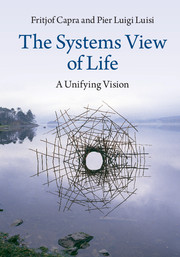 |
| The Systems View of Life - A Unifying Vision |
Part 2 addresses the title - the rise of systems thinking.
The part - whole distinction is not only the root of the reductionism - holism and analysis - synthesis debates, but you feel clever knowing what mereology means ;-). This book is jargon free, even while being detailed and technical when necessary. Terms are defined when needed.
You see (possibly?) the power of advertising given the prominence of vitality in marketing. Meanwhile, vitalism a key to life seems to be an unknown, ever present but in the shadows, until our attention is drawn to it (health: life-death). Capra and Luisi explore mechanism and vitalism, and in turn organismic biology. Whether dealing with science, economics, biology..., I like the way the authors draw in the initial thinkers, the pioneers: whose lives, work and influence often spanned the 19th and 20th centuries.
The proof of my opening statement in post (i) can be found on page 66:
'Systems thinking is "contextual," which is the opposite of analytical thinking. Analysis means taking something apart in order to understand it; systems thinking means putting it into the context of a larger whole.' p.66.
Ever user(s)-determined (context-based), Hodges' model can readily identify, relate, incorporate the - linear, non-linear, serial, parallel, simple, complex, poor, rich, narrow, broad, static, dynamic, person, service and so on. Also on page 66, Ehrenfrels (1859-1932) is an example, the first to use the term gestalt to denote an 'irreducible perceptual pattern'. There are many potentials within Hodges' model, one of which is that of gestalt. Yes, in healthcare we need to see the whole. We need to see the person, but also see the person in their social, political and spiritual contexts ('determinants)'. Now the global context is critical.
Chapter 4 charts the new physics atomic phenomena, mysticism, uncertainty, probability, causality, space, time, energy, and E=mc2. As per the book's subtitle, the search for a unifying theory in physics is noted, and ongoing. Box 4.1 briefly outlines the characteristics of systems thinking; including parts-whole, from objects to relationships and measuring to mapping. Within box 4.1, figure 4.1 reminds me of a Voronoi tessellation.^ From chapter 5 can I claim that Hodges' model is tektological - contributing to the science of structures? One day perhaps this Russian contribution to systems thinking can be looked at anew? Chapter 5 continues to reveal classical systems theories, general systems, cybernetics, feedback - in social systems too, and homeostasis - self-regulation. It's less than a page spanning 92-93, but 'information theory' is duly noted, closing with cybernetics in the brain, and the emergence of self-organization. Shannon showed that even when there is noise in a communication channel, signals can be transmitted (coding). Is this why training and competence in interpersonal skills and self-awareness are so important, to help health professionals to attend, actively listen, and observe?*
 |
| An old T-shirt 'Art Matrix' |
Chapter 6 on complexity theory, inevitably describes mathematical ideas providing equations. Unsurprisingly chapter 6 has figures galore. When I unpack the boxes and crates, I must sit down with The Beauty of Fractals ... (p.124!) and check the graphic capabilities of the latest software and hardware. The 'The Systems View of Life' definitely stimulates further enquiry. The baker transformation anyone (Box 6.2, p.107)? Exploration of non-linear dynamics, and abstract spaces also helpful in studies of relations and maths. This completes part II.
Many thanks again to CUP for the pb copy, much easier on the eyes. While this copy is new, I do make extensive use of secondhand books.
The title of Peter Gardenfors' book Conceptual Spaces is enough to switch the four lights on in this house. In chapter 1 the conclusion includes -
So what kind of theory is the theory of conceptual spaces? Is it an empirical, normative, computational, psychological, neuroscientific, or linguistic theory? The answer is that the theory of conceptual spaces is used in two ways in this book. On a general level, it is a framework for cognitive representations. .... On a more specific level, the framework of conceptual spaces can then be turned into empirically testable theories or constructive models by filling in specific dimensions with certain geometrical structures, specific measurement, specific connections to other empirical phenomena, and so forth. p.30.Chapter 5: Semantics gives us figure 5.9 (p.173):


 |
| Brian E. Hodges - c/o Brian's family. |
Born in Liverpool, NW England, UK.
Community Mental Health Nurse NHS, Part-time Lecturer,
Researcher Nursing & Technology Enhanced Learning
Registered Nurse - Mental Health & General
Community Psychiatric Nursing (Cert.) MMU
PG Cert. Ed.
BA(Joint Hons.) Computing and Philosophy - BIHE - Bolton
PG(Dip.) Collaboration on Psychosocial Education [COPE] Univ. Man.
MRES. e-Research and Technology Enhanced Learning, Lancaster Univ.
Live and work in NW England - seeking a global perspective.
The views expressed on W2tQ are entirely my own, unless stated otherwise.
Comments are disabled.
If you would like to get in touch please e-mail me at
h2cmng AT yahoo.co.uk
 orcid.org/0000-0002-0192-8965


