Hodges' Model: Welcome to the QUAD: vulnerability

Hodges' model is a conceptual framework to support reflection and critical thinking. Situated, the model can help integrate all disciplines (academic and professional). Amid news items, are posts that illustrate the scope and application of the model. A bibliography and A4 template are provided in the sidebar. Welcome to the QUAD ...

Showing posts with label vulnerability. Show all posts

Thursday, April 23, 2026

Picking up sticks: when axes matter ii

This past week at WCCS26, I've put Hodges' model itself on the work-, or more properly the inspection bench. Now, referring back to the - 'Our broken sticks' c/o Roger Lewin "Complexity: life at the edge of chaos" post, perhaps a theatre table is required. That is, as I try to examine the model, take it apart, have a look at the bits - as far as they are. And, what about the question posed in the above post?

'If we take the axes of Hodges' model, and break them at twenty-five points, I wonder what we end-up (or start) with?'

If there are twenty-six sticks, well, amongst other things - we've made quite a mess. But, there's more going on.

There may be some kind of idealised symmetry, or is it equality between the necessary, or projected length of the I-G axis. That is, as it extends for the INTERPERSONAL and SOCIOLOGICAL domains. But is there equivalence, in a default sense, for the SCIENCE and POLITICAL domains? Or am I (once again) overthinking? If medicine, health and by implication social care are bio-psycho-social, then surely we have a structural problem? Not only that, but we see a boundary, partition ... axis - in action. In Hodges' model the axes have two parts, two sides, so they are in effect composite. If the bio-psycho-social model is true, in whatever senses we wish to declare, derive or pursue in research (the literature, logic, practice, political expediency, or realism ...), then the group axis is incomplete. 

Hodges' model: Structure and Content - Axes and Domains

Is this literally why health care systems are so difficult to design, develop, establish and sustain? Think about that too, please. Is this why we as individuals rely on a functioning (caring) society and political systems? Is this why health care systems can suddenly be faced with collapse, as geopolitics has revealed. Vulnerability, becomes more than an individual characteristic and experience; when nations are dependent upon others for their funding, organisation, logistics, personnel, continuity and more. As a result, many understandably want to break with this socio-political and coloanial legacy.

Is there something in the sentence above in italics, that we can actually utilise to help define the foundation of Hodges' model? Again, not wanting to sound grandiose, but is there an axiom hidden in there? Even as 'health' is the inevitable election issue. The irony of this! Even if the politics of health and health in politics is not so much hidden as often denied. History reveals the influence of triage on the battlefield on the emergence of medicine and surgery. The future is here now. There is a political fight to follow for health in all its manifest forms. So here is another post to return to.
Saturday, February 21, 2026

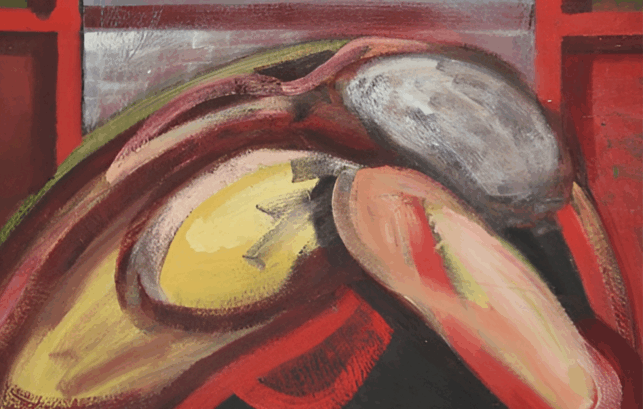
London: 'The Weight of Being: Vulnerability, Resilience and Mental Health in Art'

In London currently, 20th - 23rd I was on my way to Bankside Gallery and walking by Temple Place, #2 to be precise, on a board outside I read:

'The Weight of Being: Vulnerability, Resilience and Mental Health in Art'

Taking in the mental health and illness of artists, gender, domesticity, industrial and political struggle, COVID, and Gaza I spent and enjoyed a two hour detour. The building is also amazing. The exhibition is on until 19 April 2026, closed on Monday's and today 21st February. Before I share some text from their website, the interior of the building was a 'virtual' experience, but without the technology. Helpfully, the exhibition is spread across several rooms.

'Curated by Angela Thomas, this new exhibition explores artistic expression and mental health. Through depictions of deeply personal and collective experiences, it examines the powerful ways in which artists capture vulnerability, resilience, and their search for solace.

Including the work of a diverse range of twentieth century and contemporary artists and their varying perspectives, The Weight of Being showcases how artists have captured the psychological and emotional impact of societal pressures, resilience in the face of adversity, and existential uncertainty.

Alongside dozens of artworks drawn from galleries and collections across the UK, the portraits, landscapes, and figurative studies of the lesser-known artist John Wilson McCracken (1936–1982) are woven throughout. Denied the opportunity to return to the Slade School of Art following a period of hospitalisation for mental health reasons, McCracken spent much of his career in Hartlepool, producing work that reflects a profound sensitivity to the emotional and social pressures of his time. Shaped by personal and collective struggles, his art offers a deeply human perspective on the exhibition’s themes, revealing how external forces imprint themselves on the mind, body, and creative spirit.' Continued . . .

The building as a whole - Two Temple Place is owned and run by a registered charity, the Bulldog Trust

I will definitely (hopefully!) visit again, on the way or returning from the South Bank of the Thames. The video below presents key aspects of the building's amazing interior and history:

Tuesday, January 06, 2026

KU Leuven - LCHH2 Health Humanities Lecture Series 2025-2026

Dear all,

The Leuven Centre for Health Humanities organises a yearly lecture series and we would love to invite you!

This year’s lecture series explores the entangled relations between nature and health. Bringing together perspectives from medical history, psychology, disability studies, colonial studies, and environmental humanities, the talks examine how ideas of nature have shaped — and have been shaped by — practices of care, control, and coexistence. Topics range from the rise of disposable medical technologies and their environmental costs, to colonial disease management at the cattle frontier, and from the ambivalent role of “nature” in the lives of people with disabilities to contemporary debates on the restorative effects of natural environments. The series also turns to the microbial world, challenging human exceptionalism and rethinking health as multispecies interdependence rather than biological mastery. Together, these lectures invite critical reflection on sustainability, vulnerability, and care, and offer new ways of imagining health in a world where human and nonhuman lives are profoundly interconnected.

Join us online and on campus, at KU Leuven, for a series of inspiring health humanities talks.

You can find more information about the lectures and how to register here:

Health Humanities Lecture Series 2025-2026 — 
Leuven Centre for Health Humanities (LCH²)

Best wishes,

Lore Delahaye (she/her)
Administrative Support

KU Leuven
Doctoral School for Humanities and Social Sciences
Blijde Inkomstraat 5, box 3000
3000 Leuven


https://ghum.kuleuven.be/phd

Tuesday, August 19, 2025

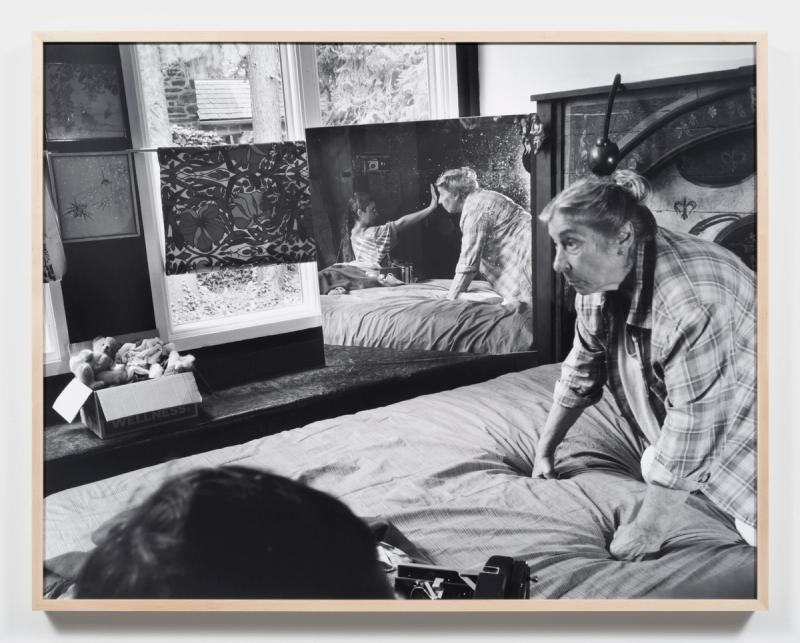
Dementia in 4x5 by Katherine Hubbard

"The American interdisciplinary artist Katherine Hubbard has spent the past five years documenting her relationship with her ageing mother, Antonette Berger, who in 2020 began exhibiting the first signs of memory loss. Her book The Great Room, set between the four walls of Berger's home in Philadelphia, is a culmination of grief and intimacy, as Hubbard steps into her role as caregiver. Using two large- format 4x5 cameras (which she is both behind and in front of) and drawing on her background n performance art, Hubbard transforms the once safe, domestic space into a psychological playground as the pair navigate their new reality. ...
In this portrait, Hubbard sits with her mother on her bed. Their bodies are reflected in a square nirror offset by a series of other square and rectangular objects (picture frames, windows, the headboard) which fragment the viewer's gaze. "This photograph was taken before she had a diagnosis,' Hubbard tells me. "It was a very confusing time, with a lot of uncertainty and frustration between us. ... 
"І am using the camera as а means of creating time with my mom apart from the brutal task of managing her," Hubbard writes. And to the woman who gave her life: "You might like to know that, when І think of you and see you, it's as a whole person."  
Inès Cross. FTMagazine. 

Individual
|
      INTERPERSONAL    :     SCIENCES               
HUMANISTIC  --------------------------------------  MECHANISTIC      
 SOCIOLOGY  :    POLITICAL 
|
Group
one fifty one (hand to face), 2021. Silver gelatin photograph

'The
Great
Room'


Collaboration

Care in the Community

Direction

Gaze


Book: 
h290 x w219 mm. 88 pages
Text by Katherine Hubbard. Hardback. £46.00

https://loosejoints.biz/collections/current-titles/products/the-great-room

Photograph: https://companygallery.us/ - https://companygallery.us/exhibitions/the-great-room

Book cover: Amazon
https://www.amazon.co.uk/Katherine-Hubbard-Great-Room/dp/191271969X


My source:
Inès Cross. Katherine Hubbard, FTMagazine. August 9th 2025, #1137. pp.10-11.
Ack. Antonette Berger (mother ...).

Wednesday, July 30, 2025

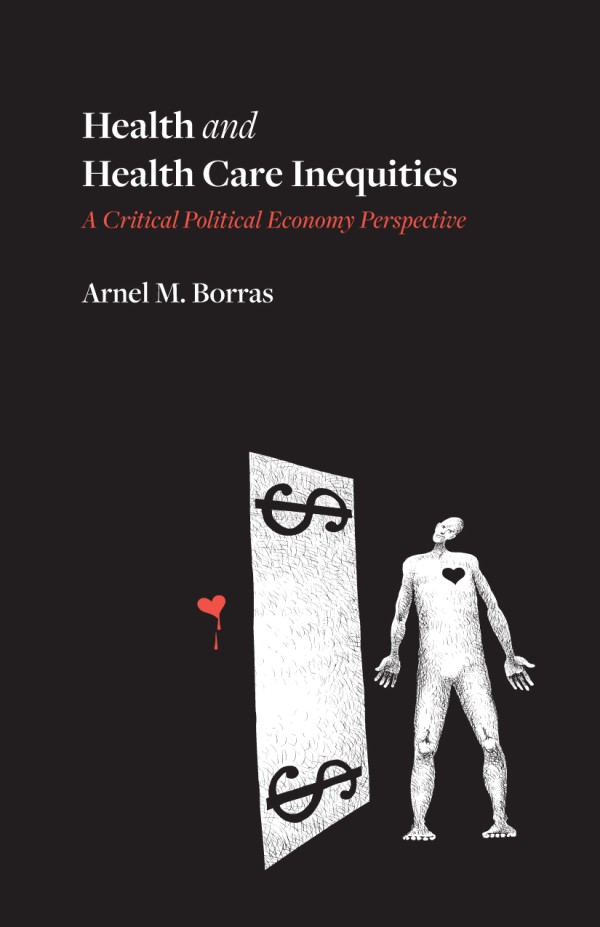
Book: 'Health and Health Care Inequities' iv

Fittingly, chapter 4 brings us to Political Power and Policy Advocacy. In Hodges' model you can both have your cake; and gratefully receive the cake you're given. This is the health in politics and the health in politics (as, for example, revealed in the health status of political leaders).


As a framework structure, the axes of Hodges' model initially give rise to four symmetric domains (spaces). There is an invitation to begin where you choose. Chapter four reveals some truths, as the 'nexus' - center of the model is mobile (unlike many citizens!) as the 2x2 rendition below suggests, if not illustrates. Borras takes us through health politics, political participation and representation, unequal power and politics, and policy change approaches with illustrative cases.

In an institution (like the NHS), bureaucracy, aka an organisation, the workforce are often acutely aware of policy and procedure. It is like the Force. It permeates everything - the meetings - and yet is remote. Borras seek to shed light on unequal resources and policy influence. Again Borras's literature informed discussion and argument, includes some historical gems, such as Lasswell (1958).

Individual
|
      INTERPERSONAL    :     SCIENCES               
HUMANISTIC  --------------------------------------  MECHANISTIC      
 SOCIOLOGY  :    POLITICAL 
|
Group


Political Power and
Policy Advocacy


In chapter 5 on evidence and ideas, discussion of Katherine Smith's 'under 'Six Travelling Ideas' is an excellent resource, with several references including:

Smith, Katherine E (2013) Institutional filters : the translation and re-circulation of ideas about health inequalities within policy. Policy and Politics, 41 (1). pp. 81-100. ISSN 0305-5736 (https://doi.org/10.1332/030557312X655413).

I love the image of ideas as and on a journey, some successful, others fractured, weak, re-contextualised, even non-journeys (falling - 'dead from the press'I suppose?). At least the journey of Hodges' model is ongoing. A baton for our times. As I wrote in post i, chapter 5 tackles 'evidence' (there's a post or two). It does so in relation to information, ideology, and interests:

If you've read many posts on W2tQ, you may see: I've a chip on my shoulder. Evidence for the safety, benefits, theoretical underpinning ... of Hodges' model is still to be realised. To the satisfaction, that is: of course to the powers that be. Speaking of which: the axial (for me) subtitles arise again in chapter 6; capitalism-imperialism-colonialism-racism nexus (p.87).

To demonstrate the utility of Hodges' model, this is significant.

Please feel free to search for these terms - capitalism-imperialism-colonialism-racism in the search bar above.

I've been interested in drama since playing the part of Francis Nurse in Miller's The Crucible. It took some 50 years to go from armchair to treading the boards again. I played Ken, supported by his wife, trying to run a post office, amid a chaotic and injurious IT system. An 8-9 minute sketch which was part of a Living Newspaper. Interested in writing - as previous posts may reveal, I also keep trying get to the theatre. With the themes of chapter 6, Liberation was thought provoking.

Mind-Body, Private-Public, Socialist-Conservative, Borras adds the global health North-South schism. A prompt for suggesting a brief glossary is expropriation and exploitation^ (p.88). Four stages of capitalism too. This chapter - A critical political economy approach is essential reading for me (and you!?) - a path to a critical care economy (self-care to planetary health).

^There is a note #3 about these on page 99.

See also: Post i : Post ii : Post iii : Post v (to follow)

Merelman, R. M. (1981). Harold D. Lasswell’s Political World: Weak Tea for Hard Times. British Journal of Political Science, 11(4), 471–497. http://www.jstor.org/stable/193766

Arnel M. Borras. (2025) Health and Health Care Inequities - A Critical Political Economy Perspective. Fernwood Publishing.

Liberation image: The Agency
https://theagency.co.uk/news/cast-announced-for-ntombizodwa-nyonis-liberation-at-royal-exchange/

Tuesday, July 29, 2025

Book: iii 'Health and Health Care Inequities'


This book, or similar should be read by 3rd year student nurses and other healthcare learners. I wondered if, for students, a brief glossary might be useful. But key terms are explained and clearly, with typologies numbered and expanded when needed. There seems an aversion in nursing academia to avoid the acutely 'political'. Even though of course in psychiatry, the need for considersation of human rights, consent, capacity, law, personal and public safety, risk is inevitable. Should we only learn of the politics of our role on a post-registration/license course of learning? As mentioned in post i, Borras duly notes the asymmetric impact COVID. The disproportinate deaths of frontline healthcare workers from ethnic minority groups (UK). A sign of the impact, is reflected in COVID recurring through the text.

The device of using axes, e.g. Class-Gender-Health (p.11) rightly draws in commentary on nutrition, pay gaps - heterosexual white men, terms of employment, and design and occupational health for woman. Gender politics is also reflected in the text. The relational dimensions of this discussion also stands out. The Class-Race-Health axis (had me return to the question of parity, but beyond the mental - physical divide. 

These axes employed by Borras seemingly traverse a path and are extensible (across pages). Briefly, in Hodges' model the domains and axes act as stepping stones: 

We can ‘walk’ the model:

Humanistic INTERPERSONAL Individual SCIENCES Mechanistic: adding - Humanistic SOCIOLOGY Group POLITICAL Mechanistic 

A global perspective is matained, even though the focus is Canadian health, government, policy and policy. The press have often highlighted the global nature of the housing crisis. Canada is not immune; as discussed in chapter 2. For what is in many nations a 'housing disaster', Borras covers the history too. Reflecting on: 
'Around the world, neoliberal programs have resulted in over a billion people living in slums (Davis 2017, 23). In wealthier countries, there was rampant privatization of social housing units.' p.25. 
- you feel like a nodding dog toy. Where is the leadership, the strategy and integrity to provide housing for all? Arnel also stresses the link between mental health status and housing. The SDGs place emphasis on security (yes, at the level of what is happening in Ukraine, Gaza, South Sudan...), then housing follows. And with climate refugees to follow ...! I have seen gentrification, and listened to an account in 2007 as Manchester started to experience high-rise growth. I used to try to walk to community visits with students when possible. Observational skills come in many forms, safety still depends upon them. With no place to call home, safety and security is a stark issue for people. A foundation for health, wellbeing and ironically productivity. The rise of foodbanks is also damning. 

Gambling is not indexed, but there appears a denial in the UK government, with other nations 'folding' to the influence of lobbying and corporate influence reducing or removing restrictions in gambling and crucially: advertising. What's the denial you say? Yes, well governments seem to be in denial that there are vulnerable groups in their respective populations. It is laudable that they bestow upon the citizenry the freedom of choice, but that can spell trouble.

If Canada - Ontario has its housing scandal:
'Housing insecurity and homelessness occur because the state and its goencies support real estate and banking corporations that continuously increase housing prices. This setup is a huge problem because these enti- ties focus on generating profit and capital accumulation. The Greenbelt Scandal in Ontario revealed how the government made decisions that served the interests of big companies instead of the public (McGrath 2023; Office of the Auditor General of Ontario 2023). This scandal is an example of neoliberalism and a corrupt style of governance (Moscrop 2023). We need to stop using neoliberal strategies and focus on socialized housing.' p.27.

So does the UK: Grenfell Tower Inquiry No doubt, other nations have their tragic examples. It seems 'international Standards', quality, integrity can never be taken for quality. They too are precarious, vulnerable. Borras's work in chapter 2 on housing security, and differenciation of core housing need is laudable, informative and welcome. Re-reading Arnel's point: 'There is no doubt that housing insecurity affects health'. p.28. His book as a whole makes the point that of course more evidence will always be needed. In healthcare for decades the basics of public health have been identified, studied, established, placed in models and frameworks. Yet we find we are found wanting (UK - Awaab's Law) dragged back to the first steps; and despite the urgent issues we now face.

"Universal health care" is not exactly new:

The Canadian Association of Social Workers. (1961). The Social Worker, Volume 29, Numbers 1 to 2. 29(1to2), 1to78. The Canadian Association of Social Workers. The Social Worker - Le travailleur social. Canadian Association of Social Workers. https://jstor.org/stable/community.39672572.

Borras is correct to write of 'The Continuing Private War against Universal Health Care' (p.36). Looking at NGRAM it appears the private sector has been winning in recent decades. Working previously as a community mental health nurse for older adults, chapter 3 explores Canada's health care systems. Table 3.1 compares the ownership of long-term care homes in figures. The discussion deals with the quality of care and variation. Policy intentions, plans, research and what follows in practice is also debated. Is there any comfort  in learning that Canada is not alone in being skilled at kicking-can-down-the-road. To be fair many developed nations face the same demographic cliff (whichever way you it!), just one of the urgent issues noted above. The contribution of informal carers is also highlighted.

Here in the UK the commissioner - provider split and models of care at the finance level are a maze: amazing in their bureaucracy. Borras does a marvellous job, in providing enough detail without weighing the narrative flow, and losing the reader. The close of chapter 3 offers hope that Hodges' model will continue to be found:
'Therefore, shifting away from neoliberalism toward a new societal system where health care is seen as a fundamental human need and a universal right, not a profit-driven commodity, is crucial. This alternative system requires a new societal framework built on solidarity, fairness, and humanity, prioritizing health over financial and personal gain.' p.50.
See also: Post i : Post ii : Post iv : Post v (to follow)

Arnel M. Borras. (2025) Health and Health Care Inequities - A Critical Political Economy Perspective. Fernwood Publishing.

In addition:

Messing, K., & de Grosbois, S. (2001). Women Workers Confront One-Eyed Science: Building Alliances to Improve Women’s Occupational Health. Women & Health, 33(1–2), 125–141. https://doi.org/10.1300/J013v33n01_08  (Borras - pp.11-12).

https://nhsrho.org/news/tender-maternal-and-neonatal-image-library/

Monday, June 30, 2025

Assisted Dying Bill - UK

Individual
|
      INTERPERSONAL    :     SCIENCES               
HUMANISTIC  --------------------------------------  MECHANISTIC      
 SOCIOLOGY  :    POLITICAL 
|
Group


Choice by dying person of how they die

Anticipation of role of AI

Where does mental illness 'lie'?

Decision needs approval by two doctors

Change in relationship between:
INDIVIDUAL -
Prognosis of < 6 months

Terminal diagnosis

Anticipation of role of AI

Seek assistance to end their life

Decision needs approval by two doctors

What of patients who are comatose?^
Profound Societal Change

Quality of Life

Quality of Death

Impact of 'poor' death on others - friends and family

Vulnerabiity of certain groups

Lest we forget what happened to the nursing and care home sector during COVID*

and the STATE

UK - House of Lords

Oversight Panel: 
Legal figure e.g., King's Counsel; and a Psychiatrist

Doctors and care workers not compelled to take part in assisted dying

What about the psycho-POLITICS of anorexia, severe depression?


^Brian M. Rosenthal. They woke as doctors prepared to remove their organs. The New York Times International Edition, 11 June 2025, p.6. 
https://www.nytimes.com/2025/06/06/us/kentucky-organ-donations.html

Sunday, June 22, 2025

In Theatre, Silence is a genre, and therapeutic ally

'As a playwright it may be your intention to build a vehicle to take us to the stars. But do make sure you have people aboard.' (p.9).^
Alan Ayckbourn in The Crafty Art of Playmaking.

Sound of silence in activism

Quite fitting in the two decades since publication, given the rise of AI and the impact upon the arts, specifically human imagination, creativity, and livelihoods. Meaning: silence as a tool for protest, and activism is also a genre and a can be a therapuetic ally. 

Going backwards - Sir Alan writes: 'Theatre for me has always been, in a way, a reflection of life writ somewhat smaller'. p.10.

While the point concerns the faith and trust placed in theatre directors by the company, there is an analogue in healthcare. The belief of the patient, in their doctor and the medical team. Or, at least the knowledge and skills they should, and appear to possess. For Ayckbourn '... the director looked as if he knew.' (p.10).

Obvious rule no. 4: 'Use the minimum number of characters that you need' (p.13).

What can I say? Society, has peeled back the patient - doctor (substitute health profession as needed) to the person whose monologue seeks confirmation of illness x,y, or z. Apparently here in the UK 1 in 4 adults have a mental health condition. The debate is ongoing as to what is going on. But the subject of Hodges' model as a possible crucible for a work of drama can certainly keep to character count down.

Not only that, but is this a book on counselling - interpersonal skills?

'An audience that doesn't care stops listening in the end. '. p.14. 

As part of -

'Obvious Rule no. 5: They need to care about your characters. (So you should too.)'

So, for both playwrights and carewrights, there is a duty of care (for all of course - despite the actions of so many governments).

In health the patient is the character study. There is, should be, must be - a plan of  care, a care plan. As a 'play', Hodges' model begins as a template of at least five acts [Spiritual (Four domains) ]. That is whether or not they are all 'written'. The attitude though should be unconditional positive regard.

There's no Waiting for Godot here, unless the character is social care?

Could it be that as organisational hierarchies have been flattened, the notion of character has been under siege? The onion that is our identity, personality, persona unpicked, skin-by-skin by social media, social change, and policy affecting education. Character building used to be a thing didn't it? No longer needed now is it?

Sir Alan, supports this hypothesis in his 'Obvious Rule No. 28:

People in general are reluctant to reveal themselves.' (p.65).

I still wonder about the potential of Hodges' model in secondary level education. More than ever, with all the talk about resilience, recovery, mental health issues, the rising UK welfare bill, may beg the question: What is character today? But, it is not defined by a stiff upper lip.

Not to sound 'ableist', but the 'crafty' in Ayckbourn's title, can be read in health terms; the disciplines drawing on science and the arts. Plus, they involve craft - use of the self, empathy and rapport. Not limited to, but in mental health care, it could be 'crafty' in the exercise of power, so frequently a theme central in drama and the human condition.

^A nice reminder too, of a Poul Anderson's SF classic Tau Zero (and a previous post).

The Crafty Art of Playmaking by Alan Ayckbourn. Faber, 2004, softcover, ISBN 0571215106.

https://www.concordtheatricals.co.uk/s/45898/the-crafty-art-of-playmaking

https://www.isthiswhatwewant.com/

Image: https://upload.wikimedia.org/wikipedia/commons/thumb/b/b0/Is_This_What_We_Want%3F.jpg/250px-Is_This_What_We_Want%3F.jpg

https://www.amazon.com/Zero-Coronet-Books-Poul-Anderson/dp/0340163364

Monday, March 31, 2025

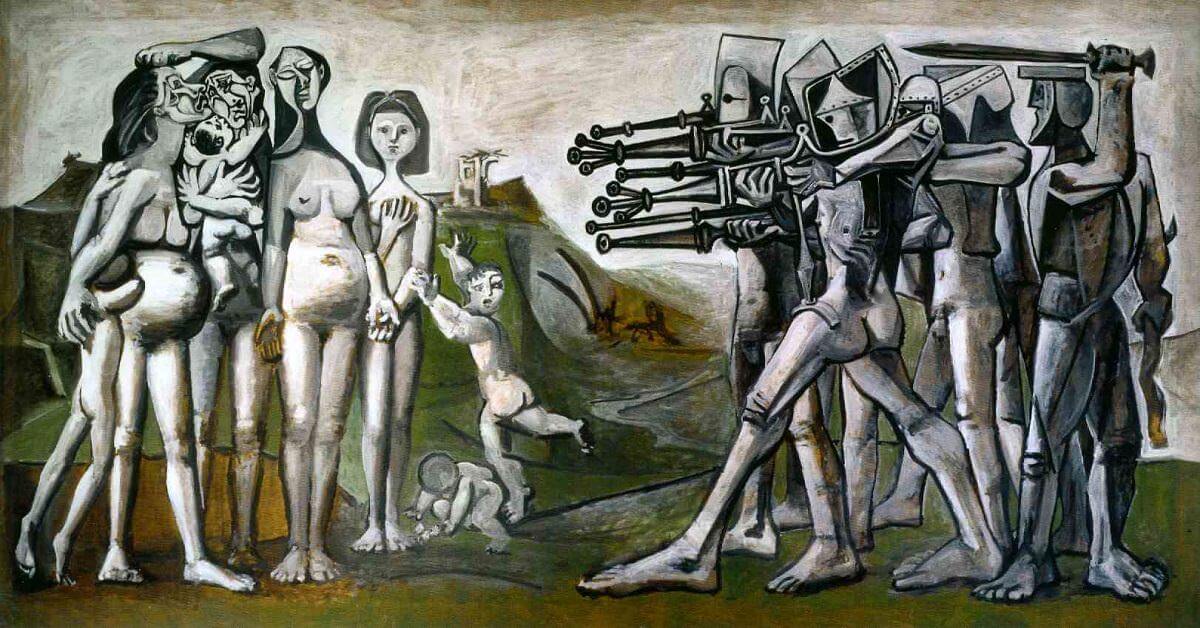
c/o Picasso - 'Massacre in Korea' (1951)

Art is a lie that makes us realize the truth.

                                 - Pablo Picasso

individual
|
INTERPERSONAL : SCIENCES
humanistic ------------------------------- mechanistic
SOCIOLOGY : POLITICAL
|
group


HUMANISTIC - mind


body - MECHANISTIC

"The 'beat' goes on"!?
'Massacre in Korea' (1951)

My source:
Vivienne Chow, How Picasso became a prize for Asia's new collectors, Collecting, FTWeekend. 22-23 March 2025, p.3.

See also: 
https://www.mplus.org.hk/en/exhibitions/ (15 March - 13 July 2025)

https://www.pablopicasso.org/massacre-in-korea.jsp

Wednesday, December 25, 2024

Praying ... for PEACE

INDIVIDUAL
|
INTERPERSONAL : SCIENCES              
humanistic ------------------------------- mechanistic
SOCIOLOGY : POLITICAL   
|
GROUP

PRAY


PREY

PRAY

PREY


Saturday, November 23, 2024

'Little Shrew' (Snowflake)

INDIVIDUAL
|
INTERPERSONAL : SCIENCES              
humanistic ------------------------------- mechanistic
SOCIOLOGY : POLITICAL   
|
GROUP


Chappell, P. Heathcliff, it's me again: more new music from Kate Bush on the horizon, The Times, October 26th 2024, pp.18-19.

Friday, November 01, 2024

ERCIM News No. 139 Special Theme: "Software Security"

Dear ERCIM News reader,

A new ERCIM News issue (Number 139) is online with a special theme on Software Security. The articles in this special theme offer a comprehensive panorama of the current European research activities in software security and protection. They showcase a diverse range of research projects, highlighting the ongoing advancements and key developments of the field..

You can access the issue at https://ercim-news.ercim.eu/

This special theme was coordinated by our guest editors Sebastian Schrittwieser (University of Vienna) and Michele Ianni (University of Calabria).

Thank you for reading ERCIM News!

Please share this issue with anyone who might find it interesting. You can also support us on X (https://x.com/ercim_news) and LinkedIn. Let's keep the conversation going and share the latest updates together!

Next issue:

No. 140, January 2025
Special Theme: " Large-Scale Scientific Computing". Submissions are welcome! See call for contributions.

Announcements in this issue: Call for Proposals: Dagstuhl Seminars and Perspectives Workshops - Schloss Dagstuhl – Leibniz-Zentrum für Informatik is accepting proposals for scientific seminars/workshops in all areas of computer science.

Call for Papers: ACM Digital Threats: Research and Practice

ERCIM News is published quarterly by ERCIM, the European Research Consortium for Informatics and Mathematics. With the printed and online edition, ERCIM News reaches more than 10000 readers.
All issues published to date are available online.

About ERCIM

ERCIM - the European Research Consortium for Informatics and Mathematics - aims to foster collaborative work within the European research community and to increase cooperation with European industry. Leading European research institutes are members of ERCIM. ERCIM is the European host of W3C.

Peter Kunz                      	
ERCIM Office
+33 (0)7 68 16 50 47

2004, Route des Lucioles
BP93
F-06902 Sophia Antipolis Cedex

@ercim_news 

Saturday, October 26, 2024

NOT 'Nanny State': Protection & assurance of the quality of nutrition

The Government needs a plan to fix our broken food system and turn the tide on the public health emergency

24 October 2024

The House of Lords Food, Diet and Obesity Committee demands that the Government should develop a comprehensive, integrated long-term new strategy to fix our food system, underpinned by a new legislative framework. This is the key conclusion of the Committee’s report, ‘Recipe for health: a plan to fix our broken food system’.

Chair's comments

Baroness Walmsley, Chair of the Food, Diet and Obesity Committee, said:

“Food should be a pleasure and contribute to our health and wellbeing, but it is making too many people ill. Something must be going wrong if almost two in five children are leaving primary school with overweight or obesity and so many people are finding it hard to feed healthy food to their families. That is why we took a root and branch look at the food system and analysed what had gone wrong over the past few decades.

“Over the last 30 years successive governments have failed to reduce obesity rates, despite hundreds of policy initiatives. This failure is largely due to policies that focused on personal choice and responsibility out of misguided fears of the ‘nanny state’. Both the Government and the food industry must take responsibility for what has gone wrong and take urgent steps to put it right.

“We hope, given the recent comments from the Prime Minister, Lord Darzi and the Secretary of State for Health, that there is now an appetite to shift towards prevention of ill health. We urge the Government to look favourably on our plan to fix our broken food system and accept that not only is it cost-effective, but that it would lead to a lot less human misery.”

[My emphasis] 

About time! Real action please.

DO NOT DILUTE TO TASTE!

individual
|
INTERPERSONAL : SCIENCES
humanistic ------------------------------- mechanistic
SOCIOLOGY : POLITICAL
|
group
Personal responsibility
Educational determinants
Health literacy
My choices
Role model
Internal - Extrinsic motivation
The life chances I am afforded
impact my 'health career'.

Environmental/Physical determinants 
Ultra Processed Foods
Smoking
Food & Nutrition
Impacts of Obesity
Child development
Nutritional value of foods


Social determinants
public (mental) health
information
Family economics
Social values
Sustainable Living

Political determinants
'Nanny State' (political rhetoric)
Lobbying - (Food) Industry
Business ethics
Food poverty
Advertising regulation
Cost to Government, NHS, Society
Security

Spiritual determinants: Values of society, governments, citizens, business . . .

Previously:

Jones P, Wirnitzer K. Hodges’ model: the Sustainable Development Goals and public health – universal health coverage demands a universal framework. BMJ Nutrition, Prevention & Health 2022;5: https://nutrition.bmj.com/content/5/2/358

'nutrition' on W2tQ

https://x.com/search?q=%40h2cm%20%27nanny%20state%27&src=typed_query&f=live

Gambling?

Sunday, July 07, 2024

Book for review: v "Philosophy of Care - New Approaches to Vulnerability, Otherness and Therapy"

I think this is the final post for Philosophy of Care (think! There is so much more ...). There are other chapters more salient to me personally, but for Hodges' model and the collective human enterprise, I think chapter 5 by Virginia Held is the most important. There's not just a chapter, but three in Part II 'Care and Economy'. I appreciate the reminder of Kate Raworth's Doughnut Economics which challenges;"the dominant assumption of the economy as a machine". I notice on Twi/X Kate Rowarth reflects on the UK's election:
The book 'Doughnut Economics' opens with the story of Yuan Yang who, as a young economics student back in 2008, was challenging the outdated theory she was being taught. Last night she was elected as the first-ever MP for Earley & Woodley. Huge congratulations @YuanfenYang!
    https://x.com/KateRaworth/status/1809216007518507248
I gave Keir Starmer a copy of Doughnut Economics just 10 days before he became Labour Party Leader. So will the book make it onto his bookshelves in Number 10? More importantly: will policies for a regenerative & distributive UK become real under this government?...

     https://x.com/KateRaworth/status/1809235013403136029

While in Philosophy of Care, another three words stood out:
"'Big-picture thinkers'^, Raworth notes, have offered alternative visions, but they have been dismissed by the field of economics." p.102.

continued ... 

Tuesday, June 25, 2024

Book for review: iii "Philosophy of Care - New Approaches to Vulnerability, Otherness and Therapy"


Before moving beyond Pierron's 1st chapter (the whole book is very worth reading), there is much that reminds me of institutional care:

https://winwickremembered.org.uk/

Recognition of the sub-standard cockroach 'co-habiting' environment away from the entrance corridor, quality of life, task oriented, de-personalising, stagnant, passive, pervasive sense of hopelessness and helplessness. There was a chink of light. 

As registered mental health student's we were on a crusade. Carrying a torch, lit outside in the community to help open the doors to community care.

 On trips outside, gradually the institutional skin sloughed off, to reveal the person - the individual came alive (even through medication). 

'Bill' had a sense of humour, a lovely smile. He'd had the prospect of another life. So many people there for so long: too long. Potential unrealised?

"To be in contact with the other in care is not to exercise a hold over them." p.16. 

The problem is - within institutions this can be forgotten and lost:
"To suspect a substituting mode of solicitude (cf. Heidegger) of being a highhanded charitable hold over someone invites one to consider the ethical and political fecundity of a solicitude which looks ahead. To think through this alternative would amount to unmasking the mechanisms of domination, whether voluntary and involuntary - naturalisation of roles, masculine domination, organisational violence, etc, - at work in care. Doing so politicizes care, enabling it to overcome that democratic optimism which doesn't want to recognize that violence is part of human history (Merleau-Ponty 1996: 124-125), that violence insinuates^ itself into care relations, and, as such, comes under the sway of what Merleau-Ponty called the 'maleficence of living among many' (maléfice de la vie à plusieurs)." p.16. 

^The need to be aware of subtle abuse

My notes for chapter 2 'From an Anthropology of Vulnerability to the Ethics of Care' by João Maria André, reflects a lot on relationality, and maps which I've drawn: "(identity is always dialogical identity)" and "how we map ourselves". Again this helps my (other) current reading and draft work. There's time here, plus "there is no such thing as abstract vulnerability - vulnerability is necessarily concrete". p.25. I don't think André mentions future generations but I've added a note; 'I-we' too. There's a triple axis, and more encouragement as Tronto and Gilligan feature. Heidegger's reference to Hyginus' Fable 220 (in which Care moulds man out of clay, Jove grants it spirit, and Earth gives him body, with Care being assigned the task of keeping him alive." (Gaia?) p.26.

As in chapter 1, and previously reviewed text 'General Psychotherapy', the term 'constellation' appears. In chapter 2 it is expanded (with reference to Corine Pelluchon); leading us to "appreciation of the world, and self-care as care for the world" p.29. So, planetary health too. With Hodges' model purposed (1/4) to help bridge the theory - practice gap; this perennial problem exhibits existential relevance here (p.27). We by-passed biopolitics on page 17, but  the interrelation of psychosocial and other examples informs the text (philosophy). As I scribbled, Hodges' model is simultaneously a space for resonance and unconditional positive regard (pp.30-31). Authors inevitably find themselves deliberating upon dualisms, Descartes of course, plus Spinoza and others. Entralgo is nails the duality: "the aim of caring is to lead the I from being 'a body that says I' to a learning how to progressively become, and define itself as, 'a body that says we'". p.35.

Braga, J. & Santiago de Carvalho, M. (Eds.), Philosophy of care: New approaches to vulnerability, otherness therapy. Springer. 

Many thanks again to Springer for my copy.

Individual
|
      INTERPERSONAL    :     SCIENCES                   
HUMANISTIC  --------------------------------------  MECHANISTIC      
 SOCIOLOGY  :    POLITICAL 
|
Group

relational

'I' - mind 

individual vulnerability

intention

affection - as movement


climate change

'I' - body

maps - cartography

Planetary Health

action - movement


We

context

equity - equality

social vulnerability


We

policy

bio-POLITICS

accountability of government(s)


See also:
body & soul - Book: Philosophy of care: New approaches to vulnerability, otherness therapy

Sunday, June 23, 2024

Book for review: ii "Philosophy of Care - New Approaches to Vulnerability, Otherness and Therapy"

What I like here is being drawn (rescued then!) from the torrent that is the near reaches of the 

    bit, byte ... data, information, knowledge, wisdom

continuum, to its latter realm. The forever incomplete project of wisdom in 'care':
"Care, which is prior to all curing, identifies a fundamental availableness that has not yet been appropriated in the expert and technical discourses of care specialists." p.9.
This goes back to Pierron's 1st chapter focus upon 'Care: A New Arrival in the History of Philosophy'?

J. Braga & M. Santiago de Carvalho (Eds.), Philosophy of care: New approaches to vulnerability, otherness therapy. Springer.

A real gift for me (Hodges' model) is:
"Narration .. In opposition to the mathematization of the world, which reduces human problems to theoretical questions and to a universalized and rational formulation of moral dilemmas, the philosophies of care present a conflict of interpretations which deconstructs official and stereotyped narratives. Amy (or the voice of care) does not conceive a dilemma as a mathematical problem but rather as a narration of human relations, whose effects extends over time. (Gilligan 2008: 53)." p.13.
In addition to Tronto "Care is <<a species of activity that includes everything we do to maintain, contain, and repair our 'world' so that we can live in it as well as possible. That world includes our bodies, ourselves, and our environment>> (Tronto 2009: 143)." p.15. (see i) - I must add Gilligan to the list. 

In this weekend's FT, there's an item about the sorry state of the UK's statistical infrastructure (a post will follow, and mention of another book). I remember* Derek Hoy (RIP) doing a presentation about using data, and nursing informatics to make nursing visible. I wonder how he would make sense of the contrast between nursing whilst in COVID and post?
"Gilligan puts forward a distinction between a feminine ethics of care, which makes use of the idea of the natural solicitude of women by associating self-sacrifice and concern for others, and a feminist ethic of care, thought of as a critical approach that brings to light the mechanisms which favour the "invisibilisation" of care. The latter makes it possible to analyse the ways in which we lose the capacity to care for the other when relations of mutual caring are damaged." p.14. 

As usual below I've mapped some concepts to the domains of Hodges' model. 
Many thanks again to Springer for my copy.

Please note, also - as usual I am trapped in chapter 1! :-)

Individual
|
      INTERPERSONAL    :     SCIENCES                   
HUMANISTIC  --------------------------------------  MECHANISTIC      
 SOCIOLOGY  :    POLITICAL 
|
Group

"Amy - voice of care"

relational

situated


data, information, informatics

visibility

statistical infrastructure


context

equity - equality

social justice

context

feminism

data - reporting

accountability of government(s)


See also:
body & soul - Book: Philosophy of care: New approaches to vulnerability, otherness therapy

*https://hodges-model.blogspot.com/2010/08/drupal-musings-12-semantic-web-icnp.html

Friday, June 14, 2024

Book for review: i "Philosophy of Care - New Approaches to Vulnerability, Otherness and Therapy"


Among the questions that research might answer regards Hodges' model I have in mind:
  • At what age can Hodges' model be introduced in the general curriculum?
  • Is there consistency in how people view/interpret and apply Hodges' model?
  • How simple is it (or complex)?
  • Is it a meta-model?
  • How can Hodges' model relate to the spiritual?
My B.A.(Joint Hons) is in Philosophy and Computer Science, so the 'Philosophy of Nursing' is a preoccupation. In January 2022 I discovered:

J. Braga & M. Santiago de Carvalho (Eds.), Philosophy of care: New approaches to vulnerability, otherness therapy. Springer.

I requested a copy but ever distracted did not register any further action beyond acknowledgement and being forwarded. Discovering I'd missed this, I picked it up again. I must admit two years ago I was expecting a book with 'care' in the nursing, medicine, health context. Revisiting the 'blurb' I saw that this is not the full picture. Last year and this however drawn to conferences that combine the environment and religion this book really did fit the bill. Requesting a 'review copy' so late in the publishing cycle presents a challenge. 

Hodges' model provides a long-tail, surely a defining property of a lifelong learning resource? This plus a history of cataract surgery brought a print copy and many thanks to Daniela Rohrmann and team. I've now reached Part V, chapter 19 and 'medical care'.

The book's physical quality (printed hardcopy) is up to Springer's usual high quality standard. The fact that much of the contents have, I believe, been translated appears to show at times, in one chapter especially, with missing, or additional words. Perhaps this also reflects proof reading, an important part of production I would have thought (and still best not left to AI)? The font and print size is very readable and the format and design - architecture - of headings and layout are inviting and engage the reader. There are Any problems with grammar, flow were readily overcome. 

In meeting this text I oscillated in expectation - philosopher of care, as in the clinical context; and then the spiritual, pastoral. Which is it? The emphasis is on the latter with the final part focussed more on medicine. The book has extended my appreciation of 'care' in the wider sense, it is rewarding and well-worth reading.
"Finally, the fifth part – Care and Therapy – examines issues relevant to medical
care. This volume would be remiss if it did not take therapeutic care into account.
Practical and theoretical knowledge mutually influence each other. This highly specialized
domain imparts a significant amount of the status that care is given in our
daily lives. Thus, in this last part, the previous themes of otherness and ipseity converge
systematically. Through the theoretical emphasis that is placed on the issue of
suffering – whether it concerns physical illnesses or those of the psychological and
psychiatric realm – the authors of these chapters show us the urgency of thinking
about therapeutic care practices in the light of a theory of intersubjectivity, where
the disease itself and its cure are understood within the communication processes
and not only as exclusively technical-scientific processes." p.vii. (Introduction).
Don't worry I'm not going through each chapter, but Chapter 1 is a fascinating read, the title 'Care: A New Arrival in the History of Philosophy?https://link.springer.com/chapter/10.1007/978-3-030-75478-5_1 presented an immediate challenge. For me, love, compassion, philosophy - as the love of wisdom, knowledge, what it is be, think, exist, the human condition and more all imply 'care' including care of thought and argument. I'm probably begging the question and I realise the Peirron's purpose is more specific, nuanced. I'm reassured though as care is defined by three criteria:
"(a) care is contextual and anti-essentialist... The characterization of care requires a great deal of attention to the precise details of each situation (Tronto, 2012: 35)."

"(b) care is relational and accepts that human beings , other beings, and the environment are interdependent  (Tronto, 2012: 32)."

"(c) In human societies which would like to assume the equal value of all human life, care needs to be democratic and inclusive  (Tronto, 2012: 36)." p.6.
I must read Tronto - who work has elevated vulnerability as flagship concept of her politics of care (Tronto, 2009) (p.8); 'dialectical' too (p.10). The book is full of many leads, the writing scholarly and authoritative.

With some studies in education and philosophy the pragmatic school of thought quickly surfaces. I see Hodges' model as a pragmatic solution. In addition to the 'pragmatics of care', Peirron opens the door even further in respect of 'care':
"Giving through care involves much more than what is described in the interactional framework of exchanges characteristic of homo economicus (economical animal) paradigm. Giving is not exchanging because care involves so much more than just the provision of a service. Care, as understood as a politically relevant anthropological position, is thus very different from a Hobbes-inspired anthropology which supposes a social epistemology based on a an atomistic approach to individuals. It provides a fundamental interpretation of our social intelligence by thinking it, starting from a relational anthropology within which the concept of vulnerability plays, as we will see, a strategic role. A pathetics of care rethinks the balance between reason and feeling, argument and emotion in the spirit of the tradition of Scottish philosophy, in order to allow a "different voice" to be heard in the analysis, the description, and the support of the human world." p.7. 
The pathetic view of care requires a language, methods, aesthetics that can manage 'the singularity of an enduring life history' (p.10). This equates for me with the health career in Hodges' model.

As usual below I've mapped some concepts to the domains of Hodges' model. I will add to this post too.

Individual
|
      INTERPERSONAL    :     SCIENCES                   
HUMANISTIC  --------------------------------------  MECHANISTIC      
 SOCIOLOGY  :    POLITICAL 
|
Group

contextual

anti-essentialist

relational

situated


context

human being, other being 

and environment -

interdependent


context

interdependence

care in human societies 

equality within human societies

context

situated

human societies are democratic

and inclusive


See also:
body & soul - Book: Philosophy of care: New approaches to vulnerability, otherness therapy

Monday, June 10, 2024

body & soul - Book: Philosophy of care: New approaches to vulnerability, otherness therapy

Near the end now of Braga & Carvalho's (2021) Philosophy of care on page 318 I came across:
"When we come up against the demon of acedia, then with tears let us divide the soul and have one part offer consolation and other receive consolation. (Pr. 27)."

Individual
|
      INTERPERSONAL    :     SCIENCES               
HUMANISTIC  --------------------------------------  MECHANISTIC      
 SOCIOLOGY  :    POLITICAL 
|
Group

soul

body


- and a footnote (42):

"The generally accepted treatment for depression, with or without pharmaceutical intervention, is gentleness. Eat well, avoid stress, do not feel guilty; be kind to yourself, seek quiet but real amusement, rest a lot. But such a regime would find little sympathy with the spiritual directors of those afflicted with accidie. The classic cure for accidie is penance, a strict 'rule' of life, self-discipline and hard work" (Maitland, 2008: 113).

Maitland, Sara. 2008. A Book of Silence. London: Granta.

Interesting, the similarity between afflicted and affected?

A lot more to follow ...

Carvalho, C.A.S. Acedia and Its Care. In J. Braga & M. Santiago de Carvalho (Eds.), Philosophy of care: New approaches to vulnerability, otherness therapy. Springer. pp.297-323.

Abbrev. (Pr. 27) Evagrius of Pontus. 1971. Praktikos. ...

With thanks to Springer for hard copy - helps greatly. 👀