Twitter on hold: Blog a trickle ...
Deal!
— Dries Buytaert (@Dries) August 25, 2021
Feels good already ...
Thanks for following and visiting ...
Still available at h2cmng AT yahoo.co.uk
Take care
Peter J.
Deal!
— Dries Buytaert (@Dries) August 25, 2021
Feels good already ...
Thanks for following and visiting ...
Still available at h2cmng AT yahoo.co.uk
Take care
Peter J.
... if you get your blogging mojo back I will pick up Drupal and put this blog (and twitter) in much more than semi-stasis.
Clearly, my Drupal use may not be as profound, but after a decade I have quite a requirement (some might describe it as 'stonking'), but this merely demonstrates the seductive nature of 'ideas'. How easy it is to appear clever, to have thoughts - compared to action.
As I've been told and blogged before: I need to do something instead of blogging and twitter.
So yes, there's an irony here for me, but good luck and thanks for the (much-needed) prompt!
c/o Dries Buytaert:
 |
| DrupalCon Attendee |
Using Drupal at a college or university? Attend this summit to connect with other Higher Education Drupal users, typically web developers, managers, communicators, graphic designers, editors and the like.
Learn from peer Drupal users and experts, working in a variety of contexts in the higher education sector, about the ever-changing Drupal and web landscape, including new trends and current best practices.
Expect small group discussions, lightning talks, a keynote, and other formats allowing you to engage with your peers.
The DrupalCon Higher Education Summit is informal, and focuses on
best practices, case studies, and discussing solutions to the unique
situations inherent to higher education.
The DrupalCon Higher Education Summit is open to all higher education staff, volunteers, and service providers who are using, or considering using, Drupal as part of their technology stack. This summit is not intended for vendors to pitch new business.
https://events.drupal.org/drupalcon2021/summit/higher-ed
Plus:
The healthcare space is now, more than ever, a critical area for all development communities. Digital communication and technologies offer the promise of improved access for patients, but building good solutions requires a solid foundation in accessibility, security and compliance.
Whether you are at a pharma working towards the next vaccine or therapy, a hospital network treating patients with AND without COVID, an insurance company making sure all patients have access to critical healthcare during this tough time, there is much for you to gain from this summit.
Join us for a day of facilitated peer-to-peer problem solving combined with industry leaders sharing their experience solving common challenges like building a digital roadmap for a healthcare system, vaccine distribution platforms, and building user-centered patient experiences.
Anyone interested in hearing how companies and the community are creating rich Digital Experiences in the Healthcare space and all levels of colleagues in the Pharma, Medical, Clinical, Hospital, Payers, Caregivers and Healthcare Professional space.
https://events.drupal.org/northamerica2021/summit/healthcare
It is over a year - October 2019 - since I updated on the above.
First, let's get the elephant sorted. The elephant is the 'new website'. A non-trivial task in so many ways, not just physically, but psychologically, giving rise to frustration, embarrassment but still an exciting and promising 'project'.
The IT literacy I do possess allied with conference and media engagement suggests I should give up trying to build this myself and pass the 'requirement' and 'specification' to real software developers - and stop acting the goat (is that elephant smiling?).
Lockdown has been a great opportunity to crack-on with the website, so no excuses. Hopefully the posts over the past year can still represent learning, growth and progress.
At the start of 2020 I was hoping to do some p/t tutoring. COVID-19 upset that plan and with it planning for a pilot study and engaging with prospective partners. I am ready to pick this up, but in terms of Drupal I have to refer back to 2019...
 |
| Learning Drupal 8 |
I attended this year 13-15 March, pre-lockdown (obviously) and the tone was somewhat muted. Many people were unable/unwilling to travel. I felt ridiculous myself being in London (in February too) and a nurse. That feeling was magnified when pre-booked I found myself in the basement again for jazz. Like everyone at present, I miss London and so many other places. Human nature being what it is, during lockdown 1 & 2 on reflection there was a sense of relief in having run the gauntlet in February and early March.
Next year, DrupalCamp London will be online.
Last week and last minute, I signed up for DrupalCon Europe, not in Barcelona but online. Still sorting (reducing) papers, I can see how through Drupal versions 7 to 8, the platform is focused upon 'enterprise solutions'. While I'm not an Enterprise (but would love to be a crew member), the project that is Hodges' model warrants the potential to scale.
DrupalCon Europe was a confusing experience - in a positive sense. I missed the journey, the Basilica Santa Maria del Pi, the Guitar concerts and much more. As many of us have discovered, I was pleased to avoid the additional costs of travel and accommodation. Given this, my saying that the 250 Euros was worth it, has a less hollow ring. I missed even more the buzz of the community, which was still very much evident online. I'm looking forward to the NWDUG online meeting on the 22nd.
I know (!!) I've said this before: but I really, really need to stop blogging, tweeting and exercise this itch to the exhaustion of possibility. I've a co-authored draft to complete for submission and (two) books to read for review. So that will be an ongoing thread. Finally I will also make use of the text above.
With each abandoned (messed-up) Drupal 'dev' site, I've carried forward the legacy HTML pages that are Brian Hodges' original lecture notes. Following DrupalCon it would be progress to have more tangible outputs to carry forward, apart from being able to get to were I was much quicker. Having a content strategy is one take-away c/o the sessions that I plan to secure.
Noting the two most recent additions to the bibliography, if I can help you use Hodges' model, please let me know (I may need the distraction).
Wherever you are - take care; and for me if this is the journey - that's great too. I'd like to think there is some learning to be had here - even if not in the form of a reflective workbench.
Here is an update on writing projects ...
WEBSITE - DRUPAL:
A few months ago I decided to cancel the web hosting. The same provider and for the second time. Lack of progress is nothing to do with them. Despite best intentions, the account was essentially redundant, apart from one occasion when I was ready to start transfer of a site including Brian Hodges' lecture notes, as part of what would be an archive. I still have the pages - HTML all ready to 'go' - somewhere... The host company were very good, offering to take me through the process. I will git back on the horse. The journey is still very enjoyable, even if frustrating.
Last weekend at the Northwest (England) Drupal User Group - NWDUG Unconference in Manchester, I gave an eleven slide presentation on the ultimate in vapour ware. Even with no site the day was very useful, the community great. At month end I will be following online DrupalCon Amsterdam. Really disappointed not to be there, but the currency situation nails it, on top of my not having earned the trip.
As posted last Tuesday -
I choose ... [still] to try . 4.6 . . . 8.7.5 and c o u n t i n g . WAMP Windows Apache MySQL PHP Command Line Interface [VirtualBox, Vagrant ...] PHPMyAdmin JQuery git HTML5 CSS Drupal APIs Themes & Modules*^ Create Custom T&Ms #? . to journey ... to explore ... to learn ... |
| ||
The Drupal slogan is: "Come for the software, stay for the community." | The Stack |
I scratched (blew up) the draft Drupal site - for the umpteenth time - some five-six weeks ago. It did not take long to be back up and 'core' refreshed. As I build the content I keep saving them. It's just the the three archive pages. I've not resurrected the timeline, but get the gist now. The spreadsheet with the content is there when / if needed. The conclusion of this is that well into our summer and yes, the focus drifted again.
 |
| Off the Gosport ferry 1977... 2018 |
I just thought I'd provide an update on the new site.
There's still nothing new on the hosting account. I managed to update on localhost from 8.5.0 to 8.5.3. As I went to the Manchester Drupal Sprint two weekends ago I had a couple of errors. Webform was proving awkward but that was probably me the way I tried to remove it in order to update. It appears there have been some problems, but switching on "Logging and errors" I had more errors that weekend and working through with advice and support at the Sprint things resolved!
Poking around has been really useful and thus far I've not had to start from scratch. Webform is updated but I realised previously I have only scratched the module's surface. Then there is Paragraphs! This is the challenge with Drupal and the range of modules available as explained at DrupalCon Nashville. I know, I know, I've picked up pen and paper and am fleshing out users, roles, content and permissions. This is a distraction. There has always been help available - that's the Drupal community. I've someone to chat with now and looking forward to updating Richard and help to get the new site live. Richard was at Szeged my first Drupalcon in 2008. I remember the advice of Chris, Dan and James back then and Phil, Nathan and others since: Just do it!
So I can't keep scribbling on paper - or here...
While I have not had the practical reason to apply it (to my shame) I have known of 'maintenance mode' for donkey's y-ears. I have been listening. As tweeted earlier this week, I've been trying to remove Webform so I can update / replace it. I'm avoiding core 'experimental' modules in an attempt to avoid future problems. I'd managed to remove webform bootstrap, but trying to delete from the usual Drupal interface did not work. I checked the tables and those for webform were empty. Impatience set-in and I removed the folder within modules. That was the big mistake. For a time there, I could not access the localhost site on my laptop. I thought it had gone...
I had a MySQL backup and imported this while a CTRL 'Z' restored the folder. This did the trick. I have the HTML source for the archive pages as files too.
At several Drupal events Paragraphs has been presented as very useful site building module. With four 'basic pages' whatever follows will benefit from and no-doubt demand more thought about content types. Checking out some videos Paragraphs really does seem to fit the bill when allied with field group.
I'm looking forward to the local Drupal meetup in Manchester this Tuesday.
Drupalcamp London was a bootcamp literally in light of the weather. This affected the schedule a bit but it was well worth attending.
The first session on my list was not the intended module development but:
Flexible content editing with paragraphs and Drupal 8 - with Baddý Sonja Breidert who stepped in at short notice. We were encouraged to look at Open Doors as an example of Paragraphs being deployed. The fact that there were 25 types of paragraphs prompts the thought - not so much how many would I would need but the users? Apparently, paragraphs are not that user friendly to edit. Navigation was indicated 'Manage Display' - 'Preview' - 'Paragraph'. The 'environment indicator' flagged whether the site in use was live or dev: a reminder. A future tip included not using entities, but media for anything reusable. Reusable paragraphs were applied to banner and images, using simple entities. There were some special functions (and specific modules) in the table of contents, entity embed, entity browser, insert view and add map.
In considering when to use paragraphs this connects with choosing content types - another key question for me. There was a lot more in what was a 'changed session'. I'll check the slides / videos were available and for those below. The three keynotes were excellent too:
Let’s take the best route - Exploring Drupal 8 Routing System
Drupal in the era of microservices
"Hi user, I am Drupal. How can I help you?"
Accelerating Drupal projects with Thunder: a case study
In 'Make your site findable' dutchyoda Dick Rensema pulled me up short. So, I will check out the metatags module and use this from the outset. As for being findable - it's also best to have separate text and images not have both within a WYSIWYG editor. Another point is to 'make it long'. That sits well for the archive pages for Hodges' model.
Lunchtime on Sunday was preceded with gambry on Plugin API, a key idea being:
ENTITY - Same model different data
PLUGIN - Same "thing" type different ways
This was a captivating, dense, rich session and one to revisit.
Finally, the 0930 start in London helped as I'd been up late. Ronnie Scott's is an amazing experience, the second house from 1030 doors open through to 0300: I left at 3 thanks also to Resolution 88.
The Institute for Digital Humanities, Media and Culture (IDHMC) at Texas A&M University (http://idhmc.tamu.edu) is pleased to announce “Coding for Humanists,” a new book series from Texas A&M Press that addresses the practical skill-development needs of scholars in the humanities. The series is edited by Quinn Drombrowski and Laura Mandell.
The hands-on training offered at an institute or workshop such as DHSI, DHOxSS, and HILT equips scholars to pursue new directions in their research and/or pedagogy. These workshops stand apart from generic technical training sessions through their focus on the specific needs, interests and goals of humanists. The pedagogical approach respects students’ intelligence and expertise without assuming a pre-existing knowledge of other programming languages or technologies.
The “Coding for Humanists” book series follows in the spirit of these workshops (http://coding.forhumanists.org). Each volume focuses on a particular tool, technology, methodology, or programming language, using humanities examples. Without assuming any prerequisite technical knowledge, “Coding for Humanists” books guide scholars through the jargon, concepts, and processes fundamental to the technology under consideration, leaving them ready to use the technology independently, or deepen their knowledge through resources written for a general audience. For scholars who are unable to attend an in-person workshop, or who wish to develop new technical skills as time permits, the “Coding for Humanists” series fills an unmet need for clearly-written, accessible training materials developed specifically for a humanistic audience.
The first volume, Drupal for Humanists by Quinn Dombrowski (http://drupal.forhumanists.org/), will be published this fall. Co-editor of the series, Quinn Dombrowski is the Digital Humanities Coordinator in Research IT at UC Berkeley, and has developed numerous digital humanities sites using Drupal, including the DiRT Directory and DHCommons. She has taught “Drupal for Digital Humanities Projects” at DHSI since 2014, and Drupal for Humanists expands upon the materials that have been used successfully in that course.
This book is a significant expansion of, and improvement on, the open access early drafts that have been posted on this site since 2013, and are still available through the Wayback Machine. Over the next year, excerpts from the book will be posted to the site. In addition, there is a great deal of further information about Drupal modules, configuration, and tips and tricks for building Drupal sites that extends beyond the maximum feasible word count for the book. This information, too, will be posted on an ongoing basis, and contributions will be solicited from the community of humanities Drupal users and developers. (From: http://drupal.forhumanists.org/ )
After the ICIC 2016 in Barcelona this past week I'm still reflecting on Lancaster and the Network Learning Conference. It has been a busy month. I'll write about Barcelona (again) soon, but with the ICIC presentation done (thanks to all 30+ who attended the session and engaged afterwards) I can catch up a little. Despite the stress this implies this is all positive as the challenge lies in the opportunities and tensions between nursing-healthcare, education and technology.
In Lancaster, Fran Tracy (Liverpool John Moores University) and Jesper Jensen (University of Southern Denmark) held a symposium - Designs for learning with the Semantic Web. Three papers were presented followed by discussion on:
1) the emergent nature of semantic web technologies, 2) how participatory research practices like DBR are affected during the development of semantic web technologies and 3) how both of these concepts may find a new place as we move forward into increasingly complex and changeable educational environments.
a systematic but flexible methodology aimed to improve educational practices through iterative analysis, design, development, and implementation, based on collaboration among researchers and practitioners in real-world settings, and leading to contextually-sensitive design principles and theories. (p. 7)The context sensitive is were I see a role for situated learning. There are a couple of hierarchies that result. Situated learning brings in the community (- of practice), but Hodges' is firstly about the student, the care situation and their learning with the model, reflection and developing reflective practice. There are few examples of technology mediated group reflection, but the technical challenges of the group form make the individual starting point more realistic?
Winding the calendar back to 2008 and Szeged, Hungary I doubted I would see it: 'depression', 'anxiety' and other mental health - related concepts writ-large in a Drupalcon presentation. And not just any presentation, but a community keynote.
 |
| Drupalcon Barcelona 2015 Mike Bell 24 Sept keynote |
 |
| David Rozas (left) |
 |
| Drupalcon David Corbacho Román |
on the subway of course...
 |
| Subway advertisement for Penn State Online |
 |
| City Tech CUNY.EDU New York subway |
Here is an update on what H5P can offer. My interest lies in the Drupal module and this update includes news of:
Now you may store more and more data about what your user is doing with the H5Ps you create. How many attempts did she use? What scores did she get? How much time did she spend? All of this is available now, and more statements will be added - when did she stop the video? What did she answer when? What slides has she seen?
H5P triggers javascript events every time a xAPI statement is generated. ...
You may also use the xAPI to adapt to what the user does in the H5P. For instance you may display more content on a completed event with full score. H5P uses xAPI internally for the adaptivity, in the question set and in the presentation content types.
H5P February 2015 release note
 |
| Drupal 8 add content: Article and Basic Page |
It's not listed in the sidebar, but by far the most significant h2cm related event I've attended in the almost eight years of Welcome to the QUAD has been the residential week up at Lancaster. I had just 41 miles to travel; fellow students in cohort 7 came from much further afield: UAE, Egypt, German, Japan, Canada, Saudi Arabia, Oman, Singapore and Isle of Man (Yo! there used to be users of h2cm there!) ....
I was late on the first day.
It was 0930 start last Monday, I arrived 1015. There was an accident at Preston on the M6.
It was great to meet people, fellow students and staff that I'd shared online learning tasks with since January. Strange to think - hope! - that we'd all be meeting again in a year. Meeting cohort 6, the group 12 months ahead of us was very informative. Also exciting that the group are considering an extramural residential in other climes: I hope this happens.
The presentations were a great help and included guest speakers - Prof. Charles Crook and Dr Debbie Prescott (cohort 1).
Now I've a research study to complete and Hodges' model is (will be) a key part of this. It's looking like there will be a literature search to follow.
Yesterday 0930 I thought the day was going to be wasted. It wasn't. I settled on Zotero now and it's a boon (at least I hope I don't have to start afresh!). There are other productivity tools to find, select and master into a workflow.
I hope to hear next week about a research conference in September that will further h2cm studies.
The study double bind is always an interesting one, being scared out your pants ... the 60+ mark: but also reassured - "You wouldn't be here if....".
I'd applied before for other programmes (Netherlands and thought about Italy), drafting a proposal and with subsequent efforts amazed at the demonstrated ineptitude. I think there's progress.
At the reception the progression of studies was stressed. The way, if we get beyond part one, we will be learning more and more about less and less.
How does that sit with Hodges' model and all it entails?
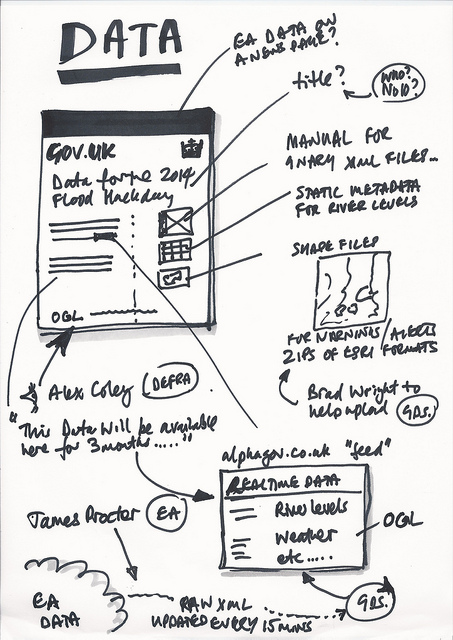 |
| Flood hack |
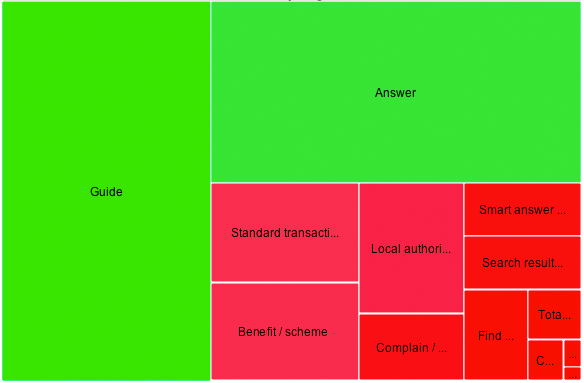 |
| Output from Needotron |
The H5P module is finally available for Drupal 7! Now you can download
H5P and H5P content types empowering you to create great rich
experiences for your users to enjoy. Content like interactive videos,
presentations, drag and drop, fill in the blanks questions and more are
available from h5p.org.
We have received many enthusiastic
requests for an H5P D7 module and we are proud to present the newly
released version. You can find it available on the H5P project page.
You
create the content with your web-browser and the content will work just
as great on smartphones and tablets, as on you desktop computer.
Below is a summary of the H5P content types that are currently available for Drupal 7 (and all other platforms we support).
Interactive video
Perhaps
the most powerful tool in the H5P toolbox. Upload videos and
animations, and make them interactive by adding quizzes, images and text
along the way.
Presentation
Create a presentation
slideshow with interactions along the way. Add text, images, video and
various quiz tasks to your presentation.
Boardgame
A
level based board game where the user must complete tasks in various
levels to win. Depending on whether the user completes or fails, a video
is shown at the end of each level. The game is fully customizable.
Flashcards
An
image is displayed and the user has to insert a corresponding text by
using the keyboard. The card turns to display the solution. Several
cards can be added in a sequence.
Fill in the blanks
Create
sentences and leave out words, adjectives, conjugations etc. for the
user to complete by typing the missing text on the keyboard.
Question set
Your staple quiz question tool. Add a mix of multiple choice questions, fill in the blanks & drag and drop tasks.
Contact button
A
simple widget that allows users of your website to get in touch with
you using their preferred channel, such as email, Facebook or Twitter.
For
those that are new to H5P, H5P is short for HTML5 Package, and is a
simple way to create and share rich and interactive web content. H5P is
modular and consists of several content types and applications, perfect
for use in e-learning and advertising.
See all the content types in action on H5P.org
With H5P you can:


 |
| Brian E. Hodges - c/o Brian's family. |
Born in Liverpool, NW England, UK.
Community Mental Health Nurse NHS, Part-time Lecturer,
Researcher Nursing & Technology Enhanced Learning
Registered Nurse - Mental Health & General
Community Psychiatric Nursing (Cert.) MMU
PG Cert. Ed.
BA(Joint Hons.) Computing and Philosophy - BIHE - Bolton
PG(Dip.) Collaboration on Psychosocial Education [COPE] Univ. Man.
MRES. e-Research and Technology Enhanced Learning, Lancaster Univ.
Live and work in NW England - seeking a global perspective.
The views expressed on W2tQ are entirely my own, unless stated otherwise.
Comments are disabled.
If you would like to get in touch please e-mail me at
h2cmng AT yahoo.co.uk
 orcid.org/0000-0002-0192-8965




