Hodges' Model: Welcome to the QUAD: DrupalCamp

Hodges' model is a conceptual framework to support reflection and critical thinking. Situated, the model can help integrate all disciplines (academic and professional). Amid news items, are posts that illustrate the scope and application of the model. A bibliography and A4 template are provided in the sidebar. Welcome to the QUAD ...

Showing posts with label DrupalCamp. Show all posts

Tuesday, December 15, 2020

Blog, Twitter, Drupal, Reading and Writing ...

It is over a year - October 2019 - since I updated on the above

First, let's get the elephant sorted. The elephant is the 'new website'. A non-trivial task in so many ways, not just physically, but psychologically, giving rise to frustration, embarrassment but still an exciting and promising 'project'.

The IT literacy I do possess allied with conference and media engagement suggests I should give up trying to build this myself and pass the 'requirement' and 'specification' to real software developers - and stop acting the goat (is that elephant smiling?). 

Lockdown has been a great opportunity to crack-on with the website, so no excuses. Hopefully the posts over the past year can still represent learning, growth and progress.

At the start of 2020 I was hoping to do some p/t tutoring. COVID-19 upset that plan and with it planning for a pilot study and engaging with prospective partners. I am ready to pick this up, but in terms of Drupal I have to refer back to 2019...

Learning Drupal 8
At DrupalCamp London 2019 I won 'Learning Drupal 8' in a raffle. I replied to Dora who emailed the news, but don't think I thanked the company here So thank you to Inviqa and the many other sponsors who make these events possible.

Drupalcamp London: And all that jazz

I attended this year 13-15 March, pre-lockdown (obviously) and the tone was somewhat muted. Many people were unable/unwilling to travel. I felt ridiculous myself being in London (in February too) and a nurse. That feeling was magnified when pre-booked I found myself in the basement again for jazz. Like everyone at present, I miss London and so many other places. Human nature being what it is, during lockdown 1 & 2 on reflection there was a sense of relief in having run the gauntlet in February and early March.

Next year, DrupalCamp London will be online. 

Last week and last minute, I signed up for DrupalCon Europe, not in Barcelona but online. Still sorting (reducing) papers, I can see how through Drupal versions 7 to 8, the platform is focused upon 'enterprise solutions'. While I'm not an Enterprise (but would love to be a crew member), the project that is Hodges' model warrants the potential to scale.

DrupalCon Europe was a confusing experience - in a  positive sense. I missed the journey, the Basilica Santa Maria del Pi, the Guitar concerts and much more. As many of us have discovered, I was pleased to avoid the additional costs of travel and accommodation. Given this, my saying that the 250 Euros was worth it, has a less hollow ring. I missed even more the buzz of the community, which was still very much evident online. I'm looking forward to the NWDUG online meeting on the 22nd.

I know (!!) I've said this before: but I really, really need to stop blogging, tweeting and exercise this itch to the exhaustion of possibility. I've a co-authored draft to complete for submission and (two) books to read for review. So that will be an ongoing thread. Finally I will also make use of the text above.

With each abandoned (messed-up) Drupal 'dev' site, I've carried forward the legacy HTML pages that are Brian Hodges' original lecture notes. Following DrupalCon it would be progress to have more tangible outputs to carry forward, apart from being able to get to were I was much quicker. Having a content strategy is one take-away c/o the sessions that I plan to secure.

Noting the two most recent additions to the bibliography, if I can help you use Hodges' model, please let me know (I may need the distraction).

Wherever you are - take care; and for me if this is the journey - that's great too. I'd like to think there is some learning to be had here - even if not in the form of a reflective workbench.
Thursday, March 08, 2018

Drupalcamp London: And all that jazz

Drupalcamp London was a bootcamp literally in light of the weather. This affected the schedule a bit but it was well worth attending.

The first session on my list was not the intended module development but:

Flexible content editing with paragraphs and Drupal 8 - with Baddý Sonja Breidert who stepped in at short notice. We were encouraged to look at Open Doors as an example of Paragraphs being deployed. The fact that there were 25 types of paragraphs prompts the thought - not so much how many would I would need but the users? Apparently, paragraphs are not that user friendly to edit. Navigation was indicated 'Manage Display' - 'Preview' - 'Paragraph'. The 'environment indicator' flagged whether the site in use was live or dev: a reminder. A future tip included not using entities, but media for anything reusable. Reusable paragraphs were applied to banner and images, using simple entities. There were some special functions (and specific modules) in the table of contents, entity embed, entity browser, insert view and add map.

In considering when to use paragraphs this connects with choosing content types - another key question for me. There was a lot more in what was a 'changed session'. I'll check the slides / videos were available and for those below. The three keynotes were excellent too:

Let’s take the best route - Exploring Drupal 8 Routing System

Drupal in the era of microservices

"Hi user, I am Drupal. How can I help you?"

Accelerating Drupal projects with Thunder: a case study

In 'Make your site findable' dutchyoda Dick Rensema pulled me up short. So, I will check out the metatags module and use this from the outset. As for being findable - it's also best to have separate text and images not have both within a WYSIWYG editor. Another point is to 'make it long'. That sits well for the archive pages for Hodges' model.

Lunchtime on Sunday was preceded with gambry on Plugin API, a key idea being:

ENTITY - Same model different data
PLUGIN - Same "thing" type different ways

This was a captivating, dense, rich session and one to revisit.

Finally, the 0930 start in London helped as I'd been up late. Ronnie Scott's is an amazing experience, the second house from 1030 doors open through to 0300: I left at 3 thanks also to Resolution 88.


Saturday, March 01, 2014

Drupalcamp London 2014: The Government Digital Service, Drupal 8 Multilingual features, Twig

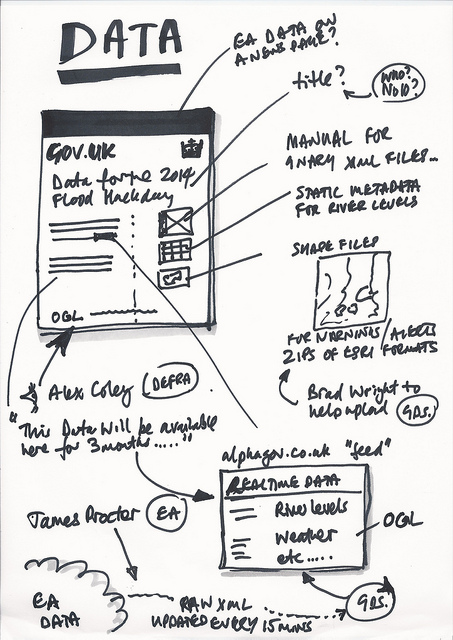
https://gds.blog.gov.uk/2014/02/23/flood-hack-developing-solutions/
Flood hack
DrupalCamp London today got underway with a keynote Delivering User-centred Digital Services by Mark O'Neill from the UK Government Digital Service.

Given the record of public and private sector led IT projects it was refreshing to hear of the GDS's approach being user-centred, the extension of 7 design principles and Mark's previous experience. It's clearly too late for the health care sector to coin and create the Needotron - GDS beat us to it.

Drupal 8 is looking formidable both in its potential and the (learning) stack it presents. Another great session to pick out was - A whole new world for multilingual sites in Drupal 8 by Gábor Hojtsy. The progress here is phenomenal and even though incomplete it is a major achievement and a credit to the Drupal community.

It's humbling as it reminds me to post some introductions to Hodges' model on W2tQ in several languages.

As to being user-centred, the Harmony Forum is a real tease. I know a forum will not moderate itself (is that the new Sorcerer's Apprentice?) and yet time is of the essence. Harmony is one for me to watch - so I'm signed up for the newsletter. Two sessions on Twig and Entities rounded up a busy few days.

This began on Thursday with Cutty Sark, the Royal Greenwich Observatory (learned much from their interactive designs) Turner and the Sea, The British Library - Beautiful Science (60-90 mins ample), and Ibsen's Ghosts at Trafalgar Studios.

I was also able to visit a university yesterday and meet a member of faculty who used Hodges' model many years ago. Here's hoping that some of the materials can be retrieved even though it seems unlikely. I hope to keep in touch with this nursing contact (and not just for the dinner!). I've met several other people here, the Drupal community is another great asset - and with thanks to the sponsors who make these events feasible for many of us.

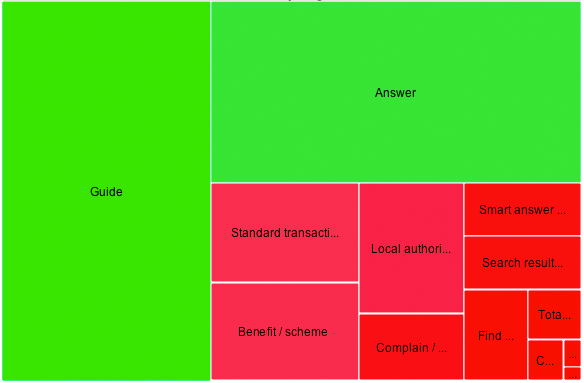
Output from Needotron


I'll end this post back with Mr O'Neill and the GDS.

I wonder to what extent healthcare figured in the flood deliberations?

It seems that an output from the Needotron may not be so far removed from h2cm?

Happy St David's Day too - in the closing minutes here!


Monday, February 24, 2014

Drupal in Education: Richer experiences with Drupal 7 and H5P (HTML5 Package)!

The H5P module is finally available for Drupal 7! Now you can download H5P and H5P content types empowering you to create great rich experiences for your users to enjoy. Content like interactive videos, presentations, drag and drop, fill in the blanks questions and more are available from h5p.org.

We have received many enthusiastic requests for an H5P D7 module and we are proud to present the newly released version. You can find it available on the H5P project page.

You create the content with your web-browser and the content will work just as great on smartphones and tablets, as on you desktop computer.

Below is a summary of the H5P content types that are currently available for Drupal 7 (and all other platforms we support).

Interactive video
Perhaps the most powerful tool in the H5P toolbox. Upload videos and animations, and make them interactive by adding quizzes, images and text along the way.

Presentation
Create a presentation slideshow with interactions along the way. Add text, images, video and various quiz tasks to your presentation.

Boardgame
A level based board game where the user must complete tasks in various levels to win. Depending on whether the user completes or fails, a video is shown at the end of each level. The game is fully customizable.

Flashcards
An image is displayed and the user has to insert a corresponding text by using the keyboard. The card turns to display the solution. Several cards can be added in a sequence.

Fill in the blanks
Create sentences and leave out words, adjectives, conjugations etc. for the user to complete by typing the missing text on the keyboard.

Question set
Your staple quiz question tool. Add a mix of multiple choice questions, fill in the blanks & drag and drop tasks.

Contact button
A simple widget that allows users of your website to get in touch with you using their preferred channel, such as email, Facebook or Twitter.

For those that are new to H5P, H5P is short for HTML5 Package, and is a simple way to create and share rich and interactive web content. H5P is modular and consists of several content types and applications, perfect for use in e-learning and advertising.

See all the content types in action on H5P.org

With H5P you can:

  • Export and import content types and applications between sites, e.g. from a Joomla site to a Drupal site.
  • Use existing content types and applications, and build on these to create your own content.
  • Create and edit rich web content directly in your browser. No technical skills are needed.
  • As a developer, build upon existing content types and applications, or create you own from scratch. Share your work with the rest of the world on the h5p.org!
Source: https://groups.drupal.org/node/409763

Looking forward this next weekend and London for DrupalCamp.

Monday, September 10, 2012

DrupalCamp North West November 24-25 Manchester

If your are based in the North West of England, or can travel to Manchester there are plans for a DrupalCamp in November 24-25th at Media City Salford.

You can sign up for news - ...

For the next few months the North West Drupal User Group are having 'back to basics' sessions (Madlab, Manchester 1st Weds in the month). I'm really grateful to Phil who sorted VirtualBox and DrupalPro on my Macbook last Wednesday. I've been struggling with MAMP since Drupalcon in Munich, asking too much of the conference wifi and paying the price with 'MySQL server gone away' and PDO errors. DrupalPro is quite something behold.

Thanks to the NW gang, friends old and new. Before DrupalCamp there is also PHPNW 2012 to enjoy next month.

Saturday, June 23, 2012

Drupal Education Camp Oxford (School's out)

Well it is over and it was a great experience. So many thanks to the Drupal Oxford Group, Finn @finnlewis and the sponsors. The boxes are all ticked: the sessions, lunches, St Catherines' College surroundings and staff (excellent), and as ever the Drupal Community. Amongst many really good sessions ...

Yesterday, Johan Gant listed the pros and cons of Migrating data into Drupal using the migrate module, when you might care to use it and when not. When not to use it is a definite take home (a take care). There's a potential overlap here with semantizing content in Drupal 7 which Philipp Schaffner explored today. His presentation included not just the relevant modules, but Drupal's core RDF status out of the box and how to extend this. Philipp's English is very good; I wish I could present in another language as well as he did.

Many of the 'take homes' have not changed. They are glaringly obvious: build your site get on with it. That aside in the previous efforts to enter content from the old website into Drupal (4.7, 5.x, 6.x ...) the decisions about style, fonts, colours have been and remain an enjoyable task. In Bring that designer over to the Drupal side of the force Tom Bamford provided a description of styling and a listing of resources. Definitely something to follow and use.

Martin Bush introduced his work as a lecturer Use of Drupal at London South Bank University and the creation of QuizSlides. I have an eye on the existing Quiz module. The QuizSlides' approach utilises Powerpoint as the basis for the quiz. Prior to this Martin outlined his course on Internet Technologies across lectures, labs, MCT and individual assignments. Speaking to him afterwards I mentioned how I would love to take my stuff (re. h2cm) and formalise it in a structured way. How could you link Hodges' model into nursing, informatics, and educational curricula?

Another key session for me was How we built a Virtual Learning Environment with Drupal 7 with Lee Willis. This is way beyond my purposes in the sense of scale but not in terms of - intended - user experience. Lee made some vital points about Drupal's educational potential and the lessons he and his colleagues have gleaned from projects to date. There is still great variation in the user interface of Drupal and this is compounded with the number of contributed modules used. Drupal is powerful in providing related navigable content, but this should not mean forcing an order on the learner. In addition to the need to plan the interface, another point Lee made also draws me to Drupal and reflects a central ethos of some psychological therapies. We learn best through self-discovery. So in addition to structured and unstructured content, there is a case for leveraging Drupal to facilitate discovery. (I've just thought of another post...)

As well as education, the keynote yesterday by Prof. David Upton was informative and entertainingly delivered (a lesson in itself) stressing the complexity of corporate scale IT projects and the problems (disasters) that can and do ensue. I did wonder (and nearly asked) if Prof. Upton had any views on a particular project he didn't mention. Which reminds me: I must cast an eye on the new NHS information strategy.

Monday, June 18, 2012

Musings on a mixed and busy fortnight: Oxford Drupal Education Camp

There is a busy fortnight coming up here. If all goes according to plan it runs like this: Drupal, Visual Methodologies and Ruby.

On Thursday evening I will travel down to Oxford for Drupal Education Camp. My first Drupal effort is taking shape. There are five photos in a jCarousel. I think I'm almost there but after the five scroll through there are five empty placeholders or blanks. It's probably just a tweak to the settings. The enquiry form is completed. I'm not happy about the formatting which seems to characterise many Drupal pages: that of the long series of fields. Listening to discussion at Drupal NW this month also reminded me of the need for spam capture.

I'm hoping one or two Drupal mental health contacts from Cambridge in January may also attend. The accepted sessions for Oxford present a very useful mix (timing permitting), especially:

Drupal 7 Semantizer

How we built a virtual learning environment

There was a debate on the longevity of VLEs in Wolverhampton in 2008-09. As I tried to look up that event I noticed that variations on the theme of "The VLE is dead, long live the VLE" are still doing the rounds. Clearly a case of the undead.

So, three - four years on this should insightful: What is a VLE? Is there a hybrid form? How far can Drupal be pushed? Why do students use FB and by-pass the institutional 'tools'? Perhaps it's because the institutions are busy deliberating the existence of this TLA versus that?

Migrating data into Drupal using the migrate module

NeuroHub: The information environment for Neuroscientists

The content of a new h2cm website will (yes, I know....) combine archive material - Brian Hodges' notes - with new work. For student users a means to assess and measure understanding of the content makes sense. I implemented a crude multiple choice test. The questions were probably not too bad, but there was no log-in, administration. If assessment can be done in a standardised way then that would be a huge bonus. What a new site should be about though is facilitating students in developing their knowledge and application of Hodges' model. The context of that knowledge and application need not be wholly limited to nursing.

After Oxford, on Monday 25th and after work I'm heading east to Newcastle for two days. I'll reflect on that soon. The trick is going to be threading all these together.

Thursday, April 26, 2012

Oxford Drupal 'Education' Camp 22 - 23 June 2012

I have booked a holiday for Friday 22 June because as their website announces -

Oxford Drupal 'Education' Camp is happening!

Venue: St Catherine’s College, Oxford.

I'm hoping to meet people from other Drupal events and specifically from Drupalcamp Cambridge. Although Drupal is far from a dedicated educational platform - either for authoring materials and managing learners / learning - there are many contributed modules that can be adapted and extended.

One of the three papers mentioned last week will be published by an online journal in June. News of the other two must wait, one is an end-of-year prospect. Although an abstract and preparation for the ICN Congress (if accepted!) is a non trivial undertaking, further writing must fit in with future web developments. This Drupalcamp will help bring several threads together.

Wednesday, February 22, 2012

Mental health follow-up II: Drupal ScienceCamp Cambridge 20-21st Jan 2012

After the birds of a feather (BoF) session in Cambridge last month I spent an hour chatting to Beatrice and Matthew Taylor who share my interest in mental health and Drupal.

Since that Sunday morning I've exchanged emails with them both and am sharing some points here raised by Matthew. ...

Matthew:
There are lots of things that I'd like to talk to you about. I've been browsing your pages on the Hodges' Model and I'm really impressed. You've done a huge amount of work.

PJ:
Thanks for that! A lot of the content in the website is quite dated and the HTML & styling reflects this, but positive feedback is always very welcome and I also greatly appreciate your bringing the repeated paragraph in the Michel Serres paper to my attention (corrected now).

Matthew:
It seems to me, on first reading, that you're looking at things from within an institutional setting and that I'm on the outside. However, I can see that there are ways in which the two perspectives could overlap and that the technology now exists that can facilitate the testing of the fit between different health models (and their creation in the first place).

PJ:
Yes, I'm looking at things from an institutional setting in terms of working within the NHS (with regular social care contact), being on the service side of the nurse education system, and working amid a mechanistic medical system that also seeks to be (psycho-)social in orientation. H2cm - Hodges' model however, helps to provide flexibility in the perspectives we can adopt.

In that respect I left the 'institution' in 1985 to work in the community. Your point Matthew is a very useful reminder about not taking things for granted and to what extent is 'community care' free of the institution? What has the institution (of old) become?

I suppose the other side to this is that you are not on the outside. Instead of pushed into the nooks and recesses of individual minds, we need positive mental health to be pushed into the open. The community, the commons, society. We need an infusion of insight to combat stigma and a misalignment - holistic asymmetry - in physical and mental health education and delivery.

Matthew:
As you probably gathered, the direction that I'm coming from is that of personally managed mental health care records. Here are some of the websites that I'm using as guides:

http://indivohealth.org/
http://ontology.buffalo.edu/smith/

PJ:
These website are well worth knowing about - thanks very much. I'll explore them in more depth. Making enquiries (seeking guidance) on my research aims it was suggested to me just before Christmas (c/o Wolverhampton University) that my work seems to be more about ontology than a literature search. I've realised this for quite a while. Key attractions of Drupal include its RDF functionality and the examples provided by specific modules such as Neologism.

Matthew:
I'm currently building an ontology for mental health (from a virtual world perspective) using OBO edit http://oboedit.org . My objective is to embed the ontology in a Drupal website http://www.playsthething.org.uk/ that also exists to promote a conference on well-being.

PJ:
I'm clear that I'm not about to create a mental health record system, truly fascinating a project as that may be (especially in some sectors). There are proprietary and open source solutions out there. I'm also aware of problems with the uptake of Google's, the NHS's and Microsoft's respective attempts to engage with the self-maintained and managed e-record. Drupal's appeal for me also lies in e-learning and using Drupal educationally.

If you've a specific objective in mind Matthew then that immediately cuts through my concerns and that's excellent. I'm lost in my own bag of potential users and requirements. The thought of embedding a health ontology into Drupal is an exciting prospect. I wonder if there is a basic ontology that could fit with h2cm (as one or more conceptual spaces)?

Matthew:
I've been asked to guest edit a section of ArtsProfessional magazine, coming out in May, that will be focused on arts and well-being. I'm going to use it as the opportunity for launching the 'Moonshot for Mental Health' that I touched on at the Cambridge Drupal conference.

If you'd like to write something for the magazine/website on the theme of arts and well-being (and why we need a moonshot for mental health) then just let me know. I can let you know more if you'd like to follow this up.

PJ:
I really would like to contribute, so although I work full-time please do f/w more details.

Last summer in Warrington at Disability Awareness Day (DAD) (July 15 for 2012) I came across (the magazine) Reflections. Specific examples of art were also displayed at this event at Walton Park by 5 Boroughs Partnership NHS Foundation Trust and others. There is so much more that the arts can offer in mental health and the residential care / nursing home sector.

Matthew:
I'd be delighted if you were able to promote a Drupal/MH meeting. I'll start putting something together. Let me know if you have any ideas.

PJ:
I will and would be pleased to assist. There may be scope for a venue in the NW - I could make enquiries at least. There is always Munich and the European Drupalcon this summer!

Thanks for getting in touch Matthew. Lovely to share and talk shop with you and Beatrice also. I hope we can meet again.

Matthew Taylor
...

Monday, February 06, 2012

Follow-up: Drupal ScienceCamp Cambridge 20-21st Jan 2012

Stefan van Hooft @_iCompute kindly took these notes for the Mental Health session, 10.45am 22 January 2012 (mentioned previously on W2tQ). Stefan captured the topics that were quickly and briefly raised among the seven attendees (contact details provided but withheld here). I have added some [additional comments] and my response follows:

--- Twitter hash tags ---
Mental Health #mhuk #ukmh [global mental health hash?]

RDF
Solr
Sparkle [SparQL]

• accessibility within website
• openair Open source mental health [OpenEHR]
• mental health record
• care plans
Who has access to information?

•  Set up a system, you can give and revoke others access to your data
• "Flourishing" or "In treatment"

Use Drupal:
     - distribution
     - accessibility
     -
Is there a Group on drupal.org about mental health?

Security is crucial!
Pubsubhubbup [ http://code.google.com/p/pubsubhubbub/ ]
Spartacus report
Burn out
#Nhssm, NHS social media

<->
Dear Stefan and All,

STEFAN'S SELF-ASSESSMENT TOOL

I am interested in the application you showed, it reminds me of the STAR - SPIDER format and approach. I think there's a tool like this in forensic mental health - and no doubt other areas?

http://hodges-model.blogspot.com/2010/06/carers-support-evidence-measures-and.html

At some point Stefan it would be good to feature your image based tool when suitably complete on my blog; do you have a video at all?

HODGES MODEL

If anyone is interested in receiving more details on Hodges model please let me know. This model looks simple but it is really powerful in terms of scope and application.

...

FUTURE MEETING

Matthew mentioned the possibility of a small gathering combining mental health and Drupal. I'd be pleased to help with publicity - twitter, FB, Linkedin and the blog and have links with many other groups.

DRUPAL HEALTH GROUP

Here is the link to the health care Drupal group:

http://groups.drupal.org/healthcare

- note at the top the link to Drupal health care sites.

openEHR

Here is openEHR which I mentioned:

http://www.openehr.org

RDF and related

http://drupal.org/project/neologism

Lovely to meet everyone and really pleased to have the chance to share an hour (after the meeting) with Beatrice and Matthew. It is very good that mental health and disability came up at a Drupal meet. I hope to attend Drupalcon Munich so maybe there is scope for a BoF meeting in the summer?

<->

Shortly I'll post some additional observations by Matthew Taylor another participant. There I'll expand on my requirements and expectations of Drupal.

Friday, February 03, 2012

Drupal ScienceCamp Cambridge 20-21st Jan 2012

Two weeks ago Drupal ScienceCamp was a great success thanks to the organisers and sponsors. There were about 60 attendees with a European flavour too. Being a Science Park we had to circumvent the fence, the alternate access gates closed over the weekend. The three of us who left the hotel soon became six ... as we walked around to the very smart venue - Napp Pharmaceuticals Limited.

On the Saturday I attended sessions on responsive design, Drupal modules, Less CSS (at this point I wish I could have split in two Drupal search and Solr Wizardry had very positive comments), From flipcharts to Drupal Features, and Migration, upgrading and moving house. All very helpful.

Sunday was spontaneously self-organising. People offered to deliver sessions and meetings in a BoF - birds of a feather format, others requested the things they were seeking. Whether a sign of my time in Drupal [v. 4.7], or possibly Drupal's ever increasing diffusion or both; seven of us gathered around mental health and disability.
More on this to follow.  ...

Thursday, November 04, 2010

Drupal musings 19: DrupalCamp Edinburgh, Panels, another prize book! and a 'mu'.

DrupalCamp Edinburgh was just one day, but a Drupal drenched day. So, camping can be fun even when it rains - community spirit and ethos, tips and things you never knew.

The first session on PHP namespaces with Jonathan was on the technical side, but this is a topic to watch for Drupal 8.

Up RPC - upgrading was also technical in the sense of being for people with sites to upgrade. Joachim went through the process from Drupal 5 to 6.

Drush - the DRUpal SHell (Mac) was presented by snufkin and with the frequency Drush crops up at Drupal events, inc. NW England it's a mu - must use.

A question was raised around multimedia in Drupal, this centred upon images.

The afternoon was built around Chris Muktar's session on WikiJob. Chris described the site's birth, growth and move to Drupal. Wikijob utilises the PressFlow distribution of Drupal optomised for performance and scalability. What was fascinating here were the insights into the use of Pantheon and Amazon Web Services. The good news for Chris and WikiJob is that hosting costs are dropping month-on-month while the lessons: you need to know what you're doing and AWS is self-service.

Providing for mobile users came up and here I was actually able to contribute (well sort of) with my notes from Copenhagen and Martin Joergensen's session.

At the end there was a prize draw. I won another book! Drupal 6 Panels Cookbook, Bhawin (Vin) Patel, Packt. Having read this there's no doubt that combining Views and Panels packs some punch, especially as in Chapter 10 a travel website is created and the recipe uses the PressFlow distribution. This chapter also uses the Location and GMap modules, which I am currently looking at. Since first hearing there were modules called Panels, Views and Context I've automatically attributed h2cm related functionality to them. The care domains are 'panels'. Organic Groups, another example has proved quite different to what I thought and I only learned that this summer (that's why using really is learning). What the book brings home - without picking up the shovel - is the way these modules leverage each other.

At 10am when everyone first met with two sessions scheduled with the rest of the 10-5 day a blank I worried: 200 miles! (I didn't attend, but the morning also saw Addison Berry of Lullabot running a "Beginners Track"). My faith deserted me only for a moment. Great job Duncan and all.

Saturday, October 23, 2010

Drupal musings 18: healthcare group, DrupalCamp and #183

It's a fair trip to Edinburgh from NW England just for one day on the 30th October, but DrupalCamp looks like it will be worth it. I've just booked a room for the Friday night and will set out straight from work.

There's been a Drupal healthcare group for quite a while, now there's also a list of health sites using Drupal:

http://groups.drupal.org/healthcare-sites

One day, one day....!

I'm not sure if this post is contrived: a means of getting to post #183. That was the total for 2009 and here we are already.

If one day, one day is going to happen then this blog is going to slow down soon. No suspended animation though. There will be a pulse.

The involvement of a few link partners on W2tQ is very helpful. It seems the archives are of interest. This not only supports the IT side - future hosting ... but attending events (DrupalCamp travel, B&B) and possibly conferences...

As a full-time nurse I sometimes have to rely on holidays to attend events. Drupalcons are a case in point. It's not easy trying to simultaneously span nursing, education and informatics, but it really is fascinating [and it makes me :-) ]. Take the following 'local' conference:

Celebrating the Past and Embracing the Future:
Evolution and Innovation in Problem-based Learning

March 30th and 31st 2011 in Grange-Over-Sands, Cumbria, UK

I raise this because problem-based learning is a real gift for the health career model, but this gift runs to £235 (which of course for two days training / education is very reasonable - there is a free half-day workshop too). 

Monday, October 18, 2010

Drupal musings 17: PHPNW 2010, HTML5, DrupalCamp Edinburgh


PHPNW 2010 on the w/e 9th - 10th October was well worth attending. Sessions for me after the keynote included:

Let your toolchain set you free

Debugging – Rules and Tools

The curious case of php|architect

Designing HTTP URLs and REST Interfaces

All the sessions where very informative, but the latter proved the most interesting. I noticed REST interfaces kept coming up at the Ruby conferences in '08 and '09 and also in reading about Ajax. So David Zuelke's session was very interesting both with his critique of how REST is applied (twitter) and his humour. I look f/w to the videos appearing.

A dinner date with friends meant I had to leave early and so I missed the prize draw. The past week started with a smile when Emma Parker, PHPNW10 Events Team emailed to say I'd won a book in the prize draw. Last Thursday the book arrived:

Pro HTML5 Programming

Magic! Thanks to the conference team and Apress.


I have just learned about DrupalCamp Edinburgh on the 30th and have registered.

Monday, June 15, 2009

DrupalCamp UK Manchester: education and a (virtual) website

DrupalCamp UK in Manchester this past weekend was a great success. The organisers, sponsors and hosts the BBC on Oxford Road did a magnificent job.

My course through the schedule found me attending:

  • Installing and creating your first site
  • Drupal for Education
  • Drupal and Scrum
  • Drupal Forms API
  • Introduction to Organic Groups
  • Creating your first module
  • Using CCK and Views
  • The Forms API - again
  • Migrating data into Drupal
  • Using Photoshop to theme a Drupal site
  • Views handlers
All this was really useful, but of particular relevance for me was Robert Castelo and Dominik Lukes's session on Drupal for Education. They discussed key modules and developments in Drupal and also related this to Moodle already well established in the education sector. Modules presented included:
Hodges modelThey began with Drupal being applied to education for brochureware (wish the new site was there!). This will be my starting point for Brian Hodges' old notes. These obviously need a place on the site, an archive where they are accessible next to new introductory material written to reflect:


health and social care, public (mental) health
informatics
education
socio-politics and the challenges of the 21st century

Yes I know that is a broad agenda ('too much'), but this is about the learners, learning tools AND the models we teach being fit for purpose...?

Additional links:

Drupal.org


My review on W2tQ of Bill Fitzgerald's book 'Drupal for Education and E-Learning'

Drupal in Education - group
