Hodges' Model: Welcome to the QUAD: UK

Hodges' model is a conceptual framework to support reflection and critical thinking. Situated, the model can help integrate all disciplines (academic and professional). Amid news items, are posts that illustrate the scope and application of the model. A bibliography and A4 template are provided in the sidebar. Welcome to the QUAD ...

Showing posts with label UK. Show all posts

Wednesday, October 28, 2026

AI bots flooded 2023 UK government consultation on disposable vapes ban

'AI bots flooded a government consultation with tens of thousands of fake responses in a failed attempt to stop the UK’s ban on disposable vapes.

Three-quarters of all the responses to the 2023 consultation on the tobacco and vapes bill were machine-generated, in what is thought to be the first coordinated attempt to use AI to derail health policymaking in the UK.

The attempt to manipulate the outcome of the consultation was disclosed on Tuesday in research published in the journal Tobacco Control by the health policy experts Dr Nason Maani, from the University of Edinburgh, and Prof Anna Gilmore, of the University of Bath.

The Department of Health and Social Care (DHSC) used bot-detection methods to identify that 90,835 of the 118,756 responses it received, 76%, were submitted by bots.

All but two of those 90,835 automated responses answered the same question in the “smoke free generation” consultation, in which they opposed Rishi Sunak’s Conservative government’s plan to ban disposable vapes. The submissions were “often duplicated many times and sent at high frequency from a small number of IP addresses”, the DHSC said.'

Read more ... The Guardian

My source: BBC Radio 4 Today

Sunday, October 18, 2026

BCS SPECIALIST GROUP ON AI (BCS-SGAI) AI for Health 2026 - Nov. 6th

Friday November 6th 2026 (all day event)

A special event showcasing the role of Artificial Intelligence for Health
Organised by BCS-SGAI

At the BCS London Office
Ground Floor, 25 Copthall Avenue, London, EC2R 7BP (near Moorgate underground)

 
There are is an online registration form available from the event website.

BCS-SGAI, the British Computer Society Specialist Group on Artificial Intelligence was founded in June 1980. Its mission is: `To foster achievement, capability and awareness in both business and research in Artificial Intelligence, and to promote the interests of the related community`. It is one of Europe`s longest established groups working to support the community of artificial intelligence developers and users and is the organiser of one of the longest running annual series of AI conferences in Europe: the AI-20xx series.

According to the World Health Organization (WHO) prioritising AI for health is crucial. The WHO also highlights that a healthy diet protects you against many chronic non-communicable diseases, such as heart disease, diabetes and cancer. Quantum computing is gathering an enormous interest as a new paradigm of computing (see Quantum for Good at https://quantumforgood.eu/), which is already making an impact across industries like health and life sciences (agriculture, food and health). Classical (or current) AI relies in classical computers based on binary bits (zeros and ones), while quantum AI relies in quantum computers based on quantum bits (qubits). Quantum AI could dramatically accelerate research that requires processing vast amounts of data, contributing to human health by accelerating drug discovery or enabling earlier diagnostics. Quantum AI could be also instrumental in identifying early signs of crop diseases or optimising water use.

Come along to AI for Health 2026 if you are interested in cutting-edge AI for Health, using latest technologies with a promise of high impact.
SPEAKERS
 
Prof Brendan Delaney (Imperial College London)
 Medical diagnosis after LLMs
 
Mr Anirban Lahiri (Arndit Ltd. and Kainos Ltd., United Kingdom)
 AI in Mental Healthcare
 
Dr Marinos Ioannides (Head of Software and AI Medical Devices, MHRA, UK)
 Demystifying AI Regulation
 
Dr. Mercedes Arguello Casteleiro (SGAI)
 Hands-on Tutorial on Low-Code AI Agents for Health, Farming, and Food
 
Dr Oliver Thomson Brown (Quantum Software Lab, EPCC, University of Edinburgh)
 Introduction to Quantum Computing and its Relevance for Biomedical Science
 
Dr Saihong Li (University of Stirling)
 Translating Quantum Food Futures
 
Dr Aleksey Kozikov (Newcastle University)
 Emerging Opportunities for Quantum Technologies in Food and Health


Monday, October 12, 2026

Report - Health Misinformation: Public Perceptions of Threat to the UK

A London School of Hygiene & Tropical Medicine report

Published: 28 September 2026

Authors: Pete Wilton & Dr Ben Kasstan-Dabush

Foreword

The London School of Hygiene & Tropical Medicine (LSHTM) has a long track-record of developing innovative approaches to countering false or misleading health information (health misinformation). While health misinformation has always been with us, in the last few years changes to the technological and political landscape have enabled it to spread further and faster around the world, threatening to undermine trust in health experts and institutions.

That was why in January 2025 LSHTM launched a new initiative focusing on fighting dangerous health misinformation in the UK through interventions in the media, online, and on social media. While misinformation is global the response often has to be national or even local and what we quickly realised is that there is still a lot we don’t know about the prevalence and impact of health misinformation in the UK.

How equipped are Britons to identify false or misleading health claims? What do they do to factcheck if these claims are true? Are our fears about the harms of health misinformation on the UK population justified? And, if they are, who is being harmed and how can we help them to protect themselves? These were just some of the questions we had.

Of course one survey was never going to give us all the answers, but we believe the findings detailed in this report are an important first step towards gathering some of the ‘missing evidence’ on health misinformation in the UK. We hope that this report will help to motivate and inform all those working to make ours a healthier, stronger society.

Professor Liam Smeeth
Director, London School of Hygiene & Tropical Medicine

Continued . . .


My source: BBC Radio 4 Woman's Hour - 36mins 
https://www.bbc.co.uk/sounds/play/m0032qn8

'How can medical misinformation harm women, and how do we combat dangerous myths? Nuala McGovern is joined by former consultant breast surgeon and cancer survivor Liz O'Riordan and Dr Rachael Kent, whose academic research focuses on the impact of digital technology on mental and physical health.' 

Sunday, August 02, 2026

Study invitation: Examining the Experiences of Black African Nurses in the UK Healthcare System

PARTICIPANT INFORMATION SHEET

Examining the Experiences of Black African Nurses in the UK Healthcare System

You are being invited to take part in a research project exploring the experiences of Black African nurses working in the UK healthcare system.

For the purpose of this study, Black African nurses refers to male and female nurses aged 18 years and above who migrated from an African country to the UK and have worked within the UK healthcare sector for at least one year. This includes nurses who arrived in the UK on a work visa and are currently working in the NHS, care homes, or private healthcare organisations. It does not include individuals who later changed their education or career pathway after settling in the UK. Please read the following information carefully to help you decide if you want to take part. 

What is the purpose of Study?

The purpose of this study is to better understand the experiences of Black African nurses who have migrated from African countries and are working within the UK healthcare system. Research and workforce reports suggest that internationally recruited and racially minoritised nurses may face unique professional and personal challenges, yet their lived experiences are often under-represented in research and policy discussions. This study aims to bring greater awareness to how race, culture, identity, and migration background may interact with workplace environments and organisational systems to shape nurses’ professional experiences and wellbeing. By giving participants the opportunity to share their perspectives in their own words, the research seeks to highlight areas where support, inclusion, and fair practice can be strengthened.

It is hoped that the findings will contribute to improved understanding, inform future policy and workplace practices, and support ongoing efforts toward equity, inclusion, and culturally appropriate support within the UK healthcare workforce.

What will happen if I decide to take part?

If you agree to take part in this study, you will be invited to an online interview using Microsoft Teams at a time that is convenient for you. Before the interview begins, you will have the opportunity to ask any questions about the study before confirming your consent to participate.

During the interview, you will be asked some brief background questions, such as your professional background and migration route. The interview will focus on your experiences of working as a Black African nurse in the UK healthcare system, including workplace experiences, identity, support, challenges, and sources of strength or resilience.

With your permission, the interview will be audio-recorded to ensure your views are captured accurately.

... ... ...

WHO CAN I CONTACT? [... and for the FULL DETAILS ]

This study has been reviewed and approved by the University of Edinburgh Research Ethics Board. 

If you have any questions or concerns about the study, you can contact the researcher:

Oluchi Mellor – O.D.Mellor@sms.ed.ac.uk

My source: Oluchi via RCN NWMG 

https://www.rcn.org.uk/northwest/Get-Involved/NW-Multicultural-Group

Wednesday, July 15, 2026

Project 2000: The Judge Report 1985

Somehow, or perhaps that is being kind, I have a feeling that sources on the history of 'recent' nurse education may come to the fore. It is interesting that the guest editorial below reflects itself on the preceding 25 years. Not just several cohorts of students, careers, but a whole life-time. 

We must hope today, that British nurse educators can find more security, if not the contentedness described by Rye in 1985 ...

'The main principles for policy change contained in the commission's report are as follows.

1 The uncoupling of education from service. Students should no longer be employees of the National Health Service. Nursing education should now be part of the main-stream of higher education, students being financed through a suggested bursary system.

2 A single level of basic nurse qualification leading to registration.

3 Curriculum development (as discussed in chapter 4 of the report) must take into account the need to retain certain speciality options, and prepare students for practice both in hospital and community settings. It creates the possibility of direct entry into district nursing, health visiting and midwifery. 

This 3-year course would have educational credibility as it will be at diploma level, the first year being a foundation programme, furnishing a basis for informed choice later. The second year would contain practical placements (in the community, adult nursing and mental health). It would consist of three modules, the first to be based in a community setting, the second (focused upon the nursing of adults) in a hospital setting, and the third in a variety of environments related to mental health. Roughly 30% of the time will be dedicated to carefully supervised practice in clinical settings. The final year will be characterized by increased specialization. The opportunity to make a selection from a number of available modules will equip each successful student to become registered and to take up work either in an institutional or non-institutional setting. The academic award will be that of Diploma in Nursing Studies. 
...
This new approach to nursing education will not create a 'generic' nurse, but will prepare students to work in their chosen speciality in hospital or in the community. If nurses are to respond to the changing patterns of health care, it is critical for future development that preparation for working in the community takes place in the basic diploma programmes. This may be seen as one of the more controversial implications of the report, but the profession must address itself now to these matters, as nursing education must become more flexible and capable of change to meet the needs of clients.'

See also: #RCN26 RCN Congress - Nurse Education 

Rye, D.H. (1985), THE EDUCATION OF NURSES: A NEW DISPENSATION. THE REPORT OF THE RCN COMMISSION ON NURSING EDUCATION. Journal of Advanced Nursing, 10: 505-506. 
https://doi.org/10.1111/j.1365-2648.1985.tb00540.x

Royal College of Nursing (Great Britain)., & Judge, H. G. (1985). The education of nurses : a new dispensation. Royal College of Nursing. (Classed as a Book.)

See also: https://wellcomecollection.org/works/p889dx97

https://eprints.hud.ac.uk/id/eprint/10084/1/ouseycontent_9838.pdf

Monday, June 22, 2026

Maker-field: More than just a point* on a map

Ashton-in-Makerfield has been in the news of late. With Andy Burnham MP championing the communities of the north; local issues, socio-economic gaps, needs and everyday lived experience up North.

But Makerfield holds much more as a veritable rabbit-hole supporting lifelong learning, character development, reflective practice and critical thought:

 'maker' - 'field'

* - a political constituency.

Previously: 'map'

Sunday, May 10, 2026

Final Call December AI-2026: Cambridge, UK :: June: Virtual seminar on 'A Future with AI Agents'

FINAL CALL FOR PAPERS AND POSTERS

The proceedings of the AI-20xx conference series are now published by Springer in Lecture Notes in Artificial Intelligence (LNAI), a sub-series of the distinguished Lecture Notes in Computer Science (LNCS) series of conference proceedings.

AI-2026: Cambridge, UK, December 15th-17th 2026

Organised by BCS SGAI: The British Computer Society Specialist Group on Artificial Intelligence (a EurAi Member Society).The leading series of UK-based international conferences on Artificial Intelligence and one of the longest running AI conference series in Europe.

CALL FOR CONTRIBUTIONS

AI-2026 is the forty-sixth SGAI International Conference on Innovative Techniques and Applications of Artificial Intelligence. The scope of the conference comprises the whole range of AI technologies and application areas. AI-2026 reviews recent technical advances in AI technologies and shows how these advances have been applied to solve business problems. Key features are:
  • Papers will be published by Springer in the Lecture Notes in Artificial Intelligence (LNAI) subseries of the popular Lecture Notes in Computer Science (LNCS) series (
  • Papers are invited in two streams. The Technical Stream presents the best of recent developments in AI, covering a wide range of technical areas. The Application Stream is the largest annual showcase in Europe of real applications using AI technology.
  • It is expected that the best papers will be reprinted in expanded form in an international journal.
  • A mixture of full papers (maximum 14 A4 pages) presented orally and short papers (maximum 6 A4 pages) presented as posters. Papers of both kinds will be included in the proceedings.
  • Prizes for best paper and best student paper in each stream and best presented short/poster paper.
  • Invited keynote lectures.
  • The first day comprises tutorials and workshops to provide greater depth in selected topics. (Separate one-day registration for this day is also available.
  • A panel session or a debate on a topical subject.
  • An 'AI Open Mic' session to allow delegates to have their say about any aspect of AI.
  • In addition to the formal sessions, the conference programme includes a welcome reception and a Gala Dinner.
AI-2026 offers a valuable opportunity to keep up to date with developments in AI and to share experiences in the practical issues of developing AI systems.

:::: PLUS :::::

-------- Virtual Meeting seminar on A Future with AI Agents --------

The next in our series of free evening virtual seminars will be on Wednesday June 10th from 6 p.m. to 7.30 p.m. (UK time). The topic will be A Future with AI Agents.
 
Humans are becoming the minority online with bots generating almost 50% of all internet traffic. The World Economic Forum recognised that the advancement of agentic AI is obvious and the agent-driven economy is here. The global AI agents market is growing from a $5.4 billion market in 2024 to $236 billion by 2034. Come along and find out about some technical foundations of agentic systems and how to build a minimal AI agent from scratch.
 
The speakers will be

Anirban Lahiri (Arndit Ltd., Cambridge, United Kingdom) on Agentic AI: A Friend or Foe'
Dr Mercedes Arguello Casteleiro (SGAI) on 'AI Agents 101'

The virtual seminar series is free and open to all. For further details and for the zoom link to use go to https://bcs-sgai.org/seminars/2026-06-10/.
 
Details of future SGAI events will be placed on the website at https://bcs-sgai.org as they become available. To register to be sent information about future SGAI events by email go to https://www.bcs-sgai.org/register/.
 
Max Bramer
Chair, BCS SGAI
----------------------------------------------------
Chair, British Computer Society Specialist Group on Artificial Intelligence
Emeritus Professor, School of Computing, University of Portsmouth, UK
http://www.maxbramer.org
 
My source: AI-SGES list

Sunday, March 01, 2026

Definition: Individual and Group Counselling

INDIVIDUAL
|
    INTERPERSONAL    :     SCIENCES               
HUMANISTIC --------------------------------------  MECHANISTIC      
SOCIOLOGY  :   POLITICAL 
|
GROUP
"Counsellor"


"Counsellor of state"


My source: Robert Wright, Starmer eyes succession law change for Andrew, FTWeekend, 21-22 February, 2026, p.2.

Previously: 'counselling' : 'therapy'

Wednesday, February 25, 2026

IFS Report: 'From fiscal rules to fiscal traffic lights: rethinking the UK fiscal framework'

'In other words, the current framework means that macroeconomic volatility is mainlined into policy volatility, which adds unnecessarily to economic uncertainty and makes good policymaking less likely. There is also a problem of asymmetry: when the forecast improves, any additional ‘headroom’ is typically treated as free money and happily spent. Yet when the forecast worsens, the rules tend to get changed or ‘gamed’: Chancellors of all political stripes have proved adept at promising future tax rises or spending cuts which are unlikely to be delivered, but which allow them to meet the letter of their rolling fiscal targets. 

All this is to say, the current framework is not delivering good outcomes. It is not achieving sustainable public finances, it has limited credibility with financial markets, and it is not creating the conditions for good policymaking or for a high-quality public debate about the important issues at play. It seems likely that any framework, left in place for long enough, will start to create problems in practice, as unhelpful norms emerge and actors find ways to game the system. Just as the tendency of HM Treasury to fudge its forecasts in the 2000s was one reason for the creation of the OBR as a corrective mechanism, the dysfunction around the current framework necessitates a change in thinking and approach.'

INDIVIDUAL
|
    INTERPERSONAL    :     SCIENCES               
HUMANISTIC --------------------------------------  MECHANISTIC      
SOCIOLOGY  :   POLITICAL 
|
GROUP
'Fixation upon -

lived
[ equilibrium ]
experience


'RAG'
assessment of patients in mental health services - caseload management


 fiscal headroom'
GOOD - BAD
PASS - FAIL
Equilibrium
Outcomes 
Public Policy
 
Interviews
 
sustainable public finances
 
good policymaking
(here)

high-quality public debate

Cost of Living


Report: IFS

Policy
Office for Budget Responsibility


My source: Valentina Romei, IFS urges end to fixation on fiscal 'headroom', Financial Times, 19 February, 2026, p.3.

Images: IFS

Tuesday, February 24, 2026

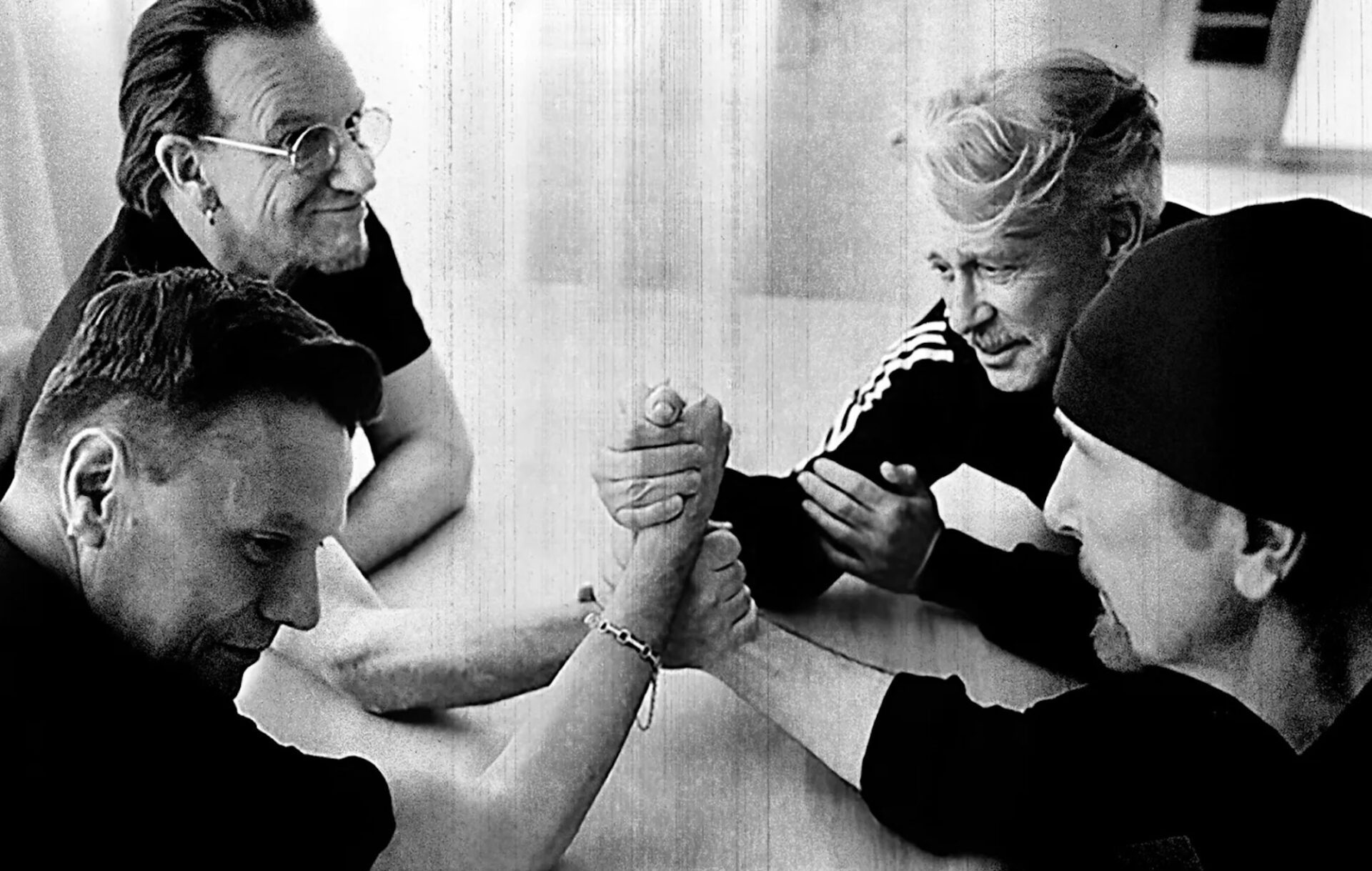
c/o RollingStone UK - "U2 surprise-drop politically charged ‘Days of Ash’ EP with six new songs"

The collection delves into ICE, Israel, the West Bank, Ukraine, Iran — and features a guest vocal by Ed Sheeran

U2 (RollingStone UK - Picture: Anton Corbijn) 

By Andy Greene

'U2 have emerged from a long hiatus with a surprise six-song EP, Days of Ash, available now, in which they address political flashpoints around the world, including ICE raids in the US, the Iranian uprisings, the war in Ukraine, and Israeli settlements in the West Bank.

The six songs — ‘American Obituary’, ‘The Tears of Things’, ‘Song of the Future’, ‘Wildpeace’, ‘One Life at a Time’ and ‘Yours Eternally’ (featuring Ed Sheeran and Taras Topolia) — are all on streaming platforms. They’ve also created lyric videos for each one.' 

Continued ...


Previously: conflict : war : hope : peace

Monday, February 16, 2026

The UK Dementia Awards 2026

Dear CHAIN member,

We would like to draw your attention to the following opportunity. Please pass on as appropriate. Thank you.

Dementia Community

The UK Dementia Awards 2026

The awards are judged by a panel of dementia experts, including people with lived experience, ensuring that every nomination is seen, valued, and understood.

Whether nominating a colleague, a team, a service, or someone whose quiet dedication deserves the spotlight, this is the chance to say: you matter, and your work matters too.

Friday 27 February 2026, 5pm: Nominations Close.

For more details please see: https://journalofdementiacare.co.uk/awards/listings
Regards,

Irina Johnston

CHAIN Administrative Assistant


If you wish to publicise information on the CHAIN Network please email your request to: enquiries AT chain-network.org.uk


CHAIN - Contact, Help, Advice and Information Network – is an online international network for people working in health and social care. For more information on CHAIN and joining the network please visit website: www.chain-network.org.uk


Follow CHAIN on X: @CHAIN_Network ; Connect with CHAIN on LinkedIn

Previously: 'dementia' : 'carer'

Tuesday, February 10, 2026

'Why is it so hard to find an NHS dentist?' BBC Radio 4 - Inside Health


'Dentistry is high on the public and political agenda. There have been dozens of headlines about access to NHS dentistry, with some people having to travel huge distances to find a dentist, or being put onto long waiting lists to get an NHS appointment.

In this episode of Inside Health, James Gallagher is joined by chairman of the British Dental Association Eddie Crouch, the Oral Health Foundation's Dr Rachael England, and consultant oral surgeon Tom Thayer. Together, they drill into the issues surrounding NHS dentistry. Along the way, they discuss possible solutions, whether contract reforms will help, and the potential future of dentistry in the UK.

Presenter: James Gallagher
Producers: Alice Lipscombe-Southwell and Thomas Hunt
Production coordinator: Stuart Laws
Content editor: Ilan Goodman'

Source & image: https://www.bbc.co.uk/programmes/m002r3nn

Latest paper re. Hodges' model:

S. Bettiol, P. Jones, H. A. Onyedikachi, and W. G. Kernohan, (2026) Bridging Gaps in Oral Health Frameworks: Mapping With Hodges' Health Career - Care Domains - Model, Journal of Public Health Dentistry. 1–14, https://doi.org/10.1111/jphd.70034

Tuesday, October 28, 2025

Careif report: The Health Needs of the Indo-Caribbean Community in the United Kingdom

'The Indo-Caribbean community has played a key part in the life of the United Kingdom, but this has not often been recognised. Little is known about this populations’ physical and mental health needs and its experience of health and social services in the UK.


This report, The Health Needs of the Indo-Caribbean Community in the United Kingdom, examines the history of the Indo-Caribbean community in the UK, the prevalence of mental health conditions among the community, barriers to accessing mental health services, and the existing services available.'


Includes:
"The absence of a unique category designating ‘Indo-Caribbean’ as a unique category in the UK Census was identified as a major barrier to obtaining vital epidemiological data on the UK’s Indo-Caribbean population."

Above text:
https://www.careif.org/news-and-events/2025-10-9-careif-report-the-health-needs-of-the-indo-caribbean-community-in-the-united-kingdom


n.b. 
In my community mental health nursing career in Chorley, Preston, and West Lancashire as services were established, the diversity of the local populations was evident, but there was an assumption that many communities were essentially 'closed': one explanation for lack of referrals from specific racialised communities - was that some communities 'looked-after their own'.

Of course this can be racism (acute or subtle), an excuse for inaction, delayed response, lack of action - outreach and translation services. There were marked examples of intervention. I have seen first-hnad interpreting and translation services in action since full-time retirement and the services offered are amazing for the insights and care delivery they can facilitate. Is this why we also need mental health nurses and the team? To translate in challenging circumstances, even by being there, seeking avenues, giving time - especially in instances of psychoses and doing so safely (for all)?

In addition to the main body of Careif's report and its recommendations, it may be helpful to consider the report's key terms relating them to the domains of Hodges' model? I also note reference to the bio-medical model as an explanatory framework. A conference abstract has been submitted today for April 2026, highlighting the need for bio-psycho-socio-political model / framework (Hodges' model - of course?).

See also:
RCN North West Multicultural Group