Hodges' Model: Welcome to the QUAD: climate

Hodges' model is a conceptual framework to support reflection and critical thinking. Situated, the model can help integrate all disciplines (academic and professional). Amid news items, are posts that illustrate the scope and application of the model. A bibliography and A4 template are provided in the sidebar. Welcome to the QUAD ...

Showing posts with label climate. Show all posts

Thursday, June 25, 2026

To which care/knowledge domain does this video belong?


P.S. There isn't a domain called 'bin' but there is plenty of waste.

There isn't one called denial, or ignorance either, but you will find them in abundance too.

Rest assured (if you still can!) that each domain carries its own truth

Thursday, February 26, 2026

New Journal Alert - Philosophy and Urban Affairs

Dear Philosophers,

I'm pleased to announce that Philosophy and Urban Affairs is now operational. Below is a description.

Philosophy and Urban Affairs is a peer-reviewed journal that explores the ethical, political, epistemological, metaphysical, and social dimensions of cities. Articles may be theoretical, applied, or both, provided they illustrate how philosophical investigation can elucidate, critique, or inform city living.
Unsolicited manuscripts are not accepted. Instead, the journal solicits submissions through public calls on emerging topics or through invitations to scholars working on specific themes. On occasion, a focus article will be published to prompt response papers and foster sustained scholarly dialogue.
Philosophy and Urban Affairs is fully open access and charges no fees of any kind.
Check out the first CFPPhilosophical Perspectives on Coastal and Island Cities

All the best - Shane

Associate Professor of Philosophy
Missouri University of Science and Technology

Shane Epting, in Creating Future Cities, insightfully analyzes complex normative challenges in urban planning and design—from organizing urban residents' political power to building for resilience—and passionately argues that citizens of cities must fight for their cities and their futures. - Ronald R. Sundstrom, University of San FranciscoUSA

My source:

Philos-L "The Liverpool List" is run by the Department of Philosophy, University of Liverpool https://www.liverpool.ac.uk/philosophy/philos-l/ Messages to the list are archived at http://listserv.liv.ac.uk/archives/philos-l.html. Recent posts can also be read in a Facebook group: https://www.facebook.com/PhilosL/ Follow the list on Twitter @PhilosL. Follow the Department of Philosophy @LiverpoolPhilos 

Monday, September 15, 2025

The sands of time are running out ...

... ironic, when the place you most
need blue-sky and long-term thinking,
innovation and action is becoming a desert ...

Individual
|
      INTERPERSONAL    :     SCIENCES               
HUMANISTIC  --------------------------------------  MECHANISTIC      
 SOCIOLOGY  :    POLITICAL 
|
Group


Image(s) © Harry Haysom

With thanks to HARRY HAYSOM - DESIGN & ILLUSTRATION -
and for being able to edit and apply this work to Hodges' model.

Visiting bookshops regularly, following the media and https://harryhaysom.co.uk/

 - I realise I'm more aware of Harry's brilliant work than I thought.

https://www.instagram.com/harryhaysom

My source: FT Magazine, January 4/5 2025. p.10.

Friday, September 05, 2025

Submit your pitch for Black History Month 2025

London Arts and Health
and The Culture Health and Wellbeing Alliance


To celebrate Black History Month this year, London Arts and Health and The Culture Health and Wellbeing Alliance will commission six artists to explore and showcase their creative practices. This initiative is rooted in the belief that the arts can be a powerful force for health, climate justice, and cultural empowerment.

More details ...

Monday, December 16, 2024

Fragile: This way up - Frozen goods!

Apollo 17 'Blue Marble' Photograph
 
Apollo 17 1972 NASA Original Blue Marble Photograph

Or, some water 'heading your way' ...
'NASA’s archival designation for it is AS17-148-22727, and the original image was taken upside down with the South Pole at the top. In its myriad reproductions, it’s flipped up to match what we would normally expect to see.'

Text: https://www.thephoblographer.com/2013/12/09/behind-blue-marble/


Does the model still 'work' -

Group
|
 POLITICAL        :     SOCIOLOGY  
MECHANISTIC --------------------------------------  HUMANISTIC
            SCIENCES       :    INTERPERSONAL
|
Individual
POLITICAL

SOCIOLOGY

SCIENCES

INTERPERSONAL


- this way ...?

Image source: https://www.forum-conquete-spatiale.fr/t15428-apollo-17-1972

Prompt for 'Blue Marble' - Plate 1 in Brotton, J. (2024) The Four Points of the Compass: The Unexpected History of Direction, London: Allen Lane.

Previously: 'compass'

A planet is not just for Christmas.

Wednesday, October 16, 2024

2025 6th edition of "Seed Projects for Interdisciplinary Research"

Para quem possa ter interesse. / To whom it may concern.

Caros/as Coordenadores/as das Unidades I&D da UC,  

Caros/as Gestores/as de Ciência, 


A pedido do Vice-reitor para a Investigação e Diretor do Instituto de Investigação Interdisciplinar (IIIUC), Professor João Ramalho-Santos, i
nformamos que estão abertas as candidaturas para a 6ª Edição de financiamento dos "Projetos Semente de Investigação Interdisciplinar", com o apoio da Fundação Santander, promovido pelo Núcleo das Áreas Estratégicas da UC (NAE), em colaboração com o Instituto de Investigação Interdisciplinar (IIIUC). 


Com este concurso, a UC pretende continuar a apoiar o desenvolvimento inicial de projetos de investigação originais e interdisciplinares com um financiamento semente que permita aos investigadores e às investigadoras da UC tornarem as suas propostas científicas mais robustas, de forma a assegurar financiamento competitivo no futuro e o desenvolvimento de novas linhas de investigação que cruzam áreas do saber na Universidade de Coimbra.


Irão ser financiados até cinco projetos de investigação interdisciplinar, uma em cada Área Estratégica da Universidade de Coimbra:  Saúde; Clima, Energia e Mobilidade; Recursos Naturais, Agroalimentar e Ambiente; Digital, Indústria e Espaço; Património, Cultura e Sociedade Inclusiva.


Poderão concorrer a este financiamento investigadores/as integrados/as nas Unidades I&D (ou noutras estruturas da Universidade de Coimbra) que desenvolvam investigação na UC e que obtiveram o doutoramento após 1 outubro de 2014. A equipa do projeto deve incluir de três a seis Investigadores/as da UC, de pelo menos duas Unidades I&D de
domínios científicos distintos. 


As candidaturas podem ser submetidas até 6 de dezembro de 2024, às 17h na página web do concurso:
 

https://www.uc.pt/iii/iiiuc-apoia/seedprojects-uc/edicao-2025/  


Estão disponíveis nesta página as normas do concurso, modelo para submissão de candidatura e a lista de júri nomeado para esta edição.


Atenciosamente,
 

O Núcleo das Áreas Estratégicas 


Isabel Neves 
 

Maria João Neves   

Natacha Leite   

Shiva Saadatian   


*******************

On behalf of the Vice-rector for Research and Director of the Institute for Interdisciplinary Research (IIIUC), Professor João Ramalho-Santos, we would like to inform you that applications are now open for the 6th edition of "Seed Projects for Interdisciplinary Research", with the support of Santander Foundation, promoted by the UC Strategic Areas Unit (NAE), in collaboration with the Institute for Interdisciplinary Research (IIIUC).  


Through this call, the UC intends to provide support for the initial development of original and interdisciplinary research projects with seed funding that will allow UC researchers to make their scientific proposals more robust, ensuring competitive funding in the future and the development of new research lines that cross areas of knowledge at the University of Coimbra. 


There will be funding for up to five interdisciplinary research projects, one in each of the UC Strategic Areas: Health; Climate, Energy and Mobility; Natural Resources, Agri-food and Environment; Digital, Industry and Space; Heritage, Culture and Inclusive Society. 


Researchers of the R&D Units (or other structures of the University of Coimbra), who carry out research at the UC and who obtained their doctorate after 1 October 2014 are eligible to apply for this funding. The project team must include three to six researchers from the UC, from at least two R&D Units in
different scientific fields 


The applications can be submitted until 6 December 2024 at 5pm on the call website: 
 

https://www.uc.pt/en/iii/iiiuc-supports/seedprojects-uc/2025-edition/  


The call guidelines, proposal template and the list of juries appointed for this edition are available on this page. 


Yours sincerely,  

Strategic Areas Unit 


Isabel Neves   

Maria João Neves    

Natacha Leite    

Shiva Saadatian 

Universidade de Coimbra • Reitoria • Administração | University of Coimbra • Rectory • Administration

Serviço de Promoção e Gestão da Investigação | Research Management Service

Núcleo das Áreas Estratégicas | Strategic Areas Unit

Polo I | Rua Larga • Edifício da FMUC (1º piso) • 3004-504 COIMBRA • PORTUGAL

Polo II | Casa Costa Alemão • Rua Dom Francisco de Lemos • 3030-789 COIMBRA • PORTUGAL

https://www.uc.pt/spgi/nae/ 

Thursday, October 10, 2024

British Computer Society: AI for One Health and Planetary Health

 BCS SPECIALIST GROUP ON ARTIFICIAL INTELLIGENCE (BCS SGAI)! 

AI for One Health and Planetary Health: Where Are We?

Friday November 8th 2024 - British Computer Society London Office (near Moorgate Underground)

Invitation to Register

http://www.bcs-sgai.org/health2024/

A full-day event with invited talks on the following topics:

  • One Health and Planetary Health: the case for considering a unified health perspective
  • Translational Diagnostics in Companion Animals
  • Mixed AI approaches to surfacing information hidden in veterinary electronic health records
  • Hands-on Tutorial: Low-Code/No-Code AI: Democratise AI for Text, Images, and Audio
  • AI for One Health and Planetary Health: is there a generic framework?
  • Low-Code/No-Code AI for Biomedical Image Classification: Visual Impairment as a case stud
  • Low-Code/No-Code AI for Planetary Health: World Fisheries and Aquaculture as a case study
The  21st  century  brings  major  global  challenges,  including  climate  change  and  rapid  population  ageing, calling  for  transdisciplinary  involvement  of  diverse  sectors  and  stakeholders,  including  academics  and students, companies and societal organisations. One Health considers human health, animal health, and our shared  environment  as  parts  of  a  deeply  interconnected  system.  Our  environment  is  changing  and  it  is affecting  our  health.  Planetary  Health  emphasises  that  everything  is  connected:  "the  quality  of  the  air  we breathe and of the water we drink, the quality and quantity of food we produce, our exposure to infectious diseases, and even the habitability of the places where we live". Digitalisation is happening in both human and veterinary medicine. Human-AI collaboration can bring humans and AI together to gain more valuable insights  than  either  could  achieve  alone. The  event  comprises  a  number  of  talks  with  speakers  from  the Animal  and  Plant  Health  Agency  (APHA.gov.uk),  Veterinary  Health  Innovation  Engine  (vHive),  Small Animal  Veterinary  Surveillance  Network  (SAVSNET),  National  Health  Service  (NHS)  England,  and  UK universities.  

Low-code/no-code AI is on the rise with Large Language Models (LLMs) at its core, including multimodal LLMs that can produce content (text, image, video, or audio/speech) as output (generative AI). Come along to the hands-on tutorial if you are interested in content generation and content analysis of text, images and  audio  with  open-source  LLMs from  Google,  Facebook,  Microsoft  and  OpenAI  in  just  3  lines  of python  code  (low-code  AI)  and  LLM  prompting  (no  code  AI).  The  exercises  can  be  executed  in  1  to  5 minutes using Google Colab (free of charge for basic use and without setup to use).  

There will be Certificates of Attendance for those who register and attend the event.

We hope that you will come and join us, and that you enjoy this new offering from the BCS SGAI.

Full details are available at http://www.bcs-sgai.org/health2024/

Reduced delegate fees!!
The  delegate  fee  is  just  £50  plus  VAT  for  BCS  and  SGAI  members  and  £90  plus  VAT  for  others. This includes  attendance  at  the  event,  lunch  and  refreshments.  A  special  rate  of  £35  plus  VAT  is  available  for students. A Group Discount Rate is available for group bookings of three or more.

--------------------------------------------------------
To register for future mailings about SGAI events go to http://www.bcs-sgai.org/register/

Max Bramer
Chair BCS Specialist Group on Artificial Intelligence (bcs-sgai.org)

Sunday, October 06, 2024

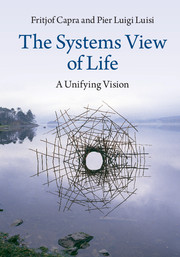
[v] Book: The Systems View of Life - A Unifying Vision

The Systems View of Life -
A Unifying Vision


Part IV begins with the ecological dimensions of life. There's a reminder that ecology, comes from the Greek 'oikos' for "household". We need this -

move you rubbish (don't leave it in the first place), wipe your feet; switch the lights off when not in use, assuming you have them!; close and open the windows as needed; think less 'location, location, location' and having a home.

Given the pictorial form of Hodges' model - mind-mapping - I've always been attracted to diagrams, no-less here the pioneering work of the Odum brothers and 'Odum flow diagrams' which even today are an ecological currency in the literature (p.344-45). An update on ecosystems as dissipative structures and as autopoietic would be helpful. Of course, now for scholars and students have search terms then resources and learning can follow. While ozone depletion is acknowledged, the role of the atmosphere could possibly be (briefly) expanded (guest essay, box?), in-particular the role of the Van Allen belts and the fact of Earth's magnetic field and (still) molten core. 16.2.3 definitely points the way pp.348-351.

16.3.1 Defining sustainability - made me sit up. Lester Brown's 1980's work is not referenced in:

Jones P, Wirnitzer K. Hodges’ model: the Sustainable Development Goals and public health – universal health coverage demands a universal framework. BMJ Nutrition, Prevention & Health 2022;5:doi: 10.1136/bmjnph-2021-000254 (From the bibliography listing in the sidebar of this blog.)
It was Brown who defined sustainability, and the question is ongoing regards how to build a sustainable society (p.352). Key as Capra 2002 notes is that a sustainable human community would not interfere with nature's inherent ability to sustain life. Ecological literacy 16.3.2 was also welcome; a constant theme on this blog, given the many claimed forms of literacy, as with (schools of) informatics. The informational perspective can reveal its power across literacies and informatics, consider media and information literacy? A way to paraphrase the authors: "The market and the marketplace is information disordered." (p.354).

Three chapters include descriptions of agencies (with links) that work with knowledge in an interdisciplinary way; where ecological and spiritual dimensions of education are emphasized; and in chapter 18 several other centers of learning. Chapter 16 looks at organisations with a focus on ecoliteracy in schools, colleges and universities. Checking some of the links many are ongoing - alive!
Struck in the past by the original approach of Goethe to 'science', his work on patterns is described in the introduction and here in relation to the arts and curricula. You will find 'art' sprinkled throughout the posts on W2tQ. Key concepts are described networks, flows, cycles, nested systems, dynamic balance, and development. Chapter 17 joins the dots of the world's problems. 'Growth' appears a disposable term, in how it is applied and so little understood, even by politicians and policy makers? Recent UK politics is a prime example. There is a another concurrent thread (to informatics and literacy) on this blog, as it is inbuilt, hard and soft-wired into the structure of Hodges' model. It is dichotomy, polarity and oppositions, specifically, objective - subjective, quality - quantity.
'In fact, the new systemic conception of life makes it possible to formulate a scientific concept of quality. It seems that there are two different meanings of the term - one objective and the other subjective. In the objective sense, the qualities of a complex system refer to properties of the system that none of its parts exhibit. Quantities like mass or energy tell us about the properties of the parts, and their sum total is equal to the corresponding property of the whole - e.g., the total mass or energy. Qualities like stress or health, by contrast, cannot be expressed as the sum of properties of the parts. Qualities arise from processes and patterns of relationships among the parts. Hence, we cannot understand the nature of complex systems such as organisms, ecosystems, societies, and economies if we try to describe them in purely quantitative terms. Quantities can be measured; qualities need to be mapped (see Section 4.3).
With the recent emphasis on complexity, networks, and patterns of organization, the attention of scientists in the life sciences has begun to shift from quantities to qualities, and there has been a corresponding conceptual shift in mathematics. In fact, this began in physics during the 1960s with the strong emphasis on symmetry (see Section 8.4,3), which is a quality, and it intensified during the subsequent decades with the development of complexity theory, or nonlinear dynamics, which is a mathematics of patterns and relationships. The strange attractors of chaos theory and the fractals of fractal geometry are visual patterns representing the qualities of complex systems (see Sections 6.3 and 6.4). 

In the human realm, the notion of quality always seems to include references to human experiences, which are subjective aspects. This should not be surprising. Since all qualities arise from processes and patterns of relationships, they will necessarily include subjective elements if these processes and relationships involve human beings.' pp.368-369. (My emphasis - and encouraging for research and researchers in Hodges' model)
The authors point out how the conjoining of 'sustainable development' is problematic when viewed in qualitative and quantitative terms (17.2.2 pp.369-371). I wonder what Capra and Luis would make of the SDGs and the metrics employed today? This has been an issue (reading for Jones & Wirnitzer, 2022), with measures needing to catch up and the disruption of COVID. There really is a case for economic literacy for people globally, as 'freedom' is so readily passed-off - associated with economics and trade as a 'right'. Another potential update revolves around globalisation, what would they make of Doughnut economics?

An additional risk now are the bitcoin factories and energy needed to drive AI data-processing. How transparent are global corporations in declaring their energy use? The LIBOR scandal is raised, but what the cost involved in Bankman-Fried and FTX-Alameda Research fraud? Capitalism is built on speculation and always will be? But if we defer 'paying' for economic transformation in a decade the costs will rapidly increase. Capra and Luis acknowledge the need to think about future generations. An ethical stance that is, thankfully, changing policy, and deserves attention.

I pencilled in the margin - what is the conclusion of the lesson of Argentina? Do the economists, the IMF, the World Bank, the Argentinian people know? What of the economic predilections of other nations? Who are the exemplars, the pioneers? Must Africa follow the West's bad-habits? Can they leap-frog technologies (land-lines, fossil fuel reliance ...)? I understand they are! In the West, do we need to re-invent public information services, to address the prevailing mindset? Even as the financial industry has passed-through a 'quant' phase, but mathematics still (and will always) hold sway (p.379).

Page 381 reminded me of the need for gainful employment, and how this is threatened and has always been threatened by technology (very broadly defined). The varied forms of parity of esteem become evident not just in health (mental - physical); education (technical - vocational), but employment too, especially with automation and artificial intelligence. The decade since the book was published leaves room for new content: what might replace or complement The Occupy Movement, The Seattle Coalition? The socio-political rate of change is remarkable. Greta Thunberg and Extinction Rebellion, for example, are clearly post-publication. The claimed rationale for business as usual in 'trickle down economics' remains relevant (sadly) p.384. More could be made now of the two numbers - 565 gigatons and 2,800 gigatons of carbon (350.org); and the current debate on carbon capture (Ah! p.408). 

I have over the years associated the intra- interpersonal domain with the individual's cognition, reasoning, logic, intellect, thought, and education. Collectively though we need to invert this:

individual
|
INTERPERSONAL : SCIENCES
humanistic ------------------------------- mechanistic
SOCIOLOGY : POLITICAL
|
group
education
EDUCATION

EDUCATION
EDUCATION


It is essential for every person to be informed were possible, to get to this situation (e.g. this book in a sense is an appeal for the public's understanding of science; and our political leaders):


individual
|
INTERPERSONAL : SCIENCES
humanistic ------------------------------- mechanistic
SOCIOLOGY : POLITICAL
|
group
EDUCATION
EDUCATION

EDUCATION
ANOTHER WORLD
IS POSSIBLE!


Chapter 18 pulls everything together (and provides HOPE) in systemic solutions. The previous post:

- drew on this chapter (p.398). I didn't realise 'commercial speech' is protected in the USA. 

As expected - a moral compass is still needed (p.430). I really the section on acroecology. It might be an idea to read this final chapter first. If there is a response to the question (there's no answer) as to why we are here - this is it. Biotech has its section, genetic engineering, the scope and risks, as does, the third industrial revolution, citing Rifkin's five pillars (2011). Agribusiness, world hunger, and the twelve myths:

'At a time of unprecedented wealth, when almost one-half of all Americans own stocks and are able to watch their wealth and economic power grow on the nightly news, it is good to remember that over 800 million people worldwide are passing the same nights unable to feed themselves and their children. A full quarter of other Americans, especially children, have much in common with the world’s hungry, experiencing their own hunger intermittently. Frances Moore Lappe and co-authors Joseph Collins and Peter Rosset in World Hunger: 12 Myths are there to remind us. Remind us of the plight of the world’s hungry, as Frances Moore Lappe has done for over 20 years, and remind us too that there is enough food; that hunger is not necessary; that hunger is a social creation; hungry people a social phenomenon, and consequently one that depends on us and that we can change.'

https://www.worldhunger.org/world-hunger-12-myths/ 

The chapter and book closes with a meditation regards hope. A comprehensive bibliography and index follows.

Despite the age of this book it has proved well-worth reading. I am glad I pursued my original request for a review copy. Well recommended and I wonder if there would be another edition? Clearly this would take a great effort, but then needs must? I will revisit the chapter on health. In the past week, the  the UK's last coal power plant closed (BBC News). Change is happening. And the weather globally of recent months cannot be denied. 

My thanks are extended to the team at Cambridge University Press for the paperback copy.

Fritjof Capra and Pier Luigi Luisi (2014) The Systems View of Life - A Unifying Vision. Cambridge: Cambridge University Press.

https://www.cambridge.org/gb/universitypress/subjects/life-sciences/genomics-bioinformatics-and-systems-biology/systems-view-life-unifying-vision?format=HB&isbn=9781107011366


Tuesday, October 01, 2024

[iv] Book: The Systems View of Life - A Unifying Vision

The Systems View of Life -
A Unifying Vision


If you are about to start studying biology, Part 3 'A new conception of life'  is an excellent introduction to some broad and yet pivotal concepts. I haven't checked the 'current' curricula for biology or human biology, but I suspect there is content provided that may be missing? How are biology curricula characterised? If the 'subject' is comprehensively covered at school - college, there may still be value in the way in which they are presented in TSVoL. And, yes the book is a decade old. There's a step-wise development, that is coherent and fascinating.

The opening sentences to chapter 7, which asks 'What is Life?' :

'7.1 How to characterize the living

It is a common understanding that it is impossible to provide a scientific definition of life which is universally accepted. This stems from the fact that the background of scientists dealing with the question - biologists, chemists. computer scientists, philosophers, astro-biologists, engineers, theologians, social scientists, ecologists differs considerably from one another, depending on one's conceptual framework. In this book, we will not dwell so much on the question of a unique definition of life a single sentence catching all the various aspects of life - but rather, we will consider the more general question: what are the essential characteristics of a living system?' p.129.

- for some reason puts me in Plato's Cave? Maturana and Varela would (and do) have very broad shoulders by now. Autopoiesis is described with structure, systems (of course), self-maintenance, nonlocalization, coupling, and emergent properties. 'Life is a factory that makes itself from within'. p.132. Well that will do me. Even though we talk of political, social and psychological processes, I've always associated the SCIENCES domain of Hodges' model with processes. This includes whether the processes are biological, manufactured by human hand/intellect, such as, industrial working, project management and planning.

For life, initial descriptions concern the cell, DNA, RNA, cell walls and the cellular logic of life. Key is life's interaction with the environment. This is emphasised 7.2.4 and 7.4. I gained a lot of encouragement from:

'According to Maturana and Varela (1980, 1998), the organism interacts with the environment in a "cognitive" way whereby the organism "creates" its own environment and the environment permits the actualization of the organism.' p.134.

It is not just mind - but 'embodied mind'. The joy (for Hodges' model) continues with the impact of social autopoiesis in the social sciences.  

'While behaviour in the physical domain is governed by the "laws of nature,' behavior in the social domain is governed by rules generated in the social system itself.
Thus, two questions arise: is it meaningful to apply the concept of autopoiesis to these domains at all, and, if so, to which domain should it be applied?' pp.136-37.

It's almost like Descartes has taken on a quantum property. We don't know when life is physical (time, space, velocity) and when it is mental - cognitive? Contemplating life, death is never far behind (taxes p.419 if you're wondering). The ethics of death and dying are acknowledged in medical intervention (or not) and religious beliefs and edicts. Again the figures are helpful, illustrating the dynamic modes of an autopoietic unit: homeostasis, reproduction, and death of a cell (p.138). The trilogy of life then is also illustrated as environment, cognition, and autopoietic unit (p.142). When it comes to knowledge domains (social science & ecology) are clearly ubiquitous too.

Concepts of Modern Mathematics
Ian Stewart, 1975

It is Chapter 8 that delivers the biological goods. Beginning with a fascinating account of molecular, or prebiotic evolution, giving rise to biological structures and the interplay of soaps and lipids - "amphiphilic" substances, with molecules that contain a hydrophilic (water loving) head group, and long hydrophobic (water-hating) chains. Well illustrated too, box 8.1 describes 'Surfactants, lipids, and liposomes'. Self-organization, emergence are skillfully threaded together and with creativity - the generation of new forms. Unsurprisingly, Gaia is highlighted 8.3.3 and in a guest essay 'Daisyworld' by Stephen Harding of Schumacher College; which also reminded me of the 1970's BBC drama 'Edge of Darkness'. Maths has another turn in the text; a chiral one. Biomathematics is posited as a new mathematics frontier: here - the numerology of plant growth, the golden section (there's one primary context?), nature's spirals, and symmetry breaking. This helps my current return to maths (the struggle!) trying to get to grips with basic concepts. Ian Stewart is cited, later work than 1975's 'Concepts' I must seek out the 'Mathematics of Life' 2011/12.

Darwin, the resulting biological revolution, history, polymers, peptides and proteins plus DNA and RNA continue a suitably in-depth treatment of 'life' in chapter 9. The conclusion on Darwinism today and the status of genes in science and relation to our identity, being and the effect of chance and contingency is worth being reminded of. In mental illness - psychiatry and psychology a sometimes vitriolic debate continues.  Commercial realities are also apparent, the extent of their influence described: the race to map the human genome. In the text protein folding has advanced markedly since the book's original publication. Now new commercial pressures allied with artificial intelligence make you wonder how the author's would deal with this new 'content'? Exobiologists will enjoy chapter 10 as the focus is planetary: the origins of life on Earth. Useful, basic chemistry figures here - informational and functional (concentration). The notion of 'cognitive' is raised again - information carrying. 

While we are concerned for all life, chapter 11 takes in the human adventure, including the determinants of being human. 'Determinants' have taken on more import today. Chapter 12 in addressing 'Mind and consciousness' is helpful in the approach, the easy and hard problems of consciousness, types of consciousness, schools study. There is another guest essay. Chapters 13-15 deal with spirituality (inc. eco-literacy); life mind and society (I wonder if topology does have a role in the mental realm? (p.311). Chapter 15 is a gift for healthcare professionals - 'The systems view of health' with the question, 'What is health?'. Not to diminish this statement, but I will return to this subsequently; whether in the closing post for this 'review,' or afterwards. This completes part III of what is a great read.

Many thanks again to CUP for the paperback copy, much easier on the eyes. While this copy is new, I do make extensive use of secondhand books.

Fritjof Capra and Pier Luigi Luisi (2014) The Systems View of Life - A Unifying Vision. Cambridge: Cambridge University Press.

https://www.cambridge.org/gb/universitypress/subjects/life-sciences/genomics-bioinformatics-and-systems-biology/systems-view-life-unifying-vision?format=HB&isbn=9781107011366


Sunday, September 22, 2024

Book: [iii] 'The Systems View of Life - A Unifying Vision'

The Systems View of Life -
A Unifying Vision


Part 2 addresses the title - the rise of systems thinking.

The part - whole distinction is not only the root of the reductionism - holism and analysis - synthesis debates, but you feel clever knowing what mereology means ;-). This book is jargon free, even while being detailed and technical when necessary. Terms are defined when needed.

You see (possibly?) the power of advertising given the prominence of vitality in marketing. Meanwhile, vitalism a key to life seems to be an unknown, ever present but in the shadows, until our attention is drawn to it (health: life-death). Capra and Luisi explore mechanism and vitalism, and in turn organismic biology. Whether dealing with science, economics, biology..., I like the way the authors draw in the initial thinkers, the pioneers: whose lives, work and influence often spanned the 19th and 20th centuries. 

The proof of my opening statement in post (i) can be found on page 66:

'Systems thinking is "contextual," which is the opposite of analytical thinking. Analysis means taking something apart in order to understand it; systems thinking means putting it into the context of a larger whole.' p.66.

Ever user(s)-determined (context-based), Hodges' model can readily identify, relate, incorporate the - linear, non-linear, serial, parallel, simple, complex, poor, rich, narrow, broad, static, dynamic, person, service and so on. Also on page 66, Ehrenfrels (1859-1932) is an example, the first to use the term gestalt to denote an 'irreducible perceptual pattern'. There are many potentials within Hodges' model, one of which is that of gestalt. Yes, in healthcare we need to see the whole. We need to see the person, but also see the person in their social, political and spiritual contexts ('determinants)'. Now the global context is critical.

Chapter 4 charts the new physics atomic phenomena, mysticism, uncertainty, probability, causality, space, time, energy, and E=mc2. As per the book's subtitle, the search for a unifying theory in physics is noted, and ongoing. Box 4.1 briefly outlines the characteristics of systems thinking; including parts-whole, from objects to relationships and measuring to mapping. Within box 4.1, figure 4.1 reminds me of a Voronoi tessellation.^ From chapter 5 can I claim that Hodges' model is tektological - contributing to the science of structures? One day perhaps this Russian contribution to systems thinking can be looked at anew? Chapter 5 continues to reveal classical systems theories, general systems, cybernetics, feedback - in social systems too, and homeostasis - self-regulation. It's less than a page spanning 92-93,  but 'information theory' is duly noted, closing with cybernetics in the brain, and the emergence of self-organization. Shannon showed that even when there is noise in a communication channel, signals can be transmitted (coding). Is this why training and competence in interpersonal skills and self-awareness are so important, to help health professionals to attend, actively listen, and observe?*

An old T-shirt 'Art Matrix'


Chapter 6 on complexity theory, inevitably describes mathematical ideas providing equations. Unsurprisingly chapter 6 has figures galore. When I unpack the boxes and crates, I must sit down with The Beauty of Fractals ... (p.124!) and check the graphic capabilities of the latest software and hardware. The 'The Systems View of Life' definitely stimulates further enquiry. The baker transformation anyone (Box 6.2, p.107)? Exploration of non-linear dynamics, and abstract spaces also helpful in studies of relations and maths. This completes part II.


Many thanks again to CUP for the pb copy, much easier on the eyes. While this copy is new, I do make extensive use of secondhand books.

Fritjof Capra and Pier Luigi Luisi (2014) The Systems View of Life - A Unifying Vision. Cambridge: Cambridge University Press.

https://www.cambridge.org/gb/universitypress/subjects/life-sciences/genomics-bioinformatics-and-systems-biology/systems-view-life-unifying-vision?format=HB&isbn=9781107011366

^See: https://blogs.helsinki.fi/fcai-sig-lsc/files/2022/04/Peter-Gardenfors.pdf and 'conceptual spaces'

*Jones, P. (1996) Humans, Information, and Science, Journal of Advanced Nursing, 24(3),591-598.

Jones, P. (1996) An overarching theory of health communication? Health Informatics Journal,2,1,28-34.

Friday, September 20, 2024

Book: [ii] 'The Systems View of Life - A Unifying Vision'

The introduction highlights the oscillation through history between reductivism, holistic and integrative perspectives; the relationship between theology and the claims for and crystallisation of knowledge and the sciences. The development of cybernetics and systems theory in the 1950s and 1960s does not have it all its own way: 

'The eclipse of systems thinking from pure science had become so complete that it was not considered a viable alternative. In fact, systems theory began to be seen as an intellectual failure in several critical essays. One reason for this harsh assessment was that Ludwig von Bertalanffy (1968) had announced in a rather grandiose manner that his goal was to develop general systems theory into "'a mathematical discipline, in itself purely formal but applicable to the various empirical sciences.'' He could never achieve this ambitious goal because in his time no mathematical techniques were available to deal with the enormous complexity of living systems.' p.11.

(With Zeeman's book on Catastrophe Theory on-loan at present the above is helpful.)

I've picked up a book of Arne Naess's, put it down again: or did I buy 'The Ecology of Wisdom'? I can't check at present (the books I've left are all boxed / created), but Naess sets the scene for the mechanistic worldview.

'Care flows naturally if the 'self" is widened and deepened so that protection of free Nature is felt and conceived as protection of ourselves. .. Just as we need no morals to make us breathe... [so] if your "self" in the wide sense embraces another being, you need no moral exhortation to show care.. . You care for yourself without feeling any moral pressure to do it. (quoted by Fox, 1990, p. 217)
'What this implies, according to the eco-philosopher Warwick Fox (1990), is that the connection between an ecological perception of the world and corresponding behavior is not a logical but a psychological connection. Logic does not lead us from the fact that we are an integral part of the web of life to certain norms of how we should live.' p.14.
Science fiction gives you an appreciate of 'deep', even if not initially the philosophical connotations. Deep space, A.C. Clarke's Deep Range, and more recently deep time brought me to consider deep care on the old website and here on W2tQ with Hodges' model a means of navigation. Naess refers to shallow and deep ecology. Now we also have deepfakes, although the climate change deniers may struggle to believe their deepfake - that is: reality.  Although the book was published pre-sustainable development goals, sustainable development is discussed in detail. For me, the climate change and the SDGs demand we consider ecology, ecosystems, life, and the Earth across the domains of Hodges' model and the spiritual explored in chapter 13.
 
individual
|
INTERPERSONAL : SCIENCES
humanistic ------------------------------- mechanistic
SOCIOLOGY : POLITICAL
|
group


shallow
|
DEEP


A table on page 13 contrasts several opposites across thinking and values:


As usual, I can't shift beyond the book's introduction, but these points for me underscore the value of the book and Hodges' model. Throughout the blog and papers various dichotomies, polarities, oppositions arise. The structure of Hodges' model lends itself to this, and consequently finding the middle. All the above can be reflected upon in relation to Hodges' model, and also searched.

Chapter 1 explains how the discoveries of Galileo, Descartes, Bacon, Newton and Darwin contributed to the world and life - in biology being viewed mechanistically. The focus of the book is 'Western' and the developed nations; as the main contributor to the current state of the planet. The Cartesian divide - mind & matter/body distinction (p.24) is implicit within Hodges' model:

individual
|
INTERPERSONAL : SCIENCES
humanistic ------------------------------- mechanistic
SOCIOLOGY : POLITICAL
|
group

res cogitans


res extensa


Newton's work is described and the limitations of Newtonian physics - the social sciences presented a challenge(!). Thermodynamics is introduced helpful for subsequent chapters.

For general science students the book provides a historical primer, and even an introduction to the philosophy of science. Chapter 2 is short but conjoins cells, molecules, genes (Mendel, Watson & Crick; Franklin & Wilkins, and others), and mechanistic medicine. 

'This will not change until medical science relates its study of the biological aspects of illness to the general physical and psychological condition of the human organism and its environment, The conceptual problem at the center of contemporary healthcare is the confusion between disease processes and disease origins. Instead of asking why an illness occurs and trying to remove the conditions that led to it, medical researchers try to understand the mechanisms through which the disease operates, so that they can then interfere with them. These mechanisms, rather than the true origins, are seen as the causes of disease in current medical thinking. In the process of reducing illness to disease, the attention of Physicians has moved away from the patient as a whole person.' p.43.

Thinking about this in basic instrumentalist terms the reliance on optics, the craft of telescopes and microscopes to discover the very large (our Milky Way as 'a' galaxy) and the invisible - germs, bacteria must have been a profound factor.

If you are selecting subjects for age 16 exams, do not underestimate the value of SOCIO-ECONOMIC history. It has helped me as a community mental health nurse. Especially in light of austerity (UK), the cost of living and energy crisis and the 'housing disaster' (book 2024 with) posts to follow. Chapter 3 uses b&w illustrations of key figures, such as, Locke, Adams, and Marx. I remember in the media, economics education being questioned. That is part 1: concise (p.59!) and yet still relevant today.

Many thanks again to CUP for the pb copy.

Fritjof Capra and Pier Luigi Luisi (2014) The Systems View of Life - A Unifying Vision. Cambridge: Cambridge University Press.

https://www.cambridge.org/gb/universitypress/subjects/life-sciences/genomics-bioinformatics-and-systems-biology/systems-view-life-unifying-vision?format=HB&isbn=9781107011366