Hodges' Model: Welcome to the QUAD: emotional

Hodges' model is a conceptual framework to support reflection and critical thinking. Situated, the model can help integrate all disciplines (academic and professional). Amid news items, are posts that illustrate the scope and application of the model. A bibliography and A4 template are provided in the sidebar. Welcome to the QUAD ...

Showing posts with label emotional. Show all posts

Saturday, August 01, 2026

Koln 75

The film Koln 75 was very enjoyable ...
'Brandes quit the music business a few years ago, after a very successful career. Why? "Digital formats were taking over the record industry, which was giving away entire repertoires to companies like Apple with a completely idiotic accounting system in the background, which would never, ever allow for the artists to get properly remunerated for their rights. The whole industry thought that digital would be the biggest portion of whipped cream on top of the cake that they would continue to be eating until the end of all time.'"

Instead, inspired by a 1993 study that found that listening to classical music-specifically Mozart-enhances spatial-temporal reasoning, and by Don Campbell's bestselling 1997 book The Mozart Effect: Tapping the Power of Music to Heal the Body, Strengthen the Mind, and Unlock the Creative Spirit. Brandes studied psychology at university and then, funded by the Austrian Ministry of Culture, established the Research Program for Music-Medicine at the Paracelsus Medical University in Salzburg. "Being a music producer, I dreamt about doing scientific research on the effect of music and trying to figure out what effects music has on us - cognitive, emotional, whatever," she says. "Since then I have developed a method to use music to help people with chronic depression."
individual
|
INTERPERSONAL
: SCIENCES             
humanistic ------------------------------- mechanistic
SOCIOLOGY : POLITICAL   
|
group


cognitive
emotional
chronic depression


Jazz


Stuart Jeffries, How a teenager helped to make jazz history, Life&Arts, FTWeekend, 30/31 May 2026. p.15.

See also: https://www.youtube.com/watch?v=3CrFdGMj4cM
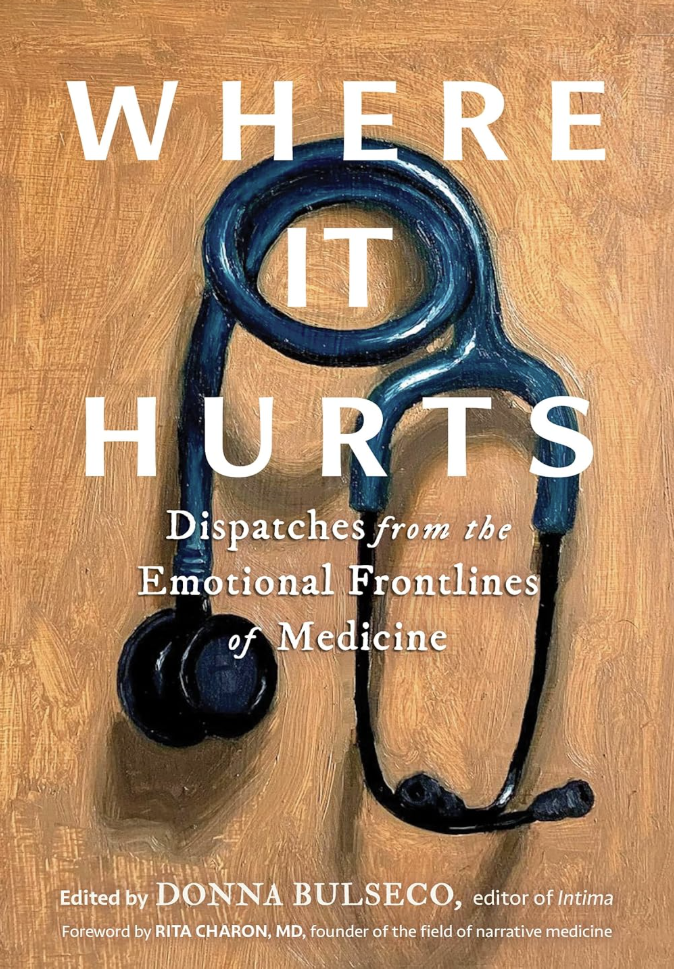
Tuesday, January 27, 2026

c/o Intima 'Reflect on the World' . . .

CARE/of Intima:

REFLECT ON THE WORLD WITH US EVERY FRIDAY AT NOON.

No pressure, but we want to remind you that every Friday, around noon EST, we post a Crossroads blog—a short reflection that contributors from our current issue do on something from our archives.

Think of “Friday at noon” as a blip in your busy life where you take time to yourself to reflect on our small part of the universe. Pause and spend 5 minutes reading one each Friday — it’s the equivalent of a deep-breathing exercise, a short yoga stretch, a tiny palate cleanser of lemon sorbet between the complex courses served up to us every day, or a moment stolen between patients or in a waiting room when you step out of your routine. Read the titles of recent ones below, then go and read a few. If you like what you read, set up a reminder alert.

◇

INDIVIDUAL
|
    INTERPERSONAL    :     SCIENCES               
HUMANISTIC --------------------------------------  MECHANISTIC      
SOCIOLOGY  :   POLITICAL 
|
GROUP


My source: Intima (and image) - mail list.

See also: 'reflect' : 'crossroads'

Friday, October 13, 2023

Hodges' model: How the I-G axis is idealised

As a conceptual model, Hodges' model is idealised.

As an example, take the concept individual in the vertical axis. Whether a patient, client, carer, student or teacher, the individual is where the self also resides.


'I' - INDIVIDUAL 'Self'
|
     INTERPERSONAL    :     SCIENCES               
HUMANISTIC --------------------------------------  MECHANISTIC      
SOCIOLOGY  :   POLITICAL 
|
GROUP

spiritual - emotional self
(my mind)
Identity?


material / physical self
(my body)
identity?


social self
(realised, or not; loneliness, excluded, isolated, ostracized, or loner by choice/character. Socio-Politically we arrive at 'civil society', if indeed it is civil.)


political self
(whether or not politically
motivated / engaged. Self as a citizen arises here, with the law in whether in States voting is mandatory.)


 James, W. (1892). The conscious self. In W. James The principles of psychology (Volume 1), Chapter 10. Harvard university Press: MA.

"From the very beginning of the chapter, James established that he was going to take a fresh approach to his subject. "In its widest possible sense," he wrote,
'a man's Self is the sum total of all that he CAN call his, not only his body and his psychic powers, but his clothes and his house, his wife and children, his ancestors and friends, his reputation and works, his lands and horses, and yacht and bank-account.' (p. 279) 
The explication James offered for this claim is telling: All these various things and persons are part of an individual's self insofar as they give that individual the same emotions (pp. 279-280). In pointing thus toward the emotional foundations of the self, James indicated right at the start that he was going to follow Bain (1859, chap. 7) and others in reaching beyond the old rationalist approach to "the soul" in order to ground his treatment of the human self on the experience and makeup of the whole person, emotional as well as intellectual." (p.107)

 
Leary, David E. "William James on the Self and Personality: Clearing the Ground for Subsequent Theorists, Researchers, and Practitioners."Reflections on The Principles of Psychology: William James after a Century. Ed. William James, Michael G. Johnson, and Tracy B. Henley. Hillsdale, NJ: L. Erlbaum Associates, 1990. 101-37. Print.
