Hodges' Model: Welcome to the QUAD: reflect

Hodges' model is a conceptual framework to support reflection and critical thinking. Situated, the model can help integrate all disciplines (academic and professional). Amid news items, are posts that illustrate the scope and application of the model. A bibliography and A4 template are provided in the sidebar. Welcome to the QUAD ...

Showing posts with label reflect. Show all posts

Tuesday, January 27, 2026

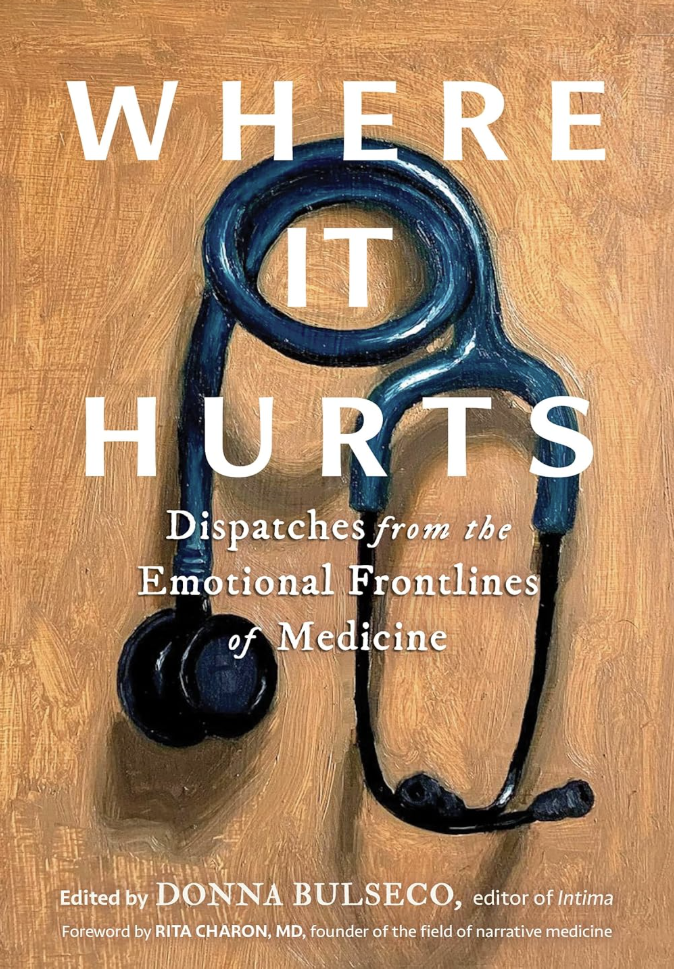
c/o Intima 'Reflect on the World' . . .

CARE/of Intima:

REFLECT ON THE WORLD WITH US EVERY FRIDAY AT NOON.

No pressure, but we want to remind you that every Friday, around noon EST, we post a Crossroads blog—a short reflection that contributors from our current issue do on something from our archives.

Think of “Friday at noon” as a blip in your busy life where you take time to yourself to reflect on our small part of the universe. Pause and spend 5 minutes reading one each Friday — it’s the equivalent of a deep-breathing exercise, a short yoga stretch, a tiny palate cleanser of lemon sorbet between the complex courses served up to us every day, or a moment stolen between patients or in a waiting room when you step out of your routine. Read the titles of recent ones below, then go and read a few. If you like what you read, set up a reminder alert.

INDIVIDUAL
|
    INTERPERSONAL    :     SCIENCES               
HUMANISTIC --------------------------------------  MECHANISTIC      
SOCIOLOGY  :   POLITICAL 
|
GROUP


My source: Intima (and image) - mail list.

See also: 'reflect' : 'crossroads'

Saturday, October 18, 2025

Just imagine ... caseloads, payloads and careloads

Just imagine ... no, not like that - really imagine!

You are in a situation. Unsurprisingly, let's say it's in health, or social care. We find ourselves in a care or nursing home, on a ward, or in the individual's home, even if the patient does not currently recognise it as such.

The patient is mobile. That is, and isn't a problem.

Physically, apart from thoughts about a chest, or urine infection, yes they are mobile, but they're also confused - disoriented.

We are concerned about their safety. 

Noisy, increasingly agitated, they are making it clear they want to leave.

Their carer, family, or staff are trying to limit the patient / resident's access to the exits, be that the front, or back door, the spare room, their room, or main entrance. They are not in agreement about where they need to be. Persuasion and distraction aren't working either. They appear to lack the level of mental capacity required to decide for themselves what needs to happen.

It is one thing to have this assessment of the situation running through one's mind; but quite another to 'pick up' a care concept mentally and carry it over the care (knowledge) domains of Hodges' model.

Hodges' Health Career - Care Domains - Model
Try it for yourself ...

Have a think about the following care concepts: mobility, capacity, consent, confusion, mobility, liberty, a locked-door while spouse/partner goes shopping, and safeguarding

As we engage in critical thinking, these concepts have a literal payload. They carry varying degrees of informational value, salience that helps us prioritise, what else do we need to factor in, what help is needed, and when; how do we  decide what to do?

As a concept is evaluated against Hodges' model, it changes. It is as if it morphs subtely, or starkly as other concepts, by association, are brought into play.

This process is influenced in so many ways; our training to date, our prior experience, biases and cultural baggage we might also carry, who else is present (this is of course potentially both a positive and negative), past and current role-models, our (team's) preparedness - what to do if .., teamwork, access to leadership (who is 'duty'?), and our confidence in them (Oh no!). And, them in us.*

Vitally, there is the small matter of our understanding, attititude and response to the person in-front of us. 

The delivery of healthcare is often stressed as emotional labour. Whether we use Hodges' model or not, perhaps the labour, the physical and psychological work involved, is experienced through carrying and feeling the careload. A reason too for supervision.

*Do seek help - advice if needed.

Further reading [ please contact me if needed - h2cmng AT yahoo.co.uk ]:

Jones, P. (2025), A Generic Model and Conceptual Framework to Prime Curiosity Across Health and Social Care Disciplines to Facilitate Lifelong Learning. Journal of Evaluation in Clinical Practice, 31: e70252. https://doi.org/10.1111/jep.70252

Jones, P. (2025). A Conceptual Mapping Exercise of Deprivation of Liberty Safeguards in Residential & Community Care Using Hodges' Model and Threshold Concepts. Journal of Evaluation in Clinical Practice, 31: e70085. https://doi.org/10.1111/jep.70085
Sunday, September 07, 2025

Editorial: Persistent Positive Change in Challenging Times - IJPCLHSC

'What then is the common theme for this issue? It is the persistence of these authors, practitioners and academics to be curious about what could be better and engage with scholarly enquiry to advance practice-based learning.' 

The editorial introduces the content of -

International Journal of Practice-based Learning in Health and Social Care Vol. 13 No 1 August 2025
https://publications.coventry.ac.uk/index.php/pblh/issue/view/96

Howden,  S.  (2025).  Editorial:  Persistent  Positive  Change  in  Challenging  Times.  International  Journal  of  Practice-based Learning in Health and Social Care, 13(1), ii-iii.

- which I have mapped to Hodges' model (with some additions):

Individual
|
      INTERPERSONAL    :     SCIENCES               
HUMANISTIC  --------------------------------------  MECHANISTIC      
 SOCIOLOGY  :    POLITICAL 
|
Group

restlessness (- in mind)
(curiosity)

patient's lived experiences*

intra- inter-personal

pastoral support

engagement - enjoyment

workshop, case study ...

psycho-

restless legs syndrome

remote, rural, urban
community-based :: clinical settings

(infra-) structures

processes - procedures

simulation, major incident

forensic, podcasts

-social factors

interdisciplinary (integrated?) working

social structures
(This is how we 'do it' here)

'Institutional? “positive restlessness"'

*clinical subjective exposure 
(determinants of health)

organisational (Inst.) structures


<>

The final paper is on workshops and continuing professional development:

Kenny, B., Bourne, E., & Li, J. (2025). Knowledge Translation from Clinical Education Workshop to Workplace. International Journal of Practice-based Learning in Health and Social Care, 13(1), 56-76. https://doi.org/10.18552/ijpblhsc.v13i1.1084 

The editorial notes:

'The authors integrate goal setting as part of a development session on supervision skills and follow up survey, to ask what happened next in relation to their goals and practice. When resources are scarce and CPD is so critical, these ideas about enhancing workshop effectiveness and feeding participants’ experiences back into sessions has never been more important.'

When presenting Hodges' model at events I will often tick for a workshop. This reflects former work experience with student nurses, OTs, social workers and other learners: when a workshop could cover the some 2 hours with a break in the middle. Hodges model is flexible, adaptable and in a workshop can be applied on an individual basis, or small group work - breakout sessions [this does not necessarily mean the participants are bored :-)]. A wide range of learning and teaching approaches can be considered. 

Kenny, Bourne & Li utilise role play, case studies for example, their approach and paper framed by the KTA Framework:

'Workshop design was underpinned by the Knowledge to Action (KTA) Framework. KTA acknowledges the importance of social interaction in the adaptation of research evidence, taking account of local context and culture (Graham & Tetroe, 2011).' p.58. ...

'The KTA framework comprises two major components: knowledge creation and an action cycle. During the workshop, knowledge creation was supported by CEs identifying factors that contribute to challenging clinical education situations and reflecting upon the impact of these factors in their workplace contexts. During Part 1 of the workshop, attendees focussed on understanding challenging situations. Each group was assigned a case study that included a complex mix of student, educator and workplace factors thatinteracted to create a challenging learning situation.' p.58. ...

'A focus on active learning within the workshop prepared CEs for translation of their knowledge of supervisory practices when they returned to their workplaces. In Part 2 of the workshop, CEs worked through a structured process for managing placement challenges by engaging in peer learning role play activities. The process was adapted to address challenges that included mental health issues in workplace learning, developing professionalism, providing inclusive learning environments, and facilitating clinicalreasoning and reflection.' p.58.

  clinical educators (CEs)

Reading KB&L: I wonder if Hodges' model provides a more 'accessible' map as an output / summary, evidence of learning and teaching activity? 'Filtering' would be essential of course, as to what exactly is mapped. While I've no evidence (in theory), Hodges' model in being (imho) accessible, might also be primed for transferability (after all what does transferable mean?^); by being recognised more consistently across larger groups, and (as per the conclusion) other individuals, and broader educational contexts.

Currently, working with three co-authors on a draft paper revision (dental health and policy frameworks) for a journal, I noticed our leading author refers to 'translational'. In the paper below, (cited by KB&I): 

Graham, Ian D. PhD1; Logan, Jo RN, PhD2; Harrison, Margaret B. RN, PhD3; Straus, Sharon E. MD, MSc4; Tetroe, Jacqueline MA5; Caswell, Wenda RN, MEd2; Robinson, Nicole6. Lost in knowledge translation: Time for a map?. Journal of Continuing Education in the Health Professions 26(1):p 13-24, Winter 2006. | DOI: 10.1002/chp.47

Graham et al's, Table 1 Definitions of Terms, is (still) really helpful.

See also on W2tQ: 'reflect' : 'holistic' : 'map' : 'situation'

^Translation; transfer - dual, two-way, inversion?

Monday, June 09, 2025

🗣️Solving or Resolving Palestinian Human Rights Issues: Relationship "Normalization" | Mohamed ‘Arafa


🗣️ Solving or Resolving Palestinian Human Rights Issues: Relationship "Normalization" | Mohamed ‘Arafa

This session will be the first in the series of conferences “Jurisprudential Dialogues on Human Rights”, which is designed to promote exchanges on topical issues involving human rights and the role of the courts of justice.


The aim of this session is to reflect on the violations of the human rights of the Palestinian people — an enduring state of affairs that transcends political or religious lines of judgement. Over the decades, the Israeli-Palestinian conflict has been marking the international landscape, sparking divisions, human misery, and far-reaching geopolitical consequences.


This session will be led by Professor Mohamed Arafa, Professor of Law at the University of Alexandria and Adjunct Professor of Law & the Clarke Initiative Visiting Scholar at Cornell Law School. Joining in will be Professor Rita Ribeiro, from the Institute of Social Sciences at the University of Minho, and Zaina Awartani, PhD researcher at the School of Law of the University of Minho and the School of Researchers of the Research Centre for Justice and Governance (JusGov). The event will be chaired by Sergio Ruiz Díaz Arce, Doctoral Integrated Researcher at JusGov.


📍June 13th, 2025 | 4.00 p.m. Online


Scientific Commission

Sergio Ruiz Díaz Arce

Joaquim Freitas da Rocha

Robert Junqueira


Organisation

JusGov (JusLab – DH)

School of Law of the University of Minho


Support

FCT - Foundation for Science and Technology


Yours respectfully,

Robert Junqueira

Executive Coordinator | Research and Scientific Careers Bureau


Research Centre for Justice and Governance

School of Law of the University of Minho

Gualtar Campus
4710-057 Braga - Portugal


T: (+351) 253 60 18 75

E: martinsjunqueira AT direito.uminho.pt

Thursday, December 01, 2022

Travelling to the Spiritual ... Liminal ...

"I am on a lonely road and I am ...


 INDIVIDUAL
|

 INTERPERSONAL    :     SCIENCES               
HUMANISTIC --------------------------------------  MECHANISTIC      
SOCIOLOGY  :   POLITICAL 
|
GROUP
blue


traveling,
traveling,


traveling,


traveling


.. Looking for something, what can it be? ..."

Joni Mitchell


BLUE cover image: https://en.wikipedia.org/wiki/Blue_(Joni_Mitchell_album)

@jonimitchell

Source: Blue CD track 1
"All I Want" – 3:34 in the car travelling from Hay-on-Wye back to the NW England.

Still looking - listening: 'Both Sides' ...
