Hodges' Model: Welcome to the QUAD: character

Hodges' model is a conceptual framework to support reflection and critical thinking. Situated, the model can help integrate all disciplines (academic and professional). Amid news items, are posts that illustrate the scope and application of the model. A bibliography and A4 template are provided in the sidebar. Welcome to the QUAD ...

Showing posts with label character. Show all posts

Saturday, January 17, 2026

European Character and Virtue Association (ECVA) Conference 2026

Theme: Bridging the Knowledge – Action Gap in Character Development

Re: invitation to the ECVA 2026 conference: reminder ...

Established in 2022, the European Character and Virtue Association offers a forum for promoting research, training and networking in the field of character education. We bring together educational institutions in Europe and scholars from around the world, providing unrivalled opportunities for members to share best practices and shape European policies affecting higher education and research. 

The 2026 conference of ECVA will take place in Trnava University, Slovakia, in cooperation with the Jubilee Centre for Character and Virtues, University of Birmingham, the Private University College of Teacher Education of Christian Churches, and the Virtues and Values Education Center of Francisco de Vitoria University. 

The Executive Board of the European Character and Virtue Association (ECVA) cordially invites you to attend the 2026 ECVA Conference in Trnava, Slovakia. 

  • President: Prof. Dr. James Arthur (Harvard University)
  • Vice President: Prof. Dr. Verónica (Francisco de Vitoria University Madrid)
  • Secretary: Prof. Dr. Tom Harrison (Jubilee Centre for Character and Virtues, University of Birmingham)
  • Treasurer: Prof. Dr. Roland Bernhard (University of Teacher Education of Christian Churches Austria)

Conference Information Trnava, Slovakia, 2026, 24th to 26th of June 

We expect more than: 📍100+ researchers 🏫 40+ universities 🌍 20+ countries 🎤 60+ presentations & keynote addresses 

📝 Submit your abstract and find all conference details at the link below:

👉 https://ecva-character.org/ecva-conference-2026

Deadline for Abstract Submission: 31st of January, 2026.

All abstracts will undergo a review process over the course of the following month. Once your proposal has been accepted, you will receive detailed information about registration, conference fee (275,- EUR) processing, accommodation options, and other necessary information.

Notification of Acceptance: 1st of March 2026.

Contributions that demonstrate high quality and close relevance to the main theme of the conference will be accepted for review in preparation for the next scientific monograph produced by the ECVA.

Warm regards,

Dr. Martin Brestovanský
(Trnava University, Slovakia)

on behalf of the ECVA Steering Group

Prof. James Arthur (Harvard University)
Prof. Verónica Fernández (Universidad Francisco de Vitoria, Madrid)
Prof. Tom Harrison (Jubilee Centre for Character and Virtue, University of Birmingham)
Prof. Roland Bernhard (University of Teacher Education of Christian Churches, Vienna)
Prof. Claudia Navarini (Università degli Studi Europea di Roma)
Prof. Ines Weber (Paris Lodron Universität Salzburg)

Conference description 

Bridging the Knowledge – Action Gap in Character Development 

Moral education often assumes that ethical knowledge or cognitive competence alone will result in moral behaviour. Yet lived experience, philosophical reflection, and empirical research consistently show otherwise. A persistent gap exists between what individuals know is right and what they actually do—a phenomenon recognized since antiquity. 

Aristotle observed that “we reason here not to know what virtue is, but to become good” (Nicomachean Ethics, 1103b), highlighting that moral reasoning is directed toward formation, not just information. Immanuel Kant similarly acknowledged that a person may clearly understand moral duty and yet lack the will to act accordingly, pointing to the human struggle between reason and inclination. 

David Hume went further, arguing that “reason is, and ought only to be the slave of the passions,” insisting that moral knowledge without rightly ordered desires lacks the power to move us to action. And Martin Buber wittily adds: “The worst notorious liar in the classroom will write a brilliant treatise on the destructive power of falsehood”. 

This enduring challenge – now referred to as the knowledge–action gap – remains a pressing concern across education, psychology, and the social sciences. Scholars have described related phenomena in various conceptualizations, such as the reason–action gap, attitude–behaviour gap, intention–behaviour gap, or the knowledge–attitudes–practice (KAP) gap. Each term reflects a common concern: knowing what is right does not reliably lead to doing what is right. 

Bridging this divide is a complex task, compounded by the dynamic, deeply personal, and context-sensitive nature of character formation. Educational and behavioural sciences are increasingly turning to integrative approaches that go beyond cognitive instruction. Interventions such as moral sensitization, dramatization, habit training, and reflective practice are being explored to enhance the coherence between values and actions. 

There is growing consensus that this so-called “gappiness problem” cannot be resolved through one-size-fits-all solutions (e.g., moral emotions alone or identity-based interventions). Instead, promising “multi-component” models are emerging that draw on diverse disciplines and methodologies to address the challenge. 

Conference Goals 

By bringing together interdisciplinary perspectives and diverse methodologies, the ECVA 2026 conference aims to deepen our understanding of the knowledge–action gap and to promote innovative, research-informed strategies for strengthening moral coherence and character development in real-world settings. 

We look forward to welcoming those committed to advancing theory-informed practice and practice-informed theory in the service of ethical integrity and flourishing lives.

Previously: 'character

Monday, October 06, 2025

On models, gaps, deficits, neglect

This a.m. I responded to an email from -

the SDOH Listserv at https://listserv.yorku.ca/cgi-bin/wa?SUBED1=SDOH&A=1

- about a forthcoming book (news to follow). 

I replied, with thoughts (edited) that link to the post earlier today:

On the 'front' - or behind the line(s)?

As a community mental health nurse, I've always recognised (as best I can) the critical, power relation of psychiatry.

This is why I study - champion Hodges' model, because the -
  • medical model
  • bio-medical
  • bio-psycho-social models 
- are all inadequate (in the 21st C. and supposedly post-Institutional care?).*

Inclusion of the 'Political' domain in Hodges' model, is critical in the negotiation between the person and collective.

This is what opens up the wide, expansive 'front' in Hodges' model, where relations can be explored in abstract and concrete terms.

A point I'm currently working through (post - paper?): is it ironic that that education and health have acknowledged and try to mitigate(?) the 'deficit model', but in the very conceptual frameworks / models that these disciplines & professions deploy (esp. medicine?), there is a deficit* - manifest in were we are and how we Care today and tomorrow. This is further aggrevated as capitalism clearly has its way (counter-lobbying the health and care professions)?

*tantamount to neglect?

Despite the pioneering efforts and work of several leaders e.g. Virchow, and fields of medical sociology and public (mental) health.

See also - Joe Wicks: Licensed to Kill Channel 4 UK. 2000hrs 6th October 2025.

'Cereal'

Wednesday, July 02, 2025

Did 'to a T' find its inspiration in Rio de Janeiro?

... or somewhere else?

to a T

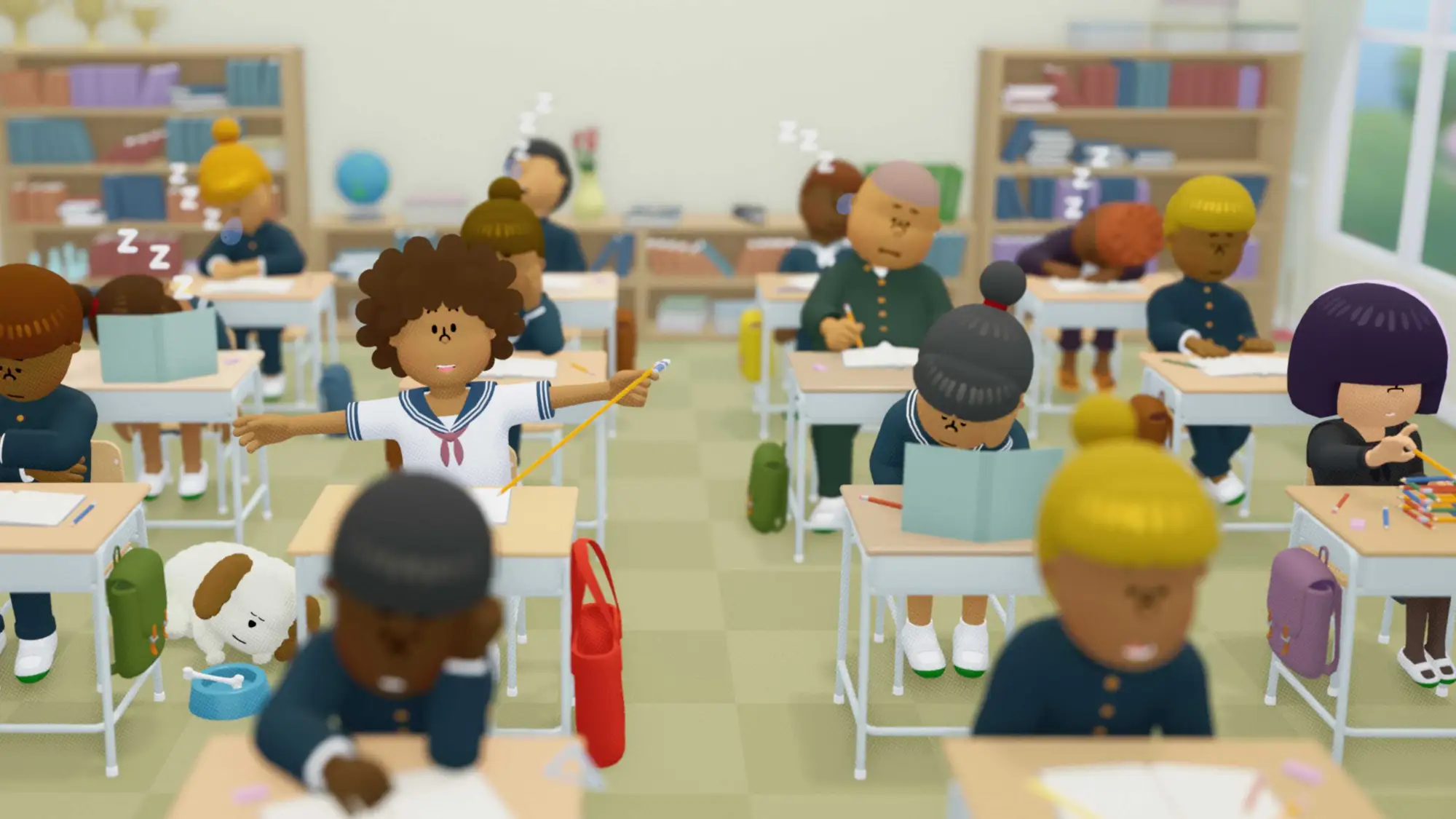
A new game from Keita Takahashi
"'to a T' is an episodic 3D adventure game developed by Keita Takahashi and the uvula team, with a strong focus on character, interaction, story and exploration. Play as a teenager (Teen), with a unique posture just trying to live a normal life in a small coastal town. Explore the town along with the help of Teen’s loyal dog and loving mother. While going to school and contending with bullies, Teen discovers a new ability granted to them by their extraordinary posture, and they start to uncover more about their mysterious lineage."
'to a T' - image https://annapurnainteractive.com/en/games/to-a-t

Developer - https://uvula.jp/

I have never been as far south as Rio de Janeiro. It would be marvellous to visit Tijuca National Park - Alto da Boa Vista, Rio de Janeiro - RJ.

But then ... 🌍🌎🌏🌐

My source: Tom Faber, In praise of gaming's auteurs. Financial Times, 11 June, 2025, p.18.

Monday, June 23, 2025

Entry to the Theatre of Nursing & Space

I do understand that reading theatre related texts, joining a theatre group, my writing a play is still pi in the sky. It's the journey, that's all. In Hodges' model I've differentiated between structure and content. This is the center of the stage about which Hodges' model turns. In the guided discovery by which students and audiences can discover the model,  these are the bases to touch in turn.


Sir Alan's focus on construction in writing: is narrative, time, location, characters (p.12). The overall message for me is, the frequently uttered - less is more. I must take heed and listen. During Ayckbourn's career, he has encountered the full retinue of writers and directors young and 'experienced'. Reading this, it is nice to be both 'new old-er' -
'Then there is the new old playwright. Far more difficult to deal with. They have probably nursed this script for twenty-five years and they're damned if you're going to mess it up for them when they've waited so long. Especially someone your age who wasn't even born when their harrowing play about World War Two was still raging, dammit.' p.110. (My emphasis in bold.)
Thinking about 1959 and the start of Sir Alan's career, his reference to WWII, made me recall nursing assistant and student nurse studies and placements at Winwick Hospital in 1977. On the geriatric wards for entertainment it was WWI songs were often sung, or records played. Long players, indeed.

In health we are usually accustomed to stopping before the 'true' end, with the exception of palliative care, although even then the ending should be 'better' than what it would otherwise have been.

If I am nursing Hodges' model, I've been doing so ever since 1987-88. As Sir Alan also observes of writers, while passionate about the utility of the model - my project - not my model; I am filled with self-doubt. Is this an over-valued idea - in my hands (and mind!)?

In other reading - Stagecraft. The Complete Guide To Theatrical Practice, by Griffiths Trevor R. 1982, I came across the word 'proscenium'.

'Incidentally, when we came to stage [the play in question is 'Woman in Mind' PJ] the London proscenium version this was far more difficult to achieve. Proscenium theatres generally make scenic statements whether they want to or not; the round makes none unless called upon to do so.' p.32. 

There are many insights into sets, design, and the various pros and cons. In May and earlier this month, with three other cast members I performed a role 8-9mins in a Living Newspaper (40-50 mins in total). It was fascinating to watch the various aspects developing from the initial reading in January. With Hodges' model an idea, the question of set design is not straight forward. But as with over-valued ideas, I am probably over-thinking (as usual) making things more complicated than necessary.

One golden nugget of advice, is if you are the writer and write well, well you don't have to think the set design. That is a problem for someone else to solve. Hopefully you will be impressed by the interpretation and realisation (often in film credits) of your work.

That is, unless you're unlucky and find yourself on the receiving end of Obvious Rule No. 13:

Beware of competitive set designers, particularly those with a 'concept'.

The name Ayckbourn is synonomous with The Stephen Joseph Theatre, which is in the round:

'The Round provides a truly unique experience as the audience is seated all around the stage. Not only does the audience see the performance from every angle, it also brings the actor into the same space as the audience.'

"Let’s have the actors in the same room as the audience, let’s have four front rows, let’s get really excited about this acting business!"

Stephen Joseph, 1959 - https://sjt.uk.com/about-us

From the mid-1980s and 90s I used to visit Bolton's Octagon quite regularly. Performances were frequently in the round. Last month, Abigail's Party was too (the last night).

Whatever, the staging, set, I'd be interested to see the 'concept'. On directing:

'As regards interpretation. you may need to tread more warily. As I said earlier, many playwrights are not naturally theatre creatures - certainly they are rarely visual theatre creatures, I have seen them sit there and watch their play physically anfold with a look of total amazement. pordering sometimes on delight, sometimes on dismay. What was in their head has been made three-dimensional flesh.' p.111.

Space has been and remains fundamental to my thinking about Hodges' model. Even pushing the envelope to topology, this is well beyond my ken. But not other gifted researchers. Hodges' model provides inter- multi- transdisciplinary bridges: we need to Before the time of schools becoming fenced and patrolled sites, we used to play cricket, tennis and football. There was a large wall at front of a former school, great for tennis, but not return of serve. Now a projection shared in the round - so everyone sees the same thing (yes, another rule!) might hold potential. There's acknowledgement that technology moves on too (p.123). And room for comedy, Ayckbourn's starting point. 

'Designers, it has been said, even the best of them, sometimes get hold of the wrong end of the stick. ... Always get to look at drawings, ground plans and, most helpfully, scale models of what they intend.' p.120.

The Crafty Art of Playmaking by Alan Ayckbourn. Faber, 2004, softcover, ISBN 0571215106.

https://www.concordtheatricals.co.uk/s/45898/the-crafty-art-of-playmaking

Sunday, June 22, 2025

In Theatre, Silence is a genre, and therapeutic ally

'As a playwright it may be your intention to build a vehicle to take us to the stars. But do make sure you have people aboard.' (p.9).^
Alan Ayckbourn in The Crafty Art of Playmaking.

Sound of silence in activism

Quite fitting in the two decades since publication, given the rise of AI and the impact upon the arts, specifically human imagination, creativity, and livelihoods. Meaning: silence as a tool for protest, and activism is also a genre and a can be a therapuetic ally. 

Going backwards - Sir Alan writes: 'Theatre for me has always been, in a way, a reflection of life writ somewhat smaller'. p.10.

While the point concerns the faith and trust placed in theatre directors by the company, there is an analogue in healthcare. The belief of the patient, in their doctor and the medical team. Or, at least the knowledge and skills they should, and appear to possess. For Ayckbourn '... the director looked as if he knew.' (p.10).

Obvious rule no. 4: 'Use the minimum number of characters that you need' (p.13).

What can I say? Society, has peeled back the patient - doctor (substitute health profession as needed) to the person whose monologue seeks confirmation of illness x,y, or z. Apparently here in the UK 1 in 4 adults have a mental health condition. The debate is ongoing as to what is going on. But the subject of Hodges' model as a possible crucible for a work of drama can certainly keep to character count down.

Not only that, but is this a book on counselling - interpersonal skills?

'An audience that doesn't care stops listening in the end. '. p.14. 

As part of -

'Obvious Rule no. 5: They need to care about your characters. (So you should too.)'

So, for both playwrights and carewrights, there is a duty of care (for all of course - despite the actions of so many governments).

In health the patient is the character study. There is, should be, must be - a plan of  care, a care plan. As a 'play', Hodges' model begins as a template of at least five acts [Spiritual (Four domains) ]. That is whether or not they are all 'written'. The attitude though should be unconditional positive regard.

There's no Waiting for Godot here, unless the character is social care?

TAU ZERO

Could it be that as organisational hierarchies have been flattended, the notion of character has been under siege? The onion that is our identity, personality, persona unpicked, skin-by-skin by social media, social change, and policy affecting education. Character building used to be a thing didn't it? No longer needed now is it?

Sir Alan, supports this hypothesis in his 'Obvious Rule No. 28:

People in general are reluctant to reveal themselves.' (p.65).

I still wonder about the potential of Hodges' model in secondary level education. More than ever, with all the talk about resilience, recovery, mental health issues, the rising UK welfare bill, may beg the question: What is character today? But, it is not defined by a stiff upper lip.

Not to sound 'ableist', but the 'crafty' in Ayckbourn's title, can be read in health terms; the disciplines drawing on science and the arts. Plus, they involve craft - use of the self, empathy and rapport. Not limited to, but in mental health care, it could be 'crafty' in the exercise of power, so frequently a theme central in drama and the human condition.

^A nice reminder too, of a Poul Anderson's SF classic Tau Zero (and a previous post).

The Crafty Art of Playmaking by Alan Ayckbourn. Faber, 2004, softcover, ISBN 0571215106.

https://www.concordtheatricals.co.uk/s/45898/the-crafty-art-of-playmaking

https://www.isthiswhatwewant.com/

Image: https://upload.wikimedia.org/wikipedia/commons/thumb/b/b0/Is_This_What_We_Want%3F.jpg/250px-Is_This_What_We_Want%3F.jpg

https://www.amazon.com/Zero-Coronet-Books-Poul-Anderson/dp/0340163364 (This was the same copy I read in my teens.)

Saturday, February 15, 2025

'Life's compass' ...

'... I have been thinking a lot about the responsibilities of leadership. How do people in positions of power reach decisions and do they fully consider the consequences of these decisions? In questioning how someone chooses to lead, I'm also asking how that individual navigates the possible courses of action, and what kind of compass is being used to guide them. It has made me think about how any of us choose to navigate our way through life and where we look for a sense of direction. I wonder what we might change about the choices we make if we were more reflective about what serves as a compass in our lives.'

'"The Invention of the Compass" is attributed to an anonymous painter of the late 16th century, although there exists a roughly contemporaneous plate of the same title, and of an almost identical image, engraved by the Dutch artist Jan Collaert the Elder. In the original painting an old man with a long white beard, and dressed in a voluminous red and brown cloak, sits behind a large table in the centre of a room. As well as a canopied bed and another desk spread with books and scientific instruments, there is a model, or vision perhaps, of a carrack sailing ship hanging from the ceiling. There is also a large round compass device that sits heavy on the floor on the left foreground of the canvas. ...'

'It is as if this painting (Caravaggio) intended to serve as a compass, helping to move our steps and actions in the direction of caring for others. This is a powerful idea, and it suggests that all images contain that potential to influence how we live. Where we choose to direct and keep our gaze to some extent can determine how we permit our lives to be guided, if not in a physical sense then toward a value system that can end up having an impact on the way we engage with the wider world.' (My emphasis)

Ack. Enuma Okoro, Life's compass, The art of life, Life&Arts, FTWeekend, 1-2 February 2025. p.2. (Still need to subscribe, marvellous reading!)


Caravaggio, The Seven Works of Mercy


The Invention of the Compass


INDIVIDUAL
|
      INTERPERSONAL    :     SCIENCES               
HUMANISTIC  --------------------------------------  MECHANISTIC      
 SOCIOLOGY  :    POLITICAL 
|
GROUP

moral compass
personal values
my choices

maps - compass
position - navigation
direction - distance
degrees of freedom

the public
the public good
group think


leadership
power
political freedom


Enuma Okoro, Life's compass, The art of life, Life&Arts, FTWeekend, 1-2 February 2025. p.2.

Images: 

New Inventions of Modern Times [Nova Reperta], The Invention of the Compass, plate 2
https://collectionapi.metmuseum.org/api/collection/v1/iiif/659663/1403273/main-image

By Caravaggio - Unknown source, Public Domain, https://commons.wikimedia.org/w/index.php?curid=10286196

Previously:

'compass' :: 'map'

Sunday, October 13, 2024

Dramatherapy 2 - Personal identity

'Dramatherapy helps make sense of the world. Just as Goffman (1971) regards society as dramaturgically constructed, for the social presentation of selves, so Kelly (1955) describes a process in which individuals 'try on for size' various views of themselves as perceived by other people, in order to select the ones which allow them to carry on social relationships with one-another. Understanding of the other person is achieved by the process of construing his or her world, or 'construct system'. Kelly uses the notion of constructs and construct systems to describe cognitive structures. A construct is basically way of registering the degree to which an idea is present in relation to other ideas:

A construct is like a reference axis, a basic dimension of appraisal, often unverbalised, frequently unsymbolised, and occasionally unsignified in any manner except by the elemental processes it governs. Behaviourally it can be regarded as an open channel of movement, and a system of constructs provides each man with his own personal network of action pathways, serving both to limit his movements and to open up to him passages of freedom which otherwise would be psychologically non-existent.
(Kelly, 1955:199)' p.164.

'The multifarious ingredients of dramatherapy, like those of a theatrical event, are not haphazard. They are closely related, either by similarity or difference, to one another. Where there is confusion, this too is distinguished: it is confusion as opposed to order. Structure is employed in a conscious or intentional way, in order to reveal its true identity as the means by which we perform the fundamental action of relating things, in order to plot our movements in the world we live in. By allowing us to distinguish from, structure permits us to relate to. Certainly, the mechanism of perception performs this action without any conscious intention on our part; drama, and dramatherapy, is consciously contrived to assist it in its critical function, helping it to achieve a particular kind of clarity, by providing it with the raw material for involvement with the objects of perception.'
p.167-168.

EVALUATING THE EFFECT OF DRAMATHERAPY ON THOUGHT-DISORDER

Construct Theory rests upon the proposition that ideas hang together in a trustworthy way because people's behaviour is basically consistent. If people behave inconsistently, the thinking which they induce will lose its articulation, because the sense we make of life demands continual validation from the people and events we base it on. Thus, confused experience of relationship is, at its most fundamental level, the same thing as confused thinking; when our ideas begin to lose their coherence this is because, for us, other people have begun to come apart'. When they no longer fit the model we have of reality, the model itself loses its precise definition. At this point, Kelly suggests, we make our model more vague in order to preserve its identity as a model of reality: reality is blurred, so our model is imprecise. Unfortunately, it may become too inexact to function as a means of communication with the world of people and events it is intended to represent. The task of therapy is to provide evidence of the world's conformity to the individual's model, thus validating that individual's constructs. Because a person's disordered thinking is primarily concerned with the way they construe people, it must be done personally; because it is the result of experience over a considerable time, it must be done systematically, or 'serially`.
pp.171- 172.

Note to self: 'It is' :: 'It is - as if ?'. p.166.

individual
|
INTERPERSONAL : SCIENCES
humanistic ------------------------------- mechanistic
SOCIOLOGY : POLITICAL
|
group

I


I


Greek theatre masks

Institutional masking


Grainger, R. Dramatherapy and thought-disorder. Chapter 11. In Jennings, S. (Ed.), (1992) Dramatherapy. Theory and Practice 2. London: Routledge.
(Apologies, punctuation in the above may not be accurate, and I no longer have the text.)

Saturday, November 04, 2023

Infraethics <-> Infrastructure c/o Floridi & TPM

INDIVIDUAL
|
     INTERPERSONAL    :     SCIENCES               
HUMANISTIC --------------------------------------  MECHANISTIC      
SOCIOLOGY  :   POLITICAL 
|
GROUP

moral education^

character development^

personal values

courage, commitment .. 6Cs

Your - Registration

What does being a professional mean to you?

What does belonging to a profession mean to you?

"The idea of an infraethics is simple, but the following “new equation” may help to clarify it further. In the same way as business and administration systems, in economically mature societies, increasingly require physical infrastructures (transport, communication, services etc.) to succeed, likewise human interactions, in informationally mature societies, increasingly require an infraethics to flourish. The equation is a bit more than just an analogy between infrastructure and infraethics."*


"Any complex society—be this the City of Man or the City of God to put it in Augustinian terms—has an implicit infraethics, which can be more or less morally successful, and more or less evil-unfriendly. Theoretically, even a society of angels, that is, of impeccably good moral agents, needs infraethical rules for coordination and collaboration. ...
The right sort of infraethics is there to support the right sort of axiology. Designing it, maintaining it and keeping it updated is one of the crucial challenges for our information society. It is one of the reasons why our age is the age of design. Clearly, when talking about infrastructures, politicians have more on their plates than just networks of bits and atoms."
socio-


"When economists and political scientists speak of a “failed state”, they may refer to the failure of a state-as-a-structure to fulfil its basic roles, such as exercising control over its borders, collecting taxes, enforcing laws, administering justice, providing schooling and so forth. Or they may refer to the collapse of a state-as-an-infrastructure or environment, which makes possible and fosters the right sort of social interactions."


-political infrastructure


^Raised on In Our Time:
https://x.com/h2cm/status/1720095205012251114?s=20

*Point noted.

See also:

Floridi, L. Infraethics–on the Conditions of Possibility of Morality. Philos. Technol. 30, 391–394 (2017). https://doi.org/10.1007/s13347-017-0291-1.

My original source:

Floridi, L., Infraethics, The Philosopher's Magazine, 1st Quarter 2013. Issue 60. pp.26-27.
(Still clearing books, journals, magazines... )

Wednesday, February 15, 2023

c/o Joan Didion 1934-2021: "Let Me Tell You What I Mean"

"All I know about grammar is its infinite power. To shift the structure of a sentence alters the meaning of that sentence, as definitely and inflexibly as the position of a camera alters the meaning of the object photographed. Many people know about camera angles now, but not so many know about sentences. The arrangement of the words matters, and the arrangement you want can be found in the picture in your mind. The picture dictates the arrangement. The picture dictates whether this will be a sentence with or without clauses, a sentence that ends hard or a dyingfall sentence, long or short, active or passive. The picture tells you how to arrange the words and the arrangement of the words tells you, or tells me, what's going on in the picture. Nota bone:


It tells you.

You don't tell it."

 INDIVIDUAL
|
 INTERPERSONAL    :     SCIENCES               
HUMANISTIC --------------------------------------  MECHANISTIC   
SOCIOLOGY  :   POLITICAL 
|
GROUP


"Let me show you what I mean by pictures in the mind. I began “Play It as It Lays” just as I have begun each of my novels, with no notion of “character” or “plot” or even “incident.” I had only two pictures in my mind, more about which later, and a technical intention, which was to write a novel so elliptical and fast that it would be over before you noticed it, a novel so fast that it would scarcely exist on the page at all. About the pictures: the first was of white space. Empty space."...


My source: BBC Radio 4


Episode 4

Book cover: goodreads.com

Text source:
New York Times archive -
Why I Write,
https://www.nytimes.com/1976/12/05/archives/why-i-write-why-i-write.html

Previously on W2tQ: Book: "The Empty Space"

Sunday, January 01, 2023

Art as 'social media' 1923

Agnes Savill (Agnes Forbes Blackadder), Music, Health and Character, London: Bodley Head Limited. 1923. (Book cover: AbeBooks)
Music, Health and Character
"The varied picture presented by life is viewed by each individual through the transforming medium of his own private consciousness. Our judgements are biased, being coloured, inevitably, by our personal  interests, occupation and experience. To the physician has been entrusted the health of the body; his outlook upon the world is tinged by his desire to prevent disease by eliminating abnormal predisposing causes. So close and so intricate is the union of mind and body that modern medicine recognizes the necessity of right thinking and right conduct for the highest development of the body. Hence, from his unique corner of advantage, that of the sympathetic confidant of innumerable life tragedies, the physician views with dismay the ruin of individuals, and the disaster brought on families and entire communities by frequent contact with the morbid, even at times the depraved teaching which is embodied in many branches of art with lighthearted irresponsibility. More and more profoundly are the medical psychologists impressed by the creative and the destructive power of such intangible forces as ideas. More and more urgently, therefore, does modern medicine plead, in its capacity as guardian of the public health, for the improvement of mental and moral conditions. With wiser education people will demand that Art shall be pure, sincere and life-giving, and that artists shall value seriously their responsibility and their power to mould the character of the community. The true artist always aims high and discourages the association of art with all that is trivial, insincere and debasing." p.225-226.

Agnes Savill (Agnes Forbes Blackadder), Music, Health and Character, London: Bodley Head Limited. 1923.
(Book cover: AbeBooks)

Saturday, August 20, 2022

ii The Jubilee Centre Framework for Character Education in Schools - 3rd edition

Some thoughts on the previous post ...

Regards, "Character is fundamental: it is the basis for human and societal flourishing;" and "Character is sought freely to pursue a better life;" p.7.

While education is rivalrous - character education is - should be non-rivalrous?

Philosophers have and continue to debate the meaning of 'success', 'good', and related concepts. At a time when students will be acutely aware of the socio-economic transformations needed to accept environmental limits and re-shape the global economy; the provision of tools for reflection, critical thinking, problem solving and 'Being well' should not be a constraint.

There is - must be - a place for a tool that invites, facilitates and rewards conceptual exploration, vocabulary development and the personal and social development that can follow.

Caught, Taught and Sought - are memes still a 'thing'? 

Hodges' model clearly has a hold here. 

Perhaps, you can embrace it too?

It is encouraging to see how character education draws in PSHE, Citizenship, general studies and more. We should not just acknowledge the role of the humanities in a well-rounded education, but as we turn-the-stones let's be aware of the corners too.

Here in the UK students study for O-Levels, A-Levels, T-Levels, BTEC and more. The government's policy to level up - demands that in education we run the gamut of the alphabet and much more. 

Given the global scope of education (usually*), with Hodges' model a product of Manchester Polytechnic now Manchester Metropolitan University, there are strong links between the healthcare sector, education and research - hence the sciences. The question now concerns the nature of these links. I feel they are bound to be strengthened. Even within healthcare, medicine, nursing and the allied health professions - on-the-ground it appears there is a need to do more to effect positive change through the sustainable development goals and not just draw attention to the social determinants of health, but to determine how we can act on them.

*https://theirworld.org/

University of Birmingham 2013, 2017, 2022
ISBN: 9780704429789
https://www.jubileecentre.ac.uk/527/character-education/framework

Cover image:
https://www.researchgate.net/publication/362745797_The_Jubilee_Centre_Framework_for_Character_Education_in_Schools_3rd_revised_version 


Schoolboy's guilt after controversial goal 50 years ago in Wirral football game finally put right:
ITV hub - https://www.itv.com/news/granada/2022-08-27/50-years-of-extra-time-for-schoolboy-football-match


Friday, August 19, 2022

The Jubilee Centre Framework for Character Education in Schools - 3rd edition

'The aim of our studies is not to know
what virtue is, but to become good.'


Aristotle


"WHAT CHARACTER
EDUCATION IS

Character is a set of personal traits or dispositions
that produce specific moral emotions,
inform motivation, and guide conduct.

Character education includes all explicit and
implicit educational activities that help
young people to develop positive personal
strengths called virtues." p.7.


 INDIVIDUAL
|
 INTERPERSONAL    :     SCIENCES               
HUMANISTIC --------------------------------------  MECHANISTIC      
SOCIOLOGY  :   POLITICAL 
|
GROUP

CHARACTER

VIRTUES:
Intellectual; Moral; Civic, and Performance

Caring for and respecting others, as well as
caring for and respecting oneself
Positive psychology, mental health

VIRTUE Literacy i-iii: ‘Perception’; (ii) Virtue ‘Knowledge and Understanding’; and
(iii) Virtue ‘Reasoning’.

- emotional literacy, judgement

Improved attainment, better behaviour


Direct teaching of character provides the
rationale, language and tools to use in
developing character elsewhere in and
out of school. p.7.

EMOTIONAL


Character is sought freely to pursue a
better life.

'Success' in each domain ...

Build - virtue literacy

Character is educable: it is not fixed and
the virtues can be developed. Its
progress can be measured holistically,
not only through self-reports but also
more objective research methods. p.7.

Character can be -

Caught...
...through a positive school community, formational relationships, and a clear ethos.
Taught...
...through the curriculum using teaching and learning strategies, activities, and resources.
Sought...
...through chosen experiences that occur within and outside of the formal curriculum. p.12.

CONTAGION

Belonging to,
participating in - a school
community
Common good
Role-modelling

Flourishing societies
[Address: Social Determinants of Health]*

partnership with parents, families

caring for and respecting others, as well as
caring for and respecting oneself

Civic
Citizens
Committed leadership

Increased employability,
empowering, and liberating

partnership teachers, employers,
and other community
organisations

Each child has a right to character education


"Practical Wisdom (phronesis) is the integrative virtue,
developed through experience and critical reflection, which
enables us to perceive, know, desire and act with good sense.
This includes discerning, deliberative action in situations
where virtues collide." p.9.


University of Birmingham 2013, 2017, 2022
ISBN: 9780704429789
https://www.jubileecentre.ac.uk/527/character-education/framework

*Some thoughts to follow, to include on SDoH, and SDG.


Wednesday, August 04, 2021

Myers-Briggs 'in' Hodges' model (Discuss?)

individual
|
INTERPERSONAL : SCIENCES
humanistic ----------------------------------------------- mechanistic
SOCIOLOGY : POLITICAL
|
group - population
INTUITION

THINKING
 

INTROVERSION

JUDGING


While thinking and thought span the intra- interpersonal and sciences domains, the bias is towards objectivity not subjectivity.

While individual's exercise judgement and the outcome of many decisions may be inconsequential, when situations are misjudged, the consequences can be very political, i.e. professional and legal. The overlaps here are many (as per the function of the MBTI) - in judgements that are adverse socially, for example, shame and embarrassment may also result.

Intuition is usually experienced in a person's 'gut' and yet despite this somatic reference it is a very subjective and humanistic quality. In clinical contexts it is interesting when a colleague or a team try to make sense of this in terms of action to take.

This interplay between subjectivity-objectivity, personal-other, quality-quantity and other dichotomies are inherent in Hodges' model.

My source:
Ahuja, A. (2018) The eternal appeal of Jung (Review of: What's Your Type? The Strange History of Myers-Briggs and the Birth of Personality Testing, Merve Emre, William Collins. Life&Arts, FTWeekend, 15-16 September. p.9.


Thursday, April 25, 2019

Compassion TO Governance: "Meet you in the middle?"


Governance:
"Yes, in theory and practice!"

SELF - individual
|
INTERPERSONAL : SCIENCES
humanistic ----------------------------------------------- mechanistic
SOCIOLOGY : POLITICAL
|
group - POPULATION

compassion


THEORY


PRACTICE


governance


While compassion must be demonstrated by the individual practitioner [as one of the 6Cs], it is also a positive phenomena that should be found, experienced and readily transferred - communicated within the team and community of practice.

Allied with governance, health systems should then ensure that there is time and space for compassionate care. While 'middle' might work as a metaphor in Hodges' model, the qualities of compassion and governance are not about the 'middle', as in, being average.

Hodges' model can also help us appreciate the role that self-governance plays in personal responsibility, accountability and professionalism.

The great amount of effort and work to place assure the person is at the center of care (and #h2cm) also becomes apparent.


My prompt: https://twitter.com/PippaJL01/status/1121399893225037824

Saturday, February 10, 2018

Courage: One of the 6Cs - for Individual & Governments? [i]

individual
|
INTERPERSONAL : SCIENCES
humanistic --------------------------------------- mechanistic
SOCIOLOGY : POLITICAL
|
group

Courage is perhaps one of the more challenging of the 6Cs for learners to grasp and even for experienced staff  to exercise. As a concept a definition is easy to find. Courage is often associated with whistleblowing. Over the decades whistleblowing has proved critical and vexed to both an individual's career and organizations.  Hodges' model encourages us to expand on this ...

The courage of seeking
data,
information,
knowledge,
diagnosis and prognosis
Address:
assumptions : misinformation : disinformation
["Dr Google", fake news, drugs online..?]
Disclosure or withholding information

||||||||||||||| LONG GRASS |||||||||||||||
Husbands, wives, partners, sons and daughters with many friends find courage every moment of everyday (and many nights) when caring for someone living with dementia and other chronic illnesses. Practitioners may need courage to challenge promises made by family members that - "A nursing home? Never!" But, is the patient still at the centre of concern in these cases? Care at home at any cost? This can be the 'record' that matters to families.


Governments of all hues and globally are vested with courage, but how they exercise this quality depends vitally on governance. This is same reason, constraint that operates on the individual. "Do I? Don't I?" becomes "Do we? Don't we?" But then that individual practitioner is (must be) supported (governed) by supervision and the deliberations of the multidisciplinary team.
What is the governments' record? Do governments have the courage to address the problems sustainable health and social care presents? Or, do they just kick the  problem...


Courage [ii]: One of the 6Cs - for Individual & Governments?

Monday, October 16, 2017

'Virtuous Practice in Nursing' Research Report c/o The Jubilee Centre


6Cs

individual
|
INTERPERSONAL : SCIENCES
humanistic --------------------------------------- mechanistic
SOCIOLOGY : POLITICAL
|
group
individual character                virtues and values
philosophy         ethics        courage         
commitment             [moral
selection / recruitment criteria
     caring         attitudes       compassion
reflective practice-think, think, think?
knowledge and skills
subjective - 'soft'?
time, pressures, tasks, robotic
competence
vacuum]             
theory -(ethical)- practice
gap
evidence-based care 
objective - 'hard science'?
e-learning platforms-things to read, read, read?
(professional) socialisation
role modelling
mentoring         practice
patient's experience    communication
public perception, media
public involvement

patient/person-centeredness
policy
Professional bodies

autonomy     whistleblowing      advocacy   
 career pathway, education and training, organisational culture, appraisal and development of staff
management, business, finance*

See also 'Virtuous Medical Practice' plus others*

Saturday, January 14, 2017

Framing a Life Animated


individual
|
INTERPERSONAL : SCIENCES
humanistic -------------------------------------------  mechanistic
SOCIOLOGY : POLITICAL
|
group-population
(mental) Life
Animated


communication  meaning

singing  dialogue

family friends relationships


documentary

activism

awareness


My source: Whitworth, D. (2016)  The autistic boy whose life was unlocked by Disney, Arts, The Times, 13 December. p.8-9.

Wednesday, February 01, 2012

"You're a nurse? That's cool. How much do you make?"

Somebody asked:

"You're a nurse? That's cool, I wanted to do that when I was a kid. How much do you make?"

The nurse replied: "HOW MUCH DO I MAKE?" ...

I can make holding your hand seem like the most important thing in the world when you're scared. ...
I can make your child breathe when they stop. ...
I can help your father survive a heart attack. ...
I can make myself get up at 5 a.m. to make sure your mother has the medicine she needs to live. ...
I work all day to save the lives of strangers. ...
I make my family wait for dinner until I know your family member is taken care of. ...
I make myself skip lunch so that I can make sure that everything I did for your wife today is charted. ...
I make myself work weekends and holidays because people don't just get sick Monday thru Friday. ...
Today, I might save your life. ...

How much do I make? All I know is, I make a difference.

Re-post not only if you are a nurse or you love a nurse, but most importantly, re-post this if you respect their work.


My source: Stu Young, Royal College of Nursing Students 

Related 2014: "You're a nurse? How much do you know?"

Saturday, September 15, 2007

Child well-being, Silver Superdreams, DEEP care and DEEPer voices

On the website [archived 2015 - page may not remain] there's a small page that highlights DEEP things...

That is DEEP ECOLOGY, DEEP TIME, DEEP SPACE and of course DEEP CARE. These days it seems everything is DEEP. So it isn't noise that's damaging your ear drums it's pressure.

When I wrote that page deep care was left to fend for itself (there's a books worth there I bet); but then I remembered a day as a student...

In those days I had a silver Honda 250cc Superdream. I'd swear that bike had a built in gyro (except for the time I dropped it in the snow). The bike not only helped me with the a2b; on community experience I had to spend a day at a children's home...

The day started at 2pm working through to 9-10pm. Many of the kids were not yet home from school. So I was able to chat with the house-mothers as the two female staff members were called and I do remember their names. This was a quiet interlude before the chaos ensued. It was spring and the 'instructions' were - when the children are home, join-in outside while tea is prepared.

Well, arrive they did and there I was in this big garden playing football and inevitable rough and tumble with the lads. While all this was going on I could see the house-mothers at the window watching. Watching a bit more. Then not just watching: staring. Was I doing something wrong (and who was cooking tea)?

Anyway, a bell announced tea time to be followed with more antics outside then some indoor games and then time for bed. Stories first of course. I was asked to take a youngster upstairs and settle him down. He couldn't have been more than 5. On my shoulders up the stairs. A brief flight through the air along a carefully judged flight-path suddenly filled with giggles to find the book...

As I started to read one of the house-mothers came in and started to tidy the room and I suppose keep an eye on me. I like reading. As I read that feeling returned - being watched just like in the garden. This time it was a pair of very young eyes doing the staring, with an open-mouthed intensity that was dry-mouth disturbing. Next, I noticed the house-mother had stopped what she was doing to watch and listen. OK: What was going on? We reached a point were the book closed and it was time for lights out and prayers.

Then I was asked for a kiss.

It wasn't that I was upset or anything, but it was the way this little guy asked.

Now I know there are all sorts of considerations these days, equality and diversity, sex and gender roles. This WAS ALL about equality and diversity and something wasn't right.

I responded with that student-male awkwardness that I wasn't about to kiss him, but it would be great to shake his hand and say thanks for everything - the soccer, chocs, drawings, thumbs up for the bike....

So, phew - lights out upstairs - it was time for twenty questions downstairs.

As the home got quieter by the second, the questions were well-formed, but had to wait as I joined the two house mothers sitting at the kitchen table for tea/coffee. Straight away they guessed my star-sign: Aquarius. OK... Then they apologised for staring earlier. I acknowledged that this hadn't gone unnoticed. They explained how pleased and totally fascinated they were to see the young boys able to interact in ways that they - try as they might - just cannot manage. The house-mothers usually read the stories and while I'm no bass-baritone, my voice - a lone male voice - had really struck a cord.

Unfortunately, back then there were issues about recruiting male staff members. I passed on those same concerns and my experience to the school of nursing. The house-mothers agreed that as a consequence there were potential future mental health issues being incubated there - the clients of tomorrow. They were trying to bring about change themselves.

That day will stay with me - I hope. As I rode home I knew it was a real gem in terms of learning experience. Scary, the notions of 'self' and 'others'. I wonder how things have changed in the homes and in society at large?