Hodges' Model: Welcome to the QUAD: aptitude

Hodges' model is a conceptual framework to support reflection and critical thinking. Situated, the model can help integrate all disciplines (academic and professional). Amid news items, are posts that illustrate the scope and application of the model. A bibliography and A4 template are provided in the sidebar. Welcome to the QUAD ...

Showing posts with label aptitude. Show all posts

Friday, January 03, 2025

How 'divine' is the language of care?

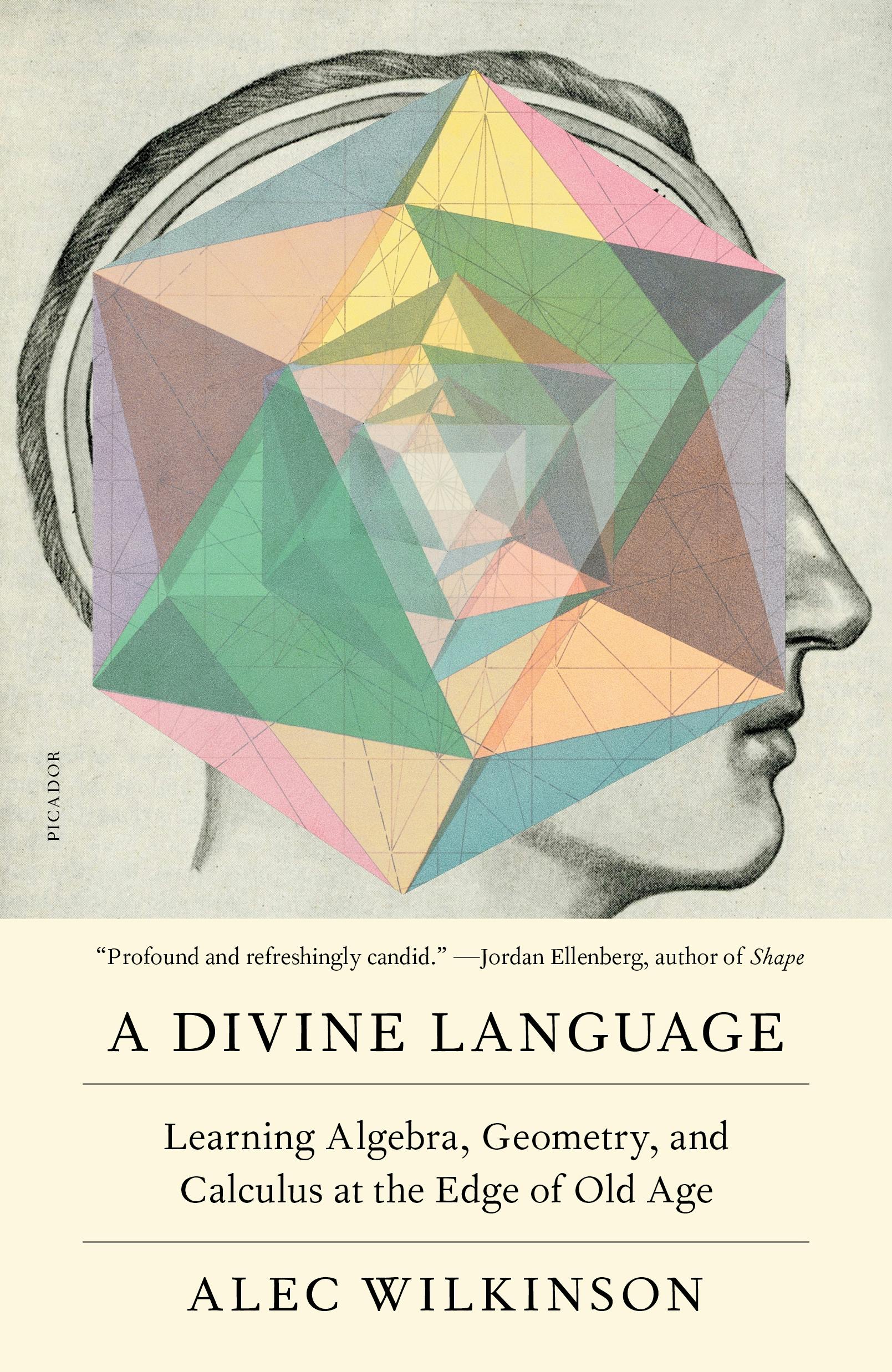
'My impression was that algebra was less a subject than a practice into which one was inducted by the algebra priests after a series of mortifications. The letters and equations that the teacher drew on the board did not seem related to the numbers I had handled in other classrooms. For one thing, a problem in arithmetic was vertical, one number beneath another, and a problem in algebra, an equation, was horizontal. I felt as if in a permanent present, unable to see how the past and the future were joined. In Ulysses James Joyce writes that the present is the drain that the future goes down on its way to becoming the past.' p.12.
'The mathematician Alonzo Church, who taught Alan Turing, told another of his students, David Berlinski, "Any idiot can learn anything in mathematics. It requires only patience." I would sit with a pencil and paper trying to solve an algebra problem and sometimes go only so far before my mind would halt, because I had could used up what little I knew that might apply. It hadn't occurred to me to think of algebra as the bright boys and girls I had been among had thought of it, as a series of related procedures. They were constructing a map. I was collecting postcards from places where anxiety or incuriousness had kept me from leaving my hotel.' p.31.
(my emphasis)


Alec Wilkinson. (2022) A Divine Language. Learning Algebra, Geometry, and Calculus at the Edge of Old Age. New York: Farrar, Straus and Giroux. https://us.macmillan.com/books/9781250168580/adivinelanguage/

Previously: math :: logic

Wednesday, August 04, 2021

Myers-Briggs 'in' Hodges' model (Discuss?)

individual
|
INTERPERSONAL : SCIENCES
humanistic ----------------------------------------------- mechanistic
SOCIOLOGY : POLITICAL
|
group - population
INTUITION

THINKING
 

INTROVERSION

JUDGING


While thinking and thought span the intra- interpersonal and sciences domains, the bias is towards objectivity not subjectivity.

While individual's exercise judgement and the outcome of many decisions may be inconsequential, when situations are misjudged, the consequences can be very political, i.e. professional and legal. The overlaps here are many (as per the function of the MBTI) - in judgements that are adverse socially, for example, shame and embarrassment may also result.

Intuition is usually experienced in a person's 'gut' and yet despite this somatic reference it is a very subjective and humanistic quality. In clinical contexts it is interesting when a colleague or a team try to make sense of this in terms of action to take.

This interplay between subjectivity-objectivity, personal-other, quality-quantity and other dichotomies are inherent in Hodges' model.

My source:
Ahuja, A. (2018) The eternal appeal of Jung (Review of: What's Your Type? The Strange History of Myers-Briggs and the Birth of Personality Testing, Merve Emre, William Collins. Life&Arts, FTWeekend, 15-16 September. p.9.


Wednesday, August 26, 2020

Book Review: v Mathematics and Art: A Cultural History

Mathematics + Art
Mathematics + Art

Running since May, I need to wrap this review up. As already noted this is a marvellous read and not just as a supportive friend through lockdown. Conscious of more reading and a new part-time clinical role, I could write so much more and read so much more into the text.

 Gestalt and patterns are described and illustrated, which prompt me to 'see' fields of knowledge, care domains and blank/blanc space (p.263). Amid this physical and psychological data can assume their simplest forms? Piaget is significant too in the thought on whole-part distinction and our preoccupation (science's) with a unified world view. This fits with future reading on Hodges' model and how learners categorize and develop their disciplinary and professional vocabularies.

If the mathematics might deter further reading on group theory, perhaps symmetry in art and sociology might be persuasive (chap. 7)? Does chapter 8, 'Utopian Visions after World War I mean that introspection and with it reflection are futile (p.288)? There could be another model/theory of nursing here: with Psi waves, Bohr Kierkegaard (p.281 Either-Or 1843), ideas, observation and competition in physics interpreting physics the uncertain times continue. I do get a (vague?) sense that the notion of consistency is very important and of use here too (p.322). As in healthcare and science the search for evidence is relentless, it is sobering to read (again) of the limits of language and hence mathematics (p.326, Wittgenstein's tower of meaning, Figure 9.3). The book is multicultural yet reminded me of the feats of navigation, observation and collective memory across Oceania.

In my notes, I picked out Karl Gerstner's, Aperspective 1: The Endless Spiral of a Right Angle and looking for an image to post here found an Aeon post:

How physics and maths helped create modernist painting

If you visit the post above the relevance of Aperspective 1 to me is not necessarily obvious, yet Hodges' model is full of axes, right-angles, symmetries and asymmetries. Recently, working through a little angst, I've been writing about Hodges' model from a definitive perspective. If there was a manual what would it 'say'? The center of the model is a fusion of right angles and disciplinary domains. What is involved, implied, communicated in the many forms of crossings (p.386)?


A.R. Penck: 'The Crossing' (1963)

Michel Serres is quoted:

"The ordered structure blew up." p.410.

With a long-standing interest in visualisation in the humanities, I had written Levi Strauss - maths in social sciences in my notes.

Bourbaki, Sontag the names come thick-and-fast - more reading.


This is an amazing book, the content, quality, index, references. I'm going to close here, but may return in future (there's 556 pages and the end notes are excellent too). As I pick up another book, a great find is another disciplinary bridge (Fechner, Psychophysics, 1860) more recently rediscovered in Buddhism and neuroscience?

individual
|
INTERPERSONAL : SCIENCES
humanistic ----------------------------------------------- mechanistic
SOCIOLOGY : POLITICAL
|
group - population
Psycho-
-Physics


The Crossing image: 
https://www.dw.com/en/exhibition-utopia-and-demise-shows-tensions-in-east-german-art/a-50303887

Lynn Gamwell (2016) Mathematics and Art: A Cultural History. Princeton, New Jersey: Princeton University Press. ISBN: 9780691165288. p.283.

(Sincere thanks to PUP and John Wiley for the review copy.)

Sunday, May 31, 2020

Book Review: ii Mathematics and Art: A Cultural History

Last time I suggested that philosophy is missing from the title. Architecture is another very welcome theme in the book, the significance of perspective to art being obvious, but not the only focus. As mentioned the preface is an invitation to dive in. The oldest star atlas (xi), Chinese, sets the scientific and global tone to follow. My interest in diagrams, was quickly awoken as there are many in this book. I recalled the lunar cycle depicted on cave walls and bone. The first diagrams from prehistory. The preface works brilliantly as an introduction, such that I couldn't wait for chapter 7: "Scientists describe such symmetries using the mathematics of group theory" (xv).

Mathematics + Art
Mathematics + Art
For young scholars the book plays the role of sign-posting schools and history of thoughts and ideas. [Paraphrasing..] Adorno and Horkheimer ... wrote the first in-depth analysis of the loss of confidence in enlightenment ideals, a condition that came to be called postmodernism (xviii). There's an observation of artists being inspired by mathematics, but not mathematicians drawing upon art - with some rare exceptions. When possible, Gamwell's approach to the personality and intellectual environment of mathematicians and artists is psychological (noting key traumas), at others the author adopts a more sociological and cultural stance. The prose throughout is clear and flows very well, even with some inevitable and necessary cross-referencing.

Chapter 1 Arithmetic and Geometry brings home the relationships and dependencies between maths, arts, belief and changes in our understanding of the Universe. When I learned in my teens of the destruction of the Library of Alexandria, which Ptolemy would have visited, (p.30) I was shocked and still am at this loss. Sadly a loss that is not just an ancient phenomenon.* Interested in astronomy, the loss of Hipparchus's globes and co-ordinate system is a further blow. A cross-cultural perspective is maintained throughout the book, with Islamic mathematics, South America and Asia. Do you know the difference between philosophy and mathematics? There is an opinion here. From the Greeks - Neoplatonism, early Christian and medieval thought and the 'liberal arts', I knew the modern book version of the 'Quad-rivium' on my shelf was of significance:
"In the late Roman and early Christian era, scholars continued to study the ancient texts based on a curriculum - arithmetic geometry, music, and astronomy (the quadrivium, Latin combination of quadri and via meaning "the place where four roads meet") - first described by the Pythagoreans and adopted by Plato for his Academy." (p.37)
An original purpose for Hodges' model, remains curriculum planning and development, the definition of the core disciplines of learning has always been a roll call of sorts. The book can serve all, but younger scholars especially, as it sets out the formulation of scholastic traditions which have a chapter each:
  1. logicism (chapter 5): Realism - St Augustine - Platonic realm
  2. intuitionism (chapter 6) - Conceptualism - Peter Abel - distinct objects only in the mind
  3. formalism - (chapter 4) Nominalism - William of Okham - mere signs or names (p.37)
Even today we must ponder on the status of the seven liberal arts, the quadrivium plus the trivium of grammar, rhetoric and logic. To classics scholars this will be introductory, but invaluable grounding for many learners - young and more senior.

There is an account of eastern and western cultures and the relative development of mathematics. The sciences and theology feature markedly as human reason made progress - increasing certainty only to suffer from doubt with new discoveries. The 'via negativa' (Latin for "negative way", p.47) reminded me of two books on ignorance I purchased in London. I arrived there March 12th and soon thought; "What on Earth (as a nurse too) am I doing here?" Especially, being in the basement for Jazz Live at Pizza Express, Soho. These are indeed uncertain and challenging times.

You may have noticed I have not mentioned the art thus far. Well there is plenty. By page 47 we are up to plate 1.52 'The Cloud of Unknowing' 1998 by Roman Verostko.

Post iii soon.

*In lockdown I followed a conversation on the destruction of libraries from the digital Hay Festival:

(This does require a subscription to Hay Player.)

Friday, May 22, 2020

Book Review: Mathematics and Art: A Cultural History

Spotting this book really hurt my face. The resulting contortion: the half-smile - half-grimace was painful, but I had to approach the publisher for a review copy.

In the email I was honest. I fessed-up to being a mathematical hopeless lover of the discipline. So many maths teachers, so many broken pieces of chalk, so much pain and anxiety. In the early 1970s my late uncle Doug (Engineering, Liverpool University) provided some tuition at weekends. This did not translate into exam success, but he did not diminish my wonder and awe of this subject.

I mention this to set some personal background and give you a sense of my gratitude to Princeton University Press for the privilege of this tome with its 576 pages and 9.5 x 12 in. The email included my work in mental health nursing and having this blog with a small readership and twitter. I've already posted highlighting this book, but thanks to PUP and your faith.

In Waterstones, Gower St, London in February I saw a copy downstairs, so although published in 2016 this book still has currency. The hardback, sat on your knee, you know it's there. That isn't a problem, but sometimes the clearly high production standards and quality literally 'shone' in certain lighting. The quality, high legibility and art reproductions are not to be missed: 444 color + 102 b/w illustrations.

Maybe there are a few math (maths?) teachers who will pass this way and think about their teaching methods, a child's ability, aptitude and sense of wonder. Even if the mind before them doesn't 'get it', please leave that sense of wonder intact. Nurture it, nudge it as best you can to inform the other literacies and provide the momentum for lifelong learning.

There's a word missing from the title, philosophy, which Gamwell combines in a balanced, almost formulaic manner, that had me captured - enraptured from chapter 1. No! Wrong again. Even the preface works indicating the global scope to follow soon. ...

Mathematics and Art: A Cultural History


Lynn Gamwell (2016) Mathematics and Art: A Cultural History. Princeton, New Jersey: Princeton University Press. ISBN: 9780691165288. p.283.

(Thank you to PUP for the review copy - more to follow.)

Sunday, November 01, 2015

Medical (local) history II

It is quite surprising (or maybe not) the things we fail to notice in our everyday lives. Making a slight alteration to my path through the cemetery on the way down to Ashton - my home town in WN4 - I came across the gravestone photographed below.

Of course, 'surgery' in 1822 would have been radically different to that of today. In Jameson's lifetime progress was nonetheless being made on several fronts within medicine:

1796Edward Jenner develops a method to protect people from smallpox by exposing them to the cowpox virus. In his famous experiment, he rubs pus from a dairymaid's cowpox postule into scratches on the arm of his gardener's 8-year-old son, and then exposes him to smallpox six weeks later (which he does not develop). The process becomes known as vaccination from the Latin vacca for cow. Vaccination with cowpox is made compulsory in Britain in 1853. Jenner is sometimes called the founding father of immunology.
1800Sir Humphry Davy announces the anesthetic properties of nitrous oxide, although dentists do not begin using the gas as an anesthetic for almost 45 years.
1816René Laënnec invents the stethoscope.
1818British obstetrician James Blundell performs the first successful transfusion of human blood.
1842American surgeon Crawford W. Long uses ether as a general anesthetic during surgery but does not publish his results. Credit goes to dentist William Morton.
Infoplease: Medical Advances Timeline

Posting the photo and reading this gravestone I am minded about the need for respect and given to wonder about this man and his contemporaries? Is the family still local in Ashton, are they listed in parish records? Are there other records to follow...? What specific deeds gifted him this epitaph?

"Year of his Age": is thought provoking as we carry our Age literally, individually, around us, a bubble of time. Then we try to distil this into the life story of those whose living memory's fail them, but not their families and carers.


It is remarkable to see, in stark relief, the impact of a practitioner's attitude and aptitude. A lesson from the past for all healthcare professionals. This was the case thousands, hundreds of years ago, it is the case today and must be tomorrow.

As you read this slightly weathered stone there is another lesson.
Reading each word, with aged grammar and worn clarity even the past begs us to 'listen actively': the greatest lesson of all.

Bless you Mr Jameson.


Related post:

Thursday, May 09, 2013

Jordan JNC Conference: Mental health and stigma, Student nurse's aptitude and the MDGs

There were a great many fascinating talks at the conference in Amman. The following caught my attention:

Dr Heyam Dalky on Perception and Coping with Stigma of Mental Illness: Arab Families' Perspectives

Since I trained in the late 1970s there has been a marked positive change in the social stigma associated with medical and mental health conditions. People are by and large more enlightened regards epilepsy for example. Although perhaps some of the progress can be related to medication, medicine management and community follow-up. Mental health professionals and services are aware of the potential damage that a diagnosis of 'schizophrenia' can inflict on young adults. Despite any sense of progress I might see, there is much still to be done as campaigns such as Time To Change attest.

It was very useful then to revisit the historical development of thought in stigma. Dr Dalky also shared global insights into stigma perception within families by citing research in a range of countries; for example, in Jordan, Morocco, Sweden, Germany, China, Malaysia, and Ethiopia.

Within Hodges' model the individual, as in the self, is given a pivotal and yet mobile place (transferable from the top of the model to the center) this led me to the concept of self-stigma (Corrigan, 2009) as I draft a paper on h2cm, case formulation and diagrams.

In her presentation Dr Dalky notes:

  • Link and Phelan (2001) defined stigma as the co-occurrence of the components of: 
    • labeling, stereotyping, separation, status loss, and discrimination.
  • “self-stigma” or “stigma perception,” is the extent to which individuals believe others stigmatize them because of who they are.
They say travel broadens the mind and listening to this presentation you really see the difficulties, objectives and aspirations that not only practitioners share but families and our clients too.

Heyam F. Dalky, PhD, RN, Jordan University of Science & Technology, Irbid, Jordan
 

Ever since my engineering aptitude was measured in the mid 1970s by predicting the movement of a series of gears I've always held a special place for aptitude and attitude, as reflected here on W2tQ.

Mrs. Maxie Andrade, et al. presentation Aptitude Towards Nursing: Is it Measurable? highlighted a central challenge within nurse education.

Nurse training represents a major personal investment for the student (their family too in many cases), the educational institutions and societies concerned. As a sign-off mentor I assess third year students on their final placement. This is a great responsibility that is usually a privilege, but it can be a frustration at the loss entailed for a failing student.

Mrs Andrade defined aptitude:
Is a condition, a quality or a set of qualities in an individual, which is indicative of the probable extent to which one will be able to acquire under suitable training some knowledge, skill or composite of knowledge, understanding and skill

Ref: Mangal S L. General Psychology. Fifteenth reprint. New Delhi: Sterling Publishers Pvt. Ltd; 2008.
The main questions:
Do nursing students possess the required ability (aptitude) to become an effective nurse?
What abilities do we really expect from nursing students?
The development of a tool to measure aptitude was described, reviewing the literature. Are there any existing tools within nursing? What exactly should a tool measure? Statistics and results were listed. This was a very interesting presentation and of particular interest to me.

Mrs. Maxie Andrade, Asst. Professor, Manipal College of Nursing Manipal, Manipal University


There was also a reminder of the time left to achieve the Millennium Development Goals [MDGs] c/o Prof. Hester C. Klopper's keynote: The nursing education tipping point: Forces of change. 
Less than 1,000 days and that was last month.

One thing I noticed and a sign of the issues in the Eastern Mediterranean is that the JNC conference website has proved unavailable at times. It is accessible as I post this.

Andrade M. Perceptions of health care consumers, deliverers and nurse educators on nurses, nursing practice and nursing education system. Manipal University, Manipal: 2010. (Dissertation work).
Andrade M. Choice of nursing career: Pleasure or pressure. International Journal of Nursing Education. 2012; 4(1); 42-44. 

Corrigan, P.W., Larson, J.E., Rüsch, N. (2009). Self-stigma and the “why try” effect: impact on life goals and evidence-based practices. World Psychiatry. 8(2): 75–81.

Monday, April 22, 2013

Jordanian Nursing Council 4th International Nursing Conference “The Tipping Point: Creative Solutions to Health and Nursing Challenges”

Well, I arrived in Amman for this conference at midnight and have not been this far east before. It is certainly different and there is much to look forward to.

I panicked slightly in Istanbul briefly reading the boarding time on my e-ticket as the flight time. So, I was looking for 1920, but the flight was 2020 and not yet displayed.

The hotel Le Meridien is excellent, my driver last night and the staff are very friendly. I was told on the 35 minute trip from airport to hotel that events nearby have impacted on tourism. People have had to seek other work as many tourist offices have closed. At breakfast it does give you pause to wonder about what is happening not all that far away.

I've not checked the conference venue yet. There's a reception this evening and workshops ongoing through today. I opted for:

4
15:00-18:00
Nicola McHugh, MSc, MA, RN
Understanding and Using Research in clinical Nursing Practice

In preparation we've been asked to read:

Seers, K. et al., (2008). A randomised controlled trial to assess the effectiveness of a single session of nurse administered massage for short term relief of chronic non-malignant pain. BMC Nursing, 7:10 doi:10.1186/1472-6955-7-10. http://www.biomedcentral.com/1472-6955/7/10

Two workshops are recorded - an approach to consider for the future - as with using Skype.

Although only two days long there are a great range of concurrent sessions, amongst them:
  • Differences in Perception Between Nurses and Patients Related to Patients’ Health Locus of Control Ayman M. Hamdan-Mansour
  • Fostering Global Citizenship in Nursing Education: The Role of the United Nations Mary E. Norton 
  • Aptitude Towards Nursing: Is it Measurable? Maxie Andrade 
  • Comparison of Structure, Process, and Outcomes of Healthcare Service Provision between Advanced Community Nurse Practitioner and General Nurse Practitioner Noppawan Piaseu
  • Development of a Multimedia Computer -Assisted Learning with Integrated Content of Anatomy and Physiology for Enhancing Nursing Students’ Skills on Physical Examination in Adult: Head and Neck Examination Chularuk Kaveevivitchai
  • Assessment of Nursing Students' of Azad Islamic University of Saveh' Perception about Importance of Caring Behaviors Based on Caring Model of Watson Lida Nikfarid
My presentation is tomorrow afternoon and on Wednesday I'm chairing a session.

More to follow on this and some reading ...

Thursday, November 10, 2011

The Care Campaign


The Care campaign is a joint drive by the Patients Association and Nursing Standard magazine to improve fundamental patient care across the UK.


CARE stands for:

C – communicate with compassion
A – assist with toileting, ensuring dignity
R – relieve pain effectively
E – encourage adequate nutrition


The campaign recognises that everyone who goes into a care setting is entitled to these four fundamental aspects of care – they are a human right.

We hope patients, relatives and nurses will use this Care slogan as a care checklist. Patients and relatives can use it to pinpoint shortcomings in care; nurses can use it to articulate a case to their managers for more support, for example, more staff.

The Care campaign asks all nurses, nursing directors, chief executives and non-executive directors of NHS trusts to sign up to the Care Challenge so that ‘Care’ becomes a universal expectation for patients.

The campaign’s aims are:
  • For nursing staff to adopt the Care Challenge, based on our four-point tool.
  • To highlight obstacles nurses face in delivering the Care Challenge.
  • For organisations to sign up to the Care Challenge.
  • For patients to recognise the Care checklist and to use it to challenge poor care.
  • To support nurses who expose failures to deliver the fundamentals of care.
Contact The Care Campaign: carecampaign AT rcnpublishing.co.uk

===========
Some thoughts:
What is crucial of course is what the above C. A. R. E. depends upon - and this has been considered within the campaign:

C: Attitude, self-awareness, professionalism and training in theory and practice.
A: Time and adequate staff assignment to enable patient - person-centred care not task allocation.
R: Time to observe and interact with patients and relatives - acknowledging patient reports and training in the recognition of pain and management. Pain management should not be incidental - neither should dignity and respect.
E: Too posh to wash - Too senior to help feed a patient, ensure they have a drink?

Saturday, May 01, 2010

Health, social care and informational emaciation

We hear a lot about information and how important it is, being in what is described as the information age, the information economy. ...

Nurses, patients and carers (plus managers) would instantly recognise that if a care plan and subsequent care delivery was based on the following assessment:


oriented, not depressedhypertension, falls, dizziness, headaches, pyrexia
carer due hip operationadmitted 1st May 2010 1200hrs
to clinical decisions unit

- we would be acutely concerned.

Clinically this is a case of informational emaciation. The information above is rather thin on the ground, this in turn affects the knowledge that can be gleaned in formulating, negotiating and agreeing actions. Even in the information sparse example above each of the care domains has some content; is that always the case?

Use of the word emaciated in this context is not intended to diminish the plight of people who are physically emaciated, poorly nourished.

This post is intended to highlight another aspect of poverty.

As the Global Healthcare Information Network (HIFA 2015) argues and campaigns - information is a means to emancipation - a way to overcome information emaciation.


Wednesday, May 06, 2009

Nursing Times: Safety ytefaS :semiT gnisruN

This weeks Nursing Times includes an article by Liz Owen 'Improving compliance with the C. difficile root cause analysis tool' (2009). The piece includes a section that highlights* the importance of reflection, which together with action planning underpins the concept of root cause analysis (p.16).

There are three references in particular cited: Murphy (2002) in relation to the infection and prevention team giving leadership to staff committed to reducing health care associated infections (HCAI) rather than accepting sole responsibility for HCAI. This also entails capturing the 'hearts and minds' of staff (Shapiro, 2003) completing the root cause analysis tool (p.16). Amongst many interesting points - it was found that there were unexpected benefits too (Glanfield, 2003) notably - strengthened relationships and improved attitudes.

This reminds me of affordances in human-machine interfaces and the use of technology more generally. As Owen and others show whatever we call these unexpected outcomes they are by definition unexpected, or not readily accessible to our initial perception and reasoning. Owen found that clinical engagement and leadership proved central in this project. Is there a way to foresee more of the 'unexpected' whether barriers or benefits?

Before being able to engage with others we need to be aware and able to -

reflect on our own hearts and minds.

A coherent team with the inevitable chaotic-creative outliers that (just 1 or 2....) personalities bring might just help us see around the corners - an additional key asset to safety...

Murphy, D.M. (2002) From expert data collectors to interventionists: Changing the focus for infection control. American Journal of Infection Control; 30: 120-132.
Shapiro, A. (2003) Creating Contagious Commitment. Hillsborough, NC: Strategy Perspective.
Glanfield, P. (2003) Towards sustainable change and improvement. In: Pickering, S.P. (ed) Clinical Governance and Best Value. London: Churchill Livingstone.
Owen, L. (2009) Improving compliance with the C. difficile root cause analysis tool. Nursing Times; 105: 16, early online publication.
*even if that is just a subtitle?

Friday, February 20, 2009

Reprise: Hodges' model introduction

Developed in the UK during the early 1980s, Hodges’ model (h2cm) is a conceptual framework that is person-centered and situation based. In structure it combines two axes to create four care (knowledge) domains (as illustrated on the website). Academics and practitioners in many fields create models that help support theory and practice (Wilber, 2000). Models act as a memory jogger and guide. In health care generic models can encourage holistic practice directing the user to consider the patient as a whole person and not merely as a diagnosis derived from physical investigations? Exposure of h2cm is limited to a small (yet growing) cadre of practitioners; several published articles (Hinchcliffe, 1989; Adams, 1987; please see the bibliography on this blog). In addition to a website (Jones, 1998) there is a blog and an audio presentation both first published in 2006.

The best way to explain h2cm is to review the questions Hodges originally posed....

To begin, who are the recipients of care?

Well, first and foremost individuals of all ages, races and creed, but also groups of people, families, communities and populations. In this way the potential scope of Hodges' model is personal and global.

Then Brian Hodges asked: what types of activities - tasks, duties, and treatments - do nurses carry out?

They must always act professionally, but frequently according to strict rules and policies, their actions often dictated by specific treatments including drugs, investigations, and minor surgery. Users who adopt Hodges' model find that the model transcends the purely task-based perspectives of care and intervention. Hodges' model also encompasses beliefs, attitudes, motivation, self-awareness, and values. Nurses do many things by routine according to precise procedures, the stereotypical matron - machine-like efficiency? If these are classed as mechanistic, they contrast with times when healthcare workers give of themselves to reassure, comfort, develop rapport and engage therapeutically. This is opposite to mechanistic tasks and is described as humanistic; what the public usually think of as the caring nurse. In use this framework prompts the user to consider four major subject headings or care domains of knowledge. Namely, what knowledge is needed to care for individuals - groups and undertake humanistic - mechanistic activities?

Through these questions Hodges’ derived the model depicted on the website.

Initial study of h2cm on the website has related Hodges’ model to the multicontextual nature of health, informatics, consilience (Wilson, 1998), interdisciplinarity, and visualization. H2cm says nothing about the study of knowledge, but a great deal about the nature of knowledge is implied in the models structure and knowledge domains. This prompted two web pages devoted to the structural and theoretical assumptions of h2cm. Although the axes of h2cm are dichotomous, they also represent continua. This duality is important as for example an individual’s mental health status is situated on a continuum spanning excellent to extremely unwell. There are various states in-between affected by an individual’s beliefs, response to stress, coping strategies, epigenetic and other influences. H2cm was created to meet four educational objectives:

1. To produce a curriculum development tool.
2. Help ensure holistic assessment and evaluation.
3. To support reflective practice.
4. To reduce the theory-practice gap.

Since h2cm’s formulation these objectives have grown in relevance. The 1980s may seem remote, but these problems are far from archaic as expansion of points 1-4 reveals. Education is now preparation for life-long learning. Curricula are under constant pressure. Despite decades of policy declarations, truly holistic care (combining physical, mental and pastoral care) remains elusive. The concept and practice of reflection swings like a metronome, one second seemingly de rigour, the next moment the subject of web based polls. H2cm can be used in interviews, outlining discussion and actions to pursue, an agenda - agreed and shared at the end of a session. The model is equally at home on paper, blackboard, flipchart and interactive whiteboard. Finally, technology is often seen as a way to make knowledge available to all; the means to bridge theory-practice gap through activities such as e-learning, governance and knowledge management. The digital divide cannot be bridged by idealism alone.

The axes within h2cm create a cognitive space; a third axis projecting through the page can represent history; be that an educational, health or other ‘career’. It is ironic, that an act of partition can simultaneously represent reductionism and holism. Reductionism has a pivotal role to play, which h2cm acknowledges in the sciences domain. What h2cm can do is prompt the user that there are three other pages to reflect and write upon.

Should you be interested I can f/w two papers on Hodges' model published 2008 and 2009: please contact me at h2cmng at yahoo.co.uk. Much of the material on the website is in need of update, or removal - if you would like to help please let me know. The time for partnership in spreading Hodges' model is now....

REFERENCES:

Adams, T. (1987). Dementia is a Family Affair. Community Outlook, Feb, pp. 7-8.
Hodges E. Brian (1989). Hodges health Career Model, IN, Hinchcliffe, S.M. (Ed.). Nursing Practice and Health Care, [1st Edition only], London, Edward Arnold.
Wilber, K. (2000). Integral Psychology: Consciousness, Spirit, Psychology, Therapy. Shambhala Publications.
Wilson, E.O. (1998). Consilience: The Unity of Knowledge, Abacus.

See this blog's bibliography for references and the blog labels (tags) for additional resources.
Saturday, October 27, 2007

21st Century Care and the need to touch the sides

In the developed world the constant to brand and consume generally and medicalise, diagnose and prescribe specifically means that vast quantities of food and drugs go straight down the hatch: rapid swallowed-whole without ever touching the sides. Now the effects of the wind produced is being noticed because the consequences mean a shake of the grim reaper's hand sooner than might be expected.

When health care budgets are compromised it is often the public (mental) health practitioners that find their piggy-bank in pieces. Although evidence-based medicine has its roots in the POLITICAL and SCIENCES domains, its impact seems solely hemispheric - 'local' - largely restricted to the right in terms of Hodges' model. It fails to reach the INTRA - INTERPERSONAL and SOCIAL domains, the places where change really counts.

Using Hodges' model can help the food and drugs to touch the sides, although actually by then of course we are too late!

It's one of many ironies that we need safety nets to catch people at risk. What about a sticky net that can stop all that food and reduce the volume of drugs from commencing this metabolic flight?

If we are to tackle and fully exercise the care problems and issues presented by the 21st century our research, interventions, attitudes and aptitudes must be 4-fold* to ensure that the caring touch is not senseless, but is accompanied by thought. Touching the sides means engaging thought at several levels from common sense through to critical appraisal. Whether we are dealing with individuals, groups, populations or the global family - 'X' truly marks the spot!

*5-fold taking into account beliefs.

Monday, August 27, 2007

INTERPERSONAL links: Holistic Bliss or Tristram Shandy ... III

The INTERPERSONAL domain links are to my mind (no pun intended) fairly obvious, at least that first row complements the SCIENCES top row opposite.

Basically, who needs a talking therapy and who needs a drug therapy?

The two uppermost care domains are intended to represent the INDIVIDUAL axis, so just as the SCIENCES [ANATOMY & PHYS] domain covers physical care; so the INTERPERSONAL domain encompasses emotional and mental health care.

Hodges' model is comprised of four care domains, but it is these two [INTERPERSONAL : SCIENCES] applied to the individual that even today we struggle to balance in theory and practice.

A key factor in Brian Hodges' early nursing career (and mine) has been the role of institutions, organisations and the formal policies and structures they represent. This can be depicted as:

EMOTIONAL HEALTH : PHYSICAL HEALTH (both 'individual')
OTHERS family, society : INSTITUTIONS (both 'group')

As to the INTERPERSONAL links themselves - I arrived at mental health through reading a psychology text on Wundt and introspection, then James..... PSYCHOLOGY being of central importance in this domain has two listings, with MENTAL HEALTH and closely related THERAPIES also sharing the top row. I may swap these around: PSYCH-OLOGY as a cognitive science should be placed rightmost, while MENTAL HEALTH and THERAPIES should be further to the left being more 'humanistic'. What do you think?

Do the sciences have to be corralled in the SCIENCES domain? I think I remember Bryan Magee and John Searle in conversation noting that many disciplines with science in their title are probably not sciences - in that upper right hand quadrant sense. Maybe it is just that -

cognitive science : "SCIENCE" (physics, biology, chemistry)
social science : political science

- are still running wild out there, untamed and as yet unbroken? Cognitive science has however, clearly come of age and the 21st century will undoubtedly be the century of the brain when anatomy, physiology and genetics are linked to thought and individual (and even social) behaviour.

Already the content here highlights cognition (thought). The inclusion of other link categories in this upper-left set can be explained with recourse to cogitation. After PSYCHOLOGY, PHILOSOPHY (with ETHICS) is the rather obvious 'ology'.

For better or for worse our culture is driven more by IDEAS and ideology than philosophy. Call it the informal philosophical engine that drives CREATIVITY.

COMMUNICATION lies at the heart of all things human-e. Given the millennia that the patient-physician relationship has been around, you might expect it to be perfected by now. Well health and social care workers and the public they serve are still trying to reach empathic nirvana (although that may be to take communication a bit too far).

Hodges' model has a role to play supporting reflection for all.

IDEAS, COMMUNICATION lead us to belief and a central component in psychological therapies. Belief is also a thread can be used by one individual to lead others positively or to subvert other individual's capacity to think critically. It is in this INTERPERSONAL domain that good and evil are so proximal they create heat, fanned by a culturally driven winds of history and media from the South. Be-life indeed. Here then - THEOLOGY is purposefully placed with TRANSDISCIPLINARITY. If it is to serve humanity Religion must be bound and integrated into the corpus of knowledge and that includes reconciliation with the SCIENCES. We cannot deny myth and yet myth cannot deny evidence - a debate that will go on......

The economic emphasis placed
currently on creativity is quite remarkable, not just at a national level (cue ramble...). Cities recognise that their future development, sustainability and very survival depends on the generation and flow of ideas. Some things do not change. In myth a special place has been reserved for the isolated thinker, the one individual who takes themselves away for weeks-months, to be touched by the spiritual realm, to return to the community delivering insight, creative sustenance. Now creative individuals are needed more than ever. The isolation is virtual, the community potentially global. The energies of individuals are directed at solving problems concerning more mundane matters of cost, risk, flexibility and growth. Those creative outputs are distilled through team work and although they are then diluted they remain invaluable - such is the scale of the problems to be solved. Just as the great rivers that feed our cities have their sources - often remote and isolated in the high mountains, so ideas and creativity begin with one individual. That flow of personal knowledge now finally enters the ocean of KNOWLEDGE MANAGEMENT - EXPERT SYSTEMS (decision support systems).

I have a little mantra that I share with students. It's not perfect as there is much overlap; but I figure that what
aptitude is to engineering so attitude is to caring.

HEALTH PROTECTION and PROMOTION, SELF CARE are all about attitude.
Of course, money in the form of departmental budgets (those institutions do matter) and family income can make a huge difference, but if the right attitudes are not present then you may as well - "go fish!".

In light of the above STUDY SKILLS and EDUCATION and TRAINING speak for themselves - on this occasion at least. One of the original purposes of Hodges' model was to facilitate reflective practice
(more to follow). We are familiar with the mechanical tools in use everyday to the extent they are taken for granted. Now the focus of training is more likely on the software tools that translate IDEAS into art, artefacts and conceptual frameworks.... ;-) These graphical and design tools must be learnt and the HUMAN-COMPUTER INTERFACE and its ACCESSIBILITY 'quotient' can prove to be either a brick wall or a leg-up for the individual user (even if networked or a collaborative tool - see SOCIOLOGY links).

If the SOCIAL domain reflects the worlds of the others, then the last INTERPERSONAL row REST & RECREATION reflects something of me and my family.

"Next!" - the SOCIOLOGY domain links....
