Hodges' Model: Welcome to the QUAD: health promotion

Hodges' model is a conceptual framework to support reflection and critical thinking. Situated, the model can help integrate all disciplines (academic and professional). Amid news items, are posts that illustrate the scope and application of the model. A bibliography and A4 template are provided in the sidebar. Welcome to the QUAD ...

Showing posts with label health promotion. Show all posts

Friday, July 24, 2026

WHO’s Self-Care Month (June 24th – July 24th) and International Self-Care Day July 24th


The Global Self-Care Federation (GSCF) is putting the spotlight on the benefits of self-care ahead of and beyond WHO’s Self-Care Month (June 24th – July 24th) and International Self-Care Day July 24th – two key annual advocacy milestones. 
 
GSCF’s 2022 International Self-Care Day campaign builds on the #SelfCarePromise theme, encouraging everyone to make and share their personal commitment to embrace a specific self-care action. This year, we are specifically focusing on the topic of resilience.  

Self-care is any action that an individual takes to look after their own health, based on the knowledge and information available to them. This practice can also occur in collaboration with healthcare professionals when needed. Actively managing your own health and well-being through self-care has numerous benefits, including better choice between healthcare options, better care for individual wellbeing and better value for governments and health systems worldwide.

Continued ...
 

individual
|
INTERPERSONAL
: SCIENCES             
humanistic ------------------------------- mechanistic
SOCIOLOGY : POLITICAL   
|
group

SELF-CARE
Mental health 
self-care & wellbeing
Individual Health literacy
(- and other literacies!)

Self Advocacy

Physical self-care
Personal resilience
Evidence-based interventions
Disease prevention
Diagnostics, Drugs, Devices, 
Integrated into Care


Health Promotion & Education
Community Empowerment
Community Resilience
Community Advocacy
Social cohesion
Rehabilitation, Recovery
& Reablement


Knowledge & Information Access
Learning opportunities
 
Universal Health Coverage
Approp. Policy frameworks
Improved care outcomes
Advocacy representation
WHO and agencies


See also:WHO - Self-care for health and well-being

Sunday, May 03, 2026

Global Experts call for Paradigm Shift in Medicine, Health and Education to Save Lives and Fight escalating Health Crisis

ACCESS NEWS WIRE – for PRESS RELEASE on Tuesday, 28. April 2026

A global consortium of 64 experts (72 entities, 5 continents) unveiled two coordinated consensus plus policy brief reports, outlining a science‑driven roadmap to confront escalating health crises and to tackle the growing burden of noncommunicable diseases (NCDs—including cardiovascular diseases, cancer, diabetes, etc.: 75% of global deaths; 82% in low-/middle income countries; 90% of all death in European region).

The centerpiece is HEAL—Healthy Eating & Active Living, ideally whole‑food plant‑predominant/vegetarian-vegan diets & daily exercise outdoors/active mobility—as the minimum, first‑line standard in health and care. The authors urge immediate action on Prevention-over-Treatment and reforming education and human‑relevant science (drug failure rate from animal studies is 90-95%, and as high as 99.6% for Alzheimer disease), with a rapid shift from disease‑centered reaction to person‑centered, lifestyle‑first cure and care.


Figure 1. HEAL means choosing a whole-food, plant-predominant (ideally vegan) diets coupled with daily exercise outdoors/in nature to kick-start better health. Credit: iStock/LightFieldStudios.


Sustainable health is for free but cannot be downloaded or prescribed—it must be lived daily and earned across lifetime through informed lifestyle choices, with HEAL as starting point. As childhood-entrenched health literacy lasts a lifetime; embedding HEAL from primary to tertiary education is the policy priority of our generation.” —Lead author Katharina Wirnitzer | PHT, University of Innsbruck & CCCTIM


Foto 2. Katharina Wirnitzer/Keynote on Vegan Diet in Sports. Credit: ©Katharina Wirnitzer.

Why change is imperative.

  • The paradox: Despite rising health spending and scientific advances, public health gains lag while ever-growing NCDs. The expert panel offers 101 consensus statements and a 10‑step policy roadmap to act across the lifespan—from individual behavior to population‑level change.

  • Why HEAL, and why now: HEAL combines Healthy Eating (whole‑food, plant‑predominant; preferably vegetarian/vegan) with Active Living (regular, ideally daily, including outdoor activity and active mobility). Evidence shows synergistic benefits beyond either alone, reducing reliance on drugs and surgery while improving resilience and sustainability of health systems.

  • Prevention-First (3:1): The reports recommend prioritizing prevention, health maintenance, and health promotion over treatment by 3:1 (Figure 3), making healthy choices the easy, first‑line intervention and reserving medicalized treatment for specific indications.

  • Education and workforce: Embed HEAL from primary through tertiary education and continuously upskill healthcare and education professionals to deliver evidence‑based lifestyle counseling, routine assessment, and monitoring. Improve meal standards and support active mobility in schools and public spaces.

  • Human‑relevant science: Accelerate the transition to non‑animal, human‑relevant methods for basic and preclinical research and for efficacy, safety and toxicity testing through funding priorities, validation, and regulatory adoption.

  • Policy roadmap: Apply Health in All Policies (HiAP) to link individual choices with systemic supports (Figure 4); invest in supportive defaults (healthy public catering, active transport, public‑space design, community HEAL programs); embed HEAL in curricula; and track outcomes with robust evaluation to scale what works.


Every dollar/euro invested in evidence-based prevention saves multiples in treatment. HEAL is the smartest first investment a health system can make.” —Bernd Haditsch | ÖGK – Austrian Health Insurance Fund, Prevention Unit
Obesity is a disease with powerful drivers. HEAL gives every patient a proven, first-line foundation to reclaim their health.” Fatima Cody Stanford | Harvard Medical School & MGH
A doctor who cannot counsel patients on the Power of Lifestyle, especially on food and movement, is only half-equipped. Lifestyle education in medical school is the missing foundation of modern medicine. Helping our patients to eat a more plant-strong diet is the most powerful healing medicine we can prescribe.”
Michael Klaper | Moving Medicine Forward
Plant-forward diets provide a powerful opportunity to concurrently improve health and wellbeing for people, farmed animals and the environment.“ Andrew Knight | Griffith University


Figure 3. Four areas-of-action, balanced 3:1, to achieve lifelong health. Credit: ©Katharina Wirnitzer.


Given its cost-effectiveness, Traditional, Integrative, and Complementary Medicine will be the evidence-based mainstream of tomorrow’s global healthcare.” Tomáš Pfeiffer | ITCIM & SANATOR
Treatment alone will not sustain health systems. HEAL connects prevention, lifestyle medicine and integrative care to advance salutogenesis on a planetary scale. We must invest far more in creating health.” 
—Georg Seifert |
WHO CC & CCCTIM, Charité Universitätsmedizin Berlin

The science clearly shows that, when it comes to human health, animal protection is a win-win.
Given human health’s complexity, and
since animal testing virtually fails to cure human diseases, human-relevant methods already outperform animal experimentation and must therefore be implemented with priority in science, with funds going to human-focused research.
Citizens in the EU and US have spoken clearly in favor of this transition.
HEAL can prevent many diseases, avoiding the need for animal studies altogether
.“
Merel Ritskes-Hoitinga | Universities Aarhus & Utrecht; Doris Wilflingseder | Vetmed Uni Vienna, Aysha Akhtar | Center for Contemporary Sciences, Corina Gericke & Gaby Neumann | Doctors Against Animal Experiments


Figure 4. Systemic application of HEAL to reach target groups and improve personal and public health across micro (individuals/families), meso (communities), and macro (state/government/federal policy) levels, ensuring optimal vertical and horizontal permeability and integration. Credit: ©Katharina Wirnitzer.

Key Actions at a Glance.

  • Make HEAL the universal starting point and minimum, first‑line prevention standard.

  • Implement lifestyle‑first counseling before routine prescriptions.

  • Prioritize Prevention-over-Treatment with an 3:1 balance.

  • Mandate lifestyle education in schools; embed HEAL across tertiary programs.

  • Continuously upskill professionals for evidence‑based lifestyle counseling and monitoring.

  • Accelerate adoption of human‑relevant methods to end animal experiments in research, education and regulatory testing.


Figure 5. The Power of Lifestyle: Start with the dual HEAL approach across 6 interconnected areas to improve health and well-being. Credit: ©ACLM. Graphic modification: ©Katharina Wirnitzer (permission: 24.11.2021).


Contact for further information

Katharina C. WirnitzerProfessor for Sports Public Health with a special focus on Child Public Health

Email: katharina@wirnitzer.at | Cell: +43 (650) 5901794

University College of Teacher Education Tyrol (PHT), Innsbruck, Austria

Friday, December 05, 2025

Conquering Today's Health Paradox with the Power of HEAL – An Expert Consensus Report plus Research Priorities and Policymaker Roadmap

A further post will follow with full PR, but the paper is now published:

Article type: Policy Brief
Journal: Frontiers in Public Health - Public Health Education and Promotion
Manuscript ID: 1695757
Received on date: 30 Aug 2025

Abstract

Background. Despite growing scientific evidence and health guidelines, the global health paradox persists, with rising lifestyle-related diseases and escalating healthcare costs exposing the inadequacy of current efforts.

Objective
. 3 multidisciplinary congresses were held to generate evidence-based conclusions to tackle the global health paradox.

Methods
. 58 experts from 62 entities participated in the international research and knowledge exchange panels. Experts reviewed the latest findings to develop practical strategies, key research and policy priorities, focusing on the “Healthy Eating & Active Living” (HEAL) approach.

Results
, Conclusions, and Relevance. The expert consortium endorsed a 33 evidence-based consensual-statement policy roadmap for addressing global health challenges, emphasizing the HEAL approach can significantly contribute to the “Prevention First” appeal and broad ethical, social, ecological, and economic advantages, and eventually policy change.


Wirnitzer KC, Motevalli M, Tanous DR, Drenowatz C, Moser M, Cramer H, Rosemann T, Wagner K-H, Michalsen A, Knechtle B, Fras Z, Ritskes-Hoitinga M, Marques A, Mis NF, Stanford FC, Schubert C, Goswami N, Leitzmann C, Fredriksen PM, Ruedl G, Wilflingseder D, Lima RA, Kessler C, Jeitler M, Khan NA, Joulaei H, Fatemi M, Knight A, Kratky KW, Palmer KK, Haditsch B, Jakse B, Kofler W, Pfeiffer T, Cordova-Pozo K, Tortella P, Straub S, Lynch H, Schätzer M, Krishnan A, Fathima A. S, Gatterer L, Kriwan F, Abhishek M, Nandgaonkar H, Nandgaonkar S, Adedara AO, Haro JM, Gericke C, Neumann G, Akhtar A, Rashidlamir A, Thangavelu M, Ngoumou GB, Perpék É, Klaper M, Bhattacharya B, Kirschner W, Bessems KMHH, Jones P, Peoples G, Bescos R, Duftner C, Seifert G (2025). Toward a roadmap for addressing today’s health dilemma–The 101-statement consensus report. Frontiers in Nutrition, Volume 12:1676080. doi:10.3389/fnut.2025.1676080.

 https://doi.org/10.3389/fnut.2025.1676080


Saturday, May 24, 2025

'Health and Wellbeing Boards' - hiding the obvious

Does the language we use really matter? A public NHS document includes the following:

'PHARMACY

2.1

Background

Health and Wellbeing Boards (HWBs) in England hold statutory responsibility to publish and keep up to date a statement of the needs for pharmaceutical services of the population in its area, referred to as a pharmaceutical needs assessment (PNA). PNAs are used by the NHS to make decisions on which NHS funded services need to be provided by local community pharmacies.'
I'm not asking, or demanding, change to this but the words we employ do matter. One of them above matters greatly. The question of responsibility and its attribution. In the response to mental illness,  responsibility has always been played out on the public stage. Even when society's response was to leave 'care' to religious and charitable agencies. Then the state stepped in with the first legislation. The state assumed responsibility as per the previous post. Not only where the keys thrown away, but many people admitted there, did not need be. The 'reason for referral' was more accurately described as a social ill. In this way, individuals were incarcerated and forgotten.

It is in the gift of Hodges' model, care of its vertical axis [INDIVIDUAL - GROUP], to be able to negotiate the contextual switch from personal to group and population. There is a marked contrast from self-medication, a nurse doing a medicines round - to the design, testing and research effort of production of a specific drug or intervention. The focus then is obviously at the population scale. The pharmocological business, is not just a business. It is a pharmaco-industrial complex, e.g.

Grouse L. Cost-effective medicine vs. the medical-industrial complex. J Thorac Dis. 2014 Sep;6(9):E203-6. doi: 10.3978/j.issn.2072-1439.2014.09.01. PMID: 25276402; PMCID: PMC4178073.

When we think of dependence it is often framed at the individual level. But how can we expect to change health services, health systems to see them as they truly are: Illness and Infirmity Boards masquerading as Health and Wellbeing Boards?

individual
|
INTERPERSONAL : SCIENCES
humanistic ------------------------------- mechanistic
SOCIOLOGY : POLITICAL
|
group


drugs
manufactoring
testing


Sybil Shainwald
(April 27, 1928 – April 9, 2025)


Sybil Shainwald 

Monday, May 13, 2024

Salt Awareness Week

Individual
|
      INTERPERSONAL    :     SCIENCES               
HUMANISTIC  --------------------------------------  MECHANISTIC      
 SOCIOLOGY  :    POLITICAL 
|
Group
[My] attention, priorities, beliefs, mindset(s) ..
Knowledge
Health literacy
(All literacies)
Choices
Decision making
Motivation
My health:
Physical AND Mental


Responsible for..?
Culture
Lifestyle
Friends - Family
Dining custom & practice

Food Industry
National - Global action
Policy - Law
Health Economics (Price of foods)
Food labelling
Impact of Climate Change


My source: Twi/X

Sunday, December 04, 2022

Time - for care to commute [an appendum]

"The whole thrust of nursing in the last decade [1981-91] has been directed towards seeing the patient as an integrated, individual human being rather than as a piece of malfunctioning anatomy. The patient is a person not 'the mastectomy in bed 3' or 'the man with the leg'. This means that any model of nursing must take into account the patient's psychological and social functioning as well as anatomy and physiology." p.53.
Ack. Walsh, M. (1991). Models in clinical nursing: The way forward. London: Bailliere Tindall.
[Book now bound for students.]

 INDIVIDUAL
|

 INTERPERSONAL    :     SCIENCES               
HUMANISTIC --------------------------------------  MECHANISTIC      
SOCIOLOGY  :   POLITICAL 
|
GROUP

psychology

anatomy, physiology

social


employment, studying ...
life chances / end of life choices


We need to consider concepts of care for a person, patient, and carer, not only in terms of their respective, or primary care domain [ e.g. leg, mastectomy; anatomy, physiology; sciences ] and associations with the academic disciplines; but in Hodges' model, focus upon the horizontal, vertical and diametric relation across and between care domains.

As described by Walsh, talk of  'the mastectomy in bed 3' or 'the man with the leg', is a dated trope; yet sadly it can signify the nature of staff (team) attitudes, the quality of care and experience of patients and their families. 
 
Technically, I see Hodges' model as a relational ontology. What this means basically, is that the model facilitates, encourages the user of the model to consider what they identify in a situation as objects (entities), events, concepts, relationships, data, and so on. An important assumption here is that what 'stands out' is what has salience (what the patient says - non-verbally too, what they mean, what they don't say?); that is, meaning and significance. 
 
Returning to Walsh's example: What does this event, diagnosis, prognosis (including anatomy and physiology) mean for this person as an individual? (If it means 'nothing' this may still - in a mental health context - be important.) What will it mean for the person's friends and family? What do the person it will mean to friends and family - significant other? What about their ability to work, and study? Can they resume their life plans and what of the person's life chances and those also affected? 
 
Crucially, there may not be a connection, a relation, across the care domains of Hodges' model. Asking the question is key, however; to go beyond what can be(come) task-based care. The ability of the model to assure and improve health care rests on this. The same applies for self-care too, with the model's support of reflection and critical thinking, essential to health and other forms of literacy.

Parity of esteem means we have to travel across the model. If we are 'collapse' the model's domains - four sets, into one that actually means something for the nurse, patient, manager, policy maker and researcher. This something, at least conceptually; is no less than person-centred, holistic and integrated care.

Q. Can care commute?

Saturday, February 15, 2020

c/o Assoc. Prof. Nazilla Khanlou: Connecting - Hodges' model & Women's Health

From: Nazilla Khanlou
To: peter jones
Sent: Tuesday, 28 January 2020, 23:18:15 GMT
Subject: Re: Connecting - Hodges' model & Women's Health

Hi Peter,

I hope all is well. Yesterday in the PhD level 2 Seminar course that I teach (for PhD in Nursing students) we discussed your publication and 2 by 2 template. Thank you for letting me know about your work!

FYI, these are the readings we discussed yesterday:

Epstein I, Khanlou N, Ermel RE, Sherk M, Simmonds KK, Balaquiao L,& Chang K-Y. (2019). Students who identify with a disability and instructors’ experiences in nursing practice: A scoping review. International Journal of Mental Health and Addiction , 1-28, Published online: https://doi.org/10.1007/s11469-019-00129-7

Hoeck, B., & Delmar, C. (2018). Theoretical development in the context of nursing—The hidden epistemology of nursing theory. Nursing Philosophy, 19(1), e12196. https://onlinelibrary.wiley.com/doi/abs/10.1111/nup.12196

Jones, P. (2014). Exploring the dimensions of recovery and user experience. International Journal of Person Centered Medicine, 3(4), 305-311.
https://www.researchgate.net/profile/Peter_Jones9/publication/288182688_Exploring_the_Dimensions_of_Recovery_and_User_Experience_Background_and_Conceptual_Development/links/567efd9908ae051f9ae66e93/Exploring-the-Dimensions-of-Recovery-and-User-Experience-Background-and-Conceptual-Development.pdf

Khanlou N, Mustafa N, Vazquez LM, Davidson, & Yoshida K. (2017). Mothering children with developmental disabilities: A critical perspective on health promotion. Health Care for Women International (38)6, 613-634. Available url: http://dx.doi.org/10.1080/07399332.2017.1296841

Thorne, S., Stephens, J., & Truant, T. (2016). Building qualitative study design using nursing's disciplinary epistemology. Journal of Advanced Nursing, 72(2), 451-460.

Two of the readings in the above are related to my publications (1st one I am a co-author on and the 4th one I am the first author on).

The students asked how I came to know about your work, and I indicated one of the advantages of Twitter is you connect with folks related to our field!

Thank you again,

Nazilla
---------
Nazilla Khanlou, RN, PhD
Women's Health Research Chair in Mental Health, Faculty of Health
Academic Lead, Lillian Meighen Wright Foundation Maternal Child Health Scholars Program
Associate Professor, School of Nursing
York University, HNES 3rd floor
4700 Keele Street
Toronto, ON, Canada, M3J 1P3

E-mail: nkhanlou AT yorku.ca
Twitter: https://twitter.com/YorkUOWHC

https://twitter.com/NazillaKhanlou
Website: http://nkhanlou.info.yorku.ca/

Friday, February 08, 2019

c/o The King's Fund: Making sense of integrated care systems, integrated care partnerships and accountable care organisations in the NHS in England

When I see a 'model' I ask myself; what does this mean in itself? What is its purpose? I also (invariably) ask how does it relate to, or how might it support the theory and application that might underpin h2cm?

In February 2018 The King's Fund posted this item on integrated care systems. It wasn't just the 2x2 figure that caught my eye, but the axes and the additional amber tab (figure 1). Pondering for a time I have transposed this to Hodges' model below figure 1. Beneath that, I've provided an explanation for the altered schematic; recognising that as with h2cm such models are idealised representations.

c/o The King's Fund


individual
|
INTERPERSONAL : SCIENCES
humanistic ----------------------------------------------- mechanistic
SOCIOLOGY : POLITICAL
|
group
Individual care management

Care for patients presenting with illness or for those at high risk of requiring care services

Population Health (systems)

Improving health outcomes across whole populations including the distribution of health outcomes

[Improving population health outcomes requires multiple interventions across systems]


'Making every contact count'

Active health promotion when individuals come into contact with health and care services


Integrated care models

Co-ordination of care services for defined groups of people (eg. older people and those with complex needs)


INTRA- INTERPERSONAL:
Individual care management has been changed from care services and individuals to this domain, which conceptually preserves the original placement. In h2cm as can be seen the interpersonal domain combines the individual and humanistic. In the 4Ps this domain also includes 'purpose'. Whenever possible it here (individual motivation) that self-care and self-efficacy and staying as well as possible relies on the patient's awareness and education about their condition and level of health literacy. There is recognition now that children need some awareness of mental health issues and the law needs to protect what images and content youngsters are exposed to on social media. So, ultimately 'how I manage myself' has a major bearing on the 'whole care management enterprise.' The focus on 'high risk' also denotes a need for an assessment and one that is part of the move to parity of esteem in respect of physical and mental health.

SCIENCES:
I have shifted Population Health (systems)from population to this (physical) individual domain, on the basis that our research, as in, quantitative and qualitative, needs to be synthesized and then ultimately generalised - across populations. While complex systems cannot be taken apart it is from the sciences (including social sciences) that evidence-based practice flows. There should be a feedback loop here, research that also takes into account the multiple interventions across systems (the amber tab in figure 1) and the outcomes achieved.

POLITICAL:
The King's Fund's figure 1 stands as it is of course, but I have 'moved' Integrated care models most radically. If there is no organisation, rules, order, policy, procedures ... then things will NOT happen (as they should). Agreement is also needed on definitions for reasons of standards, measures and accountability. Such matters are political (even if ignored - kicked in the long-grass). For services that are evidence-based (as just mentioned in SCIENCES) we need when possible for health and social care policies to also be evidence-based (for reasons of efficiency, equity, effectiveness and equality). While we cannot 'break' complex systems we can break models; 'health care systems' need to break ("be broken whilst still in flight") in order to be transformed for the 21st century.

SOCIOLOGY:
Making every contact count I have placed in the h2cm's Sociology domain. To me this initiative remains with care services, but I have switched this from individual to group-population within h2cm. Health care education places constant emphasis (research, CPD, mandatory training) upon interpersonal - communication skills and this is where clinical and social care interactions and interactions ultimately count. It is here that trust, the 6Cs, unconditional positive regard ... are 'counted' in qualitative terms. If the psychological represents the theory of psych-social intervention, it is in the social outcomes and benefits were the practice is (truly) delivered. It is also here that partnerships are forged and social capital found.

In social care as an example, the integrated care model should politically permit - allow for a sufficiently skilled and remunerated work-force (socially valued?) with sufficient time to ensure that every contact really does count.

<>

Forty years in the NHS suggests that when ever 'integrated care' is being written and even spoken about, then the context should be indicated at the same time; so at least - integrated care1-5 as above?

'integrated' as in -
  • philosophy (ethics, morality, values)
  • spiritual (values) (and part-whole of 1-5)
  • political - policy, government funding
  • economically - commissioning (models of care, sustainability)
  • management
  • care delivery
  • team organisation
  • community involvement
  • patient involvement
  • health literacy, health promoting
...?

Accessibility: apologies that there is no equivalent text to figure 1.

My source: https://twitter.com/TheKingsFund/status/1093556280248147969

Sunday, September 02, 2018

Health Communication: Noise in the Channel(s)*

"Despite overwhelming evidence that illnesses come in clusters with 
mental and physical 
components, we continue to present public health as a series of separate issues - 
"stop smoking", "lose weight", "drink less". 
This is confusing, disempowering and psychologically naive. 
The public has no idea what to prioritise and is prone to either write 
off illness as inevitable, or to feel inadequate and anxious, 
leading to further unhealthy behaviour.

individual
|
INTERPERSONAL : SCIENCES
humanistic ----------------------------------------------- mechanistic
SOCIOLOGY : POLITICAL
|
group

People see mental illness as mysterious and frightening and ...

... physical illness as explicable and fixable.


Neither view encourages healthy lifestyles."


*still.
 
McCullough, A. (2009) Healthiness is all in the mind, Health Service Journal, 5 February, 119(6142):18.

[Also inc. "Planned investment in mental health promotion in adult mental health services in England in 2007-08 was £4m out of the total mental health spend of 4.5bn - less than 0.1 per cent." ]

Friday, April 20, 2018

Digital health interventions: How might we measure “meaningful engagement”?


I admit I am struggling to stop blogging, even as the pull of Drupal and a new site will (must) win-out. The above tweet prompts these thoughts ...

A key point from Kathleen Ryan's blog post reads:

"The design process* needs to be reflective..."

I wholeheartedly agree - it is the way that we reflect to achieve a socio-technical synergy that counts. Even with the socio-technical bases covered there are other factors too:

individual
|
INTERPERSONAL : SCIENCES
humanistic ----------------------------------- mechanistic
SOCIOLOGY : POLITICAL
|
group
Person-related issues
(e.g. their beliefs, cognitions and values).

What 'x' means to me.
"... attention, interest and how the person feels and thinks about the intervention (where more attention / affect / enjoyment = more engagement)."

Patient (Person?) Activation measures?

Yes - 'person-centredness' is 'up-here' according to the axes of the model, BUT we must take into account the social and political milieu of the individual concerned.

*design purposes
subjective
diseases
Technology-related issues

"No matter how well-crafted and evidence-based the intervention, active ingredients proven to effect health behaviour change simply cannot work if the technological components that house them are not accessed by participants. As such, lack of adequate engagement with DHIs poses a barrier to evaluating the effectiveness of these interventions."
*design process
Law of Attrition
Usage metrics:
statistics, logs, frequency, totals

e-health and m-health
objective
prevention & treatment of -
'lifestyle diseases'

social incentives
socialisation
'health seeking behaviour'
Health literacy

 "human contacts can allow for “supportive accountability” via remotely delivered prompts, social support and encouragement."

*design practices

National use of 'Patient activation'?
(Forms of profiling)
Incentives - health policy
Nudge - behaviour change?
Health insurance/credits

HEALTH meaning within? SYSTEMS
 paternalistic--'degrees of freedom'?--autonomy
ADVERTISING
'The Market'

*design policy


Perhaps, future measures need to simultaneously combine analysis AND synthesis - the subjective AND objective... a job for AI ..?

Thanks to Kathleen Ryan
https://twitter.com/kathleen_ryan33

Ack. This week learned of 'Patient activation' attending a Best Practice Meeting.

 *The 4Ps within Hodges' model. 

What is meant by 'universal' design?

Yes, there is an ironic element to this post and recent others in respect of 'meaningful engagement' and 'the meaning of evidence'? Do people recognise 'evidence'?

Wednesday, September 13, 2017

Logical Levels Behavioural Model - mapped to Hodges' model

individual
|
INTERPERSONAL : SCIENCES
humanistic --------------------------------------- mechanistic
SOCIOLOGY : POLITICAL
|
group
Identity

Beliefs & Values

(Interpersonal) Skills

Environment (cognitive access)
Environment (physical access)

Identity (Body image)

Practical Skills & Capabilities

(Social) Environment

Identity (Social Roles)

(Cultural) Values
Identity
(Work, Political status - Citizenry)

Environment (Accessibility)


My source: HIFA forum

Dear HIFA Colleagues

I would like to share with you what I have found to be a simple and practical behavioural model which can be used as a framework for designing, reviewing and enhancing health promotion interventions.

The “Logical Levels” model proposes that the change or maintenance of a particular behaviour must be supported at various ‘neurological levels’: “Environment”, “Skills and Capabilities”, “Beliefs and Values” and “Identity”. All levels must be appropriately and effectively addressed and failure to address any one of the levels can undermine the impact of a health promotion intervention.

For example, relating the model to condom use: Even if someone can get condoms easily (Environment), can use them properly and negotiate their use with a sexual partner (Skills and Capabilities) and believes they are highly effective at preventing HIV, other STIs and unintended pregnancy (Beliefs and Values), Identities such as “I am useless and worthless” or “I am a macho stud” may still prevent them from actually using condoms. In such cases, a shift at the level of Identity is also needed to support condom use.

This article (http://www.boht.org/key-concepts.aspx/#LogicalLevels) presents the Logical Levels model and how it can be used to enhance health promotion interventions, with the illustrative example of how it has informed the development of a training kit which addresses condom use at all the different logical levels.

Best Regards
Peter

Peter Labouchere
BRIDGES OF HOPE TRAINING - Transformational Training for Healthy Lives
E-mail: peter AT boht.org
Skype: peterlabouchere
Website: www.boht.org

HIFA profile: Peter Labouchere is a Training Consultant / Executive Director at Bridges of Hope Training, South Africa. Professional interests: Developing innovative training materials and engaging participatory training methodologies to address (throughout Africa and beyond) a spectrum of health and behaviour change issues including HIV-prevention, testing, treatment, stigma, positive living, PMTCT and Medical Male Circumcision. peter AT boht.org

Monday, August 14, 2017

Fences too far? Prevention, Health Education and Promotion

On my community visits I see many horses out in the fields. There are 'horses' in information systems too:

What are "horses"?
“As an intentional nod to Clever Hans, a 'horse' is just a system that is not actually addressing the problem it appears to be solving.” (Sturm, 2014).
In healthcare we keep talking about the need for more emphasis on prevention, health education and promotion. So much of what we do is not futile, despite the growing* debate on euthanasia, but as a 'system' that incorporates and enacts prevention, health education and health promoting principles (and literacies) we continue to fail. In short, the healthcare system is a horse as defined by Sturm.

I'm certain - even without evidence (intuition influenced by the quality# media?) that public health AND public mental health have been going backwards. Or if you like, the politicians keep talking the talk but this is limited to the political domain (or paddock)? So many promises in the form of committees, consultations, green, white papers that could be betting slips. In fact the government seems to favour those betting slips or the associated behaviours that produce tax revenue as opposed to the 25 year cross-party plan that would really herald change. This level of change will take longer and would be realised in younger people. Perhaps there are signs of change as many young adults eschew drugs and alcohol (UK)..?

There are two ways in which Hodges' model is a horse; or not:
  1. Firstly, there is (still) no information system based on Hodges' model that might appear to be solving a problem.
  2. Secondly, Hodges' model has not really had the opportunity to address the health and social care problem. As such it cannot be judged in such equestrian terms.
In the meantime the horses remain in their respective paddocks. Some are racing about, others jumping, a group do dressage, while increasing others are out to pasture - they graze and neigh-say (everything is fine DO carry on)!

*Whatever one's respective views this debate will grow - a consequence of demographics driven through the heart of the political divide.
#A sticky wicket then?

B. L. Sturm, “A simple method to determine if a music information retrieval system is a 'horse',” IEEE Trans. Multimedia 16(6):1636–1644, 2014. Winner of the 2017 IEEE Transactions on Multimedia Prize Paper Award.

My source: B. L. Sturm email tohttp://digitalhumanities.org/humanist

HORSE2017
On “Horses” in Applied Machine Learning
Research workshop, QMUL, London
Wednesday 20 September 2017, approx. 9h30-17h 
Location: Arts One Lecture Theatre, QMUL, London E1 4NS

Thursday, July 27, 2017

Invitation to join HIFA - Healthcare Information For All

Dear Welcome to the QUAD reader

I would like to invite you to join HIFA. HIFA (Healthcare Information For All) is a growing global health movement working in collaboration with WHO Geneva and supported by around 300 health and development organisations. HIFA has more than 16,000 members (health workers, librarians, publishers, researchers, policymakers and others) committed to the progressive realisation of a world where every person has access to the information they need to protect their own health and the health of others. We have about 5000 members in Africa, 5000 in Europe, and 6000 in the rest of the world, across 177 countries. We interact on five forums in three languages (English, French, and Portuguese). HIFA members have experience and knowledge which they can use to bring clarity to challenging questions around global health issues in general and healthcare information issues in particular. Our website is www.hifa.org and membership is free! Join here: www.hifa.org/joinhifa

Many thanks,
Peter Jones

If you use Facebook or Twitter, please spread the word. The HIFA Twitter handle is @hifa_org (with thanks to our HIFA twitter coordinator Jules Storr) and the HIFA Facebook page is https://www.facebook.com/HIFAdotORG/ (with thanks to HIFA Facebook coordinator Tara Ballav Adhikari)

You can also point people to our latest HIFA Annual Review:
http://www.hifa.org/sites/default/files/other_publications_uploads/HIFA_Annual_Review_2016.pdf

Let's build a future where people are no longer dying for lack of healthcare information - Join HIFA: www.hifa.org

My source: Neil Pakenham-Walsh - coordinator of HIFA

Monday, July 24, 2017

TOILET: Ek Prem Katha

When a love story = Hygiene and Safety


individual
|
INTERPERSONAL : SCIENCES
humanistic --------------------------------------- mechanistic
SOCIOLOGY : POLITICAL
|
group

belief hygiene


personal hygiene
=
public
health
&
safety

political hygiene

Sunday, November 06, 2016

Reply to: [HIFA] Self-care could cut need for millions of GP visits (4)

The following is a reply to a thread on HIFA - Healthcare Information For All:

Dear Lucie, Thelma and All,

The Austrian economist Joseph Schumpeter (1883-1950) defined a dynamic economy as that which is in equal parts destructive and constructive (Abbott and Ryan, 2000).

As Lucie points out in the NHS we are set-fast in ill-health delivery, curricula and workforce planning. Breaking this demand-supply is to try to stop a runaway process that has spawned many other processes: specialties, disciplines, treatments...

Policy makers repeatedly place the solution in reducing demand by eliminating - providing cures for diseases and through technology.

Innovation through technology is still sold as a (the) solution (2002.. NPfIT - currently NHS Digital). Technology has a role to play. The benefits however must be Socio-Technical.

We can readily see the connection between Schumpeter's definition and our present preoccupation with innovation and technology driven disruption?

Talk abounds of the healthcare system / market / economy being disrupted (as per HIFA and this thread!).

Innovation is often stimulated through seed funding.

In computing a runaway process may need to be 'Killed'. Clearly and despite the resultant irony, we cannot do this to our respective healthcare systems (whatever their constitution and ideology).

We cannot Kill the NHS, private and 3rd sector systems we have at present and have them newly reconfigured on 31 December 2016, 23:59:60 UTC to be primarily:

HEALTH PROMOTING, PREVENTIVE - Self-caring and with a health literate populous

Even with the addition of a leap second; this would be a leap too far.

Change of our health care systems will need to be 'seeded'.

Many small gains can be compounded, the seeds must be broadcast across the domains of Hodges' model:

  • INTRA- INTERPERSONAL
  • SOCIALLY
  • the SCIENCES
  • POLITICALLY
  • SPIRITUALLY
Abbott, J. & Ryan, T. (2000). The Unfinished Revolution: Learning, Human Behavior, Community, and Political Paradox, Stafford, UK: Network Educational Press. p.162.

Kind regards,

Peter Jones


Wednesday, February 17, 2016

Petition to get Mental Health Education on the curriculum c/o Change.org


Laura Darrall London, United Kingdom


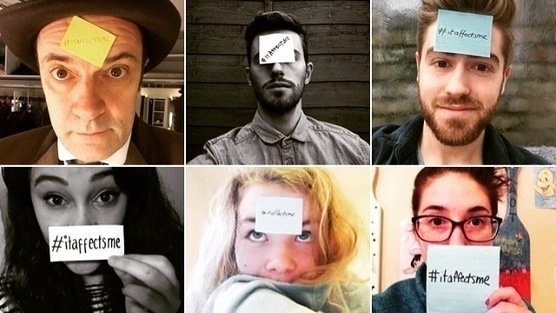
"Last year I had what society refers to as a mental breakdown and after coming out the other side I knew I needed to give something back. I started the #itaffectsme campaign to encourage people who have suffered or who know someone who has suffered to post selfies on social media - to help prove that the one in four people who suffer from mental health issues really are everywhere. 
#itaffectsme wants to see Mental Health Education put on the National Curriculum. To arm our children with knowledge, understanding and compassion. 1 in 4 people suffer with mental illness and 50% of those are established by age 14. We teach our children symptoms of chlamydia and gonorrhoea so why not depression, OCD and anxiety?" 
continued...

Note: I have copied this petition as Hodges' model could definitely be used in schools, colleges to frame and support Personal Social Health Economic Education


Monday, December 07, 2015

Patient education and human rights in Hodges' model

individual
|
INTERPERSONAL : SCIENCES
humanistic --------------------------------------- mechanistic
SOCIOLOGY : POLITICAL
|
group


"Patient education is Article 25 of the universal Declaration of Human Rights, and Article 4 of Patients' Rights Law - The right for information, the ethical principle of respect and a component of the nursing professional standard that prove the examples of good practice. The patient, with the exception of life-threatening situations, and when the relatives or contact persons are not available, receives educational information on expected handling, treatment and care processes, medication, and all that is followed by the agreement on the part of the patient to receive treatment, rehabilitation or prevention process." (p.1957)

Reference:
Beta, G., & Lidaka, A. (2015). The Aspect of Proficiency in the Theoretical Overview of Pedagogical Practice of Nurses. Procedia - Social and Behavioral Sciences, 174, 1957–1965. http://doi.org/10.1016/j.sbspro.2015.01.861

Sunday, March 08, 2015

International Women's Day: Health, Employment, Equality, Philosophy...

c/o Pan American Health Organization

Did you know that a girl born today in the Americas can expect to live to age 79.5? Nearly four years more than she could two decades ago.

Happy International Womens Day! March 8!
Progress in women’s health has made great strides in the last decades, but there is still work to be done to make health for all women a reality!
We can ‪‎make it happen!

¿‪Sabía Usted que una niña que nace hoy en las Américas puede esperar a vivir 79.5 años? Casi cuatro años más que hace 20 años.
¡Feliz ‪Día Internacional De La Mujer! 8 de marzo!
Durante las últimas décadas, hemos avanzado mucho en mejorar la salud de las mujeres, pero todavía hay mucho que hacer para que la salud para cada mujer sea una realidad!
Todos podemos hacer algo!


Sunday, February 08, 2015

Navigating health and models: c/o HSJ


individual
INTERPERSONAL : SCIENCES
humanistic ------------------------------------------- mechanistic
SOCIOLOGY : POLITICAL
group
Geisinger's Proven Health Navigator
communicate and share decision making
 patient - person focus
patient access to records
birthday cards, follow up
benefits, outcomes
purposes of integration
population management
data gathered and applied
preventive medicine
referral reduction to hospitals
early intervention
case management of complex and chronic diseases
a "medical neighbourhood" offering care in the most appropriate setting -
community care
health promotion
culture change1
Geisinger Health Systems (not for profit)
health insurance, budgets
care commissioning
values based reimbursement system
accountable, leadership
culture change2


My source:
Moore A. (2014) Show you can navigate integration, Health Service Journal, 28 November: 124, 6425, pp. 20-23.

"A wise person once explained to me that delivering integrated care successfully was 
"more sociological than technical"".
 Prof. Chris Ham, On 'bilingual' clinical leaders. p.22.