Hodges' Model: Welcome to the QUAD: individuals

Hodges' model is a conceptual framework to support reflection and critical thinking. Situated, the model can help integrate all disciplines (academic and professional). Amid news items, are posts that illustrate the scope and application of the model. A bibliography and A4 template are provided in the sidebar. Welcome to the QUAD ...

Showing posts with label individuals. Show all posts

Friday, July 24, 2026

WHO’s Self-Care Month (June 24th – July 24th) and International Self-Care Day July 24th


The Global Self-Care Federation (GSCF) is putting the spotlight on the benefits of self-care ahead of and beyond WHO’s Self-Care Month (June 24th – July 24th) and International Self-Care Day July 24th – two key annual advocacy milestones. 
 
GSCF’s 2022 International Self-Care Day campaign builds on the #SelfCarePromise theme, encouraging everyone to make and share their personal commitment to embrace a specific self-care action. This year, we are specifically focusing on the topic of resilience.  

Self-care is any action that an individual takes to look after their own health, based on the knowledge and information available to them. This practice can also occur in collaboration with healthcare professionals when needed. Actively managing your own health and well-being through self-care has numerous benefits, including better choice between healthcare options, better care for individual wellbeing and better value for governments and health systems worldwide.

Continued ...
 

individual
|
INTERPERSONAL
: SCIENCES             
humanistic ------------------------------- mechanistic
SOCIOLOGY : POLITICAL   
|
group

SELF-CARE
Mental health 
self-care & wellbeing
Individual Health literacy
(- and other literacies!)

Self Advocacy

Physical self-care
Personal resilience
Evidence-based interventions
Disease prevention
Diagnostics, Drugs, Devices, 
Integrated into Care


Health Promotion & Education
Community Empowerment
Community Resilience
Community Advocacy
Social cohesion
Rehabilitation, Recovery
& Reablement


Knowledge & Information Access
Learning opportunities
 
Universal Health Coverage
Approp. Policy frameworks
Improved care outcomes
Advocacy representation
WHO and agencies


See also:WHO - Self-care for health and well-being

Thursday, June 04, 2026

Individual and shared mental models c/o Proctor, & Vu, (2023).

The first day of the conference on 'Ecologies of Care' 4th-5th June is complete. It was helpful to contribute early and then focus on the programme. The questions and acknowledgement have made the (personal) effort worthwhile. Tomorrow also looks promising. There was an emphasis on attention which I tried to reflect and featured in a fascinating keynote by Professor Yves Citton. I will check the sources highlighted; and tomorrow, inquire about a point made re. use of socio in contrast to social.

Regards ongoing reading, perhaps, the evidence to support Hodges' model in practice is already out there? There might be a caveat, that the literature may suggest (if does not yet confirm) that if taught cross-curricula and professional groups then Hodges' model can function as a meta-model? 

What do you think of the following from a chapter on 'Social attention and team performance' (with my emphasis)? :

'... Other two-person team examples include doubles tennis partners and pairings of an airline pilot and copilot. Larger teams can be found in the numerous team sports surgical teams, busineses, and research teams of many scientific laboratories. For teams, coordinated performance is crucial, which becomes more difficult when teams extend to three or more people. As such, teams need to have shared mental models representing the team knowledge (Gardner et al., 2017), which support team situation awareness (Demir et al. 2017).
 
The concept of individual mental model refers to understanding a particular event on the basis of the activation of relevant schemas from long-term memory and, sometimes, simulation of possible scenarios (see also Chapter 10). Bower and Morrow (1990) pointed out that a crucial role in mental models is to shift and focus attention. ...
 
Shared mental models refer to collective understanding among team members of the task to be performed and how it can be accomplished. This understanding includes the responsibilities of the individual team members and dependencies between teammates on other members progress. The term team mental models is sometimes used when the context is teamwork that needs to be coordinated and executed (Jonker et al., 2010). The idea is that teams will perform better if they share mental models. ...
 
The surgery intern study illustrates that shared mental models are learned, leading to the question of how this learning can be facilitated.' p.368. ...
 
'Team leadership can be effective at getting members to be engaged in activities that will promote shared mental models. Boies and Fiset (2018) found evidence that leaders can facilitate the development of shared mental models by involving team members in the consideration of the to-be-accomplished task and their roles in its accomplishment. This involvement, again, likely directs members' attention to information relevant for achieving team goals and enables more domain-specific group discussion, which then furthers the emergence of a shared mental model. ...
 
Situation awareness is a broader concept than mental models, focusing on an explicit understanding of events and contexts. Shared situation awareness differs from individual situation awareness discussed in Chapter 9, in the information required for operators to have effective coordination (Chiappe et al., 2016). For example, paramedics delivering a patient to an emergency room need to coordinate with the hospital and its staff members to ensure that the hospital has the capacity and that the doctors receiving the patient have the vital information they need to treat the patient. Once the patient is in the emergency room, nurses, doctors and technicians need to coordinate with each other to make sure that the patient is being properly cared for.' p.369. 

Proctor, R. W., & Vu, K.-P. L. (2023). Social attention and team performance. In R. W. Proctor & K.-P. L. Vu, Attention: Selection and control in human information processing (pp. 343–374). American Psychological Association. https://doi.org/10.1037/0000317-012

Saturday, April 25, 2026

MAACAL: Statues Also Breathe

Catharsis Arts Foundation in collaboration with Obafemi-Awolowo University and 108 students, 2022

This exhibition presents a collaboration between Obafemi-Awolowo University, 108 students from all across Nigeria, and the families of the Chibok girls who were kidnapped by Boko Haram in 2014. 

Inspired by the iconic terracotta heads of Ife, it was initiated by artists Prune Nourry and Ade Bantu and seeks to raise awareness on the plight of the missing girls, and to highlight the diversity of Nigerian culture. . . .

On Thursday I visited MAACAL - Museum of African Contemporary Art Al Maaden, an art gallery  I first read about in FTWeekend Life&Arts, not long after first visiting Marrakech in 2023.

The main exhibit presents itself straight away after entering:

Statues Also Breathe, exhibition view, Art Twenty One, Lagos, Nigeria
 ©Dohdohndawa Photography/DDD Studios

A short but touching film in the gallery bears testimony to the fact many 'school girls' are still absent. Repetition is standard method in design. In today's manufactured world you might think what is so special about this? Until you are there physically, and walk through them. You see each one, a who: unique, an individual, a person taken away from where they belong.

As a white man from NW England, there was a moment when I realised: I was on the same continent where this had happened and is ongoing. Searching Youtube reveals other related videos concerning the exhibitions. It's strange watching them again as a check on their availability. A short video of an event to launch three new installations earlier this year is worth watching. Unfortunately, my phone failed until I got back to Marrakech, so I've no photos. I've three works in mind though.

I walked there, and back after trying to sort a taxi with a lovely couple from Germany and their son. Some taxis are limited to carry three persons. This is what arrived. The sun, even behind clouds that day, and flights taking off from the airport helped my sense of direction. The girls, seeking an education, did not have these means of navigation.

The garden at MAACAL was small but lovely. I hope to return one day, and well before then . . .

Friday, February 28, 2025

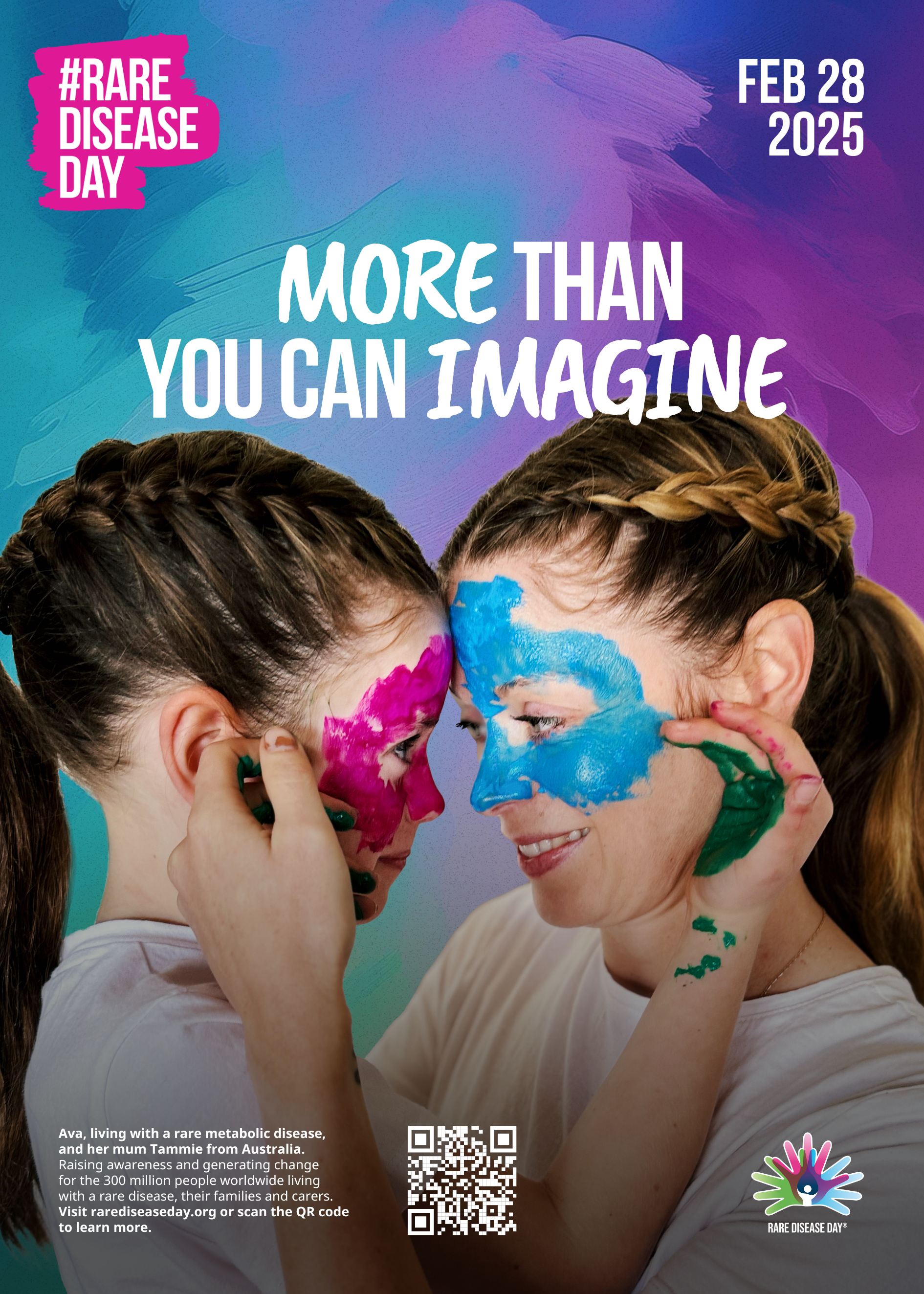
RARE DISEASE DAY FEB 28 2025

Ava and Tammie

Individual
|
      INTERPERSONAL    :     SCIENCES               
HUMANISTIC  --------------------------------------  MECHANISTIC      
 SOCIOLOGY  :    POLITICAL 
|
Group

IMAGINATION
IDENTITY
EXPERIENCE
EXPERTISE


ACTION
RESEARCH -
qualitative - quantitative
ACCESSIBILITY


SUPPORT
AWARENESS
COMPANIONSHIP
SOCIAL NETWORKS
FAMILIES


FUNDING
ACTIVISM
COOPERATION
COLLABORATION
COORDINATION


Previously: 'Rare'

Friday, February 21, 2025

Rediscovering nursing ...? [ concepts-maths i/iii ]

   Individuals


'In the Introduction to his landmark book, Individuals Peter Strawson talked of the “massive central core” of human thinking that has no history … categories and concepts which, in their most fundamental character, change not at all”.'

'Strawson’s central core revolved around the need for us to identify persistent objects in a unified framework of space and time. He was not troubled that with the arrival of special and general relativity our concepts of space and time had changed, nor that our concept of middle-sized dry goods had changed to accommodate what we suppose to be their constitution by quantum particles.'


Blackburn, S. Rediscovering the Past, The Philosopher's Magazine, 1st Quarter 2018. 80: 72-73. 
https://archive.philosophersmag.com/rediscovering-the-past/

Strawson, P.F. (1964). Individuals (1st ed.). Routledge. https://doi.org/10.4324/9780203221303

https://www.taylorfrancis.com/books/mono/10.4324/9780203221303/individuals-strawson

See also:

How 'divine' is the language of care?


Tuesday, March 15, 2022

PhD Opportunity: An Atlas of Health and Social Inequalities


Excited to announce that we have funding for a +3 studentship in the UCL Department of Geography for the project “An Atlas of Health and Social Inequalities”. The research will be carried out in association with the Health Foundation and will comprise the creation of a range of innovative datasets presented through a series of ground-breaking maps and graphics. The project will centre on the Health Foundation’s Social and Economic Value of Health: Place programme, which is designed to generate new knowledge about the ways in which the physical and mental health of a population shapes their social and economic outcomes. The Health Foundation have funded a number of research projects already that focus on understanding the relationship between a given population’s health and the health of individuals within that population.

The PhD will benefit from insights from these projects and focus on the creation of a nationwide atlas to demonstrate the social and economic value of health. It will produce a series of research-led maps created from innovative and granular datasets to demonstrate the new ways that health data can be visualised. These will convey a range of variables including health metrics such as mortality, self-reported health, prevalence of specific health conditions, and social and economic outcomes including employment, pay, structural changes to industrial sector composition and social fragmentation.

The work will be supervised by myself (James.Cheshire AT ucl.ac.uk) and Dr Anwar Musah (a.musah AT ucl.ac.uk), to whom enquiries may be directed. The successful applicant will hold a First or Upper Second Class honours degree in a quantitative social science or computer science discipline and/or similar Masters qualification.

For further details on eligibility etc please see here.

CLICK HERE TO APPLY (Deadline 4th April)


My source: Spirit of 1848

Monday, February 28, 2022

Rare Diseases Day 2022 - and the FIVE domains

     Self - INDIVIDUAL - Person
|
 INTERPERSONAL    :     SCIENCES               
HUMANISTIC -----------------------------------  MECHANISTIC    
SOCIOLOGY  :   POLITICAL 
|
           Family - Community - GROUP - Organisations - Populations


"Learning from the rare disease community

Europe’s pharmaceutical entrepreneurs are taking the lessons learned from this community to develop health innovation which would not have been dreamt of a few decades ago."


Yes, they do! 

The sciences (all of them) are a vital domain, but as ever of course we must not let this limit the scope of our collective aspirations when it comes to rare diseases and innovation.

We need to take into account the four domains of Hodges' model plus the spiritual as we address local and global health with rare diseases and disability an intrinsic part of health systems and services whether in delivery or development.

In this way we also acknowledge the role of the social determinants of health and the SDGs.

RARE DISEASES DAY 2022

Image:
https://twitter.com/Parlimag/status/1497156923610836995?s=20&t=dvO5GlugrN185L3Z98k5PA

Previously:

'disease'

https://hodges-model.blogspot.com/search?q=disease

'rare'

https://hodges-model.blogspot.com/search?q=rare

'domain'

https://hodges-model.blogspot.com/search?q=domain