Hodges' Model: Welcome to the QUAD: Phd

Hodges' model is a conceptual framework to support reflection and critical thinking. Situated, the model can help integrate all disciplines (academic and professional). Amid news items, are posts that illustrate the scope and application of the model. A bibliography and A4 template are provided in the sidebar. Welcome to the QUAD ...

Showing posts with label Phd. Show all posts

Thursday, July 02, 2026

LAST CALL 2nd AIxIA Summer School on Artificial Intelligence for Healthcare!

[apologies for multiple postings]

A few last spots are still available for the school, taking place in Trento, Italy, on 13-17 July 2026.

The school is open to anyone interested in AI for Healthcare: Master and PhD students, researchers, clinicians, physicians, data scientists, AI engineers, and professionals working at the intersection of AI and healthcare.

Master and PhD students benefit from a reduced fee: 470 EUR.
The regular fee is 495 EUR.

This year’s edition will focus on:

  • Medical Imaging
  • Smart Hospitals
  • Patient Trajectories
- with attention to concrete healthcare problems and to different AI research perspectives, including generative AI and neuro-symbolic AI.

More information:
https://lnkd.in/dEBmQ8Rr

Registration:
https://lnkd.in/dggvaMSP

Please share with anyone who may be interested!

#AI #DigitalHealth #Healthcare #ArtificialIntelligence #GenerativeAI #NeuroSymbolicAI #MedicalImaging #SmartHospitals #PatientTrajectories #AIxIA

My source: francesco.calimeri, unical.it

Thursday, February 19, 2026

2026 Lancaster Philosophy of Psychiatry Work in Progress Workshop

I am looking forward to, and preparing for this event next week:

====================================================

Thursday 26 February 2026, 11:00am to Friday 27 February 2026, 3:30pm

Venue: Storey Lecture Theatre, Lancaster , LA1 1TH
Open to: Postgraduates, Staff

Event Details:
 
Sponsored by the British Society for the Philosophy of Science.
This workshop provides an informal forum where PhD students, and more experienced researchers, can present and discuss short works in progress. All paper slots are taken for 2026. 
Please email r.v.cooper AT lancaster.ac.uk if you'd like to attend.
THURSDAY 26th  FEB

10.45-11 Welcome
11-11.30 Hane Maung - Philosophy in Healthcare Practice: A Case Study.
11.30-12 Peter Jones - Hodges' model: A work-ALWAYS-in-progress and this is why...
12-12.30 Matthew Williams - The failure of the harm-minimisation argument for BID Surgery and the necessity of therapeutic justification
12.30-1 Clive Duddy – Autonomy in mental health care
1-2 LUNCH
2-2.30 George Turner - Difference denied.
2.30-3 Dieneke Hubbeling - Different ways of medical knowing in Walzer's different spheres of justice?
3-3.30 Ali Walker - Forget Fictionalism: Psychiatric Disorders are Quasi-Real
3.30-4 Ewa Grzeszczak - Philosophy of psychiatry and the methodology of social ontology.
4-4.30 Break
4.30-5 Alessandra Civani - What kind of concept is ‘incongruence’?
5-5.30 Anna Golova - Self-illness ambiguity without a self-illness distinction.
5.30-6 Break
6-7 Prof Miriam Solomon – Royal Institute of Philosophy talk ‘Stigma as an actant in the history of psychiatry’

FRIDAY 27th Feb
11-11.30 Sam Fellowes - Modelling psychiatric diagnoses when self-diagnosing - how does this work?
11.30-12 Giulia Russo - Epistemic and political role of experience
12-12.30 Frank Denning - Using Stebbing’s Directional Analysis to Evaluate ‘Mentalizing’.
12.30-1 Gloria Ayob - Flourishing as mental health
1-2 LUNCH
2-2.30 Richard Hassall - Hermeneutical Injustice and Damaged Intellectual Self-Trust in Psychiatric Service Users.
2.30-3 Lara Calabrese - Exploring epistemic injustice in dementia care: a scoping review and a qualitative study
3-3.30 Jacob Barlow - Epistemic borders: experts, communities, communication

<>

Monday, November 03, 2025

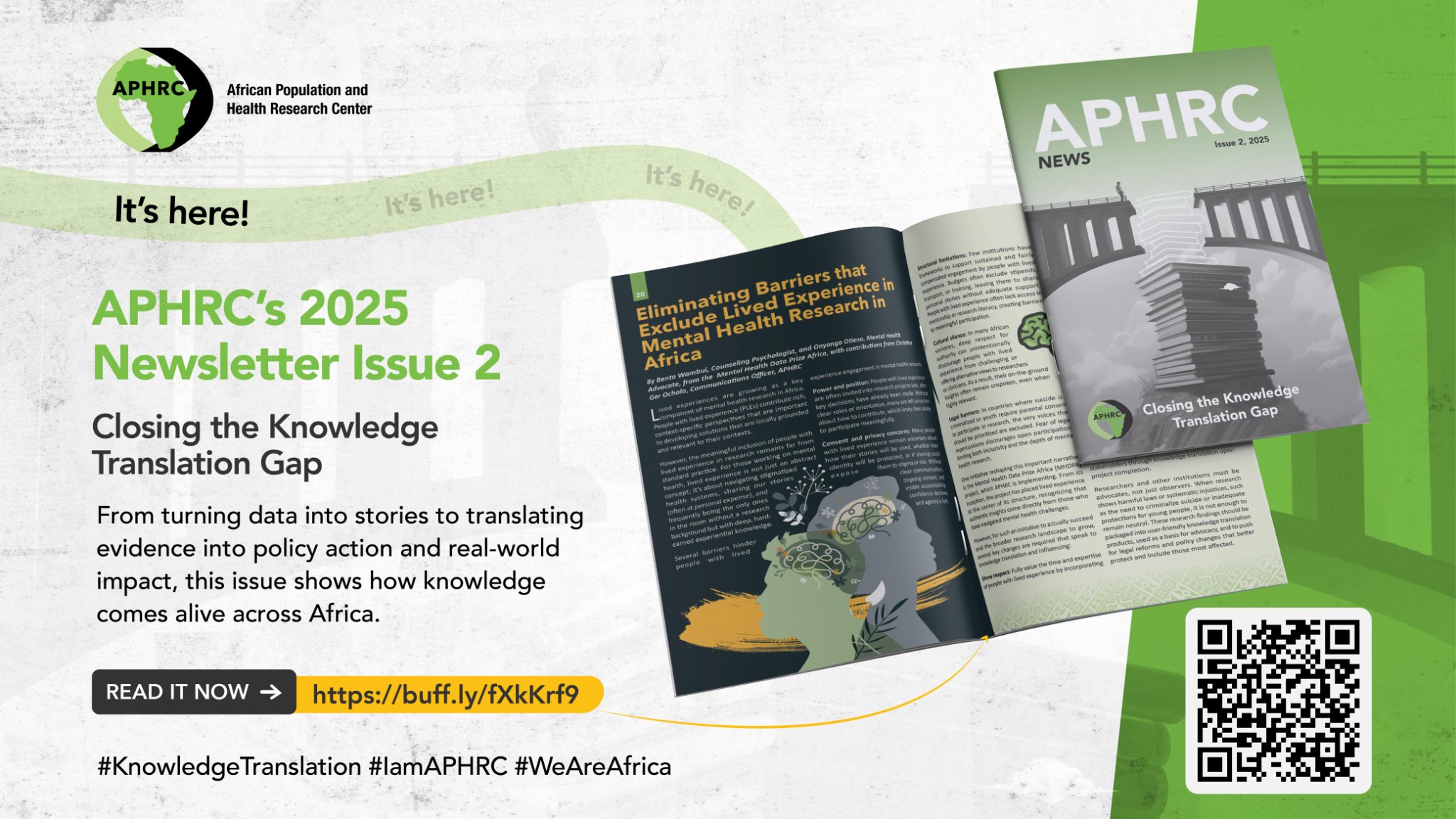
Newsletter: African Population and Health Research Center

APHRC News – Issue 2, 2025

  •  31/10/2025
Welcome to APHRC’s second 2025 newsletter issue! This edition explores how the Center is closing the Knowledge Translation Gap, making research accessible, relatable, and transformative. Dive in to discover stories of change, from climate and health innovations to inclusive education and mental health breakthroughs across Africa.


Wednesday, September 03, 2025

TEL us a story ... Hard, Soft and being Smart

Sorting papers I'd saved I came across -

David Mossley and Clare Saunders: A revolution in philosophy teaching? from the The Philosophy Magazine. 3rd quarter. 2013. pp. 40-45. 

Checking back, I see I posted and cited this item in 2013:


In the decade-plus since, how things have changed in tech, education and philosophy!

The story is ... that around this time I needed a new website and in the past I practised computer aided learning. Or should I say mCAL, microcomputer aided learning on the ZX81 and BBC Micro (related citations below). In 2013-2014, I started a PhD (as noted elsewhere) thinking I could recover and update some IT skills. Could I recapture the CAL days, by picking up TEL - technology enhanced learning? I stepped outside healthcare, and nursing specifically. I see now this was an error, but of course I still venture off-piste. The latest detour is even more extreme? On a personal - psychological level I'm visiting a subject maths - formal methods that simultaneously fills me with wonder (recognising its power and utility) and yet terrifies me with its complexity, made me feel sick at school, as a pre-teen and after.

My 'research question' was poorly formulated - which I did recognise. Two years were not wasted, far from it. The journey then was also driven by personal circumstances, married with events in 2007, 2010 and then 2015. 
 
Sticking with the current conference theme, I noticed a call for the 7th International Soft Computing and Engineering Applications Conference. Selected themes from track #4 include:


Track 4: Soft Computing for Smart Sustainable World

Smart agriculture and aquaculture
Smart cities
Smart communication
Smart disaster monitoring and management
Smart earth system
Smart education
Smart elderly care
Smart environment and ecosystems
Smart governance
Smart healthcare
Smart homes and buildings
Smart learning
Smart living
Smart machines and robots
Smart materials and fabric
Smart medicine
Smart social services
Smart villages
Smart wearables and implants

Amid all the (understandable) emphasis on 'smart' we need to retain a place for the human. That's the challenge in simultaneously considering the hard and soft of today's and tomorrow's world.

Citations

1982 CAPA: COMPUTER AIDED PATIENT ASSESSMENT, Sinclair ZX81, advertised in Nursing Mirror (see below) provided on audio cassette tape.

1983 THE NURSING PROCESS – Computer Aided Learning program, BBC Micro, published by Open Software Limited (OSL)

1984 HAEM. Blood Groups Computer Aided Learning program, BBC Micro – (OSL).

1989 SHADES OF GREY, Computer Aided Learning program, BBC Micro. Simulation of nuclear weapons, Based on Fanchi, J. Local effects of nuclear weapons, BYTE, Volume 11. Issue 13. Dec., pp. 143–155. Computer Aided Learning program, BBC Micro, published by Open Software Limited..

Jones, P. (1986) Computing in Nursing NEWS. Computerised Patient Assessment. Nursing Times. 85: 5. Sep 3-9;82(36):63-5. PMID: 3532039 (Describes 'CAPA', a BBC microcomputer program for student nurses.)

Jones P. 1988 Thunderbirds are Go? (Impact of technology in society, disasters, macro-engineering). Popular Computing Weekly.

Jones, P. (1989) Computers in Nursing NEWS. Creating a Program. Nursing Times. Feb 1-7;85(5):66-8. PMID: 2648342 (Describes 'HAEM', a BBC microcomputer program for student nurses on blood and blood groups.)

Jones, P. (1989) Information Technology is Good For You! (Effects of information technology) IT in Nursing, BCS-Nurs. Specialist Group. 1,1

Jones, P. (1990) Creating a Community Mental Health IS (Creation of a community mental health resource centre - a multidisciplinary research project). IT in Nursing and Paper at BCS NSG Conference. 2,4.

Jones, P., & Beckingham, D. (1991) The Ins and Outs of a small mental health Information System. Healthcare Computing 91 Conference Paper.

Jones, P. (1992) Nursing: All in the mind and machine? (Models of nursing and computing). British Computer Society -Nursing Specialist Group Conference Paper

Thursday, April 03, 2025

Survey: Identifying and Fixing Undesirable Behaviors Across Software Versions

Hello,

As part of my PhD at the University of Lille, I am currently conducting a study on how developers handle certain bug scenarios. 
The goal is to better understand current practices, the tools used, and developers' needs regarding debugging in a specific scenario. 

You can find the survey at the following address:
Your participation in this short questionnaire (5 - 10 minutes) would greatly help us analyze existing methods and identify potential gaps in the available solutions. 
This survey will be open for 6 weeks (until May 15th, 2025). The responses will be analyzed and included in a scientific publication. The results will be available here.

If you can, please feel free to share this questionnaire with other developers who might be interested. 
Every response counts and will contribute to a better understanding of the community's practices! 


A big thank you for your help and time. 


Best regards, 
Rémi Dufloer
PhD Student, University of Lille 

---------------------------------------------------------------------------------------------------------------------------


Bonjour,

Dans le cadre de ma thèse à l’Université de Lille, je mène actuellement une étude sur la manière dont les développeurs gèrent certains scénarios de bugs.
L’objectif est de mieux comprendre les pratiques actuelles, les outils utilisés et les besoins des développeurs en matière de debugging sur un scénario précis.

Voici le lien du questionnaire:


https://sondages.inria.fr/index.php/462191?lang=en


Votre participation à ce court questionnaire (5 - 10 minutes) nous aiderait énormément à analyser les méthodes existantes et à identifier les éventuelles lacunes dans les solutions disponibles.
Ce survey est ouvert durant 6 semaines (fermeture le15 mai 2025).Les réponses obtenues seront analysées et feront l'objet d'une publication scientifique.Les résultats seront publiésici.

Si vous le pouvez, n’hésitez pas à partager ce questionnaire avec d’autres développeurs susceptibles d’être intéressés.
Chaque réponse compte et contribuera à une meilleure compréhension des pratiques de la communauté !

Un grand merci pour votre aide et votre temps.

Bien cordialement,

Dufloer Rémi
Doctorant, Université de Lille


________________
My source: Esug-list mailing list & checking with Rémi.

Sunday, September 15, 2024

Interview study: Exploring psychological safety in inpatient mental health settings


Wednesday, August 28, 2024

Call for Participation in NHS Survey

ARE YOU WORKING IN THE NHS? IF SO, HELP NEEDED URGENTLY! Please read this email. 

Glasgow Caledonian University is inviting NHS Staff across the UK to participate in this doctoral research survey to analyse the impact of responsible leadership on improving well-being and organisational trust among NHS Staff members. 


To be eligible, you must be an NHS staff member from any area of the UK in any job role. The survey collects no recognisable information and is wholly anonymised to protect participant privacy and confidentiality. It has received full ethical approval, will take around 10 minutes and will help provide an improved understanding of the area of well-being in the profession.


Please forward this survey link to everyone in your contacts working for NHS. This will help gain more responses, increasing the study's reach and validity. Your help is highly appreciated, and we thank you in advance.


Here's the link for the participant information sheet and survey: 

https://app.onlinesurveys.jisc.ac.uk/s/caledonian/impact-of-responsible-leadership-on-employee-well-being-and-org


Warm wishes
Umm E Habiba Tariq (Chief Investigator)


Umm E Habiba Tariq (she/her) | PhD Candidate, MSc, BBA (Hons)

Occasional Lecturer | Department of HRM | Glasgow School for Business and Society (GSBS)


Glasgow Caledonian University is a registered Scottish charity, number SC021474

My source: Nurse-Philosophy List.

Tuesday, April 23, 2024

Call for participation in a Doctoral Research Study

ARE YOU WORKING IN THE NHS? IF SO, HELP NEEDED URGENTLY

Please read this email. 

Glasgow Caledonian University is inviting NHS Staff across the UK to participate in this doctoral research survey to analyse the impact of responsible leadership on improving well-being and organisational trust among NHS Staff members. 


To be eligible, you must be an NHS staff member from any area of the UK in any job role. The survey collects no recognisable information and is wholly anonymised to protect participant privacy and confidentiality. It has received full ethical approval, will take around 10 minutes and will help provide an improved understanding of the area of well-being in the profession.


Please forward this survey link to everyone in your contacts working for NHS. This will help gain more responses, increasing the study's reach and validity. Your help is highly appreciated, and we thank you in advance.


Here's the link for the participant information sheet and survey: 

https://app.onlinesurveys.jisc.ac.uk/s/caledonian/impact-of-responsible-leadership-on-employee-well-being-and-org


Warm wishes

Ummey Tariq (Chief Investigator)


Umm E Habiba Tariq (she/her) | PhD Candidate, MSc, BBA (Hons)

Occasional Lecturer | Department of HRM | Glasgow School for Business and Society (GSBS)

Glasgow Caledonian University is a registered Scottish charity, number SC021474


My source: NURSE-PHILOSOPHY list
https://www.jiscmail.ac.uk/cgi-bin/webadmin?A0=NURSE-PHILOSOPHY

Saturday, March 02, 2024

Funded PhD in Empathic Healthcare (the only one in the world!)

 Artificial Empathy

Qualification: PhD


Department: School of Healthcare

Application deadline: 7 April 2024

Start date: 23 September 2024

Overview (referenced - see main)

Supervisors

Professor Jeremy Howick (jh815 AT leicester.ac.uk)
Dr Josie Solomon
Dr Amber Bennett-Weston
 
Project description

Empathic healthcare improves patient quality of life and satisfaction with their care while reducing their pain.1,2 Higher levels of practitioner empathy are also associated with lower mortality among diabetic patients.3 Empathy can also reduce practitioner burnout.4,5 Despite its importance, the extent to which patients report that their practitioners are empathic varies widely,6 and medical student empathy appears to decline throughout medical school.7 To address this problem, the Stoneygate Centre for Empathic Healthcare are developing and implementing a revolutionary evidence-based empathy curriculum to the Leicester Medical School, and also to healthcare professionals in the NHS and beyond.

Aims

To develop, deliver, and evaluate research-based educational empathy interventions to medical students and healthcare professionals. 

[NB: While hosted in a medical school, this is not a medical education project per se. The PhD candidates will focus on the research to underpin an evidence-based curriculum.]

My source and image:
https://x.com/Empathy_Centre/status/1760690291726762402?s=20

Sunday, June 04, 2023

Applications for the 2023-2024 Nursing Philosophy Fellowship are Now Open!

"The Center for Nursing Philosophy Fellowship program supports promising nursing PhD students or interested nursing faculty to pursue targeted scholarship in nursing philosophy. The PhD Nursing Fellowship comes with a small stipend to be used at the fellow’s discretion for support during the fellowship period. The fellowship is a 1-quarter (10 week) commitment for intensive mentored scholarship in the Center for Nursing Philosophy (either virtually or in person depending on context), followed by 2 additional 10-week quarters of virtual mentorship to support scholarship completion. The expectation is that the end of the Fellowship corresponds with submission of the completed scholarship as a manuscript for publication in a peer-reviewed journal.

The application period opens June 1 of each year.

The CNP Nursing Fellowship application period is NOW OPEN, please click here to learn more and apply!"


Wednesday, March 08, 2023

Invitation to participate in research: Supporting midwives to provide emergency maternal & neonatal care in rural communities with limited resources

The challenges of providing quality midwifery care in rural and remote communities are significant, particularly in low and lower-middle-income countries. I am excited to invite midwives, midwifery educators, health service managers and Ministry of Health personnel from the focus countries listed below to participate in a PhD research study. Our research team aims to identify ways to better support midwives providing emergency maternal & neonatal care in rural communities with limited resources. Insights gained from these different perspectives will help us provide evidence for policy, education and practice.

Please consider participating in the study and/or sharing the link with your colleagues.

To participate in our online surveys, please use the following links:

Midwife/nurse-midwife survey: https://lnkd.in/eD4YSQnn

Educator/Manager/Ministry of Health survey: https://lnkd.in/gphj-i4D

If you would like more information, or if you are interested in participating in an online in-depth interview to discuss these issues, please email: Kristen.Graham AT anu.edu.au

Further information is also available at https://nceph.anu.edu.au/research/projects/strengthening-primary-care-midwives-preparedness-readiness-emergency-maternal

Focus countries: Sub-Sahara Africa: Burundi, Eswatini, Eritrea, Ethiopia, Gambia, Ghana, Kenya, Lesotho, Liberia, Malawi, Nigeria, Rwanda, Sierra Leone, South Sudan, Sudan, Tanzania, Uganda, Zambia, Zimbabwe, South & SE Asia: India, Pakistan, Philippines, Pacific: Kiribati, Papua New Guinea, Samoa, Solomon Islands, Tuvalu and Vanuatu

This study has ANU ethics approval (Protocol 2022/492)

Thank you Kristen

Kristen Graham PhD candidate

National Centre for Epidemiology & Population Health ANU College of Health and Medicine The Australian National University Canberra ACT 2600

HIFA profile (and my source): Kristen Graham is a PhD Candidate at the Australian National University, Australia. Professional interests: Sexual, reproductive, maternal, newborn, child and adolescent health; Midwifery; Workforce capacity building in rural and remote low resource settings. kristen.graham AT anu.edu.au

#iwd2023 #internationalwomensday
Ack. All midwives. PJ

Tuesday, March 15, 2022

PhD Opportunity: An Atlas of Health and Social Inequalities


Excited to announce that we have funding for a +3 studentship in the UCL Department of Geography for the project “An Atlas of Health and Social Inequalities”. The research will be carried out in association with the Health Foundation and will comprise the creation of a range of innovative datasets presented through a series of ground-breaking maps and graphics. The project will centre on the Health Foundation’s Social and Economic Value of Health: Place programme, which is designed to generate new knowledge about the ways in which the physical and mental health of a population shapes their social and economic outcomes. The Health Foundation have funded a number of research projects already that focus on understanding the relationship between a given population’s health and the health of individuals within that population.

The PhD will benefit from insights from these projects and focus on the creation of a nationwide atlas to demonstrate the social and economic value of health. It will produce a series of research-led maps created from innovative and granular datasets to demonstrate the new ways that health data can be visualised. These will convey a range of variables including health metrics such as mortality, self-reported health, prevalence of specific health conditions, and social and economic outcomes including employment, pay, structural changes to industrial sector composition and social fragmentation.

The work will be supervised by myself (James.Cheshire AT ucl.ac.uk) and Dr Anwar Musah (a.musah AT ucl.ac.uk), to whom enquiries may be directed. The successful applicant will hold a First or Upper Second Class honours degree in a quantitative social science or computer science discipline and/or similar Masters qualification.

For further details on eligibility etc please see here.

CLICK HERE TO APPLY (Deadline 4th April)


My source: Spirit of 1848

Thursday, March 11, 2021

PhD position on "Analyzing the Interactions Between Spaces of Argumentation in Different Contexts"

We are seeking applicants for a PhD position on «Analyzing the Interactions Between Spaces of Argumentation in Different Contexts» at LAMSADE (University Paris-Dauphine).

The Covid19 crisis shows us that arguments can circulate between different social worlds, as they have done between scientific and academic worlds, media, and social media, in different directions. However, the way people discuss in these different environments is very different and rely on different standards to recognize proofs.

How can different groups advance in a debate when sharing information, evidence on a complex issue, refer to different notions of arguments and proof standards?

For example, in recent months we could observe some ideal-typic description of the shape of the argumentation:

  1. in the mediatic world: repeat, follow, approve/disprove, exaggerate, attack ad hominem;
  2. in the scientific world: decide paradigm, decide hypothesis, test, revise, purify, consolidate, invalidate, give examples, give counter-example.

The literature on argumentation theory has elaborated several defeasible argumentation schemes, which are abstract argument forms that do not necessarily fall into the classical deductive or inductive argument structures, and that capture also what traditionally is classified as a fallacy.

For a detailed description see:

https://www.lamsade.dauphine.fr/fileadmin/mediatheque/lamsade/documents/propositions_theses_2020/pigozzi.pdf

*Required Profile*

- Master degree in Computer Science (or equivalent) with good GPA
- Knowledge in Computer Science, Mathematics, Economics and Logic
- Minimal programming skills
- Strong interest for multidisciplinary research
- Autonomy and ability to work in a team
- Good writing skills in English

*Application procedure and deadline*

Interested candidates should send the following PDF documents to Juliette Rouchier (juliette.rouchier AT dauphine.fr) and Gabriella Pigozzi (gabriella.pigozzi AT dauphine.fr) before 11 April 2021:

- CV
- Scan of transcripts of marks with their ranking
- A letter of motivation
- One letter or recommendation

A first selection will be performed amongst eligible applications, and selected candidates will be interviewed.

PS: Please forward this email to potential candidates.

My source: 

Philos-L "The Liverpool List" is run by the Department of Philosophy, University of Liverpool https://www.liverpool.ac.uk/philosophy/philos-l/

Wednesday, March 03, 2021

Fully funded PhD opportunity: Power

individual
|
INTERPERSONAL : SCIENCES
humanistic ----------------------------------------------- mechanistic
SOCIOLOGY : POLITICAL
|
group


'Power'
How power is exercised here ...

[The above is my addition, and is not an endorsement]

Power as a social determinant of health inequalities (supervised by Mhairi Mackenzie and Sharon Greenwood at the University of Glasgow and Dr Gerry McCartney, Head of the Scottish Public Health Observatory at Public Health Scotland).

This PhD aims to deliver academic and policy learning about how power shapes health and health inequalities at a societal level and methodological learning about collaborative autoethnography as a means of generating data from/with elite participants. The findings will be used to develop learning materials for those engaged in the health inequalities field and to contribute to Public Health Scotland’s ongoing work programme in understanding power as a fundamental driver of health inequalities (HI).

In its proposed focus and methodological approach, the PhD draws on three ideas within the health inequalities literature:

  • Power is not properly understood as a determinant of health and HI – it appears as a relatively amorphous concept whose multiple mechanisms have not been sufficiently delineated; this means that potential policy levers remain obscured.
  • Those working within HI themselves sit within power structures and, as such, are a group whose understanding of power is important to explore. They have opportunities to influence policy debates, experience barriers created through power structures and, it is argued, despite commitment to resolving the problem, themselves benefit from the so-called ‘poverty industry’.
  • Researching concepts such as HI with professional elites is difficult when professionals have well-practiced repertoires of responses.

There is evidence that using non-standard research approaches in the field of HI can bring original perspectives to bear.

Using a novel methodological approach (collaborative autoethnography) the study will:

  • Explore how academic/policy elites working within the HI field:
  1. Understand the mechanisms through which different types of power impact on health outcomes and HI.
  2. Reflect on and conceptualise the power which they deploy or otherwise benefit from within their own personal/professional lives.
  • Generate learning about hidden and actionable levers of power relevant to HI. 
  • Develop learning sets for use with professionals in the HI field.
  • Generate learning about researching with elite participants.

https://www.sgsss.ac.uk/studentship/power-as-a-social-determinant-of-health/


Mhairi Mackenzie,
Professor of Public Policy,
Urban Studies, School of Social & Political Sciences, University of Glasgow,
Email: mhairi.mackenzie AT glasgow.ac.uk

AND:

Deputy Director (Studentships and External Communications) of the Scottish Graduate School Social Sciences: Doctoral Training Partnership
Sgoil Cheumnaichean Saidheans Sòisealta na h-Alba: Com-pàirteachas Trèanaidh Dotaireachd
University of Edinburgh


A selection of recently published papers:

Mackenzie, M., Skivington, K., Fergie, G. (2020) “The State They’re In”: Unpicking Fantasy Paradigms of Health Improvement Interventions as Tools for Addressing Health Inequalities. Social Science & Medicine. 256. https://doi.org/10.1016/j.socscimed.2020.113047

Mackenzie, M., Gannon, M., Stanley, N., Cosgrove, K., Feder, G. (2019) ‘You certainly don't go back to the doctor once you've been told, “I'll never understand women like you.”’ Seeking candidacy and structural competency in the dynamics of domestic abuse disclosure. Sociology of Health & Illness 41(6): 1159-1174. https://doi.org/10.1111/1467-9566.12893

Mackenzie, M., Bradley, L., Gannon, M., Cosgrove, K., Barton, D., Feder, G., Stanley (N) (2019) What might normalisation process theory bring to policy implementation studies? Learning lessons and uncovering questions through a case study of the profound implementation failure of a new policing policy’. Social Policy & Administration 53 (3): 449-463 DOI: 10.1111/spol.12467

Mackenzie, M., Hastings, A., Babbel, B., Simpson, S. and Watt, G. (2017) Proportionate universalism as a route to mitigating health inequalities? Exploring political, policy and practice uncertainties in times of austerity. In: Fee, D. and Kober-Smith, A. (eds.) Inequalities in the UK: New Discourses, Evolutions and Actions. Emerald Publishing Limited. ISBN 9781787144804,

Mackenzie, M., Collins, C., Connolly, J., Doyle, M. and McCartney, G. (2017) Working-class discourses of politics, policy and health: 'I don't smoke; don't drink. The only thing wrong with me is my health'. Policy and Politics, 45(2), pp. 231-249. (doi:10.1332/030557316X14534640177927)

Mackenzie, M., Hastings, A., Babbel, B., Simpson, S. and Watt, G. (2017) Tackling and mitigating health inequalities – policymakers and practitioners 'talk and draw' their theories. Social Policy and Administration, 51(1), pp. 151-170. (doi:10.1111/spol.12154)

My source: POHG

Thursday, September 17, 2020

Suicide Prevention Research Fund PhD Scholarship

About the PhD Scholarship 

Suicide Prevention Research Fund PhD Scholarship 

The PhD Scholarship provides funding for successful applicants to attain a Doctor of Philosophy (PhD).

The PhD Scholarship is a funding agreement between Suicide Prevention Australia and the applicant’s Administering Institution (a University in Australia). 

The PhD Scholarship aims to support outstanding graduates who are at the early part of their research career. The Scholarship supports research relevant to all aspects of suicide prevention and to develop a capacity for original independent research within Australia. 

... continued ...

individual
|
INTERPERSONAL : SCIENCES
humanistic ----------------------------------------------- mechanistic
SOCIOLOGY : POLITICAL
|
group - population

Hear from Dr Katie McGill with further information on the Suicide Prevention Australia PhD scholarship application process.

Hear from Professor Myf Maple, deputy chair of the Suicide Prevention Australia Research Advisory Committee, on what we look for in PhD Scholarship applications.


My source:

https://twitter.com/Kavanagh_AM/status/1305694590574292992?s=20

Please note my using h2cm here is not intended to represent endorsement by the respective organisations / institutions.

Saturday, February 15, 2020

c/o Assoc. Prof. Nazilla Khanlou: Connecting - Hodges' model & Women's Health

From: Nazilla Khanlou
To: peter jones
Sent: Tuesday, 28 January 2020, 23:18:15 GMT
Subject: Re: Connecting - Hodges' model & Women's Health

Hi Peter,

I hope all is well. Yesterday in the PhD level 2 Seminar course that I teach (for PhD in Nursing students) we discussed your publication and 2 by 2 template. Thank you for letting me know about your work!

FYI, these are the readings we discussed yesterday:

Epstein I, Khanlou N, Ermel RE, Sherk M, Simmonds KK, Balaquiao L,& Chang K-Y. (2019). Students who identify with a disability and instructors’ experiences in nursing practice: A scoping review. International Journal of Mental Health and Addiction , 1-28, Published online: https://doi.org/10.1007/s11469-019-00129-7

Hoeck, B., & Delmar, C. (2018). Theoretical development in the context of nursing—The hidden epistemology of nursing theory. Nursing Philosophy, 19(1), e12196. https://onlinelibrary.wiley.com/doi/abs/10.1111/nup.12196

Jones, P. (2014). Exploring the dimensions of recovery and user experience. International Journal of Person Centered Medicine, 3(4), 305-311.
https://www.researchgate.net/profile/Peter_Jones9/publication/288182688_Exploring_the_Dimensions_of_Recovery_and_User_Experience_Background_and_Conceptual_Development/links/567efd9908ae051f9ae66e93/Exploring-the-Dimensions-of-Recovery-and-User-Experience-Background-and-Conceptual-Development.pdf

Khanlou N, Mustafa N, Vazquez LM, Davidson, & Yoshida K. (2017). Mothering children with developmental disabilities: A critical perspective on health promotion. Health Care for Women International (38)6, 613-634. Available url: http://dx.doi.org/10.1080/07399332.2017.1296841

Thorne, S., Stephens, J., & Truant, T. (2016). Building qualitative study design using nursing's disciplinary epistemology. Journal of Advanced Nursing, 72(2), 451-460.

Two of the readings in the above are related to my publications (1st one I am a co-author on and the 4th one I am the first author on).

The students asked how I came to know about your work, and I indicated one of the advantages of Twitter is you connect with folks related to our field!

Thank you again,

Nazilla
---------
Nazilla Khanlou, RN, PhD
Women's Health Research Chair in Mental Health, Faculty of Health
Academic Lead, Lillian Meighen Wright Foundation Maternal Child Health Scholars Program
Associate Professor, School of Nursing
York University, HNES 3rd floor
4700 Keele Street
Toronto, ON, Canada, M3J 1P3

E-mail: nkhanlou AT yorku.ca
Twitter: https://twitter.com/YorkUOWHC

https://twitter.com/NazillaKhanlou
Website: http://nkhanlou.info.yorku.ca/
Wednesday, October 30, 2019

The Rosamund Snow Scholarship for Patient-Led Research

INDIVIDUAL
|
INTERPERSONAL : SCIENCES
HUMANISTIC ----------------------------------------------- MECHANISTIC
SOCIOLOGY : POLITICAL
|
GROUP
(real) Subjective?

Rosamund

Patient / Carer's experience


(real) Qualitative?
Subjective ------ Research ------ Objective

Disciplinary - Professional
 language and jargon

Change

Qualitative ------ Research ------- Quantitative
Snow, PhD

"The Sociology of health and illness"

Patient-Led Research

Co-Production of Research

'What happens when patients know more than their doctor?'

Medical sociology

Unequal power dynamics
of the
clinical consultation

The politics of self-management

Challenges of advocacy

Scholarship

Funding

The Rosamund Snow Scholarship for Patient-Led Research
"Rosamund Snow, who died in February 2017, had type 1 diabetes. After completing a Master’s degree in Social Sciences at King’s College London, she went on to study for a PhD in the patient experience of diabetes. She became a respected academic at the University of Oxford, undertaking research and teaching medical students about the importance of the patient perspective. She believed passionately in patients working alongside clinicians to produce research and teaching that is informed by the (often under-valued) expertise in what it is like to live with an illness. She used her own expertise from experience to question and challenge norms of medical practice, always striving to improve patient care. After her death, Rosamund’s family generously donated funding to Green Templeton College at the University of Oxford, to allow others to be trained to continue the work she started." [ Source: #RSSPLR ]

My source: with thanks @trishagreenhalgh

Wednesday, June 20, 2018

Would you like to help design a new risk assessment tool?

On Tuesday, 19 June 2018, 19:06:42 GMT+1, Charlotte Christiane Hammer, UK wrote:

We are looking for experts in the fields of health protection and humanitarian aid who are interested in helping us with the content validation for a new risk assessment tool for communicable diseases in humanitarian emergencies. The validation will be in the form of a short interview (between 20 and 35 minutes) via Skype during which you will have the opportunity to examine the tool and comment on it. If you are interested or know anyone who might be interested, please send us an email and we will give you further details regarding the project and the consent procedure. Your help is greatly appreciated. Please also forward this email to any colleagues who might be interested.

Kind regards,
Charlotte Hammer

Charlotte Christiane Hammer, MA, MPH
PhD Candidate

Health Protection Research Unit in Emergency Preparedness and Response
University of East Anglia
c.hammer AT uea.ac.uk

Related post - Dec 2017  
My source:
HIFA: Healthcare Information For All: www.hifa.org
HIFA Voices database: www.hifavoices.org

Tuesday, May 08, 2018

CfP: Lancaster - Philosophy of Psychiatry Work in Progress Day 2018

Thursday 31st May 2018

PhD students and more established academics are invited to present work in progress in the philosophy of psychiatry (20 min talks, 10 mins discussion). Paper slots will be given out on a first come, first served basis. If you’d like to give a paper please email Rachel Cooper (r.v.cooper AT lancaster.ac.uk) with a title. There is no budget for this workshop, so speakers will need to cover their own expenses!

Speakers accepted so far are:

  • Hane Maung (Manchester) – Is suicide a psychiatric problem?
  • Richard Hassall (Sheffield) – What does a psychiatric diagnosis mean for those who are given a diagnosis?
  • Phoebe Friesen (Oxford) – Distancing medically assisted dying and suicide: Is it justified?
  • Rachel Cooper (Lancaster) – Puzzles in psychiatric classification
  • Sam Fellowes (Lancaster) – Continuity and discontinuity in the history of psychiatry
An up-to-date list of accepted papers can be found here:

http://wp.lancs.ac.uk/bioethics-and-philosophy-of-medicine/2018/04/20/cfp-lancaster-philosophy-of-psychiatry-work-in-progress-day-2018/


My source: Philos-L


Wednesday, January 20, 2016

Doctoral student quest... (Delamont et al. 2000 - so true...!)

individual
|
INTERPERSONAL : SCIENCES
humanistic ---------------------------------------  mechanistic
SOCIOLOGY : POLITICAL
|
group

It is apparent that there is no single 
definition of the personal, intellectual quest on which doctoral students embark. Indeed we should not expect there to be one . . .


Scientific and academic knowledge 
does not rest on a purely mechanistic set of definitions and requirements. 
(Delamont et al. 2000: 51)


My source: Module 6 reading list.

Delamont, S., Atkinson, P. and Parry, O. (2000). The Doctoral Experience: Success and Failure in Graduate School. London: Falmer.

cited in:
Murray, R. (2003). How to Survive Your Viva : Defending a Thesis in an Oral Examination. Maidenhead: Open University Press.
