Hodges' Model: Welcome to the QUAD: difference

Hodges' model is a conceptual framework to support reflection and critical thinking. Situated, the model can help integrate all disciplines (academic and professional). Amid news items, are posts that illustrate the scope and application of the model. A bibliography and A4 template are provided in the sidebar. Welcome to the QUAD ...

Showing posts with label difference. Show all posts

Friday, June 05, 2026

'Moved to Care' amid the Boxes - RCN

A Balikbayan Box for Nursing: artists and writers in residence

'Our new Arts Council National Lottery funded project takes the Filipino custom of the Balikbayan Box as its central theme, inspired by Romalyn Ante's poem Notes Inside a Balikbayan Box. The Balikbayan Box is a long-standing Filipino cultural practice through which we are exploring the spirit of nursing across borders and boundaries. 

Visit our exhibition to explore the installation ‘Inside Home’ by Haleema Aziz and meet our writers in residence – Romalyn Ante, Jennifer Wong and Christie Watson – to explore the art of nursing with a difference.

Our writers will each be running a writing workshop for a different audience to help them engage with the exhibition themes, and develop their own writing skills: refugees, schoolchildren and young adults.

Writing residencies run in the RCN Library and Museum (20 Cavendish Square) from April – June 2026. Find our what our writers have been working on at this public celebration of art and migration panel event in July.

Our writers will be based in the Moved to Care exhibition space in the England Library from 11am-4pm during their residency week. Anybody can drop in and chat to them between 3-4pm, or if you're a member you can book a free half-hour 121 slot. Discuss your own writing, ask questions about publication or the role of art and creativity in nursing with our writers in residence.'

Previously: 'box' : 'creativity

My source RCN Congress 2026

Monday, March 02, 2026

Thoughts re. 2026 Lancaster Philosophy of Psychiatry Work in Progress Workshop

After posting on the 19th February about the 2026 Lancaster Philosophy of Psychiatry Work in Progress Workshop last Thursday, 1100 through to 1530 on Friday - was well worth attending. I am also grateful for the opportunity to present Hodges' model, share current challenges and questions. Running through the programme what helped here:

While seemingly open in title the first presentation with Hane Maung, was (as with all) specific, but related to aspects of psychiatry and philosophy applicable here; classification, what is a 'disease'?, concepts, Millikan also appears in a reference: https://philpapers.org/go.pl?aid=MAUTDO-6.

As 2nd speaker, there were several questions after my presentation. Fourteen slides went to time: 20 minutes with 10 for Q&A. I'm not the best judge, but I believe I answered them. As my 'subject' is always the same in Hodges' model, I do make an effort to try (at least) to say something new. Listening, I soon realised this is an established Lancaster-grounded group, and welcoming too. If there is ever another opportunity, something new would definitely have to follow.

I can see scope for this in Matthew Williams's - The failure of the harm-minimisation argument for BID Surgery and the necessity of therapeutic justification. 'BIDS' is 'Body integrity dysphoria surgery' a challenging and ethics-bound situation, that while still rare, has made the news for (as ever) the wrong reasons. The relations to be considered cross all the domains and dimensions of health, care and more.

It is possible to become complacent regards our conceptual currency. Without taking care, we grow to take them for granted. I'm grateful to Clive Duddy for a refresh were autonomy is concerned.

'Difference' is a recurring trope in healthcare, informatics and other fields. George Turner's 'difference denied' and subsequent discussions was extra insightful therefore, addressing ongoing (legacy?) issues for service users, carers, patient and public involvement and engagement (PIE).

Presenting, 'Different ways of medical knowing in Walzer's different spheres of justice?', Dieneke Hubbeling drew my attention to Walzer's book: Spheres Of Justice: A Defense Of Pluralism And Equality. In addition capacity and capacities (to achieve an outcome), plus difference (again)especially when it comes to knowledge and knowing. I remember thinking about rather than putting the person at the centre of Hodges' model, place 'equality' and reflect upon that.

I note that we overlap with a journal too, and another topic - overtreatment - that was something of an elephant in the room (perhaps?): a further theme to follow - https://openaccess.sgul.ac.uk/id/eprint/113806/1/jep.13632.pdf

Ali Walker's Forget Fictionalism: Psychiatric Disorders are Quasi-Real,with a topological - cartographic themed slide perked me up later afternoon. The subject of Borderline Personality Disorder also reminded me of the extent of change in adult community mental health services, in practice through 1985-1995 and that encountered in 2019. Much to digest here. A 3 minute video of Ali's thesis BPD Disorder - Trauma is available from last year: https://www.youtube.com/watch?v=5tMSyt71hvs

I will review/add more details here, or a new post.

Thursday, February 19, 2026

2026 Lancaster Philosophy of Psychiatry Work in Progress Workshop

I am looking forward to, and preparing for this event next week:

====================================================

Thursday 26 February 2026, 11:00am to Friday 27 February 2026, 3:30pm

Venue: Storey Lecture Theatre, Lancaster , LA1 1TH
Open to: Postgraduates, Staff

Event Details:
 
Sponsored by the British Society for the Philosophy of Science.
This workshop provides an informal forum where PhD students, and more experienced researchers, can present and discuss short works in progress. All paper slots are taken for 2026. 
Please email r.v.cooper AT lancaster.ac.uk if you'd like to attend.
THURSDAY 26th  FEB

10.45-11 Welcome
11-11.30 Hane Maung - Philosophy in Healthcare Practice: A Case Study.
11.30-12 Peter Jones - Hodges' model: A work-ALWAYS-in-progress and this is why...
12-12.30 Matthew Williams - The failure of the harm-minimisation argument for BID Surgery and the necessity of therapeutic justification
12.30-1 Clive Duddy – Autonomy in mental health care
1-2 LUNCH
2-2.30 George Turner - Difference denied.
2.30-3 Dieneke Hubbeling - Different ways of medical knowing in Walzer's different spheres of justice?
3-3.30 Ali Walker - Forget Fictionalism: Psychiatric Disorders are Quasi-Real
3.30-4 Ewa Grzeszczak - Philosophy of psychiatry and the methodology of social ontology.
4-4.30 Break
4.30-5 Alessandra Civani - What kind of concept is ‘incongruence’?
5-5.30 Anna Golova - Self-illness ambiguity without a self-illness distinction.
5.30-6 Break
6-7 Prof Miriam Solomon – Royal Institute of Philosophy talk ‘Stigma as an actant in the history of psychiatry’

FRIDAY 27th Feb
11-11.30 Sam Fellowes - Modelling psychiatric diagnoses when self-diagnosing - how does this work?
11.30-12 Giulia Russo - Epistemic and political role of experience
12-12.30 Frank Denning - Using Stebbing’s Directional Analysis to Evaluate ‘Mentalizing’.
12.30-1 Gloria Ayob - Flourishing as mental health
1-2 LUNCH
2-2.30 Richard Hassall - Hermeneutical Injustice and Damaged Intellectual Self-Trust in Psychiatric Service Users.
2.30-3 Lara Calabrese - Exploring epistemic injustice in dementia care: a scoping review and a qualitative study
3-3.30 Jacob Barlow - Epistemic borders: experts, communities, communication

<>

Monday, August 25, 2025

c/o SDOH list "Liberal/Individualized Versus Materialist/Structuralist Approaches"

Abstract

Background: While consensus exists that the sources of health inequalities are social inequalities brought on by the experience of qualitatively different living and working conditions, means of addressing these conditions continue to be the subject of dispute. Whether to emphasis education or income as a social determinant of health is one such example of differing views on the sources of these inequalities and the means of addressing them. These different emphases are often justified through the narrow examination of the magnitude of statistical relationships between educational attainment and income with health outcomes.
Purpose: We offer a broader view, seeing these differing emphases as indicative of contrasting views of the nature of society and means of responding to these inequalities with emphasis on education representing a liberal reformist view of the issue while an emphasis on income representing a materialist structuralist view.
Research design and study sample: We examine, the validity of this hypothesis through an analysis of content of five representative publications that consider educational attainment as a social determinant of health and five that do so for income.
Analysis and results: We find that the emphasis on education as a social determinant of health focuses on the attributes of the individual and is generally accepting of the structures and processes of the existing economic and political order. In contrast, an emphasis on income – when placed within a materialist analysis – views existing systems as inequitably distributing income and other resources thereby requiring their reform or transformation.
Conclusion: Considering evidence of deteriorating living and working conditions for many in Canada and elsewhere, we see the latter emphasis as more useful for understanding and addressing these disturbing developments.

Ervin A, Raphael D. Liberal/Individualized Versus Materialist/Structuralist Approaches to Addressing Social and Health Inequalities: Education and Income as Social Determinants of Health. Community Health Equity Research & Policy. 2025;0(0). doi:10.1177/2752535X251316086

At present differentiating and conceptualising the individual and the collective (society) is ongoing. Ervin and Raphael's paper is helpful then:

'Grabb’s definition of social inequality leaves room for the importance of individuals’ attributes such as educational attainment and income – while Crossman’s definition directs explicit attention to the structures and processes of society9,10:'

Individual
|
      INTERPERSONAL    :     SCIENCES               
HUMANISTIC  --------------------------------------  MECHANISTIC      
 SOCIOLOGY  :    POLITICAL 
|
Group

'Social inequality can refer to any of the differences between people (or the socially defined positions they occupy) that are consequential for the lives they lead, most particularly for the rights or opportunities they exercise and the rewards or privileges they enjoy.9, p.1'

Physical processes

Physical structures

Infrastructures

'Social inequality is characterized by the existence of unequal opportunities and rewards for different social positions or statuses within a group or society. It contains structured and recurrent patterns of unequal distributions of goods, wealth, opportunities, rewards, and punishments.10'

Political processes 
(bureaucracy)

Political structures
(inc. Institutional)

Power

In Ervin and Rapahael (2025) there are also two tables:

Table 1. Four Primary Aspects of How Educational Attainment Comes to be a Social Determinant of Health.

Table 2. Five Primary Means of Conceptualizing How Income Comes to be a Social Determinant of Health.

- the main headings of which I have mapped to Hodges' model below.


Individual
|
      INTERPERSONAL    :     SCIENCES               
HUMANISTIC  --------------------------------------  MECHANISTIC      
 SOCIOLOGY  :    POLITICAL 
|
Group

Personal cognitive and
decision-making skills

(Cognitive) Access - Literacies


(Physical) Access to healthcare


Behavioural risk factors


SOCIO-

Life Chances - Health Career

-ECONOMIC status

Wednesday, July 02, 2025

Did 'to a T' find its inspiration in Rio de Janeiro?

... or somewhere else?

to a T

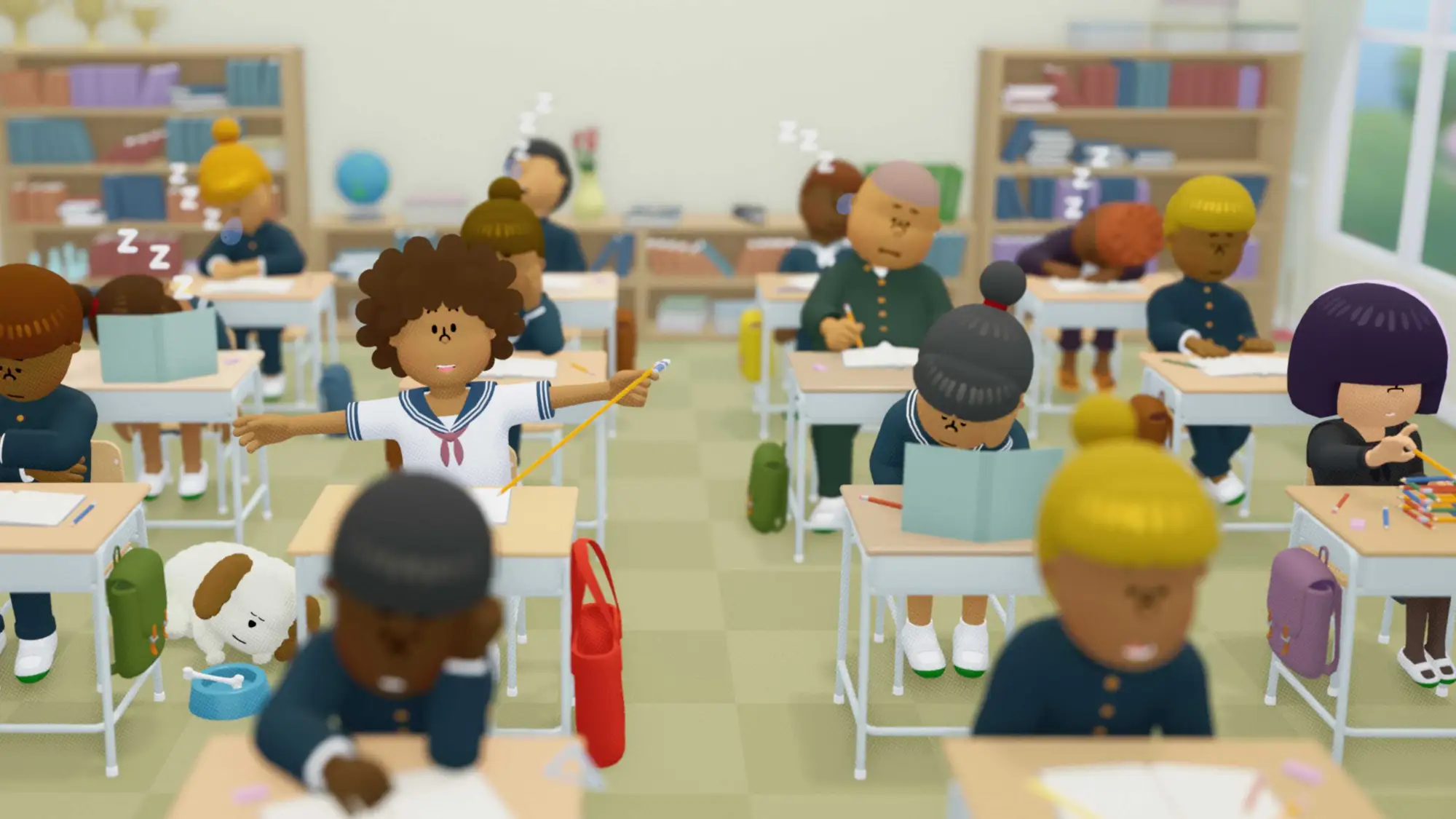
A new game from Keita Takahashi
"'to a T' is an episodic 3D adventure game developed by Keita Takahashi and the uvula team, with a strong focus on character, interaction, story and exploration. Play as a teenager (Teen), with a unique posture just trying to live a normal life in a small coastal town. Explore the town along with the help of Teen’s loyal dog and loving mother. While going to school and contending with bullies, Teen discovers a new ability granted to them by their extraordinary posture, and they start to uncover more about their mysterious lineage."
'to a T' - image https://annapurnainteractive.com/en/games/to-a-t

Developer - https://uvula.jp/

I have never been as far south as Rio de Janeiro. It would be marvellous to visit Tijuca National Park - Alto da Boa Vista, Rio de Janeiro - RJ.

But then ... 🌍🌎🌏🌐

My source: Tom Faber, In praise of gaming's auteurs. Financial Times, 11 June, 2025, p.18.

Saturday, August 31, 2024

Books... Bakhtin's centripetal and centrifugal forces in relationships

individual
|
INTERPERSONAL : SCIENCES
humanistic ------------------------------- mechanistic
SOCIOLOGY : POLITICAL
|
group


"Bakhtin's dialogism is theory of the contradicting process as realized in the ongoing tension between centripetal (i.e. unifying) and centrifugal (i.e., differentiating) dialectical poles. Each pole of the centripetal-centrifugal contradiction is constituted in the particulars of the situation at a given point in time. The centripetal pole consists of whatever phenomenon or quality occupies the dominant or normative position, whereas the centrifugal pole consists of whatever phenomena are subordinate, peripheral, or secondary. Substantial fluidity characterizes centripetal and centrifugal poles, in that a phenomenon that is dominant at one point in time can be subordinate or secondary at another point in time, and vice versa.

Because dialogism is a general theory of sociality, rather than a context-specific theory, Bakhtin did not pursue the particular  phenomena that constitute centripetal and centrifugal forces for any specific context, including the context of personal relationships. Thus a first step in extending dialogism to personal relationships is to particularize Bakhtin's abstract centripetal contradiction." p.141.


Duck, S. (Editor) Social Context and Relationships. London: SAGE Publications, 1993.

Monday, August 12, 2024

Laws of Form - Society, Conference, and Journal (to follow)

Finding out last minute at the end of last week, I attended the Laws of Form Conference at the Old Library, Liverpool University, 19 Abercromby Square L69 7ZN, UK. It was 17 minutes away by rail, so I made the short walk from Lime Street Station, as pre-existing commitments allowed.

The Society, devoted to the ideas and work of George Spencer-Brown is quite new 2023. I was greeted with a welcome that actively encourages the widest range of ideas as relates to LoF, the AGM also revealed future plans.

Laws of Form Books: Source lof50.com 

I've been on the LoF mail list for many years and every so often I've replied to themes that also touch thinking on Hodges' model. Now trying to look at Hodges' model more formally, learning of the conference I had to attend.

At the close today the vote of thanks expressed for the support of University of Liverpool and West DenHaag was shared here.


After the introduction, the first session by Andrew Crompton, of The Alternative Natural Philosophy Association, How to Make a Horse Vanish included insights into the scope of George Spencer-Brown's thought, combining philosophy, design, and architecture with great visuals. All the sessions were interesting, helpful and stimulating, including several that were technical detailing applications of Laws of Form:

".. Spencer-Brown has pointed out that he discovered an arithmetic that underlies Boolean algebra. This arithmetic is the Spencer-Brown Calculus of Indications generated by the mark <> (here written in typographical form) subject to the relations of calling, <><>=<>, and crossing, <<>> = , where, in crossing, the two marks are erased in the plane of writing. .." 
KEYNOTE Louis H Kauffman, Arithmetic in 'Laws of Form' - also Weds 7th Aug

Even though I could not understand the approach, listening to purposes, application and and the terminology is useful. 

I was online Thursday, and only followed the first two sessions. I have been exasperated with the various -isms, a response possibly shared with Jonathan Mize, Mind, Your Business: Reimagining business, art and science:

"The world is aching for a fresh approach to how we interact with one another. A popular prescription for our ailment is some type of new “ism,” some meticulously engineered set of dictums that propose to “fix society” once and for all. In this paper, I offer no “isms,” no grand new paradigms and no set of rules that humanity “must follow,” lest they slip into oblivion. What I offer is something very simple—a re-seeing of our approach to our everyday lives, a lifting of the vision from the “ills” and the “evils” of the world to the potential for our collective creation and experience. ..." Thurs 8th Aug.

Secondly, Diego Lucio Rapoport Campodonico, presented The Geometry and Topology of the Primal Distinction: Phenomenology and cosmo-sociomorphisms. If the public's understanding of science can be represented as a morphism, then it was extended here so I will explore.

There was a slide in the session of Florian Grote, Playing the Game of Counting to Two: On the question of requisite re-entries in communication including artificial intelligence (Friday 9th August)that I could immediately relate to Hodges' model:

"In the poem which provided the title for the book Only Two Can Play This Game, James Keys (1971) aka George Spencer-Brown provides the reader with a thorough reflection on the unlikely inevitability of a communicative – a social – world."

I can't cover all the examples of interest, but over the years systems, systems theory invariably crop up. Through the UKSS and Open University I have come across people with ties to the Schumacher Inst.. This thread continued 10th Aug, with Laws of Context with Philip Franses.

Hans Rudolf Straub's The Form and the Bit as Basic Building Blocks of Information: A comparison stood out as a source of reading conjoining LoF and informatics.

Marcus J. Carney's talk (also Sat 10th) Letting Go. The Form of Mourning reminded me of what does a single discipline mean when it uses the term 'applied'? Nursing a cold I didn't want to use the mic, but I think Marcus's work could support theory given the attention on trauma-informed care and therapy at present. There were obvious immediate connections in the abstract, borne out (well delivered!) in his presentation.
"Threnos in antiquity was understood as the activity of mourning. S. Freud dichotomised mourning with melancholia, entangling both in libido. A. and M. Mitscherlich took this up in the 1960s for the German people post Holocaust as their “inability to mourn”. J. Ruesen tried “Trauer” in this context again in the 1990s as “mourning humaneness”, bloating its abstraction. While M. Rothberg introduced the notion of “implicated subject” to the field/s of historical violence and injustices to modify R. Hilberg’s perpetrator-victim-bystander triad in 2019, the German “Historikerstreit 2.0” was raging, but not about Rothberg’s “implication”, yet about his 2009 concept of “multidirectional memory”, wherewith he demonstrated how the Holocaust had enabled the articulation of other histories of victimisation at the same time that it had been declared "unique" among human-perpetrated horrors, while uncovering the more surprising fact that public memory of the Holocaust emerged in part thanks to postwar events that seemingly had little to do with it."
As noted in a previous post, there's also the approach of Parallel Histories. You wonder from where dialogue can follow: Israel and Palestine ... but it must. On Wednesday the recent rioting impinged on proceedings with directions to close earlier and dining plans impacted. 

After too many years I must explore George Spencer-Brown's Laws of Form and try to apply it to Hodges' model as an additional and alternative theoretical resource.

The GSB Society have a forthcoming journal which I will post about here as details follow.

The next conference is in 2026 and will be based in Cambridge - a great prospective source of ideas.