Hodges' Model: Welcome to the QUAD: activities of daily living

Hodges' model is a conceptual framework to support reflection and critical thinking. Situated, the model can help integrate all disciplines (academic and professional). Amid news items, are posts that illustrate the scope and application of the model. A bibliography and A4 template are provided in the sidebar. Welcome to the QUAD ...

Showing posts with label activities of daily living. Show all posts

Wednesday, July 02, 2025

Did 'to a T' find its inspiration in Rio de Janeiro?

... or somewhere else?

to a T

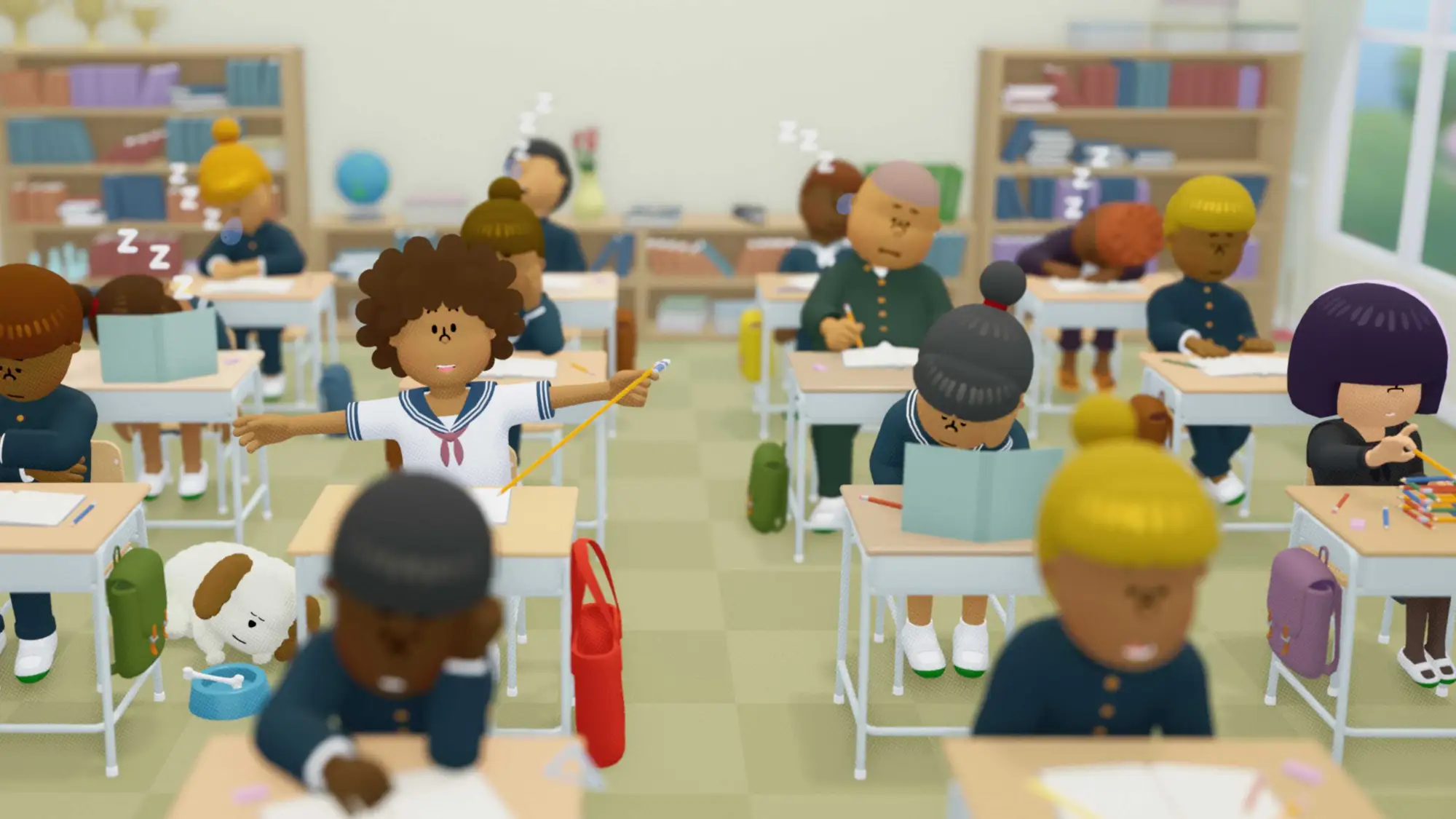
A new game from Keita Takahashi
"'to a T' is an episodic 3D adventure game developed by Keita Takahashi and the uvula team, with a strong focus on character, interaction, story and exploration. Play as a teenager (Teen), with a unique posture just trying to live a normal life in a small coastal town. Explore the town along with the help of Teen’s loyal dog and loving mother. While going to school and contending with bullies, Teen discovers a new ability granted to them by their extraordinary posture, and they start to uncover more about their mysterious lineage."
'to a T' - image https://annapurnainteractive.com/en/games/to-a-t

Developer - https://uvula.jp/

I have never been as far south as Rio de Janeiro. It would be marvellous to visit Tijuca National Park - Alto da Boa Vista, Rio de Janeiro - RJ.

But then ... 🌍🌎🌏🌐

My source: Tom Faber, In praise of gaming's auteurs. Financial Times, 11 June, 2025, p.18.

Friday, February 07, 2020

Post enigma 2008 ADLS

I've found back in 2008 there is reference to a non-existent post. I'm not sure what happened, but do remember considering this:

https://hodges-model.blogspot.com/2008/09/holistic-care-what-is-holistic.html

Creature of habit and habitat that I am, I also appear to have used the same 'strategy' of mapping concepts to the domains of Hodges' model.

In this case the focus was activities of (daily) living. It is this strategy that is employed in a draft paper still to be revised but on the Sustainable Development Goals. This exercise is not just reflective, there is a reflexive quality to it. The fact that asymmetry is revealed should not be surprising. In this post the clue is in the word 'activities' and ADLs and what is often deemed primary in theory, practice and common-sense.

To be revised ...


Monday, April 16, 2018

#EndPJparalysis - NHS 70


individual
|
INTERPERSONAL : SCIENCES
humanistic ----------------------------------- mechanistic
SOCIOLOGY : POLITICAL
|
group
For people who are agitated and living with dementia their carers may learn to remove such cues as hat, coat and shoes.

Seeing these may cause increased agitation as a need to be elsewhere.

For #EndPJparalysis perhaps we can reverse this and use the sight clothes and footwear as a cue for 'get up & try to go'.


My source:

Sunday, April 30, 2017

Top 4 Branding Tips: "Between MIND and BODY lies the soup"

HODGES' SOUP

Full of holistic & integrated goodness
Colouring agents & agency guaranteed
Quality Additives Assured QAA 


INDIVIDUAL
|
INTERPERSONAL : SCIENCES
humanistic ----------------------------------------- mechanistic
SOCIOLOGY : POLITICAL
|
POPULATION

You would like some soup.

Yes.
We should start here.
[For as the ancients recognised:
"In-between MIND and BODY lies the soup."]

As we can (and do) debate exactly 'where' and 'when' action begins.

Do you know you're hungry?
Do you know you want soup?
Do you know where it is?
Did you buy some three days ago?

If you don't, do know how to make this happen?
Can you ask someone for help if needed?
Do you know where the kitchen is?
Is your kitchen, one that you can walk in
(also known as your's),
 or is it one of those "off-limits" designs
(see below right)?

Like many of the things we take for granted
Soup IS Knowledge


There you are! In the kitchen.
You are aok opening the can, carton.
Home-made excellent!
[And the bread! Wo!]

Can you reach for and open things?
Grip, twisting it is quite an operation -
fingers, hands, wrists, balance.

We don't want you to spin around do we?
Most have a opener of some sort,
maybe a drawer or a rack full.
Perhaps something to sit - perch on would help?

Can you read the instructions?
tiny print and poor eyesight

What about Imperial and Metric?

Take care with that can?
Safety first, cooker, gas...?
Are you up to date with Tetanus jabs?

Where's the plasters?
1st Aid Kit.
"Is there a Dr in the house! :-/ "
Quick - grab the ice!

How does the soup taste?
Taste?
Yes it is  subjective ... but...

Are you on a big hike?
If so, it's the best soup you ever had?
Attitudes to food inc. soup are laid here.
Somehow it tastes better in company.
 Like its constituents soup is best crowdsourced.

Here is the place
and down the agees
 that the crowd (family-friends)
together with home-made
are ingredients made for each other.

Ah! They're here.
My Carer = company + soup ...

How much time don't we spend on a communal meal. An event in itself.

Thanks Stan your soup was delicious!


Whether a kitchen,
outside oven,
or camp fire
this place is a powerful place.

Assessment for Personal Independence Payments

Powerful too are foodbanks and soup kitchens.

Oh dear.
Yet another new carer = lost time
'dear' indeed.

Stop!
Are those vegetables ok?
What's the BBE - Expiry?
So much food goes to waste - tragic.
Is there an Occupational Therapist in the team? What about a Physio, or do we have to refer on?

Who controls the labelling
on this product anyway?

"Kitchen - Catering
STAFF ONLY"

Friday, November 11, 2016

Dementia & Sleep: What the Papers Say

individual
|
INTERPERSONAL : SCIENCES
humanistic -------------------------------------------  mechanistic
SOCIOLOGY : POLITICAL
|
group-population
Sleep disturbance


Sleep disturbance 2


Just recently I came across a gentleman who in living with dementia and supported by his wife at home has been struggling with his sleep. Waking in the early hours 0330, 0400 in the summer is not too bad accompanied by the dawn chorus, but if it happens most days? And then in Winter: that is another matter.

Also fairly recently there are increasing instances of this man not being sure that the lady-  who is in their / his house and is taking him shopping - is his wife. She looks like my wife...? She knows what to buy and then she pays for the shopping.

individual
|
INTERPERSONAL : SCIENCES
humanistic -------------------------------------------  mechanistic
SOCIOLOGY : POLITICAL
|
group-population

Who are you?

Have the doctor consider
 prescribing a sleeping tablet

"Oh OK! Hello Sandra."

Arrange a medical review

This gent is up early anyway as there is a newspaper to collect which involves a walk. The problem is he leaves too early and is then outside waiting. His wife was struggling with all this so we discussed the need for a care review by the community mental health team. A sleep diary was provided to obtain some data upon which to base decisions. While I was in the garden with Mr. my student (thanks Katie) suggested to Mrs Y that this 'imposter' be passed as a friend. This has since proved very effective at reducing anxiety, social tension and distress.

Whilst we constantly strive for truth, honesty and respecting autonomy and dignity, sometimes sadly, 'truth' is compromised. It becomes less clear when it is being cognitively undermined.

We also want to maximise independence and support what are the usual daily activities of living: collecting the newspaper included. Risks were becoming evident however. So, Mrs Y came up with a strategic decision which has seen this gentleman adjust very quickly. Sleeping in until 8 o'clock is quite a surprise for the rest of the family to hear. And for us too. It is as if the (subscription) token for the newspaper was not only sitting waiting in a pocket or wallet. It also had slot in memory, where it had to be kept on constant refresh, whirring away; of such importance that it was proving quite disruptive introducing new risks, disturbing sleep. There are still many other activities and walks to be enjoyed. Nice call Mrs Y:

individual
|
INTERPERSONAL : SCIENCES
humanistic -------------------------------------------  mechanistic
SOCIOLOGY : POLITICAL
|
group-population


Cancel the newspaper

Sunday, February 21, 2016

Domain-specific vignette development in polyarthitis: Arends, et al. (2015)

This paper by Arends et al. (2015) sheds further light on the use of vignettes and the difficulties (for me) in categorising care phenomena. There is a great deal of overlap in the three domains that the authors apply to patients with arthritis. Their domain-specific focus is also of interest.

Independent functioning extends across the interpersonal and sciences domains of Hodges' model as mental functioning and physical. Sports, holidays, hobbies and other activities while usually social in nature can be solitary pursuits. In this example even if the context is social as per the domain, it is the impact upon the individual that the researcher's note:

"Changes in life domains caused by a chronic disease can have psychological and social consequences for patients and can affect their identity"... (p.1896)
In the quote below, copied across the domains of Hodges' model, volunteering is political in nature, but the reward in this instance - voluntary work in a nursing home - could be intrapersonal, derived from the interaction with and making a difference to the residents, staff and visitors.

So, it is vital to capture - or freeze the context in some way, vignettes it appears are one way to achieve this.

"The 11 vignettes all have a main character that is diagnosed with RA. In each situation, the impact of the disease on daily life is described as the main character always encounters a limitation or difficulty. The stories are set in three different domains:
the social domain,
the leisure activities domain,
and the independent functioning domain...
individual
|
INTERPERSONAL : SCIENCES
humanistic ---------------------------------------  mechanistic
SOCIOLOGY : POLITICAL
|
group

In the independent ...

psyche        identity 


functioning domain, the topics are gardening, household tasks, and running errands.


Topics of the vignettes in the social domain are activities with partner, children, family, and friends. In the leisure activities domain, the topics are sports, holidays, hobby,

and volunteering." (p.1900)


Reference:
Arends, R., Bode, Y., Taal, C., & Laar, E. (2015). Exploring preferences for domain-specific goal management in patients with polyarthritis: What to do when an important goal becomes threatened? Rheumatology International, 35(11), 1895-1907. DOI: 10.1007/s00296-015-3336-8 

Sunday, April 19, 2015

Context, Rooms, Faces and Shots


"... The most revealing shot is always the wide shot. 

The room where the person is tells more about him than his face." Roy Andersson


Leigh, D. (2015) Funny ha-ha, and strange, Arts - Cinema, FT Weekend FT, 18-19 April, p.12.

A Pigeon Sat on a Bench Reflecting on Existence, Roy Andersson

Monday, January 06, 2014

Sunday, July 31, 2011

Department of Health tackles shortfall of Personal Assistants

Source: Department of Health, 27 July 2011

Plans to make it easier for people with disabilities to employ Personal Assistants to help them to live as full a life as possible were revealed today by Care Services Minister Paul Burstow.

A Framework for Personal Assistants helps offer universal support for people with care needs as well as the PAs they employ. It maintains the flexibility of the role, which makes them so vital in helping people with disabilities to live their lives and aims to increase the number of PAs available.

Research shows that those receiving payments can be nervous about becoming an employer and the lack of a clear, universal job description can be a barrier to those considering joining the profession.

The publication is part of the personalisation agenda at the heart of the Government's Vision for Adult Social Care to deliver services chosen by people to meet their individual needs. By 2013, everyone eligible should be offered a personal budget to spend on the best care package for them. It is estimated that by 2025 this could create nearly 1.2 million Personal Assistant jobs - there are currently less than 200,000 people working as Personal Assistants in England.

Care Services Minister Paul Burstow said:

"Many company executives would describe their PA as a life-saver, but for those who employ a personal assistant for their social care needs, they really do give them back their life. Being able to set the job description spelling out exactly what support you need and when, can be liberating. It's much better than trying to fit your life around Local Authority-commissioned services.

"I've seen today in Essex what can be achieved when social services work together with people who need personal assistants to make sure both they and their PA are fully supported. The difference it has made to these peoples' lives is a clear reminder of why personalisation is so important and is at the heart of our plans for social care."
The new framework will:
  • Provide employers with an up to date toolkit to make the practical side of employment easier to understand including job descriptions and interviewing;
  • Develop an induction framework so all PAs have the same basic introduction to the role based on the Common Induction Standards developed by Skills for Care;
  • Create a clear, national toolkit including templates for contracts and other legal aspects of employment. This will be regularly reviewed and updated;
Use Local Authorities to assist in background and reference checking where requested; and Work with Job Centre Plus to make all staff aware of PAs as a career option for job seekers. In some areas employers and PAs already receive all this support and more - but it isn't the norm. This Framework will also look to help share best practice so everyone has access to the same information and support.

Paul Burstow, this morning, visited ecdp (formerly Essex Coalition of Disabled People), a disabled person's user-led organisation which offers a high level of support to people employing Personal Assistants including a full payroll service and access to training and development opportunities for Personal Assistants. They currently support nearly 4,000 people to employ personal assistants.

Anyone looking for information or support on hiring or becoming a Personal Assistant should visit the link below.

The Personal Assistants Framework ...

The Vision for Adult Social Care ...

My source:
The Choice Forum - the Foundation for People with Learning Disabilities http://www.learningdisabilities.org.uk

PJ: Personal Assistants will also benefit from a conceptual framework around which to ground their lifelong learning. I do hope another conference will be organised that might provide an opportunity to highlight the relevance of Hodges' model to Personal Assistants in social care, Asst. Practitioners and Support Workers.

Wednesday, December 02, 2009

comment: Activities of Daily Living ADLs and Hodges' model [1]

Guy Dewsbury got in touch through LinkedIn in response to the ADL post [1]:

On 12/01/09 6:49 AM, Guy Dewsbury wrote:
--------------------
Hi Peter
Really like your post on ADLs, but it seems that ADLs whenever they are used omit the need of the person in preference to the risk associated with them. I am sure you would agree, that is why I tend to pay a passing nod to ADLs but instead concentrate on what the person actually wants and aspires to and see how this can be achieved.

I wonder what your take on this is. I would have thought that aspiration and need are critical in mental health as well, in fact I would posit that by concentrating on ADLs it is easier to omit looking beyond them to the real needs of the person.
Over to you..
Guy

On 12/01/09, Peter Jones wrote:
--------------------
Hi Guy
Thanks for your comments and feedback. I quite agree - in a way that's what the blog post is saying. If you look at the basic ADLs they are 'placed' or associated with the sciences - processes - physical tasks. That's why I highlighted some of the psychological aspects in the intra-interpersonal domain.

Running for the bus by Jess and JamesFor example, in future posts I may add the way that there are a lot of people with quite chronic respiratory problems, but they carry on as their behaviour has modified such that they know they can no longer run for the bus. Although an assessment of respiration may reveal their (medical) problem their needs are elsewhere.

Perhaps - if you don't mind - I could post your reply and my note above on the blog as a follow-up - since the comments are disabled.

Cheers Guy appreciate your getting in touch.
Peter J.

--------------------
Guy Dewsbury has sent you a message.
Date: 12/02/2009
Hi Peter
Happy for you to post anything you want.
Great reply too
Guy

Image source: Running for the bus - Jess and James

Tuesday, December 01, 2009

Activities of Daily Living ADLs and Hodges' model [1]

The Hodges' model matrix below lists some basic Activities of Daily Living. The intention is to read the table as per the numbers. In 1. - the sciences domain - is a list of basic ADLs, this represents my classification of 'where' these ADLs live within Hodges' model. This is followed by a qualification in the intra-interpersonal domain 2.:


2. While basic ADLs are typically designated as 'functional', that is related to physical abilities they are of course also very dependent upon mental health status. Including: mood, motivation, memory, orientation, confusion. Many ADLs are closely associated with disease and illness, which affects people's independence.
1. personal hygiene
dressing - undressing
eating and drinking
toilet: (urinary and faecal)
elimination (often taken for granted)
transfers: e.g. bed to chair and back
degree of mobility
(sitting - standing balance)

4. We can appreciate the impact of the carer's burden by arriving here finally. The sciences, interpersonal and political domains weigh heaviest here, as the carer assumes responsbility for the care of another, themselves and often other dependents.
3. Assessment of ADLs covers aspects of safety and risk to SELF, OTHERS and risk of SELF-NEGLECT.
Increasingly, however the emphasis is on self-care, independent living and strengths in the above ADL skills.

In further blog posts I will present a similar treatment of other ADLs with references.

Link:
"Activities of Daily Living Evaluation." Encyclopedia of Nursing & Allied Health. Ed. Kristine Krapp. Gale Cengage, 2002. eNotes.com. 2006. 30 Nov, 2009 http://www.enotes.com/nursing-encyclopedia/activities-daily-living-evaluation

Sunday, March 29, 2009

Independence and Quality of Later Life: A decade of research to support older people 14th May


The next KT-EQUAL event for all-comers is on 14th May in Bath.

It will showcase the outcomes of a decade of research to support older people and disabled people, especially:


- improving accessibility to the world outside of the home:
streets, neighbourhoods, parks, transport systems
the very spaces and places that many older people look forward to visiting.

- the better design of everyday products and packaging:
products which are not stigmatised as being for older or disabled people but are mainstream products, which are enjoyed by everyone.

- using new technology to support individuals in the self-management of chronic conditions such as diabetes, heart conditions, and the effects of stroke:
Can these technologies be easy to use and unobtrusive? Do they really they boost health, activity, confidence and well-being?

As well as presenting some of latest findings and developments, the workshop will also be looking to the future, especially at how researchers are coming together to make certain that older people benefit from the best of British Science by getting their findings into policy and practice.

The event is free and is open to anyone with an interest in improving the quality of later life - professionals from all sectors, policy makers, representatives of charities and voluntary bodies, older people and their carers, as well as researchers. It is being held in the centre of Bath so is easy to reach from the railway station. Bath in May can be idyllic!

Full details can *could* be found on the SPARC website.

Best wishes

Peter Lansley

^^^^^^^^^^^^^^^^^^^^^^^^^^^^^^^^^^^^^^^^^^^^^^^^^^^^^^^^^^^^^^^^^^^^^^^^^^^^^^^^^^
Professor Peter Lansley, BSc, MSc, PhD, MCIOB, FCOT
Director, KT-EQUAL – Knowledge Transfer for Extending Quality Life
School of Construction Management and Engineering, URS Building,
University of Reading, Whiteknights, PO Box 219, Reading, RG6 6AW, UK
^^^^^^^^^^^^^^^^^^^^^^^^^^^^^^^^^^^^^^^^^^^^^^^^^^^^^^^^^^^^^^^^^^^^^^^^^^^^^^^^^^
My source SPARC mailing list

Monday, December 08, 2008

The Times: Virus clue to cause of Alzheimer’s

From
December 6, 2008

Virus clue to cause of Alzheimer’s

Cheap cold sore drugs could offer best treatment yet

brain
Mark Henderson, Science Editor

The virus that causes cold sores may be one of the main causes of Alzheimer’s disease, according to research that suggests that existing drugs could be used to treat the most common form of dementia.

Compelling new evidence found by British scientists has implicated the cold sore virus, known as herpes simplex virus 1 (HSV1), in up to 60 per cent of Alzheimer’s cases.

Though the findings from the University of Manchester remain preliminary, they could transform scientific understanding of a brain disorder that affects more than 400,000 people in Britain, and open an entirely new approach to treating it.
