Hodges' Model: Welcome to the QUAD: population

Hodges' model is a conceptual framework to support reflection and critical thinking. Situated, the model can help integrate all disciplines (academic and professional). Amid news items, are posts that illustrate the scope and application of the model. A bibliography and A4 template are provided in the sidebar. Welcome to the QUAD ...

Showing posts with label population. Show all posts

Saturday, October 24, 2026

ii Identity: Plain to see? A little thought experiment

individual
|
INTERPERSONAL
: SCIENCES             
HUMANISTIC ------------------------------------------------ MECHANISTIC
SOCIOLOGY : POLITICAL   
|
group


A little thought experiment - continued:

What's that!

 'A case of individual ineffability.'? 

Is this really ineffable? Are you saying - ironically - this is beyond language? 
That there's something sacred here?
Surely that's a stretch too far? 

I can see it is often complex, maybe difficult to explain too.

Well, the claim of ineffability is justified.
For some people, this touches upon the sacred and spiritual too.

How so? 

Well. Take the global population pyramid we inverted to span the sociological and political domains.
We're all in there. Even if you don't check that dynamic link, that pyramid is 'dynamic'. 
New births are being added, as the newly departed take their leave. 
So it's not just dynamic it's noisy too. 
Strictly speaking it's dancing: a constant shuffle.

Oh, dear! Save me, save us all!
What about the person we pulled out from the masses? 

Yes, one individual, but in truth as our focus, they occupy the interpersonal and sciences domains.
Have you ever used - painted with a palette knife? 

No, I can't say I have, probably not beyond my hands as a child.

Take that person as a single line - the palette knife's edge; then - move the knife, spread those colours across the two upper domains of Hodges' model. Let's say now that instead of a single person as a column, a data point, which we can hardly see; this 'spread' represents their lifespan. Not only that, but in there we also have their unique health career. Plus, arranged chronologically a record of life chances can also be charted.

And that's ineffable? 

True, there's no bright light. But, we can represent here the existential and religious debates and the point that some people get anxious, fearful of death and yet we were not anxious before we started life's inexorable shuffle? 

In these times of AI, it is important to acknowledge that what is ineffable in Hodges' model, is what we human beings can find, can experience in all the domains of  the model and the 'why' that surround it.

Ah, I see. Thanks.

 Previously: 'life chances' : 'health career'

Friday, October 23, 2026

Identity: Plain to see? A little thought experiment

individual
|
INTERPERSONAL
: SCIENCES             
HUMANISTIC ------------------------------------------------ MECHANISTIC
SOCIOLOGY : POLITICAL   
|
group


A little thought experiment:

Beneath the humanistic-mechanistic axis (within the sociological and political domains) superimpose an inverted global population pyramid - scaled to fit - of course. Make it dynamic if you wish.

Then imagine lifting just one individual out of the global population. As our subject, of whatever age, sex ... place them anywhere above the horizontal axis. Anywhere within the interpersonal or sciences domains. There they are: a single data unit. Selected at random, of course, their health status would vary accordingly.

Would we actually be able to see them here? One single vertical line, at this scale? 

A case of individual ineffability. Welcome to the ethical debate re. the individual and collective. And yet there they are? The focus of their own self-care and independence, famine, conflict ... or our care. Not just 'us', as a nurse, doctor, social worker, support worker ... but intermittently, the whole health and social care team.

From being lost in anonymity, literally a number in a chart, to having a name, several identities - with or without 'papers' - needs, background, character, personality, problems, relationships, strengths and humanity.

Hodges' model provides an incredible conceptual estate for us to utilise, if we choose to.

We can refer back instantly as context and population pyramids demand to parent, guardian, partner, family.

 Previously: 'population' : 'identity'

Monday, August 31, 2026

Reflection: Turn it over ...

individual
|
INTERPERSONAL
: SCIENCES             
humanistic ------------------------------- mechanistic
SOCIOLOGY : POLITICAL   
|
group
In your mind


in your hands

with-in your community


in your (cold) warm collective heart, wealth, or technology?


Previously: 'wealth' : 'poverty' : 'justice'

Wednesday, July 29, 2026

Arriving at Hodges' model via guided discovery ...

Following Brian Hodges’ lead in his notes, I have engaged a great many learners with a guided discussion through the following questions:

Questions

Answers

Outcome/Significance

Who do we care for?

The person, individual, patient, client, carer.The group, family, community, national/global population. The 'duty of care'. The Planet.

It is the individual (guardian) who consents to care. The subject at the top of the vertical axis of Hodges’ model is first identified. It is the person who consents to care (or their guardian); then the group occupies the bottom of the vertical axis.

What do we do to help deliver care?

We attempt - complete tasks and interact in ways that are both mechanistic and humanistic. We use procedures, equipment, devices, technologies, physical interventions; and the self – empathy, rapport listening, being present. Team work with effective communication, coordination and collaboration are also essential.

To care is to act. The horizontal axis is added, with humanistic to the reader’s left; and mechanistic to the right.

The axes are then complete, revealing the model’s ‘fixed’ structure. Interdisciplinary can be identified and further discussed.

What skills and knowledge do we need to care for the individual, family and populations?

Here we are concerned with the content of the given situation. This can encompass the whole curriculum and acknowledges experiential learning.

The epistemological and ontological scope and scale of health is revealed from self to planet. The importance of context and situation can be stressed. Including first-aid and its rules and risk assessment. Discussion visits and demonstrates the significance of each of the domains of Hodges’ model and the spiritual to participants. The relevance of Hodges' model to the 21st century, as a bio-psycho-socio-POLITICAL model is emphasised.

Previously: 'Hodges' model'.

Saturday, April 11, 2026

'Sociological Theory in Transition' (always ..?)

Conclusion: Sociology as a Skin Trade

In other writings (O'Neill, 1972, 1985) I have set out a rival conception of the embodied subject who suffers the hopes and defeats of what I have called 'sociology as a skin trade'. At the same time I began to renovate the imagery of society as a body-politic, to differentiate the levels of the bio-body, the productive body and the libidinal body as sites where human beings pursue the relevant knowledge and values of health, work and happiness. Each level of discourse requires he formulation of relevant technical knowledge (medicine, political economy, sociology and psychoanalysis) and each level has its own emancipatory discourse about health creativity and self-expression. Because each of these discursive interests is likely to be articulated by professional social scientists and therapists, it is necessary to require the institutionalization of mechanisms of political and ethical accountability to laypersons' common-sense knowledge and values regarding their bodies, their families, their work and their souls. Medical and sociological nemesis is not the result of a therapeutic conspiracy against society. It belongs to the radical technological a priori of Western knowledge whose ambition is fundamentally bio-technological. The sin of Adam and Eve was the best humankind could manage at the time. In today's laboratory Adam and Eve can be bypassed and life can be set in motion according to the best genetic formulas. Huge legal, ethical and sociological problems are simultaneously generated. And thus we step into a new 'crisis of opportunity` for which very few social scientists are prepared - whether by training or morals.' p.35.
INDIVIDUAL
|
     INTERPERSONAL    :     SCIENCES               
HUMANISTIC --------------------------------------  MECHANISTIC      
SOCIOLOGY  :   POLITICAL 
|
GROUP
psychoanalysis

body as a machine
bio-technological

body-
bio-

sociology

-politic

bio-politics of the population


'In concrete terms, starting in the seventeenth century, this power over life evolved in two basic forms ... One of these poles - the first to be formed, it seems - centered on the body as a machine: its disciplining, the optimisation of its capabilities, the extortion of its forces, the parallel increase of its usefulness and docility, its integration into systems of efficient and economic controls, all this was ensured by the procedures of power that characterised the disciplines: an anatomo-politics of the human body.
The second, formed somewhat later, focussed on the species body, the body imbued with the mechanics of life and serving as the basis of the biological processes: propagation, births and mortality, the level of health, life expectancy and longevity, with all the conditions that can cause them to vary. Their supervision was effected through an entire series of interventions and regulatory controls: a bio-politics of the  population. (Foucault, 1980a, p. 139; altered for my emphasis)' p.24.
'Bio-power regulates bodies individually, as in the clinical model. and collectively, as on the model of social medicine. The two strategies are combined to produce the most complete system of discipline ever known in the history of power. Disciplinary power works in hospitals. schools, prisons, armies, factories and bureaucracies. It is compatible with shifting vocabularies of rights, reform and welfare. It is intimate and collective; it is obeyed not because of its power over death but because of its power over life. It is this shift in emphasis that is the source of the expansion of bio-power whose corresponding apparatus we may call the therapeutic state.' p.25.
 
O’Neill, J. Sociological Nemesis: Parsons and Foucault on the Therapeutic Disciplines, Chapter 1 (pp.21-35). In. Wardell, M.L. and Turner, S. (Eds.). (1986) Sociological Theory in Transition. London: Allen & Unwin, Inc. https://digitalcommons.usf.edu/phi_facpub/86

Previously: 'sociology' : 'power' : 'body'

Monday, December 29, 2025

Factor Analysis - in the Intra- Interpersonal domain

 'Some Limitations of Factor Analysis.
The mistake should not be made of identifying the whole of the psychology of abilities with factor analysis. Vocational and educational selection and guidance must take account not only of personality traits and interests which might profitably be expressed as factors also, but also of relevant experience, home circumstances and the like. And although there is a strong case for substituting objective tests for the subjective judgments of an interviewer, in practice it is seldom possible to carry out such guidance without an interviewer to bring together all the data and to interpret them to the candidates (cf. Vernon and Parry, 1949). Still more mportant for the development of psychological science are experiments on conditions affecting the performance of skills and of mental tasks, for example, investigations of the design of equipment, or studies of the learning process, of concept formation, of physical or mental fatigue and boredom, and so forth. Here factor analysis is largely irrelevant, since it deals only with the end products of human thinking and behaviour, and throws little light on how these products come about in individual human beings. Factors are indeed a kind of blurred average, for though they derive from the common features displayed by a large group of people, they may stem from very diverse mental and physical processes in different people. Analysis does not even usually tell us which factors an individual uses in any given performance, though it probably could do so. Thus one individual may score well at a test through high g, another might get the same score by virtue of some group factor, yet another through specific ability at that particular test.' p.9.


Philip E. Vernon, (C. A. Mace, Ed.). (1971) The Structure of Human Abilities. Methuen's Manuals of Modern Psychology. London: Methuen & Co. Ltd., pp. 208.

See also: 

Seemüller, F., Schennach, R., Musil, R. et al. (2023). A factor analytic comparison of three commonly used depression scales (HAMD, MADRS, BDI) in a large sample of depressed inpatients. BMC Psychiatry 23, 548. https://doi.org/10.1186/s12888-023-05038-7

Bajraktarov, S., Blazhevska Stoilkovska, B., Russo, M., Repišti, S., Maric, N. P., Dzubur Kulenovic, A., Arënliu, A., Stevovic, L. I., Novotni, L., Ribic, E., Konjufca, J., Ristic, I., Novotni, A., & Jovanovic, N. (2023). Factor structure of the brief psychiatric rating scale-expanded among outpatients with psychotic disorders in five Southeast European countries: Evidence for five factors. Frontiers in Psychiatry, Volume 14-2023. https://www.frontiersin.org/journals/psychiatry/articles/10.3389/fpsyt.2023.1207577

Bandalos, D. L. (2018). Measurement theory and applications for the social sciences. New York: Guilford Publications.

Schmitt, T. A. (2011). Current methodological considerations in exploratory and confirmatory factor analysis. Journal of Psychoeducational Assessment, 29(4), 304–321. 
https://doi.org/10.1177/0734282911406653

Monday, November 03, 2025

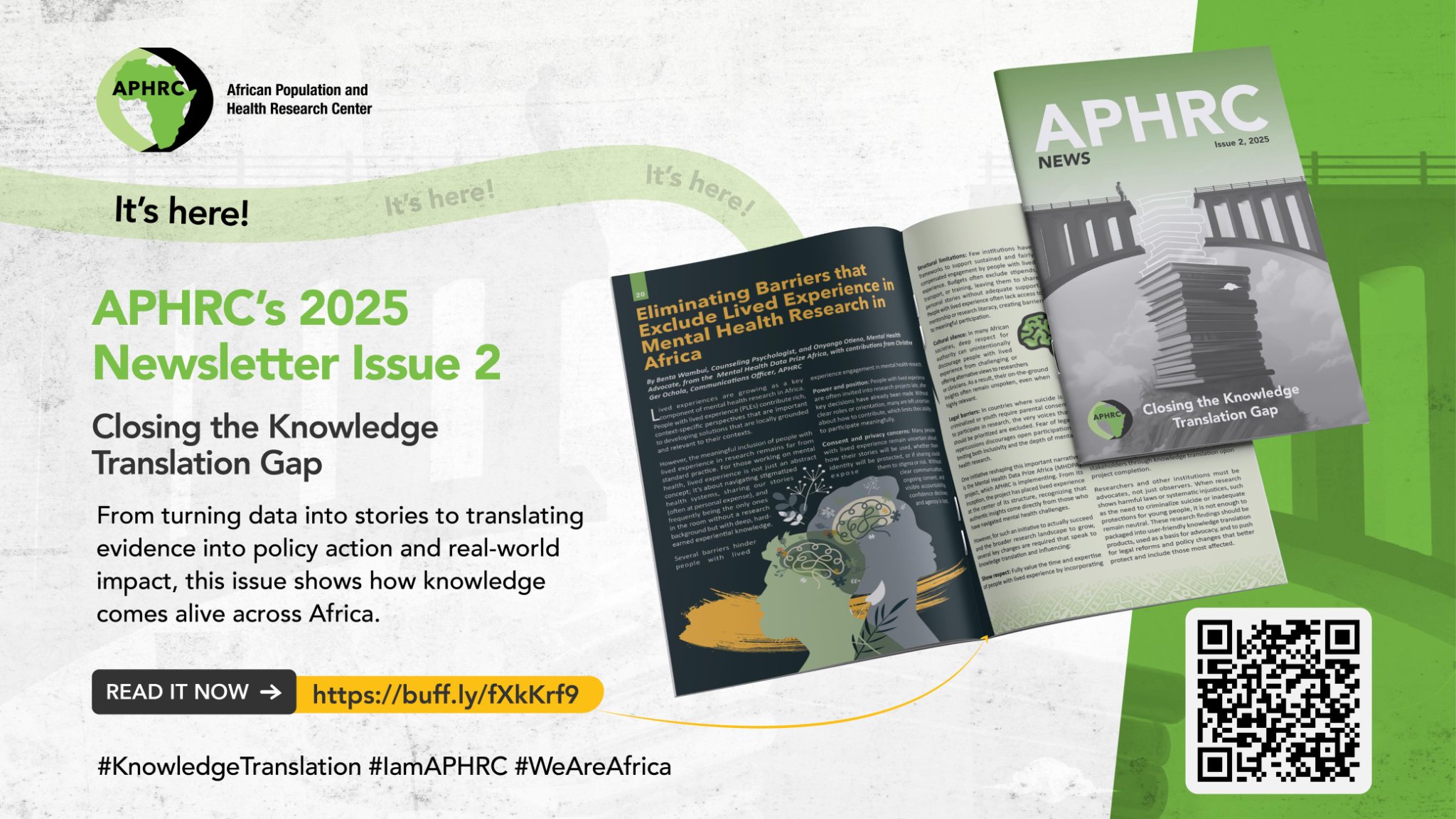
Newsletter: African Population and Health Research Center

APHRC News – Issue 2, 2025

  •  31/10/2025
Welcome to APHRC’s second 2025 newsletter issue! This edition explores how the Center is closing the Knowledge Translation Gap, making research accessible, relatable, and transformative. Dive in to discover stories of change, from climate and health innovations to inclusive education and mental health breakthroughs across Africa.


Saturday, November 01, 2025

On Sociology & Becoming a Patient

'The Subject matter of Sociology
& Becoming a Patient'

A primer for my picking up Hodges' model, or being pressed onboard, was early exposure to history and sociology. There was an understandable emphasis in the (then) school of nursing (registered mental nursing) on the role of society, social history, lunacy and the asylums, law, and attitude towards mental illnesses.

Continuing to sort books (inc. secondhand) and papers, there is:

Maclean, Una. (1974) Nursing in contemporary society. London: Routledge & Kegan Paul.
https://wellcomecollection.org/works/qhqc24fv

individual
|
INTERPERSONAL : SCIENCES
humanistic -------------------------------------------  mechanistic
SOCIOLOGY : POLITICAL
|
group-population


'The sociological viewpoint can be taken on many different subjects. Thus, political sociology has to do with people's voting behaviour and their reactions to the processes of government, while the sociology of education takes into account the influence of various social factors upon educational opportunities and achievements. In addition, social psychology, social psychiatry and social medicine are all related to medical sociology. These terms all imply the use of sociological methods and insights in different areas of human behaviour, and the divisions between them are a convenient way of dealing with what is a very wide territory. Such divisions may suggest that events and things in the real world are already separated in themselves, whereas the divisions are actually in the minds of the people who make them.
It is easier to regard sociology generally as being the study of people's behaviour in groups, groups of all kinds, large and small, casual or permanent, groups of which people are very conscious as well as those of which they may scarcely be aware. Thus, much of sociology is concerned with the human family, a group whose form and composition varies from one part of the world to another and from one set of people to another but which does have common features and functions wherever it is studied. The family will be referred to repeatedly in this book, since not only does it affect all our lives but it profoundly influences the way in which people react in relation to illness.' pp.8-9.


Maclean pointed to the 'innumerable other human groupings' (p.9) and how these - family, schools, clubs, professional training, friendships, audiences, tourist crowds, customers, villager, hostel dweller; such groupings, some historic, temporary or transient - also differentiate into populations, that inform epidemiological and demographic studies. 

It is remarkable how societies have changed globally, since Maclean's 1974 text.

As if to presage the one-to-one encounters to follow, chapter 2 'Becoming a patient' after a brief history 'sickness' arrives at the work of the American sociologist Talcott Parsons.

I don't have the date but I remember making a note the four combined conditions at work for an individual to adopt the sick role. What stood out was how something we think is individually determined is social and so often a question of permission.

Maclean's text (with my emphasis) on these factors follows;
 and is then mapped to the domains of Hodges' model:
'In the first place, the illness must be outside the patient's control, in no sense his own fault. Second, the sick role will allow him exemption from his other roles. with their associated obligations and duties. For example, a man can legitimately give up work and leave his usual family 'responsibilities to his wife. But, third, the sick role requires that the patient should positively desire to get well, he should not relish the relinquishment of responsibility and, fourth, he has the obligation to seek competent medical help.' p.25.
individual
|
INTERPERSONAL : SCIENCES
humanistic -------------------------------------------  mechanistic
SOCIOLOGY : POLITICAL
|
group-population
the sick role requires that the patient should positively desire to get well

the illness must be outside the patient's control,
in no sense his own fault.

the sick role will allow him exemption from his other roles. with their associated obligations and duties

he has the obligation to seek
competent medical help


Again as an exercise you might care to reflect on this and our experiences since the millennium?

What is most remarkable is the need to view this as a 'future lesson' in terms of how societies must, will change to meet the challenges of tomorrow, and the day after that ...

Tuesday, October 28, 2025

Careif report: The Health Needs of the Indo-Caribbean Community in the United Kingdom

'The Indo-Caribbean community has played a key part in the life of the United Kingdom, but this has not often been recognised. Little is known about this populations’ physical and mental health needs and its experience of health and social services in the UK.


This report, The Health Needs of the Indo-Caribbean Community in the United Kingdom, examines the history of the Indo-Caribbean community in the UK, the prevalence of mental health conditions among the community, barriers to accessing mental health services, and the existing services available.'


Includes:
"The absence of a unique category designating ‘Indo-Caribbean’ as a unique category in the UK Census was identified as a major barrier to obtaining vital epidemiological data on the UK’s Indo-Caribbean population."

Above text:
https://www.careif.org/news-and-events/2025-10-9-careif-report-the-health-needs-of-the-indo-caribbean-community-in-the-united-kingdom


n.b. 
In my community mental health nursing career in Chorley, Preston, and West Lancashire as services were established, the diversity of the local populations was evident, but there was an assumption that many communities were essentially 'closed': one explanation for lack of referrals from specific racialised communities - was that some communities 'looked-after their own'.

Of course this can be racism (acute or subtle), an excuse for inaction, delayed response, lack of action - outreach and translation services. There were marked examples of intervention. I have seen first-hnad interpreting and translation services in action since full-time retirement and the services offered are amazing for the insights and care delivery they can facilitate. Is this why we also need mental health nurses and the team? To translate in challenging circumstances, even by being there, seeking avenues, giving time - especially in instances of psychoses and doing so safely (for all)?

In addition to the main body of Careif's report and its recommendations, it may be helpful to consider the report's key terms relating them to the domains of Hodges' model? I also note reference to the bio-medical model as an explanatory framework. A conference abstract has been submitted today for April 2026, highlighting the need for bio-psycho-socio-political model / framework (Hodges' model - of course?).

See also:
RCN North West Multicultural Group

Monday, October 06, 2025

On the 'front' - or behind the line(s)?

In many sources on socio-economics, politics, health policy ... I still note the challenge to represent the INDIVIDUAL and COLLECTIVE within a figure. Of course the author's subject, purpose, the context all influence the final depiction and the message to be conveyed. 

I wonder if Hodges' model can provide a starting point to explore relationships, oppositions, arguments and synergies?

Hodges' model provides an 
expansive and potentially powerful 'front' 
through its horizontal axis 
[ HUMANISTIC ↔ MECHANISTIC ].

This axis - drawn across and through the model vertically, may make it easier(?) to analyse and synthesize the relations at work and produce a diagram?

Individual
|
      INTERPERSONAL    :     SCIENCES               
HUMANISTIC =========================  MECHANISTIC      
 SOCIOLOGY  :    POLITICAL 
|
Group
INDIVIDUAL

INDIVIDUAL

GROUP - POPULATION

GROUP - POPULATION


Tuesday, August 05, 2025

Collective loneliness

Individual
|
      INTERPERSONAL    :     SCIENCES               
HUMANISTIC  --------------------------------------  MECHANISTIC      
 SOCIOLOGY  :    POLITICAL 
|
Group
loneliness

depopulation
demographics

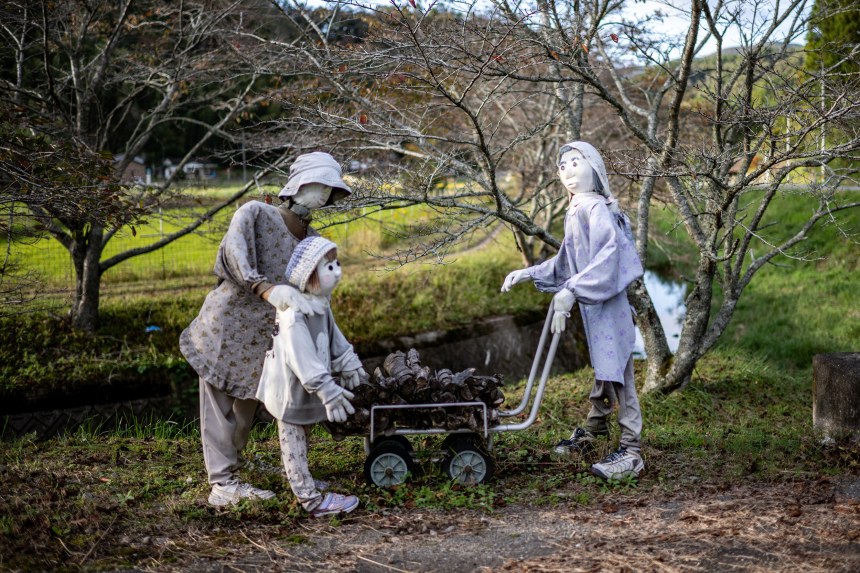
Japan

 A family of puppets collects wood in 
 the Japanese village of Ichinono.
 Philip Fong / AFP - Getty Images 
'Stop the boats'

'global trends'


My source: Sam Freedman. The truth about migrant workers: demonised but in demand, and few of us can live without them. The Observer, 03.08.25. pp.12-13.
https://observer.co.uk/news/national/article/sam-freedman-demonising-migrants-wont-fill-jobs-or-boost-falling-populations

Image and context:
'Outnumbered by puppets': Depopulated village in Japan crafts dolls for sense of life
https://www.nbcnews.com/news/world/outnumbered-puppets-depopulated-village-japan-crafts-dolls-sense-life-rcna177216

Wednesday, January 08, 2025

Hodges' model: A person - Everyone else [x2!]

INDIVIDUAL
|
   INTERPERSONAL : SCIENCES              
humanistic ------------------------------- mechanistic
 SOCIOLOGY : POLITICAL   
|
GROUP


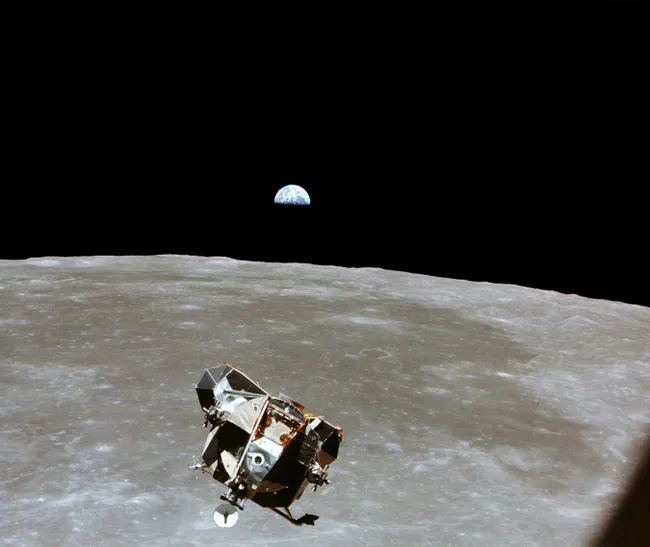
'Michael Collins, the astronaut who took this photo in 1969, is the only human, dead or alive, that isn't in the frame of this picture.' 

 (Image credit: NASA/Getty Images) 


“If the universe is meaningless, so is the statement that it is so… The meaning and purpose of dancing is the dance.”

'Alan Watts on our search for meaning and the antidote to our existential loneliness'


Image: https://www.digitalcameraworld.com/news/spaceman-who-photographed-every-living-being-but-himself-rip-michael-collins

Text: https://x.com/themarginalian/status/1876298178326069285

https://www.themarginalian.org/2016/11/01/alan-watts-wisdom-of-insecurity-3/

So good I'm repeating myself ... https://hodges-model.blogspot.com/2019/07/2-everyone-else-1-thank-you-michael.html

'dance' :: 'meaning'

Tuesday, December 10, 2024

Webinar: 11 December - Universal Health Coverage (UHC) Day 2024

"The UHC Compass and Social Participation:
empowering patient organisations to hold governments
 accountable for universal health coverage"

Register for the UHC Compass launch!

To mark Universal Health Coverage (UHC) Day 2024, IAPO will officially launch the UHC Compass at an exciting webinar titled "The UHC Compass and Social Participation: empowering patient organisations to hold governments accountable for universal health coverage" on 11 December 2024, from 11:30 to 13:00 GMT via Zoom.

The webinar will be conducted in English with simultaneous interpretation into Spanish.

Panellists include:
  • Dani Mothci – International Alliance of Patients’ Organizations (IAPO) 
  • Dr Pamela Cipriano – UHC2030 & International Council of Nurses
  • Lara Brearley – Special Programme on Primary Health Care Universal Health Coverage - Life Course, World Health Organization
  • Dumiso Gatsha – Success Capital NGO & Civil Society Engagement Mechanism for UHC2030 (CSEM)
  • Nicola Bedlington – Global Patient Think Tank & Millwater Partners
  • Smitha Sadasivan – Global Patient Think Tank, Inclusive Health Policy, Disability Rights India Foundation & CSEM 
  • Paul Mendoza – Psoriasis Philippines and Psoriasis Asia Pacific & IAPO
The UHC Compass is a dynamic tool created by patients for patients, empowering local leaders and communities to advance universal health coverage (UHC). In the context of the World Health Assembly resolution on social participation and UHC Day 2024, this session will explore how the Compass can serve as a tool to hold governments accountable for investing in UHC.

Co-created by the Global Patient Think Tank (GPTT), a diverse group amplifying the patient voice in the UHC movement, the Compass is proudly hosted by IAPO. Our mission is to ensure this resource reaches and benefits our global network of patient organisations.

Join us to discover how the UHC Compass can help make UHC a reality for everyone!

Learn more & register [https://www.iapo.org.uk/node/15686] Share https://iapo.cmail19.com/t/d-fb-sfiudt-iuqjytrli-o/ Tweet https://iapo.cmail19.com/t/d-tw-sfiudt-iuqjytrli-b/ Share [https://iapo.cmail19.com/t/d-li-sfiudt-iuqjytrli-h/]

[http://www.iapo.org.uk]

The International Alliance of Patients’ Organizations is registered in England and Wales as charity no.1155577 and company limited by guarantee no.08495711.

Registered office: Hounslow House, 7 Bath Road, Hounslow TW3 3EB, UK.

It is also the IAPO's 25th Anniversary.
More details at:

https://www.iapo.org.uk/node/15687

I will post again in the New Year.

My source: HIFA

Previously: compass : UHC : patients

Sunday, April 07, 2024

World Health Day 2024

World Health Day 2024

Around the world, the right to health of millions is increasingly coming under threat.

Diseases and disasters loom large as causes of death and disability.

Conflicts are devastating lives, causing death, pain, hunger and psychological distress.

The burning of fossil fuels is simultaneously driving the climate crisis and taking away our right to breathe clean air, with indoor and outdoor air pollution claiming a life every 5 seconds.

The WHO Council on the Economics of Health for All has found that at least 140 countries recognize health as a human right in their constitution. Yet countries are not passing and putting into practice laws to ensure their populations are entitled to access health services. This underpins the fact that at least 4.5 billion people — more than half of the world’s population — were not fully covered by essential health services in 2021.

To address these types of challenges, the theme for World Health Day 2024 is 'My health, my right’. ...
https://www.who.int/campaigns/world-health-day/2024

My source: HIFA

World Health 24/7/365 . . . also calls for a generic conceptual framework around which individual, family, community and population health can be assessed, planned, formulated, delivered and evaluated.

Thursday, February 01, 2024

HIFA discussion on Alcohol Use Disorders, 5 Feb - 17 Mar 2024

Dear all on HIFA,

It's just 4 days to go before the official launch of our deep-dive discussion on Alcohol Use Disorders, 5 February to 17 March 2024.

Please forward this message to your contacts and networks and invite them to join! www.hifa.org/joinhifa

More information here:
https://www.hifa.org/news/hifa-announces-deep-dive-discussion-alcohol-use-disorders-starts-5-february-2024

HIFA is grateful for sponsorship from the Ulrich and Ruth Frank Foundation for International Health known online as NextGenU.org.

Note: We have opportunities for further sponsored discussions in 2024. We have 20 working groups on standby to plan and implement a discussion [ https://www.hifa.org/projects ]. Or we can start a new group to address a topic that is important to you. Also new in 2024 there is the option to have live webinars to complement our forum discussions.
To discuss possibilities, please contact: neil AT hifa.org

With thanks, Neil

HIFA Partnerships and Projects working group: https://www.hifa.org/projects/partnerships-and-projects

HIFA profile: Neil Pakenham-Walsh is coordinator of HIFA (Healthcare Information For All), a global health community that brings all stakeholders together around the shared goal of universal access to reliable healthcare information. HIFA has 20,000 members in 180 countries, interacting in four languages and representing all parts of the global evidence ecosystem. HIFA is administered by Global Healthcare Information Network, a UK-based nonprofit in official relations with the World Health Organization.

Tuesday, December 26, 2023

Immigration - in Hodges' model

 Individual
  |
     INTERPERSONAL    :     SCIENCES               
HUMANISTIC --------------------------------------  MECHANISTIC      
SOCIOLOGY  :   POLITICAL 
|
GROUP

You - have seen nothing yet ...?

"One of the key ideas behind Brexit was to 'take back control' of immigration. Back in 2010, David Cameron pledged to bring net migration to under 100,000 a year, but the promise was never met. ...

However, in the post-Brexit years, immigration has soared to unprecedented levels. Net immigration, which hovered around 200,000 in pre-Brexit years skyrocketed to an all-time high of 745,000 in 2022." p.10.

We - have seen nothing yet ...?
How Migration Really Works


Hass, H. de., The Necessity of Immigration, BIG ISSUE, 4 December 2023. Issue 1593, pp.10-11.

Tuesday, November 14, 2023

'Humanistic geography' - goes full circle

INDIVIDUAL
|
     INTERPERSONAL    :     SCIENCES               
HUMANISTIC --------------------------------------  MECHANISTIC      
SOCIOLOGY  :   POLITICAL 
|
GROUP

"Alongside Euclidean geometry non-Euclidean geometries were invented. Alongside the old Aristotelian logic and the law of the excluded middle, new forms of logic with, for example, multiple values were developed. This type of work, far from remaining purely speculative, proved indispensable to the progress of physical theories. Consequently epistemological research was no longer seen as fundamentally inductive. It was no longer content to follow the movement of science: it undertook to precede science by indicating which tools should be used to make the best progress. This was the atmosphere which characterised neo-positivism: some concern was already apparent, therefore, but epistemology was still only partially critical. Its role was still more prescriptive." p.227.


"Tuan states that 'humanistic geography' is 'not an earth science' and that with its purpose as the better understanding of man and his condition, humanistic geography properly belongs to the humanities. (Tuan, 1976, 266). For Tuan humanistic geography is 'event-centred'; it is the study of articulated geographical ideas such as 'place', 'territory', 'crowding', 'privacy' and religion and it is particularly concerned with describing the quality of the emotion experienced in specific settings, e.g. the study of place as a centre of meaning for an individual rather than place as described by its geographical coordinates." pp.116-7.


Now we need to think of 'biospheric geography' within which humanity plays a pivotal and critical part.

https://science.nasa.gov/resource/the-story-behind-apollo-8s-famous-earthrise-photo/

https://www.nasa.gov/news-release/nasa-administrator-honors-life-of-apollo-astronaut-frank-borman/

Rose, C., Wilhelm Dilthey's Philosophy of Historical Understanding: a Neglected Heritage of Contemporary Humanistic Geography, p.99-131; Claval, P., Epistemology and the History of Geographical Thought, p.227-239. In. Stoddart, D.R., editor (1981) Geography, Ideology & Social Concern. Oxford: Basil Blackwell Publisher Ltd.

More books - gone; btw I'm not finding a post in each one - honest!

Sunday, August 13, 2023

History: Hepatoscopy and the Census


INDIVIDUAL
|
     INTERPERSONAL    :     SCIENCES               
HUMANISTIC --------------------------------------  MECHANISTIC      
SOCIOLOGY  :   POLITICAL 
|
GROUP

"Perhaps it was merely an oversight of this historian that he failed to mention another religious practice, hepatoscopy. For this, the Romans down to imperial times relied on Etruscans. Divination from the liver of sacrificed animals was a most complicated business. 


To get the interpretation right required a sound knowledge not only of astronomy but also of anatomy and pathology.

In 1877 at Piacenza a bronze model of a liver was found. It was evidently a model used in a priests' school for teaching the art of haruspicy, and of a fairly late period. On the upper surface are marked sixteen divisions in which are inscribed the names of some thirty gods, some more than once. Each of the sixteen divisions corresponded to a section of the heavens, for the Etruscans regarded the liver as an image of the cosmos, as a microcosm of the universe. The liver, it was believed, exactly reproduced the heavenly firmament with its sacred laws and controlling divinities and its division, first into four, by the intersecting axes and then into sixteen subdivisions." p.87.

 
The Etruscans

"Censuses for purposes of taxation and military service still exist. But not many know that it was an Etruscan king who first legally established such a registration in Rome, from whence, with the rise of the Roman empire, it spread throughout Europe." 

"What this measure was is stated by Livy thus: 'The population was divided into classes and 'centuries' according to a scale based on the census, and suitable for both peace and war." p.146.


Keller, W. (1975) The Etruscans. Norfolk: Book Club Associates. [Cover image: AbeBooks]

Tuesday, March 28, 2023

PHT-2 Obesity paper - Chance is still up. Please help us WIN the @Nutrients_MDPI "Nutrients 2023 Best Paper Award"

Dear Professors and Colleagues,

https://doi.org/10.3390/nu13041200

the chance is still up to win the @Nutrients_MDPI "Nutrients 2023 Best Paper Award" for our Childhood Obesity paper from the School Study.

Nutrients Editorial Office prepared for us this banner (above) to use for social media etc.

Motevalli, Mohamad, Clemens Drenowatz, Derrick R. Tanous, Naim Akhtar Khan, and Katharina Wirnitzer. 2021. "Management of Childhood Obesity—Time to Shift from Generalized to Personalized Intervention Strategies" Nutrients 13, no. 4: 1200.
https://doi.org/10.3390/nu13041200

Pls help us with your continuous support to WIN, kindly asking
2nd time now to POST & SHARE widely the prepared text-blocs below with the attached grafic, thx so much!

Best Katharina

Like, Post, share and recommend at/via: