Hodges' Model: Welcome to the QUAD: Search results for parity

Hodges' model is a conceptual framework to support reflection and critical thinking. Situated, the model can help integrate all disciplines (academic and professional). Amid news items, are posts that illustrate the scope and application of the model. A bibliography and A4 template are provided in the sidebar. Welcome to the QUAD ...

Showing posts sorted by relevance for query parity. Sort by date Show all posts

Thursday, September 18, 2025

Nurses - Ask 5 complimentary questions

I received an email from RCNi subject heading - 'Q. What questions are nurses asking?'

An invitation to sign-up and ask five free questions: https://rcni.com/ask 

Question 1

Is there a model of care, or nursing that encompasses the sciences, mental health, sociology and political domains of care?

Several models of care and nursing frameworks integrate diverse domains beyond purely biological aspects, encompassing scientific, mental health, sociological, and even political dimensions. These models emphasise a holistic approach to patient well-being, recognising the complex interplay of various factors in health outcomes.

  • Social Model of Health: This model focuses on salutogenesis, examining what contributes to health rather than just illness, by considering broad social, economic, environmental, and cultural influences on an individual's well-being .
  • Person-Centred Nursing Framework: This framework extends beyond individual biological health to include the person's intricate cultural context, family, spirituality, and life experiences, defining health as encompassing intellectual, social, and spiritual dimensions .
  • Biopsychosocial Model of Care: This approach integrates biological, psychological, and social factors to address a patient's holistic needs, moving beyond the biomedical model's sole focus on physical illness .
  • Dual Registration Degrees: Educational programmes for nurses and social workers combine life sciences with social work principles, law, and policy, preparing professionals to understand factors influencing health, social justice, structural inequalities, and anti-discriminatory practises .
  • Multidisciplinary Team (MDT) Care Model: While not a nursing model itself, the MDT approach enhances patient care by integrating expertise from various professionals, including specialist doctors, nurses, psychology counsellors, dietitians, and pharmacists, to deliver individualised treatment plans and coordinate care .
Modern healthcare increasingly recognises the necessity of comprehensive care models that extend beyond traditional medical approaches. These integrated frameworks, including the social model of health, person-centred nursing, and the biopsychosocial model, provide a foundation for understanding and addressing the multifaceted nature of health, incorporating scientific, mental health, sociological, and policy-related aspects to improve patient outcomes. [Five references provided - hence poor formatting in transfer.]

Question 2

What model of care has the conceptual scope to critique parity of esteem in mental health nursing?

Critiquing the concept of parity of esteem in mental health nursing requires models that move beyond a purely biomedical focus to embrace holistic, person-centred, and culturally sensitive approaches. These models emphasise equality, social justice, and comprehensive care, addressing the historical imbalance between physical and mental health provision.

  • Biopsychosocial Model: This model offers a conceptual framework to critique parity of esteem by considering biological, psychological, and social factors in a patient's health, aiming for holistic needs rather than just biological ones . It contrasts with the biomedical model, which has historically led to paternalistic decision-making in healthcare .
  • Culturally Sensitive and Competent Care: Essential for critiquing parity of esteem, culturally sensitive care requires nurses to appreciate diverse cultures and adopt personalised, flexible approaches to mental health support . Culturally competent care, underpinned by equality and diversity principles, involves behaviours and attitudes that value patients' diverse backgrounds, improving satisfaction and outcomes .
  • Person Centred Care: This approach is crucial for addressing the historical paternalism in healthcare, ensuring patients participate in decisions about their care and re viewed as individuals with unique experiences rather than just labels or symptoms . Recent mental health reforms, such as the Mental Health Bill 2025, aim to embed person-centred and equitable care further .
  • Holistic Care: The Nursing and Midwifery Council (2024) emphasises assessing spiritual needs to provide effective holistic care, recognising that "seeing the whole person supports better care" . This aligns with the biopsychosocial model's aim to meet holistic needs and challenges the organisational and practice divisions between mental and physical healthcare .
Effective critique of parity of esteem in mental health nursing necessitates a shift towards models that integrate biopsychosocial, culturally sensitive, and person-centred approaches. These frameworks are vital for fostering equality, social justice, and comprehensive care, moving beyond traditional biomedical limitations to address the full spectrum of patient needs. [Eight references.]

I'll leave it there. I think. PJ
<>

My emphasis: In the spring I tried to engage and see if I could write a short article about Hodges' model for RCNi. After an online chat and following up by email, Hodges' model isn't for them apparently. It was kindly suggested that I try another journal.

I must improve my prompt writing.
Nurse, you must improve your prompt writing ...

Monday, May 08, 2017

Hodges' model: Parity of Esteem - ic ic ic Integrated Care

individual
|
INTERPERSONAL : SCIENCES
humanistic --------------------------------------- mechanistic
SOCIOLOGY : POLITICAL
|
group

Mental Health Care


Parity of
Esteem

ic


Physical Care


ic


ic


My source:
Log-in or Institutional access required to access the paper.

Mitchell, A.J., Hardy, S. & Shiers, D. (2017). Parity of esteem: addressing the inequalities between mental and physical healthcare. BJPsych Advances, May 2017, 23 (3) 196-205;
DOI: 10.1192/apt.bp.114.014266


Wednesday, November 13, 2013

Held in equal esteem: Physical health and Mental health

As a mental health nurse you are familiar with concept of ‘esteem’. Self-esteem is central within assessments of clients, central to all care workers as safe and effective practitioners; and self esteem tests carers in those people for whom their condition means self-esteem is something attributed by proxy.

I noticed just recently use of the term esteem applied to the disparity between physical health and mental health. The two upper-most domains in Hodges' model (interpersonal and sciences) draw attention to the historical duality of mind and body. To integrate the two means acknowledging differences and this is acute in terms of finance, research and treatment plus many other measures.

The limitations of my emphasis in a series of previous posts on holism, holistic care, holistic approaches become apparent as long as the political domain is not addressed. You can be as holistic as you like, identifying, processing and integrating the full remit of health care concepts relevant in a case. If esteem is not achieved then the benefits of being holistic must be severely damaged. They may even be considered futile politically (speaking - just a whisper)?

Through the links below this post demonstrates that esteem is stirring in the political, policy and legislative domain and is being addressed, even if a solution will not arrive overnight.

My original sources: New Scientist, the HSJ and BBC.

Nick Craddock (2013) Opinion: Where's our Higgs? New Scientist, 27 April, 2914; pp.30-31.
Psychiatry needs the star quality of physics to help recruit top academics and fight the scourge of mental illness - this opinion piece concludes:

So, in 2013, psychiatry has powerful scientific tools and a developing narrative that already points to strong theoretical bases. Yet, in the UK research into mental illness is stalled at around 5 per cent of the annual medical research budget, and the picture is similar in other rich countries. That will have to change – and governments and funders are starting to see this. The door is open: all that is needed is for more of the best to come in and find out just how hot psychiatry really is.

‘Esteem gap’ between mental and physical health remains
10 October, 2013 | By Alastair McLellan
The government knows the challenges the facing mental health sector, but without radical solutions the goal of treating mental and physical health service users on an equal footing seems as far away as ever.
http://www.hsj.co.uk/opinion/leader/esteem-gap-between-mental-and-physical-health-remains/5064120.article

Debate on 10 October: Parity of Esteem for Mental and Physical Health - Lords Library Note
http://www.parliament.uk/briefing-papers/lln-2013-024/debate-on-10-october-parity-of-esteem-for-mental-and-physical-health

Lords debate – Parliament TV:
http://www.parliamentlive.tv/Main/Player.aspx?meetingId=13879&st=11:51:20

Royal College of Psychiatrists: OP88. Whole-person Care: from rhetoric to reality (Achieving parity between mental and physical health)
https://core.ac.uk/download/pdf/34719468.pdf

Thursday, January 16, 2020

Social Care: in the round and square c/o King's Fund

Simon Bottery's Long Read -

What’s your problem, social care? The eight key areas for reform

- and listed below, have been mapped to Hodges' model. The full article and comments are well worth reading and may help readers discern the relationships between the key areas identified.
  1. Means testing: it’s not like the NHS 
  2. Catastrophic costs: selling homes to pay for care 
  3. Unmet need: people going without the care and support they need 
  4. Quality of care: 15-minute care visits and neglect 
  5. Workforce pay and conditions: underpaid, overworked staff 
  6. Market fragility: care home companies going out of business 
  7. Disjointed care: delayed transfers of care and lack of integration with health 
  8. The postcode lottery: unwarranted variation in access and performance

I have associated each with the respective knowledge (care) domain in which they are placed:


individual
|
INTERPERSONAL : SCIENCES
humanistic ----------------------------------------------- mechanistic
SOCIOLOGY : POLITICAL
|
group - population
1. Parity of Esteem in Means Testing
2. (Catastrophic) Cost to me, anxiety, depression, stress
3. Unmet need (mental health, counselling ...)
4. Quality of Care (Mental Health, Well-Being..)
5. Workforce (values, person-centred, self-esteem, job-well-done, BE the Difference?)
6. Market fragility (attractiveness as career pathway, having a leader)
7. Disjointed care (number of carers, lived experience...)
8. Postcode (I thought this had been addressed?)
(postcode? - a remote 'thing' outside through the window and (summer) garden]


1. Parity of Esteem in Means Testing
2. (Catastrophic) Cost to NHS - innovation, change, prevention, transformation
3. Unmet need (physical, access ...)
4. Quality of Care (Time, Logistics)
5. Workforce (tasks, scheduling, physically reasonable?)
6. Market fragility (scale, bed occupancy, local demographics...)
7. Disjointed care (geography, transfers, A&E admissions...)
8. Postcode ('literally') North, West, East, South,
Regions, London, Urban, Rural ...

1. What is your
Parity across

2. (Catastrophic) Cost to my family.
3. Unmet need (socialising, access, carer ..)
4. Quality of Care (Relationships, Belonging, Communication, Family Groups..)
5. Workforce (job satisfaction, status, social worth ..)
6. Market fragility (Public perception, marketing, negativity bias - local news, time for outreach, intergenerational engagement...)
7. Disjointed care (input of family, local provisions, self-funding - budgets...)
8. Postcode (pre-social care, pre-lottery?)


Means (let's Test that.)
here too?

 2. (Catastrophic) Cost to the State?
3. Unmet need (my choices, informal carer ...)
 4. Quality of Care (Value for £, Measures, Inspection, safety..)
5. Workforce (pay and conditions, minimum wage?, Unions, contracts, training, BREXIT ..)
6. Market fragility (FUNDING settlements, estate, investment, staff turnover, Qualified staff, commercial history, profit, governance..)
7. Disjointed care (commissioning, ...)
8. Postcode (local policy, funding, protocols ..)


Sunday, January 06, 2008

Health Affairs blog - MENTAL HEALTH PARITY: researchers stress importance of out-of-network benefits

There is an interesting insight into US mental health provision/funding and what can be hidden factors posted by Chris Fleming:

Congress is on the verge of passing legislation mandating that health plans cover mental health (MH) and substance abuse treatment to the same extent that they cover other medical and surgical treatment. In a study published December 18 on the Health Affairs Web site, researchers say that passage of either the Senate or House version of this legislation would constitute a major improvement over the current 1996 Mental Health Parity Act, which only guaranteed equal annual and lifetime payment limits. However, the authors also warn that parity legislation could actually reduce access to MH treatment for some patients if it does not facilitate treatment by providers outside insurers’ networks.

Continued at the Health Affairs Blog. 

While this news will undoubtedly 'date' this is encouraging for Hodges' model and ongoing research. 

Thursday, September 17, 2020

The Pain of Parity of Esteem

"Chronic pain is defined as pain that lasts more than 12 weeks or persists beyond the usual healing time (Treed et al., 2015)."
individual
|
INTERPERSONAL : SCIENCES
humanistic ----------------------------------------------- mechanistic
SOCIOLOGY : POLITICAL
|
group - population

"Functional magnetic resonance imaging studies of the brain have shown that emotional pain stimulates the somatic pain system, and the somatic pain system activates the nuclear accumbens and ventral tegmental areas, which are the seats of emotion and reward pathways (O'Connor et al., 2008). This biological evidence underscores the complex and bidirectional association between physical and emotional pain." (p.14).

12 weeks

"the mesocortico-limbic dopaminergic pathway and endogenous opioid system"


Majeed MH, Naveed S. Chronic Pain in Youth: Can Mental Health Services Provide Relief?. J Psychosoc Nurs Ment Health Serv. 2018;56(11):13-16. doi:10.3928/02793695-20181012-03

See also:

Morton, J., & O’Reilly, M. (2019). Mental health, big data and research ethics: Parity of esteem in mental health research from a UK perspective. Clinical Ethics, 14(4), 165–172.

https://doi.org/10.1177/1477750919876243
 

RCN: Parity of Esteem – Delivering Physical Health Equality for those with Serious Mental Health Needs

https://www.rcn.org.uk/professional-development/publications/pub-007618

Tuesday, June 16, 2026

vi Book: 'Complexity in Health Care - A Paradigm Shift for Clinical Practice'

The rest of the book is practice-based which is a strength. Chapter 18 has three clinical illustrations, were reflection and self-reflection is brought to fore. Especially so, as it pointed out that the 'clinical situation/encounter' introduces its own 'vagaries', or noise which can impact the 'quality of the bond between clinician and patient'. Rapport is the key. 

I was still missing 'complexity' and its dynamics, but I'm sure of the following:

If this was discussed - could be represented then the book would be theory-laden and I and other would-be readers would not be able to understand.

I still think Hodges' model can help, and in chapter 19 picked out 'manifold' (p.113), as if doing so, manifests something more esoteric. There is something here, the author noting the need to shift from individual to group perspectives. So, yes I think we can do more than embrace 'complexity' (p.114).

On page 116 there is discussion of the sometimes sudden path to recovery, 'probably common but often not comprehended'. Please pardon the naivety, but I scribbled 'hidden in complexity, what would (say) the three(?) equations be?'. For a book published in 2023 'artificial intelligence' is not indexed. This might be one area that AI could assist, given the progress in formal mathematics (but see below p.183!)? Algorithm is mentioned throughout the book. Further reading here, informed me that engaging with a reading group on 'Philosophical Counselling' is worthwhile. It is!

Part IX had me wondering if the debate about typical and complex cases, there is a slight of perspective going on? You can end up with paradoxes in terms of an individual's needs, criteria, risk, 'need for admission'. Which I must think about! Chapter 20 has three further reading texts on abductive reasoning. There's an appeal(?) on page 129 for an appropriate treatment model, well that is my take. Collaborative care and stepped care models are suggested. But with acknowledgement that:

'In truth, all models currently available may involve a defect in continuity within or between systems'. p.129.

I beg to differ. A role of Hodges' model is to help frame aspects of care through time, to facilitate and assure continuity.

Part X tackles the required precision in assessment, hence recourse to mathematics and statistics. The next two chapters may be useful for early career researchers and yet looking over our shoulders what is ai offering here? In Case 1 I was impressed by the suggestion of a health record that is over 70 years old. Not impossible of course, but I thought of the Lloyd George envelopes, their hospital equivalents, other paper sources and inevitable scanning this would entail here in the UK? Of interest to research is the creation and validation of complexity profiling inventories (tools) not just that, but their self-assessment form of delivery. And, yes in summary chapter 24:

'We are still left with the challenge of rating the patients' severely compromised health situations where "health" includes social, emotional, and financial well-being.' p.143.

'How do you factor this interpersonal situation into your complexity equation?' p.144.

Yes, how indeed? 

The realities of research of dealt with - funding for the development of tools a problem universally. The references here concern biopsychosocial complexity. Chapter 25 describes abstraction, and hiding detail, which is of great interest here. DSM-5 criteria for major depressive disorder are listed (DSM-6 may be released in 2029?). 

In chapter 25 the authors are once stymied by 'how to include (integrate? PJ) four dimensions, three time periods,and assorted assessment items in a single assessment.' 

As noted the four domains are here again (p.151): medical, psychological, social and care delivery and on page 153, introducing chapter 26, limitations of complexity assessment tools. Parity as in 'parity of esteem' is not indexed and I don't recall having read this, but this is well represented in later deliberations on variables #2. You will find psychosis, but not in depth or severity.

 In 'Creation of a New Model for Clinical Practice' (Chapter 31) identity is stressed, as a prompt to encompass those variables that contribute to preserving the person - what is humanistic. Allied with manifold, identity is a 'coi' for me, concept of interest - for this same reason. On page 172: the authors observe they 'are left with the question of whether there are acceptably accurate clinical models that are simpler and more straightforward than ours? We believe the answer is no!'. I believe there is a way, and a model to help 'keep the life in clinical work' - not take it out. There is a sense that Chapter 32 seeks what I was looking for above: as they explore random variable and 'sample spaces' descriptively - over a page.

Ah! 'Artificial intelligence' is found in text p.183. I'm surprised an editor, proofreader aloud the following sentence to go unchallenged?

'But, as will be discussed, these computer techniques have their limitations based on their lack of flexibility.' 

I was genuinely surprised to read this. Plus, again on ai on page 185: 'Making inferences is not reliably their domain.' I think I would look more at the human-ai interface. And the status of ai within psychiatry as opposed to medicine, but that is also another (parity - divide) debate. Things really are complex now on so many fronts: ethics especially.

Perhaps I am looking for the cookbook formula as introduced for chapter 35 clinical judgement. The further reading is combined with critical thinking. More detail on the empirical-collaborative method is welcome. When I read 'illustrated' I take this literally. Again I can disagree twice on page 220. I know Hodges' model is not validated, but it can - with practice(?) - do this light (simple) or heavy (complex) lifting. 

The warning about dogma needs to be repeated regularly. It is rather like the need for nurses to revisit their profession, role and work as relates to the law. Is Hodges' model an over-valued idea? Am I guilty of thinking I'm an expert? A problem with that view is that any assumed expertise is stretched across the whole model. So if anything there is a shallowness, but this means that I see my particular scope of practice, as other colleagues / professions see theirs. Here in the UK of late, this seems to have become rather blurred. 

In closing with this and achieving a "real-life" understanding of a case, with synthesis - path analysis diagram, the author's underline the value of their book which I have enjoyed and informed my preparation for WCCS26 (more to follow there). The authors can perhaps be reassured that all practitioners have a means to achieve their paradigm shift as described here - with added value and values.

There is a missed word: "of the situation ['with'?] him" on page 114. And revision needed re. text beginning with 'his boyish Paul McCartney "mop-top" ... on page 214. Spelling error on 216 'retu(r)ning'. 

Thanks again to Daniela and colleagues at SpringerNature for the review copy.

Steven A. Frankel, Steven D. Thurber, James A. Bourgeois (2023) Complexity in Health Care: A Paradigm Shift for Clinical Practice. Cham. Switzerland: Springer. ISBN: 978303114948.

Thursday, September 04, 2025

Parity of Esteem: It's all smoke and mirrors ...

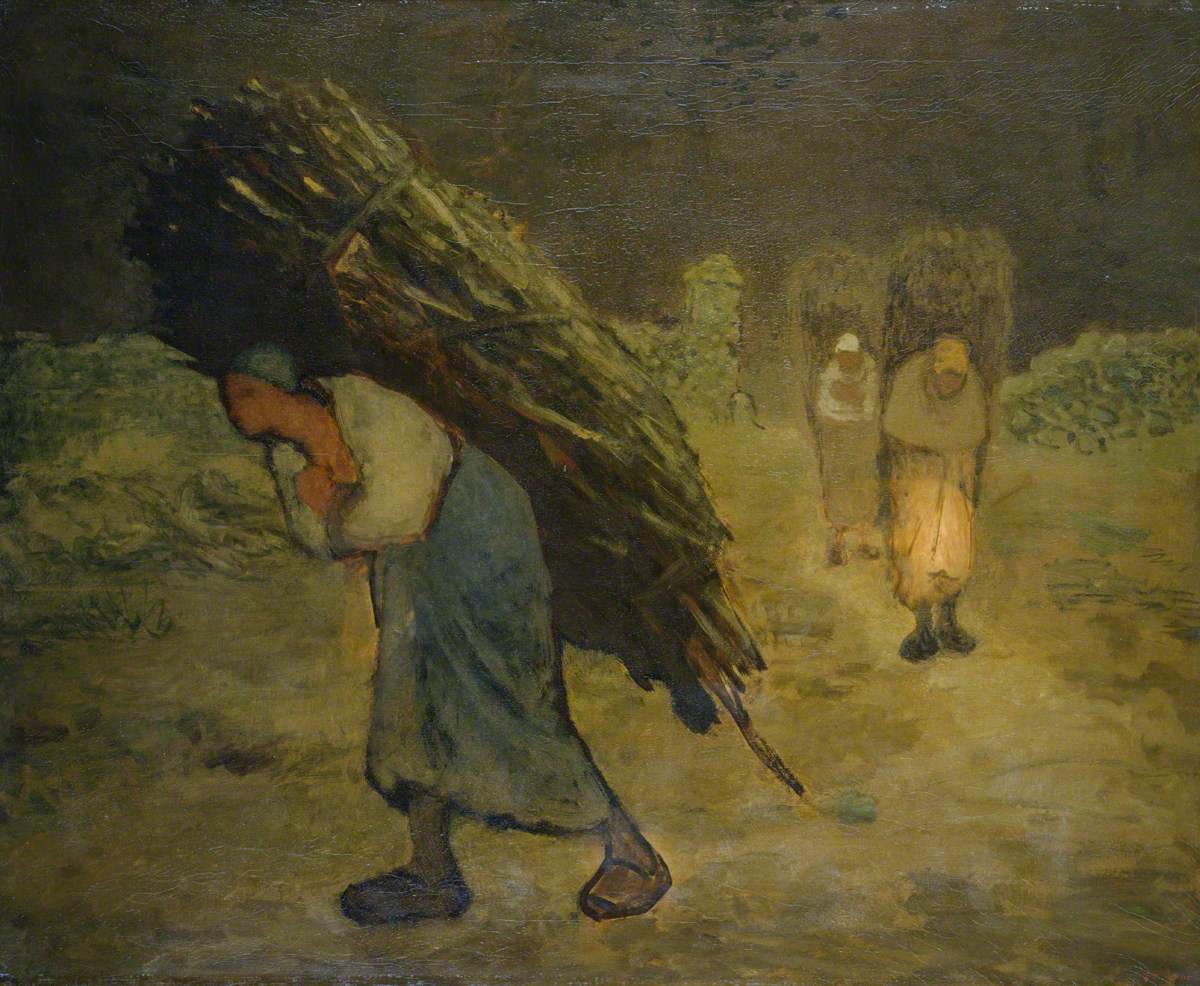
Having just visited the National Gallery and an exhibition on Millet:

https://www.nationalgallery.org.uk/exhibitions/millet-life-on-the-land

Dr Sanil Rege on twitter provided:


Seeing, and reading (again?) about 'The Faggot Gatherers' I couldn't help but see socio-economic history enacted:

'Two women are taking a short rest from gathering tree branches for sale as firewood. The older woman’s hunched back and clawed hands betray a lifetime of physical toil. The setting is the forest of Fontainebleau, south of Paris, close to the village of Barbizon. Millet was an exponent of Realism, a movement that rejected historical art and idealisation in favour of a truthful view of contemporary reality.'

Text: https://www.nationalgalleries.org/art-and-artists/232271
Winter, The Faggot Gatherers Jean-François Millet (1814–1875) National Museum Cardiff

The National Gallery's accompanying text reads:

'Three women are on their way home trom the forest of Fontainebleau. One of its entrances, the Porte aux Vaches, is visible at the back right. The staggering scale of their loads threatens to overwhelm them in their stumble homewards. The scene evokes Millet's 1851 letter to his biographer Alfred Sensier, in which he described how seeing 'a poor figure laden with a faggot reminded him of the constant fatigue of people's lives.
While the painting is unfinished, the elemental figures are typical of Millet's vork. The extreme simplification of their forms results in austere silhouettes.'

Mental illness has always been a facet of humanity, evidence of trephination from prehistoric times and across cultures and geographies bears testimony to the mind - body divide. Life was brutish physically too. What chance did the weakest stand? If, that is a broken bone: you could be left behind? But perhaps we underestimate the knowledge and experience of our ancient ancestors. Knowledge gained and passed orally, culturally, even before written history. Perhaps too, we struggle to understand how early humanity expressed itself beyond the big-stick of nature and the struggle for survival as the hominids that led to 'us' were winnowed down?

Even as recent as the 19th century life was hard. As the notes above attest, Millet's work seeks to record the sheer physicality of labour, even as the industrial age emerged. The advent of the industrial revolution brought its own pressures and privations, as pastoral life is replaced with change work at home (spinning cotton) to urban and factory growth. 

Severe mental illness would have been institutionalised in poor houses, religious and charitable organisations. Parity of esteem is grounded, to some extent in the questions: "What happened to you?", or "How are you feeling today?" In Millet's work the physical cost and strain stands out. While in the L'Angelus there is debate about prayer, or grief. What is visible usually speaks first, and stands for itself. This is why self-awareness, reflection, critical thinking, observational and interpersonal skills are important; and why mental health nursing calls for specific knowledge and skills. And, in psychiatry too, even when the same is contested.

Image source: Oil on carvas Lent by Amgueddfa Cymry - Museum Wales. Bequeathed by Gwendoline Davies in 1952.

Tuesday, June 21, 2022

'Pad culture' ...

INDIVIDUAL
|
 INTERPERSONAL    :     SCIENCES               
HUMANISTIC --------------------------------------  MECHANISTIC      
SOCIOLOGY  :   POLITICAL 
|
GROUP
DEMENTIA

SELF
ORIENTATION - INSIGHT
Listened to .. 'Hear me'?
dignity and respect
Mental capacity (awareness?)
emotional distress

Appears confused -
Physical cause: dehydration, delirium..?


[A shared convenience?:
How many persons are assumed
to be diagnosed with a dementia?]


in-CONTINENCE

Place:
[Home,
Community Hospital,
Residential care, Nursing Home]
IT/Record systems

'Parity of Esteem' i
Mental Health and Physical health

'Parity of Esteem' ii
[Mental Health and Physical Health] AND Social Care

Time:
ASSESSMENT, Care Plan, Evaluation ...

'Pad Culture'


'My Pad' Culture -
buy/sell
£££ $$$


Standards of Care
Nursing - Social Care
policy - funding


File on 4 BBC Radio 4 21 June 2022 - 20:00hrs

Dementia: The Final Indignity

"Around 800,000 people have dementia in the UK. For those suffering from the illness, incontinence can often be seen an inevitable consequence - but that’s not always the case. Deemed as too embarrassing or taboo, it’s a topic that rarely hits the spotlight. Experts say preserving someone’s ability to go to the toilet is crucial to maintaining their dignity and quality of life and should be a priority in care settings. But is that always happening? A new report shown exclusively to File on 4 has looked at how continence care is being managed in hospitals – and how, in some cases, those who are continent are actively encouraged to soil themselves. Datshiane Navanayagam speaks to families who say their loved ones were ignored when it came to their continence needs in hospital and that the consequences have left them with health issues and requiring additional support. Nurses and medical staff say that continence training is often seen as a ‘Cinderella subject’. We also hear from dementia patients themselves about why maintaining your own dignity and independence is so crucial with this disease. With the government set to reveal a new dementia strategy this year, will continence care be placed higher up the agenda?"


Featherstone K, Northcott A, Boddington P, Edwards D, Vougioukalou S, Bale S, et al.
Understanding approaches to continence care for people living with dementia in acute hospital settings: an ethnographic study. Health Soc Care Deliv Res 2022;10(14). https://doi.org/10.3310/
QUVV2680
 
Source: Today BBC Radio 4, 21st June, 2022.

Sunday, February 17, 2019

Waste not - Want not: An Item for Discussion (to refine) ...

Proposed item for discussion:

That this meeting reflect on the need and case for a generic and foundational conceptual framework across health and social care disciplines. This will help all (lifelong) learners to develop as reflective practitioners and critical thinkers to better support integrated and person-centred care, to appreciate and achieve parity of esteem and the leadership required to further high quality healthcare outcomes, health promotion and self-care.

Many nurses, including students, will no doubt have heard the words of wisdom: “Things go round in big-big circles, some of them decades long. You'll see!” We realise there are problems that seem perpetual. Health care seems to have its share of legacy issues, that is, problems that stretch across the decades and confound successive generations of practitioners, managers and policy makers. These issues are ongoing subjects for discussion and debate like this proposal. Nursing is a vibrant profession, things, including 'us' change. There are theories and practises that (thankfully) fall out of fashion. Nurse education is no exception with its own approaches. Some are permanent becoming accepted fixtures, while others wax and wane. Respective examples are educational technology, a fixture whether on the desk, one's lap, in the hand or simulation lab; nursing theory and models of nursing had their moment several decades ago as now they struggle for attention. To a degree this is understandable; curricula are over-crowded, practice must be evidence-based, healthcare is multidisciplinary, nursing is person, patient and carer-centred. Society also 'moves on'. Crucially, however; we must remember that to nurse - is to be a reflective practitioner and critical thinker.

Mention of models and theories of nursing may reveal something of the proposer. Much has changed for the profession since the late 1970s. Nursing [UK] has been challenged both publicly and from within; culminating in serious individual and organisational failures. Such incidents, plus associated reports and recommendations, called into question the quality of nurse education, nursing and care. No system is 100% effective in terms of checks and balances: to err is human. In nursing, however, our constant aspiration should be to disprove this fact of human frailty. In healthcare and nursing so much of what we do is predicated on the quality of our communications. Demographic trends impose pressure on proportionally fewer staff. There are more patients and carers who need reassurance, explanation, time and attention. How can nursing solve the ongoing productivity conundrum?

While communication is the common factor for all health disciplines and the essence of humanity, there is no accepted overarching theory of health communication. Although this may seem an academic question, in healthcare it is paramount. Poor communication can undermine shared awareness, responsibilities, understanding and is a constant factor in patient safety. Now, we must also recognise the patient as expert and raise the level of health literacy of the public. While there is progress in overcoming stigma within mental health, public mental health remains lost within public health. The issue of parity of esteem, extends beyond the much debated and still to be reconciled fields of physical and mental health care.

In response, this discussion calls for a generic, foundational conceptual framework across all fields of nursing, including midwifery, learning disability, mental health, veterans and prison services and end of life. If more argument is needed then without such a generic framework, the health and social care goal of our times - that of truly 'integrated care' - will just be (circular?) hyperbole. For the people who are self-caring and those in our care, the empathy and rapport they experience will more likely be process-driven, our patient-carer-public-centred care invariably off-target.

Supporting information: (links deactivated and may no longer work)

Francis Report
https://researchbriefings.parliament.uk/ResearchBriefing/Summary/SN06690

NMC Code
https://www.nmc.org.uk/standards/code/read-the-code-online/#fourth

NMC Revalidation
http://revalidation.nmc.org.uk/what-you-need-to-do/reflective-discussion.html

RCN: Revalidation
https://www.rcn.org.uk/professional-development/revalidation/reflection-and-reflective-discussion

NICE: Reflection and reflective practice
https://www.evidence.nhs.uk/search?q=reflection+OR+%22reflective+practice

HSJ: The importance of reflective practices
https://www.hsj.co.uk/workforce/the-importance-of-reflective-practices/5048994.article

The King's Fund: Integrated Care
https://www.kingsfund.org.uk/publications/making-sense-integrated-care-systems

The King's Fund: Shared responsibility for Health
https://www.kingsfund.org.uk/publications/shared-responsibility-health

Health and Social Care Act 2012
http://www.legislation.gov.uk/ukpga/2012/7/contents/enacted

Friday, October 16, 2026

Mental Health and Physical Activity

You know you're on the right (running) track when there is a journal that seeks to address the fundamentals of parity of esteem that is mental and physical health:

Robertson, R., Robertson, A., Jepson, R., and Maxwell, M. (2012) Walking for depression or depressive symptoms: A systematic review and meta-analysis, Mental Health and Physical Activity, 5, 1, 66-75. ISSN 1755-2966 https://doi.org/10.1016/j.mhpa.2012.03.002.

Sometimes, geography matters too in terms of intervention choices and the population of a study:

Moran, R., Sperandei, S., Peel, N., Gray, T., and Reis, A. (2024) The long-term effect of surf therapy on posttraumatic stress, depression, and anxiety symptomology among current and former Australian defence force members - A nonrandomised controlled longitudinal study in a community setting. Mental Health and Physical Activity, 27, 100629, ISSN 1755-2966. https://doi.org/10.1016/j.mhpa.2024.100629.

While researchers seek an holistic view -

Ciaccioni, S. et al. (2026) Modifiable determinants of adolescents’ physical activity and sedentary behaviour in school, home and mixed settings: A DE-PASS systematic review and meta-analysis of self-reported data with a holistic analysis. Mental Health and Physical Activity, 31. 100803,
ISSN 1755-2966, https://doi.org/10.1016/j.mhpa.2026.100803.

- and the above journal 'Supports open access', I do not believe my individual circumstances would qualify for differential treatment of fees:
'Article Publishing Charge (APC): USD 3,190 (excluding taxes). Actual APCs may differ based on individual author circumstances.'

This is a pity, as surprisingly thus far, the journal does not appear to have explicitly referred to 'parity of esteem'? Clearly a soapbox for me, there is plenty of room for others to join in the debate. To acknowledge, however, severe mental illness is well represented.

Given the holistic scope of Hodges' model the lack of inclusion in such literature is a shame. 

Acutely so, as Hodges' model begs (demands!?) consideration of holistic bandwidth. The matter of exercise and activity as a therapeutic option in mental health care quickly gets intense and heated (even if the interlocutors are recumbent). Social prescribing seems well established. On social media ['X' still for me] voicing the benefits of exercise does not always go down well. 

Fabiano N, Puder D, Stubbs B. Could not prescribing exercise for depression be psychiatric malpractice?

Ironically given the limitations of the bio-psycho-social model, the 'barricades' don't go up they are a permanent feature. As soon as we need to consider the political dimensions of health care, legal and professional accountability, policy, funding, accessibility, the minutiae of human rights (individual instances). Plus, in the UK the welfare benefits bill, the struggles of young adults not in employment, education or training; then division and oppositions are all that is. And, what can be individual and collective opportunities are missed.

My source:  https://x.com/NTFabiano/status/2103876655366521278?s=20

Saturday, January 11, 2025

Are you planning a health* study in 2025?

New Year - new project perhaps?

*nursing, mental health, theory, practice, management, workforce, medicine, allied health professions, social work, psychology, labs, diagnosis, palliative, end of life, diseases, public health, public MENTAL health, -isms, prevention, protection, education, learning disability, parity in care, informatics, information, literacIES, AI, arts, policy, leadership, migration, history, future, women, children, men, LGBTQ+, ethics, rights, health economics, social care, systems, services, climate change, refugees, conflict, law, leadership, resources, commerce, fraud, self-care, UN, WHO, UNESCO, regional, national, global, or planetary ..., ...

Is there a 'space' for Hodges' model in your study?

IF NOT, IMHO YOUR STUDY MAY BE INCOMPLETE!

Is this statement ...?

INDIVIDUAL
|
   INTERPERSONAL : SCIENCES              
humanistic ------------------------------- mechanistic
 SOCIOLOGY : POLITICAL   
|
GROUP

utter nonsense and arrogance

a psychological threat^

it's either a great joke, or a grand delusion

look - get real, we can't cover all the bases

calling attention to the high-degree of subjectivism in academia and health research

no, actually it is blatant evidence of bias and a lack of objectivity! Who is Hodges?

shamefully egotistical

our project does not need to consider:
reflection - reflective practice
critical thinking
holistic - integrated care: parity of esteem
person-centredness
the curricula (however 'expressed')

methods - methodology - philosophy

a sign we've found the true 'meta-' tool
(Yes, this is interesting!)

to the Nth degree!

a physical threat^

a fact - when critiqued using Hodges' model

limited apprehension of 'HEALTH'..

sheer ignorance

proof of an incomplete (grey) literature search

proof that 'not invented here' prevails

identification of relations and relationships is catered for, as are ...

safety, situational awareness, scoping, mapping, evaluation, analysis, synthesis, diagrams - graphical approaches, project mangement

potentially supporting inter- multi- transdisciplinarity

a sign that ('fashion') science, evidence have moved on: get over it!


a soul in search of a community of practice?

demonstrating much effort is falling on deaf ears?

time to listen, with all that's going in the world

Hodges, did you say? Sorry not here!

not commissioned/funded by a 'us'. 

what? No Doctorate? Go away: please!

who does that person think they are!

   fao project/research management group/committee?


^No threat is implied, on the contrary frustration ... If Hodges' model may be of use, please do get in touch. Thanks to all for your visits and best wishes with your respective projects, studies and careers.

Thursday, May 27, 2021

High Intensity Networks - serenity integrated mentoring SIM model of care

individual
|
 
 INTERPERSONAL : SCIENCES 
 humanistic ----------------------------------------------- mechanistic 
SOCIOLOGY : POLITICAL
| 
 group
'Serenity'
a humanising term?
TRAUMA informed?
Expressing distress
Poor coping skills
Suicidal ideation
, Plans, Intent
Self-harm
Personal Responsibility -  Serenity
Practitioner values?
Therapeutic modality
Access to Therapy - DBT ...?
Active research in this field - Parity?
Chaotic presentation
[Define] High Intensity:
Needs highly personalised care

'person-centred care'
'This' is why I became a MH Nurse:
Values
High Intensity Network# and “serenity integrated mentoring” (SIM) model of “care”
Nursing theory: 'patiency'
Integrated Recovery Programme - IRP
[Define] High Intensity:
Attempted suicide, Frequency, Nos. of services,
Nos. of A&E attendances,
Dual, n-diagnosis, Data
Evidence-base
Independent review
Mare Serenitatis:

Peace on the Moon?
Resource allocation:
Framing the problem* 'Clinically'
Language & Terminology
'High Intensity'
Education of students:
'committed' - 'completed'?
Care in the Community
(Social) Serenity
Social Justice
Community - MH Nursing - of Practice
Therapeutic relationships
Historical artefact:
The therapeutic alliance
Policing, Law & Enforcement
“high intensity users” (HIUs) of emergency services
Mental Health [Police officers] Teams

Criminalisation
Decriminalisation of Suicide 1961
(Organisational) Serenity?
High Intensity (Service-centred)
Cost, Time, Personnel, Services involved
Commissioning, Policy
Outcomes - Cost Savings?
NMC MH Nursing Standards
MH Nursing Curricula

#Website not provided: "Service Temporarily Unavailable" 

*There is a 'problem' here. Is the main symptom and sign however, evidence of an ongoing lack of parity of esteem?

My source: Twitter - various


Saturday, August 22, 2026

Re. 'Population mental health in England, 2003–2022: Teasing apart psychological distress, mental illness and activity limitation'

Last month I was struck reading John Burn-Murdoch's regular opinion piece 'Data Points' in the FTWeekend.

This one 'What's really going on with mental health around the world?' concerned a report:

Henking, C. and Baumberg Geiger, B. (2026), 'Population mental health in England, 2003–2022: Teasing apart psychological distress, mental illness and activity limitations'. ESRC Centre for Society and Mental Health, King's College London.
https://osf.io/preprints/socarxiv/8ygrz_v2

Below I have mapped some points to Hodges' model and added others. 

By accident or not, Mr Burn-Murdoch continued this theme last weekend, discussing pandemic lockdowns and how they never ended for some people (citations below):

individual
|
INTERPERSONAL
: SCIENCES             
humanistic ------------------------------- mechanistic
SOCIOLOGY : POLITICAL   
|
group


Getting stuck in a psychological minima. Becoming fixed in mindset, lack of self-development through others - empathy, rapport. 

Subtle self-harm becoming more serious.

What is character in the 21st C?

Lack of measures.
^Lack of coherence - parity in health policy.

Lack of assertiveness, self-advocacy, prone to self-stigma (non-help seeking!)

Qualitative lived experience becomes self-reinforcing (and other - family?)

Getting fixed with a physique, posture - shaped by technology.
Physical equivalent-complement 
of 'mindset'.

Getting stuck in a physical minima 'long-term'. Subtle self-harm becoming more serious.


'Systems medicalisation'
PROCESSES

Convenience (POLITICAL) of binary responses, e.g. 
DISABLED -------- NOT DISABLED

Search for 'answers' - diagnosis

Search for 'solutions' interventions

Early effect of lack of external play, risk-taking with others, friends - testing - trust.
Lack of social skills.
Impact of social and other media - reduction of stigma.
Social roles models - father-
figure? 

Lack of 'real' socialisation - meeting peers.

Socio-Political Power, hence resort to 'sick role'.

Social media - contribution to self-diagnosis. 

Support inc. Social prescribing: "You're not listening! How dare you suggest walking, gardening, volunteering, discussion group .. as a way to deal with this!"

'It's life - get on with it!' 

The compound effect of 'World News' on young people: cost of living; housing; cost of/access to education; employment options - related to AI; geopolitical events; climate change, state of economics since birth; COVID; housing; and isolation.
'Jobs' for teenagers?
(I had a 7-day paper-round)

 ^Parity of esteem (see above)

Welfare traps - 
especially by age xx

Realisation of the importance of outdoors play. Streets being protected for children.

Early Start Nursery


Imagine four characters called Harlequin meet for dinner. Halfway through another Harlequin gatecrashes the party, called spirit, then add psychiatry, anti-psychiatry, psychology, service users, policy-makers, the pharma-industry and education to the guest list and you are set for a marvellous time.

My source: John Burn-Murdoch, What's really going on with mental health around the world? FTWeekend, 11-12 July 2026, p.10.

John Burn-Murdoch, Pandemic lockdowns never ended for some people. FTWeekend, 15-16 August 2026, p.8.

Previously: 'young people' : 'mental illness' : 'behaviour' : 'Serres'

Friday, July 03, 2015

Vulnerability: In Art and Care (Ack: Benedict Rubbra)

individual
|
INTERPERSONAL : SCIENCES
humanistic --------------------------------------- mechanistic
SOCIOLOGY : POLITICAL
|
group
'Vulnerability' by Benedict Rubbra (with permission)


Last weekend I helped my eldest son with some driving SW to Exeter in Devon. While he disappeared to help make a couple's wedding day special (which I understand it was), I spent Saturday morning at Royal Albert Memorial Museum.*

Serendipity soon arrived as one of the exhibitions was Benedict Rubbra: Eye to Image. I'm very grateful to the artist for being able to display 'Vulnerability' to help illustrate Hodges' model, taking the title literally here; that is, vulnerability within the mental health context plus vulnerable people in society and care.

I had never heard of Mr Rubbra, but I'm glad that I now know not just his work, but his way of working. The video 2/4 below explains the artist's technique:


There are actually several paintings that I could relate to h2cm and travels:

Singing Blackbird
A Wave in Summer
Tranquility
Pantheon (I waited for a plane...)
work that references Fra Angelico

Singing Blackbird and A Wave in Summer are not exhibited at RAMM but are illustrated in: 
Benedict Rubbra: point of balance || Jenny Pery

I've some new draft notes introducing Hodges' model:

The idealised nature of the model is obvious even upon brief examination. How are we intended to navigate the model's axes? Are both similar in this respect? Taking the individual-group axis first, we can see where the idealisation of person-centred care might be located. This is not just by virtue of labelling ('individual'), but is associated with the knowledge that it invites around it. The two upper domains of interpersonal and sciences represent the two forms of nursing care upon which all nursing is based; and around which a parity of esteem debate still rages (Millard and Wessely, 2014). These are mental healthcare (interpersonal) and physical care (the sciences). 

Within these domains we can conceptualise the various activities that make up being human and doing nursing. 

In addition the model as a whole can also be considered, according to need, as being found within a spiritual domain.


Millard, C., Wessely, S., (2014) Parity of esteem between mental and physical health. BMJ 349, g6821–g6821. doi:10.1136/bmj.g6821

*I did my general nurse training at Royal Albert Edward Infirmary - Wigan.

Thursday, February 15, 2024

Questions in eclipse

 Last Friday 9th I had a Zoom chat for 30 mins, regards Hodges' model with faculty in the USA.

We touched upon:

  • background to Hodges' model
  • courses taught across the water and interests
  • overlaps, inc. person-centered care - socio-technical
  • informatics & literacies
  • maths/logic

As an outcome it was suggested I forward some questions I'm currently of Hodges' model. Questions that for me, are challenging, put me in the dark, and may not even be valid?

Going through my draft notes I picked out 20, beginning with the working title:

Hodges’ Model as a mathematical object and relational ontology:
category theory or category mistake?

  1. Can it be argued there is what amounts to a care locus - that can 'locate' person-centredness?

  2. Can the model's domains be seen as functions?

  3. Are the domains placeholders?

  4. Is there a case to test, and if logical implement co-domains (e.g. parity of esteem)?

  5. Are there other 'structures' in Hodges' model,  for example L-shaped forms, that is relations that involve three domains and (seemingly) omit one?

  6. Are there practical - case studies - that can be associated with such structures?

  7. Can Hodges' model be considered as a single conceptual space (Gärdenfors), or a series of four? (blog posts)

  8. Can Hodges' model be used to identify and apply threshold concepts (Meyer & Land)? (blog posts)

  9. Can we argue that the structure of Hodges’ model as defined by the axes extent, provides and invites inverse relations?

  10. Is Hodges' model as a structure only (a template) equivalent to an empty set (empty set as an initial object)?
  11. Is this a mathematical analogue (being neutral) to a practitioner's unconditional positive regard?

  12. Taking its axes and four (care/knowledge) domains can Hodges' model be reduced to a graph?

  13. If Hodges' model acknowledges/incorporates Cartesian duality, are there Cartesian products?

  14. In these Cartesian products are critical operations, e.g. relating to psychotropics - physical health; eating disorder - physical/mental health; complex emotional needs - policy (evidence-based care)?

  15. If the model is inverted, mirrored ... what follows: is the structure - function - consistency retained?

  16. Is Hodges' model 'closed' in comparison with Buzan's (open?) approach to mind-mapping?

  17. There is an 'equation of time': is there an 'equation of care'?

  18. Thought experiments: (semantic distance... cognitive linguistics)

    Which concept (INTERPERSONAL :: SCIENCES) is closer to the ‘INDIVIDUAL’ axes; which is closest to the ‘GROUP’ (SOCIOLOGY :: POLITICAL)?

    Which concept (SOCIOLOGY :: INTERPERSONAL) is closer to the HUMANISTIC axes; which is closest to the MECHANISTIC (SCIENCES :: POLITICAL)?

  19. Role of 'types' in Hodges' model - that is, patient / model as a whole as objects (with identity)?

  20. What significance can be gleaned given commonality between several mathematical terms, e.g. group, object, (co-)domain and Hodges' model?

I can no doubt structure - group these questions, and I've not picked out many concerned with Hodges' model as a set, or, as yet, those venturing into category theory. I am wondering, what the commutative law might tell us about holistic, integrated care, and parity of esteem when applied through Hodges' model? Also refining 3-4 case examples to explore and illustrate the same?

While it is maths that prompts this diversion, perhaps ultimately health care disciplines can determine its own formal approach that can produce its own context-sensitive rules, that straddle mathematics/logic and the humanities?

In initial emails, I'd noted the forthcoming eclipse across the USA. Checking, my interlocutor is just N of the path of totality (I wish!) for April's total eclipse. I'm enjoying the darkness here too.

https://science.nasa.gov/eclipses/future-eclipses/eclipse-2024/where-when/

#TotalEclipse2024 #SolarEclipse2024