Hodges' Model: Welcome to the QUAD: architecture

Hodges' model is a conceptual framework to support reflection and critical thinking. Situated, the model can help integrate all disciplines (academic and professional). Amid news items, are posts that illustrate the scope and application of the model. A bibliography and A4 template are provided in the sidebar. Welcome to the QUAD ...

Showing posts with label architecture. Show all posts

Monday, October 26, 2026

'Maggie’s: Architecture That Cares' exhibition

Learning of this exhibition in February, c/o the FT; I wished I'd been able to visit. Now it ends on the 1st November:

'Maggie’s: Architecture That Cares' exhibition at the V&A Dundee.

Hodges' model is a latent 'care architecture' brought to life when applied to person, or community-centred care. Architecture in care, is a theme that keep recurring which is encouraging in its own right.


Edwin Heathcote, The healing power of a hospitable hospital, Life&Arts, FTWeekend, 21-22 February 2026, p.15.

Previously: 'Maggie's'

Tuesday, September 01, 2026

Blueprints ...

individual
|
INTERPERSONAL
: SCIENCES             
humanistic ------------------------------- mechanistic
SOCIOLOGY : POLITICAL   
|
group


Du Sautoy, M. (2024). Blueprints: How mathematics shapes creativity. Glasgow: 4th Estate.
https://www.4thestate.co.uk/products/blueprints-how-mathematics-shapes-creativity-marcus-du-sautoy-9780008685034/

Burgis, B., Bhaskar Sunkara, B., and Beggs, M. (2026 - 26th Sept) The Blueprint: How Socialism Can Work in the Real World. London: Verso.
https://www.versobooks.com/en-gb/products/2843-the-blueprint/

Book covers c/o Waterstones (Du Sautoy) and Verso Books. 

My source https://www.liverpool.ac.uk/philosophy/philos-l/ (Beggs et al.) and various.

Previously: 'creativity' : 'socialism' : 'politics'

Sunday, July 26, 2026

The Line(s)

Foresight, hindsight, sight itself and that illusory association with the line of time is a fascination for us all. No doubt, as a result of the hardwired analogue found in the lifeline and our ultimate fate. Hodges' model acknowledges all these lines; concrete and abstract. The work and health careers, an individual's education career (where accessible / permitted) now lifelong learning.

Abstract things seem tenuous, indistinct, maybe lost somewhere in theory. Concrete on the other hand, is physical, tangible. 

Hodges' model can cover paper with lines, two of them ideally. The model can then be applied in practice.

There is then an interplay between abstract and concrete; between which data, information and knowledge flows, uncertainty reduced. Scope and scale become clearer once assessment, planning, intervention and evaluation are concurrent.

This applies to all lines, if they are not destined to be covered in sand.

My source:  
End of The Line: how Saudi Arabia’s Neom dream unravelled, FTWeekend: 
https://ig.ft.com/saudi-neom-line/
 
See also: 'design' : 'architecture' : 'line'

Saturday, June 06, 2026

"step inside" TO "think outside"

  
individual
|
INTERPERSONAL
: SCIENCES             
humanistic ------------------------------- mechanistic
SOCIOLOGY : POLITICAL   
|
group


             c/o Somerset House, 6th June 2016.

Friday, April 17, 2026

Ann Hutchinson Guest (Obit.), 'Authority on dance notation ... '

'Although there are many forms of dance notation going back to Pierre Beauchamp's system for Baroque dance in the 1680s, Nijinsky had developed his own cryptic version. Ann Hutchinson Guest first tried to reconstruct his work in 1956 after the choreogapher's widow, Romola, gave her his notes. "I spent years trying to work it out," she said, adding with a laugh: And I'm supposed to be the leading authority on dance notation in the world. She told how Nijinsky had revised his notes many times, often contradicting himself. 'We couldn't get anywhere. Romolo was furious. She said it was taking much too long."
    Hutchinson Guest studied dozens of different dance notation systems, translating many of them into Labanotation, a system developed in the 1920s by Rudolf von Laban who was a central figure in European modern dance. According to a  press report in 1954: "The printed Labanotation page looks like a combination of hieroglyphs, pictographs, Morse dots-and-dashes, đoodles, and a musie score turned on edge" 
    It was not until 1980 that she and Claudia Jeschke, a dance historian, succeeded in cracking Nijinsky's code after finding a copy of his annotated score in the British Library.'
Register, The Times.

My source: Ann Hutchinson Guest (Obit.), 'Authority on dance notation known for reconstructing Vaslav Nijinsky's scandalous ballet, L'Après-midi d'un faune'. Register, The Times. 20 April, 2022, p.48.
https://www.thetimes.com/uk/obituaries/article/ann-hutchinson-guest-obituary-hkw8z88ns


INDIVIDUAL
|
     INTERPERSONAL    :     SCIENCES               
HUMANISTIC --------------------------------------  MECHANISTIC      
SOCIOLOGY  :   POLITICAL 
|
GROUP
abstraction
representation
interpretation
observation - translation
code - formalism

body (bodies)
symbols - forms
dance
choreography
movement - 4D - time

group
ensemble
'anthropological composition?'
'diagnostic grouping'?
social - cultural category . . .

'collective power & attention 
evinced as time'
'The stage: the space for health'^

Hutchinson Guest in 1956
 Source: The Times.


'Dance has been called moving architecture, a truth which the complexities of contemporary choreography may mask. Not only does the dancer's body form shapes and groups of dancers form moving or static designs, but also group arrangements carve up the stage space, establishing areas of open as well as enclosed space which are significant in their changes and contrasting effects.

While the rccording of movement on paper-dance notation-does not look like movement (disregarding primitive stick figure drawings), there is an "architecture" in the sequence of graphic symbols used to record dance patterns. Over the centuries many different devices have been used to capture dance steps on paper. What are the elements that have to be represented?

The process of dance notation requires reducing four-dimensional movement (time being the fourth dimension) to a two-dimensional surface. The parts of the body in action have to be defined, as does the form of movement involved (flexion, extension, rotation, directional placement) and the duration of each in relation to the overall time structure. In group dances the relationship of dancers to one another must be determined and recorded, as well as their location on stage and their paths of travel. In a dance score each performer is like a small orchestra-arms, legs, head, torso, etc. in motion-this is then multiplied by the number of dancers who are performing individual sequences.'


Guest, A. H. (1990). Dance Notation. Perspecta, 26, 203–214. https://doi.org/10.2307/1567163

^Health is always performed in the political domain, make no mistake (excuses, or exceptions). It is not:
  1. Acknowledged, masked - covered by the 'set design' (see #2 below);
  2. Implied in the medical, biomedical, bio-psycho-social model;
  3. The intermission is neither the time, or place, to reflect upon and critique the political in health :: health in politics.

Previously: 'dance' : 'architecture' : 'movement' 
 : 'notation'

Wednesday, March 11, 2026

Cooperative Design Visualization and Engineering - CDVE2026 Call for Papers

The 23rd International conference on Cooperative Design Visualization and Engineering (CDVE2026) will be held at the Leuphana University, Lunenburg, Germany on September 21-23, 2026 in their amazing architecture landmark main building. Please check the Youtube video:

https://www.youtube.com/watch?v=0YrWvqdu6_E.

Important dates:

Long paper (10 pages): April 10, 2026
Short papers (6 pages): April 20, 2026

Topics: The conference focus is "cooperative". Papers about cooperative design, cooperative visualization, cooperative engineering and all other cooperative applications are welcome. Papers about multiple users, locations, sensors, multimodal applications and integration are all within our focus. Topics also cover social networks, IoT, sensor networks, e-health care, e-education etc. Check our web page

www.cdve.org for more information.

Proceedings publication: by Springer Nature in their LNCS - Lecture Notes in Computer Science.

All accepted papers will be indexed individually by Conference Proceedings Citation Index (CPCI), part of Clarivate Analytics’ Web of Science, EI Engineering Index (Compendex and Inspec databases), ACM, Digital Library, DBLP, Google Scholar, IO-Port, MathSciNet, Scopus, Zentralblatt MATH etc. 

Selected papers will be considered in a couple SCI journal special issues.

In addition, according to the publisher, the CDVE conference proceedings books have very high number of access among the LNCS proceedings books which can definitely raise the impact of your paper.

The submission page: https://easychair.org/conferences/?conf=cdve2026

Contact of the conference: cdve2026 AT easychair.org

You are welcome to forward this call.
---------------------------------------------

The 23rd International Conference on Cooperative Design, Visualization and Engineering
Sept. 21-23, 2026, Lüneburg, Germany
www.cdve.org

Saturday, February 21, 2026

London: 'The Weight of Being: Vulnerability, Resilience and Mental Health in Art'

In London currently, 20th - 23rd I was on my way to Bankside Gallery and walking by Temple Place, #2 to be precise, on a board outside I read:

'The Weight of Being: Vulnerability, Resilience and Mental Health in Art'

Taking in the mental health and illness of artists, gender, domesticity, industrial and political struggle, COVID, and Gaza I spent and enjoyed a two hour detour. The building is also amazing. The exhibition is on until 19 April 2026, closed on Monday's and today 21st February. Before I share some text from their website, the interior of the building was a 'virtual' experience, but without the technology. Helpfully, the exhibition is spread across several rooms.

'Curated by Angela Thomas, this new exhibition explores artistic expression and mental health. Through depictions of deeply personal and collective experiences, it examines the powerful ways in which artists capture vulnerability, resilience, and their search for solace.

Including the work of a diverse range of twentieth century and contemporary artists and their varying perspectives, The Weight of Being showcases how artists have captured the psychological and emotional impact of societal pressures, resilience in the face of adversity, and existential uncertainty.

Alongside dozens of artworks drawn from galleries and collections across the UK, the portraits, landscapes, and figurative studies of the lesser-known artist John Wilson McCracken (1936–1982) are woven throughout. Denied the opportunity to return to the Slade School of Art following a period of hospitalisation for mental health reasons, McCracken spent much of his career in Hartlepool, producing work that reflects a profound sensitivity to the emotional and social pressures of his time. Shaped by personal and collective struggles, his art offers a deeply human perspective on the exhibition’s themes, revealing how external forces imprint themselves on the mind, body, and creative spirit.' Continued . . .

The building as a whole - Two Temple Place is owned and run by a registered charity, the Bulldog Trust. 

I will definitely (hopefully!) visit again, on the way or returning from the South Bank of the Thames. The video below presents key aspects of the building's amazing interior and history:

Friday, February 13, 2026

{ Humanise } ARChITECTURE

INDIVIDUAL
|
    INTERPERSONAL    :     SCIENCES               
HUMANISTIC --------------------------------------  MECHANISTIC      
SOCIOLOGY  :   POLITICAL 
|
GROUP


ARChITECTURE


Humanise.org


My source: Francesca Specter, Which is the fairest of them all? House&Home, FTWeekend, 11-12 October, 2025. pp.1-2.  

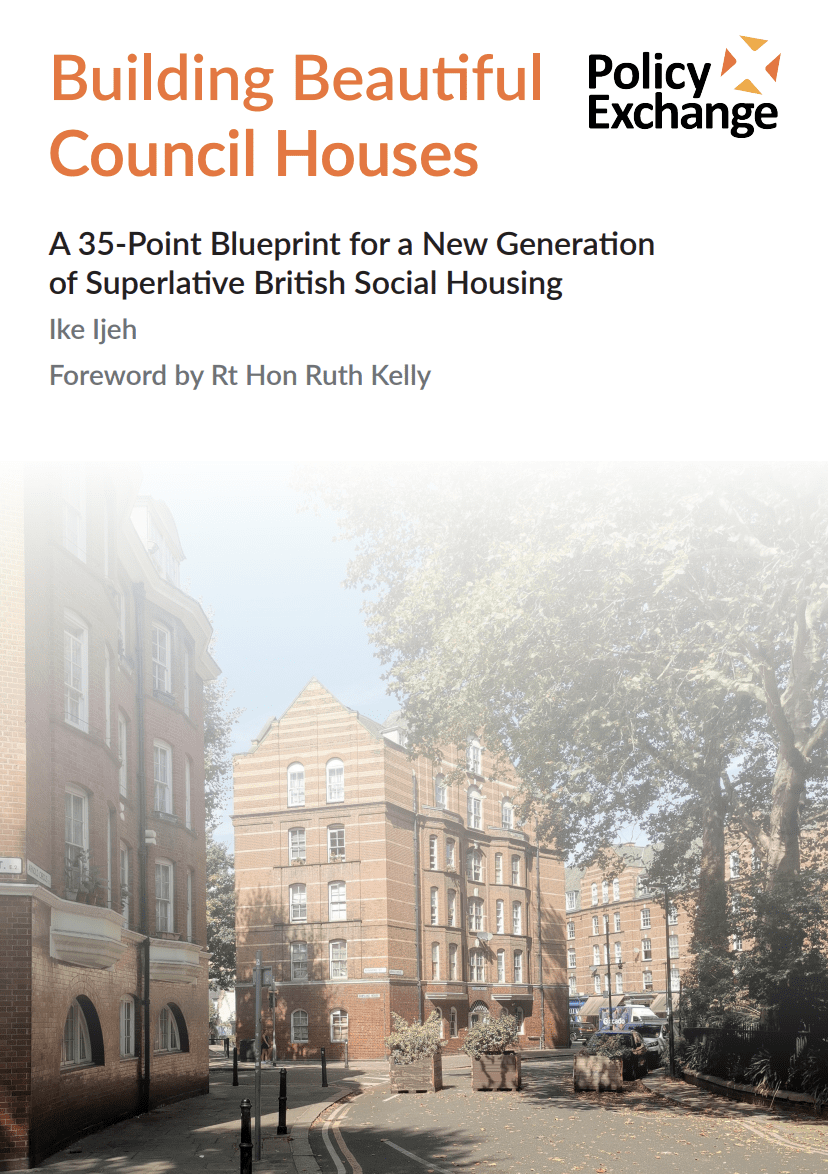
Spector refers to the Policy Exchange publication above, and other works:

McAdams P, Svobodova S, Newman T-J, Terry K, Mather G, Skelton AE, et al. (2025) The edge orientation entropy of natural scenes is associated with infant visual preferences and adult aesthetic judgements. PLoS ONE 20(2): e0316555. https://doi.org/10.1371/journal.pone.0316555

Valentine, C.; Wilkins, A.J.; Mitcheltree, H.; Penacchio, O.; Beckles, B.; Hosking, I. Visual Discomfort in the Built Environment: Leveraging Generative AI and Computational Analysis to Evaluate Predicted Visual Stress in Architectural Façades. Buildings 2025, 15, 2208.
https://doi.org/10.3390/buildings15132208

Calder, B. (2016). Raw Concrete: The Beauty of Brutalism. London: William Heinemann. 

Previously: 'housing' : 'homeless' : 'architecture'

Wednesday, January 07, 2026

Healthcare Evolution through AI and Digital twins - HEAD 2026

Dear colleagues,

We do hope this Call for Papers may be of your interest.
We do apologize if this CfP reaches you more than once.

Yours sincerely
HEAD Organizers

=========================================================

Healthcare Evolution through AI and Digital twins - HEAD 2026

18 - 21 May, 2026 - Sydney, Australia

https://www.head.icar.cnr.it/

- in conjunction with the 26th IEEE International Symposium on Cluster, Cloud and Internet Computing (CCGrid 2026) and in-cooperation with ACM SIGHPC

Submit your paper by using the link:

https://easychair.org/conferences/submission_new?a=35863199

=======================================================

MISSION:
------------

All over the world, the number of investments in Information and Communication Technology (ICT) for healthcare and wellbeing (eHealth) is rapidly increasing. GLOBE NEWSWIRE has predicted that the Global eHealth market is expected to reach $123.78 billion by 2030. This means that digital health is of considerable interest worldwide, as it has the potential to improve both the quality of services and users’ access to health information, while also saving time and reducing the workload and associated costs for health service providers in the long term.

In this context, an increasing interest is growing around eHealth and ICT technologies, such as Artificial Intelligence (AI), Digital Twins, Cloud computing, Edge and Fog computing, and Internet of Things (IoT),

which are at the basis of revolutionising healthcare by bringing innovative network applications and services. In fact, modern healthcare applications are becoming increasingly dependent on heterogeneous infrastructures, including IoT and edge medical devices, as well as High-Performance Computing (HPC) backends, to support the execution of AI-driven models and patient-specific Digital Twins.

The HEAD workshop would explore the open challenges and current issues surrounding the application of these technologies, while bridging the gap between healthcare innovation and the hardware and software systems that support scalable and reliable computing. HEAD aims to encourage interdisciplinary discussion about how technologies such as HPC, distributed systems and performance optimisation can facilitate the deployment of reliable and scalable Digital Twins for healthcare. The workshop will highlight the role of computing infrastructures as key enablers of future digital medicine by linking algorithmic advances with architectural and systems-level innovations.


TOPICS:
----------

■ AI Algorithms and Learning Frameworks for Healthcare
■ Modeling and Simulation Methodologies for Healthcare
■ Programming Techniques and Architectures for Healthcare
■ Data Management, Analytics, and Knowledge Extraction
■ ICT Infrastructure and Tools for Healthcare Digital Twins
■ Cloud Computing, Edge and Fog Computing for Healthcare
■ Internet of Things (IoT), Big Data, and Wearable Devices for Healthcare
■ Ethical, Legal, and Societal Implications of ICT for Healthcare
■ Accelerator-based architectures (GPUs, NPUs, FPGAs and DPUs) for Healthcare
■ Parallel and Distributed Training and Multi-GPU/Multi-Node Execution for Healthcare Applications
■ Energy-Efficient, Sustainable, and Optimization-Oriented Computing for AI in Healthcare


IMPORTANT DATES:
--------------------------

• Submission deadline: February 01, 2026
• Notification of paper acceptance: February 28, 2026
• Submission of camera-ready papers: March 15, 2026
• Registration: March 15, 2026


PAPER SUBMISSION:
---------------------------

Manuscripts should describe original work and should be formatted according to the IEEE conference proceedings format. 

Papers will be submitted through the CCGrid 2026 submission system.

Submit your paper here:

https://easychair.org/conferences/submission_new?a=35863199

All submissions will undergo a rigorous peer-review process. Each paper will be reviewed by at least three members of the Technical Program Committee. Reviews will be double-blind.

Accepted papers will be published in the CCGrid 2026 workshop proceedings and will be submitted for inclusion in IEEE Xplore.


BEST PAPER AWARD:
---------------------------

A Best Paper Award certificate will be conferred on the author(s) of a paper presented at the workshop, selected by the Chairs based on scientific significance, originality, and technical quality, as evaluated by the Program Committee.

Please visit https://www.head.icar.cnr.it/  for more information and if you have any questions kindly get back to us by sending an email

Kind regards,
HEAD 2026 Organizers

My source: Dr. Giovanna Sannino

Wednesday, October 29, 2025

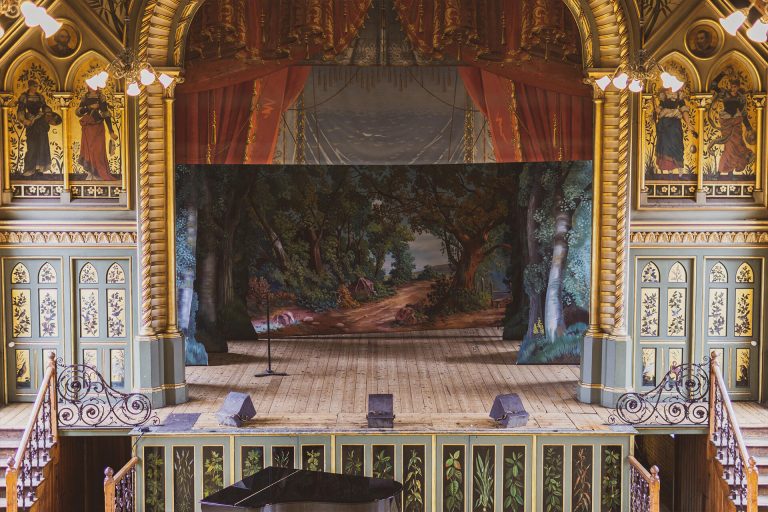
Normansfield Theatre in Teddington

Normansfield Theatre in Teddington

'My favourite building is the amazing Normansfield Theatre in Teddington that John Langdon Down (1828-1896) built to provide positive and stimulating education for learning disabled people (Down syndrome is named after him). At a time when most disabled people would have been shut away in horrific asylums, Down adapted his own house as a residential home, and built a beautiful theatre for creative rehabilitation. It's one of the few surviving private theatres from the period, with original painted scenery and other ornate fixtures, recently remodelled. For me, it's also a reminder of how the wealthy often used their money for good causes, which feels less common now. Jos Boys, guest curator and co-director of The DisOrdinary Architecture Project'


My source: The pick of London Open House. House&Home, FTWeekend. 6/7 September 2025. p.8.

Image: Langdon Down Centre

Previously: 'learning disability' : 'theatre' : 'architecture'

Wednesday, October 22, 2025

Single, dual aspect in architecture. What of care?

'The challenge of overheating in Britain is our buildings are built to retain heat in our temperate climate. Energy efficiency regulations for new dwellings now require high insulation and few drafts to reduce the need for heating in winter, but broadly make it harder to cool homes in summer. Residents of cities are particularly vulnerable to overheating due to urban heat island effects.

There are two ways buildings can be cooled – mechanical methods (primarily air conditioning) and passive cooling methods that use the design of the building to limit heat gain and retain cooler air inside the dwelling.

Passive cooling is much easier in dual-aspect dwellings with windows on multiple external facades, which as shown in Figure 1, are contrasted to single-aspect flats that face out on to only one external facade. Dual aspect allows breezes to blow through dwellings and easily exchange stuffy indoors air for cooler air from the outdoors. Even if outside temperatures are high, cross-ventilation or overnight air exchange and limits to solar gain (daylight indoors) can keep indoor environments cooler than the outdoors.'

https://www.centreforcities.org/reader/breaking-the-bottlenecks/overheating-and-dual-aspect/


individual
|
INTERPERSONAL : SCIENCES
humanistic -------------------------------------------  mechanistic
SOCIOLOGY : POLITICAL
|
group-population
In Hodges' model at least, we seem to have dual aspect covered. 

That's why we say the model is situated.


Image source: https://www.centreforcities.org/reader/breaking-the-bottlenecks/overheating-and-dual-aspect/

My source:  Plimmer, G., Pickard, J., Steinberg, J., London planning rules face tweak in bid to build more homes. FTWeekend. 18/19 October 2025, p.2.

Previously on W2tQ: 'architecture' : 'situated' : 'housing'

Sunday, August 24, 2025

Nothing new under the Sun . . .

"The quadrangle is the token of a new humanity. The square is to us what the cross was to the early Christians". 

Theo van Doesburg

Tate Liverpool visit 13th June 2008.

Thursday, July 31, 2025

'Nurse as Engineer' by Josefson

'Engineering' and 'architecture' have both been co-opted by cross-disciplinary explorers to help traverse what are usually cravasses between disparate fields. Or, if not a serious journey - more a day-trip than an expedition, it's an effort to create the impression of progress being (rapidly) made. Fields of knowledge being pulled - fused-together. These are transdisciplinary times:

'Individualization is best achieved in the engineering model, in which cach patient is seen as a unique case. The nurse collects and analyses the patients' data to arriye at a diagnosis, which includes, but is not limited to, issues that concern medical diagnosis and treatment. "The nurse sets obiectives based on knowledge and experience of what is desirable and achievable and designs an individualized care plan by selecting from a known repertoire of nursing interventions those most likely to lead to achievement of the objectives. After implementing the interventions, the nurse evaluates their effectiveness by comparing the client's subsequent condition with previous diagnoses and objectives."

In the last model - the non-routine model, which is a research model - the patient is still seen as unique. The problem is that the search procedures cannot be analysed because more judgement and intuition is required in making decisions.' p.25.

n.b. Two other models are described: the nurse acting as a craftsman; and the routine.

Josefson asks in a section (pp.28-29):

Who draws the boundary between Man and Machine?

Who - indeed!

Ingela Josefson. The nurse as engineer—the theory of knowledge in research in the care sector. In.  Knowledge, Skill and Artificial Intelligence. Bo Göranzon & Ingela Josefson (Eds). (1988), ISBN038719519X. pp.19–30. Berlin, Heidelberg: Springer-Verlag.

In the above paper/chapter Josefson draws upon the work of Katie Eriksson and Judy Ozbolt.

Previously: 'engineer' : 'architecture'

Friday, February 14, 2025

Curtains ...

'I'm not sure many rational designers would set out to emulate, or even to echo the interiors in David Lynch's films. These are rooms that haunt us: the chevron carpets, the red velvet curtains, the peeling wallpaper suggesting that our environment is somehow theatrical, temporary, a dream - an expression of our subconscious. ...

"I don't know where it came from, but I love curtains," Lynch - famously reluctant to explain his work - said in 2014. "There is something so incredibly cosmically magical about curtains opening and revealing a new world. It resonates on a deep level with people."'


INDIVIDUAL
|
      INTERPERSONAL    :     SCIENCES               
HUMANISTIC  --------------------------------------  MECHANISTIC      
 SOCIOLOGY  :    POLITICAL 
|
GROUP

IMAGINE a curtain:
What colour is it?
Imagine opening the curtain -

<<== CURTAIN
                      [a room: LxDxH]
- is the wallpaper peeling? ...


Edwin Heathcote, Head spaces, Interiors, House&Home, FTWeekend, 1-2 February 2025. p.4.

Previously:

Wednesday, April 10, 2024

"David Lynch: A Thinking Room"


Where is the Thinking Room?


Individual
|
      INTERPERSONAL    :     SCIENCES               
HUMANISTIC  --------------------------------------  MECHANISTIC      
 SOCIOLOGY  :    POLITICAL 
|
Group

Ah! Surely this one?

It's deep!


Is it here?
This is deep too!

Please take a chair.


I trust you are comfortable, so
what about this place?


Yes, you can think here -
but you must check first
before you do: Think. 
If you must ...

N.B. Please rate your experience too.


Soraya Roberts. A Room Of His Own, FT Magazine, 30-31 March, 2024, 1067: pp.38-41.

https://www.ft.com/content/bf6a6eaa-30d1-4704-9aea-4ff2d117f407

David Lynch’s dreamlike rooms at the Salone del Mobile.Milano 2024:
https://www.salonemilano.it/en/articles/david-lynchs-dreamlike-rooms-salone-del-mobilemilano-2024

Tuesday, January 16, 2024

Architectural Epidemiology: Rethinking architecture for community and planetary health

Dear colleagues,

I am pleased to invite you to the first Policy Dialogues session of 2024, from the JHU-UPF Public Policy Center:

Architectural Epidemiology: Rethinking architecture for community and planetary health
Thursday 25th January at 6pm CET
Location: Online :: Language: English


Buildings account for nearly 40% of global greenhouse gas emissions (GHGs) and up to 1/5 of chronic disease. In an era of climate emergency, rising global levels of chronic disease and increasing social inequalities, there is an urgent need to reassess and transform buildings and their social and environmental impacts. The new, transdisciplinary field of Architectural Epidemiology offers a roadmap for overcoming these challenges: it aims to transform the building sector from being a major contributor to climate change and chronic disease to becoming one of the primary forces behind their decline.

The JHU-UPF Public Policy Center is delighted to invite Dr. Adele Houghton (Harvard University) to present her cutting-edge work on Architectural Epidemiology in this Policy Dialogue. She will be joined by Dr. Carme Borrell (Barcelona Public Health Agency), who will respond to and discuss the presentation, offering a European perspective on the possibilities and challenges that this field presents for community and planetary health. The session will be moderated by Dr. Mary Sheehan (Johns Hopkins Bloomberg School of Public Health).

We hope you can join us to learn about and discuss this exciting new field of research and action!

Register here, and please feel free to share within your networks.

Best regards,
Aeve Ribbons
Coordinator of Policy Dialogues

My source: Politics of Health Group Mail List Messages

Visit the PoHG website for lots of interesting links and publications: http://www.pohg.org.uk/

Wednesday, September 20, 2023

The Architecture of Care: Emergency shelters


INDIVIDUAL
|
     INTERPERSONAL    :     SCIENCES               
HUMANISTIC --------------------------------------  MECHANISTIC      
SOCIOLOGY  :   POLITICAL 
|
GROUP

mental health / illness
psychic trauma

sense of security
sense of (new?) place

meaning:
temporary - permanent?

earthquakes, natural disasters
emergencies
sustainable shelter
Refugee shelter - design
(to last 20 years,
not disposable, 'C'-footprint)

2.5 million homeless Turkey 

Enforced displacement

Refugees

Shelter - Hope - HOME

Dignity


Forced displacement

war, conflict

meaning:
temporary - permanent?

UN statistics 17 years = temporary?


Essential Homes Research Project
Giardini Marineressa, Venice, Italy. 2022 - ongoing
"An increasing number of communities are suffering the consequences of natural disasters, wars or other humanitarian crisis, forcing them to leave their homes and countries to stay in refugee camps."


My source: Heathcote, E. (2023) Norman Foster tackles the emergency shelter. FT Weekend, Venice Biennale. 20-21 May. p.5

 See also: https://www.euronews.com/culture/2023/05/24/norman-foster-designs-forward-thinking-emergency-shelter-at-venice-biennale

Sunday, January 29, 2023

Information design: Tufte & Raskin

Art & Science

Information Design  Edited by Robert Jacobson  Foreword by Richard Saul Wurman      $50.00 Paperback     Hardcover  373 pp., 8 x 9 in,      Paperback     9780262600354     Published: August 25, 2000     Publisher: The MIT Press
"Every major field of human activity is a mix of art and science. Theoretical physicists and professional mathematicians speak of the aesthetics of their work and are driven by concerns about elegance and beauty. Is a painter any less an artist for knowing perspective, understanding Josef Alber's elegant experiments and demonstrations about color, or being aware of chemical incompatibilities between various kinds of paint?

Designing the presentation of information, by the same token, partakes of the nature of both art and science. Edward Tufte's books reflect such a blend of knowledge. In one of them he outlines his five principles for designing graphics (1983: 105):" p.346.

[see below ...]
"The first four principles are (mostly) science-based. But the last, "revise and edit," tells us not only to check repeatedly that the first four conditions are met, but also apply our aesthetic judgement to the final work." p.347.
 INDIVIDUAL
|
  INTERPERSONAL    :     SCIENCES               
HUMANISTIC --------------------------------------  MECHANISTIC   
SOCIOLOGY  :   POLITICAL 
|
GROUP

5.revise and edit

  1. above all else show the data
  2. maximize the data-ink ratio
  3. erase non-data ink
  4. erase redundant data ink *

5.revise and edit

5.revise and edit

N.B. Take note of the potential significance of 'revise and edit' in the Political domain, and its consequences socially and personally (and spiritually within the 5th domain). 

*In terms of #5 revise and edit, and as I work to complete a draft paper on:

Reflecting Society, Technology, COVID19 and Information Disorder within Hodges' Model

- the ability to create and generate deep fakes using technology and generative AI, presents a major SOCIO-POLITICAL challenge. When public trust in media is fractured then everything can be denied - 'The Liar's Dividend' (Gregory, 2022).

Gregory, S. (2022). Deepfakes, misinformation and disinformation and authenticity infrastructure responses: Impacts on frontline witnessing, distant witnessing, and civic journalism. Journalism, 23(3), 708–729. https://doi.org/10.1177/14648849211060644

Raskin, J. (2000). Presenting Information. In R. Jacobson (Ed.), Information Design (pp. 341-348). Cambridge, MA: The MIT Press. 

See also: (The link below may time out, but 'Try again' works here.)

https://web.archive.org/web/20010710223205/http://www.jefraskin.com/forjef2/jefweb-compiled/published/NursingTheoryForSite.html

Thursday, November 10, 2022

New York – Livable Cities: A Conference on Issues Affecting Life in Cities

NEW YORK Conference: Abstract Deadline

New York / Virtual
14-16, June 2023
Abstracts: Nov 20th, 2022 (Round One)


A cross-departmental conference held at City Tech (CUNY) with the Departments of Architectural Technology, Construction Management, Civil Engineering and Environmental Technology

LIVABLE CITIES - NEW YORK is a conference covering architecture, design, planning, health, technology, urban economics and social policy. It is calling for contributions to specific strands of sustainability, resilience, design, planning and construction.

These strands seek to explore issues related to net-zero energy buildings, sea defenses and strategic retreat, life cycle analysis in the construction industry, Building Environmental Assessment methods, EcoHomes, BREEAM, alternative energy generation in cities, material science and much more. 

The conference is organized across departments at City Tech (City University of New York) with Amps and publication support from Routledge and UCL Press.

CALL SUMMARY

What makes a city livable? Transport, housing, health and environment. Matters of culture, entrepreneurship, crime and safety. Affordability and education. Depending on whose ‘livability index’ you look at, it may include design quality, sustainability and the digital infrastructures of the smart city. Other criteria applied may encompass food access, job opportunities or walkability. Inclusivity and the politics of participation also come into play.

The past two decades have seen an exponential rise of livability measures. Reflecting increased urbanity globally, they risk making the notion of the city ever more contested. The two cities that host this event are cases in point. The Mercer Livability Ranking takes New York as the datum by which all other cities globally are graded – as better or worse. London, by contrast, measures itself: the London Assembly scoring everything from air quality to indices of deprivation. When we consider the livability of cities then, it is clear we are dealing with a plethora of issues – both isolated and, inevitably, interconnected.

Within this broad livability framework, we seek to develop strands and publications around themes of the design and construction sectors – particularly as they relate to sustainability and resilience.

https://amps-research.com/conference/livable-cities-new-york/

My source: http://www.cosmobilities.net/ list

n.b. A suggestion: consider the conference themes and the structure and domains of Hodges' model; what relationships, dichotomies, synergies, and opportunities can you glean?

Thursday, October 27, 2022

The Listener ... and remarkable hearing


The Listener
Giuseppe Penone


 INDIVIDUAL
|
 INTERPERSONAL    :     SCIENCES               
HUMANISTIC --------------------------------------  MECHANISTIC      
SOCIOLOGY  :   POLITICAL 
|


My source:
Heathcote, E. 'Space - but not as we knew it', Venice Biennale, Life&Arts FT Weekend, 22-23 May 2021. p.1.

I see and hear you too Talio Havini, 'Deep listening across time', p.3.