Hodges' Model: Welcome to the QUAD: aesthetics

Hodges' model is a conceptual framework to support reflection and critical thinking. Situated, the model can help integrate all disciplines (academic and professional). Amid news items, are posts that illustrate the scope and application of the model. A bibliography and A4 template are provided in the sidebar. Welcome to the QUAD ...

Showing posts with label aesthetics. Show all posts

Monday, September 07, 2026

Host|Guest by Hospital Rooms

To mark its 10-year anniversary, arts and mental health charity Hospital Rooms presents a major exhibition at Victoria Miro this September.

Bringing together leading contemporary artists from across the Hospital Rooms programme, the exhibition features re-creations of monumental new artworks created for hospitals this year, alongside artists the organisation has collaborated with over the past decade. It reflects on the impact of transforming NHS mental health environments through art, while looking ahead to expanding access to creative programmes nationwide.

Host|Guest


My source: Ellee Su, Gallery, HOSPITAL ROOMS, FT Weekend Magazine, Number 1,192. 5 September 2026, pp.10-11.

Friday, February 13, 2026

{ Humanise } ARChITECTURE

INDIVIDUAL
|
    INTERPERSONAL    :     SCIENCES               
HUMANISTIC --------------------------------------  MECHANISTIC      
SOCIOLOGY  :   POLITICAL 
|
GROUP


ARChITECTURE


Humanise.org


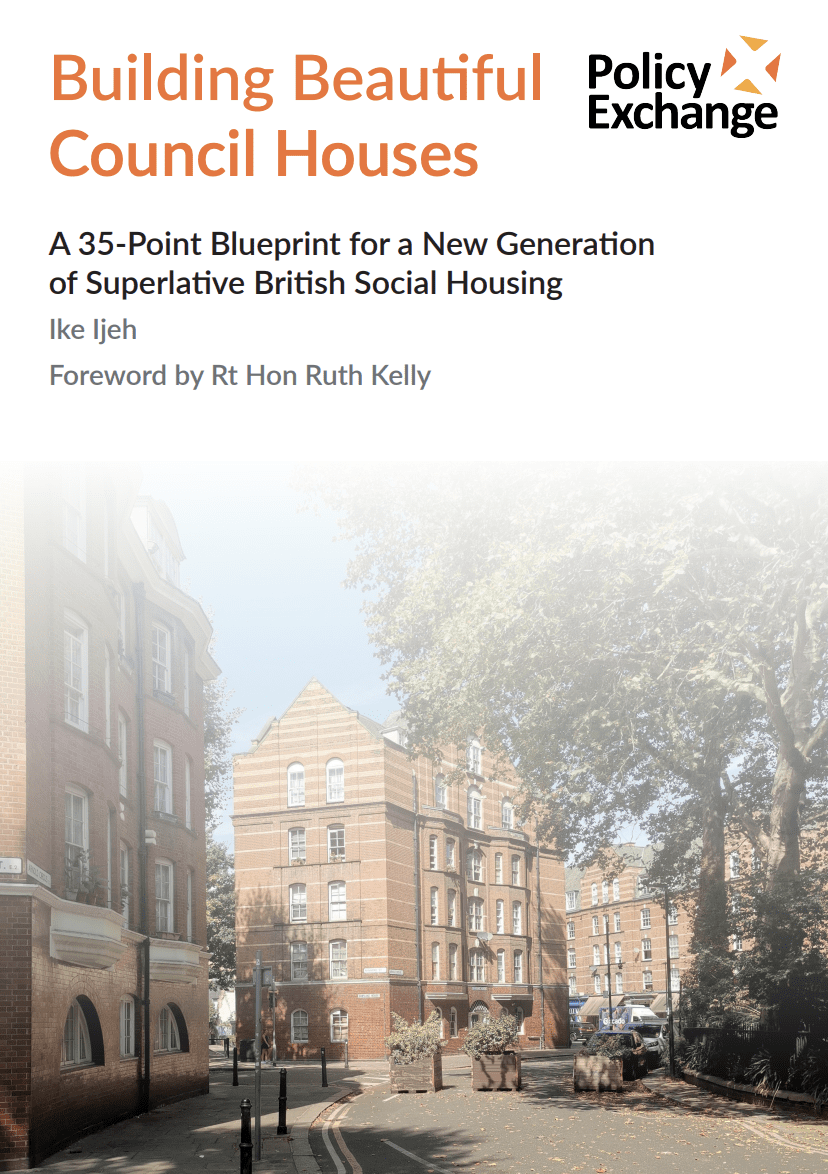
My source: Francesca Specter, Which is the fairest of them all? House&Home, FTWeekend, 11-12 October, 2025. pp.1-2.  

Spector refers to the Policy Exchange publication above, and other works:

McAdams P, Svobodova S, Newman T-J, Terry K, Mather G, Skelton AE, et al. (2025) The edge orientation entropy of natural scenes is associated with infant visual preferences and adult aesthetic judgements. PLoS ONE 20(2): e0316555. https://doi.org/10.1371/journal.pone.0316555

Valentine, C.; Wilkins, A.J.; Mitcheltree, H.; Penacchio, O.; Beckles, B.; Hosking, I. Visual Discomfort in the Built Environment: Leveraging Generative AI and Computational Analysis to Evaluate Predicted Visual Stress in Architectural Façades. Buildings 2025, 15, 2208.
https://doi.org/10.3390/buildings15132208

Calder, B. (2016). Raw Concrete: The Beauty of Brutalism. London: William Heinemann. 

Previously: 'housing' : 'homeless' : 'architecture'

Monday, March 17, 2025

1st Seminar Series: "Violence, Memory, Networks" - Interdisciplinary Connections

Dear colleagues,

The first session of the seminar "Violence, Memory, Networks" will take place on 19th March, 2025, at 2.30 pm (GMT), exclusively online.

In this session, Caroline Elkins (Harvard University, USA) will speak about "Legalized Lawlessness: Violence and the End of the British Empire" and Max Silverman (University of Leeds, UK) will bring us a communication on "Concentrationary violence and the everyday: the Zone of Interest (Jonathan Glazer, 2023)".

Registration is free but mandatory: https://forms.gle/brgNcR6hk6dxf7gu7

Event website: https://www.uc.pt/fluc/seminarvmn/

We would be very grateful if you could publicise the event through your channels.

Looking forward to see you soon,

The organising committee.

My source: https://www.uc.pt/fluc/ief/

Saturday, February 22, 2025

6º CONGRESSO INTERNACIONAL DA SPF - CONVITE À SUBMISSÃO DE RESUMOS/CALL for PAPERS

6º CONGRESSO INTERNACIONAL DA SOCIEDADE PORTUGUESA DE FILOSOFIA

CONVITE À SUBMISSÃO DE RESUMOS

A Sociedade Portuguesa de Filosofia, em colaboração com o Centro de Filosofia da Universidade de Lisboa, organiza o seu 6º Congresso Internacional, que decorrerá na Faculdade de Letras da mesma universidade, de 1 a 3 de setembro de 2025.

O Congresso é aberto à participação de todos os interessados em apresentar e discutir a sua investigação em qualquer domínio e metodologia dos estudos filosóficos. As propostas serão avaliadas anonimamente por membros de um amplo painel de especialistas.

ORADORES CONVIDADOS

Genia Schonbaumsfeld (Universidade de Southampton)
João Carlos Salles (Universidade Federal da Bahia)
Luísa Couto Soares (Universidade do Porto)
Olga Pombo (Universidade de Lisboa)
Viriato Soromenho-Marques (Universidade de Lisboa)

LÍNGUAS DO CONGRESSO: Português, Inglês, Francês e Espanhol

VALORES DA INSCRIÇÃO:

Participantes: € 80,00
Sócios da SPF: € 50,00
Estudantes (licenciatura, mestrado ou doutoramento): € 40,00
Estudantes sócios da SPF: 30€

DATA LIMITE para a submissão de propostas de comunicação: 1 de Abril de 2025

COMISSÃO CIENTÍFICA:

Álvaro Balsas (Universidade Católica Portuguesa, Braga)
André Barata (Universidade da Beira Interior)
António Pedro Mesquita (Universidade de Lisboa)
Célia Teixeira (Universidade Federal do Rio de Janeiro)
David Yates (Universidade de Lisboa)
Diogo Ferrer (Universidade de Coimbra)
Gil Santos (Universidade de Lisboa)
Irene Borges Duarte (Universidade de Évora)
João Cardoso Rosas (Universidade do Minho)
João Constâncio (Universidade Nova de Lisboa)
José Meirinhos (Universidade do Porto)
Magda Costa Carvalho (Universidade dos Açores)
Nuno Venturinha (Universidade Nova de Lisboa)
Pedro Galvão (Universidade de Lisboa)

EMAIL DO CONGRESSO: 6congressospf  AT gmail.com

INSTRUÇÕES PARA SUBMISSÃO DE RESUMOS E MAIS INFORMAÇÕES

Consulte a página do congresso no site da SPF: www.spfil.pt/6congresso

__________________________________________________________

ENGLISH

6th INTERNATIONAL CONGRESS OF PHILOSOPHY

CALL FOR ABSTRACTS

The Portuguese Philosophical Society, in partnership with the Centre of Philosophy of the University of Lisbon are organizing the 6th International Congress of Philosophy, to be held at the University’s Faculty of Letters on 1 to 3 September 2025.

The Congress welcomes all researchers interested in presenting and discussing their research in all domains of philosophical studies and according to all philosophical methodologies. Abstracts submitted will be anonymously refereed by members of a large panel of experts.

INVITED SPEAKERS:

Genia Schonbaumsfeld (University of Southampton)
João Carlos Salles (Universidade Federal da Bahia)
Luísa Couto Soares (Universidade do Porto)
Olga Pombo (Universidade de Lisboa)
Viriato Soromenho-Marques (Universidade de Lisboa)

CONGRESS LANGUAGES: Portuguese, English, French and Spanish

CONGRESS SECTIONS

Each proposal must indicate that it intends to be associated with one and only one of the following sections:

Teaching Philosophy (PE)
Epistemology / Philosophy of Knowledge (ET)
Aesthetics and Philosophy of Art (ES)
Ethics and Bioethics (EB)
African Philosophy (AF)
Philosophy of Science (SF)
Philosophy of History (FH)
Philosophy of Language (FL)
Philosophy of Mathematics (FMA)
Philosophy of Mind (FME)
Philosophy of Nature and Environment (FN)
Philosophy of Religion (FR)
Philosophy of Law (FD)
Philosophy and Gender (FG)
Phenomenology (FE)
Luso-Brazilian Philosophy (FB)
Political Philosophy (PF)
History of Ancient and Medieval Philosophy (HA)
History of Modern Philosophy (HM)
Logic (LO)
Metaphysics and Ontology (MO)

FEES:

Participants: € 80,00
SPF Associates: € 50,00
Students (Bac, MA or PhD): € 40,00
Student SPF Associates: 30€

DEADLINE for submitting proposals: ­­­­­­1st April 2025

SCIENTIFIC COMITTEE:

Álvaro Balsas (Universidade Católica Portuguesa, Braga)
André Barata (Universidade da Beira Interior)
António Pedro Mesquita (Universidade de Lisboa)
Célia Teixeira ((Universidade Federal do Rio de Janeiro)
David Yates (Universidade de Lisboa)
Diogo Ferrer (Universidade de Coimbra)
Gil Santos (Universidade de Lisboa)
Irene Borges Duarte (Universidade de Évora)
João Cardoso Rosas (Universidade do Minho)
João Constâncio (Universidade Nova de Lisboa)
José Meirinhos (Universidade do Porto)
Magda Costa Carvalho (Universidade dos Açores)
Nuno Venturinha (Universidade Nova de Lisboa)
Pedro Galvão (Universidade de Lisboa)

CONGRESS EMAIL: 6congressospf AT gmail.com

HOW TO SUBMIT ABSTRACTS AND FURTHER INFORMATION on the congress page at the SPF site: www.spfil.pt/6congresso

My source:


E-mail: iestudosfilosoficos AT gmail.com

Tuesday, December 31, 2024

Call for Abstracts (for Publication): "Visual Narratives, Aesthetics, and Decoloniality: Imagery and the Construction of the Other"

Mappæmundi is pleased to announce a call for papers for a collective publication on 

"Visual Narratives, Aesthetics, and Decoloniality: Imagery and the Construction of the Other"

Please find all the details below.

We invite contribution proposals for the edited volume Visual Narratives, Aesthetics, and Decoloniality: Imagery and the Construction of the Other. The book aims to critically examine the persistent influence of colonialism in shaping modern subjectivities, tracing its historical roots in the formation of Western modernity and interrogating its continued implications in contemporary contexts. It positions media and visual narratives as central discursive spaces where colonial legacies are both perpetuated and, potentially, contested. This volume conceptualizes and critically interrogates aesthetics as a foundational condition that establishes a visual lexicon integral to Western modernity. The aesthetic framework not only shapes the development of visual narratives but also plays a crucial role in the construction and perpetuation of varied subjectivities.

In particular, we focus on the critical analysis of the role of visual narratives within the framework of epistemological colonialism. Visual narratives have been central in defining, reinforcing, and legitimizing colonial ideologies by shaping perceptions and controlling representations of colonized peoples and cultures. These visual narratives have played a fundamental role in constructing colonial time and space, which were systematically controlled by Western epistemologies. This volume positions itself as a counterpoint to this colonial legacy, offering critical perspectives that challenge and re/deconstruct the visual lexicon of Western modernity. Through this lens, the book seeks to uncover pathways for alternative visual expressions that resist colonial frameworks and promote inclusive, decolonized understandings of identity and, more broadly, cultural production.

The arts, the media, and communication are powerful forces that can either perpetuate or challenge colonial legacies. Addressing and dismantling these legacies is essential for the creation of just, inclusive, and equitable societies - i.e., societies that value, embrace and benefit from the diversity of reason. From a decolonial lens, the book seeks not only to question the validity of established forms of knowledge but also to question the very criteria by which knowledge is defined. The objective is to contribute to critical discourses on potential pathways forward by amplifying cultural voices marginalized within the colonial matrix of power.  To this aim, we invite contributions that engage with scholarship in diaspora studies, subaltern and postcolonial studies, critical race studies, decolonial aesthetics, visual culture, and visual practices, with a particular emphasis on non-hegemonic epistemologies.

When bringing together these critical issues and perspectives, the book shall offer a comprehensive and interconnected framework for understanding postcolonial experiences in the 21st century. It will explore the role of aesthetics in shaping modern subjectivities, tracing the roots of domination in multiple paths toward modernity. This book intends to serve as an essential resource for scholars, researchers, activists, and the general public, encouraging deeper engagement with colonial histories that continue to shape contemporary life.

We especially encourage contributions from scholars, artists, and practitioners from the Global South that:

  • Engage in theoretical discussions on aesthetics and visual narratives from a decolonial perspective.
  • Combine theoretical frameworks with analyses that directly engage with visual arts, such as photography and other forms of artistic expression.
  • Discuss case studies that examine individual works of art, archives, photojournalistic projects, or other forms of visual narratives.
  • Explore media as a space for resisting and challenging colonial legacies.
  • Offer comprehensive analyses of how media and art contribute to the perpetuation or disruption of colonial ideologies.
  • Provide practical strategies and share lived experiences that contest colonial-rooted narratives.
  • Critique prevailing ideologies within the discursive spaces of media and art production and consumption.

Submission Details

The volume Visual Narratives, Aesthetics, and Decoloniality: Imagery and the Construction of the Other will be part of the Mappæmundi series published by Ventura Edizioni. It will be edited by Dr. Tomás Cajueiro (Universitat Autònoma de Barcelona) and Dr. Estevão Bosco (American College of the Mediterranean and the Latin American Social Science Faculty). The final publication will be exclusively in English. However, abstracts may be submitted in Portuguese, English, Spanish, or Italian. Once a proposal is accepted, authors will be responsible for translating their final chapters into English. Chapters should range from 20,000 to 40,000 characters, including spaces, and must incorporate visual materials to support the analysis of visual works. 

Proposals must be submitted to tomaskju AT gmail.com by April 4, 2025.

Theoretical and Textual Articles

Chapters may integrate theoretical insights with practical interventions or focus solely on theoretical exploration. Contributions can draw on real experiences from individuals, communities, and organizations. Potential research methods include literature reviews, case studies, comparative analyses, discourse analyses, and analyses of photographs and visual works. Abstracts should have a maximum of 5,000 characters, including references. Chapters should fall between 35,000 and 40,000 characters.

Visual narratives

For contributions focusing on the analysis of visual content, the textual component must range from 10,000 to 15,000 characters. The abstract, while limited to a maximum of 5.000 words, should also include an overview of the visual material being analyzed.

Important Dates 

Abstract Submission Deadline: April 4, 2025
Notification of Proposal Acceptance: May 11, 2025
Full Chapter Submission Deadline: September 11, 2025 
For more info: tomaskju AT gmail.com
--
Departamento de Filosofia, Comunicação e Informação
Faculdade de Letras da Universidade de Coimbra
3004-530 Coimbra, Portugal ... (and my source).

Saturday, September 28, 2024

'It takes a village ...

individual
|
INTERPERSONAL : SCIENCES
humanistic ------------------------------- mechanistic
SOCIOLOGY : POLITICAL
|
group

... to raise a child.'

"The artist returned to this subject almost  twenty years after he had drawn his red chalk  studies of children walking and standing,  shown nearby. As was typical in Rembrandt's  later works, facial expressions and gestures  are indicated with sparse and abbreviated  lines. It is remarkable that with such economy  the artist conveys an encouraging atmosphere  from the figures who surround the child, as it  takes its first steps. The British artist David  Hockney described this as 'a perfect drawing' in an interview in 2016."

1912,0416.2'


Rembrandt van Rijn (1606-1669)
A child being taught to walk, around 1656
 
Pen and brown ink on grey-brown paper.


The British Museum, Room 90. 28th September 2024.
https://www.britishmuseum.org/exhibitions/new-life-rembrandt-and-children


Friday, June 14, 2024

Book for review: i "Philosophy of Care - New Approaches to Vulnerability, Otherness and Therapy"


Among the questions that research might answer regards Hodges' model I have in mind:
  • At what age can Hodges' model be introduced in the general curriculum?
  • Is there consistency in how people view/interpret and apply Hodges' model?
  • How simple is it (or complex)?
  • Is it a meta-model?
  • How can Hodges' model relate to the spiritual?
My B.A.(Joint Hons) is in Philosophy and Computer Science, so the 'Philosophy of Nursing' is a preoccupation. In January 2022 I discovered:

J. Braga & M. Santiago de Carvalho (Eds.), Philosophy of care: New approaches to vulnerability, otherness therapy. Springer.

I requested a copy but ever distracted did not register any further action beyond acknowledgement and being forwarded. Discovering I'd missed this, I picked it up again. I must admit two years ago I was expecting a book with 'care' in the nursing, medicine, health context. Revisiting the 'blurb' I saw that this is not the full picture. Last year and this however drawn to conferences that combine the environment and religion this book really did fit the bill. Requesting a 'review copy' so late in the publishing cycle presents a challenge. 

Hodges' model provides a long-tail, surely a defining property of a lifelong learning resource? This plus a history of cataract surgery brought a print copy and many thanks to Daniela Rohrmann and team. I've now reached Part V, chapter 19 and 'medical care'.

The book's physical quality (printed hardcopy) is up to Springer's usual high quality standard. The fact that much of the contents have, I believe, been translated appears to show at times, in one chapter especially, with missing, or additional words. Perhaps this also reflects proof reading, an important part of production I would have thought (and still best not left to AI)? The font and print size is very readable and the format and design - architecture - of headings and layout are inviting and engage the reader. There are Any problems with grammar, flow were readily overcome. 

In meeting this text I oscillated in expectation - philosopher of care, as in the clinical context; and then the spiritual, pastoral. Which is it? The emphasis is on the latter with the final part focussed more on medicine. The book has extended my appreciation of 'care' in the wider sense, it is rewarding and well-worth reading.
"Finally, the fifth part – Care and Therapy – examines issues relevant to medical
care. This volume would be remiss if it did not take therapeutic care into account.
Practical and theoretical knowledge mutually influence each other. This highly specialized
domain imparts a significant amount of the status that care is given in our
daily lives. Thus, in this last part, the previous themes of otherness and ipseity converge
systematically. Through the theoretical emphasis that is placed on the issue of
suffering – whether it concerns physical illnesses or those of the psychological and
psychiatric realm – the authors of these chapters show us the urgency of thinking
about therapeutic care practices in the light of a theory of intersubjectivity, where
the disease itself and its cure are understood within the communication processes
and not only as exclusively technical-scientific processes." p.vii. (Introduction).
Don't worry I'm not going through each chapter, but Chapter 1 is a fascinating read, the title 'Care: A New Arrival in the History of Philosophy?https://link.springer.com/chapter/10.1007/978-3-030-75478-5_1 presented an immediate challenge. For me, love, compassion, philosophy - as the love of wisdom, knowledge, what it is be, think, exist, the human condition and more all imply 'care' including care of thought and argument. I'm probably begging the question and I realise the Peirron's purpose is more specific, nuanced. I'm reassured though as care is defined by three criteria:
"(a) care is contextual and anti-essentialist... The characterization of care requires a great deal of attention to the precise details of each situation (Tronto, 2012: 35)."

"(b) care is relational and accepts that human beings , other beings, and the environment are interdependent  (Tronto, 2012: 32)."

"(c) In human societies which would like to assume the equal value of all human life, care needs to be democratic and inclusive  (Tronto, 2012: 36)." p.6.
I must read Tronto - who work has elevated vulnerability as flagship concept of her politics of care (Tronto, 2009) (p.8); 'dialectical' too (p.10). The book is full of many leads, the writing scholarly and authoritative.

With some studies in education and philosophy the pragmatic school of thought quickly surfaces. I see Hodges' model as a pragmatic solution. In addition to the 'pragmatics of care', Peirron opens the door even further in respect of 'care':
"Giving through care involves much more than what is described in the interactional framework of exchanges characteristic of homo economicus (economical animal) paradigm. Giving is not exchanging because care involves so much more than just the provision of a service. Care, as understood as a politically relevant anthropological position, is thus very different from a Hobbes-inspired anthropology which supposes a social epistemology based on a an atomistic approach to individuals. It provides a fundamental interpretation of our social intelligence by thinking it, starting from a relational anthropology within which the concept of vulnerability plays, as we will see, a strategic role. A pathetics of care rethinks the balance between reason and feeling, argument and emotion in the spirit of the tradition of Scottish philosophy, in order to allow a "different voice" to be heard in the analysis, the description, and the support of the human world." p.7. 
The pathetic view of care requires a language, methods, aesthetics that can manage 'the singularity of an enduring life history' (p.10). This equates for me with the health career in Hodges' model.

As usual below I've mapped some concepts to the domains of Hodges' model. I will add to this post too.

Individual
|
      INTERPERSONAL    :     SCIENCES                   
HUMANISTIC  --------------------------------------  MECHANISTIC      
 SOCIOLOGY  :    POLITICAL 
|
Group

contextual

anti-essentialist

relational

situated


context

human being, other being 

and environment -

interdependent


context

interdependence

care in human societies 

equality within human societies

context

situated

human societies are democratic

and inclusive


See also:
body & soul - Book: Philosophy of care: New approaches to vulnerability, otherness therapy

Wednesday, April 10, 2024

"David Lynch: A Thinking Room"


Where is the Thinking Room?


Individual
|
      INTERPERSONAL    :     SCIENCES               
HUMANISTIC  --------------------------------------  MECHANISTIC      
 SOCIOLOGY  :    POLITICAL 
|
Group

Ah! Surely this one?

It's deep!


Is it here?
This is deep too!

Please take a chair.


I trust you are comfortable, so
what about this place?


Yes, you can think here -
but you must check first
before you do: Think. 
If you must ...

N.B. Please rate your experience too.


Soraya Roberts. A Room Of His Own, FT Magazine, 30-31 March, 2024, 1067: pp.38-41.

https://www.ft.com/content/bf6a6eaa-30d1-4704-9aea-4ff2d117f407

David Lynch’s dreamlike rooms at the Salone del Mobile.Milano 2024:
https://www.salonemilano.it/en/articles/david-lynchs-dreamlike-rooms-salone-del-mobilemilano-2024

Thursday, February 22, 2024

AI in the Creative Industries: An Interdisciplinary Conference [One week left!]

[reposting as there's just over one week left to submit abstracts for our summer conference on AI]

AI in the Creative Industries: An Interdisciplinary Conference [EXTENDED DEADLINE]

7th June 2024 - Hosted by Futureworks, Manchester UK

Artificial Intelligence has advanced extremely rapidly over the past months. Responses have been polarized; with some predicting the end of the world and others celebrating a technology with the potential to create a new industrial revolution. The biggest difference between these new algorithmic technologies and those that preceded them are the potential for new AI models to generate creative content. Visual art, photography, literature and digital scripting have been produced by AI, to varying levels of success. To the existing debates around AI (questions of ethics, consciousness, or cyborg theory, for example) have arisen new problems regarding the role of art and the artist in the age, not of mechanical reproduction, but mechanical production. Can a robot be creative?

This conference aims to bring together researchers from across media studies, music and sound, the visual arts, video games, film and TV, animation, sociology, history, literature, politics, philosophy and aesthetic theory, to interrogate the growing role of AI in the creative industries, its potentials (both negative and positive), and how we are to react to the rise of AI as both tool and creator.

Abstracts for 20-minute papers are welcomed on subjects including, but not limited to:
  • AI creativity: is it truly creative?
  • AI and transhumanism
  • AI and the question of consciousness
  • Copyright law and artificial intelligence
  • Utilization of AI as a creative tool
  • The depiction of AI in creative media
  • The ethics of AI usage and its potential to help or harm
  • The aesthetics of artificial intelligence
Please submit 250 word abstracts with accompanying 50-word bio and 5 keywords to organizer joe.darlington AT futureworks.ac.uk by 29th February 2024. 

Submissions are encouraged from academics, postgraduate researchers and non-academic speakers alike. Creative practitioners are also welcome, as are those working in the production or utilization of AI.

<>

This message was issued to members of www.jiscmail.ac.uk/AI-SGES, a mailing list hosted by www.jiscmail.ac.uk, terms & conditions are available at https://www.jiscmail.ac.uk/policyandsecurity/

Friday, September 22, 2023

"Conceptual: only worth the paper it's written on"

Financial Times. June 9, 2012, p.11.  
"How do you prove you own a work of conceptual art? This is an interesting issue in today's art market, with the trend towards the dematerialisation of art, and the primacy of the idea over its physical presence.
For example, the late US artist Félix González-Torres's works include "Candy Spills", in which wrapped sweets are piled on the floor or in a corner, to be taken and eaten by viewers. When the pile has gone, the owner of the work replenishes it.
So what stops anyone making and selling their own "Candy Spill"? The answer is the certificate of authenticity issued by the artist or their estate. This scrap of paper is, in fact, the only proof that the work of art genuinely belongs to you, and this is actually what you buy and sell."


INDIVIDUAL
|
     INTERPERSONAL    :     SCIENCES               
HUMANISTIC --------------------------------------  MECHANISTIC      
SOCIOLOGY  :   POLITICAL 
|
GROUP

cognition, reasoning
imagination, 
creativity
concepts, ideas
personal aesthetics
subjective - personal meaning
"This is mine!"

materials
physical objects
dimensions, form,
properties
entropy: time, decay - disorder
change
art and arts
culture - 'what is art?'
Art criticism
Collective aesthetic

'the Market'
Economic Worth / Value
Values
Proof of ownership
law, intellectual property / ©


Adam, G. "Conceptual: only worth the paper it's written on". Financial Times, The Art Market. Collecting, June 9, 2012, p.11.

Sorting / clearing books and papers ongoing. Break next week - inc. reading.

Sunday, January 22, 2023

Philosophy in Pubs - Liverpool Weds 25th Jan 7.30pm

Subscribed to Philosophy in Pubs for many years, I've posted to the list also in the distant past, but I've never attended a meeting. This past week I noticed a message about a new subgroup - Young Philosophers - in Liverpool from Mike (phone numbers removed). Below, I've posted some of the online chat:

On Saturday, 14 January 2023 at 14:38:50 GMT, <info AT philosophyinpubs.co.uk> wrote:
Hi everybody,
 
Its Mike from the Keith's PIP and the young philosophers group.
I am currently re-launching the latter as a new PIP group at
Thomas Rigby's in town
(23-25 Dale St, Liverpool L2 2EZ)
 
The first meeting of the Philosophy group will be
Wednesday evening the 25th January at 7.30pm.
Please come along, all welcome, all ages.
 
If you need anymore  information, please email me (email below) or call me on ...
 
Thanks
Mike Green.
michaelljohngreen AT gmail.com 

This piqued my interest, given my love of Liverpool (born in Walton) and the question of at what age can younger people - children be introduced to Hodges' model?

I replied expressing interest in the possibility of contributing, once the group is established, or as a 'starter for 10', seeking critique as to what sense young philosophers would make of the model.

Responding with an introduction to Hodges' model, and expression of interest, Paul and Rob replied as per below, to which I've tried to add some clarification.

Rob's thoughts are very helpful. The upshot is, I'm looking f/w to a full day in Liverpool this Wednesday, meeting Mike, Paul, Rob and possibly others before the meeting starts at 7.30pm.

Paul's message (intended for me):

info AT philosophyinpubs.co.uk
Sunday, 15 January 2023 at 13:00:12 GMT
Subject:
Re: New PIP group!

Hi Mike, Peter

Yes, you seem to be part of quite a sizeable group of people on our general members/mailing list that have not gotten round to attending one of the groups yet. But that's okay, absolutely no need for apologies, your interest is appreciated anyway.

I've had a quick glance at your attachments; found what I read very interesting and would like to know more. I don't think I've heard of the Hodges' model, or at least not in relation to what we generally practice (Community of Enquiry method).

It's great that you would like to contribute or provide a session regarding the Hodges' model, but I'm not sure if doing that would fit well with this particular opening meeting of a new PIP group. Having said that, I could be very mistaken, and an introduction in the manner you mention, might be a great way to get people thinking and herald a fruitful meeting. The meeting is due to start at 7.30pm - (meetings usually take one and a half to two hours), but if you like I could meet you there half an hour earlier. Let me know.

We have something called the Enquiry Development Series (EDS) running at the moment. It's a monthly Online event which is run for PIP members and others to learn/refresh their undertanding and practices. You would be most welcome to attend.

Best regards,

Paul ...

PS: I have cc'd some members of the EDS in with this reply.

From Rob:

On 2023-01-16 12:44, fappyhealing02 AT yahoo.co.uk wrote:

Hi Everyone,

From my very limited reading on Hodge's model. It seems to be concerned with very similar issues to those of PIPs and the CofE community, which is an expression of prior analysis, critique and reflection coming from people like Dewey, Postman, Freire, Lipman and so on. I have a basic grasp of the model as a conceptual framework and a means to better care and understanding across society. What I don't seem to have picked up so much is a more fully developed methodology rooted in practice and realisation of these ideas.

This leads me wonder whether this model/framework is mainly conceptual, with limited  methodological guidance towards how the ideas in the framework are to be expressed and realised. PIPs is at the stage where it has a very successful methodology which realises and expresses in practice the ideas that Hodge points to, along with the philosophy of education eluded to earlier and various other frameworks such as the Paul and Elder model of critical thinking.

So, we have the history and philosophical education from Socrates onwards, the comes a distillation of these ideas into a framework or model, which is where we find Piaget, Bloom, Paul and Elder, along with Hodge and others. These models then have to be cashed out in practice. At this point, we are now thinking about methodology, there is of course connection, influence and overlap with the history, philosophy and subsequent frameworks. Methodologies vary from being barely formed to being well formed and robust. I would say PIPs and CofE have a well formed and somewhat robust methodological practice. It has been well tested and critiqued for over 40 years in different countries, communities and contexts. It has stood the test of time with a good pedigree. Matt Lipman was a key figure in developing a methodology out of his research into philosophy of education and various frameworks/models. However the methodology he produced to deliver in practice was something of a prototype rather than the more fully formed, finished article. Through time and careful reflection people like R Sutcliffe and Karin Muris took Lipman's methods improved and polished them into the practice we see and use 40 years later. This is of course still developing along democratic and dialogic lines.

In the case of Edward De Bonno, Paul and Elder, Illich and Dewey we find some powerful insights, some partially formed models and some fully formed models but not that much guidance on how to implement these ideas. Yes, they provide some ideas and pointers on how to go about the realisation of these things in practice but methodology on the whole is pretty sparse. I guess it's a case of focussing on a specific group of concerns comes at the cost of other concerns, though, I don't want to take this too far and slip into zero-sum thinking. Anyway, based on limited understandings I'd provisionally put Hodge in this category of well formed model, limited methodology in terms of the nuts and bolts of how to best realise the model in practice.

Questions I'm left with:

Is the distinction between model and methodology a significant and useful one here - why? Yes/No, because...?

Given our current point of development and understanding, by doing what we do, are we already cashing out a good deal of the key ideas in Hodge's model?

Could we just clarify what Hodge's model is a model of?

Do I need some help in understanding Hodge better in terms of both 'model' and 'methodology'?

This isn't to say we should not draw inspiration and ideas or take time to explore and experiment with Hodge's model, just that I need to be clearer about what it is, what it's trying to do, how it is going to do it. Once more secure with this, I feel I'd be in a better position to make more competent judgements and recommendations about its uses and benefits.

Best wishes,

Rob

My reply:

Subject: Re: New PIP group!

Thanks for the messages - just caught up I think...

I wondered originally Mike - about your young philosopher's group and once established asking the group the questions that Rob has posed and responded to.

I'm seeking critique, not proposing that Hodges' model is adopted by PIP.

The questions posed by the model - might gainfully exercise younger minds, and provide me with some pointers - which I would make clear (from ethics / consent perspective).

I greatly appreciate Rob's thoughts*.

A question I have educationally is from what age (literacy level) which Hodges' model #h2cm might be taught (discovered?).

I'd be pleased to come through on the 25th Mike and Paul, arriving a bit earlier.

I'll get to Liverpool early a.m. train and make a day of it.

As per Rob, I'm still asking these questions of the model and enjoying the journey ... so, briefly in response:

There is no methodology associated with the model, it is 'agnostic' (whatever that means).

The model is situated - so clinically, the way the model is used is influenced by the patient, client, carer, student, manager ...

The model can provide a relational ontology - it incorporates several polarities, dichotomies, oppositions and instrumentally can facilitate dialectic engagement.

It can be applied (imho) for a variety of research and philosophical stances, standpoints - Qual , Quant, Mixed-methods ... all the -isms?

As you will no doubt appreciate, in education and health care (especially) we need *evidence-based* interventions.

In seeking possible theoretical underpinnings for #h2cm think (as Rob suggests) of the model as a giant conceptual corpus (drawing from Tim Berners-Lee's giant global graph).

The axes of the model represent the (conceptual) holistic bandwidth of the situation.

The model can wax and wane as per the context (scale, scope). In a reductive sense I see the four (care) knowledge domains as four 'conceptual spaces' (Gärdenfors).

h2cm can also find a 'home' in the semantic web and in education - the idea of 'threshold concepts' (Meyer and Land).

There is another tool, but this calls for a logician - if not a totally erroneous idea?

[ Note diametric oppositions in the model: e.g.
  • public understanding of science;
  • the extent of visualization in the humanities;
  • mental health (the self) and the State (politics, law) current Psycho-Economic crisis. ]
*ROB - and all - I'd be pleased to post your thoughts / response on the blog, if this is appropriate with links and text on PIPs.

I hope this helps and look f/w to next week - thanks for your interest too.

Best to all.

Peter
====

Clearly not the last word. Look f/w to Wednesday and learning more.

Monday, February 22, 2021

Call for Papers: Diagrams 2021


The organization of Diagrams 2021 is making rapid progress. Five outstanding Keynote speakers have now been announced. Also, the free, online conference has adopted a novel approach to the program structure that is expected to provide fair access to the conference across multiple time zones.

 Find more details in the 2nd call for papers attached below or on the webpage www.diagrams-conference.org/2021 - and do pass on the information if you know researchers or students for whom it may be relevant.

Best,

Mikkel Willum Johansen 

Publicity Chair

Diagrams 2021


*** Call for Papers: Diagrams 2021 ***

12th International Conference on the Theory and Application of Diagrams

September 28 – 30, 2021

Virtual Event

www.diagrams-conference.org/2021


*** Highlights ***


- FREE REGISTRATION

- Proceedings published by Springer

- Three Tracks: Main, Philosophy, and Psychology and Education.

- Graduate Symposium

- Best Paper and Best Student Paper awards

- Submission dates in April 2021.


***************** Keynote Speakers Announced *******************

Shaaron Ainsworth, University of Nottingham

Daniel Rosenberg, University of Oregon

Katarina Scheiter, University of Tubingen

Atsushi Shimojima, Doshisha University

Frederik Stjernfelt, Aalborg University of Copenhagen


Francesco Bellucci, University of Bologna, is the Inspirational ECR Speaker for Diagrams 2021

******************* Novel Program Schedule *********************

Diagrams 2021 will adopt a novel approach to scheduling talks, to accommodate different time zones across the globe. See

http://www.diagrams-conference.org/2021/index.php/program/

for more details.

*************************************************************

Diagrams is the only conference series that provides a united forum for all areas that are concerned with the study of diagrams and has a multidisciplinary emphasis.

For 2021, *MAIN TRACK* conference topics include, but are not limited to:

– applications of diagrams,
– computational models of reasoning with, and interpretation of, diagrams,
– design of diagrammatic notations,
– diagram understanding by humans or machines,
– diagram aesthetics and layout,– evaluation of diagrammatic notations,
– graphical communication and literacy,
– heterogeneous notations involving diagrams,
– history of diagrammatic notations,
– information visualization using diagrams,
– nature of diagrams and diagramming,
– novel technologies for diagram use,
– reasoning with diagrams,
– semiotics of diagrams,
– software to support the use of diagrams, and
– usability and human-computer interaction issues concerning diagrams.

In addition to the main track, Diagrams 2021 will have two further tracks: Philosophy, and Psychology and Education; for their topics of interest, see

http://www.diagrams-conference.org/2021/index.php/calls/main-track/

http://www.diagrams-conference.org/2021/index.php/calls/philosophy/

http://www.diagrams-conference.org/2021/index.php/calls/psychology-of-diagrams/.


If the main research contribution of your submission is considered to fit either of the other tracks then you are strongly encouraged to submit to the respective special track, each of which has a dedicated program committee.

Authors of accepted submissions will be expected to be in attendance at the virtual conference to present their research and respond to questions presented by delegates. All presenters must accept that it is not within the power of the organisers to prevent delegates from recording  talks. However, when registering, delegates will be asked to confirm that they will not record any part of the conference.

*****************************************************************

Submission Categories

The conference will include presentations of refereed Papers, Abstracts, and Posters, alongside a graduate symposium.

We invite submissions for peer review that focus on any aspect of diagrams research, as follows:

- Long Papers (16 pages),

- Abstracts (3 pages),

- Short Papers (8 pages),

- Posters (4 pages – this is both a maximum and minimum requirement).

More details and all important dates can be found on at www.diagrams-conference.org/2021.

*****************************************************************

________________________________

Mikkel Willum Johansen

Associate professor

Department of Science Education

University of Copenhagen

Monday, July 02, 2018

Doctors & Nurses in The Book of Life c/o David Kracov

individual
|
INTERPERSONAL : SCIENCES
humanistic --------------------------------------- mechanistic
SOCIOLOGY : POLITICAL
|
group


David Kracov, The Book of Life, Metal Sculpture, £20,900


My source: Eden Fine Art, New Bond St, London, 1st July, 2018.

Friday, March 03, 2017

Hodges' model: a blanc space, neutral for structure & content

On twitter today I mentioned the discovery of the book Panaesthetics by Daniel Albright. It was a buy in the end. A great discovery saddened to then learn that its author is no longer with us. Although I have not read it there will be much to draw from it: literally. I have often written about Hodges' model being initially a neutral space, a blank sheet. What is a starting position is always political as with Hodges' model. Its structure regiments the paper it is drawn upon. The presence of a political care - knowledge domain makes a statement. Structurally and in content the sense of neutrality is broken. Albright points to historical support as he discusses "What is painting?".

"White, said Superville, is an innocent peaceful color, calming us in the way that pure snow or moonlight calms. Black implies "silence and solitude, sadness, death, and oblivion"; red is "the hieroglyph of life and movement . . . the excess of luminous rays, just as the colour black is its absorption and annihilation." But this correlation of color with emotional state is less original than Superville's belief that color and lines are "the identical signs of one invariable language, and the associations of the one automatically imply the associations of the other" - every color corresponds to a linear pattern, every linear pattern presupposes a certain color. Superville provides a diagram to prove his point: red throws its arms into the air; black is stooped, submissive; "white , an invariable, pure sign, like the horizontal line, occupies the middle space between two extremes" (fig. 27)." p.102.

This is not the exact figure from the book but the meaning is relayed (I think).

A contact from the OU and 'The Difference that Makes a Difference' Conferences David Chapman kindly commented on this post on Facebook:


David Chapman "White is an innocent, peaceful, color". Except when it is the colour of the KKK, colonialism and slavery? I like the use of the shapes and can see that there may be ideas you can use in the quad, though.

I've expanded on my Facebook response below:

Thanks David, Yes I realise there's a potentially racist tone to this "white as pure". It is of course about the ideas, structure and form. I still refer implicitly to Michel Serres' work and the significance of 'blanc' and in previous posts. There are many ethnocultural connotations as to how black, white, greys and colours are interpreted and what they mean. As a tool it is important that Hodges' model conveys neutrality. In this case no emotional, value-based stance is taken.

Another thought from the past I recall is the BBC micro wordprocessor View and its appearance on a monochrome (Phillips) screen. Green on black (the new 'blanc'?) worked best. The penultimate blanc is the night sky...?

Albright, D. (2014) Panaesthetics On the Unity and Diversity of the Arts. New Haven: Yale University Press.

Diagram: http://www.dezenovevinte.net/obras/av_rc_baile_en.htm

Thursday, January 21, 2016

Sensory Deprivation

individual
|
INTERPERSONAL : SCIENCES
humanistic ---------------------------------------  mechanistic
SOCIOLOGY : POLITICAL
|
group

Sensory Deprivation Skull chair by Atelier Van Lieshout, 2007


My source:
Heathcote, E. (2016) What is good design? A look at the many definitions of quality, FT Weekend, House&Home, 16-17 January. p.1 and 13.

Photo:
http://www.curbly.com/users/diy-maven/posts/5174-sensory-deprivation-skull

Saturday, January 09, 2016

Listening with Lines - Force lin-ear

individual
|
INTERPERSONAL : SCIENCES
humanistic ---------------------------------------  mechanistic
SOCIOLOGY : POLITICAL
|
group


"The line is a force whose activities are
comparable to those of all the
natural forces." 

Henry Van de Velde

Trzebiechklatka


Henry Van de Velde (Wikipedia)

Henry Van de Velde (.pl) (some broken links)
See - The nursing house Trzebiechów

Photo: Wikipedia "Trzebiechklatka" by No machine-readable author provided. Mohylek assumed (based on copyright claims). Licensed under Public Domain via Commons - https://commons.wikimedia.org/wiki/File:Trzebiechklatka.jpg#/media/File:Trzebiechklatka.jpg

Saturday, July 21, 2007

SPT 2007 InfoVis / Infoaesthetics & history

I missed out the initial plenary at the conference the other day on The Moral Significance of Technical Artifacts. Reading Michel Serres introduced me to Latour, and the speaker Peter Kroes linked Latour and Verbeek - "What Things Do". There's lots of reading as discussed on design and technology blogs.

Peter Kroes' plenary included a slide with a PHYSICAL domain and an INTENTIONAL domain. Once I swapped these around (INTERPERSONAL - SCIENCES) something (at least) made sense to me. Like the other plenaries this was totally engaging.

This session on Tuesday 10 July 9:00-11:00
Session J: Aesthetic Computing (Laurens Room)
Michael Kelly (UNC Charlotte)
Robert Kosara (UNC Charlotte)

- resulted in 6+ pages of notes. Michael Kelly presented the paper and then Robert Kosara displayed and discussed examples of information visualization - which included:

  • Sick leave in Germany (striking approach)
  • Titanic visualization
  • Map of the Market
  • Parallel Sets (could see Public mental Health here)
  • Dumpster
  • Bus times - Sweden (Art or Data)
I found a web resource produced by Robert Kosara which displays the above. The discussion covered criteria for visualization, recognition and the readability of forms. (The use of basic colour within data tables can work wonders: see Tidwell, Designing Interfaces, chap. 6). Kosara has other examples of glyphs for data display in intensive care units.

In addition I found two blogs, the first I believe related to Lev Manovich - Language of New Media mentioned by the speakers:

information aesthetics

and

Data Mining: Text Mining, Visualization and Social Media

I'm no mathematician as will be revealed in future posts, but for some reason (!?) visualization and Hodges' model have me in their grip.

This interest started in the late 1980s, which was good timing since the 1990s saw a major UK initiative on visualization in the social sciences. To be clear I wasn't involved beyond managing to attend some really fascinating events:

1996 'Thinking with Diagrams' Colloquium, IEE, Savoy Place, London. 18 Jan BCS-SGES et al. Professional Group C4: Digest No: 96/010

9-11 Sept 1998, Visualization and Virtual Reality in the Social Sciences Workshop: Weetwood Hall, Leeds, UK, Advisory Group on Computer Graphics [Archive: website no longer maintained since 1999] Attended by Brian Hodges and PJ. Poster 'Show & Tell' session on Hodges' model. Event reported in Information Technology in Nursing (1999) 11,1,14-15

So after the presentation I had to ask about the possible need to review existing visualization techniques, to do a stock-take - a lessons learned if you will. The session was excellent especially the mix of philosophy and visuals.

Sometimes maybe there's a risk that if a picture paints a thousand words - "well let's go home then and read Harry Potter...."

The old Advisory Group on Computer Graphics produced some excellent work and reports:

Review of Visualization in the Social Sciences: A State of the Art Survey and Report
Scott Orford, Daniel Dorling, Richard Harris
School of Geographical Sciences
University of Bristol

From my limited perspective I still have a sense that the real revolution is yet to happen - for health and the social sciences. The fact that Michael Kelly and Robert Kosara are not only displaying the slides, but with the Society for Philosophy and Technology and others they are asking the tough philosophical questions could be a sign; a resurgence of interest in the transdisciplinary connection of art TO computing (TO social sciences) - with a dusting of philosophy across all.

We talk about a web year, the vis year may turn slower but is an up-to-date review pending, perhaps it's under way somewhere..?