Hodges' Model: Welcome to the QUAD: violence

Hodges' model is a conceptual framework to support reflection and critical thinking. Situated, the model can help integrate all disciplines (academic and professional). Amid news items, are posts that illustrate the scope and application of the model. A bibliography and A4 template are provided in the sidebar. Welcome to the QUAD ...

Showing posts with label violence. Show all posts

Friday, May 29, 2026

'Elegy' by Gabriel Goliath - Venice Biennale

“Elegy is wound and medicine when mourning itself is under threat”

- Christina Sharpe & Rinaldo Walcott


Elegy is a life-work of mourning. It is a cry, a lament, a tender refrain of remembrance, repair and black feminist love.

For over a decade now, Gabrielle Goliath has staged performances of Elegy across South Africa and the world, invoking the absent presence of women and LGBTIQ+ people lost to fatal acts of racial-sexual violence. In each performance, a group of seven women singers enact a ritual of mourning, collectively sustaining a single, haunting tone for the course of an hour. As one singer falters, another steps up to pick up the note, and so it continues, a cyclic threading of shared breath and voice.

Each performance of Elegy is accompanied by a eulogistic text, scripted by a family member or friend of the individual commemorated: for Sinoxolo, Koketso, Noluvo, Lerato, Kerabo, and more… Other performances address historical cases of violence against women and otherwise-feminised bodies in colonial and slaveocratic contexts. For these, speculative texts by collaborating scholars reach across generations, geographies and archival erasures, recalling these ‘past’ losses and accounting for a present of anti-black, anti-femme violence.

Refusing spectacle and the objectification of bodies deemed rapeable and killable, Elegy asserts conditions of hope and avowal: affirming black, brown, indigenous, femme, queer and trans lives as loveable and grieveable. It is a work of regard, of specificity and care. For those immersed in its sonic vigil, it offers a space for shared grief and radical refusal - for the urgent, ongoing life-work of mourning.

. . .

Source: Gabriel Goliath - https://www.gabriellegoliath.com/

May 5 - July 31, elegyinvenice.com
individual
|
INTERPERSONAL : SCIENCES
humanistic ------------------------------- mechanistic
SOCIOLOGY : POLITICAL
|
group


reflection


temporal


Collective grief


violence

My source: Nadia Beard. A musical act of mourning, Venice Biennale, FTWeekend. 2/3 May 2026, p.5.

Sunday, May 24, 2026

South Sudan Medical Journal Vol 19 No 2 May 2026


Dear Reader,

The May 2026 issue is online here; we thank all the copyeditors and reviewers who helped prepare these papers. SSMJ is indexed by African Journals Online (AJOL) – go here to see who reads us.


Editorial 

  • Ebola: The Bundibugyo virus is back Edward Eremugo Kenyi

RESEARCH ARTICLES

  • Risk factors in glaucoma: Insights from a prospective case–control study, Belagavi, India Asawari Kabure, Bhushan Kulkarni, Shilpa Kodkany, Murigendra Hiremath
  • OV16 antibody seropositivity reveals persistent onchocerciasis transmission and cross-border risk in Magwi County, South Sudan: a population-based survey Ezbon WApary, Yak Yak, Benson Ojara, Wilson Ladu, David Oguttu, Ian Hennessee, Pita Jane, Johan Willems, Thok Chol, Kamulete Horasio, Okot William, Amanya Jacob
  • Prevalence of urinary schistosomiasis in communities along the River Niger Basin areas, North-Central Nigeria Nyamngee Amase, Ikpe Raphael Terlumun, Kayode Yusuf Abel, Sulaiman Mariam Kehinde, Akanbi II Aliu Ajibola
  • Developing a communicable and infectious diseases research agenda in South Sudan: A multi-stakeholder prioritisation approach Amanya Jacob, Ezbon WApary, Dhieu Daniel, Atemthi Dau, Matur T. Tieng, John Rumunu, Cicilia Konga, Bol Atem, Betty Eyobo, Robert Napoleon, Joseph Panyuon, Kenneth L Sube, Kon Alier, Joseph Lako, John Suraj, Abuelguasim M. Hassan, Mapuor Areu, Lazarus Atem, Aja Kuol, Pizzi Wilson, Achcer Adup Mou
  • Determinants of disaster preparedness among public health facilities in Juba City, South Sudan Dumba Samuel Kenyi, Muthoni Mwangi Eunice, Musa Olouch
  • Evaluating the role of the health information system infrastructure in enhancing data quality in Central Equatoria State, South Sudan Matur T. Tieng, Karani Magutah, Joseph Muchiri
  • Impact of developmental stimulation education on maternal knowledge and caregiving practices in stunting: a longitudinal study Ning Iswati, Azizan Omar, Sukhbeer Kaur Darsin Singh, Putra Agina Widyaswara Suwaryo 
  • Holding the line: lived experiences of mental health, moral injury, and organizational support among public-health professionals in the Rohingya Camp, Bangladesh — phenomenological study Md. Ruhul Amin
CASE REPORTS 
  • Endoscopic endonasal repair of post-traumatic sphenoid sinus cerebrospinal fluid leak with encephalocele Justin Rubena, Khalid Coco, Francis Swaka, Othwonh Twong 
  • A rare pathological feature of portal vein thrombosis complicated by portal hypertension and haematemesis Hamidine Illa, Ganiou Tidjani Kabirou, Amadou Magagi Mahamane Ibrahim, Maman Brah Moustapha, Soumaila Abdou, Habou Garba Abdoul Malik, Adamou Harissou

REVIEW ARTICLE

  • Interpersonal and community-level factors influencing intimate partner violence in South Sudan: a literature review Nyinypiu Tong Chol Adong 

SHORT COMMUNICATIONS

  • Letter to the Editor J. Clarke McIntosh
  • Letter to the Editor Eluzai A. Hakim
  • News from the Gordon Memorial College Trust Fund Eluzai A. Hakim

BACKCOVER: CDC Poster: Flu or Ebola? 

Thanks to everyone who supports SSMJ. Tell your colleagues they can join our mailing list here.

The SSMJ team
Email: southsudanmedicaljournal AT gmail.com
Website: http://www.southsudanmedicaljournal.com
Follow us on X: @SSMedJournal and our Facebook Group,

Saturday, April 25, 2026

MAACAL: Statues Also Breathe

Catharsis Arts Foundation in collaboration with Obafemi-Awolowo University and 108 students, 2022

This exhibition presents a collaboration between Obafemi-Awolowo University, 108 students from all across Nigeria, and the families of the Chibok girls who were kidnapped by Boko Haram in 2014. 

Inspired by the iconic terracotta heads of Ife, it was initiated by artists Prune Nourry and Ade Bantu and seeks to raise awareness on the plight of the missing girls, and to highlight the diversity of Nigerian culture. . . .

On Thursday I visited MAACAL - Museum of African Contemporary Art Al Maaden, an art gallery  I first read about in FTWeekend Life&Arts, not long after first visiting Marrakech in 2023.

The main exhibit presents itself straight away after entering:

Statues Also Breathe, exhibition view, Art Twenty One, Lagos, Nigeria
 ©Dohdohndawa Photography/DDD Studios

A short but touching film in the gallery bears testimony to the fact many 'school girls' are still absent. Repetition is standard method in design. In today's manufactured world you might think what is so special about this? Until you are there physically, and walk through them. You see each one, a who: unique, an individual, a person taken away from where they belong.

As a white man from NW England, there was a moment when I realised: I was on the same continent where this had happened and is ongoing. Searching Youtube reveals other related videos concerning the exhibitions. It's strange watching them again as a check on their availability. A short video of an event to launch three new installations earlier this year is worth watching. Unfortunately, my phone failed until I got back to Marrakech, so I've no photos. I've three works in mind though.

I walked there, and back after trying to sort a taxi with a lovely couple from Germany and their son. Some taxis are limited to carry three persons. This is what arrived. The sun, even behind clouds that day, and flights taking off from the airport helped my sense of direction. The girls, seeking an education, did not have these means of navigation.

The garden at MAACAL was small but lovely. I hope to return one day, and well before then . . .

Thursday, November 20, 2025

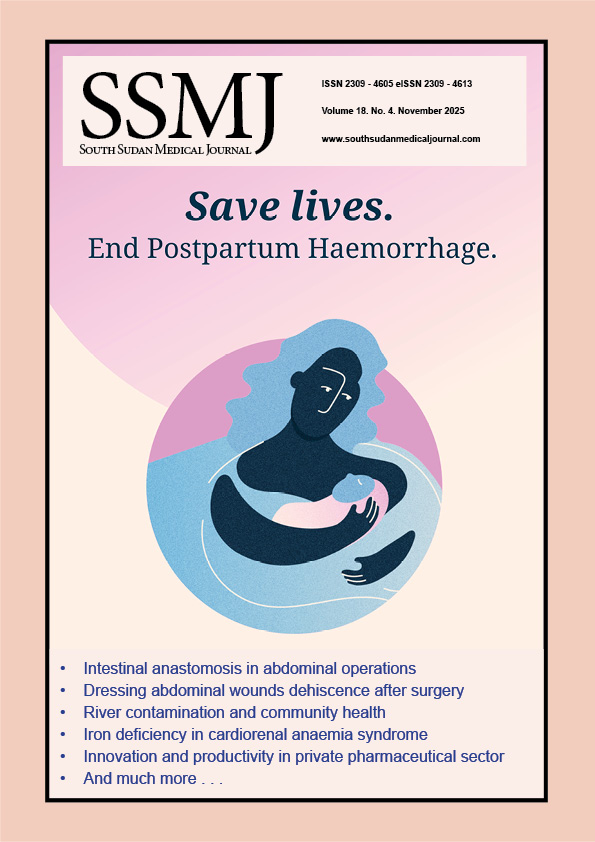
South Sudan Medical Journal - November 2025

SSMJ Vol 18 No 4 November 2025

 Dear reader,

The full issue of our November 2025 issue is now online; this is a bumper issue featuring 14 full articles and other news items, listed below. We thank the copyeditors and reviewers who helped prepare these papers. Let us know if you would like to join the Editorial team. We need you if you have time and editing skills.
 
Editorial

Research Articles

  • Comparative study between classical two-layer and one-layer extra-mucosal intestinal anastomosis in elective and emergency abdominal operations. John Chol Ajack, Galal Abouelnagah, Haytham Fayed
  • Comparison of improvised negative pressure wound therapy and conventional wound dressing in abdominal wounds dehiscence after surgery. Nasra Lichika, Edward Ketson Msokwa, Alphonce Chandika
  • River contamination and community health: mining impacts in rural central Kalimantan, Indonesia. Nawan, Septi Handayani, Agnes I. Toemon, Hepryandi L. D. Usup, Seth Miko, Joni Rusmanto
  • Iron deficiency in cardiorenal anaemia syndrome in Dodoma, Tanzania Gidion Edwin
  • Guerrilla investors: Firm-level innovation and productivity in South Sudan’s private pharmaceutical sector Garang M. Dut
  • Paediatric deaths at Al-Sabbah Children’s Hospital, Juba, South Sudan – an audit Zechariah J. Malel, Garang Dakjur Lueth, Mary Poni Jackson, Nicolas Kazimiro Sasa
  • Prevalence of anaemia among pregnant women attending the antenatal clinic at Bor State Referral Hospital. Mark Kuoi Jongkuch Kuoi and Shalini Ninan Cherian
  • The impact of dietary compliance on diabetic foot ulcer healing: A cross-sectional study. Dadi Santoso, Rajesh Kumar Muniandy, Putra Agina Widyaswara Suwaryo

Review Articles

  • Personal determinants of gender-based violence: a review of intimate partner violence in South Sudan. Nyinypiu Adong
  • Misdiagnosing Muslims: The hidden risk of using the CAGE questionnaire in some Islamic contexts. Anas Ibn Auf and Sayed Halaly
  • Impact of healthcare worker training on paediatric tuberculosis detection and reporting: A systematic review. Suryanti Chan, Hamzah Hamzah, Miftahul Falah

Case Reports

  • Lupus nephritis overlap syndrome in a male with albinism: A case report. Adam Gidion Edwin, Baraka Alphonce, Sabina Mmbali, Alfred Meremo
  • Rare isolation of Pseudomonas mendocina from a postoperative wound in a diabetic patient: A case report. Vimal Kumar Karnaker, Asem Ali Ashraf, Bhadra Jyothikumar

Short Communications

  • News: Physicians Association of South Sudan and Association of Gynecologists and Obstetricians of South Sudan. Sudan

Back Page: Supporting Wet Nursing During Emergencies
 
Articles in SSMJ are indexed by Scopus, African Journals Online (AJOL), and the Directory of Open Access Journals (DOAJ), and as well as being on our website. SSMJ is included in the EBSCO scientific research collection.
 
Thanks to everyone who supports SSMJ. Tell your colleagues they can join our mailing list here.
 
The SSMJ team
Email: southsudanmedicaljournal AT gmail.com
Website: http://www.southsudanmedicaljournal.com

Tuesday, August 26, 2025

BBC Radio 'File on Four' - DASH to Instrumentalise

Of course, I'd like to see Hodges' model applied to many purposes.

As probably posted at some point, the thought of Hodges' model being instrumentalised goes back a long way. To the time of microcomputers in fact and 'CAPA' which stood for 'Computer-Aided Patient Assessment':

Jones, P. (1986) Computing in Nursing NEWS. Computerised Patient Assessment. Nursing Times. 85: 5. Sep 3-9;82(36):63-5. PMID: 3532039

[Describes 'CAPA', a BBC BASIC microcomputer program for student nurses.]

Even before discovering Hodges' model in the late 1980s, I was sensitive about being seen to mechanise nursing and care delivery. Nursing was still preoccupied with the nursing process and individualised care. The last thing I would want is to be seen as supporting the processing of patients. The person, their social context and identity becoming lost. It was a long-term and ongoing co-author who drew my attention to Hodges' model as an instrument. Which I've considered for each and across the care domains. CAPA was simplistic, even beyond the programming language employed. A dependency score from 1-5 was allocated (it's a long time ago!) to each of the activities of daily living for a patient:

Roper, N., Logan, W., & Tierney, A. J. (2000). The Roper-Logan-Tierney model of nursing: Based on activities of living. Churchill Livingstone.

In healthcare we are trained and become accustomed to the use of many assessment tools, checklists; this includes mental health nursing and specific therapies. Emphasis, is rightly placed upon the safety, validity and hence testing of tools. Some are 'broad brushes'. Others are specific - outcomes, anger, a carer's knowledge, conviction of belief, mood, impulsivity and many more. Drift away from the original goal and purpose and problems can (predictably) ensue. Training will and must be updated, but do all assessment tools have a 'Use By' date? Hopefully there is ongoing development, version control and sustained trials and testing of the instruments themselves.


'File on Four' BBC Radio 4 this evening concerns DASH, which stands for "Domestic Abuse, Stalking and ‘Honour’- based abuse".

Wednesday, August 06, 2025

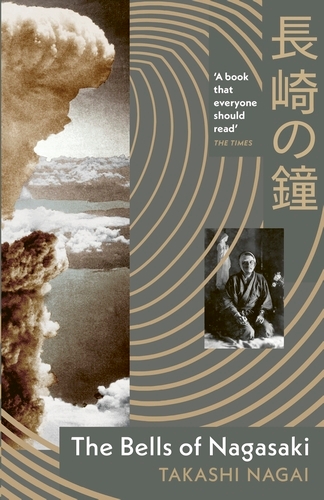
'The Bells of Nagasaki' by Takashi Nagai

Individual
|
      INTERPERSONAL    :     SCIENCES               
HUMANISTIC  --------------------------------------  MECHANISTIC      
 SOCIOLOGY  :    POLITICAL 
|


Takashi Nagai, William Johnston (Translator), Richard Lloyd Parry (Introducer). The Bells of Nagasaki. London: Penguin.
https://www.penguin.co.uk/books/469083/the-bells-of-nagasaki-by-nagai-takashi/9781529952605

My source:
Olivia Ward-Jackson. What one man saw in the ruins of Nagasaki, Review, The Daily Telegraph. 26 July 2025. pp.6-7.

See also:


Jones, P. (1994) An Enthusiast's View of CAL. (Problems in production of CAL - Simulation effects of Nuclear Weapons - conversion of GWBASIC to BBC BASIC from BYTE - with original author's permission - J Fanchi). IT in Nursing. 6,2.

Monday, June 09, 2025

🗣️Solving or Resolving Palestinian Human Rights Issues: Relationship "Normalization" | Mohamed ‘Arafa


🗣️ Solving or Resolving Palestinian Human Rights Issues: Relationship "Normalization" | Mohamed ‘Arafa

This session will be the first in the series of conferences “Jurisprudential Dialogues on Human Rights”, which is designed to promote exchanges on topical issues involving human rights and the role of the courts of justice.


The aim of this session is to reflect on the violations of the human rights of the Palestinian people — an enduring state of affairs that transcends political or religious lines of judgement. Over the decades, the Israeli-Palestinian conflict has been marking the international landscape, sparking divisions, human misery, and far-reaching geopolitical consequences.


This session will be led by Professor Mohamed Arafa, Professor of Law at the University of Alexandria and Adjunct Professor of Law & the Clarke Initiative Visiting Scholar at Cornell Law School. Joining in will be Professor Rita Ribeiro, from the Institute of Social Sciences at the University of Minho, and Zaina Awartani, PhD researcher at the School of Law of the University of Minho and the School of Researchers of the Research Centre for Justice and Governance (JusGov). The event will be chaired by Sergio Ruiz Díaz Arce, Doctoral Integrated Researcher at JusGov.


📍June 13th, 2025 | 4.00 p.m. Online


Scientific Commission

Sergio Ruiz Díaz Arce

Joaquim Freitas da Rocha

Robert Junqueira


Organisation

JusGov (JusLab – DH)

School of Law of the University of Minho


Support

FCT - Foundation for Science and Technology


Yours respectfully,

Robert Junqueira

Executive Coordinator | Research and Scientific Careers Bureau


Research Centre for Justice and Governance

School of Law of the University of Minho

Gualtar Campus
4710-057 Braga - Portugal


T: (+351) 253 60 18 75

E: martinsjunqueira AT direito.uminho.pt

Monday, March 31, 2025

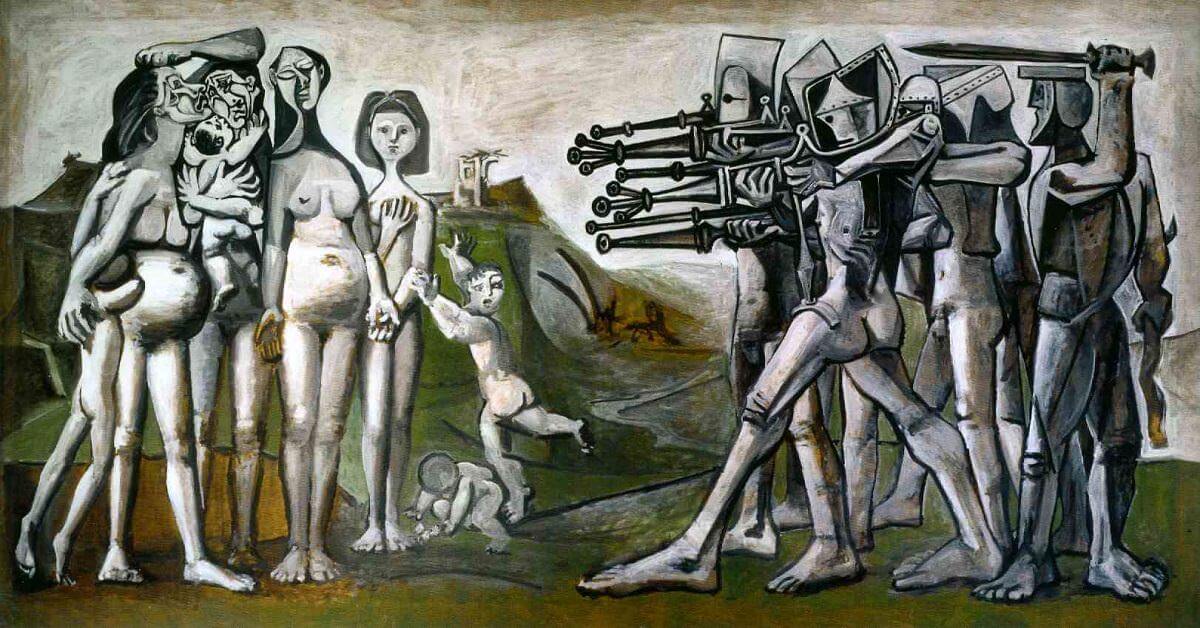
c/o Picasso - 'Massacre in Korea' (1951)

Art is a lie that makes us realize the truth.

                                 - Pablo Picasso

individual
|
INTERPERSONAL : SCIENCES
humanistic ------------------------------- mechanistic
SOCIOLOGY : POLITICAL
|
group


HUMANISTIC - mind


body - MECHANISTIC

"The 'beat' goes on"!?
'Massacre in Korea' (1951)

My source:
Vivienne Chow, How Picasso became a prize for Asia's new collectors, Collecting, FTWeekend. 22-23 March 2025, p.3.

See also: 
https://www.mplus.org.hk/en/exhibitions/ (15 March - 13 July 2025)

https://www.pablopicasso.org/massacre-in-korea.jsp

Wednesday, March 26, 2025

Objectify me by Nicola L.

Individual
|
      INTERPERSONAL    :     SCIENCES               
HUMANISTIC  --------------------------------------  MECHANISTIC      
 SOCIOLOGY  :    POLITICAL 
|
Group
'You can touch
my breasts,
caress my stomach,
my sex.
But, I repeat it,
it is the last time,'

- read a note
L. left in a drawer.


Nicola L.
 'La Femme Commode' (1969)


My source: Stoppard, L. Objectify me, House&Home, FTWeekend, 5-6 October 2024, pp.1-2.

Monday, March 17, 2025

1st Seminar Series: "Violence, Memory, Networks" - Interdisciplinary Connections

Dear colleagues,

The first session of the seminar "Violence, Memory, Networks" will take place on 19th March, 2025, at 2.30 pm (GMT), exclusively online.

In this session, Caroline Elkins (Harvard University, USA) will speak about "Legalized Lawlessness: Violence and the End of the British Empire" and Max Silverman (University of Leeds, UK) will bring us a communication on "Concentrationary violence and the everyday: the Zone of Interest (Jonathan Glazer, 2023)".

Registration is free but mandatory: https://forms.gle/brgNcR6hk6dxf7gu7

Event website: https://www.uc.pt/fluc/seminarvmn/

We would be very grateful if you could publicise the event through your channels.

Looking forward to see you soon,

The organising committee.

My source: https://www.uc.pt/fluc/ief/

Friday, March 14, 2025

New network in Environmental Humanities: H-EcoLit

supported by H-Net

Dear colleagues, 

Hello. Sorry for cross posting as I am sharing with you the below that may be of your interest. 
 
  • newly launched network in Environmental Humanities: H-EcoLit supported by H-Net

You are welcome to register for free as member of our newly launched network called "H-EcoLit", supported by the H-Net of the Michigan State University:


H-EcoLit is an international network of academics and researchers of all levels who study the fields of Environmental Humanities, Literary Theory and Cultural Criticism. The network seeks to explore issues beyond the traditional binary of nature-culture, and examines the changing status of subjectivity, agency, and citizenship, while envisioning matters for sustainable futures in a more-than-human world. H-EcoLit is aligned with the H-Net’s aims for supporting open access research, interdisciplinary projects, and ‘unites’ different voices across the globe. The intended audience includes academics, scholars of all levels and policy makers who are working on the Environmental Humanities, Literary and Cultural Studies, and related to Environmental Humanities areas.

Welcome to join us! Thank you!

  • Publications edited and co-authored by Professor Peggy Karpouzou and Dr. Nikoleta Zampaki
1. Special Issue: "Critical Green Theories and Botanical Imaginaries: Exploring Human and More-than-human World Entanglements" published in Open Cultural Studies:
2. Special Issue: "Ecologies of Life and Death in the Anthropocene" published in Lagoonscapes. The Venice Journal of Environmental Humanities
3. Special Issue: "The Digital Environmental Humanities: Towards Theory and Praxis" published in HJEAS:
4. our open access chapter titled "Toward Posthuman Aesthetics: The Flesh of the World in Auguste Rodin’s Le Penseur and The Thinking Robot" published in Nidesh Lawtoo's volume titled Mimetic Posthumanism. Homo Mimeticus 2.0 in Art, Philosophy and Technics at Brill:
5. our chapter titled “The Poetics of Zombification in Ryan Mecum’s Dawn of Zombie Haiku” In Zombie Futures in Literature, Media and Culture. Pandemics, Society and the Evolution of the Undead in the 21st Century edited by Simon Bacon, published by Bloomsbury: 
[I note online events are included in an announcements page:

We will keep in touch. Thank you!

Best regards, 
on behalf of the Editors

Nikoleta
--
Dr. Nikoleta Zampaki
Postdoctoral Researcher
Faculty of Philology, School of Philosophy, 
National and Kapodistrian University of Athens, Greece
E-mail: nikzamp AT phil.uoa.gr

My source: SOPHERE list

Wednesday, December 11, 2024

Reith Lectures: Gwen Adshead - 4 Questions about Violence

Individual
   |
      INTERPERSONAL    :     SCIENCES               
HUMANISTIC  --------------------------------------  MECHANISTIC      
 SOCIOLOGY  :   POLITICAL 
|
Group
Is there such a thing as Evil?

What is the relationship between trauma and violence?

Is violence normal^?

Can we change violent minds?


^'normal' -isation.

Monday, October 07, 2024

“Violência, Memória, Redes” :: "Violence, Memory, Networks” - Monthly online seminar March 2025


Caros colegas,

A partir de Março de 2025 realizar-se-á, mensalmente, um seminário online sobre a tríade “Violência, Memória, Redes”.

Este é organizado pela nossa equipa de um dos grupos de investigação interdisciplinar do CEIS20, um centro ligado à Universidade de Coimbra (Portugal) dedicado a temas de memória, entre outros tópicos multidisciplinares. Esta nova série de seminários dará continuidade ao sucesso do anterior trabalho sobre “Memória, Trauma e Narrativas sobre Si” (2021-22).

Desta forma, pedimos que seja divulgada pelos vossos canais a Call for Papers com a data limite em Janeiro de 2025.

Toda a informação adicional pode ser encontrada na página do seminário (https://www.uc.pt/fluc/seminarvmn/) e no anexo. Os pedidos de esclarecimento devem ser endereçados para: vmn AT uc.pt.

Disponíveis para qualquer esclarecimento adicional.

Cumprimentos,

A Comissão científica:

Edmundo Balsemão Pires (CEIS20/UC)
Joana Ricarte (CEIS20/UC)
Cláudio Carvalho (UCP/FFCS / IF/UP)
Giovanni Zanotti (CEIS20/UC)

-------------------

Dear colleagues, 

From March 2025 onwards, an online seminar will be held monthly on the triad “Violence, Memory, Networks”. 

This is organized by our team from one of the interdisciplinary research groups at CEIS20, a center linked to the University of Coimbra (Portugal) dedicated to memory themes, among other multidisciplinary topics. This new series of seminars will continue the success of the previous work on “Memory, Trauma and Narratives about the Self” (2021-22). 

Therefore, we ask that the Call for Papers be published through your channels with a deadline of January 2025. 

All additional information can be found on the seminar page (https://www.uc.pt/fluc/seminarvmn/) and in the annex. Requests for clarification should be addressed to: vmn AT uc.pt. Available for any additional clarification. 

Compliments, ...

My source: IEF

Wednesday, April 17, 2024

Policy Dialogue - Water, Conflict and Peace in the Middle East: online

Dear colleagues,

I am delighted to invite you to the next Policy Dialogues from the JHU-UPF Public Policy Center:

Water, Conflict and Peace in the Middle East
Thursday 25th April, 6pm CEST
Online via Zoom (registration required)
Language: English

The Middle East is a region of both severe water problems, and acute political instability. But what is the relationship between these two things? This Policy Dialogue will provide an opportunity to reflect on this question and its implications. It will overview the region’s water problems, and consider how these problems are – or are not – contributing to conflict. It will also examine, conversely, how war and violence are affecting patterns of water resource degradation and water insecurities, and will reflect on opportunities for water-related peace-building, including on how water for peace initiatives might best be pursued.

We are delighted to invite Natasha Carmi (Water Peace Programme Manager at the Geneva Water Hub) and Jan Selby (Professor of International Politics and Climate Change at the University of Leeds, UK) to share their expertise during this session.

We invite you to join us and explore the complexities of this extremely important issue. You can register here. Please also share this invitation within your networks.

Best regards,
Aeve

Aeve Ribbons
she/her

Educational Projects Manager of JHU-UPF Public Policy Center (UPF-BSM)
Managing Editor of the International Journal of Social Determinants of Health and Health Services (IJSDOHS)

My working days are Monday-Thursday / Mis días laborables son de lunes a jueves.

Website: http://www.upf.edu/jhu-ppc/

Twitter: https://twitter.com/pubpolcenter


My source:

Politics of Health Group Mail List Messages

Visit the PoHG website for lots of interesting links and publications: http://www.pohg.org.uk/

Visit PoHG on Facebook: https://www.facebook.com/282761111845400

Follow us on Twitter: @pohguk

Thursday, February 29, 2024

'LA Gun Club' (2016) by Jane Hilton

intent - maximum damage - social/vicarious trauma - policy fatigue(s)

Individual

   |
      INTERPERSONAL    :     SCIENCES               
HUMANISTIC  --------------------------------------  MECHANISTIC      
 SOCIOLOGY  :   POLITICAL 
|
Group


With thanks to Jane Hilton

https://www.palogallery.com/exhibitions/35-la-gun-club-jane-hilton/overview/

Top left: intra- interpersonal
Target E. Age: 26. Occupation: Architecture student. Gun: Smith & Wesson .44 Magnum revolver.
"I wanted to use the same gun as Clint Eastwood used in the movie Dirty Harry."

Top right: sciences
Target G. Age: 37. Occupation: Range master for a gun club. Gun: Beretta 92 FS 9mm pistol.
"I have the perfect job. I own many guns, I just love looking at them. I'm not bothered about shooting them. My favourite is the Kimber Warrior because it shoots large bullets."

Bottom left: sociology
Target A. Age: 35. Occupation: Federal security. Gun: Glock 22 .40 caliber pistol.
"I cannot believe I shot that hostage's ear on my target. I learnt to shoot when I was in the military Marine Corps infantry."

Bottom right: political
Target H. Age: 32. Occupation: Stay at home Mom. Guns: Smith & Wesson .357 Magnum revolver, Beretta 9mm pistol and Colt 5.56mm rifle (shooter's own).
"I own all 3 guns I used to shoot my target. Me and my husband go to different gun clubs all the time."

My source:
Alexander James, SNAPSHOT: 'LA Gun Club' (2016) by Jane Hilton. FT Weekend, Life&Arts, 17-18 February 2024. p.19.