Hodges' Model: Welcome to the QUAD: belonging

Hodges' model is a conceptual framework to support reflection and critical thinking. Situated, the model can help integrate all disciplines (academic and professional). Amid news items, are posts that illustrate the scope and application of the model. A bibliography and A4 template are provided in the sidebar. Welcome to the QUAD ...

Showing posts with label belonging. Show all posts

Saturday, April 25, 2026

MAACAL: Statues Also Breathe

Catharsis Arts Foundation in collaboration with Obafemi-Awolowo University and 108 students, 2022

This exhibition presents a collaboration between Obafemi-Awolowo University, 108 students from all across Nigeria, and the families of the Chibok girls who were kidnapped by Boko Haram in 2014. 

Inspired by the iconic terracotta heads of Ife, it was initiated by artists Prune Nourry and Ade Bantu and seeks to raise awareness on the plight of the missing girls, and to highlight the diversity of Nigerian culture. . . .

On Thursday I visited MAACAL - Museum of African Contemporary Art Al Maaden, an art gallery  I first read about in FTWeekend Life&Arts, not long after first visiting Marrakech in 2023.

The main exhibit presents itself straight away after entering:

Statues Also Breathe, exhibition view, Art Twenty One, Lagos, Nigeria
 ©Dohdohndawa Photography/DDD Studios

A short but touching film in the gallery bears testimony to the fact many 'school girls' are still absent. Repetition is standard method in design. In today's manufactured world you might think what is so special about this? Until you are there physically, and walk through them. You see each one, a who: unique, an individual, a person taken away from where they belong.

As a white man from NW England, there was a moment when I realised: I was on the same continent where this had happened and is ongoing. Searching Youtube reveals other related videos concerning the exhibitions. It's strange watching them again as a check on their availability. A short video of an event to launch three new installations earlier this year is worth watching. Unfortunately, my phone failed until I got back to Marrakech, so I've no photos. I've three works in mind though.

I walked there, and back after trying to sort a taxi with a lovely couple from Germany and their son. Some taxis are limited to carry three persons. This is what arrived. The sun, even behind clouds that day, and flights taking off from the airport helped my sense of direction. The girls, seeking an education, did not have these means of navigation.

The garden at MAACAL was small but lovely. I hope to return one day, and well before then . . .
Tuesday, August 05, 2025

Collective loneliness

Individual
|
      INTERPERSONAL    :     SCIENCES               
HUMANISTIC  --------------------------------------  MECHANISTIC      
 SOCIOLOGY  :    POLITICAL 
|
Group
loneliness

depopulation
demographics

Japan

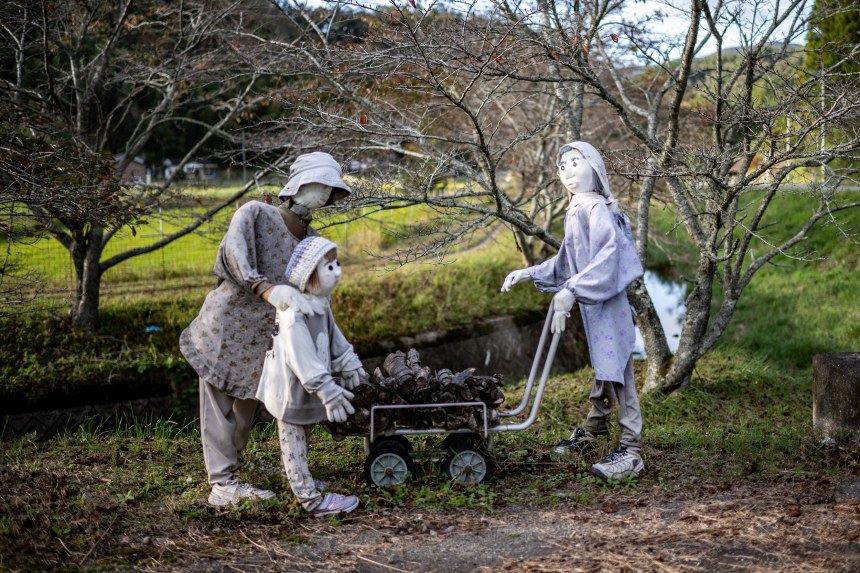
 A family of puppets collects wood in 
 the Japanese village of Ichinono.
 Philip Fong / AFP - Getty Images 
'Stop the boats'

'global trends'


My source: Sam Freedman. The truth about migrant workers: demonised but in demand, and few of us can live without them. The Observer, 03.08.25. pp.12-13.
https://observer.co.uk/news/national/article/sam-freedman-demonising-migrants-wont-fill-jobs-or-boost-falling-populations

Image and context:
'Outnumbered by puppets': Depopulated village in Japan crafts dolls for sense of life
https://www.nbcnews.com/news/world/outnumbered-puppets-depopulated-village-japan-crafts-dolls-sense-life-rcna177216

Thursday, December 19, 2024

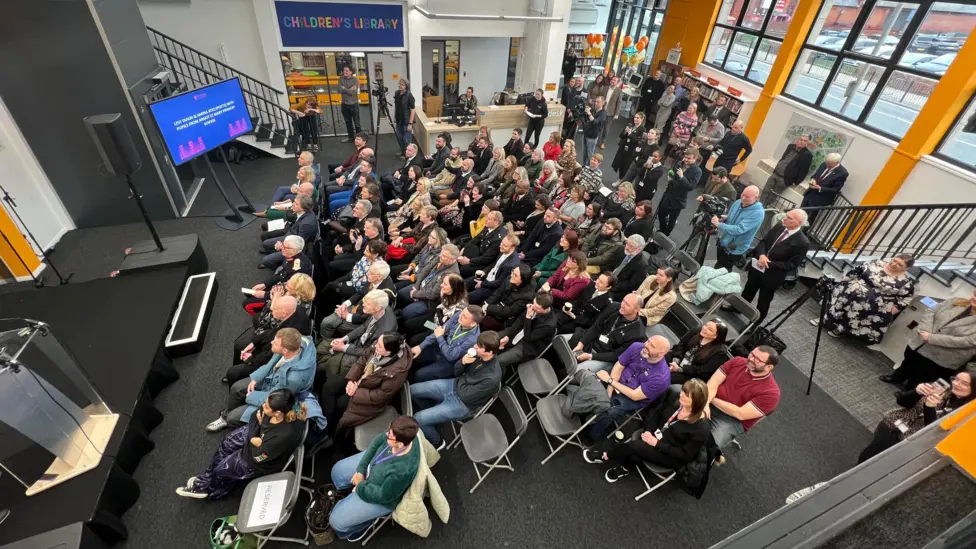
Just one library ... A world of difference

Born in Walton.

 'good prose is like a windowpane'

George Orwell, WHY I WRITE

<>

Walton, Liverpool, UK 12th December 2024
'Spellow Library, in Walton, Liverpool, was forced to close when it was set alight on 3 August amid unrest which swept across the country after the stabbings in Southport.

The city was determined to not let hatred win, with £250,000 raised and books being donated from the Queen and a host of celebrities.

An official ceremony marked the re-opening, including readings from Liverpool poet Levi Tafari while a letter from Queen Camilla was also read aloud.' ..


Claire Hamilton/BBC: An official ceremony marked the re-opening on Thursday morning


Break the Windows on Learning and
New Ones Will be Found to Look Out on the World.


INDIVIDUAL
|
INTERPERSONAL : SCIENCES              
humanistic ------------------------------- mechanistic
SOCIOLOGY : POLITICAL   
|
GROUP

My Learning
My Literacies


'The World(s) of Learning'

Society - Community
Social Justice

Justice
Social/Public Services


Previously:

Related post: 'forms of Hygiene'

literature : window

Thursday, August 11, 2022

True (group) therapy for the masses ...

Draft thoughts ...

 INDIVIDUAL
|

   INTERPERSONAL    :     SCIENCES               
HUMANISTIC --------------------------------------  MECHANISTIC      
SOCIOLOGY  :   POLITICAL 
|
GROUP
 
 SPIRITUAL

MENTAL MAPS

PSYCHO-THERAPIES


MAPS

PHYSICAL-THERAPIES


SOCIAL
THERAPY?


POLITICAL
THERAPY?

SITUATED - META-COGNITION

'Social therapy' is very much a thing - an invaluable therapy and intervention for patients / clients and  option for the multidisciplinary team. In form it may differ from the social therapy, industrial therapy encountered in 1977, with occupational therapy. Today, can I suggest that it has been diminished? Even as (in the UK) we have social prescribing, and very welcome it is too.

I still wonder if social therapy has been tainted politically, by its proximity to community?

Back in the 80s ... 90s ... I remember the mini-bus arriving with day care patients, people who had attended for years. Dependency was often a fact of life, for them, their family, or the choices were stark. and I've seen hints of dependency again. Psychological therapies were not offered as readily back then, and lack of engagement would have been the gate-keeper then and for many patients now. Day care is much diminished now, if provided at all. As a response to dependency, stasis this may not be a 'bad' thing, but what replaced it? How and where did people move on to?

Community, the original home and origin of the forum, the market place, and town crier has been left by successive governments to market forces. Now the High Street footfall is a sepia-coloured snapshot. Passers-by now, can read 'for sale' signs, 'units to let', see shutters, litter, pigeons on their break from 'being' online. The Ubers and e-food delivery enterprises now clog the roads, previously trodden by the clogs themselves (I've been told you could here them outside).

I realise there is a continuum at work here (and as 'group' in h2cm suggests - it does its work). A crossroads, hamlet, village, town, community, neighbourhood - with the exact position of some terms - 'community'  (on the IND-GRP axis) for example, subject to debate. 

The post back in May, concerning an individual therapy - New book: "Talking with a Map"

- has me thinking about the GROUP related domains of SOCIOLOGY and POLITICAL. 

About therapy not individually, but a need to address the idea of therapy at the community level. You might call this a 'root and branch' review, and yes, this is the sentiment. 

It is clearly more than 'levelling up'.

Stepping outside of the boxes (outside of #h2cm - the clinical context ...); this isn't a person with an illness. Neither is it an effort to instantaneously medicalise society (that's another post). The community (UK*) is also not best placed to self-care, to prosper - which would be quite a feat if it were possible.

Back in June, I saw tweet about WHO and the need to strengthen primary care; and the global role for primary care was highlighted in the previous post. I can't find the tweet now, but I think it was a global health call, as so many nations are still developing, even creating primary care.

Here in the UK (USA?) - like the longevity stats - we appear to be going backwards. Therapy here is not going to improve access to primary care, or correct the dental desertification the UK NHS is experiencing.

If I am true to the model - #h2cm - here as displayed above, then there must be group therapy equivalents. Not group therapy in the usual - psychological / psychotherapy - sense, but a real transition from the individual to the group as found in social and political terms. Perhaps, this can be summed up as the need to revisit and re-negotiate the social contract - if it were ever agreed? This is were healthcare and time must coalesce: the past, present and future. Our health systems need to change.

I need to work on this muddle!

*If I may be so bold.

The model is encompassed within situated cognition - meta-cognition and the spiritual.

Friday, October 11, 2019

Book: "Poems from the Edge of Extinction"

 individual
|
INTERPERSONAL : SCIENCES
humanistic ----------------------------------------------- mechanistic
SOCIOLOGY : POLITICAL
|
group - population


"One language is falling silent every two weeks. Half of the 7,000 languages spoken in the world today will be lost by the end of this century".

Poems from the Edge of Extinction


Chris McCabe

My source:
Crawford, M. (2019) Poetry, Books, FT Weekend Life&Arts, 21-22 Sepember, p.11.

Tuesday, March 27, 2018

Citizenry: In Hodges' model

individual
|
INTERPERSONAL : SCIENCES
humanistic ---------------- HUMAN NEEDS --------------- mechanistic
SOCIOLOGY : POLITICAL
|
group

Philosopher
My identity

'Nowhere'?


Public, Family, Community


Citizens, Nation State, Welfare

Political identity


BBC Radio 4 The Public Philosopher: Citizens of Nowhere?

Wednesday, February 28, 2018

Book: Poetry Pharmacy

individual
|
INTERPERSONAL : SCIENCES
humanistic --------------------------------------- mechanistic
SOCIOLOGY : POLITICAL
|
group


Saturday, September 16, 2017

"Invisible Countries": What are you saying? More to the point what on Earth are you thinking...?

The book in the previous post that prompts this has its own content and creative rationale, but taking the title literally...

individual
|
INTERPERSONAL : SCIENCES
humanistic --------------------------------------- mechanistic
SOCIOLOGY : POLITICAL
|
group

So, you take your identity, country, 
nationality for granted?

You give scant regard for your citizenship when so many are stateless.

Do you possess a passport?

A national ID number of some sort?

There's no need for borders. But they do predict the struggles to follow over access to water, the position of dams. This is where we literally co-locate (with the political domain) the geo-political.

You may have a point though:

 "The first day or so we all pointed to our countries. The third or fourth day we were pointing to our continents. By the fifth day, we were aware of only one Earth." --Sultan bin Salman Al-Saud, astronaut

You also take your family heritage, possibly your 'good' family name for granted?

Who do you think you are?

Don't you realise you are history?

Are you a pacificist? That is what many will glean from such a stance.

What's that?
Oh, I see you are a citizen of the world?

"The love of one's country is a splendid thing. But why should love stop at the border?" --Pablo Casals

Stop struggling. We are all victims of history.

See also: iWish 2059

Quotations: c/o http://www.worldbeyondborders.org/quotes.htm

Friday, September 15, 2017

iWish 2059 ....?

individual
|
INTERPERSONAL : SCIENCES
humanistic --------------------------------------- mechanistic
SOCIOLOGY : POLITICAL
|
group

My source: Sylph Editions

Saturday, April 22, 2017

Refugees: one word or two?

individual
|
INTERPERSONAL : SCIENCES
humanistic --------------------------------------- mechanistic
SOCIOLOGY : POLITICAL
|
group


Now here


Nowhere


'Welcome'
Origin
Old English wilcuma ‘a person whose coming is pleasing’, wilcumian (verb), from wil- ‘desire, pleasure’ + cuman ‘come’. The first element was later changed to wel- ‘well’, influenced by Old French bien venu or Old Norse velkominn.
https://en.oxforddictionaries.com/definition/welcome

Saturday, October 29, 2016

George Monbiot & Ewan McLennan - Breaking the Spell of Loneliness

individual
|
INTERPERSONAL : SCIENCES
humanistic -------------------------------------------  mechanistic
SOCIOLOGY : POLITICAL
|
group-population


My source: BBC 2 or C4?

Monday, July 08, 2013

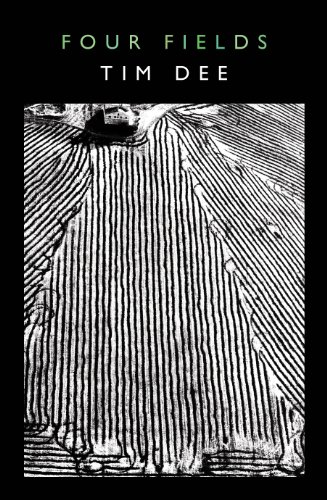
Four Fields

On my wish list:

In his first book since the acclaimed The Running Sky Tim Dee tells the story of four green fields. Four fields spread around the world: their grasses, their hedges, their birds, their skies, and their natural and human histories. Four real fields - walkable, mappable, man-made, mowable and knowable, but also secretive, mysterious, wild, contested and changing. Four fields - the oldest and simplest and truest measure of what a man needs in life - looked at, thought about, worked in, lived with, written.

Dee's four fields, which he has known for more than twenty years, are the fen field at the bottom of his Cambridgeshire garden, a field in southern Zambia, a prairie field in Little Bighorn, Montana, USA, and a grass meadow in the exclusion zone at Chernobyl, Ukraine. Meditating on these four fields, Dee makes us look anew at where we live and how. He argues that we must attend to what we have made of the wild, to look at and think about the way we have messed things up but also to notice how we have kept going alongside nature, to listen to the conversation we have had with grass and fields.

Four Fields is a profound, lyrical book by one of Britain's very best writers about nature.

Source image and text: Amazon

Sunday, June 24, 2007

Well-being: a great place to be!

Working in mental health you certainly don't take mood, mental state and that nebulous notion of well-being for granted.

Depression is a terrible thing and given the thin red line that we all walk in terms of mental health, it's a place no one wants to venture.

There's a lot of emphasis being placed on well-being (happiness!) at present. The usual retinue of number of this and that measures count for little if at the end of the day well-being or the individual's happiness is not improved, or perhaps more accurately 'satisfied'.

Source: BBCWatching Glastonbury it's all about music and well-being amid lots of mud.

Well-being is taken for granted like so many things in life. Take it away and it's noticed - very quickly.

They say that the best lessons are those we learn for ourselves. Being lost and finding your way is another pivotal lesson. At key times and places this journey can be a rite of passage no less.

In order for health promotion to deliver, people need to understand well-being, that is the many ingredients that contribute to that feeling, that sense, that inner magic that lights us up and those around us...

Hodges' model can help people with that journey, especially at a time when a fellow traveller may be needed.

Health and social care services are so often about signposting these days.

Hodges' model can help people signpost for themselves...

Photo: BBC