Hodges' Model: Welcome to the QUAD: routine

Hodges' model is a conceptual framework to support reflection and critical thinking. Situated, the model can help integrate all disciplines (academic and professional). Amid news items, are posts that illustrate the scope and application of the model. A bibliography and A4 template are provided in the sidebar. Welcome to the QUAD ...

Showing posts with label routine. Show all posts

Thursday, July 31, 2025

'Nurse as Engineer' by Josefson

'Engineering' and 'architecture' have both been co-opted by cross-disciplinary explorers to help traverse what are usually cravasses between disparate fields. Or, if not a serious journey - more a day-trip than an expedition, it's an effort to create the impression of progress being (rapidly) made. Fields of knowledge being pulled - fused-together. These are transdisciplinary times:

'Individualization is best achieved in the engineering model, in which cach patient is seen as a unique case. The nurse collects and analyses the patients' data to arriye at a diagnosis, which includes, but is not limited to, issues that concern medical diagnosis and treatment. "The nurse sets obiectives based on knowledge and experience of what is desirable and achievable and designs an individualized care plan by selecting from a known repertoire of nursing interventions those most likely to lead to achievement of the objectives. After implementing the interventions, the nurse evaluates their effectiveness by comparing the client's subsequent condition with previous diagnoses and objectives."

In the last model - the non-routine model, which is a research model - the patient is still seen as unique. The problem is that the search procedures cannot be analysed because more judgement and intuition is required in making decisions.' p.25.

n.b. Two other models are described: the nurse acting as a craftsman; and the routine.

Josefson asks in a section (pp.28-29):

Who draws the boundary between Man and Machine?

Who - indeed!

Ingela Josefson. The nurse as engineer—the theory of knowledge in research in the care sector. In.  Knowledge, Skill and Artificial Intelligence. Bo Göranzon & Ingela Josefson (Eds). (1988), ISBN038719519X. pp.19–30. Berlin, Heidelberg: Springer-Verlag.

In the above paper/chapter Josefson draws upon the work of Katie Eriksson and Judy Ozbolt.

Previously: 'engineer' : 'architecture'
Wednesday, July 02, 2025

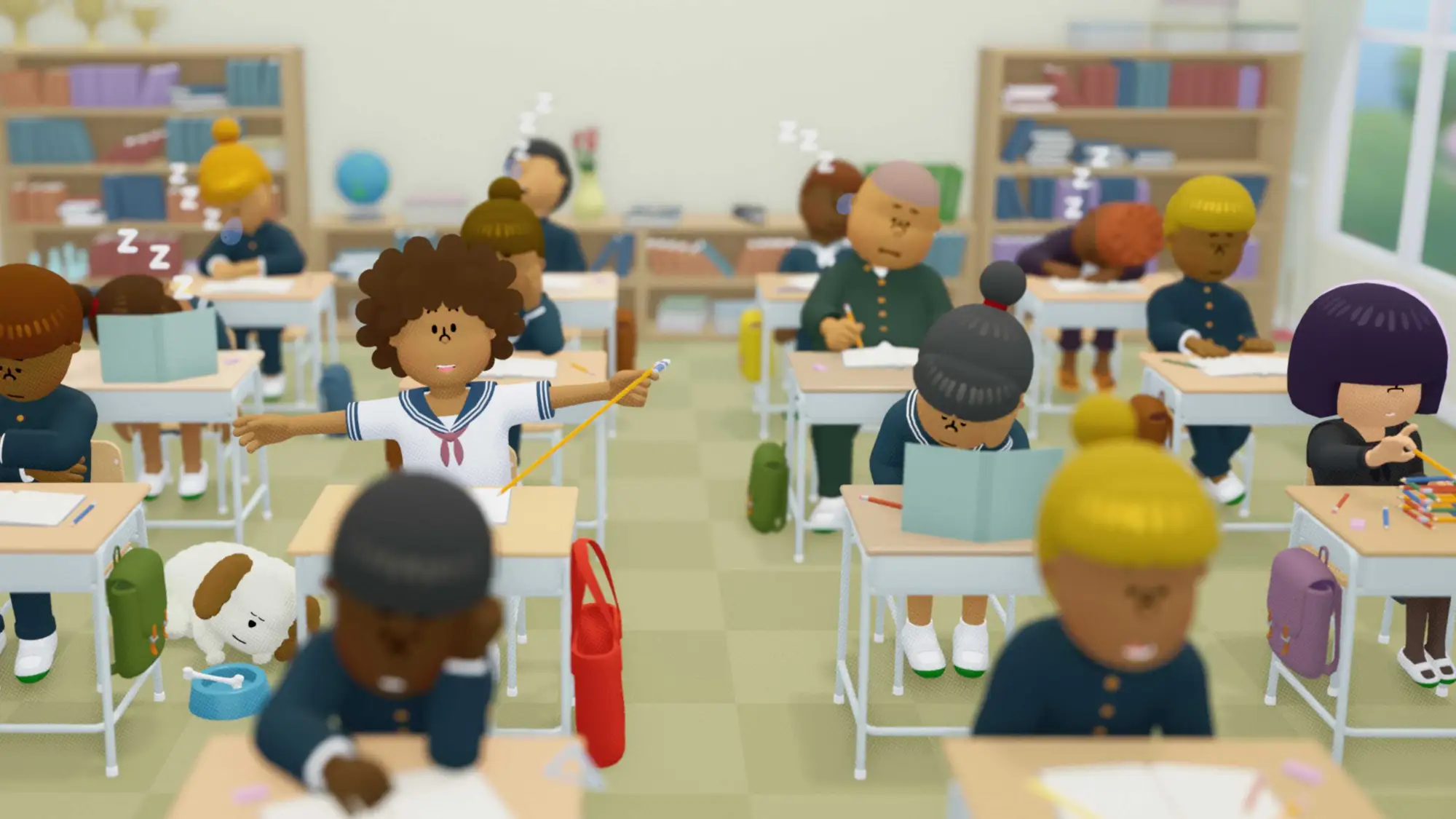
Did 'to a T' find its inspiration in Rio de Janeiro?

... or somewhere else?

to a T

A new game from Keita Takahashi
"'to a T' is an episodic 3D adventure game developed by Keita Takahashi and the uvula team, with a strong focus on character, interaction, story and exploration. Play as a teenager (Teen), with a unique posture just trying to live a normal life in a small coastal town. Explore the town along with the help of Teen’s loyal dog and loving mother. While going to school and contending with bullies, Teen discovers a new ability granted to them by their extraordinary posture, and they start to uncover more about their mysterious lineage."
'to a T' - image https://annapurnainteractive.com/en/games/to-a-t

Developer - https://uvula.jp/

I have never been as far south as Rio de Janeiro. It would be marvellous to visit Tijuca National Park - Alto da Boa Vista, Rio de Janeiro - RJ.

But then ... 🌍🌎🌏🌐

My source: Tom Faber, In praise of gaming's auteurs. Financial Times, 11 June, 2025, p.18.

Wednesday, June 11, 2025

Seeking UK Healthcare Workers: online pilot study on daily communications

C/o Olga Lainidi @LainidiO

Post Graduate Researcher and Teaching Fellow in Psychology @ University of Leeds

'I’m looking for UK Healthcare Workers to help me pilot an online study on daily communications in healthcare. Please fill in the expression of interest form if you want to find out more.'
Introduction to the study plans below from:

https://forms.office.com/e/5H84WqqTtT


UK Healthcare Staff - Daily Communications & Wellbeing at work

Thank you for your interest in this research study, which is part of a PhD project at the University of Leeds. The study explores how healthcare workers communicate about things that matter at work on a day-to-day basis, and how these decisions relate to their wellbeing. If you're a UK-based healthcare worker and would like to receive more information or take part in the study, please complete the short form below. This form helps us check eligibility and ensure we include a range of roles and experiences. It takes less than 2 minutes to complete. Completing this form does not commit you to participating - it simply lets us know you're interested and happy to be contacted. All information will be kept confidential and stored securely. Thank you for your time and interest!

The study has received ethical approval by the School of Psychology Ethics Committe, University of Leeds (2841 - 28/04/2025)

https://forms.office.com/e/5H84WqqTtT


My source:

https://x.com/LainidiO/status/1931414872840970470

I look f/w to learning of future findings and outputs.

Sunday, December 20, 2020

Information Overload: We live in challenging times ...

individual
|
INTERPERSONAL : SCIENCES
humanistic ----------------------------------------------- mechanistic
SOCIOLOGY : POLITICAL
|
group
"Perhaps of no time is this truer than of to-day, when the mass of cheap books and papers and cinema pictures fill up every minute of leisure and leave no time for individual thought. The average man becomes incapable of knowing an original thought, or of feeling a genuine emotion. His own experience is translated into novel or cinema-language; his emotions are second-hand effects modified and devitalized by the fancies and romances of other men's minds.
The average brain like a photographic plate, covered with layer upon layer of rapid and perishable impressions; originality and reasoning power are stunted, and finally killed. Machinery likewise has destroyed the labourer's pleasure in work; he has no opportunity for the expression of his original and personal gifts. To this numbing effect of routine, with its discouragement of individuality, and hence the impossibility of joyous interest in work, can be traced ...
... the undercurrent of discontent, envy and hatred, which, uncorrected, lead along defiantly recognized channels to social upheaval ...... and revolution."


Savill, A. (1923) Music, Health and Character, London: John Lane The Bodley Head. pp.181-182. 


Saturday, September 21, 2019

Quotidian Care

Hodges' model #h2cm -
Is this your 'daily' paper?
Is care integrated on a daily basis
(or any other basis)?

individual
|
INTERPERSONAL : SCIENCES
humanistic ----------------------------------------------- mechanistic
SOCIOLOGY : POLITICAL
|
group - population
Quotidian: fancy word for daily, ordinary
Quotidian: is this 'ordinary' care truly personalised then according to the person's choices?
BEING - dressed & washed, content
Don't get lost in a preoccupation with tasks and what 'quotidian' means here.
A smile a day*
My name: my day, my night

Quotidian IS night & day
Basic Nursing Care
Hygiene, Skin, Activity, Mobility
BEING: Getting Dressed & Washed, content
Quotidian Malaria: paroxysms occur daily
being ALIVE..
The Handover
That apple* - balanced diet ...

 Basic Social - Personal - Care 
Social Visits, Relationships
Quotidian: OR "Not seen you in Ages!"
Social Activities, community
The Daily, Weekly Routine
Our time :together - our day, our night

Quotidian: (Reports?) By the Book
Work policy
Health and Safety
Are you/we overworked today?
Was there NO work today: ZERO hours?
The (Comprehensive) Record


*It's the attitude and effort that counts and knowing you're not alone.

Tuesday, October 10, 2017

World Mental Health Day: Using Hodges' model to anticipate...

.... a Person's reaction to Respite Care

individual
|
INTERPERSONAL : SCIENCES
humanistic --------------------------------------- mechanistic
SOCIOLOGY : POLITICAL
|
group
cognitive problems - usual routine
prior visits - positive experience
personal space
person-centred approach - listened to, acknowledged, afforded dignity and respect
able to 'exercise' choice even if a struggle
non-verbal communication
mood, withdrawal, behaviour change
facial appearance, voices (unconscious?) reminder of friend or foe from distant past?
staff knowledge of person - likes / dislikes - favoured activities, distractions
personal care preferences
recognising distress, anxiety
sleep pattern disturbance
ambiance - atmosphere
safety
noise, smell
sense of constructive activities
temperature
impact of visual cues, case, travel bag, coat..
impact of infections
ventilation, draughts
variety of spaces, large, small, able to gravitate towards preferred places
places to wander
access to garden
territory "That's my chair!"
comfort, chair, bed, pillows...
belongings, valuables (avoid)
assessment at client's own home
personal-social history
degree of dependency
negotiating goodbyes, hellos
personalities of care staff, other residents
clash of personalities
or developing attachments, other resident mistaken for spouse?
life experience, forces,
disinhibition at various levels, invading someone's personal space, taking their things, touching them, 'surprising' them
to visit or not - friends other family?
cost of care - time away from home?
contingency plans (contacts) if agitated,
acutely distressed, aggression
diversity - residents and staff
mental capacity
deprivation of liberty
locked doors
observation 24 hour checks -
(expect the unexpected)
staff uniform or non-uniform
the political ambiance - homely, cold - impersonal, formal
community nurse follow-up -
alt assessment environment
authoritarian - fixed routine
'house rules'
cost of care - funding?


World Mental Health Day

Friday, September 15, 2017

iWish 2059 ....?

individual
|
INTERPERSONAL : SCIENCES
humanistic --------------------------------------- mechanistic
SOCIOLOGY : POLITICAL
|
group

My source: Sylph Editions

Saturday, April 18, 2009

Nursing as reverse engineering...

At Scotland on Rails last month one of the sessions included an example of Ruby code outlining a 'morning routine'. It comprised a series of tasks and sub-tasks all of which led to getting to work.

Much of the vital essentials of the code I cannot understand beyond some tentative inklings, but in the hope of learning I've re-hashed the accessible bits and turned it into a NursingRoutine. The output looks like this....

Nursing....
"Non-judgmental attitude"
"Universal positive regard"
"Basic counselling skills"
"Open mind"
"Meet person"
"Receive referral"
"assess person utilizing Hodges model"
"Create care plan"
"Meet physical needs"
"Meet interpersonal needs"
"Meet political care needs"
"Meet social care needs"
"Holistic care"
"Evaluate physical needs"
"Evaluate interpersonal needs"
"Evaluate social care needs"
"Evaluate political care needs"
"Evaluate care"
"caring..."

Something like nursing is obviously a much more complex routine than that implied above - that is because:

  • nursing is not [some - 'thing'];
  • nursing can be represented as a routine BUT;
  • nursing seeks to transcend the routine: emphasizing the personal, unique, the humanistic;
  • nursing is parallel and sequential;
In addition now we are about collaborative, multidisciplinary care that must factor in agreement (the care plan...), and patient reported outcome measures (PROMS). ...

In the meantime I need to exercise care trying to understand the program that produced the output (that could also be easily printed as a list). While this is not an example there is such a thing as obfuscated code, but surely not obfuscated nursing care?
