Hodges' Model: Welcome to the QUAD: learning disability

Hodges' model is a conceptual framework to support reflection and critical thinking. Situated, the model can help integrate all disciplines (academic and professional). Amid news items, are posts that illustrate the scope and application of the model. A bibliography and A4 template are provided in the sidebar. Welcome to the QUAD ...

Showing posts with label learning disability. Show all posts

Wednesday, October 29, 2025

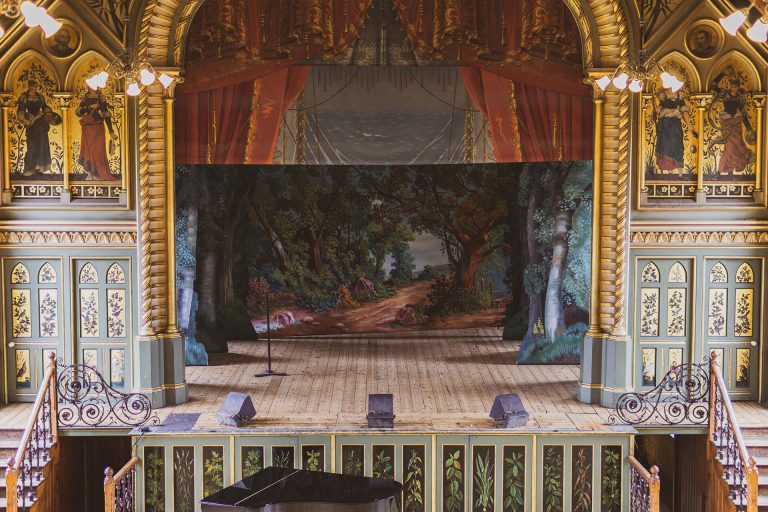
Normansfield Theatre in Teddington

Normansfield Theatre in Teddington

'My favourite building is the amazing Normansfield Theatre in Teddington that John Langdon Down (1828-1896) built to provide positive and stimulating education for learning disabled people (Down syndrome is named after him). At a time when most disabled people would have been shut away in horrific asylums, Down adapted his own house as a residential home, and built a beautiful theatre for creative rehabilitation. It's one of the few surviving private theatres from the period, with original painted scenery and other ornate fixtures, recently remodelled. For me, it's also a reminder of how the wealthy often used their money for good causes, which feels less common now. Jos Boys, guest curator and co-director of The DisOrdinary Architecture Project'


My source: The pick of London Open House. House&Home, FTWeekend. 6/7 September 2025. p.8.

Image: Langdon Down Centre

Previously: 'learning disability' : 'theatre' : 'architecture'

Friday, June 06, 2025

RCN Foundation: Investigating Learning Disability Nurses’ Perceptions of Registration with the Nursing Midwifery Council -

and wider Impact on RNLD Nursing Students
and People living with an Intellectual Disability

From twitter: Dr Lorraine Henshaw RN PD. https://x.com/lor_henshaw

'Are you a Learning Disability Nurse who is no longer registered with the NMC? Would you be happy to discuss your experiences with us for our important research into the RNLD role. See contact details below for further info. Please also share with your networks !' 


'This study ‘Investigating Learning Disability Nurses’ Perceptions of Registration with the Nursing Midwifery Council and wider Impact on RNLD Nursing Students and People living with an Intellectual Disability’ Study Aim and Objectives 1.To investigate RNLD perceptions of registration with the NMC and their thoughts about the impact on RN:D nurses on people living with an intellectual disability and thoughts regarding the future of RNLD nurses a)Obj 1- to ascertain where LD nurses are working and in what capacity/role. b)Obj 2- To explore the impact of this work on their identity as a RNLD 2.To investigate student RNLD nurses’ experiences of practice placements and perception of the role of RNLD nurses a)Obj- to understand the impact of the reduction of RNLD registered nurses (with the NMC) on the future workforce 3.To examine the impact that RNLDs have on people living with an intellectual disability and their families/carers. a)Obj- To explore the perceptions of service users and carers of the value of the RNLD.'


Site: https://salford-repository.worktribe.com/project/3385884/rcn-foundation-investigating-learning-disability-nurses-perceptions-of-registration-with-the-nursing-midwifery-council-and-wider-impact-on-rnld-nursing-students-and-people-living-with-an-intellectual-disability

Tuesday, January 28, 2025

Sticky Categories and Their Negative Consequences c/o Mikulak et al.

Category - Theory and Practice

Hodges' model -
A model for care in whatever situation, care environment*.

 
Individual
|
      INTERPERSONAL    :     SCIENCES               
HUMANISTIC  --------------------------------------  MECHANISTIC      
 SOCIOLOGY  :    POLITICAL 
|
Group
'I'
Me
My name is . . .
I am a person.
I am an individual.

Even if I don't thank you,
there may be someone out
there who thanks you for
acknowledging, confirming,
sustaining, preserving and
respecting my identity.

Even if I don't ask you
for your name please share
it with me, when you feel
 the time is right.

Together ...

[Abstract] "‘Behaviours that challenge others’ are attributed to 20% of people with learning disabilities. These behaviours are not a diagnosis, it is something people are labelled with. We conducted qualitative interviews with social care staff in the UK within four models of care: independent supported living, residential nursing home, Shared Lives, and living with family and attending a day opportunities centre*. We examine how the category of ‘behaviours that challenge others’ is produced, applied, and contested in adult social care settings. We demonstrate its stickiness and discuss its stigmatising consequences. How behaviours are understood, felt, and talked about matters for the support people with learning disabilities receive and maps onto their consequent inclusion or exclusion from society. We point out the harms the category carries for people who receive it and argue that it should be abandoned." p.110.


"Labeling theory suggests that labels lead to stigma, through changing how a group is perceived by others and supporting stratification (Haft et al. 2023). According to Link and Phelan (2001: 383), stigma ‘exists when elements of labeling, stereotyping, separating, status loss, and discrimination co-occur in a power situation that allows these processes to unfold’ (emphasis added). The acceptance of categories as valid and important differences is described by the labeling element of stigma (Link and Phelan 2001). Here, we attend to how this ‘labeling’ aspect of stigma interacts with its other mechanisms in the category of ‘behaviours that challenge others’." p.112.


"Emotions are not private, rather, they ‘circulate between bodies and signs’ producing meanings and creating ‘the surfaces or boundaries of bodies and worlds’ (Ahmed 2004b: 117); thus, affect is always distributed (Wetherell 2015). We propose the category—and the labeling process behind it—should be understood within an ableist (Campbell 2009) distribution of affect and politics of emotion; one that subordinates the experiences of people with learning disabilities through establishing the ‘truth’ of the reading as external and mediated through the emotions of people without learning disabilities. ‘Behaviours that challenge others’ (and synonyms of the category) are inherently relational but also reflect and reproduce existing power imbalances. We suggest their stickiness rehearses and reinforces the ableist politics of emotion that positions people with learning disabilities as ‘less human’ (Goodley 2021) and at times as monstrous. The category is a product of this politics, one that repeats its rehearsed, sticky associations, making the reading of the proximity of people with learning disabilities in the present a result of histories marked by dehumanization. The method of categorizing people through labels also makes them more susceptible to what McClimens has described as ‘reauthoring’, with collective histories ‘presented in a way that condones or even justifies their current situation’ (2007: 259)." p.113.


Mikulak, Magdalena, Sara Ryan, Elizabeth Tilley, Susan Ledger, Lisa Davidson, Pam Bebbigton, and Dawn Wiltshire. 2024. “Sticky Categories and Their Negative Consequences: People with Learning Disabilities and ‘Behaviours that Challenge Others’.” Scandinavian Journal of Disability Research 26(1): 110–123.
DOI: https://doi. org/10.16993/sjdr.1069 (with my emphasis)

I have cited Mikulak et al. in 1/2 papers submitted yesterday after revision on: threshold concepts, deprivation of liberty, residential care and Hodges' model.

Wednesday, January 01, 2025

Friday, April 26, 2024

Buses, Eddie Stobart, Lego and Laughing Boy

Individual
|
   INTERPERSONAL   :     SCIENCES               
HUMANISTIC  --------------------------------------  MECHANISTIC      
 SOCIOLOGY  :    POLITICAL 
|
Group

person - personality
personal duty of care
emotional care
experience

buses - Eddie Stobart - Lego
space - time
1-day Physical care  Another day
the sound of laughter


Source: Twi/X + image:

Sunday, December 18, 2022

CLOSE(D) CARE: Group climate in a secure forensic setting for individuals with mild intellectual disability

This morning ResearchGate alerted me to a new paper/thesis citing Hodges' model. 

I will add this to the bibliography and post again in the new year, relating selected conceptual content of Elien's thesis to Hodges' model.

Background

CLOSE(D) CARE
CLOSE(D) CARE
This study examines associations between group climate, aggressive incidents and coercive measures in adults with mild intellectual disability or borderline intellectual functioning (MID‐BIF) of a secure forensic setting.

Method Participants (N = 248) were interviewed about their perception of group climate utilizing the Group Climate Instrument. Data on aggressive incidents and coercive measures were retrieved from the facilities’ electronic database. A multilevel structural equation model was fitted in which variability in perception of group climate within and between living groups was examined.

Results An open and therapeutic group climate was associated with lower levels of aggression within and between groups. A higher number of aggressive incidents were significantly associated with a higher number of coercive measures.

Conclusions The findings have implications for the understanding of how group climate may play a role in reducing aggressive incidents at the living group in treatment of individuals with MID‐BIF in secure forensic settings.


Elien G Neimeijer (2021) "CLOSE(D) CARE: Group climate in a secure forensic setting for individuals with mild intellectual disability." Radboud University, ISBN: 978-94-6416-713-9
https://www.trajectum.nl/sites/default/files/proefschrift_e._neimeijer_pdf.pdf

Friday, April 16, 2021

Tracking the Alzheimer's-Down syndrome connection

individual
|
INTERPERSONAL : SCIENCES
humanistic ----------------------------------------------- mechanistic
SOCIOLOGY : POLITICAL
|
group

Communication, speech
self expression
personhood
identity
memory
personality
mood
Extend meaningful quality of life
Age 40
most people with Down syndrome develop beta amyloid plaques in the brain — a key characteristic of Alzheimer’s disease. Scientists believe this is because they have an extra copy of chromosome 21, which carries an amyloid-producing gene.Major international research effort, (ages 25+) plus siblings over five years.
Multisite Alzheimer’s Biomarkers Consortium — Down Syndrome (ABC-DS) study
Biomarkers, genetic background, environmental, metabolic and other physiological factors

Intergenerational angst
if parent/family member a primary carer?
Help families prepare for what’s going to happen potentially with their loved one

Funded by a $109 million grant
from the National Institutes of Health

 My source:

 Learn more about the study at mind.uci.edu/adrc/about


Monday, December 02, 2019

iv RCGP’s 7th Health and Justice Summit ...

I've been working through notes, photographs and the summit programme hence the flip-flopping between days.

So, back to day one:

Megan Georgiou, Jem Jethwa and Dave Banks, Programme Manager for Royal College of Psychiatrists, Project Officer at Royal College of Psychiatrists and Lead Nurse for the Intensive Support Unit at HMP Durham and Tees, Esk and Wear Valleys NHS Foundation Trust
“Transforming the Care Programme Approach in Prisons”

The Care Programme Approach (CPA) has a history of being poorly implemented within a prison setting. The Quality Network for Prison Mental Health Services and Tees, Esk and Wear Foundation Trust have teamed up to review the process and develop new tools and guidance. The purpose of the workstream is to improve service delivery and patient care. The workshop will summarise the findings from the consultation event and present our work to date.

Late again and frustrated since as a former CPA Lead this subject is close to my heart. It is not a sacred cow, although the learning and values that it helps carry must be carried forward.

I got the immediate impression of a methodology being presented and sure enough we practised too:

Go M.A.D. Thinking ® Results Framework

Part of the approach includes the 10 possibility thinking areas as per the photo.


[There's an additional exercise that reveals the ability of Hodges' model to help prioritise, contextualise (or decontextualise) and assign the 10 areas.]

Dr Alex Acosta-Armas & Ms Sarah Hill, Consultant Forensic Psychiatrist & Service Manager for  North London Forensic Service presented “Forensic Learning Disability Pathways, from prison to the community: Less restrictive practices in secure care and the development of a specialist community forensic LD service”.
Pathways of care for people with learning disabilities, from prison with the establishment of assessment and detection services, followed by secure inpatient care, focussed on introducing less restrictive practice interventions. Development of a community forensic learning disability service aimed to facilitate transition into the community and to support community services.
Brian E Hodges who created Hodges' model was a Learning Disability Nurse and Tutor and designed the model with this population in mind.

I was not ideally placed for photos, but would encourage readers interested in Forensic Learning Disability Pathway to seek out the slides. There was a local history from 1997, improving quality, stating the case for a Community Forensic LD Team, eligibility criteria (referrals), progress since April 2019 and training delivered to date. This was informative relating autistic spectrum disorder, training for staff, assessment within prison and in-patient settings, attention deficit hyperactivity disorder,risk concerns - sexual offending, arson, stalking and FTAC - Fixated Threat Assessment Centres.

Whenever I see a slide, paper ... titled "New Model of care" my heart skips a beat. This model was CHOICES. I will try and obtain more information. 

Robert McEntree - Defining trauma
A workshop was presented by Michelle Osborne & Robert McEntree, Ward Manger & Staff Nurse for Arnold Lodge on “Trauma Informed Care in Forensic Health Care: Male Mental Illness”
How the admission ward of a Medium Secure Forensic Mental Health Unit in Leicester is introducing a framework for Trauma Informed Care.

There is frequent use of 'lenses' as a metaphor and this workshop was helpful as to me it presented 'trauma' as another lens, a potentially constructive metaphor upon an emotional - lived reality (with varying degrees of recall). Robert defined trauma with references and some texts:

The Polyvagal Theory, Stephen W. Porges:
https://www.stephenporges.com/books

The Body Bears The Burden, Robert Scaer:
https://www.routledge.com/The-Body-Bears-the-Burden-Trauma-Dissociation-and-Disease-3rd-Edition/Scaer/p/book/9780415641524

The Body Keeps the Score: Brain, Mind, and Body in the Healing of Trauma Book, Bessel van der Kolk:
https://www.penguin.co.uk/books/259/259420/the-body-keeps-the-score/9780141978611.html

Despite trauma's acuity (obviousness?) the slides were very informative:

What we talk about when we talk about "Trauma"
  • Pervasive
  • Impactful
  • Effects the most vulnerable in society
  • Self perpetuating
  • Negates potentially supportive relationships
Five core values of Trauma Informed Care and Environments

Safety  Trust  Collaboration  Choice  Empowerment

Barnett Brown, V., Harris, M., and Fallot, R. (2013) Moving toward Trauma-Informed Practice in Addiction Treatment: A Collaborative Model of Agency Assessment, Journal of Psychoactive Drugs, 45:5, 386-393, DOI: 10.1080/02791072.2013.844381

Fallot, R.D. and Harris, M. 2009. Creating Cultures of Trauma-Informed Care: A Self-Assessment and Planning Protocol, Washington, DC: Community Connections. [Google Scholar]

See also:
Becoming Trauma Informed:
https://www.mappingthemaze.org.uk/wp/wp-content/uploads/2017/08/Covington-Trauma-toolkit.pdf

In post iii I made (rather) a lot of 'transitions' and two major examples include veterans returning to civilian life and prisoners on release. The frequency of 'transition' was even raised at the summit. For example, if prisoners are recruited to a health programme and are then released that will be 'lost' so interventions are kept short for that reason. Alternately, reflecting cold reality there is acceptance in being able to re-enrol should someone arrive in custody once again.

Before closing remarks and thanks the summit's sessions ended with news of a transition:

Kate Morrissey, National Programme Manager - Mental Health, Implementation Lead for RECONNECT on:
 “RECONNECT – Care After Custody” 

When I referred to the obviousness of trauma above, of course so often to the observer psychic trauma is not obvious. Is this why transition to stability, coping, staying well, recovery is so hard won? Is this why in housing, welfare and benefits so often the lens cycles through what is 'seen' resulting in doubt, denial and neglect?

These four posts reflect the main sessions and workshops I opted to attend. The summit's focus also included Women in prison, Transgender pathways and Children’s services.

Many thanks to Convenzis and other organisers, sponsors and supporters:
Great values, learning and job.

Friday, June 08, 2018

Hospital Passports or Traffic Light documents


Hospital Passport / Traffic Light Poster

I hope this helps a little John-Marc and colleagues...?

The health career - life chances - model was developed with the care and positive life experiences of people with learning disability very much in mind. Consider the model's intra- interpersonal care (knowledge) domain and the political. We are prompted to simultaneously factor in individual and collective autonomy.

As a possible learning exercise (CPD!) sketch out the model and use the poster to reflect on the concepts and aspects of individual and person-centred care that are highlighted.

Identity and care in recognising that identity is paramount whatever 'condition' places members of the public in our hands (and hearts).

Tuesday, June 05, 2018

Applications open: RCPsych Parliamentary Scholar Programme

individual
|
INTERPERSONAL : SCIENCES
humanistic ----------------------------------- mechanistic
SOCIOLOGY : POLITICAL
|
group


Via twitter:


Saturday, June 21, 2014

disABLED: What's behind a symbol?

individual
INTERPERSONAL : SCIENCES
humanistic ------------------------------------------- mechanistic
SOCIOLOGY : POLITICAL
group

NY State

Well done NY excellent MOVE!
(and hope to visit next year)


My source: James Moore, Clash of Symbols, The Independent 20 June 2014, p.35.
 
Image source from upper right:
http://in-abled.com/blog/2014/04/would-martin-luther-king-jr-care-about-disabilities/
http://en.wikipedia.org/wiki/Disability

Tuesday, April 23, 2013

A sentence in a word - precarity - and a bad spell of 'whether'

In the past couple of months I've acquired three books to review. One of them is:

Philosophical And Theoretical Perspectives For Advanced Nursing Practice, Cody.

I'm pleased to say that over half the book now has extra notes (in pencil). Within the text and my reflections there are a great many potential posts. In chapter 18 though Doane and Varcoe write:

Subsequently, there has been little discussion about what is required to develop and enact that sensitivity and/or the knowledge, capacities, and skills required for ethical and responsive nursing relationships within the complexities of current health-care milieus. For example, as social inequalities deepen and neoliberal ideologies hold individuals responsible for their own health and well-being regardless of how poverty, disability, remote geographical locations, or other inequalities determine health, notions of obligation, responsibility, accountability, and efficiency are as vital to nursing relationships as are notions of compassion, responsiveness, trust and respect. Thus, nurses require a broader understanding of relationships and their significance to ethical nursing practice. p.204.
The sentence in (my) italics can be summed up in one word - a recently discovered concept for me - that of: precarity.

Here the definition on Wikipedia (c/o the above link):
Precarity is a condition of existence without predictability or security, affecting material or psychological welfare. Specifically, it is applied to the condition of intermittent or underemployment and the resultant precarious existence. The social class defined by this condition has been termed the precariat.
Nursing is bound to be affected by the socio-economic environment. Caution is needed as the weather impacts, puts pressure on nursing's values.

Doane, G.H., Varcoa, C. (2013). Relational Practice and Nursing Obligations. In Philosophical and Theoretical Perspectives for Advanced Nursing Practice (5th ed.), by W. K. Cody (Ed.). (Burlington, MA: Jones and Bartlett.

Thursday, February 02, 2012

h2cm at 7th Annual Social Work Action Network Conference (SWAN)

The final programme is still to be confirmed, but I'll be presenting Hodges' model as a workshop next month at the 7th Annual Social Work Action Network Conference (SWAN). This will be hosted by Liverpool Hope University on 30 and 31 March 2012. This is a 40 minute train journey for me - a nice change.

As the website states: There will be two sessions of the conference made available to people to present their own research or conduct workshops. We are keen to facilitate alternative styles of presentation and would encourage people to consider group presentations, dramas, art-based workshops, social pedagogical based presentations as well, of course, as more traditional research presentations.

For several decades I have worked with many Social Workers: sitting across the desk at a community mental health project; as team members; doing joint home and residential care visits; being chased for assessment reports for 'Panel'. It will be very interesting to take in the activistic fervour at the conference. The other aspect of social work I am aware of is the relentless re-organisation they face - in common with health.

I also relish the opportunity to see how Hodges' model is received. A presentation and workshop will be prepared. Is h2cm the generic, multidisciplinary and universally applicable conceptual framework that I believe it to be?

Sunday, July 31, 2011

Department of Health tackles shortfall of Personal Assistants

Source: Department of Health, 27 July 2011

Plans to make it easier for people with disabilities to employ Personal Assistants to help them to live as full a life as possible were revealed today by Care Services Minister Paul Burstow.

A Framework for Personal Assistants helps offer universal support for people with care needs as well as the PAs they employ. It maintains the flexibility of the role, which makes them so vital in helping people with disabilities to live their lives and aims to increase the number of PAs available.

Research shows that those receiving payments can be nervous about becoming an employer and the lack of a clear, universal job description can be a barrier to those considering joining the profession.

The publication is part of the personalisation agenda at the heart of the Government's Vision for Adult Social Care to deliver services chosen by people to meet their individual needs. By 2013, everyone eligible should be offered a personal budget to spend on the best care package for them. It is estimated that by 2025 this could create nearly 1.2 million Personal Assistant jobs - there are currently less than 200,000 people working as Personal Assistants in England.

Care Services Minister Paul Burstow said:

"Many company executives would describe their PA as a life-saver, but for those who employ a personal assistant for their social care needs, they really do give them back their life. Being able to set the job description spelling out exactly what support you need and when, can be liberating. It's much better than trying to fit your life around Local Authority-commissioned services.

"I've seen today in Essex what can be achieved when social services work together with people who need personal assistants to make sure both they and their PA are fully supported. The difference it has made to these peoples' lives is a clear reminder of why personalisation is so important and is at the heart of our plans for social care."
The new framework will:
  • Provide employers with an up to date toolkit to make the practical side of employment easier to understand including job descriptions and interviewing;
  • Develop an induction framework so all PAs have the same basic introduction to the role based on the Common Induction Standards developed by Skills for Care;
  • Create a clear, national toolkit including templates for contracts and other legal aspects of employment. This will be regularly reviewed and updated;
Use Local Authorities to assist in background and reference checking where requested; and Work with Job Centre Plus to make all staff aware of PAs as a career option for job seekers. In some areas employers and PAs already receive all this support and more - but it isn't the norm. This Framework will also look to help share best practice so everyone has access to the same information and support.

Paul Burstow, this morning, visited ecdp (formerly Essex Coalition of Disabled People), a disabled person's user-led organisation which offers a high level of support to people employing Personal Assistants including a full payroll service and access to training and development opportunities for Personal Assistants. They currently support nearly 4,000 people to employ personal assistants.

Anyone looking for information or support on hiring or becoming a Personal Assistant should visit the link below.

The Personal Assistants Framework ...

The Vision for Adult Social Care ...

My source:
The Choice Forum - the Foundation for People with Learning Disabilities http://www.learningdisabilities.org.uk

PJ: Personal Assistants will also benefit from a conceptual framework around which to ground their lifelong learning. I do hope another conference will be organised that might provide an opportunity to highlight the relevance of Hodges' model to Personal Assistants in social care, Asst. Practitioners and Support Workers.

Thursday, June 02, 2011

E-ACTION FOLLOWING BBC PANORAMA INVESTIGATION - Learning Disability

Dear All,

Following last nights BBC Panorama investigation into the abuse at Winterbourne View Hospital the learning disability coalition have created the following e-action:

...

It calls on MP's to ensure that the human rights of people with a learning disability are at the heart of the forthcoming social care white paper.

Please share this around your networks.

Many thanks

Anthea

Anthea Sully MA LLM FInstLM
Director Learning Disability Coalition
anthea.sully AT learningdisabilitycoalition.org.uk

My source: The Choice Forum is brought to you by the Foundation for People with Learning Disabilities http://www.learningdisabilities.org.uk  The Foundation provides staff training, consultancy on service improvement, and undertakes research into policy and practice development on all areas related to people with learning disabilities. For more information please see http://www.learningdisabilities.org.uk/our-work/

========
Dear Peter,
Thank you for taking the time to email your MP and asking them to reform the social care system so that the kind of abuse shown on BBC Panorama cannot happen again. It is vital that we have a social care system which is well funded and enables people with a learning disability to have the same choices and chances as everyone else.
Please forward any responses you receive to ldc@learningdisabilitycoalition.org.uk and don't forget to ask your friends to email their MP too.
You can find out more about the Learning Disability Coalition and our campaigns by visiting http://www.learningdisabilitycoalition.org.uk/
Best wishes,
Anthea Sully
Director
Learning Disability Coalition

Join us on Facebook: http://tiny.cc/LDCFacebook
Follow us on Twitter: http://twitter.com/LDCoalition
Read our blog:
http://learningdisabilitycoalition.wordpress.com/

Saturday, May 14, 2011

C4 News researching anti-psychotic drugs in people with learning disabilities, inc. children and young people

Channel 4 News is researching the use of anti-psychotic drugs to control challenging or difficult behaviour in people with learning disabilities, including children and young people.

If this is an issue which affects you (or those you care for) or if you would like to share your views or experiences, in confidence, then please do get in touch with Philip Carter on -

... email at pc at pacarter.com

(Dementia is also an issue for people living with learning disabilities and their families. PJ)

My source: The Choice Forum - by the Foundation for People with Learning Disabilities

http://www.learningdisabilities.org.uk

Monday, December 20, 2010

Shared Approach: 3 keys (and a certain conceptual framework)

Before we trip into 2011 let's make a quick return to 2008 and the three keys to the Shared Approach in mental health assessment [NIMHE, 2008] which are copied below.

In between each one I have highlighted how the Health Care Domains Model can contribute ...

1) active participation of the service user concerned in a shared understanding with service providers and where appropriate with their carers;

In the end (or at the beginning!) a model of care or assessment tool is only as good as the person using it.

To progress with key #1 there are in fact two locks to open. These are in the form of 'using' and 'user'. H2CM incorporates the individual from the outset. The model encourages consideration of the client's beliefs, preferences, and experiences ... Can the client and carer actually use the model themselves to help understand their needs, their care plan and interventions? Is there a homework exercise there for them?

Do they have capacity to decide? Do they need support - an advocate? How do we ensure the carer is factored into the care equation? Well, in h2cm that's through the social domain.

2) input from different provider perspectives within a multidisciplinary approach, and;

Do you know what "different provider perspectives within a multidisciplinary approach" look like?

Well just envisage that for a few moments. ...

A scary exercise, eh?

In order to take those different perspectives and integrate them a common framework is surely needed?

Artists are lucky they use perspective as an integrative lever on paper, canvas, or whatever medium.

Clients, carers, health and social care professionals need a canvas of their own, BUT one that is sufficiently generic and agnostic to be 'owned' by all. 

3) a person-centred focus that builds on the strengths, resiliencies and aspirations of the individual service user as well as identifying his or her needs and challenges. NIMHE (2008)

H2CM can support and foster person-centred care. The model is situated: there is one (changing) situation with the person at the center. Whatever the context -

strengths, resilience, stresses, vulnerabilities, aspirations, needs, challenges

- the care domains model is fit for purpose. Health and social care is dynamic, in person-centred care that focus needs to change accordingly. Our assessments and evaluations need to resolve the SCIENTIFIC, SOCIOLOGICAL, POLITICAL, INTERPERSONAL and SPIRITUAL dimensions of care while assuring the BIG picture.

Reference:
The National Institute for Mental Health in England (NIMHE) and the Care Services Improvement Partnership. 3 Keys to a shared approach in mental health assessment. London: Department of Health; 2008.

Monday, August 23, 2010

Concept albums and voice signatures

In .net magazine (Sept 2010, p.42) Jeffrey Zeldman makes reference to the web we grew up with being as obsolete as concept albums. It's true that music distribution has suffered a series of step-downs from the format that previously conveyed the concept album visually. Many LP covers are classics in themselves. The switch from LP record covers, to CD, and then to mp3 ... downloads means concept albums are indeed fewer; but maybe the reduced visual impact means that new concept albums are less noticed too?

Could the concept album experience a renaissance: online? Story telling has never been completely lost. The web and world's media depends on content: the appetite for stories and music is voracious - Hollywood is famished. Successful narratives prove their worth by doing surprising things with concepts that prompt re-telling down the ages. The concepts may change, but the structures and elements of the stories are timeless.

Concepts obviously remain central to making sense of everything: self, others, the world and the future that includes the new web. In Hodges' Health Career - Care Domains - Model we have a concept album. It is a care concept album comprising several snapshots or frames. It is also person-centred.

It has a voice that has its own musical signature, it is unique - that is if the album is truly person-centred and listened to.

.net September also includes a brief interview with the creators of The Specials website, which takes the form of a docu-soap about five friends with learning disabilities.

When we listen stories can be told:

great things can follow.

Friday, July 30, 2010

New challenging behaviour charter launched

I noticed the item below (with links and images added here) on the Foundation for People with Learning Disabilities Forum. It makes a very important point:

"The label 'challenging behaviour', has become misused over time."
My worry is that this finding is not just relevant to individuals with learning disability and their families, but other groups.

People with dementia, especially in the latter stages can present with behaviour that is increasingly described as 'challenging'. Care facilities are being commissioned and designed with the requisite care, staffing and environment to provide care for people in an effort to provide the highest quality and standard of nursing care.

To some extent these are distinct groups with specific needs. So the use of 'challenging' in one context obviously has a different currency and meaning in another. Whilst the practise and care environments may be separate, is there no place where cross-over may occur? I remember a local RCN meeting presentation that highlighted the demographic trend of dementia within the learning disability population.

To start a painting we often start with a wash:
efficiency - puts a broad brush in the hand.

As we aspire to provide person-centred care
what type of brush do you hold?

We paint with the words we use - take care.


The Challenging Behaviour - National Strategy Group has launched a charter to promote the human rights of individuals with learning disabilities who are perceived as challenging.

Up to 27,000 people with learning disabilities in the UK may have been given a label of challenging behavior, resulting in this group of people being - stigmatised and socially excluded denied the right to ordinary lives in the community, to education, recreation and employment placed in institutional settings a long way from home and families.

The label challenging behaviour, has become misused over time. Rather than being used as a term to encourage carers and professionals to understand the underlying reasons for a person's behaviour, 'challenging behaviour' has been used as a diagnostic label, viewed as being intrinsic to the person.

The Challenging Behaviour - National Strategy Group want people (and organisations) to sign up to the charter to register their support for the principles it contains and to commit to action to improve the lives of children and adults who are labelled as challenging. We need as many people as possible to support us, so please ask your friends and family to sign up too.

To read the charter, including an easy read version visit:

http://www.challengingbehaviour.org.uk/


ENDS

What is the Challenging Behaviour - National Strategy Group?

The Challenging Behaviour - National Strategy Group (CB-NSG) was launched on November 7th 2008. The CB-NSG is a key national group to address the needs of children, young people and adults with learning disabilities whose behaviour is perceived as challenging.

Members of the CB-NSG include family carers, representatives from the Department of Health, Royal College of Psychiatrists, British Psychological Society, Royal College of GP's, NHS Trusts, researchers, service providers and a range of practitioners, regulators, commissioners and third sector representatives. The group is action and outcome focused and comes together twice a year to monitor progress, share best practice and develop coordinated action plans.

What is challenging behaviour?
"Behaviour can be described as challenging when it is of such an intensity, frequency, or duration as to threaten the quality of life and/or the physical safety of the individual or others and it is likely to lead to responses that are restrictive, aversive or result in exclusion." (Challenging behaviour - a unified approach; RCPsych, BPS, RCSLT, 2007)
Challenging behaviour is things like hitting your own head against a wall, pulling curtains down or pulling someone's hair. Often people do this because they cannot communicate with words and they have little or no choice and control over what is happening to them. How do I find out more?

To find out more about the Challenging Behaviour National Strategy Group, please refer to 'All change' the Summer issue of 'Challenge' today. This issue focuses on the work of the National Strategy Group and includes articles from Dr Roger Banks (Consultant in the Psychiatry of Learning Disabilities), Jackie Edwards (Family carer) and Bob Tindall (United Response).


'Challenge' is the newsletter of the Challenging Behaviour Foundation and is available free of charge by emailing: info at thecbf.org.uk or downloading from www.challengingbehaviour.org.uk

Helen Marron
The Challenging Behaviour Foundation
Email: info at thecbf.org.uk