Hodges' Model: Welcome to the QUAD: gender

Hodges' model is a conceptual framework to support reflection and critical thinking. Situated, the model can help integrate all disciplines (academic and professional). Amid news items, are posts that illustrate the scope and application of the model. A bibliography and A4 template are provided in the sidebar. Welcome to the QUAD ...

Showing posts with label gender. Show all posts

Thursday, October 01, 2026

Paper - 'Women's voices in rural Malawi: antenatal care research and community learning'

Dear HIFA colleagues,

My friend, Ted Lankester, suggested I share my recently published research with this community.

The paper, published in PLOS Global Public Health, explores women’s perceptions of pregnancy and antenatal care in Chizenga village, Chikwawa, Malawi. It arose from my MSc dissertation at the Liverpool School of Tropical Medicine, with co-authors Deborah Nyirenda and Terry Kana.

Through interviews with 14 pregnant women, we explored how understanding of antenatal care interacts with transport costs, distance, nutritional constraints, gender dynamics and experiences of respectful and disrespectful care. Women also expressed a desire for more community-based education and outreach.

The full open-access paper is available here: https://doi.org/10.1371/journal.pgph.0005515

Layton H, Nyirenda D, Kana T (2026) A qualitative study to explore women’s perceptions of pregnancy and antenatal care in Chizenga village, Chikwawa, Malawi. PLOS Glob Public Health 6(9): e0005515. https://doi.org/10.1371/journal.pgph.0005515

Their accounts inspired me to develop the Sangalala Maternal Health Partnership Programme with local partners, through The Reach Foundation UK. Our first cohort (39 women and 1 man) has recently completed the programme in Uganda, and we are now learning from participants’ experiences to strengthen it.

I would welcome members’ experiences of making maternal health information accessible and useful in rural communities, particularly where information needs sit alongside practical barriers to accessing care.

I promised the women who participated that I would help raise their voices. Sharing their perspectives and learning from this community is one way I hope to honour that promise.

Best Wishes,

Helen

HIFA profile [and my source]: Helen Layton is a Nurse and Global Health Consultant; Founder & Clinical Director, The Marula Institute; Co-founder & Executive Director, The Reach Foundation UK/Spain. My professional interests include maternal and child health, global health equity, respectful maternity care, community-led health education, and translating research into practice. As Co-founder and Executive Director of The Reach Foundation UK and Founder and Clinical Director of The Marula Institute, I am particularly interested in strengthening health systems, workforce education, safe care for children with complex needs, and ensuring women’s and families’ voices inform care. 
Helen AT cathcom.org

Sunday, September 06, 2026

Socialism & Adult Education - Historical perspectives for a revived lifelong learning

Call for Papers

How important has socialism been to adult education? For most of history, adult education – structured learning, involving organised study and usually teaching – was restricted largely to social and religious elites. During the nineteenth century, however, as the industrial revolution tore apart the bonds of ‘traditional’ economies and societies, propelled migrants to towns and foreign lands, and demanded mastery of new skills, new popular democratic movements arose – most profoundly, the socialist movement.

In Britain, prior to the Elementary Education Act 1870, few working-class people had any formal education; even after that opportunities were limited. In response, a diverse range of non-statutory voluntary adult education organisations emerged. These included the Mutual Improvement Societies, the Young Adult Schools, the Education Settlements, the Mechanics’ Institutes, the Working Men’s College, University Extension, Co-operative Education, the Workers’ Educational Association (WEA), and Independent Working Class Education and the Labour College Movement. Some were deeply linked with socialism – others more tenuously, if at all – but together they made adult education in literacy, technical skills and knowledge, the liberals arts and politics accessible to many adults.

Through the twentieth century, at least until the neo-liberal era, the influence of socialist ideas and movements on adult education was deep. In the 21st century, however, the forces of global capitalism have systematically sought to marginalise socialist (and democratic) thought. As jobs, and much work that rewards the human spirit, are threatened by the advance of Artificial Intelligence, adult education is more and more expected to meet the objectives of “the economy” and the labour market. Wider educational purpose is ignored.

How have we come to this? The marginalisation of socialist perspectives is by no means confined to adult education. Yet so central was adult education to the emergence and growth of socialism – and the reverse is also true – as to pose essential and urgent questions. In what ways did adult education contribute to the development of socialism? Why did socialist perspectives play so central a role in the practice of adult education – and did they enrich or constrain it? What can we learn from examining the part that socialism, and socialists, played in adult education’s rich history?

We aim to revisit the topic of adult education and socialism in Britain in the 21st century through a special issue of the journal Socialist History. It seeks to revive the field of study, and to explore the idea to meet the diverse needs of a multi-cultural society more – rather than less – adult education is needed – and that the adult education needed should be broad rather than narrowly job-related. This is especially relevant to consider in connection with the new Lifelong Learning Entitlement which has the potential to transform how post-18 students fund and approach their studies throughout the course of their lifetimes.

What new research perspectives can academics – and scholar-practitioners and activists – from all disciplines bring to the history of adult education, and to the understanding of socialist approaches to improving economic, social and cultural welfare?

We invite submission of abstracts of approx. 300 words. They may explore any aspect of the interlinked history of adult education and socialism. We welcome contributions relating not only to Britain, but to Europe (western, central and eastern) and other locations around the world. Topics may include (but are not limited to):

  • The experience of tutors and students of different forms of adult education
  • The politics of adult education
  • Organisations that provided adult education
  • The impact of adult education on socialist ideology and movements
  • Key figures in the adult education movement – tutors, students and organisers
  • Gendered perspectives of adult education
  • The buildings and spaces of adult education
  • The organisation and delivery of adult education
  • The content and curriculum of different forms of adult education
  • Biographical and autobiographical accounts of adult education
  • Local and regional case studies of adult education
  • The consuming of adult education
  • The role of socialism in colonial adult education
  • The financing of adult education initiatives
  • State support for adult education
  • Local government and adult education provision

Please email abstracts with your affiliation, a short biography and contact information to:
john.holford AT nottingham.ac.uk and p.kumbhat AT staff.newman.ac.uk. 

The deadline for submission of abstracts is Friday 30th October 2026.

We hope to convene a symposium on this theme on Wednesday 7th April 2027 at Birmingham Newman University, where contributors can discuss their draft papers and ideas. The symposium will provide an opportunity to share work in progress, receive feedback, and develop papers to be considered for publication in the Socialist History special issue in autumn 2027. The April symposium will be an in-person event, although authors based outside the UK will have the option of presenting remotely via Microsoft Teams.

My source: Bob Foster, Admin: https://www.raymondwilliamsfoundation.org.uk/

Friday, June 26, 2026

World Justice Report: a Plan for Equality and Prosperity Within Planetary Boundaries

Box 1: Combining Global Equality and Planetary Habitability

The Global Justice Report describes desirable future scenarios combining two key goals: socioeconomic equality (including full equality between countries, full gender equality in labour hours and pay, sharp compression of within country income and wealth scales, combined with fair access to education, health and political voice), and planetary habitability (aligning global resource use within ecological boundaries, including a limitation of global temperature rise below 2°C). 

To avoid climate catastrophes, we show that sufficiency is required: a structural transformation of the economy involving shorter working hours, a lower material footprint, a shift from material-intensive sectors toward relatively immaterial sectors such as education and health, and major changes in food systems and land use. Rapid decarbonization of energy systems is also necessary, as is the sharp compression of income and wealth inequality. This compression is both a social justice objective and a condition for financing necessary climate investment and human capital expenditure and for sustaining political support from bottom- and middle-income classes in both the North and the South. 

Box 2: Material and Monetary Accounting for Democratic Debate

Economy and ecology cannot be debated apart: every economic activity has a material footprint, every ecological policy shapes incomes and wealth. To make these links visible, the Global Justice Report uses multidimensional social progress indicators. We set quantitative targets for global socioeconomic justice by combining two complementary languages: material accounting (work hours, sectoral shares, education and health, energy systems, GHG emissions, land use, forest cover, temperature levels) and monetary accounting (income and wealth scales between and within countries, progressive tax rates). The report draws on two centuries of historical data on global inequality and resource use, and on the recent literature on social progress, climate and colonial reparations. 

The Global Justice Report proposes a quantitatively and institutionally grounded step toward global justice. It does not seek to close the debate: it offers a transparent basis on which citizens, unions, parliaments, and international bodies can debate, contest, and decide the course of the coming decades.

...

Chancel, L., Dietrich, J., Mohren, C., Moshrif, R., Odersky, M., Piketty, T., Somanchi, A., et al. (2026), The Global Justice Report: A Plan for Equality & Prosperity Within Planetary Boundaries, World Inequality Lab (gjp.wid.world).

individual
|
INTERPERSONAL
: SCIENCES             
humanistic ------------------------------- mechanistic
SOCIOLOGY : POLITICAL   
|
group 


SOCIAL JUSTICE


Previously: 'wealth' : 'poverty' : 'social justice'

 My source: BBC Radio 4 World at One.


Friday, May 29, 2026

'Elegy' by Gabriel Goliath - Venice Biennale

“Elegy is wound and medicine when mourning itself is under threat”

- Christina Sharpe & Rinaldo Walcott


Elegy is a life-work of mourning. It is a cry, a lament, a tender refrain of remembrance, repair and black feminist love.

For over a decade now, Gabrielle Goliath has staged performances of Elegy across South Africa and the world, invoking the absent presence of women and LGBTIQ+ people lost to fatal acts of racial-sexual violence. In each performance, a group of seven women singers enact a ritual of mourning, collectively sustaining a single, haunting tone for the course of an hour. As one singer falters, another steps up to pick up the note, and so it continues, a cyclic threading of shared breath and voice.

Each performance of Elegy is accompanied by a eulogistic text, scripted by a family member or friend of the individual commemorated: for Sinoxolo, Koketso, Noluvo, Lerato, Kerabo, and more… Other performances address historical cases of violence against women and otherwise-feminised bodies in colonial and slaveocratic contexts. For these, speculative texts by collaborating scholars reach across generations, geographies and archival erasures, recalling these ‘past’ losses and accounting for a present of anti-black, anti-femme violence.

Refusing spectacle and the objectification of bodies deemed rapeable and killable, Elegy asserts conditions of hope and avowal: affirming black, brown, indigenous, femme, queer and trans lives as loveable and grieveable. It is a work of regard, of specificity and care. For those immersed in its sonic vigil, it offers a space for shared grief and radical refusal - for the urgent, ongoing life-work of mourning.

. . .

Source: Gabriel Goliath - https://www.gabriellegoliath.com/

May 5 - July 31, elegyinvenice.com
individual
|
INTERPERSONAL : SCIENCES
humanistic ------------------------------- mechanistic
SOCIOLOGY : POLITICAL
|
group


reflection


temporal


Collective grief


violence

My source: Nadia Beard. A musical act of mourning, Venice Biennale, FTWeekend. 2/3 May 2026, p.5.

Sunday, March 08, 2026

Women Reading Deleuze c/o Edinburgh University Press

Celebrating Women in Philosophy

This International Women's Day, we're amplifying the work of women philosophers.


Our Women Reading Deleuze virtual issue pulls out articles from the Deleuze and Guattari Studies journal, chapters from the Deleuze Connections series and blog posts from our Deleuze Centenary celebrations, all written by women.


20 articles, chapters and blog essays by women

Browse the virtual issue


I have now read Bill Ross's 'Order and the Virtual - The Philosophy and Science of Deleuzian Cosmology'. A challenging and yet rewarding experience, further post to follow.

Friday, December 12, 2025

Sociology: Open access resources and course materials - BUP

As an introduction to our publishing in Sociology -

 https://bristoluniversitypressdigital.com/subject/SOC-Taster-Collection 
 
- we curated a collection of free and open access books and chapters that we think will contribute to your reading lists. Our growing list has a global outlook featuring high-quality research across emerging and established areas in the field, such as migration, gender, education, ageing, science and technology, death and culture, activism and organizing, race and ethnicity, decolonization, public sociology and children and families.

Highlights from the collection include:
Please feel free to share this collection with your network and your students. Chapters that are not perpetually open access will be free to download until end of March 2026

Our aim is to ensure that the vital work of our authors reaches the lecturers, researchers and policymakers who can use it to drive meaningful, real-world change.

You can request access to our full Sociology Collection
https://bristoluniversitypressdigital.com/subject/SOC-Collection?utm_source=listserv&utm_medium=email&utm_campaign=Sociology-2026 - via your institution’s library. 

We offer tiered pricing on our collections tailored to smaller organisations and their libraries. For more details, institutions can contact our team at bup-digital AT bristol.ac.uk.

Publish with us: If you are writing in this field, consider publishing your work with an ethical university press. To discuss your publishing projects, please contact our editor emily.ross AT bristol.ac.uk.

Looking forward to hearing your thoughts and please don’t hesitate to reach out if you have any questions.

Kind regards,
Bahar Celik Muller - Senior Marketing Executive
Bahar Muller - Senior Marketing Executive

New books

Liberation and Corruption: Why Freedom Movements Fail

Reckoning: Creating Positive Change Through Radical Empathy

Mind the Inclusion Gap: How Allies Can Bridge the Divide Between Talking Diversity and Taking Action

White Privilege: The myth of a post-racial society

 
My source: https://www.jiscmail.ac.uk/cgi-bin/webadmin?A0=EUROPEAN-SOCIOLOGIST

Thursday, December 04, 2025

Yuki Kihara: Darwin in Paradise Camp - The Whitworth, Manchester

3 October 2025 – 1 March 2026

'A visually stunning exhibition centring Indigenous, queer worlds by Japanese-Sāmoan artist Yuki Kihara.
The Whitworth is proud to present Yuki Kihara’s acclaimed installation Paradise Camp (2022), first presented at the Aotearoa New Zealand Pavilion in the 59th Venice Biennale in 2022, and a new video work, Darwin Drag (2025).

Kihara delves into art histories and archives to unpick the effects of colonialism on the peoples and ecologies of the Pacific. Her visually compelling projects centre and empower the Fa’afafine and Fa’atama in Sāmoa, traditional yet marginalised third gender communities to which the artist belongs. In this exhibition, Kihara focuses on two celebrated Western figures – French modernist artist Paul Gauguin and evolutionary biologist Charles Darwin (1809-1882) – who each shaped Western understandings of the Pacific.

Paradise Camp responds to famous paintings of Tahiti and its people by French modernist artist Paul Gauguin (1848-1903). Through archival research, Kihara links Gauguin’s paintings to colonial photographs taken in Sāmoa. Described by Kihara as an act of 'upcycling', she recreates Gauguin’s compositions in a series of 12 resplendent high definition photographs, shot on location in Upolu Island. Collaborating with Fa’afafine models and production crew, Kihara repurposes these cultural artefacts to speak to, and from, queer Indigenous worlds in a profound gesture of reclamation.'

My source:

Josh Lustig. Yuki Kihara, Gallery, FT Magazine, November 22, 2025, #1152. pp.12-13.

Wednesday, July 30, 2025

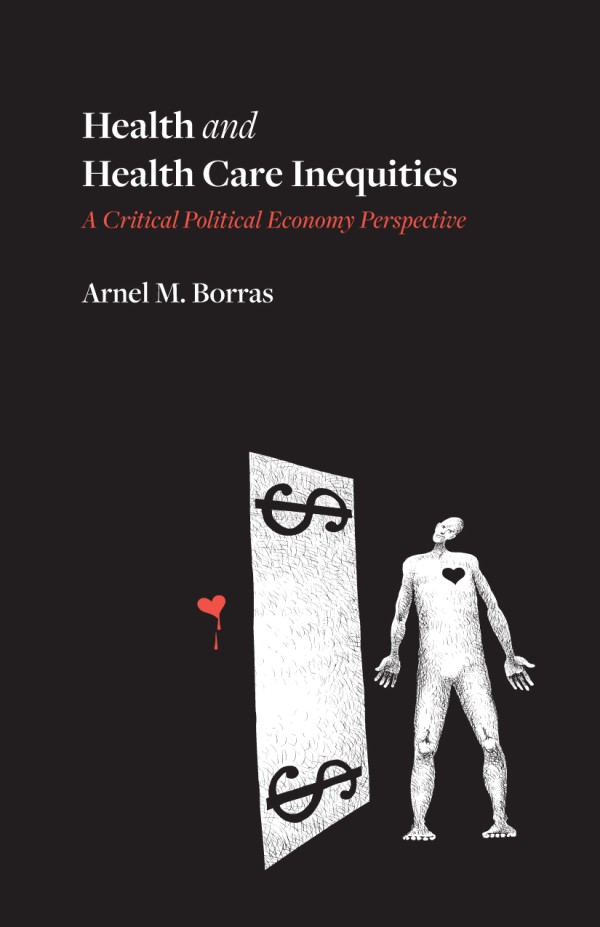
Book: 'Health and Health Care Inequities' iv

Fittingly, chapter 4 brings us to Political Power and Policy Advocacy. In Hodges' model you can both have your cake; and gratefully receive the cake you're given. This is the health in politics and the health in politics (as, for example, revealed in the health status of political leaders).


As a framework structure, the axes of Hodges' model initially give rise to four symmetric domains (spaces). There is an invitation to begin where you choose. Chapter four reveals some truths, as the 'nexus' - center of the model is mobile (unlike many citizens!) as the 2x2 rendition below suggests, if not illustrates. Borras takes us through health politics, political participation and representation, unequal power and politics, and policy change approaches with illustrative cases.

In an institution (like the NHS), bureaucracy, aka an organisation, the workforce are often acutely aware of policy and procedure. It is like the Force. It permeates everything - the meetings - and yet is remote. Borras seek to shed light on unequal resources and policy influence. Again Borras's literature informed discussion and argument, includes some historical gems, such as Lasswell (1958).

Individual
|
      INTERPERSONAL    :     SCIENCES               
HUMANISTIC  --------------------------------------  MECHANISTIC      
 SOCIOLOGY  :    POLITICAL 
|
Group


Political Power and
Policy Advocacy


In chapter 5 on evidence and ideas, discussion of Katherine Smith's 'under 'Six Travelling Ideas' is an excellent resource, with several references including:

Smith, Katherine E (2013) Institutional filters : the translation and re-circulation of ideas about health inequalities within policy. Policy and Politics, 41 (1). pp. 81-100. ISSN 0305-5736 (https://doi.org/10.1332/030557312X655413).

I love the image of ideas as and on a journey, some successful, others fractured, weak, re-contextualised, even non-journeys (falling - 'dead from the press' - I suppose?). At least the journey of Hodges' model is ongoing. A baton for our times. As I wrote in post i, chapter 5 tackles 'evidence' (there's a post or two). It does so in relation to information, ideology, and interests:

If you've read many posts on W2tQ, you may see: I've a chip on my shoulder. Evidence for the safety, benefits, theoretical underpinning ... of Hodges' model is still to be realised. To the satisfaction, that is: of course to the powers that be. Speaking of which: the axial (for me) subtitles arise again in chapter 6; capitalism-imperialism-colonialism-racism nexus (p.87).

To demonstrate the utility of Hodges' model, this is significant.

Please feel free to search for these terms - capitalism-imperialism-colonialism-racism in the search bar above.

I've been interested in drama since playing the part of Francis Nurse in Miller's The Crucible. It took some 50 years to go from armchair to treading the boards again. I played Ken, supported by his wife, trying to run a post office, amid a chaotic and injurious IT system. An 8-9 minute sketch which was part of a Living Newspaper. Interested in writing - as previous posts may reveal, I also keep trying get to the theatre. With the themes of chapter 6, Liberation was thought provoking.

Mind-Body, Private-Public, Socialist-Conservative, Borras adds the global health North-South schism. A prompt for suggesting a brief glossary is expropriation and exploitation^ (p.88). Four stages of capitalism too. This chapter - A critical political economy approach is essential reading for me (and you!?) - a path to a critical care economy (self-care to planetary health).

^There is a note #3 about these on page 99.

See also: Post i : Post ii : Post iii : Post v (to follow)

Merelman, R. M. (1981). Harold D. Lasswell’s Political World: Weak Tea for Hard Times. British Journal of Political Science, 11(4), 471–497. http://www.jstor.org/stable/193766

Arnel M. Borras. (2025) Health and Health Care Inequities - A Critical Political Economy Perspective. Fernwood Publishing.

Liberation image: The Agency
https://theagency.co.uk/news/cast-announced-for-ntombizodwa-nyonis-liberation-at-royal-exchange/

Tuesday, July 29, 2025

Book: iii 'Health and Health Care Inequities'


This book, or similar should be read by 3rd year student nurses and other healthcare learners. I wondered if, for students, a brief glossary might be useful. But key terms are explained and clearly, with typologies numbered and expanded when needed. There seems an aversion in nursing academia to avoid the acutely 'political'. Even though of course in psychiatry, the need for considersation of human rights, consent, capacity, law, personal and public safety, risk is inevitable. Should we only learn of the politics of our role on a post-registration/license course of learning? As mentioned in post i, Borras duly notes the asymmetric impact COVID. The disproportinate deaths of frontline healthcare workers from ethnic minority groups (UK). A sign of the impact, is reflected in COVID recurring through the text.

The device of using axes, e.g. Class-Gender-Health (p.11) rightly draws in commentary on nutrition, pay gaps - heterosexual white men, terms of employment, and design and occupational health for woman. Gender politics is also reflected in the text. The relational dimensions of this discussion also stands out. The Class-Race-Health axis (had me return to the question of parity, but beyond the mental - physical divide. 

These axes employed by Borras seemingly traverse a path and are extensible (across pages). Briefly, in Hodges' model the domains and axes act as stepping stones: 

We can ‘walk’ the model:

Humanistic INTERPERSONAL Individual SCIENCES Mechanistic: adding - Humanistic SOCIOLOGY Group POLITICAL Mechanistic 

A global perspective is matained, even though the focus is Canadian health, government, policy and policy. The press have often highlighted the global nature of the housing crisis. Canada is not immune; as discussed in chapter 2. For what is in many nations a 'housing disaster', Borras covers the history too. Reflecting on: 
'Around the world, neoliberal programs have resulted in over a billion people living in slums (Davis 2017, 23). In wealthier countries, there was rampant privatization of social housing units.' p.25. 
- you feel like a nodding dog toy. Where is the leadership, the strategy and integrity to provide housing for all? Arnel also stresses the link between mental health status and housing. The SDGs place emphasis on security (yes, at the level of what is happening in Ukraine, Gaza, South Sudan...), then housing follows. And with climate refugees to follow ...! I have seen gentrification, and listened to an account in 2007 as Manchester started to experience high-rise growth. I used to try to walk to community visits with students when possible. Observational skills come in many forms, safety still depends upon them. With no place to call home, safety and security is a stark issue for people. A foundation for health, wellbeing and ironically productivity. The rise of foodbanks is also damning. 

Gambling is not indexed, but there appears a denial in the UK government, with other nations 'folding' to the influence of lobbying and corporate influence reducing or removing restrictions in gambling and crucially: advertising. What's the denial you say? Yes, well governments seem to be in denial that there are vulnerable groups in their respective populations. It is laudable that they bestow upon the citizenry the freedom of choice, but that can spell trouble.

If Canada - Ontario has its housing scandal:
'Housing insecurity and homelessness occur because the state and its goencies support real estate and banking corporations that continuously increase housing prices. This setup is a huge problem because these enti- ties focus on generating profit and capital accumulation. The Greenbelt Scandal in Ontario revealed how the government made decisions that served the interests of big companies instead of the public (McGrath 2023; Office of the Auditor General of Ontario 2023). This scandal is an example of neoliberalism and a corrupt style of governance (Moscrop 2023). We need to stop using neoliberal strategies and focus on socialized housing.' p.27.

So does the UK: Grenfell Tower Inquiry No doubt, other nations have their tragic examples. It seems 'international Standards', quality, integrity can never be taken for quality. They too are precarious, vulnerable. Borras's work in chapter 2 on housing security, and differenciation of core housing need is laudable, informative and welcome. Re-reading Arnel's point: 'There is no doubt that housing insecurity affects health'. p.28. His book as a whole makes the point that of course more evidence will always be needed. In healthcare for decades the basics of public health have been identified, studied, established, placed in models and frameworks. Yet we find we are found wanting (UK - Awaab's Law) dragged back to the first steps; and despite the urgent issues we now face.

"Universal health care" is not exactly new:

The Canadian Association of Social Workers. (1961). The Social Worker, Volume 29, Numbers 1 to 2. 29(1to2), 1to78. The Canadian Association of Social Workers. The Social Worker - Le travailleur social. Canadian Association of Social Workers. https://jstor.org/stable/community.39672572.

Borras is correct to write of 'The Continuing Private War against Universal Health Care' (p.36). Looking at NGRAM it appears the private sector has been winning in recent decades. Working previously as a community mental health nurse for older adults, chapter 3 explores Canada's health care systems. Table 3.1 compares the ownership of long-term care homes in figures. The discussion deals with the quality of care and variation. Policy intentions, plans, research and what follows in practice is also debated. Is there any comfort  in learning that Canada is not alone in being skilled at kicking-can-down-the-road. To be fair many developed nations face the same demographic cliff (whichever way you it!), just one of the urgent issues noted above. The contribution of informal carers is also highlighted.

Here in the UK the commissioner - provider split and models of care at the finance level are a maze: amazing in their bureaucracy. Borras does a marvellous job, in providing enough detail without weighing the narrative flow, and losing the reader. The close of chapter 3 offers hope that Hodges' model will continue to be found:
'Therefore, shifting away from neoliberalism toward a new societal system where health care is seen as a fundamental human need and a universal right, not a profit-driven commodity, is crucial. This alternative system requires a new societal framework built on solidarity, fairness, and humanity, prioritizing health over financial and personal gain.' p.50.
See also: Post i : Post ii : Post iv : Post v (to follow)

Arnel M. Borras. (2025) Health and Health Care Inequities - A Critical Political Economy Perspective. Fernwood Publishing.

In addition:

Messing, K., & de Grosbois, S. (2001). Women Workers Confront One-Eyed Science: Building Alliances to Improve Women’s Occupational Health. Women & Health, 33(1–2), 125–141. https://doi.org/10.1300/J013v33n01_08  (Borras - pp.11-12).

https://nhsrho.org/news/tender-maternal-and-neonatal-image-library/

Saturday, May 10, 2025

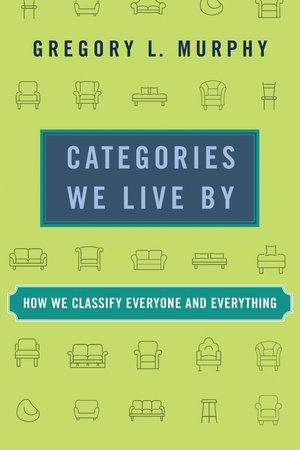
v Book review: 'Categories we live by'

Our lives and careers (hopefully) are full of bridges, some recognised, but not taken, others passed-by on our way (and unseen). Before I completed my training as a student mental health nurse beginning in 1977, I saw a critical bridge between the knowledge and skills on mental health nursing and general nursing. Crossing this bridge was essential (for me) to being a registered 'nurse'.

Chapter 6 on Psychodiagnostic Categories is a gift therefore. It's a gift because another bridge emerged in 1980-1981 with the Sinclair microcomputers and advent of 'home computing'. With a ZX81 there was going to be a need to navigate this space between the what is human and what is machine. Two categories that remain key concerns today.

The DSM (Diagnostic and Statistical Manual of Mental Disorders - published by the American Psychiatric Association [APA] ) is on the chapter's first page, plus the patient, researchers, psychiatrists and the conditions learned during their medical education, contrasted with individual psychiatrist's clinical encounters with patients. 

Very quickly (the next page p.86) Murphy identifies the 'circumstantial factors' that cause mental illness. This is very positive as acknowledging the determinants across health is key, however framed, e.g. social determinants, economic, educational we must take into account all of them. Otherwise our assessment must be considered as incomplete, or at least lacking?

The utility of Prof. Murphy's short book is in how prior to the case studies we see the problem of definitions. And how what is determined is often a matter of convenience. This is a non-trivial matter - especially in health, economics, sciences, politics, future and peace studies: you get the idea...

Of immediate relevance in the USA is the need for categories for insurance purposes. It is an industry. Yes, indeed: 'The truth is that psychiatric patients vary in every possible way', p.86. Computers of course are well-equipped to help us in the creation, revision and publication - access to categories; with classification, taxonomy, nomenclature ... also in the mix. I was reminded of WHO's history of classification (see below) which I point students and colleagues to.

The way DSM is applied is explained and the politics duly noted (especially in Chap. 7). Resort to 'miscellaneous' is described as a sign that 'the categories are not necessarily picking out 'natural kinds'. I remember in the 90s, our PICK database on a community mental health project had Murphy's 'X' not otherwise specified. I don't think I read the word 'caseness', but there is a lot 'inside'!? References are ongoing. I wondered if there could be more recent examples, but perhaps this is in turn symptomatic of categorisation tending to be the rear car? Fuzziness is discussed. Plus, the observation that 'a few psychiatric categories may be true natural kinds, like gold or rainbow trout.' p.89. 

'Change' is a mantra for all disciplines in the NHS and global healthcare. So pragmatic to see how revision and change in the DSM can be used by - dare I mention - anti-psychiatry advocates and clinicians as to what change represents to these respective interest groups? At a time when research is experiencing funding changes, Murphy contrasts how DSM was developed for the use of clinicians to identify people with similar profiles, but they were not developed to identify (research - Nat. Inst. for Mental Health) underlying causes. Raising the determinants once again, p.91.

It is obvious but as personnel and Brits may look at private medicine with coding purposed for insurance purposes; there is within the NHS (public-funded healthcare) and psychiatry (a single domain too) within and the need by patients for diagnosis, and the welfare system. Here in the UK the rise of mental health in young adults, autism and waiting lists for assessment for ADHD are a moot point.  

Through Hodges' model we some possibly fascinating bridges, that are much less-travelled these days? In many cultures, even if we do not need permission to be sick, it needs to be recognised socially - and so politically. Society needs to deal with individuals who are ill, infirm, disabled. It's interesting then to reflect on this issue and phenomena through the lens of anthropology and medical sociology. Murphy warns to of the dangers 'of thinking of something as being the category'. In medicine a new approach is needed, as Murphy also notes. A nice bridge to chapter 7 Categories and Power.
'The case studies discussed in the previous chapters remind us that categories can be political and social tools. An old department chair of mine had the saying, "She who sets the agenda controls the meeting." We might coin a new one, "Those who make the categories control the outcomes." If your psychodiagnostic categories are made by working therapists and physicians, they might facilitate treatment- -and also benefit those practitioners. If they are made by researchers, they might not be very useful for treatment at all. And if they are made by insurance companies, all bets are off.' p.95.
Trying to take my attempts to find theoretical underpinning (category 'trying to clever') I've a diagram scribbled here. Nearby, p.100, I picked up on 'the cost of losing information or distorting reality to some degree.' Murphy picks up on the ICD Int. Classification of Diseases here. Twitter is still twitter here - thumbs up for that! There is a useful example of the impact of categories in age, pregnancy and medical attention provided.

From Chapter 8, I picked out: Naming Nature: The Clash Between Instinct and Science, by Carol Kaesuk Yoon. W. W. Norton: 2009. 352 pp. £19.99/$27.95 9780393061970 | ISBN: 978-0-3930-6197-0; and checking, I remember the book's cover. Murphy's book overall highlights the convenience of our categories, the ongoing challenges and everyday conundrums they present though the remaining chapters on Species (8); Peanut Butter, Potato Chips, Almond Milk... (9); Racial Categories (10). These all contribute, still building a coherent picture, chapter 10 vital among them with a url provided (which may have changed):

https://anthropology-tutorials-nggs7.kinsta.page/adapt/adapt_4.htm


The one-drop rule (David, 1991) on p.126, is deeply troubling. Especially so given some examples of human reasoning even today. Medicine, by way of blood tests, features again. I smiled wryly reading how people from different countries have different rates of disease, e.g. 'heart disease in Scotland'. Instantly, and crackling - a deep-fried Mars bar popped into my mind. 

The things people do. You - really could read this book! 

Murphy, Gregory L. Categories we live by: how we classify everyone and everything. Cambridge, MA: The MIT Press, 2024.

Many thanks again to MIT Press for the review copy and Prof Murphy for a great read.

Previously: DSM : fuzzy : categories

Tuesday, May 06, 2025

Book review iv: 'Categories we live by'

The introduction to part ii 'Case Studies' is quite prescient: 'Categories have consequences'. p.75.

Certainly timely in the UK as Prof. Murphy returns to gender and birth sex his first example at the book's start. 

Coincidental or not, categories do change. As we try to understand them it is vital we don't mess them up. Consequences follow for people who are subjected to the categorisation. People use them for stability, predictability, so change can be fraught for all. Personal and group identities can all be affected, and (recently) provisions in how 'spaces' are allocated and regulated - controlled.

At infant - junior school I remember the lack of awareness, understanding and empathy for peers affected by epilepsy, stigma was a thing then that wandered the classroom and playground. Through my career I've heard many clients recount experiences pointing to stigma and exclusion.

Of the case studies Murphy writes:
'Each chapter is a more-or-less self-contained case study (including other similar examples), except that chapter 7 is a more general meditation on how determining categories is used in the exercise of power. Some of the case studies get into the weeds, and if you find yourself not that interested in how species are defined, for example, you can skip ahead to the next chapter without losing much. Following part II will be a conclusion, which attempts to summarize some of the lessons learned from all these examples.' p.77.
Murphy's style is accessible, and the case studies are informative. The author is also accessible and responsive I must add. I prefer and need a physical copy of books to reduce screen time, but e-books have their uses. I'm sure I read a short sentence in the case studies that essentially contrasted the individual and collective in sociology. Can I find that word? No luck thus far. I may be mistaken but appreciate Prof. Murphy's reply and thoughts.

There's another 'news' coincidence on p.80 (Chapter 5 'Legal Categories'): are Santa Claus costumes 'clothing' and so subject to tariffs (also referenced)? Every person worldwide, has no doubt pondered on their marked grade in a test or exam - and 'where' this places them?
'In her review of a book about rules, Rivka Galchen (2022) admits to feeling a bit of despair in the end: "Rules that leave a ruler, Or a judge, in charge of interpreting them feel at once humanized and corruptible. Rules that allow no exception seem free of human frailty but alien, and unable to admit properly of complexity." It is very easy to point at what went wrong with an overly strict rule or with a judge who seems biased, but less easy to devise a system of categories that avoids every problem.' p.83.
I often frame the conjunction of the mechanistic axis and the group in Hodges' model in terms of what do need, or get when you have large groups of people? The political domain, including law and disorder is critical of course. Is 'utopia' the perfect system by definition? I like the way even prior to reference to Galchen, Murphy states how 'the precise borders between categories can be essentially arbitrary, and there is no way to avoid that arbitrariness if you insist on dividing things into categories.'. p.83. 

If this book was a BASIC computer program, the first command for Chapter 6 Psychodiagnostic Categories. might well be a 'GOTO' statement: Chapter 7 Categories and Power.

More to follow and nearly there - sadly.

Previously: identity : space : categories

Murphy, Gregory L. Categories we live by: how we classify everyone and everything. Cambridge, MA: The MIT Press, 2024.

Many thanks to MIT Press for the review copy - and the dose of serendipity:

Wednesday, March 26, 2025

Objectify me by Nicola L.

Individual
|
      INTERPERSONAL    :     SCIENCES               
HUMANISTIC  --------------------------------------  MECHANISTIC      
 SOCIOLOGY  :    POLITICAL 
|
Group
'You can touch
my breasts,
caress my stomach,
my sex.
But, I repeat it,
it is the last time,'

- read a note
L. left in a drawer.


Nicola L.
 'La Femme Commode' (1969)


My source: Stoppard, L. Objectify me, House&Home, FTWeekend, 5-6 October 2024, pp.1-2.

Saturday, February 22, 2025

6º CONGRESSO INTERNACIONAL DA SPF - CONVITE À SUBMISSÃO DE RESUMOS/CALL for PAPERS

6º CONGRESSO INTERNACIONAL DA SOCIEDADE PORTUGUESA DE FILOSOFIA

CONVITE À SUBMISSÃO DE RESUMOS

A Sociedade Portuguesa de Filosofia, em colaboração com o Centro de Filosofia da Universidade de Lisboa, organiza o seu 6º Congresso Internacional, que decorrerá na Faculdade de Letras da mesma universidade, de 1 a 3 de setembro de 2025.

O Congresso é aberto à participação de todos os interessados em apresentar e discutir a sua investigação em qualquer domínio e metodologia dos estudos filosóficos. As propostas serão avaliadas anonimamente por membros de um amplo painel de especialistas.

ORADORES CONVIDADOS

Genia Schonbaumsfeld (Universidade de Southampton)
João Carlos Salles (Universidade Federal da Bahia)
Luísa Couto Soares (Universidade do Porto)
Olga Pombo (Universidade de Lisboa)
Viriato Soromenho-Marques (Universidade de Lisboa)

LÍNGUAS DO CONGRESSO: Português, Inglês, Francês e Espanhol

VALORES DA INSCRIÇÃO:

Participantes: € 80,00
Sócios da SPF: € 50,00
Estudantes (licenciatura, mestrado ou doutoramento): € 40,00
Estudantes sócios da SPF: 30€

DATA LIMITE para a submissão de propostas de comunicação: 1 de Abril de 2025

COMISSÃO CIENTÍFICA:

Álvaro Balsas (Universidade Católica Portuguesa, Braga)
André Barata (Universidade da Beira Interior)
António Pedro Mesquita (Universidade de Lisboa)
Célia Teixeira (Universidade Federal do Rio de Janeiro)
David Yates (Universidade de Lisboa)
Diogo Ferrer (Universidade de Coimbra)
Gil Santos (Universidade de Lisboa)
Irene Borges Duarte (Universidade de Évora)
João Cardoso Rosas (Universidade do Minho)
João Constâncio (Universidade Nova de Lisboa)
José Meirinhos (Universidade do Porto)
Magda Costa Carvalho (Universidade dos Açores)
Nuno Venturinha (Universidade Nova de Lisboa)
Pedro Galvão (Universidade de Lisboa)

EMAIL DO CONGRESSO: 6congressospf  AT gmail.com

INSTRUÇÕES PARA SUBMISSÃO DE RESUMOS E MAIS INFORMAÇÕES

Consulte a página do congresso no site da SPF: www.spfil.pt/6congresso

__________________________________________________________

ENGLISH

6th INTERNATIONAL CONGRESS OF PHILOSOPHY

CALL FOR ABSTRACTS

The Portuguese Philosophical Society, in partnership with the Centre of Philosophy of the University of Lisbon are organizing the 6th International Congress of Philosophy, to be held at the University’s Faculty of Letters on 1 to 3 September 2025.

The Congress welcomes all researchers interested in presenting and discussing their research in all domains of philosophical studies and according to all philosophical methodologies. Abstracts submitted will be anonymously refereed by members of a large panel of experts.

INVITED SPEAKERS:

Genia Schonbaumsfeld (University of Southampton)
João Carlos Salles (Universidade Federal da Bahia)
Luísa Couto Soares (Universidade do Porto)
Olga Pombo (Universidade de Lisboa)
Viriato Soromenho-Marques (Universidade de Lisboa)

CONGRESS LANGUAGES: Portuguese, English, French and Spanish

CONGRESS SECTIONS

Each proposal must indicate that it intends to be associated with one and only one of the following sections:

Teaching Philosophy (PE)
Epistemology / Philosophy of Knowledge (ET)
Aesthetics and Philosophy of Art (ES)
Ethics and Bioethics (EB)
African Philosophy (AF)
Philosophy of Science (SF)
Philosophy of History (FH)
Philosophy of Language (FL)
Philosophy of Mathematics (FMA)
Philosophy of Mind (FME)
Philosophy of Nature and Environment (FN)
Philosophy of Religion (FR)
Philosophy of Law (FD)
Philosophy and Gender (FG)
Phenomenology (FE)
Luso-Brazilian Philosophy (FB)
Political Philosophy (PF)
History of Ancient and Medieval Philosophy (HA)
History of Modern Philosophy (HM)
Logic (LO)
Metaphysics and Ontology (MO)

FEES:

Participants: € 80,00
SPF Associates: € 50,00
Students (Bac, MA or PhD): € 40,00
Student SPF Associates: 30€

DEADLINE for submitting proposals: ­­­­­­1st April 2025

SCIENTIFIC COMITTEE:

Álvaro Balsas (Universidade Católica Portuguesa, Braga)
André Barata (Universidade da Beira Interior)
António Pedro Mesquita (Universidade de Lisboa)
Célia Teixeira ((Universidade Federal do Rio de Janeiro)
David Yates (Universidade de Lisboa)
Diogo Ferrer (Universidade de Coimbra)
Gil Santos (Universidade de Lisboa)
Irene Borges Duarte (Universidade de Évora)
João Cardoso Rosas (Universidade do Minho)
João Constâncio (Universidade Nova de Lisboa)
José Meirinhos (Universidade do Porto)
Magda Costa Carvalho (Universidade dos Açores)
Nuno Venturinha (Universidade Nova de Lisboa)
Pedro Galvão (Universidade de Lisboa)

CONGRESS EMAIL: 6congressospf AT gmail.com

HOW TO SUBMIT ABSTRACTS AND FURTHER INFORMATION on the congress page at the SPF site: www.spfil.pt/6congresso

My source:


E-mail: iestudosfilosoficos AT gmail.com

Monday, December 23, 2024

Comment: Menopause - a global health and wellbeing issue that needs urgent attention

On 'X', I noticed a comment piece from the Lancet:


Menopause: a global health and wellbeing issue that needs urgent attention
Gayathri Delanerolle, Peter Phiri, Sohier Elneil, et al. The Lancet Global Health, Volume 0, Issue 0.
Publication History: Published December 18, 2024 
DOI: 10.1016/S2214-109X(24)00528-X

As usual I searched 'Welcome to the QUAD' [W2tQ] for previous posts tagged 'menopause'. The result '0' was a surprise, as there are several posts re.'menstruation' 

https://hodges-model.blogspot.com/search?q=menstruation

And many tagged 'women':

https://hodges-model.blogspot.com/search?q=women 

And this despite, a partner and family members experiencing the effects and impact of menopause. I was also asked in the summer to sort a list of signs & symptoms for menopause that can be associated with mental health nursing.

Interesting to see reference to the Roy Adaptation Model in the paper:
Klotzbaugh R, Fawcett J. Gender minority persons’ perceptions of peer-led support groups: a Roy Adaptation Model interpretation. ANS Adv Nurs Sci 2023; 46: 59–74.
And to address the global health extent and context of menopause:
'The stigma is such that open dialogue is inhibited in the majority of LMICs and the first-generation migrants from these LMICs to high-income countries (HICs); the paucity of broader understanding and acceptance in society exacerbates the mental and emotional strain of menopause and can lead to social isolation, particularly in these stigmatised contexts.' [my emphasis]
If needed there may be a CPD exercise for student nurses, or those qualified with revalidation pending? Hodges' model (the template) can help in achieving a broader understanding of menopause, and women's health to include menstruation and social attitudes, beliefs and attitudes. The paper does not refer to shame, and self-stigma, which may prevent a person from seeking help? So, there is a reflective exercise in reading the text and mapping the recommendations in the paper:

Panel - Recommendations to improve health outcomes for individuals with menopause 
  • Lifestyle modifications 
  • Mental health support
  • Holistic approaches
  • Culturally competent care 
  • Personalisation of hormone replacement therapy care 
  • Peer support groups or social prescribing 
  • Conduct comprehensive research 
  • Improve accessibility
  • Understanding various risk factors, such as lifestyles, environment, and climate
If anyone has events, journal special issues for 2025 ... I can help publicise, please let me know.

Ack. https://x.com/raj_psyc

See also:
Delanerolle, Gayathri & Forbes, Anna & Cavalini, Heitor & Taylor, Julie & Riach, Kathleen & Hinchliff, Sharron & Atkinson, Carol & Potočnik, Kristina & Briggs, Paula & Kurmi, Om & Talaulikar, Vikram & van Vlymen, Jeremy & Shetty, Ashish & Irfan, Muhammad & Kareem, Rabia & Kemp, Helen & Palo, Subrata & Rathnayake, Nirmala. (2024). An Exploration of the Mental Health Impact Among Menopausal Women: The MARIE Project Protocol (UK arm). American Journal of Biomedical Science & Research. 22. 10.34297/AJBSR.2024.22.002992. 

Wednesday, May 15, 2024

Yves Klein 'Anthropométrie sans titre'

Individual
|
      INTERPERSONAL    :     SCIENCES               
HUMANISTIC  --------------------------------------  MECHANISTIC      
 SOCIOLOGY  :    POLITICAL 
|
Group


Anthropométrie sans titre (ANT 43),
c1960 © Courtesy of Lévy Gorvy Dayan


My source: Rotraut to Baya Simons. My husband, Yves Klein, FT Weekend, HTSI, 11 May 2024. pp.23-24.

Yves Klein and the Tangible World is at Lévy Gorvy Dayan until 25 May, levygorvydayan.com