Hodges' Model: Welcome to the QUAD: pregnancy

Hodges' model is a conceptual framework to support reflection and critical thinking. Situated, the model can help integrate all disciplines (academic and professional). Amid news items, are posts that illustrate the scope and application of the model. A bibliography and A4 template are provided in the sidebar. Welcome to the QUAD ...

Showing posts with label pregnancy. Show all posts

Thursday, August 27, 2026

[IBPnetworkGlobalConnect] 🎉 It's live: the investment case for pleasure-based sexual health

*Shared via the IBP Network Global Community of Practice hosted by the WHO Department of Sexual Reproductive Maternal Child Adolescent Health and Ageing. Learn more at www.ibpnetwork.org*

Dear pleasure champions,

Our new research, The Investment Case for Pleasure-Based Sexual Health, is officially published in BMJ Global Health.

Read it here: https://gh.bmj.com/content/11/8/e024479

Headline finding: making sexual health services pleasure-inclusive for young people returns $23 for every $1 invested, across 99 countries. Full details, plus everything you need to help spread the word — captions, hashtags, visuals for you to use, the works — are in our media pack: https://drive.google.com/drive/folders/1FSrXz5XO1qYiZX9NoExBvvc51nCpmT-H?usp=drive_link 
We'd love it if you shared it with your communities and whomever you think needs to read it; this is exactly the kind of moment we built this toolkit for. Instructions inside!
Thank you for being part of this movement with us, reach out to me at any time if you have questions.
Warmly,
Elena and The Pleasure Project Team

Elena Ascione (lei/she/her) 

Strategic Communication Lead

e:     elena AT thepleasureproject.org

w:    www.thepleasureproject.org


n.b.My source as indicated. When I first read this, I did a double-take, but all good in the end! PJ

Thursday, June 18, 2026

Evidence sent to Cumbria Police about 61 baby deaths at church-run home c/o ITV News

'Some babies born with disabilities were denied medical help because they were judged unadoptable, as ITV News Social Affairs Correspondent Sarah Corker reports


Evidence has been submitted to Cumbria Police in connection with allegations of historical abuse at a church-run mother and baby institution where more than 60 newborn babies died, following an ITV News investigation.

A new report by Dr Michael Lambert, an historian of the welfare state at Lancaster University, has outlined a high infant death rate at St Monica’s home in Kendal.

The report concluded that the deaths were due to a combination of failings, including inadequate facilities, malpractice and poor care from those delivering babies and a lack of oversight from the church and state.

Analysis of public health records, alongside birth and death certificates, indicated that children with disabilities born at the mother and baby home were deemed "un-adoptable" and denied modern medical care, according to the new research.'

individual
|
INTERPERSONAL
: SCIENCES             
humanistic ------------------------------- mechanistic
SOCIOLOGY : POLITICAL   
|
group
emotional neglect and abuse
 grief, trauma and guilt
 shame
 
physical neglect and abuse
 high infant death rate
inadequate facilities
malpractice


mother and baby  
social / societal punishment 
public health 


 institutions
 criminal investigation
 records              


Source: ITV: NW News and https://www.itv.com/news/2026-06-09/evidence-sent-to-cumbria-police-about-61-baby-deaths-at-church-run-home

Tuesday, April 18, 2023

'Hard to Reach' or 'Easy to Ignore'

"MPs call for Government target to eliminate maternal health disparities"


Committee Room

"The Women and Equalities Committee has called on the Government to set a definitive target to eliminate “appalling” disparities in maternal deaths. Black women are almost four times more likely to die from childbirth than white women. Maternal death rates in deprived areas are on the rise, with women in the most deprived areas 2.5 times more likely to die than those in the least deprived areas."


INDIVIDUAL
|

 INTERPERSONAL    :     SCIENCES               
HUMANISTIC --------------------------------------  MECHANISTIC      
SOCIOLOGY  :   POLITICAL 
|
GROUP

'Easy to ignore'

'Hard to reach'

Hard to reach

Easy to ignore


Text in Hodges' Model c/o Donna Ockenden BBC Radio 4 Today 18 April, 2023 

Saturday, December 31, 2022

CFP: History of the Philosophy of Pregnancy

Conference Venue:

Department of Philosophy, University of Dayton, Dayton, United States

Details

CFA: History of the Philosophy of Pregnancy

We invite authors to submit abstracts of approximately 500 words for a conference entitled “History of the Philosophy of Pregnancy,” hosted by the Philosophy Department of the University of Dayton, as part of its Richard R. Baker colloquia series (Dayton, OH, USA). The conference will be  held on October 6-7th, 2023. Please see below for details. 

Keynote Speaker 

Sara Brill (Fairfield University) 

Our conference is motivated by the dearth of historical scholarship on the philosophy of pregnancy. Historical scholarship on reproduction tends to focus on the conception and development of the embryo  -- 'generation' and 'embryology' -- treating the developing organism as an independent entity. As a consequence, pregnancy is written out of the causal story. The goal of this conference is to recover a history of the philosophy of pregnancy and bring the work and challenges of the pregnant individual into focus.

We encourage submissions pertaining to all historical periods and are interested in approaches to the topic from different philosophical schools and cultural perspectives.

Examples of potential topics include the following:

  • How was pregnancy conceptualized across cultures and time?
  • How did commitments to autochthony shape conceptions of pregnancy and public policy?
  • What were the political ramifications associated with conceptions of pregnancy, miscarriage, fertility, and infertility?
  • How did slavery and colonial practices impact conceptions of pregnancy and birth?
  • How did historical discussions of individuality and individuation take pregnancy into account in the context of discussions of generation?
  • How did the practices of midwifery or obstetrics inform philosophical discussions of reproduction?
  • How has pregnancy been understood in the history of biology?
  • How was the role of the placenta in reproduction understood?
  • How was pregnancy understood across species? What significance did this have for understandings of human and non-human animals?
  • What impacts were maternal agency or mental life thought to have on  pregnancy?
  • How did pregnancy relate to ensoulment and the formation of persons?
  • How was the female reproductive body conceived relative to the male reproductive body? Were female bodies treated as inferior versions of male bodies or unique for their reproductive capacities?
  • What is the historical relation of sex or gender to pregnancy? What is the relation of physiological to cultural understandings of pregnancy, or vice versa?
  • How has the discourse on pregnancy and fertility intersected with the discourse on ableism and disability?
  • Why is there little, if any, explicitly philosophical writing on pregnancy in the history of philosophy?
  • What kinds of methods may be employed for the recovery of a history of the philosophy of pregnancy?
  • What does the history of the philosophy of pregnancy suggest for contemporary philosophy of pregnancy?

Please submit abstracts of ~500 words to histphilpregnancy AT gmail.com by May 15, 2023. Please include your name, institutional affiliation (if any), and paper title in your email. Papers should be suitable for a 30 minute talk, with Q&A to follow. Acceptance decisions will be announced by July 1, 2023. Submissions from members of underrepresented groups in philosophy are especially encouraged. Subsidized accommodations are available on a limited basis. 

Please contact histphilpregnancy AT gmail.com with any questions.

Organized by Dr. Myrna Gabbe (University of Dayton), Maja Sidzińska (PhD candidate, University of Pennsylvania), and Evangelian Collings (PhD candidate, University of Pittsburgh)

Sponsored by Philosophy Department, University of Dayton

My source: (once again)
Philos-L "The Liverpool List" https://www.liverpool.ac.uk/philosophy/philos-l/
Twitter @PhilosL. Department of Philosophy @LiverpoolPhi

n.b. I'm not sure about the motivation for recent posts, but the children have lost two grandmothers in the past two months.

Sunday, June 06, 2021

Mother?

individual
|
 
 INTERPERSONAL : SCIENCES
humanistic ----------------------------------------------- mechanistic
SOCIOLOGY : POLITICAL
|
group
Give Up!


Give Up!


GIVE UP!


GIVE UP![You will!]


... your baby


My source: BBC Radio 4 

https://www.bbc.co.uk/news/uk-wales-57251782


Monday, May 31, 2021

Africa :: New Africa ii Nutrition

individual
|
 
 INTERPERSONAL : SCIENCES
humanistic ----------------------------------------------- mechanistic
SOCIOLOGY : POLITICAL
|
group


"... the construction of the Armando Emilio Guebuza Bridge across the Zambezi resulted in a big fall in maize prices over a wide swath of Mozambique as it enabled farmers in the north of the country to move maize to the main centres of demand in the south."
 
single N-S road
 
Evidence that high levels of CO2 in the atmosphere actually depress the nutrient content of key crops. p.22

CLIMATE , COVID
 
food
Smallholders

security

CONFLICT

African Continental Free Trade Area

southern markets

"Past food security initiatives have even contributed to the problem by focusing too much on the production and distribution of staple foods, ... and too little on fruit, vegetables and pulses. As a result, vitamin A, iron and iodine deficiencies have all become more common." p.22. 


Menace of the three 'Cs', NEW AFRICAN, April/May 2021,607, p.20-21.

Small gains in malnutrition battle, NEW AFRICAN, April/May 2021,607, p.22.


Friday, May 28, 2021

Africa :: New Africa[n]

individual
|
INTERPERSONAL : SCIENCES
humanistic ----------------------------------------------- mechanistic
SOCIOLOGY : POLITICAL
|
group


To be completed.

Africa, Encyclopædia Britannica, Inc.

Sunday, December 27, 2020

Personal 'Felt' Service

individual
|
INTERPERSONAL : SCIENCES
humanistic ----------------------------------------------- mechanistic
SOCIOLOGY : POLITICAL
|
group


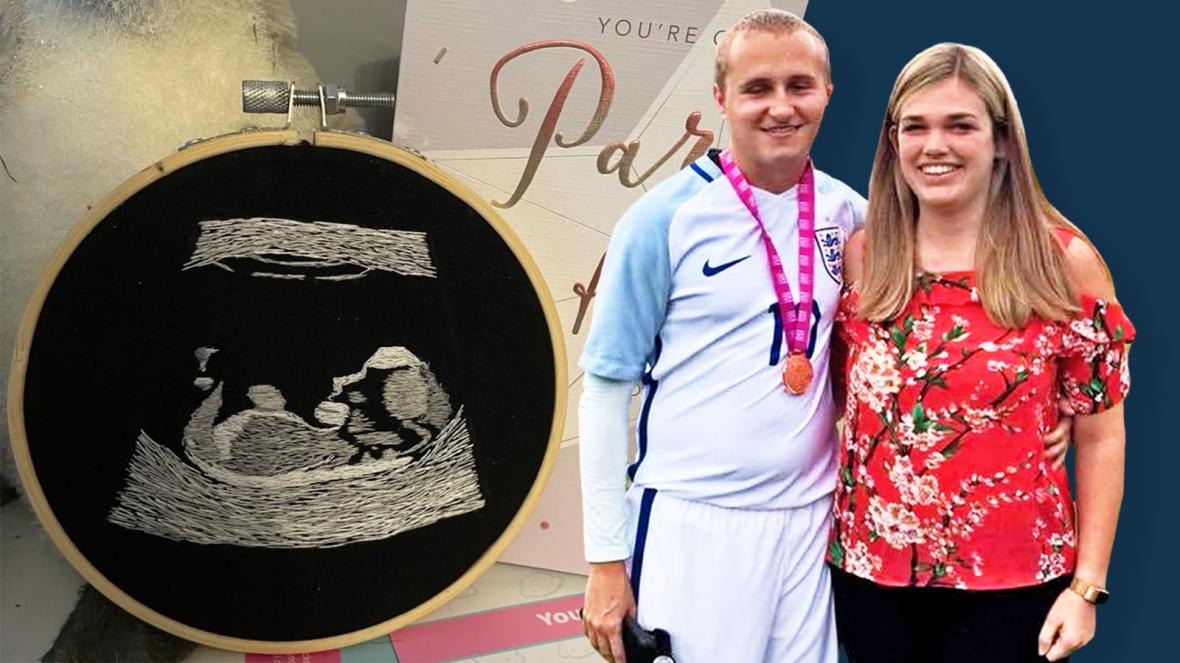
Embroidered scan lets blind father 'see' baby. The Time, 15 December 2020, p.27.

https://www.thetimes.co.uk/article/embroidered-scan-lets-blind-father-see-bab fathery-378jq82qb

Tuesday, December 18, 2018

c/o BBC Radio 4: Inherited Fear

individual
|
INTERPERSONAL : SCIENCES
humanistic ----------------------------------------------- mechanistic
SOCIOLOGY : POLITICAL
|
group

 
Inherited Fear

"Scared - but not named."


 The ghost of a ghost or
the memory of a

Biology
Germ cells
Neuro-epigenetics
PAG or periaqueductal gray -
the primary control centre for pain modulation

Know your surroundings
Facial recognition

shadow


Transmission of trauma across generations

Who is Who


All around the World
War, Perpetual Conflict
Ethnic cleansing
Refugees
Climate migrants ...

The Past
The Present
The Future


My source: BBC Radio 4: Inherited Fear

Tuesday, July 23, 2013

Global Research Nurses’ Network discussion: Nearly Free Nursing Colleges - Mental Health Nursing Rwanda

Nearly Free Nursing Colleges

Reply by Carole Bennett

I have been working in mental health nursing in Rwanda, I have seen a significant need for a mental health nurses handbook and guide. At the request of the faculty at Kigali Health Institute, I have complied two electronic texts.

1.Mental Health Nursing I: Diagnosis, Treatment Guidelines and Standards of Care : The African Context. and
2.Mental Health Nursing II: Vulnerable Populations of Africa and Emerging Best Practices.

They have links to research, questions that guide the student reading, and then clinical cases for integration of what they have learned in each chapter. They are based on an 8 week course with 3 classes per week.

I would like to place them on the internet for free access but don't know how that is done.

They would be applicable for any nurses, mental health or general nurses working in post-conflict countries. The first handbook uses heavily the WHO MH Gap intervention guide which is excellent and COHSASA standards of care. The second book includes mental health in primary care, chronic mentally ill in villages, pregnant women and infants, refugees, women who are victims of gender based violence, Incarcerated mentally ill, and traditional healers. It is challenging but could be available to anyone with motivation and an internet connection.

Perhaps resources like this could be compiled into a program of study with internet oversight. I would be interested in pursuing this concept with others. I will be returning to the US in a few days but would like to see these ebook widely distributed and utilized. Does anyone have any ideas how this could be accomplished?

www.globalresearchnurses.org

Wednesday, December 28, 2011

[HIFA2015] Women and Children First

As we draw towards the end of the year, Ros Davies, executive director of
Women and Children First (www.wcf-uk.org) reminds us:

'This Christmas Day, 1000 women will die in childbirth.
1000 women will die this way on Boxing Day too.
In fact 1000 women die every day whilst pregnant or giving birth.

... the vast majority of these deaths could be prevented by the provision of simple information and equipment which many of us take for granted.'

http://hosted.verticalresponse.com/786283/74890f4030/1470640645/8fd055e22b/

My source:
HIFA2015: Healthcare Information For All by 2015: www.hifa2015.org

Thursday, July 08, 2010

Born HIV Free campaign announces 11 million views for "Baby in the Sky" creative film

Dear Writer and Blogger,

In our series of news related to the 6-month Born HIV Free campaign, we are delighted to send you a press release focussing on the specially created film "Baby in the Sky" created by Les Bonzoms for this campaign.

The film has attracted a great deal of attention through YouTube and other broadcasts, helping to make people aware about the campaign.

Thanks as ever for your support,

Brendan
Ogilvy Public Relations Worldwide France, Paris


“Baby in the sky”: a stunning new film made by Les Bonzoms specially for the Born HIV Free campaign attracts more than 11 million viewers on dedicated YouTube channel

Geneva, 6 July 2010 – The YouTube channel dedicated to The Global Fund’s Born HIV Free campaign which was launched seven weeks ago, has already been seen by more than 11 million viewers. The channel features an exceptional animation film called “Baby in the Sky”, created by the design team Les Bonzoms and with music of Amy Winehouse. Euronews, the international news channel, joins the campaign by also featuring the video until October.

“The purpose of the Born HIV Free campaign is to encourage millions of people to support The Global Fund so we can finally put an end to the tragedy of 430,000 babies being born HIV-positive every year, when we have the means and the expertise to prevent this.” says Carla Bruni-Sarkozy, Global Ambassador for the protection of mothers and children against AIDS. Hopefully this beautiful film will reach a wide audience because of its creative ingenuity, and inspire millions of people to support The Global Fund so we can finally put an end to this terrible injustice.”

“Baby in the Sky” is a highly creative and imaginative animated film that conveys the beauty of life ahead for an unborn child. The film artistically portrays an imaginary journey in a world full of adventurous landscapes and fantastic creatures. It ends with a call from Carla Bruni-Sarkozy for an HIV-free generation in which she says “Life is a beautiful journey. Don’t let AIDS kill it.”
The film owes its powerful soundtrack to multi-award winning and singer/songwriter artist Amy Winehouse, who offered the pro-bono use of her “Back to Black” song for the film.
“It was a question of finding a true resonance with the images in the film created by Bonzoms”, says musician / producer Julien Civange, who conceived the Born HIV Free campaign, about the use of Winehouse’s music. “We wanted to find a piece that was modern but also well known, something that carried the same sensibility as the film. The magic came with the soundtrack by Amy Winehouse, an artist that Carla considers one of the greatest and most talented of her generation and who was generous enough to participate in the campaign.”
The animation can be viewed on the Born HIV Free YouTube channel and will also be distributed through various social and mass media platforms during the course of the campaign.

Since June 20, Euronews, the international news channel, has been broadcasting “Baby in the Sky” on its network in 155 countries. The film is shown in 90-second slots an average of three times a day for the first month and then once a day thereafter. Broadcasting of the film will continue until 5 October 2010.

"All of us at Euronews are very proud to be associated with this initiative, which is supported by an incredible positive animated film" said Philippe Cayla, Chairman of the Executive Board of Euronews. "We are glad to open Euronews' influential and far-reaching network to such professionals and experts fighting to eradicate HIV transmission during pregnancy. We are mobilized to make a success of this campaign and we strongly believe that Euronews' viewers will be deeply moved and will want to participate in the Born HIV Free campaign," Mr Cayla added.
CNBC has also been broadcasting the video on its network in Europe, Middle East and Africa since the launch of the campaign.

Speaking about the distinctive nature of the “Baby in the Sky” project, Jack-Antoine Charlot, a designer from Les Bonzoms said: “It was necessary to stop playing with the notion of guilt as an incentive for people to act and instead to reinforce a sense of wanting to share and take part in something. In the case of mother-to-child HIV transmission, the medications already exist to stop it. The problem is one of mobilization.”

After the film, viewers are invited to show their support by signing their name on the campaign’s “virtual wall of support”, on the www.bornhivfree.org website. The campaign asks people - by the simple act of clicking a button - to register their support for the work of The Global Fund and for the elimination of mother to child transmission of HIV by 2015.
Watch the videos on: www.youtube.com/bornhivfree

Monday, October 06, 2008

Death in Birth By Vivienne Walt/Freetown Thursday, Sep. 18, 2008

An excerpt from an article in TIME magazine is posted below by Patti Abbott, Co-Director of the PAHO/WHO Collaborating Center for Nursing Knowledge, Information Management and Sharing (KIMS), Johns Hopkins University School of Nursing.

The entire article can be found at: http://content.time.com/time/magazine/article/0,9171,1842278,00.html

“In a hospital ward in Freetown, the capital of Sierra Leone, Fatmata Conteh, 26, lay on a bed, having just given birth to her second child. She had started bleeding from a tear in her cervix, the blood forming a pool on the floor below. Two doctors ran in and stitched her up, relatives found blood supplies, and nurses struggled to connect a generator to the oxygen tank. One nurse jammed an intravenous needle into Conteh's arm, while another hooked a bag of blood to a rusted stand, and a third slapped an oxygen mask over her face. In the corner of the room, a tiny baby--3 hours old--lay on a bed, wailing, swaddled in bright-colored African fabric. "Listen! You must feel happy to hear your baby cry," said a nurse, pleading with Conteh to find strength. Three visiting members of a neighborhood church began chanting over Conteh: "Jesus, put blood into this woman! Thank you, Lord!" But as their chants grew louder, the nurses stepped back from the bed. Conteh was dead.
Some version of that scene is repeated around the world about once a minute. Death in childbirth is not just something you find in a Victorian novel. Every year, about 536,000 women die giving birth. In some poor nations, dying in childbirth is so common that almost everyone has known a victim. Take Sierra Leone, a West African nation with just 6.3 million people: women there have a 1 in 8 chance of dying in childbirth during their lifetime. The same miserable odds apply in Afghanistan. In the U.S., by contrast, the lifetime chance that a woman will die in childbirth is about 1 in 4,800; in Britain, 1 in 8,200; and in Sweden, 1 in 17,400. Deaths are heavily weighted to the poorest and most isolated in each country, which means that many politicians remain largely ignorant of the scale of the tragedy. "Often the people in the cities do not know what is happening in their own rural areas," says Sarah Brown, wife of British Prime Minister Gordon Brown and patron of the White Ribbon Alliance, a global advocacy organization that works with governments to lower maternal mortality rates. Brown--who lost a baby 10 days after giving birth in 2001--says that when she tells heads of state and their spouses how many women die in childbirth, "they are aghast."

The Gains Not Made
They have reason to be. For here is the truly ghastly reality of maternal mortality: in 20 years--two decades that have seen spectacular medical breakthroughs--the ratio of maternal deaths to babies born has barely budged in poor countries. To be sure, maternal health has seen advances, with new drugs to treat deadly postpartum bleeding and pregnancy-related anemia. But in many places, such gains are dwarfed by a multitude of problems: scattershot care, low pay for health workers and a scarcity of midwives and doctors. In Mozambique, where women have a 1 in 45 lifetime chance of dying in childbirth, there are just 3 doctors per 100,000 people; in all of Sierra Leone, there are 64 government doctors, only five of whom are gynecologists. Millions of families have never seen a doctor or nurse and give birth at home with traditional birthing helpers, while those who make it to a clinic--some being carried on bicycles or in hammocks--often find patchy electricity, dirty water and few drugs or nurses. Explaining the task of reducing maternal deaths, Sierra Leone's Minister of Health, Saccoh Alex Kabia, who returned home last year after decades of working as a surgeon in Atlanta, says, "The whole health sector is in a shambles."

The article goes on to say:
“When world leaders gather in New York City this month to take stock of the MDGS, their speeches are likely to tout the many achievements since 2000: millions more African children now attend school and sleep under mosquito nets; thousands of new water wells have been dug. Yet though maternal health care underpins many other development goals (healthy mothers are more likely to ensure that their children are well fed and educated), the total number of women dying in childbirth has remained virtually unchanged in eight years. Why? Health officials are clear in their answers. Aside from lack of money and political will, they also face entrenched traditions and fatalistic attitudes to maternal mortality, especially in very poor communities. "People think that dying in childbirth is not preventable," says Nadira Hayat, Afghanistan's Deputy Minister of Health. "They say it is up to God."
~~~~~~~~~~~~~~~~~~~~~~~~~~~~~~~~~~

I think they need knowledge, a nurse, a midwife.

Patti
Patricia A. Abbott, PhD, RN, FAAN
Co-Director of the PAHO/WHO Collaborating Center for Nursing Knowledge, Information Management and Sharing (KIMS), Johns Hopkins University School of Nursing
___________________
Visit web site:
http://my.ibpinitiative.org/GANM/NMmakingpregnancysafer/

My source: posted by Jody Lori: [Nursing and Midwifery for Making Pregnancy Safer: Discussion] link to article in Time Magazine.

Additional links:

http://www.unicef.org/infobycountry/sierraleone.html

http://www.unicef.org/infobycountry/sierraleone_statistics.html