Hodges' Model: Welcome to the QUAD: preventive medicine

Hodges' model is a conceptual framework to support reflection and critical thinking. Situated, the model can help integrate all disciplines (academic and professional). Amid news items, are posts that illustrate the scope and application of the model. A bibliography and A4 template are provided in the sidebar. Welcome to the QUAD ...

Showing posts with label preventive medicine. Show all posts

Monday, May 13, 2024

Salt Awareness Week

Individual
|
      INTERPERSONAL    :     SCIENCES               
HUMANISTIC  --------------------------------------  MECHANISTIC      
 SOCIOLOGY  :    POLITICAL 
|
Group
[My] attention, priorities, beliefs, mindset(s) ..
Knowledge
Health literacy
(All literacies)
Choices
Decision making
Motivation
My health:
Physical AND Mental


Responsible for..?
Culture
Lifestyle
Friends - Family
Dining custom & practice

Food Industry
National - Global action
Policy - Law
Health Economics (Price of foods)
Food labelling
Impact of Climate Change


My source: Twi/X

Monday, July 05, 2021

Art, Imagination, NHS, History & Future: c/o Banksy and FT

individual
|
INTERPERSONAL : SCIENCES
humanistic ----------------------------------------------- mechanistic
SOCIOLOGY : POLITICAL
|
group
 
Banksy, 'Game Changer', 2020 Banksy/Instagram @banksy


"It has been another challenging week for the UK's NHS as nurses were offered a paltry 1 per cent pay rise. But the artist Banksy is to show his support by auctioning "Game Changer" (2020), a painting initially made to hang in University Hospital Southampton, and now sold to benefit the NHS. The hand-painted, signed work, which shows a kneeling child playing with a toy nurse instead of more traditional superheroes, is estimated by Christie's at £2.5m to £3.5m".
 

Gerlis, M. (2021) The Art Market, Collecting, Life&Arts, FTWeekend, 13-14 March, p.14.

'Game Changer' source: https://www.artnews.com/art-news/news/banksy-southampton-general-hospital-game-changer-1202686284/

Saturday, May 15, 2021

Webinar: Public Health and Responsible Innovation in a post-Covid Europe

On May 20th 2021 14:00-17:20 CEST a Webinar on Public Health and Responsible Innovation in a post-Covid Europe is organized by De Montfort University and “la Caixa” Foundation

As Covid-19 will remain a part of our lives for the next years, the role of public and preventative health has been rarely so important. Digital tools and technologies offer great opportunities to the healthcare sector. However, the challenges and risks in this aspect have to be considered critically.

This webinar will focus on:

  • the challenges and dilemmas for Responsible Innovation in the public health sector; 
  • bringing together community and commercial perspectives; and
  • helping to chart a responsible and sustainable way forward for innovation in public health.

Join this forward thinking event and:

  • Learn about recent developments for Responsible Innovation and how these fit with goals for CSR, ESG, circularity, the UN SDGs and European policy agendas; 
  • Engage, through your questions, in the dialogue between leading experts; and
  • Help your organisation when designing and developing health-related products, providing or procuring technologies and services in a responsible and sustainable way.

Please register under https://www.living-innovation.net/signup


My source:

Malcolm Fisk, Professor of Ageing and Digital Health at De Montfort University

Friday, March 19, 2021

Healthcare Systems & Services: Yes, attend to the battlements ...

 Yes, attend to the battlements, but 

don't neglect your 'Towers of Observation'?

Illustration by Luca D'Urbino: https://www.durbodesign.com/
 
individual
|
INTERPERSONAL : SCIENCES
humanistic ----------------------------------------------- mechanistic
SOCIOLOGY : POLITICAL
|
group


"More than 27,000 tests have been carried out, with 459 positive results and eight deaths." p.20.


"A report last year estimated that there were some 100,000 vacancies across the health service." p.21.

My source:

Britain. The NHS and covid19. Is it ready? Britain’s NHS is well suited to dealing with crises. But it is overstretched and faces an enormous task. The politics of pandemics, The Economist. Mar 14th 2020, pp.20-21. https://www.economist.com/weeklyedition/2020-03-14

Illustration by Luca D'Urbino: https://www.durbodesign.com/

Thursday, January 07, 2021

Special Malaria Issue: South Sudan Medical Journal

EDITORIAL

Special Malaria Issue

South Sudan’s New National Malaria Strategic Plan 2021-2025 is a Game Changer

Harriet Akello Pasquale

Director, National Malaria Control Program, National Ministry of Health, Republic of South Sudan

The Ministry of Health of the Republic of South Sudan has just approved an ambitious 5-year National Malaria Strategic Plan 2020-2025 to control and prevent malaria, the third since South Sudan became an independent country in 2011. Read more.


See all articles from Issue 13 5 December 2020


We look forward to receiving manuscripts relevant to health care in South Sudan from you  - remember we can help you prepare these.  Also, encourage colleagues to join the mailing list here, follow us on Twitter @SSMedJournal and find previous SSMJ articles at African Journals Online (AJOL) and the Directory of Open Access Journals (DOAJ).

Kind regards,

The SSMJ team
Email: admin AT southernsudanmedicaljournal.com

Wednesday, December 30, 2020

The poly-pill approach to health care ...

"A "polypill" packed with four different medications to treat high blood pressure and cholesterol can cut the risk of heart attacks and strokes by up to 40 per cent when taken with aspirin, a study has suggested." 

individual
|
INTERPERSONAL : SCIENCES
humanistic ----------------------------------------------- mechanistic
SOCIOLOGY : POLITICAL
|
group

  1. aspirin (75 mg), for thinning the blood
  2. lisinopril (10 mg), for reducing blood pressure
  3. hydrochlorothiazide (12.5 mg), also for reducing blood pressure
  4. simvastatin (20 mg), for reducing “bad” LDL cholesterol


Does it follow then (triage aside) that in our health and social care interventions we should not restrict ourselves to a single care domain?


My source: 

News: 'Polypill' with aspirin offers hope of fewer heart attacks, The Times, 14 November, 2020, p.28.


See also:

https://blogs.bmj.com/bmj/2020/11/16/richard-smith-a-new-important-study-supports-wider-use-of-the-polypill/


Sunday, December 27, 2020

Personal 'Felt' Service

individual
|
INTERPERSONAL : SCIENCES
humanistic ----------------------------------------------- mechanistic
SOCIOLOGY : POLITICAL
|
group


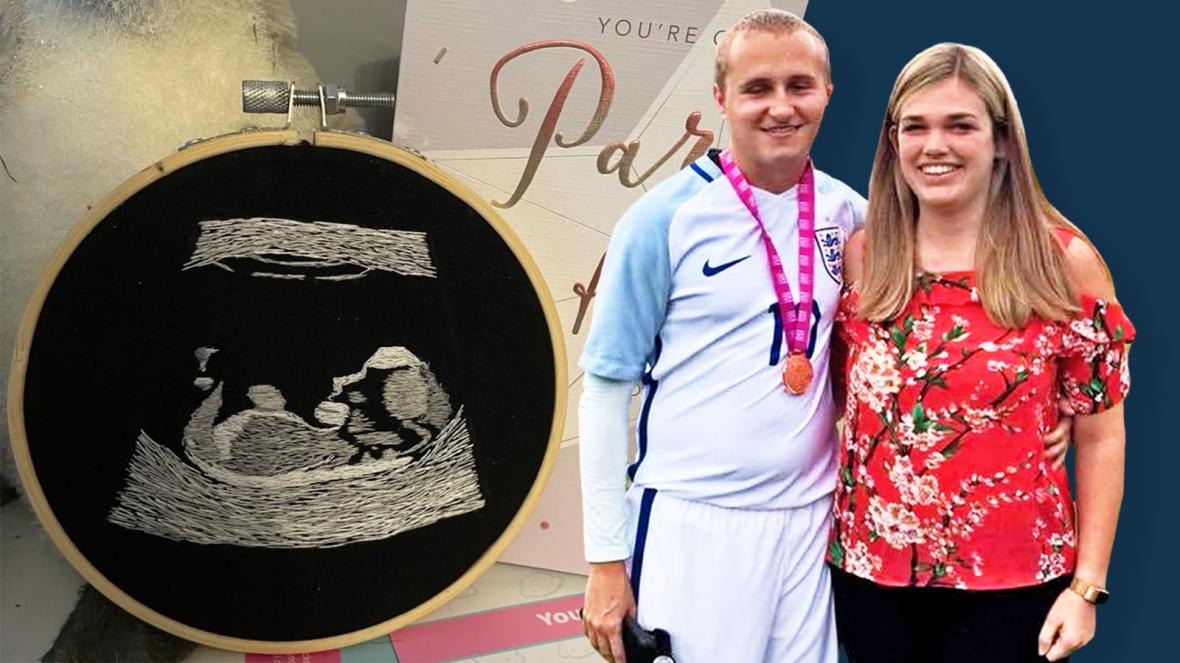
Embroidered scan lets blind father 'see' baby. The Time, 15 December 2020, p.27.

https://www.thetimes.co.uk/article/embroidered-scan-lets-blind-father-see-bab fathery-378jq82qb

Tuesday, June 13, 2017

Boxing 'II'

As young children we may encounter 'boxing' quite early on. This first experience, which we may or may not wholly remember is undoubtedly critical to our personality and subsequent psyche. Such early experiences influence our ability to 'look after ourselves', how we deal with bullies, anxiety, the potential for conflict and develop assertiveness skills. When a 'scrap' happens it can be quite sudden, that total impact of everything out of control, sheer danger and literal impacts. The environment might be nursery, playground, cloak room and the presence of peers as onlookers can be another key factor.

In the late 1960s early 70s I found some old boxing gloves under the stairs at my nan's. I had a handful of uncles on mum's side (just two now - Uncles Tom and Ken!) and the gloves had clearly been swung and jabbed down the line. I don't count myself as a fighter, unless someone tries to push their beliefs - without invitation - down my throat. Then it will be more a case of a reflex action. The 'arc' being comprised of vomit. In the school playground I learned to talk my way out of trouble, resorting to humour at times; as you learn to deploy whatever intellect you might have judiciously. Legs are essential to a boxer:

“First your legs go. Then you lose your reflexes. Then you lose your friends”
Willie Pep

My legs helped me a time or two.

Not too many years ago, so a new generation is in the frame and a nephew had boxing gloves of his very own. He trained with a local club and had some fights. I didn't go watching, but didn't make too big a big fuss either. He doesn't box now as it happens; he's married with family and busy earning a living. Over four decades I've cared for several gentleman, former boxers who developed dementia. Hence, my lack of enthusiasm. (Although the selective literature listed below does not reflect it, women's boxing is of course also well established.) The extent to which boxing caused their dementia is not the point here. It's trying to acknowledge the ongoing debate: the risks, the history (Ancient Greece 688BC), the discipline, sense of belonging and self-respect it can instill. Of course a great many sports can do this. Of course, I listened very attentively as one gent could still relate how perhaps he had been 'used' in terms of the fights and purses back in the 50s-60s. Vulnerable adults of today and yesteryear. Today American Football is concerned about head injuries, in football heading the ball repeatedly is in the news. Technology should be able to reduce the risks even more and protect individuals from injury that is obvious and more insidious in nature.

Some of these points I've considered in Hodges' model as follows:

individual
|
INTERPERSONAL : SCIENCES
humanistic ---------------------------------------  mechanistic
SOCIOLOGY : POLITICAL
|
group

SELF

self-awareness
Identity
self-belief

way-finding

dementia - cognitive damage

personality change

aggression

tactics  strategy

motivation training attitude

self-discipline

ethics

mental health - mental capacity
emotions

mood

Personal safety

boxing technique

reflexes speed movement balance

punching fitness

weight, reach, statistics

THE RING

stamina nutrition hydration

concussion
sub-concussive

exposure models

unconscious knockout

Head - Brain injuries

physics: force time (duration) momentum

technology - sensor equipped gloves

Sports Medicine Research
Headgear
Safety - Evidence

Medical risks

OTHER

Ethnographics
Coaches <-> Boxers
Mentors

Support network

THE STREET

personal history-family
History
sports history

trainer friends club

Sporting behaviour

family friends
Socio-
Rules (changes)

Conflict Power

promotion media finance

codification rules

Amateur Professional

Refereeing

Regulating bodies

Governance

Law

Contracts

Economics


Selective reading:

Sacha, J. (2017). Fighting Feelings. Sociological Perspectives, 60(1), 77-94.

Erlanger, D. (2015). Exposure to sub-concussive head injury in boxing and other sports. Brain Injury, 29(2), 171-4.

Falvey, &., & Mccrory, P. (2015). Because not all blows to the head are the same. British Journal of Sports Medicine, 49(17), 1091.

Mcintosh, A., & Patton, D. (2015). Boxing headguard performance in punch machine tests. British Journal of Sports Medicine, British Journal of Sports Medicine, 14 July 2015.

http://www.welshboxers.com/quotes/

See related post 2016: 'Boxing' I


Friday, June 10, 2016

FROM: Worry TO: Funding & Policy (What lies in-between?)

individual
|
INTERPERSONAL : SCIENCES
humanistic ---------------------------------------  mechanistic
SOCIOLOGY : POLITICAL
|
group
real WORRY
BBC Inside Science
Fighting Antimicrobial Resistance


BBC In Our Time
Penicillin

POLICY - FUNDING

Acknowledgement:
BBC Radio 4

Saturday, June 04, 2016

'Boxing' I

individual
|
INTERPERSONAL : SCIENCES
humanistic ---------------------------------------  mechanistic
SOCIOLOGY : POLITICAL
|
group
1
2

3
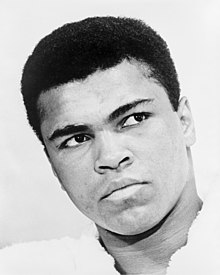
Ali (c) Library of Congress

Additional links;
Workplace experiences of BME and white staff published for every NHS trust across England
Briefing for NHS Boards on the NHS: Workforce Race Equality NHS workforce race equality delivers better care, outcomes and performance, NHS England 

Subsequent post: Boxing 'II'

Sunday, February 08, 2015

Navigating health and models: c/o HSJ


individual
INTERPERSONAL : SCIENCES
humanistic ------------------------------------------- mechanistic
SOCIOLOGY : POLITICAL
group
Geisinger's Proven Health Navigator
communicate and share decision making
 patient - person focus
patient access to records
birthday cards, follow up
benefits, outcomes
purposes of integration
population management
data gathered and applied
preventive medicine
referral reduction to hospitals
early intervention
case management of complex and chronic diseases
a "medical neighbourhood" offering care in the most appropriate setting -
community care
health promotion
culture change1
Geisinger Health Systems (not for profit)
health insurance, budgets
care commissioning
values based reimbursement system
accountable, leadership
culture change2


My source:
Moore A. (2014) Show you can navigate integration, Health Service Journal, 28 November: 124, 6425, pp. 20-23.

"A wise person once explained to me that delivering integrated care successfully was 
"more sociological than technical"".
 Prof. Chris Ham, On 'bilingual' clinical leaders. p.22.

Friday, March 28, 2014

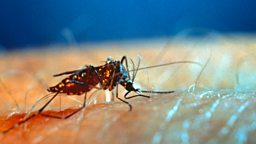
Five Fever Tales: Fact-based dramas about malaria, one of the oldest human diseases

The following radio broadcasts may be of interest:

Five Fever Tales by Lavinia Greenlaw

http://www.bbc.co.uk/programmes/b03yzlhk

Five Fever Tales by Lavinia Greenlaw


These brief plays are very interesting as they present history in a docu-drama approach. The science behind the discovery of what the 'fever' was/is and the challenge for those who first saw new 'living' things through the microscope and then convincing the scientific establishment is quite fascinating.


The economic incentives to solving the 'fever' are also salutary and give pause for thought in considering global health today (and tomorrow - global warning) as is recognition of resistance and current genetic research programmes.

I believe these programmes are freely accessible worldwide, for a limited time period.

Also posted on HIFA2015 c/o the moderator.


Sunday, July 07, 2013

Part II: Pensioners, 'Health students' and Children

For decades the reactive health care system has been founded, loved and sustained through the primary care - secondary care hospital system, together with its complex range of referral systems and processes.

Now demographic trends and economic pressures have seen the emergence and ongoing development of the virtual hospital. Call centers and teams that deliver nursing and medical care in the home to prevent admission and facilitating early discharge are still basically reactive.

What is needed is a cognitive hospital.

A form of hospital that acknowledges the health care system but can finally progress the preventive agenda on an individual, educational basis, fostering self-efficacy, health literacy and if necessary self-care.

Saturday, June 30, 2012

Health literacy around the world - please distribute

My source: HIFA2015

Hello!

At the request of the U.S. Institute of Medicine Roundtable of Health Literacy, I am preparing a background paper on health literacy activities around the world. To support that effort, I have created an online survey tool to gather information on how health literacy is being put into policy and practice in national, state, and local governments, the European Union, the United Nations, the business community, non-governmental and non-profit organizations, and within the education sector.

Our goal is to learn what is going on in the field of health literacy in as many nations as possible [*see note below] - and your assistance in both responding to the survey and sharing the survey with your colleagues is critically important. Please respond to the survey and please forward this survey link and request for participation to your peers and colleagues working in the field around the world.

You can find the survey at ....

A report will be made available based on the outcomes of this effort.

Please let me know if you have any questions about this project or encounter any problems with the web site.

If you have previously received this invitation, you do not need to respond to the survey again if you already have done so. If you have not already done so - please do!

Thank you!
Andrew Pleasant
Andrew Pleasant, Ph.D.
Health Literacy and Research Director
Canyon Ranch Institute
8600 E. Rockcliff Road
Tucson, AZ 85750


HIFA2015 profile: Andrew Pleasant is Director of Health Literacy and Research at Canyon Ranch Institute, United States. Professional interests: Health literacy, Prevention of disease, Integrative medicine, Health system reform. andrew AT canyonranchinstitute.org

[*Note from HIFA2015 moderator:

At the end of the survey is the following question:

'Please tell us what you think would be the best next steps for the field of health literacy. What could other health literacy researchers, practitioners, and academics located around the world do that would help you to make a greater impact and further advance health literacy in your work?'

I would like to invite comments on this question for discussion here on the HIFA2015 forum: hifa2015 AT dgroups.org

Health literacy is a critical issue to achieve the HIFA2015 goal - to ensure that lack of availability and use of basic healthcare knowledge is no longer a major contributing factor to needless death and suffering. What more can be done to improve health literacy in low and middle income countries? And what more can be done to ensure that healthcare information is presented in ways that are appropriate to those with low health literacy?

Thanks, Neil PW]

Thursday, December 01, 2011

Woolly vests, Engines and Health care: One stroke or two?

The cover of Nursing Times this week declares helpfully and positively that nursing is not broken. Stressed on several fronts, but not broken. The feature explores the contribution that skill mix makes to nursing practice, quality and outcomes.

With the past day of industrial action and the economic climate you hear repeated commentators extolling the need for and benefits of investment in services be that: health and social care, house and road building, high speed rail, green energy, ...

The economy is often described as an engine. The knowledge and skills of the workforce (and students) help fuel prosperity through creativity, innovation and ultimately productivity.

As the looming winter settles in - I start to think about vests. The woolliest I can find.* You wonder to what extent the in-vest-ment in skill mix on the wards and other clinical encounters are oriented  towards tasks, activity and how much that skill mix has the necessary redundancy in place to afford high-quality patient education and person-centered care? You see we need to revest patients and the public at large with the knowledge and self-efficacy to keep well and stay well.

Economies that rely on two cylinder engines are usually considered as a bit behind the times. Noise. Pollution. Waste. How many cylinders do our health care systems run on?

Well, it looks and sounds like one.

One poorly machined cylinder with CURE at one end and PREVENTION at the other. So, the irony. We need a two-cylinder engine not just in health and social care, but people's lives. What a dream machine that would be. Is there a conceptual prototype out there...? You hope that Local Authority changes can refactor the engine, because looking at re-admissions (Milne and Clarke, 1990; Dowler, 2011) a radical redesign is greatly needed.

The truth is that as things stand (and the masses sit) this isn't enough.

(Interesting to note that apparently some 'one-cylinder' designs actually depend on two operations that overlap.)

Milne, R., Clarke, A. (1990) Can readmission rates be used as an outcome indicator? BMJ, 301, 17 NOV. 1139-4.

Dowler, C., (2011) Penalties fail to cut readmission rate, HSJ, 24, 11, 11, 4-5.

*Only kidding.

Monday, November 07, 2011

Bortz's Next Medicine: Defining 'health' and h2cm

On page 137 of Next Medicine, Walter Bortz assembles the Health Equation:

Genes (A) + Extrinsic Agency (B) + Intrinsic Agency (C) + Aging (D) = Health

After providing values for the other elements Bortz notes that:

Intrinsic Agency = Health - 0.45

In other words, such reckoning, though admittedly coarse, means that internal agency accounts for around 55% of the values we need for health, which is similar to the figure obtained by Mike McGinnis of the Institute of Medicine and Bill Foege of the Gates Foundation. (p.137)
'Conceptual frameworks' are referred to frequently in the literature and in a way quite distinct from h2cm. I've just posted about h2cm as a conceptual framework - a potential conceptual space. Bortz stresses the value of having several conceptual frameworks that, for example: enable pursuit of preventive strategies; and the conceptual framework provided by thermodynamics that informs our understanding of life, health and not surprisingly - ageing.

Bortz's conclusion above however also serves to highlight:
  1. The need for a global, generic, universal (data-, information-, knowledge-centric) conceptual framework to pull the elements of this equation together (and much more besides).
  2. This IS essential as those elements include the various disciplines. agents (stakeholders)  involved.
  3. Bortz's conclusion that internal agency accounts for around 55% also acts as a definition of person-centered health care.
From 1 - 3 perhaps h2cm can also serve as an indicator of a (the) prerequisite literacy level that an individual needs to achieve self-efficacy in health terms?

Chapter 10 next and posts on last week's Cardi conference - which was excellent.

Acknowledgement: I am very grateful to Oxford University Press for the review copy.

Monday, October 24, 2011

h2cm, Bortz's Next Medicine and self-efficacy

Here on W2tQ I've written about the primacy of the individual within the health care domains model. The person, the unique human being is at the center of the nurses' focus and values.

I had a gut instinct with Bortz's book Next Medicine which I am now half-way through. This book is a real gift to me searching for evidence that supports the model's original creation and its purposes. As the book's title attests I'm also seeking evidence that highlights the model's potential today. On page 92-93 Bortz writes:
Self-efficacy. It sounds like an erudite, vacuous, scholarly term of little relevance. But just a moment's reflection leads to the recognition that self-efficacy is the centerpiece, the keystone on which all other body and mind functions depend. Self-efficacy: self-sufficiency, intactness, wholeness, autonomy, independence. These concepts embody the essence of what it means to be fully alive, fully functional.  ...  Self-efficacy, he [Albert Bandura] says, is health. Health is self-efficacy. Rather than being a remote scholarly label, it comes close to being the central axis for health and Next Medicine.
(My emphasis.)
Bortz also highlights Bandura's notion of self-efficacy and self-efficacy prescriptions.

Friday, July 08, 2011

c/o HIFA2015 Press Release: BMJ Editorial calls on funding agencies to commit to Healthcare Information For All

Dear HIFA2015 colleagues,

Please find the Press Release below. The subject of the press release is an Editorial in the BMJ, calling for major funding agencies to commit to Healthcare Information For All by 2015.

The Editorial is freely available at: http://bit.ly/hifa2015-10

Please be sure to read the Editorial online and submit *your* comment to the BMJ (click on Rapid Response on the left side of the page). Your Rapid Response will be displayed on the BMJ website (after approval by the editors) and may be selected for publication in the print version of the BMJ. Thank you for your support.

We are informed that the Editorial itself will be in the print BMJ within the next few weeks.

Please distribute this message/press release widely to your contacts and networks!

Many thanks,
Neil Pakenham-Walsh
Coordinator, HIFA2015

PRESS RELEASE: FOR IMMEDIATE RELEASE

BMJ Editorial calls on major funding agencies to commit to 'Healthcare Information For All by 2015'

London, UK, 5 July 2011 - Every day, tens of thousands of people die needlessly, particularly in low and middle income countries, often for the simple reason that the parent, carer or health worker lacks the information and knowledge they need to save them. An Editorial in the British Medical Journal by Richard Smith [1] and Tracey Pérez Koehlmoos [2,3] asks why a major funding agency has not yet come forward to support Healthcare Information For All by 2015 (HIFA2015) [4].

HIFA2015 ( www.hifa2015.org) is a global campaign and discussion forum. Its members range from senior executives at the World Health Organization in Geneva to community health workers in rural Uganda. Together they are working for the HIFA2015 goal: 'By 2015 every person worldwide will have access to an informed healthcare provider - lack of relevant, reliable healthcare information will no longer be a major contributor to avoidable death and suffering.' [5]. But progress has been constrained by lack of funding.

The Editorial states: "Funders are much keener to put money into drugs, vaccines, and bed nets than they are into something as nebulous as information access. Yet information and the capacity to act on that information is the first building block of an effective health system".

The Editorial concludes, "the best way forward would be for a major funder to recognise that improved health information is fundamental to global health improvement and development and offer substantial support, not just funds, to HIFA2015.".

HIFA2015 Coordinator, Dr Neil Pakenham-Walsh, welcomes the editorial saying "When we launched HIFA2015 in 2006, we knew our goal was ambitious, but we also knew it could be achieved if all stakeholders work together. All stakeholder groups are now working together and our work is expanding rapidly - what is needed now is financial support from a major funding agency. We repeat the call to the Gates Foundation and others made by international health leaders in The Lancet in 2006: "The challenge is to ensure that everyone in the world can have access to clean, clear, knowledge - a basic human right, and a public health need as important as access to clean, clear, water, and much more easily achievable."[6].

In keeping with the sentiments of the editorial, the BMJ has made this editorial freely available online. To access the full text simply visit

http://www.bmj.com/content/342/bmj.d4151.full?sid=55d7a166-946d-416c-bc47-8c294d5fb57d 

For further information or interview, please contact:

Neil Pakenham-Walsh, Coordinator HIFA2015, Co-director, Global Healthcare Information Network
neil.pakenham-walsh AT ghi-net.org

The authors of the Editorial have also kindly made themselves available for interview:

Richard Smith, Director, UnitedHealth Chronic Disease Initiative, UK
richardswsmith AT yahoo.co.uk

Tracey Koehlmoos, International Centre for Diarrhoeal Disease Research, Bangladesh
Tracey AT icddrb.org

Notes for Editors:

1. Richard Smith is the former editor of the British Medical Journal and is now director of the UnitedHealth Chronic Disease Initiative.
2. Tracey Koehlmoos is Head of the Health & Family Planning Systems Programme, ICDDR,B, Bangladesh & Adjunct Professor, Department of Health Administration and Policy, College of Health and Human Services, George Mason University, USA.
3. Further to discussion on the HIFA2015 forum, Richard Smith and Tracey Koehlmoos published an editorial in The Lancet (22 January 2011) which led to a reversal of Elsevier's decision to withdraw free access to medical journals in Bangladesh.
http://www.thelancet.com/journals/lancet/article/PIIS0140-6736(11)60067-6/fulltext
4. Healthcare Information for All by 2015 is the flagship project of Global Healthcare Information Network - a non-profit organisation based in the UK. HIFA2015 is a global campaign and discussion forum that brings together more than 5000 health professionals, information technologists, publishers, librarians, researchers and policymakers from over 2000 organisations in 158 countries worldwide. HIFA2015 is supported by organisations such as the British Medical Association, Royal College of Midwives and Royal College of Nursing.
5. To achieve its goal, HIFA2015 has developed a three pronged strategy based on communication (bringing together a critical mass of interested parties in five global e-mail forums), understanding (of information needs and how to meet them set out in a database of evidence), and advocacy (persuading governments, funding agencies, and others to invest in cost effective health information services). For further details, see http://www.hifa2015.org
6. Tikki Pang (WHO), Muir Gray (NHS, UK), and Tim Evans (WHO): A 15th grand challenge for global public health. The Lancet 2006; 367:284-286.
http://www.thelancet.com/journals/lancet/article/PIIS0140673606680501/fulltext

Tuesday, March 01, 2011

'Health coaching': One application for the Health Care Domains Model?

The following message from Helen Erickson (Univ. of Texas) was received through the Modeling and Role Modeling mail list MRM-L at LISTS.UFL.EDU. It is the patient education aspect of the post that is of interest to me as it highlights why I continue to champion Hodges' model near and far.

'Coaching' (in its various forms) is a potential application for h2cm which can be used explicitly by explaining the model to the (potential!) patient / carer, or implicitly used by the health care professional as an aide memoire - a conceptual framework.

More to follow as I referred to the matter of health care delivery vs. health education in my presentation and the delegates raised the question of applications of Hodges' came up in Paipa last week.

<->

Good afternoon,

Some of you know that the healthcare bill signed last year (HR3590) includes a section aimed at revamping the healthcare system from a disease model to a health promotion, disease prevention. Section 4001 particularly addresses care for those on Medicaid and Medicare. A national advisory committee is being named to study this, make recommendations, etc (see Section 4001). Among the representatives of specific groups (orientation to health care) being named to the advisory group is the "health coach".

STTI and ICN put out a manual on coaching a year or so ago, coupled with a short CE test. When I read the manual and took the test (it took about 10 minutes total), I discounted the movement, thinking that it was just another way to define what we call MRM. The only difference is that it requires some specific strategies and skills, most of which I've discussed with you through the years, e.g. contracting, The other difference will be determined by what happens at the national scene. It is possible that "coaching" will be reimbursed. Many think that it will, thus the national group out of Harvard, the University of MN, and others are meeting, talking, defining the construct, etc.

As Chair of American Holistic Nurses' Certification Corporation, I have been drawn back to the topic repeatedly. Most recently, AHNCC has decided to actively explore certifying nurses who practice holistic health coaching, i.e.certifying a holistic health nurse coach. I have added a poll to the ahncc website, eager to learn if nurses are interested in the movement, etc. if you are interested in the website or want to express your position on health coaching, please visit ahncc.org.

Hope to hear from you,

Best to all,
Helen