Hodges' Model: Welcome to the QUAD: imagination

Hodges' model is a conceptual framework to support reflection and critical thinking. Situated, the model can help integrate all disciplines (academic and professional). Amid news items, are posts that illustrate the scope and application of the model. A bibliography and A4 template are provided in the sidebar. Welcome to the QUAD ...

Showing posts with label imagination. Show all posts

Sunday, July 05, 2026

Degree Award in Reflective :: Reflexive Theory and Practice

Joint Hons. Running the Gauntlets in OverThinking

individual
|
INTERPERSONAL
: SCIENCES             
humanistic ------------------------------- mechanistic
SOCIOLOGY : POLITICAL   
|
group 
Photo: Peter Jones - Somerset House


See previous: 6th June 2010 - 'As one chapter closes another opens ...'

 
My source: Somerset House - 1st July 2026 M.C. Escher The Exhibition

Tuesday, March 10, 2026

Did Mr Hodges ever say "Welcome to my World?" (i)

The source for the post:

'Move Over LLMS! AI Legends Yann LeCun and Alex LeBrun
Debut AMI Labs' Bold Ambitions for World Models in Healthcare

- reminds me that Hodges' model provides a potential 'World Model'. Not just one world, but (seriously and non-trivially) several, in the form of the  ...

  • Nurse's
  • Student's*
  • Patient's
  • Carer's
  • Team Leader's / Managers
  • and yes the team's too - the sum total of all that effort. ...

 Hodges' model is applicable in assessment, planning, interventions, evaluation and review. The key of course, is as was as computers first arrived on wards and clinics: the human users of Hodges' model.

Of course, each comes with their own, hard won (see what I did there!) model, that needs extending by several intensive years of study. 

Situated and person-centred, Hodges' model can assist all its users, to 'incorporate the learned dynamics of the environment', however it presents: medicine anyone? What about surgical, psychiatry, paediatrics, orthopaedics, or gynaecology? You get my drift?


Wenninghoff, N., Schwammberger, M. (2026). Interpretable World Model Imaginations as Deep Reinforcement Learning Explanation. In: Guidotti, R., Schmid, U., Longo, L. (eds) Explainable Artificial Intelligence. xAI 2025. Communications in Computer and Information Science, vol 2578. Springer, Cham. https://doi.org/10.1007/978-3-032-08327-2_7  

 *And not necessarily a student nurse, but possibly medical, social work, psychology, probation, ... ai!

Mr Brian E. Hodges (RIP)

Friday, February 27, 2026

Rare Disease Day 2026 Official Video

28 February is 
Rare Disease Day


'Raising awareness and generating change for the 300 million people worldwide living with a rare disease, their families and carers.'

Manchester, UK https://www.rarediseaseday.org/event/light-up-for-rare-2/

Continued ... https://www.rarediseaseday.org/

Tuesday, January 27, 2026

c/o Intima 'Reflect on the World' . . .

CARE/of Intima:

REFLECT ON THE WORLD WITH US EVERY FRIDAY AT NOON.

No pressure, but we want to remind you that every Friday, around noon EST, we post a Crossroads blog—a short reflection that contributors from our current issue do on something from our archives.

Think of “Friday at noon” as a blip in your busy life where you take time to yourself to reflect on our small part of the universe. Pause and spend 5 minutes reading one each Friday — it’s the equivalent of a deep-breathing exercise, a short yoga stretch, a tiny palate cleanser of lemon sorbet between the complex courses served up to us every day, or a moment stolen between patients or in a waiting room when you step out of your routine. Read the titles of recent ones below, then go and read a few. If you like what you read, set up a reminder alert.

INDIVIDUAL
|
    INTERPERSONAL    :     SCIENCES               
HUMANISTIC --------------------------------------  MECHANISTIC      
SOCIOLOGY  :   POLITICAL 
|
GROUP


My source: Intima (and image) - mail list.

See also: 'reflect' : 'crossroads'

Friday, November 07, 2025

Half-turns ... to orbit

individual
|
INTERPERSONAL : SCIENCES
humanistic -------------------------------------------  mechanistic
SOCIOLOGY : POLITICAL
|
group-population


 "If you can get your ship into orbit, you're halfway to anywhere."


See: Where did Heinlein say "Once you get to Earth orbit, you're halfway to anywhere in the Solar System"?

Saturday, October 18, 2025

Just imagine ... caseloads, payloads and careloads

Just imagine ... no, not like that - really imagine!

You are in a situation. Unsurprisingly, let's say it's in health, or social care. We find ourselves in a care or nursing home, on a ward, or in the individual's home, even if the patient does not currently recognise it as such.

The patient is mobile. That is, and isn't a problem.

Physically, apart from thoughts about a chest, or urine infection, yes they are mobile, but they're also confused - disoriented.

We are concerned about their safety. 

Noisy, increasingly agitated, they are making it clear they want to leave.

Their carer, family, or staff are trying to limit the patient / resident's access to the exits, be that the front, or back door, the spare room, their room, or main entrance. They are not in agreement about where they need to be. Persuasion and distraction aren't working either. They appear to lack the level of mental capacity required to decide for themselves what needs to happen.

It is one thing to have this assessment of the situation running through one's mind; but quite another to 'pick up' a care concept mentally and carry it over the care (knowledge) domains of Hodges' model.

Hodges' Health Career - Care Domains - Model
Try it for yourself ...

Have a think about the following care concepts: mobility, capacity, consent, confusion, mobility, liberty, a locked-door while spouse/partner goes shopping, and safeguarding

As we engage in critical thinking, these concepts have a literal payload. They carry varying degrees of informational value, salience that helps us prioritise, what else do we need to factor in, what help is needed, and when; how do we  decide what to do?

As a concept is evaluated against Hodges' model, it changes. It is as if it morphs subtely, or starkly as other concepts, by association, are brought into play.

This process is influenced in so many ways; our training to date, our prior experience, biases and cultural baggage we might also carry, who else is present (this is of course potentially both a positive and negative), past and current role-models, our (team's) preparedness - what to do if .., teamwork, access to leadership (who is 'duty'?), and our confidence in them (Oh no!). And, them in us.*

Vitally, there is the small matter of our understanding, attititude and response to the person in-front of us. 

The delivery of healthcare is often stressed as emotional labour. Whether we use Hodges' model or not, perhaps the labour, the physical and psychological work involved, is experienced through carrying and feeling the careload. A reason too for supervision.

*Do seek help - advice if needed.

Further reading [ please contact me if needed - h2cmng AT yahoo.co.uk ]:

Jones, P. (2025), A Generic Model and Conceptual Framework to Prime Curiosity Across Health and Social Care Disciplines to Facilitate Lifelong Learning. Journal of Evaluation in Clinical Practice, 31: e70252. https://doi.org/10.1111/jep.70252

Jones, P. (2025). A Conceptual Mapping Exercise of Deprivation of Liberty Safeguards in Residential & Community Care Using Hodges' Model and Threshold Concepts. Journal of Evaluation in Clinical Practice, 31: e70085. https://doi.org/10.1111/jep.70085

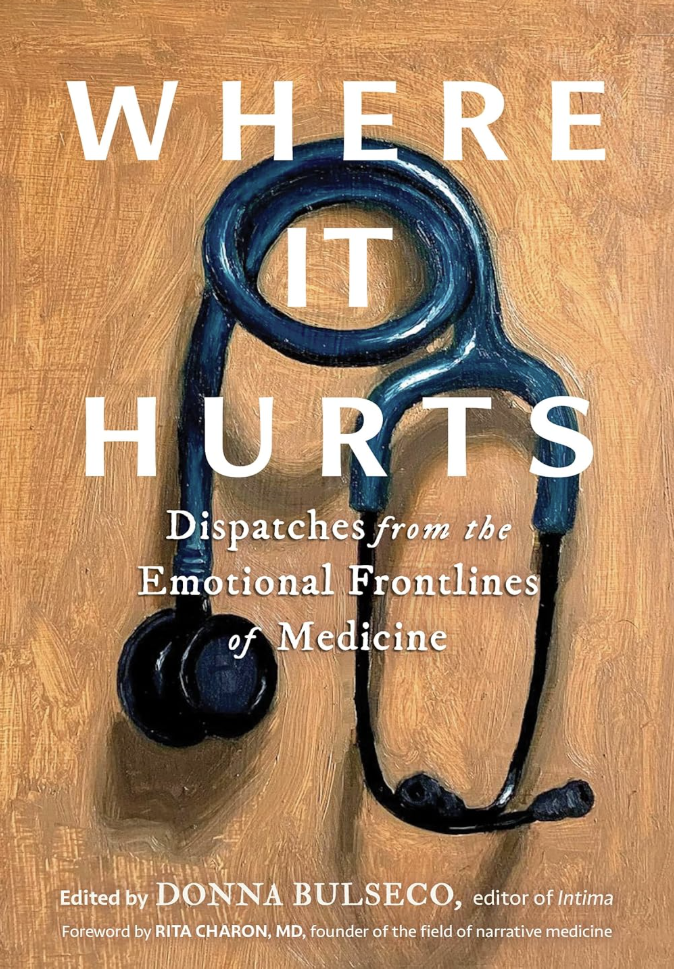
Wednesday, September 17, 2025

Bill Ross Memorial Workshop – BSP Special Event 2025

A workshop in memory of Bill Ross, and to celebrate the posthumous publication of his book Order and the Virtual: The Philosophy and Science of Deleuzian Cosmology (2024). 
Convened by the British Society for Phenomenology with the family and friends of Bill.

I never met Bill Ross, nor had I learned of his work prior to receiving news of this workshop. I attended today in Manchester; also realising I'd intended to post the details. It was well worth the effort in the (predictable!) rain. The speakers and sessions were as follows:

  • Dan Smith (Purdue University): “Reality is a Problem: Deleuze’s Metaphysics of Manifolds”
  • Michael Epperson (California State University, Sacramento): “Relational Realism and the Ontogenetic Universe: Subject, Object, and Ontological Process in Quantum Mechanics”
  • Vera Bühlmann (Vienna University of Technology): “Cosmic splendour and signal messages, or the choice that will remain unmade”
  • Kemal Tezgin (Virginia Tech): “The Virtuality of Space: A Deleuzian Reading of Quantum Fields”
  • Robin Durie (University of Exeter) & Craig Lundy (London Metropolitan University): “What the imagination already knew: Science & Myth in the Genesis of Desert Islands”
Order and the Virtual (2024)
The sessions were informative and stimulating for studies here (category theory was noted).

With thanks to Carol at Edinburgh University Press, I have a review copy of Bill Ross's text.

Looking at the contents and index there are many fields in common, which I will share over the coming months.

As with the Laws of Form conference last year in Liverpool, here is another group of academics and scholars, welcoming and keen to share their expertise and learn.

So, thanks to Carol again for what looks an exciting book and the organisers and sponsors of this brilliant event acknowledging and commemerating the work of Bill Ross.

I will try to be more timely with news of related events, and developments. More to follow, but to close for now ...

'Bill Ross (1964 – 2022) had interests ranging widely across contemporary philosophy and culture, with a particular interest in the relations between science and philosophy. As managing editor, he was the driving force behind Clinamen Press, which in the early 2000s published new works by contemporary philosophers, and English translation of important works by continental philosophers such as Henri Bergson, Gaston Bachelard and Michel Serres. He completed his PhD in philosophy at Staffordshire University, where he taught on the MA in the Philosophy of Nature, Information, and Technology. Bill had a lifelong passion for the connections between science and philosophy, on which he had published several important articles. Bill was working on a monograph on the philosophy and science of Deleuzian cosmology, which was has been posthumously published by Edinburgh University Press. This event is to celebrate Bill’s book and his life, and to allow his friends, his colleagues, and anyone interested in his work or the topics and issues addressed by his work to continue the conversation that Bill’s work inspires.'
https://www.thebsp.org.uk/bill-ross-memorial-workshop-deleuzian-cosmologies/

Thursday, December 14, 2023

Diagrams, Visualizations, Intuition and Critical Thinking QED

"The atom of Niels Bohr, a miniature solar system, had become a embarrassingly false image. ... Bohr himself had set the tone. In accepting the Nobel Prize for his atomic model, he said it was time to give up the hope of explanation in terms of analogies with everyday experience. 'We are therefore obliged to be modest in our demands and content ourselves with concepts that are formal in the sense that they do not provide a visual picture of the sort one is accustomed to require. . . .' This progress had not been altogether free of tension. 'The more I reflect on the physical portion of Schrödinger's theory, the more disgusting I find it,' was Heisenberg's 1926 comment to Pauli. 'Just imagine the rotating electron who charge is distributed over the entire space with axes in 4 or 5 dimensions. What Schrödinger writes on the visualizability of his theory . . . I consider trash.' As much as physicists valued the conceptualizing skill they called intuition, as much as they spoke of a difference between physical understanding and formal understanding, they had nevertheless learned to mistrust any picture of subatomic reality that resembled everyday experience. No more baseballs, artillery shells, or planetoids for the quantum theorists; no more idle wheels or wavy lines. Feynman's father had asked him, in the story he told many times: 'I understand that when an atom makes a transition from one state to another, it emits a particle of light called a photon. . . . Is the photon in the atom ahead of time? . . . Well, where does it come from, then? How does it come out?' No one had a mental image for this, the radiation of light, the interaction of matter with the electromagnetic field: the defining event of quantum electrodynamics." p.242.

 Individual
  |
     INTERPERSONAL    :     SCIENCES               
HUMANISTIC --------------------------------------  MECHANISTIC      
SOCIOLOGY  :   POLITICAL 
|
GROUP

reflection

critical thinking

intuition

physics

Bohr's atomic model

reflection


Gleick, J., (1992) GENIUS - Richard Feynman and modern physics, London: Little Brown and Company, p.242.

Wednesday, August 23, 2023

"Coal Fired Computers" c/o MUTE


"Graham Harwood and Matsuko Yokokoji (YoHa) build
contraptions that expose and collapse down the productive
chains linking telecommunications media to some of the
raw materials that constitute them.
In this interview with 
ANTONY ILES, however,
Harwood rejects theoretical discourses
of resistance in favour of a more direct and technical
method of 'action research' which skirts art and politics." p.159.


INDIVIDUAL
|
     INTERPERSONAL    :     SCIENCES               
HUMANISTIC --------------------------------------  MECHANISTIC      
SOCIOLOGY  :   POLITICAL 
|
GROUP


Poster image for YoHa's Coal Fired Computers exhibition, AV Festival, Newcastle 2010

"AI: Though these projects do not work solely within a logic of 'representation' they do, almost as a side effect, produce awful images. I am thinking in particular of the film still from Aluminium and the blackened lung hooked up to a coal fired computer. If the 'contraptions' you make can be thought of as diagrams of socio-technical relations, what are the qualities of the images they produce? To what extent are these images necessary by-products of the processes.

GH: We can see the images arising out of the forces that threaten to break the machine, or assemblages arising out of its in-betweenness. Its unfinished nature always requires the imagination of the participant/viewer to finish the job, fill in the details. This is a powerful strategy." p.164.


Source: Iles, A. (2011) Double Negative Feedback. In the mud and blood of networks: an interview with Graham Harwood, MUTE. Spring/Summer, Vol. 3, #1, pp.158-171. 

Image: http://yoha.co.uk/cfc

https://www.metamute.org/editorial/magazine/mute-vol.-3-no.-1-double-negative-feedback

Note 'Anti-disciplinary' in this issue too:
https://www.metamute.org/editorial/articles/anti-disciplinary-feedback-and-will-to-effect

Will investigate anti-disciplinary, as this appears to strike a discordant note in nursing in Hodges' model promulgating genericism. A quick check was encouraging leading to MIT Lab, but then disappointing in terms of personnel and resignations - but a lead for the future (inter- multi- transdisciplinary and Hodges' model).

(Yes, second post from this issue of MUTE, a random yet informative purchase. It cost £12.00. Still clearing, boxing, moving ...).

Tuesday, April 04, 2023

ii SNAP! Abstract [working] Hodges’ model as a mathematical object, a lens for social care and inclusion: category theory or category mistake?

Snap! 

As suspected the elasticity in the holistic bandwidth of the working abstract just failed.

The abstract rejected, I'm not surprised.

[ Prev. https://hodges-model.blogspot.com/2023/03/category-theory-or-category-mistake.html ]

I hoped 'no news' ... might fuel progress for a little longer.

Clearly (again), holistic bandwidth is never enough - focus, focus.

I'm grateful to learn from the call however, that there is a need to address:

How can prevention in social care be better conceptualised?

So I've a start at least ...

Grateful too, in the call, for Wright Mills sociological imagination:

“Know that the human meaning of public issues must be revealed by relating them to personal troubles—and to the problems of the individual life. Know that the problems of social science, when adequately formulated, must include both troubles and issues, both biography and history, and the range of their intricate relations. Within that range the life of the individual and the making of societies occur; and within that range the sociological imagination has its chance to make a difference in the quality of human life in our time.” Wright Mills (1959:226). [My emphasis.]

Clearly the current and previous governments have not got a clue!


Thursday, March 16, 2023

Abstract [working] Hodges’ model as a mathematical object, a lens for social care and inclusion: category theory or category mistake?

There's a clearer idea now - an abstract - something to aim for in July:

Call for Papers - Community Development and Preventative Care With Older People:
New Values and Approaches

Not yet fully fledged, but then Spring [N] still beckons ...

Hodges’ model as a mathematical object, a lens for social care and inclusion:
category theory or category mistake?

Abstract

The health and social care sectors include disciplines that inevitably fall under the combined aegis of the sciences and humanities. This paper examines social inclusion across Snow’s ‘Two Cultures’. The method is interdisciplinary and descriptive utilising a generic conceptual framework known as Hodges’ model. Rather than Hodges’ model acting as a model of, and for care, here the model is used to investigate how social care can be better conceptualised. While mathematics is a mandated competency in healthcare, the subject, as for the general population, is one preferably left at school. The question posed is: What happens when Hodges’ model is treated as a mathematical object? A challenge for reader and author alike, the purpose is to seek new insights into social inclusion, value, values and development through a relational and dialectic strategy with diagrammatic support, also signposting future avenues of study.

Given ongoing demographic pressures for many nations, is there an additional danger of two intergenerational cultures? Is prevention enough; and can we improve understanding of what can be termed ‘legacy issues’ in health and social care? Can we simultaneously reduce the focus to Simmel’s ‘dyad’, and yet open new avenues for discourse and description? Can we expose the epistemological and ontological dimensions of social inclusion and the life (and death) experience of older adults? Inclusion and exclusion are implicit parameters within the model, its original purposes being person-centredness and recognition of health as political. References and resources, in the form of a template and bibliography are provided.

<>

Still much more to do ... heaven knows what the result will be - and do? Even as I keep the call 'in mind', it may not 'fit' the intended journal at all. Non-predatory, and no article processing charges is essential. Brevity, conciseness ... the order of the day. I can't even hide behind "A little knowledge is a ...": I know nothing - but I'm sure there is some-thing here and in #h2cm.

If anyone is interested in writing something quite different and challenging, then please get in touch. There may (realistically imho) be two-three papers here?

From the call:

"As Rapoport highlighted in the 1960s, however, translating the unified view of prevention associated with public health into social welfare is inherently problematic. This remains the case. Preventative social care and support necessarily operate in complex and dynamic systems, generally where knowledge of causation and the consequences are unclear, and an imaginative application of care needs and contexts is required.

Though current policy direction across many countries suggests opportunities for re-imagining how prevention may be best conceptualised, numerous studies have highlighted that there remains considerable confusion and disparity in how this plays out in practice."

I have held on to the following article from Computing, March 19th 1987 and still learning from Durham and colleagues' journalism:

 "Sometimes a highly abstract, unifying mathematical theory underlies a whole set of scientific or engineering subjects. ...

Category theory is one such subject. Sometimes described as an algebra of algebras, it plays a unifying role in discrete mathematics. Discrete mathematics is a general heading for all the mathematical subjects which deal with jumpy, lumpy entities. Most of the mathematics used in the theory of digital computing is of this kind.

Another unifying subject, homology theory or differential topology, is less well known to computer scientists ... Homology theory is a unifying theory in continuous mathematics, which is the name given to everything that deals with smooth and stretchy entities.

Durham, T. (1987) Over the Horizon.
Working out the algebra of algebras, Computing, 19 March. pp.28-29.

[According to Bowden,] 'category theory and homology theory are fairly close things. The big difference is that homology theory includes information about the topology of the space that it describes.

Category theory is just about information. Homology theory is about information and structure, the structure of something.'

Space itself is not something we usually think of as possessing structure. But space does impose limitations on the kinds of behaviour that can be exhibited by things like electric fields and currents, or electromagnetic waves." p.28.


Durham, T. (1987) Over the Horizon. Working out the algebra of algebras, Computing, 19 March. pp.28-29. (Sorry no issue / volume nos.).


See also:

Call for Papers (i) Community Development and Preventative Care With Older People: New Values and Approaches

Call for Papers (ii) Community Development and Preventative Care With Older People: New Values and Approaches

Saturday, February 25, 2023

Call for Papers (ii) Community Development and Preventative Care With Older People: New Values and Approaches

 I drafted this with (i) but didn't want to distract from the call and journal itself.

 With three working titles in a 250 word abstract in response to:

"How can prevention in social care be better conceptualised?" - 

I am open here (as ever) to expressions of interest towards collaboration. Support (help) would be invaluable, whether advice/co-author - to develop ideas on Hodges' model as a mathematical object(?). Even if this includes telling me to stop the barking and leave the tree alone. That point aside, the reading and videos are a challenge, but really enjoyable too.

In reading the call, Quaternary prevention will be added to:

"While applied in the context of complex social problems, discourses of prevention are most coherent and established in the realm of public health (e.g., tertiary, secondary, and primary prevention). As Rapoport highlighted in the 1960s, however, translating the unified view of prevention associated with public health into social welfare is inherently problematic. This remains the case. Preventative social care and support necessarily operate in complex and dynamic systems, generally where knowledge of causation and the consequences are unclear, and an imaginative application of care needs and contexts is required."

The result will be abstract. With “'re-imagine' social care" taken literally. 

Since there are quinary industries ( 'ours' no less), is there, should there be - quinary prevention? I think so, and this - and several legacy issues encountered in my career and ongoing today (also accentuated in the future?) will form the basis of discussion. Early days, but also need to decide upon the manuscript type:

  • Article: a paper containing original research results that has not been published elsewhere. Articles shall have a maximum length of 6,000 words (the word count limit includes title, abstract, tables, figures, and references list). During a potential revisions stage, after peer-review, authors can extend the article length to a maximum of 8,000 words to better address the reviewers and editors’ comments.
  • Commentary: an opinion piece providing a critical evaluation of a published article or topic of interest to the readership of the journal. Letters to the Editor and replies should be submitted as Commentaries. Commentaries shall have a maximum length of 2,000 words (the word count limit includes title, abstract, tables, figures, and references list).
  • Review: a paper which comprehensively sums up the current state of research on a particular topic. Reviews shall have a maximum length of 6,000 words (the word count limit includes title, abstract, tables, figures, and references list). During a potential revisions stage, after peer-review, authors can extend the article length to a maximum of 8,000 words to better address the reviewers and editors’ comments.

The completed draft may not be 'finished' by July, but the exercise will help develop ideas to further understanding and awareness of Hodges' model. I'm almost too close to Hodges' model and I can't discuss ideas on a daily - work basis. The other impediment, is standing on my foot, pressing me against the walls (whichever domain) is the fact that models of/for care, and nursing theory have little currency these days. Finally, having explained I have no funding, encouragement to write is appreciated. This effort is also informed by threads on (and off) the Spirit of 1848 ListServe.

Friday, February 24, 2023

Call for Papers (i) Community Development and Preventative Care With Older People: New Values and Approaches

Editors: Fiona Verity, Frances Barker, Mark Llewellyn, Simon Read, and Jonathan Richards

Deadline for Abstracts: 15 March 2023
Deadline for Articles: 31 July 2023
Publication of the Issue: January/March 2024

Social Inclusion, peer-reviewed journal indexed in the Social Sciences Citation Index (Web of Science; Impact Factor: 1.543) and Scopus (CiteScore: 2.5), welcomes new and exciting research papers for its upcoming issue "Community Development and Preventative Care With Older People: New Values and Approaches," edited by Fiona Verity (Swansea University), Frances Barker (Solva Care), Mark Llewellyn (University of South Wales), Simon Read (Swansea University), and Jonathan Richards (University of South Wales).


The subject of this thematic issue is a prevention agenda in social care for older people, with a focus on community development values and approaches. Though current policy direction across many countries suggests opportunities for re-imagining how prevention may be best conceptualised, numerous studies have highlighted that there remains considerable confusion and disparity in how this plays out in practice. 

Prevention in social care can be implemented from mixed starting points, i.e., economic objectives, social justice objectives, and look different in practice. Included within this broad agenda are community development approaches and service delivery models driven by the needs of older people in their communities/localities, and collectively focused on common concerns and solutions.

This thematic issue will canvass questions such as:

  • What can be learnt from social care preventative practices with older people that use community development approaches?
  • How might older people be part of a reimagination of a preventative agenda in social care?
  • What can social enterprises and cooperatives contribute to advancing a prevention agenda in social care?
  • What might the marketisation of service delivery systems (e.g., individualised/direct payments) mean for community development solutions and approaches?
  • How can prevention in social care be better conceptualised?
  • What has been learnt from the impact of the COVID-19 pandemic on older populations to inform a prevention agenda in social care?

Authors interested in submitting a paper for this issue are encouraged to read the full call for papers:
https://www.cogitatiopress.com/socialinclusion/pages/view/nextissues#PreventativeCare

Abstracts welcome by 15 March 2023.

Kindest regards,
Mariana

Mariana Pires Social Inclusion Cogitatio Press 1070-129 Lisbon Portugal New issues (open access): Vol 11, No 1 (2023): Disability and Social Inclusion: Lessons From the Pandemic
https://www.cogitatiopress.com/socialinclusion/issue/view/332 Vol 10, No 4 (2022): Networks and Contested Identities in the Refugee Journey
https://www.cogitatiopress.com/socialinclusion/issue/view/331

My source:
EUROPEAN-SOCIOLOGIST list

Post ii: https://hodges-model.blogspot.com/2023/02/h2cm-relational-ontology.html

Friday, June 24, 2022

ii Seeds in 'architecture'

There is something seductive in architecture, the imagination of ideas on paper, the promise of the cornerstone, the reality of the construction, the space it grasps and the space it bestows.

Arriving at Younés paper, the history and reference to Valéry's Eupalinos ou l'architecte, Socrates and Phaedrus had me captured. 

Healthcare is dialogue. Spoken and unspoken. Discourse. Dialectic. Perspective: One : Shared : (the) Many.

What is said, gestured, and unsaid. Valéry's dialogue sounds worthy of follow-up, appreciating Plato and this form of theatre and learning. There is a latent architect in us all. Patiency too - but not yet - let us build first. Every day and night we construct (hopefully). When necessary we know when to disassemble, de-construct, to initiate change.

Reading Younés I can readily relate the paper to nursing, Hodges' model, and healthcare generally. The paper's three main questions concern (of course) architectural theory:

  1. the causal relation between building and theory;
  2. the necessary mental conditions that precede theory;
  3. a definition of theory in its scope, discourse, and nature.

There are many points of note (reading my yellow highlighter) here. 

'Reflection precedes realization, but theory does not necessarily precede practice'. p.234.

'Theory however, is a systemic elaboration that operates based on definitions and concepts, in the sense that definitions build concepts, and concepts in turn build a theory, but not the reverse of the sequence.'

'Theory, then, comes 'late', only because it is the synthesis of a content that was already present'. It is constructed after a prolonged reflection over many experiences, based on common, comparative, or contrasting sets of criteria.

Younés focus is specific the development of theory in architecture, but as he writes: 'there is some element of reflection which can be termed the building's efficient cause' p.234. I wonder about Nursing Theory and the nurse's theory based on the person - in-person: reflection of care, assessed, planned, delivered, evaluated and recorded. There are nurses still preoccupied with Q.1, even if the (primary) focus is within academia(?).

Q.2 seems an invitation for philosophy (as per the journal's title!). Being non-judgemental, if not starting to build nursing Theory, then especially for the nurse co-constructing, co-designing a theory of care with the patient/family. Hodges' model is not just a series of set squares, facilitating design; it is an empty set. Never completely empty, due to the structure. A structure that contradicts. A structure paradoxical as it constrains and releases, records and forgets.

Q.3? Did someone call - continuity? Yes, (and how!) we can carry on from Q.2. Scope - yes. See the space? Listen to all the dimensions. Reduced to those that count, in discourse and nature, by nature.

Person-centred? New patient. RESET. Re-build - but remember humanistically.

See also:

Seeds in 'architecture' i

Seeds in 'architecture' iii

Younés, Samir. “Constructing Architectural Theory.” Philosophy 78, no. 304 (2003): 233–53. http://www.jstor.org/stable/3752046.


Saturday, June 18, 2022

Seeds in 'architecture' i

For many years I've held a copy of:

Younés, Samir. “Constructing Architectural Theory.” Philosophy 78, no. 304 (2003): 233–53. http://www.jstor.org/stable/3752046.

Previously, missing a few (photocopied) pages, the paper is now complete as I continue to sort and clear 'stuff'.

There is something dynamic, literally world-defining* in architecture, a view that has influenced my thoughts about Hodges' model, and it appears other disciplines.

The source lost, I recall reading somewhere about a trend of  'architecture' being added to titles and disciplines. It may have been in an information technology, programming source, but I'm not sure. The point made, was that when this is the case the result is NOT architecture. If you have a source for such ideas I would love to hear from you.

This statement probably stood out, because I'm guilty too:

'architect-ure' - care architecture, care design ...

Buildings are fascinating, sometimes as important as the art inside, getting from side A to B and so on. If properly curated though the building shouldn't overwhelm the work inside? While I love the arts, drawing and painting, Leonardo's technical work is awesome, as witnessed in Oxford and London, I was never keen on 'technical drawing' at school. It's not in my nature to blame the teacher, but - for once - I was a runner not a footballer. In hindsight, the time was almost up on technical drawing as we were taught in the 1970s and Leonardo, well he is in another class.

In health and social care, we plan and plan again; and resort to design (case formulation) too.

So, models and frameworks - anyone..?

The axes of the model are like a mast.

The care (knowledge) domains - with their nebulous edges - are like sails.

The concepts (data, information, disinformation, uncertainty, null! ...)
caught in the domains are the wind that drives, disrupts, or in its absence bestills us.

The direction of travel the context, the situation - always adjusting.

And often subject to change, misdirection and correction.

ii Seeds in 'architecture'.

*A potential for good or ill.

Wednesday, December 15, 2021

Alice ...

Individual
|

INTERPERSONAL : SCIENCES
humanistic ------------------------------------------ mechanistic
SOCIOLOGY : POLITICAL
|
Group
Lewis Carroll’s Illustrations for “Alice’s Adventures Under Ground” (1864)


Women's Rights begin..?


My source: 

Critics' choice, Life&Arts, FTWeekend, 19-20 December 2015. regarding: https://www.bl.uk/alice-in-wonderland

Image: https://publicdomainreview.org/collection/carroll-illustrations-for-alice-undergound


See also:

Butt up against the Boxes...?


Monday, July 05, 2021

Art, Imagination, NHS, History & Future: c/o Banksy and FT

individual
|
INTERPERSONAL : SCIENCES
humanistic ----------------------------------------------- mechanistic
SOCIOLOGY : POLITICAL
|
group
 
Banksy, 'Game Changer', 2020 Banksy/Instagram @banksy


"It has been another challenging week for the UK's NHS as nurses were offered a paltry 1 per cent pay rise. But the artist Banksy is to show his support by auctioning "Game Changer" (2020), a painting initially made to hang in University Hospital Southampton, and now sold to benefit the NHS. The hand-painted, signed work, which shows a kneeling child playing with a toy nurse instead of more traditional superheroes, is estimated by Christie's at £2.5m to £3.5m".
 

Gerlis, M. (2021) The Art Market, Collecting, Life&Arts, FTWeekend, 13-14 March, p.14.

'Game Changer' source: https://www.artnews.com/art-news/news/banksy-southampton-general-hospital-game-changer-1202686284/

Wednesday, May 05, 2021

Thought Press

individual
|
INTERPERSONAL : SCIENCES
humanistic ----------------------------------------------- mechanistic
SOCIOLOGY : POLITICAL
|
group
THOUGHT PRESS


"We are 100 UK printmakers creating prints on the theme of childhood memories and imagination, to be sold in aid of two charities - Mind, supporting mental health issues and awareness, and Heart Felt Tips, providing art materials and enabling creative learning opportunities for disadvantaged children. (For more information about these charities and what they do, please visit www.mind.org.uk and www.heartfelttips.co.uk)

Follow the hashtag #thoughtpressproject on social media to see the project in action and development of designs for final prints! Visit the Shop to order a print.

If you'd simply like to add to the funds raised, please donate here:

https://www.justgiving.com/crowdfunding/thoughtpressprojectdonations

My source: Printmaking Today, Spring 2021, Volume 30, Issue 117, p.7.

Thursday, December 26, 2019

Self to Other: Forms of 'imagination'

Book: "The Sociological Imagination"


INDIVIDUAL
|
INTER-PERSONAL : SCIENCES
HUMANISTIC -------------------------------------------------- MECHANISTIC
SOCIOLOGY : POLITICAL
|
GROUP

Self
Person
Biography
imagination and creativity
individual values

Sociologist C. Wright Mills, who created the concept and wrote the definitive book about it, defined the sociological imagination as “the vivid awareness of the relationship
 between [individual] experience ...

'Thought experiment'

...and the wider society." (Crossman, 2019).

Charles Wright Mills (1916-1962)
The Sociological Imagination, 1959
Political 
imagination ACTION!

growth
climate change
universal health care
antibiotic resistance
pollution
corruption
fake news


My source:
Dillow, C. (2019) The demise of growth stocks, Investors Chronicle, 13-19 December, 210:2680, pp.16-17.

Additional links:

C.Wright Mills: On Intellectual Craftsmanship
https://brettworks.com/2010/11/04/c-wright-mills-on-intellectual-craftsmanship/

Crossman, Ashley. "Definition of the Sociological Imagination and Overview of the Book." ThoughtCo, Oct. 25, 2019, thoughtco.com/sociological-imagination-3026756

Saturday, April 13, 2019

In my mind's eye I can picture care: Frame by Frame

individual
|
INTERPERSONAL : SCIENCES
humanistic ----------------------------------------------- mechanistic
SOCIOLOGY : POLITICAL
|
group

Aphantasia -
unable to visualise mental images


Ed

Animation
Frame by Frame
Aphantasia - 2.5% of people may have it
Requires memory plus areas in the frontal, parietal, temporal, and occipital lobes to work together.

Catmull ...

has "blind mind's eye"

... a former Pixar President


Additional links:

Can’t count sheep? You could have aphantasia

Aphantasia: Losing the mind’s eye 

Low, V. Picture this: the top animators who can't draw mental images, The Times, Wednesday, April 10, 2019, p.24.