Hodges' Model: Welcome to the QUAD: metrics

Hodges' model is a conceptual framework to support reflection and critical thinking. Situated, the model can help integrate all disciplines (academic and professional). Amid news items, are posts that illustrate the scope and application of the model. A bibliography and A4 template are provided in the sidebar. Welcome to the QUAD ...

Showing posts with label metrics. Show all posts

Wednesday, February 25, 2026

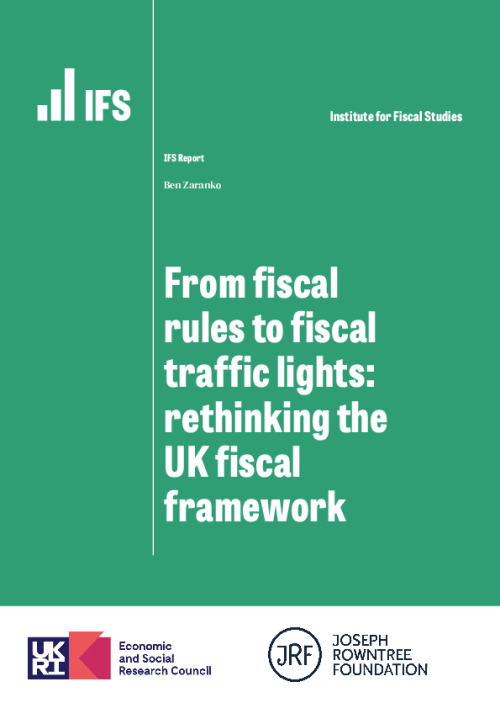
IFS Report: 'From fiscal rules to fiscal traffic lights: rethinking the UK fiscal framework'

'In other words, the current framework means that macroeconomic volatility is mainlined into policy volatility, which adds unnecessarily to economic uncertainty and makes good policymaking less likely. There is also a problem of asymmetry: when the forecast improves, any additional ‘headroom’ is typically treated as free money and happily spent. Yet when the forecast worsens, the rules tend to get changed or ‘gamed’: Chancellors of all political stripes have proved adept at promising future tax rises or spending cuts which are unlikely to be delivered, but which allow them to meet the letter of their rolling fiscal targets. 

All this is to say, the current framework is not delivering good outcomes. It is not achieving sustainable public finances, it has limited credibility with financial markets, and it is not creating the conditions for good policymaking or for a high-quality public debate about the important issues at play. It seems likely that any framework, left in place for long enough, will start to create problems in practice, as unhelpful norms emerge and actors find ways to game the system. Just as the tendency of HM Treasury to fudge its forecasts in the 2000s was one reason for the creation of the OBR as a corrective mechanism, the dysfunction around the current framework necessitates a change in thinking and approach.'

INDIVIDUAL
|
    INTERPERSONAL    :     SCIENCES               
HUMANISTIC --------------------------------------  MECHANISTIC      
SOCIOLOGY  :   POLITICAL 
|
GROUP
'Fixation upon -

lived
[ equilibrium ]
experience


'RAG'
assessment of patients in mental health services - caseload management


 fiscal headroom'
GOOD - BAD
PASS - FAIL
Equilibrium
Outcomes 
Public Policy
 
Interviews
 
sustainable public finances
 
good policymaking
(here)

high-quality public debate

Cost of Living


Report: IFS

Policy
Office for Budget Responsibility


My source: Valentina Romei, IFS urges end to fixation on fiscal 'headroom', Financial Times, 19 February, 2026, p.3.

Images: IFS

Friday, November 07, 2025

Half-turns ... to orbit

individual
|
INTERPERSONAL : SCIENCES
humanistic -------------------------------------------  mechanistic
SOCIOLOGY : POLITICAL
|
group-population


 "If you can get your ship into orbit, you're halfway to anywhere."


See: Where did Heinlein say "Once you get to Earth orbit, you're halfway to anywhere in the Solar System"?

Monday, September 16, 2024

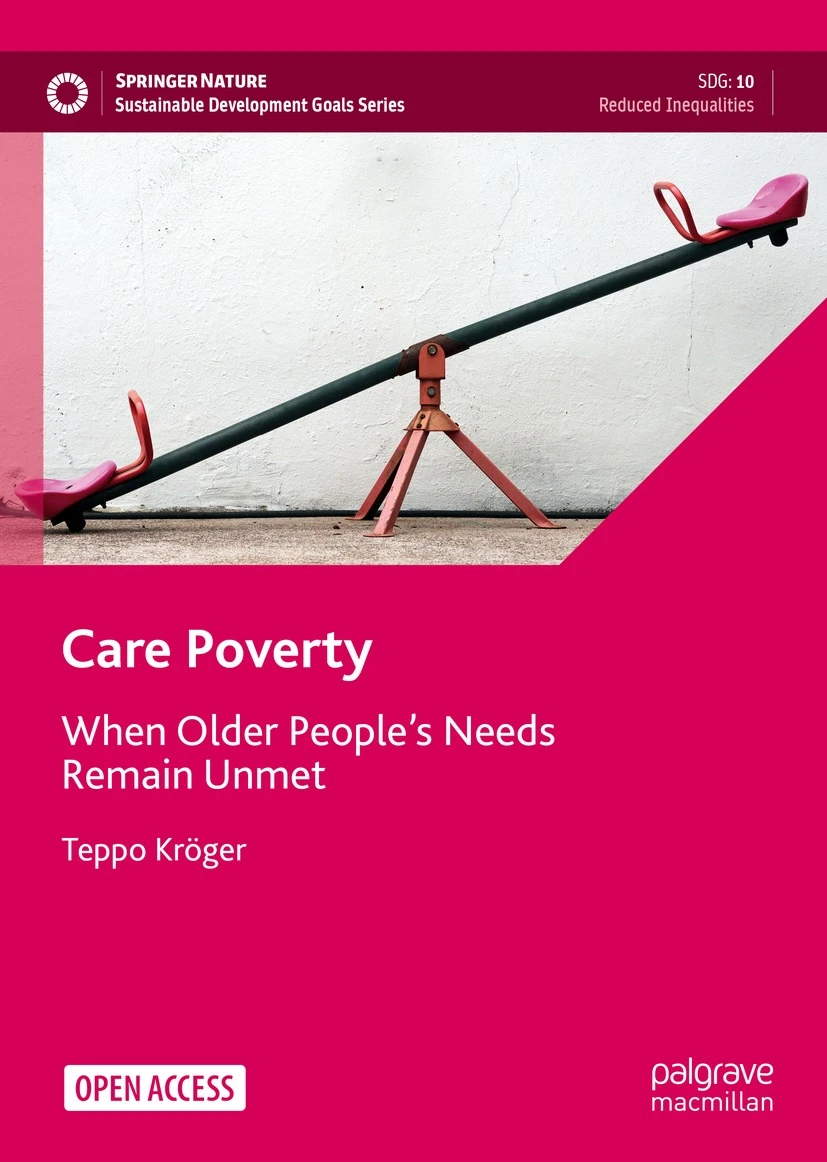
Book: Care Poverty - When Older People’s Needs Remain Unmet

CARE POVERTY
'This open access book turns the research attention of social policy scholars and long-term care researchers from comparative descriptions of care systems, focusing mostly on expenditures and volumes of long-term care services, to outcomes, and in particular to the question whether older people really receive the support that they need. Without knowledge about which needs and which social groups are currently inadequately covered, it is impossible to guide policy development.

The book puts forward a novel theoretical framework to guide future research work and public discussion on the issue of unmet long-term care needs, by broadening the current discussion so that inadequate care is seen in its societal and policy contexts, taking structural issues and policy designs into account. Kröger outlines three different domains of care poverty (personal care poverty, practical care poverty and socio-emotional care poverty) and differentiates between main methods how unmet needs are measured.' [my emphasis]

In psychiatry and psychiatric nursing, a person may be assessed to display poverty of thought, ideas or speech. As an exercise it may be useful to invert the rendering below in Hodges' model, and  consider Kröger's forms of poverty and possibly others that arise from your critique, reflections and life experience to date. Clearly, another book to add to the list!
 
individual
|
INTERPERSONAL : SCIENCES
humanistic ------------------------------- mechanistic
SOCIOLOGY : POLITICAL
|
group

CARE


CARE

CARE

POVERTY


Previously on W2tQ - (unmet) 'needs'

Kröger, T. (2022) Care Poverty - When Older People’s Needs Remain Unmet. Cham: Palgrave Macmillanhttps://link.springer.com/book/10.1007/978-3-030-97243-1#about-this-book

Will check on a related title too.

Wednesday, August 14, 2024

There is this thing - 'universal construction'

The problem of bugs in software is an ongoing problem across all IT industries. For application that are safety critical we are still reminded of the risk implications and consequences if bugs are software is not tested and bugs - errors identified and corrected.

Back in the 90s during BA(Joint Hons. Philosophy & Computing) studies, I was introduced to the formal specification language 'Z'. It was designed for definition, and modelling of computer software, working from specification to implementation, as per these images:

https://personalpages.bradley.edu/~young/CS592M120_OLD/handoutZed.pdf

https://personalpages.bradley.edu/~young/CS592M120_OLD/handoutZed.pdf

To be clear I've never worked as part of a software project and my 'tinkering' - Drupal, Pharo, online groups, hosting platform - reveals how the development stack and work processes have developed apace. The challenge is keeping up. Simultaneously, there is the sense of being on the bank of deep water; or, a vertiginous cliff:

A little learning is a dang’rous thing;
Drink deep, or taste not the Pierian spring:
There shallow draughts intoxicate the brain,
And drinking largely sobers us again.
Fir’d at first sight with what the Muse imparts,
In fearless youth we tempt the heights of arts,
While from the bounded level of our mind,
Short views we take, nor see the lengths behind,
But more advanc’d, behold with strange surprise
New, distant scenes of endless science rise! 
Pope. https://interestingliterature.com/2021/09/a-little-learning-is-a-dangerous-thing-meaning-analysis-origin/

 Acknowledging the need for an 'evidence-base' and theoretical underpinning the effort to 'push' Hodges' model forward is ongoing. Maths remains an alien territory to me, but the 'secret garden' is as tantalizing as ever. Over the years I have posted - with much overlap about:

  • maths
  • relation
  • logic
- and more recently:
  • isomorphism
  • category theory
  • and as previously posted - laws of form.
In an effort to get to grips with the above, I'm following various online videos, books and papers. Bartosz Milewski's videos, blog and publications are aimed at programmers, but are very interesting nonetheless. The first video provides an introduction to the motivation and philosophy of category theory. In another, Milewski refers to 'universal construction' on YouTube and in a blog post about 'Function Types'.

The 'universal' figures in healthcare too: universal health access, and universal health coverage appear to over-shadow 'universal health care'. The quality of 'universal' also creeps into assessment. Data gathering is not merely complete, it is comprehensive. It has to be, to contribute not just to a care plan, for one that is (supposedly) person-centred, with risks identified, strengths, weaknesses - needs, history, social network, and much more. The care plan informs and orchestrates the interventions; then evaluation follows. Are we delivering? What is the patient's (client's, carer's) level of satisfaction. Have care stages and actions been completed as per policy (in time!)? (More on this to follow later this year in light of UK mental health/illness news.)

So as I consider (wrestle with...) initial, and terminal objects, sets and categories … I can hopefully, especially with help, extend the number of posts tagged 'universal' here on W2tQ. In this vein, is Hodges' model a universal construction? There may not be a universal truth to reveal, but it will prove a marvellous learning journey.

Monday, March 11, 2024

HIFA Discussion: Alcohol Use Disorders - Drink Aware and Change

Dear HIFA colleagues,

I would like to invite you to retweet the following that I have just sent on our X/Twitter account:

"Pls RT: I just took the DrinkAware test as if I drank 3 pints a day (well over the recommended limit). The result was "Great news! You are at lower risk of alcohol-related problems". We invite others to check. Thx NPW https://www.drinkaware.co.uk/tools/drinking-check#/ "

You can see the tweet and retweet here: https://twitter.com/hifa_org/status/1762399130154885617

We are unsure why the test - which is taken by 900 people every day - is providing such misinformation.

DrinkAware is funded by the alcohol industry.

Thank you for your help to publicise this issue.

Best wishes, Neil

HIFA profile: Neil Pakenham-Walsh is coordinator of HIFA (Healthcare Information For All), a global health community that brings all stakeholders together around the shared goal of universal access to reliable healthcare information. HIFA has 20,000 members in 180 countries, interacting in four languages and representing all parts of the global evidence ecosystem. HIFA is administered by Global Healthcare Information Network, a UK-based nonprofit in official relations with the World Health Organization. Email: neil AT hifa.org


To which I replied:

RT'd as requested.. 

Reply from twitter ... 


McCambridge J, Kypri K, Miller P, Hawkins B, Hastings G. Be aware of Drinkaware. Addiction. 2014 Apr;109(4):519-24. doi: 10.1111/add.12356. Epub 2013 Oct 28. PMID: 24164565; PMCID: PMC3992896.

UPDATE 10th March

Dear HIFA colleagues,

Further to our discussions on HIFA, in the past week DrinkAware HAS CHANGED THEIR ADVICE to people who drink 42 units per week (3X the recommended maximum). Questions remain about how many people were misled by previous advice, whether that advice was deliberate, and whether WHO's AUDIT test (currently used as the basis for the DrinkAware test) should continue to be used by anyone as an unsupervised self-evaluation tool.

BACKGROUND On 22 February 2024 I reported on HIFA an apparent problem with DrinkAware, the UK's largest alcohol charity, funded by the alcohol industry. https://www.hifa.org/dgroups-rss/alcohol-use-disorders-79-role-alcohol-industry-10-alcohol-industry-and-misinformation

I took their Drinking Check. I posed as a man who drinks 42 units per week (3X the recommended maximum) and DrinkAware told me: "Great news! You are at lower risk of alcohol-related problems. This means you are at lower risk of serious diseases such as stroke, heart and liver disease, and seven types of cancer and may already be noticing the benefits of lower risk drinking such as deeper sleep, more energy and brighter moods."

There was no advice to reduce my consumption.

This test was repeated by other HIFA members in subsequent days, with the same results.

On 4 March 2024 we reported our findings to the World Health Organization.

CHANGE IN ADVICE Today, 10 March 2024, I took the test again. As before I posed as a man who drinks 42 units per week. This time I got a different result:

"You are on the right track. You are at lower risk of alcohol-related problems... To keep your health risks low, the UK Chief Medical Officers advice is to drink no more than 14 units a week. If you are regularly drinking above 14 units per week there are tips and advice below about how to cut down."

INTERPRETATION Prior to 4 March 2024, DrinkAware was encouraging many heavy drinkers (up to 42 units per week) to continue drinking as they are.

DrinkAware claims that its Drinking Check tool was used by 250,991 people in 2021, so it appears that potentially tens or even hundreds of thousands of people drinking 14-42 units per week may have been misinformed.

At some point between 4 March and 9 March, Drinkaware changed their Drinking Check tool so that heavy drinkers (up to 42 units per week) are now advised to cut down.

SHOULD WHO's AUDIT TEST BE USED AS AN UNSUPERVISED SELF-EVALUATION TOOL?

Previous messages on HIFA have suggested that AUDIT should only be used as a clinical tool by health professionals, and not as an unsupervised self-evaluation tool. WHO's AUDIT manual notes: 'Care must be taken to tell patients why questions about alcohol use are being asked and to provide information they need to make appropriate responses. A decision must be made whether to administer the AUDIT orally or as a written, self-report questionnaire.' https://iris.who.int/bitstream/handle/10665/67205/WHO_MSD_MSB_01.6a-eng.pdf

NEXT STEPS

How many people were misled by previous advice, was that advice deliberate, and should WHO's AUDIT test (currently used as the basis for the DrinkAware test) continue to be made available as an unsupervised self-evaluation tool?

I invite HIFA members to suggest next steps. Are you a health journalist (or do you know a health journalist) who might be interested to look into this in more depth? Please pass this on and/or contact me: neil@hifa.org

Meanwhile I shall report this new finding to WHO.

I look forward to your comments and suggestions: hifa AT hifaforums.org

Best wishes, Neil

Finally ...

Dear HIFA colleagues,

We now enter our 6th and final week of the deep-dive into Alcohol Use Disorders, where I invite you to reflect on what has been discussed so far (and what has not been discussed). In your view, what is the key learning in relation to the 5 questions we have explored:

1. Do people understand the health, socio-economic and environmental harms of alcohol? What matters to them? How can they be better informed? How to reduce stigma? 2. Do health workers have adequate knowledge to prevent and manage alcohol use disorders among their patients? What matters to them? How can they be better informed? 3. What is the role of the alcohol industry? What can be done to address misinformation from the alcohol industry? 4. Do public health professionals and policymakers have adequate knowledge to prevent and treat alcohol use disorders in their country? What are current national policies and what more can be done to fully implement those policies? 5. How can we define and measure alcohol use disorders?

To help with this, I have prepared a full compilation of our discussion so far (205 pages):

https://www.hifa.org/sites/default/files/publications_pdf/Alcohol_Use_Disorders_Compilation2.pdf

I shall now work on an edited version (selected text organised under subheadings for each of the 5 questions and for other topics) and will get this to you asap.

Many thanks, Neil

Sunday, July 16, 2023

UK Higher Education Research Excellence Framework - Disciplines

The Research Excellence Framework (REF) is a national assessment of the quality of UK higher education research in all disciplines.

34 subject-based Units of Assessment (UOAs)


INDIVIDUAL
|
     INTERPERSONAL    :     SCIENCES               
HUMANISTIC --------------------------------------  MECHANISTIC      
SOCIOLOGY  :   POLITICAL 
|
GROUP

Psychology, Psychiatry and Neuroscience

Archaeology

Theology and Religious Studies

Philosophy

[Mathematics & Logic]

^Communication 
as Intra- Interpersonal (Skills) Neurodiversity
hence an individual's
sense-making

Clinical Medicine (Neuroscience)
Public Health, Health Services and Primary Care
Allied Health Professions, Dentistry, Nursing and Pharmacy
Biological sciences 
Agriculture, Food and Veterinary Sciences

Earth Systems and Environmental Sciences
Chemistry
Physics
Mathematical Sciences
Computer Science and Informatics
Engineering
Architecture, Built Environment and Planning
Geography and Environmental Studies
Archaeology
Area Studies
Sport and Exercise Sciences, 
Archaeology
Social Work and Social Policy
Sociology
Anthropology and Development Studies
area studies
Education
Modern Languages and Linguistics
English Language and Literature
History
Classics
Communication^, Cultural and Media Studies, Library and Information Management
Art and Design: History, Practice and Theory
Music, Drama, Dance, Performing Arts, Film and Screen Studies
Leisure and Tourism


Archaeology

Economics and Econometrics

Business and Management Studies

Law

area studies

Politics and International Studies


As ever, you see the idealised nature of conceptual (and other) models. I have repeated archaeology, and area studies, added mathematics and logic to the intra- interpersonal (our reasoning, imaginative ability) which increasingly is being challenged and debated as computer-based proofs 'take-over'. I'm not sure where future studies might sit (or pace anxiously!)?

The REF was mentioned at the Improving University Teaching Conference [IUT] in the past week. I'd been meaning to look at the scope of the framework which is often raised across the media, hence this post. IUT, was well worth the effort of a presentation and attending. A global event spanning Australia-Asia, Europe, and North America - one to follow in the future.

Wednesday, September 14, 2022

Yes, size matters

 INDIVIDUAL
|
 INTERPERSONAL    :     SCIENCES               
HUMANISTIC --------------------------------------  MECHANISTIC      
SOCIOLOGY  :   POLITICAL 
|
GROUP


Hammond, G. 'The mini market'. House&Home, City Living Special, FTWeekend, 4-5 May 2019, pp.8-9.
https://www.ft.com/content/03a9343e-6b35-11e9-80c7-60ee53e6681d


This morning I shared three slides with the PAMHOP research team and greatly appreciate the opportunity to present and join their meeting:

Physical and Mental Health of Older Prisoners (PAMHOP)

As I spoke of considering the environment and the carceral context across the domains of the model, I recalled another piece of paper.

The image above is from FTWeekend in 2019.

In prison of course, while the physical environment is the intended constraint, the model also invites consideration of the psychological, social, political environments and added here - the spiritual.

Since 2019 and post-COVID, the change in how we regard and value the spaces we inhabit - voluntarily or otherwise.

Hammond, G. 'The mini market'. House&Home, City Living Special, FTWeekend, 4-5 May 2019, pp.8-9. https://www.ft.com/content/03a9343e-6b35-11e9-80c7-60ee53e6681d

The image above was copied from FTWeekend and pasted into a new image and saved from avif format to .jpg.


Sunday, June 26, 2022

Reflecting on the 'distances' between us

INDIVIDUAL
|
 INTERPERSONAL    :     SCIENCES               
HUMANISTIC --------------------------------------  MECHANISTIC      
SOCIOLOGY  :   POLITICAL 
|
GROUP

'DISTANCE'

a metric ...

qualitative and quantitative

conceptual - semantic distance

The Social Distance Between Us ...
... How Modern Capitalism Created our Mental Health Crisis

... Drug development $$$
 Access to healthcare / therapy
'Evidence'
Parity of Esteem
 Self-advocacy / Advocacy
 Employment, Poverty, Deprivation
Policy - Health Policy
Land
Property, Housing- Homelessness
 Mental Health Law
 'Public Spaces'
 Social Determinants of Health
Sustainable Development Goals

Life Chances
 Health Career
 Geo-Politics (Local 'politics') ...
 
.... How Remote Politics Wrecked Britain


See also: 'distance'

My source: FT Weekend and Times, BBC Radio 4 and 

https://twitter.com/Keirwales/status/1541093078102048770

Tuesday, April 05, 2022

Holism, evidence, theory and justification ...

or, measuring the temperature of our concepts ...

 
INDIVIDUAL
|
 INTERPERSONAL    :     SCIENCES               
HUMANISTIC --------------------------------------  MECHANISTIC      
SOCIOLOGY  :   POLITICAL 
|
GROUP

... "Quine bases his “confirmation holism” upon observations of Pierre Duhem (1914 [1954]), who drew attention to the myriad ways in which theories are supported by evidence, and the fact that an hypothesis is not (dis)confirmed merely by some specific experiment considered in isolation from an immense amount of surrounding theory. ...


... Thus, a thermometer will be a good indication of ambient temperature only if it’s made of the right materials, calibrated appropriately, and there aren’t any other forces at work that might disturb the measurement—and, of course, only if the background laws of physics and other beliefs that have informed the design of the measurement are sufficiently correct. A failure of the thermometer to measure the temperature could be due to a failure of any of these other conditions, which is, of course, why experimenters spend so much time and money constructing experiments to “control” for them. Moreover, with a small change in our theories or background beliefs, or just in our understanding of the conditions for measurement, we might change the tests on which we rely, but often without changing the meaning of the sentences whose truth we might be trying to establish (which, as Putnam 1965 [1975] pointed out, is precisely what practicing scientists regularly do)." ...


3.4 Verification and Confirmation Holism, In -

Rey, Georges, "The Analytic/Synthetic Distinction", The Stanford Encyclopedia of Philosophy (Summer 2022 Edition), Edward N. Zalta (ed.), forthcoming URL = <https://plato.stanford.edu/archives/sum2022/entries/analytic-synthetic/>. 


Monday, March 21, 2022

Hybrid therapy (Early) c/o Fernández-Navarro, Camarós, and Garate

... Family and Art Therapy?
 

Abstract

"This paper presents rock art as a collective action in which different strata of society took part, including children and subadults. Until recent decades archaeology of childhood has not been in the main focus of the archaeological research, much less the participation of those children in the artistic activity. The present study approaches the palaeodemography of artists in the decorated caves through the paleolithic rock art itself. The approximate age of these individuals has been calculated through the biometric analysis of hand stencils in the caves of Fuente del Salín, Castillo, La Garma, Maltravieso and Fuente del Trucho, using 3D photogrammetric models as reference. The results have been compared with a modern reference population in order to assign the Palaeolithic hands to certain age groups. It has been demonstrated the presence of hand stencil motifs belongs to infants, children and juveniles, revealing this stratum's importance in the artistic activity."
 
INDIVIDUAL
|
 INTERPERSONAL    :     SCIENCES               
HUMANISTIC --------------------------------------  MECHANISTIC      
SOCIOLOGY  :   POLITICAL 
|
GROUP

[Fig. 4. ] Study measurement system and current sample measurement 1. Hand Length; 2. Hand Width; 3. Thumb Length; 4. Thumb Width; 5. Index finger Length; 6. Index finger Width; 7. Middle finger Length; 8. Miggle finger; 9. Ring finger Length; 10. Ring finger Width; 11. Little finger Length; 12. Little finger.

"Children may have had a hand in a quarter of prehistoric art"


Fernández-Navarro, V., Camarós, E., & Garate, D. (2022). Visualizing childhood in Upper Palaeolithic societies: Experimental and archaeological approach to artists’ age estimation through cave art hand stencils. Journal of Archaeological Science, 140, 105574. https://doi.org/10.1016/j.jas.2022.105574

My source:

Badcock, James. "Children may have had a hand in a quarter of prehistoric art". The Daily Telegraph. 12 March 2022, p.15.


Tuesday, March 15, 2022

PhD Opportunity: An Atlas of Health and Social Inequalities


Excited to announce that we have funding for a +3 studentship in the UCL Department of Geography for the project “An Atlas of Health and Social Inequalities”. The research will be carried out in association with the Health Foundation and will comprise the creation of a range of innovative datasets presented through a series of ground-breaking maps and graphics. The project will centre on the Health Foundation’s Social and Economic Value of Health: Place programme, which is designed to generate new knowledge about the ways in which the physical and mental health of a population shapes their social and economic outcomes. The Health Foundation have funded a number of research projects already that focus on understanding the relationship between a given population’s health and the health of individuals within that population.

The PhD will benefit from insights from these projects and focus on the creation of a nationwide atlas to demonstrate the social and economic value of health. It will produce a series of research-led maps created from innovative and granular datasets to demonstrate the new ways that health data can be visualised. These will convey a range of variables including health metrics such as mortality, self-reported health, prevalence of specific health conditions, and social and economic outcomes including employment, pay, structural changes to industrial sector composition and social fragmentation.

The work will be supervised by myself (James.Cheshire AT ucl.ac.uk) and Dr Anwar Musah (a.musah AT ucl.ac.uk), to whom enquiries may be directed. The successful applicant will hold a First or Upper Second Class honours degree in a quantitative social science or computer science discipline and/or similar Masters qualification.

For further details on eligibility etc please see here.

CLICK HERE TO APPLY (Deadline 4th April)


My source: Spirit of 1848

Sunday, July 25, 2010

Book: "Outcome Measurement in Mental Health" Cambridge University Press

Outcome Measurement in Mental Health
Theory and Practice
Edited by Tom Trauer
Hardback
Published June 2010

In order to operate in an evidence-based fashion, mental health services rely on accurate, relevant, and systematic information. One important type of information is the nature of the problems experienced by recipients of mental health care, and how these problems change over the course of time. Outcome measurement involves the systematic, repeated assessment of aspects of health and illness, either by service providers, service recipients, or both. From outcome measurement clinicians and service recipients achieve a common language whereby they can plan treatment and track progress, team leaders and managers secure a basis to compare their services with others and to promote quality, while policy makers and funders derive evidence of effectiveness. This book will be an essential and practical resource for all members of the mental health clinical team as well as those responsible for establishing or managing services, and directing policy.

• Presents a global perspective on outcome measurement enabling readers to compare and contrast practices around the world
• Enables readers to identify the specific challenges presented in different groups and settings, the instruments to use, and how to use the results
• Emphasizes the relevance and use of outcome data to clinicians, to help them improve their effectiveness

Contents

Preface; 1. Introduction Tom Trauer; Part I. Outcome Measurement Around the World: 2. Mental health outcome measurement in Australia Jane Pirkis and Tom Callaly; 3. Outcome measures in New Zealand Graham Mellsop and Mark Smith; 4. Outcome measurement in England Mike Slade; 5. Outcome measurement in Ohio and the United States James Healy and Dee Roth; 6. The outcome questionnaire system: a practical application for mental health care settings Michael J. Lambert; 7. Outcome measurement in Italy Mirella Ruggeri; 8. Outcome measurement in Germany Sylke Andreas, Thomas Becker, Holger Schulz and Bernd Puschner; 9. Outcome measurement in mental health services in Norway Torleif Ruud; 10. Outcome measurement in Canada: one province's experience with implementation in community mental health David Smith; Part II. Outcome Measurement in Specific Groups and Settings: 11. Routine outcome measurement in child and adolescent mental health Peter Brann; 12. Outcome measurement in adult mental health services Tom Trauer; 13. Outcome measurement in older persons Rod McKay and Regina McDonald; 14. Outcome measurement with indigenous consumers Tricia Nagel and Tom Trauer; 15. Routine measurement of outcomes by Australian private hospital-based psychiatric services Allen Morris-Yates and Andrew Page; 16. Mental health outcome measurement in Non-Governmental Organizations (NGOs) Glen Tobias; 17. Outcome measurement in drug and alcohol services Maree Teesson and Mark Deady; Part III. Current Issues in Outcome Measurement: 18. Outcome measurement - applications and utility Tom Trauer; 19. Stakeholder perspectives in outcome measurement Tom Trauer; 20. Assessment of change in outcome measurement Tom Trauer; 21. Routine outcome measurement: perspectives on skills and training Tom Trauer and Tim Coombs; 22. A review of instruments in outcome measurement Tom Trauer; 23. Some economic and policy considerations for outcome measurement Rowena Jacobs; 24. Future directions Tom Trauer; Index.

My source:

UK Routine Clinical Outcomes Network Forum

Friday, October 30, 2009

'Well-being' - a discipline unattached: enter 'informatics' the ubiquitous bed-partner

Informatics has been around for decades in many guises, associated with established academic disciplines and emerging fields as a consequence of the application of technology across society, education, work and more besides. As a result new schools of informatics emerge all the time.

The status, role, theory and practice of informatics is much debated within existing peer groups and professional associations. Prime examples include:

  • medical informatics
  • health informatics
  • nursing informatics
  • community informatics
  • urban informatics
  • citizen informatics
  • gender informatics
  • social informatics

The community informatics mail list and others have deliberated on the differences and boundaries of various schools (notably for the CI fraternity - community, urban and social informatics).

I have contributed to discussions and often thought about how to get a handle (map!) on the various schools. Inevitably I draw on Hodges' model and wonder if from the center there is a spectrum of informatics schools, something akin to a pattern made up of sectors encompassing the whole model.

Imagine my interest then when I noticed (and linked to) a workshop organized within CHI 2010 on -

Wellness Informatics (WI)

This is a great turn-of-phrase with an explanation behind it provided by Beki Grinter an organizer on her blog. Wellness and well-being are on the lips of us all at the moment. Informatics as we've seen is also quite a disciplinary bed-fellow.

I hope this workshop does take place and would love to attend. As for my thoughts and Hodges' model, I wonder when the circle will be closed?

Perhaps by that time 'informatics' will not be a discipline in which humans are the 'principal investigator'?

Sunday, October 11, 2009

Book review: Curriculum Development In Nursing Education (2nd. Edition)

It is high time I reviewed a book on nursing so when I came across Curriculum Development In Nursing Education by Carroll L. Iwasiw, Dolly Goldenberg and Mary-Anne Andrusyszyn, I was really pleased to receive a review copy. While I am not a full-time academic I learned a little about curriculum development on the PG Cert. Ed. course. As for all qualified nurses I take the mentoring role seriously, enjoy it immensely and of course we are all life long learners. The other benefit comes from curriculum planning being one of the original purposes for Hodges' model.

https://www.jblearning.com/catalog/productdetails/9781284143584
To begin the book is a very comprehensive and yet accessible introduction to this subject. The language is clear and not technical, the print is also clear (and large - for an ageing readership!) the format is modern. The book is well referenced overall, leaving me with several leads to follow-up. Although grounded in and with case studies based on hypothetical North American institutions the scenarios, questions and critque are easy to appreciate and relate to, whether you are faculty, nurse (student), or other stakeholder. Iwasiw et al. stress how curriculum development (CD) is ongoing, recursive and the limitations of a 2-D representation of the process on paper. A model is provided on pages 6-10 and in figure 1.1 with many very useful definitions.

The politics of educational settings and their activities are clear as Iwasiw and colleagues explain the 'sales pitch' for CD and the importance of interpersonal skills and foresight. CD the authors make clear is a non-trivial pursuit. It should be ongoing all the time with established curricula under review. At first I was surprised about the lack of mention of project management, specialist consultants are referred to and Gantt charts and project plans are discussed subsequently. The book starts and ends with the nursing and faculty shortage (which seems ironic from here).

In chapter 3 leadership is covered and the need for formal preparation of staff to manage CD.  Faculty development for CD features in the majority of chapters. The case studies engaged me throughout. Chapter 4 leads on to the organizational context of CD, with helpful introductions to change theories and their application. So we have Kotter's 8-Stage process; the Transtheoretical Model of Behaviour Change. Talk of leadership and organizations inevitably leads to the adminstration and management of CD and types of committees. Not exactly page-turning content, but essential to planning, collaboration and ongoing success. CD is viewed as a golden opportunity for change, so decision making and critical reading is emphasized, with several methods of ideas generation outlined in a table (wither Hodges' model?). There is a 2 year Gantt chart, despite my initial reservations about 'project management'. (I am still surprised and must address my impression that academia is largely untainted by external project management and consultancy speak?). Page 80 sees an explanation for the book's cover.

There is a crucial point made in programs and courses taught and how these can act as an assett or a constraint:

Knowledge from the physical, biological and psychological sciences, as well as from the arts and humanities, contributes significantly to the nursing knowledge and well-rounded graduates p.106.
I have always been interested in this word 'infrastructure'. The complexity of education and CD is revealed as the author's explore human resources, physical resources, resources to support teaching and learning. These headings do not do justice to the content here which is dealt with economically, but effectively. Moving to external contextual factors and I can see how Hodges' model is ideally suited to helping to frame CD. The authors also cover demographics, culture, health and health care, professional standards and trends, technology and information and the environment. There is a summary of the social, political and economic conditions and their impact and influence on CD p.115-16.

The section on Approaches to data gathering for CD, seemed familar, reminding me of Management Information System books of old. Here the contrast is between data gathering for CD and data collection for research. Perhaps the distinction here is less important if we are equally open to quantitative and qualitative methods and triangulated approaches p.116-17. Tables 6.3 & 6.4 over four and a half pages run through data, data sources and data gathering methods for internal and external contextual factors. The initial definitions are supported by a further collection (p.136-7) curriculum concepts, professional abilities, curriculum possibilities, curriculum limitations, administration and curriculum nucleus. Data collection is one thing, but it is in subsequent analysis, interpretation and synthesis that value is found. In response five processes are introduced:
  1. Examining and integrating contextual data - identifying patterns and trends
  2. Inferring curricula conceptions and professional abilities
  3. Proposing curriculum possibilities
  4. Deducing curriculum limitations
  5. Identifying administration issues
Although not stated in the text, I enjoyed reading about the over-riding, over-arching ideas that nurses should learn and apply. The fundamental ideas that shape how nurses relate to their clients, how they think and behave. How are these ideas to permeate and be promoted through the curriculum? In confirming the curriculum nucleus (and another bread and butter point for Hodges' model) has anything important been missed p.148?

Educational establishments are of course living entities. Continuity is essential and is attended to here in the Popularfield case study p.150-169. If things get heavy in the book then currculum philosophy is the focus of chapter 8, and considers the role of different audiences of curriculum outcome statements. Program models (p.201-09) leads (inevitably) to models of nursing - listing Orem, Leininger, Watson. The nitty-gritty of teaching and learning is discussed in contemporary organisational structures and course sequence patterns p.211. Table 9.1 provides an interesting matrix of core curriculum concepts. The table headings include:

health promotion : empowering interpersonal relationships : caring : social justice

Deliberating curriculum delivery requires selection of delivery application, program model, and organizational strategy and course sequencing pattern - all discussed across chapters 9-10. I've been wondering about 'process' across the humanistic-mechanistic divide and there are some lines that set me to thinking:
Process-orientated courses further integrative learning, de-emphasize specific content and reduce reliance on the lecture method p.243.
Of particular interest to me is designing individual classes with table 10.5 providing example of instructional events and teacher activities. Gagne, et al., may be a primary source, but the date of 1992 troubles me. It is undoubtedly difficult to encompass the whole range of instructional events and activities in 2-3 pages, but future editions would benefit from a revision of the 'state of technology' in the book as a whole.

Chapter 11 throws CD into a public light in planning curriculum improvement and making curriculum plans public. Discussion includes division of criteria along structural and process lines. The former - adherence and duration; the latter - quality of delivery and program of differentiation. Contractual agreements are raised between health care and community agencies, legal areas of concern and insurance. The human side of CD cannot be ignored looking at the existing work force - skills - and demands and requirements of a new curriculum. The phasing of the change to a new curriculum from an old needs to be handled sensitively is an issue well made in the text. New students must not feel they are missing out and being experimented upon, while students on existing programs feel they are missing out on what is 'new and shiny'. As noted faculty development remains a constant throughout the book.

Chapter 12 is an excursion through planning curriculum evaluation taking in outcomes, human and physical resources, learning climate and policies. Skills and means in judging curriculum quality, reporting results, and reflecting on the process are explored with further definitions supplied. Utilization-focussed evaluation is described - in which the focus is on the intended use by the intended users. Program evaluation is broken down into internal and external forms (p.281) and as if to give credence to the adage "All work and no play makes Jack (and Jill) dull people"... the benefits of CD for faculty are explored.

Typologies of Curriculum Evaluation Models are presented, a generational view 1st-4th, again with resort to a table. The 4th generation - the post-late 1970s is described as holistic and inclusive. RCAR stands out Relevance-Congruence-Adequacy-Reasonableness and other examples. I thought about learning management systems here and was surprised that there is no tie-in, or mention in the index as a reporting resource. Planning evaluation of curriculum components also touched on philosophical aspects.

Chapter 13 on Flexible Delivery of Nursing Education Curricula is central to my interest and criticism of the book if there is one. Distance education and flexible delivery are differentiated. Guidance at a distance is stressed not technology (p.315). There may be be too much reliance on 2-way communications between tutor and student, and the important thing for me to remember here is the focus is on CD (academic responsibility, obligations, affirmation), not teaching methods, multimedia and instructional technology. That said, the problem of instructional technology models and their integration into curricula appears to be a key challenge: [ previous discussion on http://it.coe.uga.edu/itforum/ ] Tied to this as the authors state are the politics of schools of nursing who are obliged to follow the strategic plans of their institutions. There is reference here to an online critical care nursing course p.318. Plus integrating pedagogy and technology with Blackboard Learning System, Moodle, Desire2Learn and Knowledge Hub, so this book is far from a technology-software desert. Virtual reality is in the index.

Surprisingly or highlighting how enclosed (institutionalized) CD is, 'open source' is not considered. Too risky perhaps? Nevertheless, this is a surprising omission from the index (unless I have missed it in the text?). There are some marvellous open source projects in education, and surely some of these touch on curriculum development, especially in the developing world? Drupal the content management system (and many other open source tools) is increasingly being adopted. Libraries are deploying Drupal on the 'front desk'. The closing chapter 14 draws attention once again to the nursing and nursing faculty shortages and related politics. This really is an important message with global implications for the future of local training of nurses, job readiness, the refocus of existing nurse curricula, subsequent migration and standards within the profession. In summary:
  • I enjoyed reading CDiNE.
  • Learned a great deal about this important subject.
  • It is accessible and readable.
  • I have many leads - references to follow up.
  • The book is a comprehensive in its treatment of CD in nursing education.
  • The many definitions are informative.
  • The tables are a great signposting and summary resource.
  • The book encourages further reading and study - and actual engagement
    in the CD process.
If the book has a problem for me there is not enough on technology AND information - as a lever for change and source of metrics. My impression admittedly from one book is how untainted academia is by project management and an information (consultancy?) driven ethos. This is just an impression and I am biased as this blog demonstrates. I do believe that in discussing CD (p.195-99) that while the Web is clearly mentioned, more could be made of learning management systems. I would have thought that 'systems' to a organization of any sort, would be viewed across operational, tactical and operational levels. Where is the management dashboard here? If it is an issue of maturity this could be stated. I thought these may feature in a more integrated way, also being used as a data gathering resource. To the author's credit the book is nicely balanced as an introductory source.

Recent students have highlighted that they do not cite (unless the work is historical) references older than four years. The references here that relate to technology are for me quite dated and should be revisited and considered afresh. Recent literature suggests that the days of the university are numbered. Whether you take this seriously or not the position of instructional technology, the web, scholarship and future of academic publishing - the smoke under the door - should at least merit examination. Otherwise - from my external locale - this a very comprehensive, informed and accessible account of CD in nursing education that continues and must continue to build on previous editions. Meanwhile thanks to this good book - I must also re-visit Boyer's model of scholarship.

Acknowledgement: Thanks to Clare McMillan, Marketing Specialist and Jones & Bartlett International for the review copy.

Ref:
Carroll L. Iwasiw, Dolly Goldenberg abd Mary-Anne Andrusyszyn, (2009) Curriculum Development In Nursing Education (2nd edition), Jones and Bartlett Publishers.
(My) additional image:
Möbius Strip As Quotient Space