Hodges' Model: Welcome to the QUAD: Boyer's model of scholarship

Hodges' model is a conceptual framework to support reflection and critical thinking. Situated, the model can help integrate all disciplines (academic and professional). Amid news items, are posts that illustrate the scope and application of the model. A bibliography and A4 template are provided in the sidebar. Welcome to the QUAD ...

Showing posts with label Boyer's model of scholarship. Show all posts

Saturday, October 17, 2009

Boyer's model, Hodges' model, scholarship, future website and Drupal

Ack: This blog post draws on a brief but informative two page text by Marta Nibert, Educational Consultant for Occupational Therapy, University of Idaho.

Models abound of course (not only on catwalks where other career choices are displayed), but in nurse education and the sciences. The review of Curriculum Development In Nursing Education reminded me of Boyer's model of scholarship. I have maintained a link to this for many years, the book review prompted me to read more. Boyer is a gift for this scholar of Hodges' model and any others, a gift not just in that off-the-shelf sense, but in a constructive advisory sense.

The table below highlights Boyer's types of scholarship, purposes and measures of performance. The focus of Boyer's model is the quality of professorial activities, in the same way highly skilled and experiences nurses can be removed from the front-line, so to can specialist faculty be distanced from teaching.

Type of ScholarshipPurposeMeasures of Performance
DiscoveryBuild new knowledge through traditional research.• Publishing in peer-reviewed forums.
• Producing and/or performing creative work within established field.
• Creating infrastructure for future studies.
IntegrationInterpret the use of knowledge across disciplines.• Preparing a comprehensive literature review
• Writing a textbook for use in multiple disciplines.
• Collaborating with colleagues to design and deliver a core course.
ApplicationAid society and professions in addressing problems.• Serving industry or government as an external consultant.
• Assuming leadership roles in professional organizations.
• Advising student leaders, thereby fostering their professional growth.
TeachingStudy teaching models and practices to achieve optimal learning.• Advancing learning theory through classroom research.
• Developing and testing instructional materials
• Mentoring graduate students.
• Designing and implementing a program level assessment system.

What I will try to do here is briefly suggest how Boyer can inform consideration of scholarship in Hodges' model and a future website. This is not just a one-way dialogue I believe Hodges' model can also inform Boyer's model. For example according to Nibert, Boyer proposes using 'creativity contracts'. The creative utility of Hodges' model is surely demonstrated in the posts and archive on W2tQ spanning nursing, education and health care? Since the publication of Boyer's paper in 1997 it could be argued there are new forms of scholarship that cast light and shadows on traditional academia and forms of research. More specifically though we can take Boyer's measures of performance and apply them in turn to h2cm. Even though the purposes differ (I am neither quality faculty nor professor) the reflection is helpful:

DISCOVERY

Publishing in peer-reviewed forums.
  • There is a limited bibliography listed here on W2tQ.
Producing and/or performing creative work within established field.
  • The bibliography and website constitute a mixture of formal and rather ad-hoc creative works in nursing. Much more needs to be done.
Creating infrastructure for future studies.
  • As noted in the book review I am fascinated by this word infrastructure. I recognise the need for a 21st century home for Hodges' model; the limitations of a static website and the need to benefit from the stimulus and energy that a community of users would provide. Drupal is the future (for me), a means to provide an infrastructure out of which a community may grow and inform.
INTEGRATION

Preparing a comprehensive literature review.
  • Hodges' model deserves a comprehensive literature review, one that spans education, nursing, global health, informatics and cognitive science.
Writing a textbook for use in multiple disciplines.
  • 'Book' is an established content type within Drupal and this is a worthy objective, as Hodges' model is the ideal academic Swiss Army knife.
Collaborating with colleagues to design and deliver a core course.
  • This is so dependent upon infrastructure and it seems my actively engaging with academics in curricula design and course planning. Drupal is being adopted in education so the scope to engage from an external position is a possibility.

APPLICATION

Serving industry or government as an external consultant.
  • Is professorship a pre-requisite for consultancy work? No. Do we just leave this to the professors? No.
Assuming leadership roles in professional organizations.
  • Being in the North West of England, a full-time nurse and with many meetings down South this is a barrier to adopting such roles. For the future should there be any opportunities these must be tried - only that way can they be tested.
Advising student leaders, thereby fostering their professional growth.
  • As a mentor in clinical practice with the chance to develop local educational links there is scope here; and possibly others?
TEACHING

Advancing learning theory through classroom research.
  • As noted above it would be marvellous to be presented with the task of producing lesson plans to encourage research into Hodges' model.
Developing and testing instructional materials.
  • As far as the classroom is concerned this is very much a bullet point for the future. Using Drupal however a future site can incorporate some instructional materials.
Mentoring graduate students.
  • Ongoing, but would like to engage more in this - and whilst h2cm is on my agenda I do understand models represent a small part of student learning.
Designing and implementing a program level assessment system.
  • Another point for a future departure; how do you demonstrate competency in Hodges' model? There are means of assessment, which were applied in the 1980's, case studies, essays and discussion. ...
More to follow...

Additional link:
Instructional Design Review (ID Review) checklist at Schema Performs
Sunday, October 11, 2009

Book review: Curriculum Development In Nursing Education (2nd. Edition)

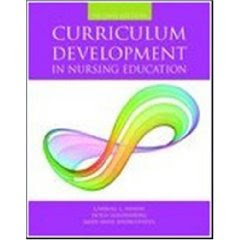
It is high time I reviewed a book on nursing so when I came across Curriculum Development In Nursing Education by Carroll L. Iwasiw, Dolly Goldenberg and Mary-Anne Andrusyszyn, I was really pleased to receive a review copy. While I am not a full-time academic I learned a little about curriculum development on the PG Cert. Ed. course. As for all qualified nurses I take the mentoring role seriously, enjoy it immensely and of course we are all life long learners. The other benefit comes from curriculum planning being one of the original purposes for Hodges' model.

https://www.jblearning.com/catalog/productdetails/9781284143584
To begin the book is a very comprehensive and yet accessible introduction to this subject. The language is clear and not technical, the print is also clear (and large - for an ageing readership!) the format is modern. The book is well referenced overall, leaving me with several leads to follow-up. Although grounded in and with case studies based on hypothetical North American institutions the scenarios, questions and critque are easy to appreciate and relate to, whether you are faculty, nurse (student), or other stakeholder. Iwasiw et al. stress how curriculum development (CD) is ongoing, recursive and the limitations of a 2-D representation of the process on paper. A model is provided on pages 6-10 and in figure 1.1 with many very useful definitions.

The politics of educational settings and their activities are clear as Iwasiw and colleagues explain the 'sales pitch' for CD and the importance of interpersonal skills and foresight. CD the authors make clear is a non-trivial pursuit. It should be ongoing all the time with established curricula under review. At first I was surprised about the lack of mention of project management, specialist consultants are referred to and Gantt charts and project plans are discussed subsequently. The book starts and ends with the nursing and faculty shortage (which seems ironic from here).

In chapter 3 leadership is covered and the need for formal preparation of staff to manage CD.  Faculty development for CD features in the majority of chapters. The case studies engaged me throughout. Chapter 4 leads on to the organizational context of CD, with helpful introductions to change theories and their application. So we have Kotter's 8-Stage process; the Transtheoretical Model of Behaviour Change. Talk of leadership and organizations inevitably leads to the adminstration and management of CD and types of committees. Not exactly page-turning content, but essential to planning, collaboration and ongoing success. CD is viewed as a golden opportunity for change, so decision making and critical reading is emphasized, with several methods of ideas generation outlined in a table (wither Hodges' model?). There is a 2 year Gantt chart, despite my initial reservations about 'project management'. (I am still surprised and must address my impression that academia is largely untainted by external project management and consultancy speak?). Page 80 sees an explanation for the book's cover.

There is a crucial point made in programs and courses taught and how these can act as an assett or a constraint:

Knowledge from the physical, biological and psychological sciences, as well as from the arts and humanities, contributes significantly to the nursing knowledge and well-rounded graduates p.106.
I have always been interested in this word 'infrastructure'. The complexity of education and CD is revealed as the author's explore human resources, physical resources, resources to support teaching and learning. These headings do not do justice to the content here which is dealt with economically, but effectively. Moving to external contextual factors and I can see how Hodges' model is ideally suited to helping to frame CD. The authors also cover demographics, culture, health and health care, professional standards and trends, technology and information and the environment. There is a summary of the social, political and economic conditions and their impact and influence on CD p.115-16.

The section on Approaches to data gathering for CD, seemed familar, reminding me of Management Information System books of old. Here the contrast is between data gathering for CD and data collection for research. Perhaps the distinction here is less important if we are equally open to quantitative and qualitative methods and triangulated approaches p.116-17. Tables 6.3 & 6.4 over four and a half pages run through data, data sources and data gathering methods for internal and external contextual factors. The initial definitions are supported by a further collection (p.136-7) curriculum concepts, professional abilities, curriculum possibilities, curriculum limitations, administration and curriculum nucleus. Data collection is one thing, but it is in subsequent analysis, interpretation and synthesis that value is found. In response five processes are introduced:
  1. Examining and integrating contextual data - identifying patterns and trends
  2. Inferring curricula conceptions and professional abilities
  3. Proposing curriculum possibilities
  4. Deducing curriculum limitations
  5. Identifying administration issues
Although not stated in the text, I enjoyed reading about the over-riding, over-arching ideas that nurses should learn and apply. The fundamental ideas that shape how nurses relate to their clients, how they think and behave. How are these ideas to permeate and be promoted through the curriculum? In confirming the curriculum nucleus (and another bread and butter point for Hodges' model) has anything important been missed p.148?

Educational establishments are of course living entities. Continuity is essential and is attended to here in the Popularfield case study p.150-169. If things get heavy in the book then currculum philosophy is the focus of chapter 8, and considers the role of different audiences of curriculum outcome statements. Program models (p.201-09) leads (inevitably) to models of nursing - listing Orem, Leininger, Watson. The nitty-gritty of teaching and learning is discussed in contemporary organisational structures and course sequence patterns p.211. Table 9.1 provides an interesting matrix of core curriculum concepts. The table headings include:

health promotion : empowering interpersonal relationships : caring : social justice

Deliberating curriculum delivery requires selection of delivery application, program model, and organizational strategy and course sequencing pattern - all discussed across chapters 9-10. I've been wondering about 'process' across the humanistic-mechanistic divide and there are some lines that set me to thinking:
Process-orientated courses further integrative learning, de-emphasize specific content and reduce reliance on the lecture method p.243.
Of particular interest to me is designing individual classes with table 10.5 providing example of instructional events and teacher activities. Gagne, et al., may be a primary source, but the date of 1992 troubles me. It is undoubtedly difficult to encompass the whole range of instructional events and activities in 2-3 pages, but future editions would benefit from a revision of the 'state of technology' in the book as a whole.

Chapter 11 throws CD into a public light in planning curriculum improvement and making curriculum plans public. Discussion includes division of criteria along structural and process lines. The former - adherence and duration; the latter - quality of delivery and program of differentiation. Contractual agreements are raised between health care and community agencies, legal areas of concern and insurance. The human side of CD cannot be ignored looking at the existing work force - skills - and demands and requirements of a new curriculum. The phasing of the change to a new curriculum from an old needs to be handled sensitively is an issue well made in the text. New students must not feel they are missing out and being experimented upon, while students on existing programs feel they are missing out on what is 'new and shiny'. As noted faculty development remains a constant throughout the book.

Chapter 12 is an excursion through planning curriculum evaluation taking in outcomes, human and physical resources, learning climate and policies. Skills and means in judging curriculum quality, reporting results, and reflecting on the process are explored with further definitions supplied. Utilization-focussed evaluation is described - in which the focus is on the intended use by the intended users. Program evaluation is broken down into internal and external forms (p.281) and as if to give credence to the adage "All work and no play makes Jack (and Jill) dull people"... the benefits of CD for faculty are explored.

Typologies of Curriculum Evaluation Models are presented, a generational view 1st-4th, again with resort to a table. The 4th generation - the post-late 1970s is described as holistic and inclusive. RCAR stands out Relevance-Congruence-Adequacy-Reasonableness and other examples. I thought about learning management systems here and was surprised that there is no tie-in, or mention in the index as a reporting resource. Planning evaluation of curriculum components also touched on philosophical aspects.

Chapter 13 on Flexible Delivery of Nursing Education Curricula is central to my interest and criticism of the book if there is one. Distance education and flexible delivery are differentiated. Guidance at a distance is stressed not technology (p.315). There may be be too much reliance on 2-way communications between tutor and student, and the important thing for me to remember here is the focus is on CD (academic responsibility, obligations, affirmation), not teaching methods, multimedia and instructional technology. That said, the problem of instructional technology models and their integration into curricula appears to be a key challenge: [ previous discussion on http://it.coe.uga.edu/itforum/ ] Tied to this as the authors state are the politics of schools of nursing who are obliged to follow the strategic plans of their institutions. There is reference here to an online critical care nursing course p.318. Plus integrating pedagogy and technology with Blackboard Learning System, Moodle, Desire2Learn and Knowledge Hub, so this book is far from a technology-software desert. Virtual reality is in the index.

Surprisingly or highlighting how enclosed (institutionalized) CD is, 'open source' is not considered. Too risky perhaps? Nevertheless, this is a surprising omission from the index (unless I have missed it in the text?). There are some marvellous open source projects in education, and surely some of these touch on curriculum development, especially in the developing world? Drupal the content management system (and many other open source tools) is increasingly being adopted. Libraries are deploying Drupal on the 'front desk'. The closing chapter 14 draws attention once again to the nursing and nursing faculty shortages and related politics. This really is an important message with global implications for the future of local training of nurses, job readiness, the refocus of existing nurse curricula, subsequent migration and standards within the profession. In summary:
  • I enjoyed reading CDiNE.
  • Learned a great deal about this important subject.
  • It is accessible and readable.
  • I have many leads - references to follow up.
  • The book is a comprehensive in its treatment of CD in nursing education.
  • The many definitions are informative.
  • The tables are a great signposting and summary resource.
  • The book encourages further reading and study - and actual engagement
    in the CD process.
If the book has a problem for me there is not enough on technology AND information - as a lever for change and source of metrics. My impression admittedly from one book is how untainted academia is by project management and an information (consultancy?) driven ethos. This is just an impression and I am biased as this blog demonstrates. I do believe that in discussing CD (p.195-99) that while the Web is clearly mentioned, more could be made of learning management systems. I would have thought that 'systems' to a organization of any sort, would be viewed across operational, tactical and operational levels. Where is the management dashboard here? If it is an issue of maturity this could be stated. I thought these may feature in a more integrated way, also being used as a data gathering resource. To the author's credit the book is nicely balanced as an introductory source.

Recent students have highlighted that they do not cite (unless the work is historical) references older than four years. The references here that relate to technology are for me quite dated and should be revisited and considered afresh. Recent literature suggests that the days of the university are numbered. Whether you take this seriously or not the position of instructional technology, the web, scholarship and future of academic publishing - the smoke under the door - should at least merit examination. Otherwise - from my external locale - this a very comprehensive, informed and accessible account of CD in nursing education that continues and must continue to build on previous editions. Meanwhile thanks to this good book - I must also re-visit Boyer's model of scholarship.

Acknowledgement: Thanks to Clare McMillan, Marketing Specialist and Jones & Bartlett International for the review copy.

Ref:
Carroll L. Iwasiw, Dolly Goldenberg abd Mary-Anne Andrusyszyn, (2009) Curriculum Development In Nursing Education (2nd edition), Jones and Bartlett Publishers.
(My) additional image:
Möbius Strip As Quotient Space