Hodges' Model: Welcome to the QUAD: NHS

Hodges' model is a conceptual framework to support reflection and critical thinking. Situated, the model can help integrate all disciplines (academic and professional). Amid news items, are posts that illustrate the scope and application of the model. A bibliography and A4 template are provided in the sidebar. Welcome to the QUAD ...

Showing posts with label NHS. Show all posts

Saturday, October 10, 2026

Poppy's Promise: "What happened next would change our lives forever"

April 2021:

'After my due date passed, I was admitted to hospital to be induced. Labour began and everything appeared normal. As first-time parents, we trusted that our baby was safe and that if something was wrong, someone would tell us. We had no reason to think otherwise.

During labour, opportunities to recognise that Poppy was in distress were missed.

Monitoring that should have taken place did not happen.

By the time concerns were recognised, panic had replaced reassurance.

I was rushed to theatre frightened, confused and not fully understanding what was happening to my baby. ...'


Poppy's Promise read more ...

My source: BBC Radio 4 Today 0736 mins:

https://www.bbc.co.uk/sounds/play/m0032fq8

Wednesday, September 02, 2026

Celebrating Black History Month with the RCN NW Multicultural Group

From Allyship to Action: Building an Inclusive, Anti-Racist Future for Nursing


22 Oct 2026, 10:00 - 16:00
6 Mount Street, , Manchester, M2 5NS

Free

Book onto our celebration for Black History Month.

Join us for a full day at the Friend's Meeting House in Manchester to celebrate Black History Month!

North west members are invite to join us in celebration alongside the RCN President, who is making a special trip to Manchester to join us for part of the day.  This year we will be exploring the theme: From Allyship to Action: Building an Inclusive, Anti-Racist Future for Nursing.

The event, organised by the member-led North West Multicultural Group, will hear from speakers including:

Estephanie Dunn: Non-Executive Director of the Caribbean and African Health Network (CAHN)

Estephanie will discuss exceptionalism and how intentional and unintentional actions can negatively impact equity, inclusion and belonging in healthcare. Her session will encourage reflection on bias, challenge inequitable practices, and promote more inclusive workplaces for all.

Temitope Babajide: General Practice Nurse

Creator of both the General Practice Nurse Starter Manual and a separate nursing-themed colouring book, will share her inspiring journey in primary care. Her session will recognise and celebrate the historic and ongoing contributions of Black nurses, while showcasing the achievements, leadership and influence of Black nursing professionals in the North West and beyond.

Patricia Hughes: Associate Director RCN : Nursing Practice Nursing

Patricia will focus on equality, leadership and career progression, encouraging greater representation of Black nurses in senior and decision-making roles.

Bejoy Sebastian: RCN President

The President, will discuss the importance of allyship and the role nursing professionals play in creating anti-racist, inclusive workplaces. He will recognise and celebrate the significant contributions of Black nurses to the NHS and wider health and social care sector. The session will explore how inclusive leadership, workforce equality standards and fair career progression can help create a culture of belonging. Attendees will be encouraged to take practical action to challenge discrimination, support equality and inspire the next generation of nursing leaders.

Anandi Ramamurthy: Professor of Media and Culture, Sheffield Hallam University; Principal Investigator, Nursing Narratives: Racism and the Pandemic; Co-Editor, Anti-Racist Nursing and Midwifery: A Resource for Students, Practitioners and Activists.

The Anti-Racist Nursing and Midwifery book, the Nursing Narratives research project, and the film 'Exposed'.

There will also be a panel discussion and a poetry workshop and 'Allyship in Action' challenge workshop in the afternoon. 

Book now to avoid missing out. This event will take place in person and is open to all North West members. A sandwich lunch is provided. 

For further information regarding the aims and objectives of the NW Multicultural Group, please visit our webpage. 

Olanike Babalola

Olanike.Babalola AT reps.rcn.org.uk

Sunday, August 02, 2026

Study invitation: Examining the Experiences of Black African Nurses in the UK Healthcare System

PARTICIPANT INFORMATION SHEET

Examining the Experiences of Black African Nurses in the UK Healthcare System

You are being invited to take part in a research project exploring the experiences of Black African nurses working in the UK healthcare system.

For the purpose of this study, Black African nurses refers to male and female nurses aged 18 years and above who migrated from an African country to the UK and have worked within the UK healthcare sector for at least one year. This includes nurses who arrived in the UK on a work visa and are currently working in the NHS, care homes, or private healthcare organisations. It does not include individuals who later changed their education or career pathway after settling in the UK. Please read the following information carefully to help you decide if you want to take part. 

What is the purpose of Study?

The purpose of this study is to better understand the experiences of Black African nurses who have migrated from African countries and are working within the UK healthcare system. Research and workforce reports suggest that internationally recruited and racially minoritised nurses may face unique professional and personal challenges, yet their lived experiences are often under-represented in research and policy discussions. This study aims to bring greater awareness to how race, culture, identity, and migration background may interact with workplace environments and organisational systems to shape nurses’ professional experiences and wellbeing. By giving participants the opportunity to share their perspectives in their own words, the research seeks to highlight areas where support, inclusion, and fair practice can be strengthened.

It is hoped that the findings will contribute to improved understanding, inform future policy and workplace practices, and support ongoing efforts toward equity, inclusion, and culturally appropriate support within the UK healthcare workforce.

What will happen if I decide to take part?

If you agree to take part in this study, you will be invited to an online interview using Microsoft Teams at a time that is convenient for you. Before the interview begins, you will have the opportunity to ask any questions about the study before confirming your consent to participate.

During the interview, you will be asked some brief background questions, such as your professional background and migration route. The interview will focus on your experiences of working as a Black African nurse in the UK healthcare system, including workplace experiences, identity, support, challenges, and sources of strength or resilience.

With your permission, the interview will be audio-recorded to ensure your views are captured accurately.

... ... ...

WHO CAN I CONTACT? [... and for the FULL DETAILS ]

This study has been reviewed and approved by the University of Edinburgh Research Ethics Board. 

If you have any questions or concerns about the study, you can contact the researcher:

Oluchi Mellor – O.D.Mellor@sms.ed.ac.uk

My source: Oluchi via RCN NWMG 

https://www.rcn.org.uk/northwest/Get-Involved/NW-Multicultural-Group

Saturday, June 27, 2026

‘Prevention Demonstrator’ - GM Live Well

England’s First Prevention Demonstrator: Opportunities for Greater Manchester and its VCFSE sector

Greater Manchester has been chosen as England’s first Prevention Demonstrator, an initiative announced in the Government’s 10-Year Health Plan earlier this year. It marks a step toward transforming public services with a more ‘preventative’ approach.

The Greater Manchester Combined Authority (GMCA) was named as the first prevention demonstrator in the UK Government’s 10 Year Plan for Health in July. It will take a community-led preventative approach to the provision of public services which means fixing the foundations of a person’s life – such as housing, and access to education and employment opportunities – as a means of preventing ill health from social and economic detriment and improving lives, as well as reducing pressure on acute and crisis services.

The Prevention Demonstrator will be building on the Live Well Model of service delivery, which brings together services such as health, employment support and debt advice at a neighbourhood level working with the voluntary, community, faith and social enterprise (VCFSE) sector, providing a blueprint for the rest of the country.

Warren Heppolette has been appointed to lead this work, seconded from NHS Greater Manchester where he was Chief Officer for Strategy, Innovation and Population Health. Warren has been closely involved in the GMVCFSE Leadership Group’s Commissioning and Investment sub-group which aims to improving standards and practices for the benefit of the VCFSE sector.

Continued ...


Lucy North, Communications and Policy Officer. Published: December 5, 2025

⍚


'Sustainability' and 'sufficiency' (as per the previous post) are words of the moment. Policymakers want change to have a permanent quality, which ironically means individuals within a population benefitting from initiatives like this have a mindset that makes them flexible to future changes and challenges.

As Camilla Cavendish notes in 'Andy Burnham will need to play a new card now', Manchester's prevention demonstrator has echoes of David Cameron's Big Society and the Troubled Families project. There are two other words that can work for individuals and populations: impetus and momentum. Within this through Hodges' model we can equip people and communities for lifelong learning. We can also highlight, as Prof. Kevin Fong did at RCN Congress 2026 in his marvellous keynote - that resilience is found between people, not within individuals.
 

See also: Presentation - Prevention, Health and Good Growth: Realising Our Prevention Ambitions

Philip Britteon, Alfariany Fatimah, Stephanie Gillibrand, Yiu-Shing Lau, Laura Anselmi, Paul Wilson, Matt Sutton, Alex J. Turner, (2024) The impact of devolution on local health systems: Evidence from Greater Manchester, England, Social Science & Medicine, Volume 348, 116801,
ISSN 0277-9536, https://doi.org/10.1016/j.socscimed.2024.116801.

My source: Camilla Cavendish, Opinion: Andy Burnham will need to play a new card now, FTWeekend, 20-21 June, 2024. p.12.

Previously: 'prevention' : 'big society' : 'troubled families' : 'social prescribing'

Wednesday, June 24, 2026

Independent report - Ockenden review into maternity services at Nottingham University Hospitals NHS Trust

FINAL REPORT: 

'This independent review of maternity services at the Nottingham University Hospitals NHS Trust (NUH) considered the quality of care relating to newborn, infant and maternal harm at the trust.

This report covers the findings, conclusions and essential actions of this independent review of maternity services.

Based on a review of over 2,500 family cases that formed part of this investigation, the final report outlines:

  • local actions for learning that staff at the trust must do
  • system-wide learnings
  • immediate and essential actions to improve maternity and neonatal care

The Independent Maternity Review (known as the Ockenden review) was led by Donna Ockenden and involved a multi-professional team of more than 160 reviewers. The review team held individual meetings with over 500 families, and more than 830 current and former staff at NUH engaged with the review.'


https://assets.publishing.service.gov.uk/media/6a3bb59c4c7605ab567238ec/ockenden-report-review-of-maternity-services-nottingham-university-hospitals-nhs-trust-e-lay.pdf

https://www.ockendenmaternityreview.org.uk/

individual
|
INTERPERSONAL
: SCIENCES             
humanistic ------------------------------- mechanistic
SOCIOLOGY : POLITICAL   
|
group
 

listening

 
 Communication
Processes 
Health Systems
mothers
families
experience
LISTENING
staffing
funding

Previously: 'maternity' : 'risk' : 'safety' : 'compassion'

Thursday, June 11, 2026

NHS Corridor Care – Urgent and Emergency Care Daily Situation Reports

If politicians & policymakers regularly 'walked'
 all the corridors of Hodges' model -
 they would see the false economy 
of their combined incremental works.

Incremental? Yes, in first being a 'temporary measure', then having a deleterious impact as the duration per patient and number of patients on corridors increased.

Now to the situation when the standard of care is unsafe, sub-standard, and denigrates the NHS as a social institution.

The fact of insufficient beds and its effect on care (pathways) and patient (and family) experiences severely affects staff morale, as they recognise subtle abuse, a precursor to structural and attitudinal changes that foster, encourage and establish institutionalised harm.

Staff also realise that they risk being de-skilled, 're-educated' -
becoming less compassionate ... (a 'lesser Nurse') as corridor care 
and its consequences are normalised.

Ignoring demographic trends and without an alternative concerted 
preventive/health education and health promoting plan, this is the result 
of the health and social care funding and policy
of successive governments, enacted by NHS management.

NHS England: Corridor Care – Urgent and Emergency Care Daily Situation Reports
https://www.england.nhs.uk/statistics/statistical-work-areas/corridor-care-urgent-and-emergency-care-daily-situation-reports/

Friday, March 13, 2026

'GlobalMinds' - NHS study severe mental health problems

Together we can change lives

Depression, bipolar, schizophrenia and related conditions affect millions of people around the world.

Yet mental health receives less than 1% of global research funding. 

This has left healthcare for these conditions stuck in the past:

Cross icon

Diagnosis can take years

Cross icon

Treatments target symptoms, not underlying causes

Cross icon

Half of the prescribed drugs cause severe side effects

GlobalMinds is a major research programme seeking to advance the understanding of mental health conditions and improve lives.


My source: 
News, NHS study to transform mental health treatment, The Times, 14 February, 2026, p.6

Tuesday, February 10, 2026

'Why is it so hard to find an NHS dentist?' BBC Radio 4 - Inside Health


'Dentistry is high on the public and political agenda. There have been dozens of headlines about access to NHS dentistry, with some people having to travel huge distances to find a dentist, or being put onto long waiting lists to get an NHS appointment.

In this episode of Inside Health, James Gallagher is joined by chairman of the British Dental Association Eddie Crouch, the Oral Health Foundation's Dr Rachael England, and consultant oral surgeon Tom Thayer. Together, they drill into the issues surrounding NHS dentistry. Along the way, they discuss possible solutions, whether contract reforms will help, and the potential future of dentistry in the UK.

Presenter: James Gallagher
Producers: Alice Lipscombe-Southwell and Thomas Hunt
Production coordinator: Stuart Laws
Content editor: Ilan Goodman'

Source & image: https://www.bbc.co.uk/programmes/m002r3nn

Latest paper re. Hodges' model:

S. Bettiol, P. Jones, H. A. Onyedikachi, and W. G. Kernohan, (2026) Bridging Gaps in Oral Health Frameworks: Mapping With Hodges' Health Career - Care Domains - Model, Journal of Public Health Dentistry. 1–14, https://doi.org/10.1111/jphd.70034

Tuesday, February 03, 2026

Joining the digital dots across primary care and integrated care

My partner and I both received a letter today from our respective GPs. An invitation for a 'FREE LUNG HEALTH CHECK'.

Overleaf is an information sheet in landscape about the health check, plus three more sides of A4, similarly formatted - inviting trifold presentation.

After the 'Re. ......' an opening sentence asks: 'Have you ever been a smoker?'

Suddenly, I was dragged backwards through his-tory (some things don't change); not one history, but several:

INDIVIDUAL
|
    INTERPERSONAL    :     SCIENCES               
HUMANISTIC --------------------------------------  MECHANISTIC      
SOCIOLOGY  :   POLITICAL 
|
GROUP
My personal and life experience 
and not just since my teens . . .

The letter states:
**If you have never smoked, you are not eligible for this service**


My mother and father 
smoked when I was a child and my siblings. 
 
They got the message early 1980s.
  
'Society' smoked back then!  
 
Once old enough, I refused to go to the corner shop.
 
Into the 1990s, patients, smoking (some chain-smoking) on admission, long-stay and other clinical areas. As a community mental health nurse, I learned diplomatic and health promoting skills when in the car, giving a patient a lift to hospital. And, when visiting their home where I was, of course, usually, a guest.


I wondered what has happened to the GP's records? To the primary care clinical record ? The custodians of my health record, that they should need to ask that question? 
 
Or, does confidentiality tie some bureaucratic knots?
 
Where is 'integrated care' and its driver 'clinical informatics'? 
The letter included the NHS Number.
 
 Don't get me wrong, I/we appreciate the obvious effort here, even if the chronology is confusing, or,  speaks of afterthought? The letters are dated 19/06/2025. I must admit I haven't accessed my GP record, checking it for accuracy.
 
If anything, this is a prompt to do so. And seek a general medical. 


Previously: 'smoking' : 'winwick'

Wednesday, November 12, 2025

The INDIVIDUAL ↔ GROUP axis

Looking at the axes of Hodges' model, specifically the INDIVIDUAL ↔ GROUP axis, I realise (as ever) there's more than meets the eye. 

The labels for the axes are placeholders. To a certain degree they are open, flexible. In the template (link and figure in the sidebar), the what should now be familiar labels are provided for guidance, and convenience.

The care, knowledge domains can be viewed as giant - compound placeholders, even as an opportunity to abstract away a lot of detail. In care delivery, as we concentrate on patient care, , clinical interactions, procedures ... we tend to do this in political terms. Until that is, we are jolted to the wider situation and the true realities of policy, law, and practice.

While the HUMANISTIC ↔ MECHANISTIC labels are fixed, I've often shown how the I ↔ G is itself situated, so you could variously have (titles & names to follow...):

person, self, I, individual, client, patient,
carer, student, nurse x, dr y, allied health z ..

|

nurse .., husband, wife, partner, kin, couple, guardian, friend, family, team, group, community, region, nation, populations, Planet

Usually, what we have is a ONE-TO-MANY relationship, that is 1:N.

In Hodges' model can we also say that the team is the 'individual' and the organisation the group?

Another thought regarding self-care. ... Some times this state might be concurrent with being a patient.

Part of the journey in a patient's recovery. But at some point the person does not need a professional and is indepedently self-caring. Care episodes are not what they used to be. Although when 'true' self-care is achieved, it might appear One-to-None, but this is not correct. Not correct, that is, if we can credit society acting as a safety net. Usually, it would be One-to-Family; if there is no family, then the One-to-Community should (must) be the placeholder of choice.

On self-care, and the vertical axis of Hodges' model, is this also a way to define sustainable health and social care?

See also: https://hodges-model.blogspot.com/2025/10/l-shaped-model.html

Tuesday, November 04, 2025

Descartes - alive and well ...

... within the Incident Reporting System

'Policy guidance on recording patient safety events and levels of harm 
This guidance is for users of the new Learn from Patient Safety Events (LFPSE) service, to provide context and guidance on selection of appropriate categories when recording incidents. It focuses on which Event Type is appropriate for different circumstances, and how to select the most appropriate options for the Levels of Harm categorisation required within Patient Safety Incidents.'

Previous harm grades

No harm
Low harm
Moderate harm
Severe harm
Death


individual
|
INTERPERSONAL : SCIENCES
humanistic -------------------------------------------  mechanistic
SOCIOLOGY : POLITICAL
|
group-population
New psychological harm grades

No psychological harm
Low psychological harm
 Moderate psychological harm
Severe psychological harm
n/a

New physical harm grades

No physical harm
Low physical harm
Moderate physical harm
Severe physical harm
Fatal


Q. 'n/a'. Discuss.

CPD reading.                      

Wednesday, October 01, 2025

Julian Tudor-Hart 'The Inverse Care Law' - c/o The Lancet

On the bottom of my notes re. Giarchi and 'distance decay' I'd written:

'Inverse Care law - p.60. - Giarchi. "those who suffer more ill health are less likely to be assisted."

It made me wonder about the origin of this law having posted about it in 2020.

The Lancet has an editorial and an associated podcast:

50 years of the inverse care law. The Lancet, Volume 397, Issue 10276, 767. February 27, 2021.

'“The availability of good medical care tends to vary with the need for it in the population served. This inverse care law operates more completely where medical care is most exposed to market forces, and less so where such exposure is reduced.”

These understated opening lines of Julian Tudor Hart's paper, The Inverse Care Law, are as relevant now (50 years to the day since publication) as in 1971. The paper is one of the landmark publications in The Lancet's near 200-year history, and the resonance of Tudor Hart's definition of the inverse care law has global and timeless importance. Simply expressed, Tudor Hart observed that disadvantaged populations need more health care than advantaged populations, but receive less.
Tudor Hart's life and career took him from highly privileged beginnings in London and Cambridge to decades spent in the deprived and deeply socialist Welsh valleys. His experience and work has inspired a generation of influential health-care leaders including Andrew Haines, Allyson Pollock, Cesar Victora, and Graham Watt. Today's anniversary issue of The Lancet explores both the global reach of the inverse care law and primary care initiatives in deprived areas around the UK.
Although inequality in health and its many causes are widely understood, inequity in health-care service provision is enduring and fundamental: an intractable concept that lies at the heart of the inverse care law. The inverse care law is primarily about inequity (injustice) in health care that results in unfair social inequalities (imbalances) in health. Since the inverse care law was published, the UK's National Health Service (NHS) has strived to reduce inequity with mixed success. Notably, long-lasting progress was achieved through the 1970s resource allocation formula, which reduced geographical inequality in hospital and institutional expenditure. In the early 2000s, the NHS strengthened primary care provision in disadvantaged areas, leading to a temporary reduction in social inequality, although this progress has reversed following shifts in funding, a slowing of spending, and years of living with austerity.'

See also: 

https://en.wikipedia.org/wiki/Julian_Tudor-Hart

https://www.chpi.org.uk/blog/julian-tudor-hart-and-the-essence-of-primary-care/

Saturday, September 13, 2025

On Care, Papers, Distance, Pressure, Academia and Falls

In my student nursing days late 1970s there was a big-stick of motivation. It wasn't management, and yet it was. There was a stigma attached to a patient developing a pressure sore - decubitus ulcers. The NHS then had many psychogeriatric wards, but that care is now with nursing homes. Despite the best efforts some patients did, especially on the mental health infirmary, which was staffed by 'general'  trained nurses too. Using aseptic technique wounds had to be packed (stage 3-4?). Some of the treatments, were not exactly 'evidence-based'. There is a historical account of previous treatments provided on 'Asylum Years'.

In the 1990s I was working on a 'book' about health, nursing and informatics (it was simpler then?). Submitting the project as a book proposal, a letter from one publisher reads: 'thanks but no thanks'. Although unsuccessful, that exercise accounts for the range of interests I still maintain today, and the scope of posts here on W2tQ. Continuing to clear and sort notes, one is for the 'book':

Abbott, P., & Payne, G. (Eds.). (1990). New Directions in the Sociology of Health (1st ed.). Routledge. https://doi.org/10.4324/9781351141727

From the above book, I've a page of notes headed "For chapter 2" drawing on a brilliant chapter 4:

Distance Decay and Information Deprivation: Health Implications for People in Rural Isolation

By George G. Giarchi

Abstract

Deprivation is frequently associated with the lives of inner city dwellers in old densely packed terraced housing, or with the residents in high-rise city slums and concrete council houses. In substantive socio-economic terms the deprivation of both the urban and the rural setting are the effects of the same structural dysfunctions, as aptly demonstrated by Townsend's 1968 classic study of poverty. On the basis of empirical studies rural deprivation affects the standards of health of many people in the countrysides of the UK particularly the most vulnerable dependent populations, such as younger children and older adults at the lower end of the social scale. The houses which are 'unfit' are damp, poorly lit, badly ventilated or lack healthy sanitation: clothes are rotten with mildew. Leschinsky's nationwide survey of rural health services indicates that centralization of health provision is a major reason for health disparities in rural areas.


I looked up the author, guessing that they were possibly still in academia, emeritus, or more likely (then, a decade or more in their career) retired by now. The search did not take long, but filled me with sadness and anger:

'A coroner has said there were "missed opportunities" to prevent the death of a hospital patient who died after developing a bedsore.

George Giacinto Giarchi, 86, died in November 2017 at Plymouth's Mount Gould Hospital after being treated for weeks at Derriford Hospital after a fall.

At Plymouth Crown Court coroner Ian Arrow said Mr Giarchi died of multi-organ failure from the pressure ulcer.

His family urged ministers to ensure hospitals had adequate staffing levels.

The former Plymouth University professor was admitted to Derriford Hospital after falling and fracturing his arm at home on 25 September 2017.

He was later transferred to Mount Gould where the lesion was first noticed.'

Pressure ulcers, known as bed sores, are injuries caused by pressure on the skin often seen in bedridden patients.'

https://www.bbc.co.uk/news/uk-england-devon-48798285

 Thank you and bless you Prof. George G. Giarchi RIP.

Jones, P. (2012). Exploring several dimensions of local, global and glocal using the generic conceptual framework Hodges's model. The Journal Of Community Informatics. 8(3). Retrieved from https://www.academia.edu/3794699/Reflecting_on_the_glocal_through_the_conceptual_framework_of_Hodges_s_model

Wednesday, August 13, 2025

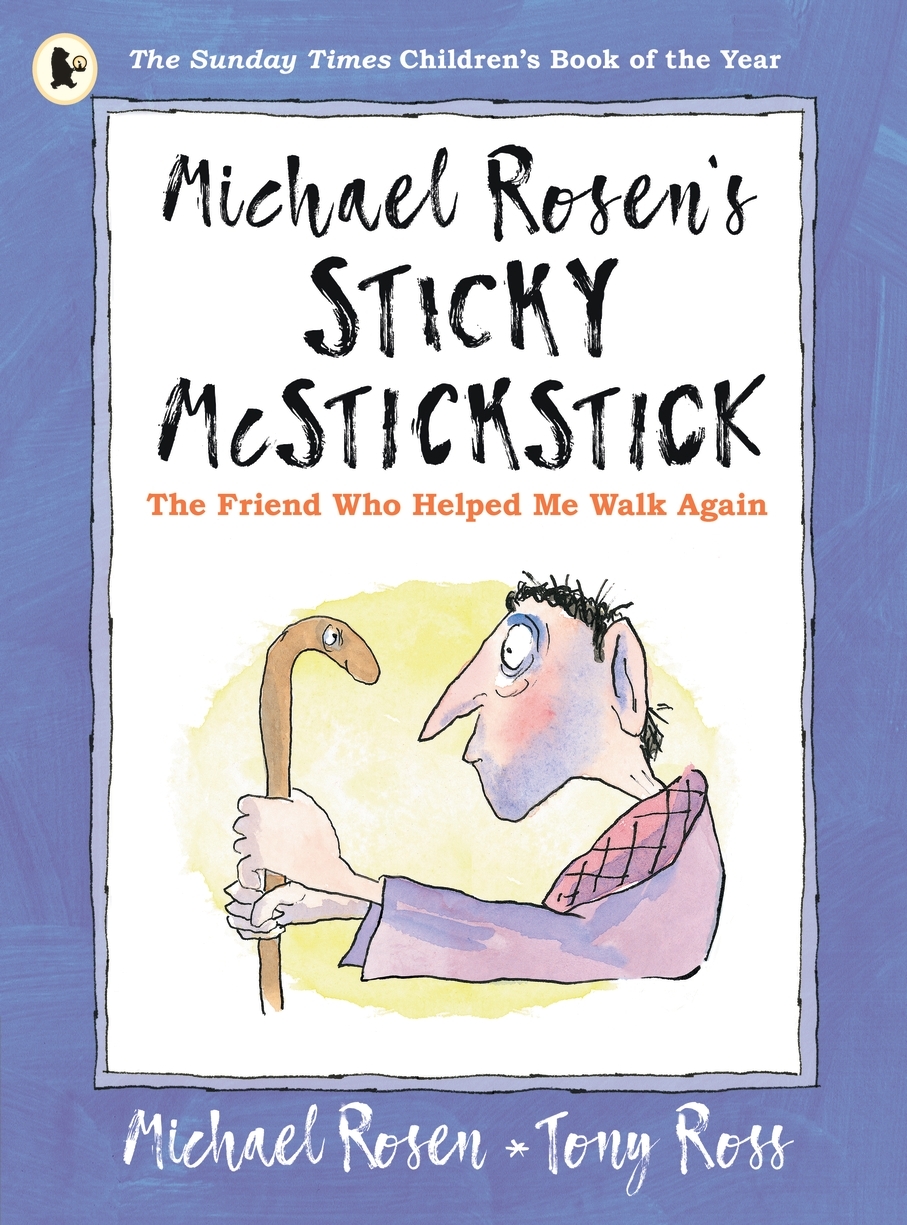
Jackanory: Parity of Esteem 'read' c/o Mr Rosen

Individual
|
      INTERPERSONAL    :     SCIENCES               
HUMANISTIC  --------------------------------------  MECHANISTIC      
 SOCIOLOGY  :    POLITICAL 
|


My source: 
Shop window of The Addyman Annexe - bookshop, Castle St, Hay-on-Wye, 12th August 2025.

Images: 
'STICKY McSTICKSTICK' - https://www.walker.co.uk/
Illustration - https://www.walker.co.uk/author/tony-ross/

Illustration - https://www.walker.co.uk/author/quentin-blake/

Previously: 'parity'