Hodges' Model: Welcome to the QUAD: group

Hodges' model is a conceptual framework to support reflection and critical thinking. Situated, the model can help integrate all disciplines (academic and professional). Amid news items, are posts that illustrate the scope and application of the model. A bibliography and A4 template are provided in the sidebar. Welcome to the QUAD ...

Showing posts with label group. Show all posts

Friday, October 02, 2026

Gaps and Legacy Issues in Health and Education

 ... and across the Professions and Disciplines

I've just revised what may be table 1 of an exploratory paper. The table's role is to inform the motivation, scope and overall purpose within the introduction. The aim is to outline the gaps and legacies in health and education. Is this the combined inheritance of life chances, health and work career: gaps?

  1. Theory-Practice gap

    A. Research in Practice – Translational Research;
     B. Education/Training: University – Apprenticeship (see 4.B);

  1. There is no research-based conceptual framework taught and applied across health and social care systems and services.

  2. Individual – Collective (Population) Health

  3. Legacies of:
      A. Integrated care (global: funding / philosophy / location / disciplines / academic …);
      B. Parity of Esteem
           i   Mind - Body – Cartesian dualism;
           ii  Funding of Health Services [mental health - general];
           iii Research funding; Policy & Education);

C. Person-Centred Care – Service-Centred Care;

D. NHS - Social care;

  1. (Ill-Health-Disease, see 4.B.ii) Treatment versus Prevention first 

  2. Long-term policy Vs Short-termism

  3. Personal, Local, Global: Developed – Developing Health Systems & Services 

  4. Determinants of Health (Schrecker and Bambra, 2025)

Any thoughts, key sources ... are most welcome, e.g. should there be a place for sustainability, self-care, the literacies and the basis of funding public, private, or charitable (mixed)? h2cmng AT yahoo.co.uk
 

Schrecker, T., Bambra, C. (2025). ‘Lethal But Legal’: The Corporate Connections (Commercial Determinants of Health). In: How Politics Makes Us Sick. Palgrave Macmillan, London. 
https://doi.org/10.1057/978-1-349-96127-6_7

Friday, September 18, 2026

Euclidean or Projective Care?

How many dimensions does a written - narrative record have?

Sketching out some ideas, I asked the question on Google and as usual an AI Overview response followed - snippet:
AI Overview

A physical written record has two primary spatial dimensions (length and breadth/width) as a flat document, or three dimensions (including thickness or depth/height) when considering its physical form or binding. [1, 2]

In archival and Records Continuum theory, a written record exists dynamically across four conceptual dimensions: [1, 2].

I put the question to the Records Management list with the above snippet and received several useful suggestions and sources. Perhaps I can share that at a future point? 

Acutely aware of not pursuing maths and category theory for its own sake, the query was driven by an attempt to look at Hodges' model in mathematical terms. Starting, rather obviously with the models structure and axes. When the model is assembled, as per many posts, the vertical axis:

INDIVIDUAL
|
GROUP

- shouts out the issue of parity and the distinction between mind and body. It does this at the individual and collective level. If we were to draw a silo, a cylinder springs to mind, and there are specific reasons for silos adopting this shape. Descartes gives us the perfect excuse, in the ongoing legacy. 

     Mathematical Visions

The question above came up from Joan L. Richards book 'Mathematical Visions' (c/o Lancaster Univ. library). Euclidean and the emergence of projective geometry is described. There is an interplay between 2D and 3D representation, that made me think about the health record and its dimensions. Not in a dataset sense (multi-dimensional), more generally and concretely(?). A patient's record on paper has physical dimensions (A4), there is a flow. An EHR has its virtual dimensions (discuss!). Abstractly the content is a time machine. At some point in a health encounter it is a literal 'history', the level of detail in accord with the context. The record might present the problem, premorbid situation, diagnosis, current state, observations and prognosis and much more.

I can revisit this, Richards provides a series of figures. We progress from two distinct circles (my silos) through to examples with a discussion of continuity and projection that sees the circles touching, then intersecting. This is a radical axis.

Richards, Joan L. (1988), Mathematical Visions: The Pursuit of Geometry in Victorian England, Boston: Academic Press, ISBN0-12-587445

Book cover: Amazon.

Monday, August 31, 2026

Reflection: Turn it over ...

individual
|
INTERPERSONAL
: SCIENCES             
humanistic ------------------------------- mechanistic
SOCIOLOGY : POLITICAL   
|
group
In your mind


in your hands

with-in your community


in your (cold) warm collective heart, wealth, or technology?


Previously: 'wealth' : 'poverty' : 'justice'

Monday, January 26, 2026

'Drama classes help GPs handle difficult patients' c/o BBC

'Hull Truck Theatre has just won the Innovation prize at the Stage Awards for their new training scheme for GPs. Associate Director Tom Saunders and GP Dr Eman Shamsaee discuss why drama classes are helping doctors treat patients.' 

BBC Radio 4 'Front Row' https://www.bbc.co.uk/sounds/play/m002q2jz (15 mins ...)

◇

Holly Phillips, East Yorkshire and Lincolnshire and Ian Youngs, Culture Reporter

Published - 21 January 2026

'A theatre company is using drama training to help doctors deal with challenging patients.

Hull Truck Theatre's classes feature actors performing difficult GP consultations, with GPs giving feedback before taking over the consultation themselves.

The theatre recently won the Innovation Award at the Stage Awards for the programme.

Dr Eman Shamsaee, who has taken part in the training scheme, described it as a "really creative way of doing GP training".'

BBC News:  Drama classes help GPs handle difficult patients

INDIVIDUAL
|
 INTERPERSONAL    :     SCIENCES               
HUMANISTIC --------------------------------------  MECHANISTIC      
SOCIOLOGY  :   POLITICAL 
|
GROUP


The training programme has completed its pilot stage and is now in the delivery phase


A reminder of co-working to deliver STORM training with a Clinical Psychologist colleague. 

See also: 'communication' : 'primary care' : 'GP' : 'drama'

Thursday, January 08, 2026

Hodges' model: An algebra for care - seeking axioms?

Although Oliver had been brought up by philosophers, he was not theoretically acquainted with the beautiful axiom that self-preservation is the first law of nature.
                                                                                    
- Charles Dickens, Oliver Twist

Coady, C. A. J. (1990). Hobbes and “The Beautiful Axiom.” Philosophy, 65(251), 5–17. 
http://www.jstor.org/stable/3751240

"It is an axiom in therapeutics that the more remedies there are proposed for a disease the less likely is any of them to be effective."

[- William Osler]

Mountin, J. W. (1943). Nursing: A Critical Analysis. The American Journal of Nursing, 43(1), 29–34. https://doi.org/10.2307/3416264

Individual
|
     INTERPERSONAL    :     SCIENCES               
HUMANISTIC  --------------------------------------  MECHANISTIC      
 SOCIOLOGY  :    POLITICAL 
|
Group
 
'One of the core tenets of pragmatism, despite its various formulations by William James, Jane Addams, John Dewey, and neo-pragmatists like Rorty, Habermas, and Putnam, is an epistemological axiom first formulated in 1868 by Charles Sanders Peirce. This maxim, often dubbed the pragmatic maxim, states that the meaning of our ideas is best expounded when we can spell out the implications or the effects of these ideas in real-world experience and practice (Peirce 1878).' pp.105-106.
(Racine, 2024).

physical - SELF - My body[?]


'The lack of consideration of downside risks applies to all COVID-19 countermeasures, including mass-masking (e.g. the social and psychological consequences of mask-wearing for all kinds of social interaction, most notably in educational and childcare settings) and to the accelerated approval of vaccines. The latter is particularly noteworthy because the need for rigorous testing of new medications to guard against the risk of side effects is a standard axiom of contemporary ethical medical practice. Given that the vaccines in question employed novel mechanisms, not testing them sufficiently to assure their longer term safety was stratospherically risky: it meant that the possibility that this vaccination programme would do more harm than good could not be excluded. Yet, the medical establishment stood foursquare behind it, insisting on the safety and efficacy of the vaccines and pillorying any, including those within it, who demurred.' p.55. (Kelly, 2023).


'“Never have we been so free. Never have we felt so powerless”: this, according to Bauman, is the paradox of our time. Verhaeghe writes with a variant: “Never before have we in the West had it so good, and never have we felt so bad.”33 Because neoliberal axioms determine the standards of what is healthy and normal, society sees those who do not want to participate as sick or abnormal.' pp.97-98. (Vanheste, 2023).
 

My emphasis

Racine, E. (2024). What Participatory Research and Methods Bring To Ethics: Insights From Pragmatism, Social Science, and Psychology. Kennedy Institute of Ethics Journal 34(1), 99-134. 
 https://dx.doi.org/10.1353/ken.2024.a943431.

Kelly, M.G.E. (2023). Securing the Pandemic: Biopolitics, Capital, and COVID-19. Foucault Studies 35, 46-69. https://muse.jhu.edu/article/940834.

Vanheste, J. (2023). Half a Century of Exhaustion and Madness: The Fiftieth Anniversary of Pink Floyd's The Dark Side of the Moon. Soundings: An Interdisciplinary Journal 106(1), 87-109. 
https://muse.jhu.edu/article/950363.

See also: 'axiom' : 'algebra' : 'pragmatism'

Person-centred care = care axiomatics at a collective and individual level?

The first rule (axiom?) of first aid is...?

Monday, December 15, 2025

Q. Is Hodges' model Person OR University-centered? [ 'Big Mind' iii? ]

To date, I have not written a paper on Brian Hodges' original purpose for his model in curriculum development, design, planning and evaluation. Geoff Mulgan's book and referenced sources provide support, if not evidence, for the increasing relevance of Hodges' model.

The center of Hodges' model, the nexus, can be variously occupied by an individual student, researcher; a group, or team, or even an institution. Why not a university?

Since 1987-88, when I applied Hodges' model in a case study, I've acquired a broad understanding of the 'POLITICAL' domain in terms of institutions and organisations. Even if that learning is now 'archived':

https://web.archive.org/web/20150414073721/http://www.p-jones.demon.co.uk/linksIV.htm

In 'Big Mind', Chapter 14, The University as Collective Intelligence (pp.174-180) refers to 'third-loop learning' and a document from Nesta:

Geoff Mulgan, Oscar Townsley, and Adam Price, "The Challenge-Driven University: How Real-Life Problems Can Fuel Learning", Nesta, accessed April 28, 2017.
accessed 15/12/2025: https://media.nesta.org.uk/documents/the_challenge-driven_university.pdf 

'This paper focuses on one important strand of change: the rise of what we call ‘challenge-driven’ university models. These models develop students by putting them up against difficult problems and challenges for which there are no established answers.  Instead students to draw on many disciplines to solve them; they have to work in teams; and they have to collaborate with organisations outside higher education.

These models aren’t a replacement for the classic core of university education - mastering a discipline.   But they provide an important complement to this core, and they may be better suited to preparing young people for the needs of the world. They also re-emphasise one of the founding principles of some ancient universities: a focus on questions rather than answers as the key to deep learning.'

Within the Nesta document, Mulgan et al. list educational institutions who have succeeded, and are trying to effect change (with much editing):

US

The approach was pioneered by McMaster University Medical School in the late 1960s where in response to changing demands on the profession, the curriculum was changed so that students learned collaboratively, working on real-life cases in small groups. ...

... examples like High Tech High in the US, use project-based learning, centred on real-life problems, as the core curriculum for students.

Olin College of Engineering has quickly gained a reputation for being one of the most innovative institutions in the US since it opened in 1997.

Last year, the Ash Center for Democratic Governance and Innovation at the Harvard Kennedy school founded the ‘Urban Innovation Field Lab’, a project aiming to improve social conditions in cities in Massachusetts.

Canada

In Canada, the University of Waterloo uses a model of co-operative education, where students’ time is split between study and assessed work experience.

Europe 

Aalto University in Finland was created out of a merger between Technology, Economics and Art Universities in Helsinki and now runs four interdisciplinary ‘factories’ - Design, Health, Media and Service, where teams of academics and students work with companies and communities to develop new products that respond to demand from the real economy. 

The Norwegian University of Science and Technology in Trondheim has a similar approach. As part of their courses, students are required to join a ‘village’ (i.e. area of interest) of around 30 members which address questions such as ‘Biofuels - a solution or a problem?’, ‘Sustainable, affordable housing for all’, and ‘Portable technology and well-being’.

At Maastricht University (the second youngest university in the Netherlands), all teaching uses a problem-based learning model, and this has become one of the main attractions of the university. 

Twelve to fifteen students discuss problems in group sessions, with one student appointed to lead the discussion. The students are given complex problems from everyday professional practice which they brainstorm and research both together and separately. ...

UK 

Imperial College London and the Royal College of Art (RCA) are two particularly innovative higher education institutions. For the last ten years, Imperial has been running the Energy Futures Lab - a cross-discipline, issue-based department aimed at tackling global energy challenges. It was established to bring together disparate fields of study that are relevant to energy including engineering, environmental sciences, computer science, business, policy and mathematics. ...

Imperial and the Royal College of Art also run a Double Masters in Innovation Design Engineering (IDE) which is well known for producing some of the best talent in the field. Their flagship international module ‘GoGlobal’ takes students abroad for three week cross cultural, collaborative projects with academics and industry partners. ... The University of Lincoln has challenge-driven education at the core of its teaching.

Globally? South?

... 

Over the years I've reached out to a great many private and public bodies. 

MEMO TO: New College of Humanities and London Interdisciplinary School

I note the NESTA document is a 'draft'. I'd be pleased to help update and complete this work. Keen to frame Hodges' model not just in the context of problems, but strengths, weaknesses, risks, opportunities and more. When your model emerges from health, you quickly learn when it comes to problems that versatility and adaptability are essential. Always ready to cross disciplines - insofar as I understand them, borders and boundaries as required.

Previously:

https://hodges-model.blogspot.com/2025/07/big-mind.html

https://hodges-model.blogspot.com/2025/12/ii-big-mind-book.html

Geoff Mulgan (2017) Big Mind: How Collective Intelligence Can Change Our World, Princeton University Press.

Sunday, December 14, 2025

ii Big Mind: How Collective Intelligence Can Change Our World

'Everything we know is knowledge from the past, which may not apply in the future - the problem repeatedly stumbled on by models, algorithms, economic theories, and geopolitical dispositions, which made sense in one era, but then become dysfunctional in another. As social science has repeatedly discovered, the more you use a model, the less likely you are to question it. What starts as a pragmatic tool to answer a question becomes a truth in itself.

And so the models we use to think can also become traps. A model is held on to because it provides meaning and reassurance. Police forces notoriously cling to evidence they collect early in a case in the face of powerful contrary evidence that emerges later, and thus extraordinary miscarriages of justice result. The middle-aged cling to the theories they learned as undergraduates. Organizations become attached to models that become comfortable through use. I remember once meeting the planning team of a government that admitted that their forecasts had been no better than random guesses, but argued that the detailed forecasts were still needed to help with planning. The model became a comfort, even though it had no real use. 

Familiarity also breeds blindness. ...

Expertise can equally entrap. ...
 
The implication, as the Buddha pointed out, is that intelligence has to be at war with and suspicious of itself to be truly intelligent.' pp.120-121.

FIVE FUNDAMENTAL PRINCIPLES FOR EFFECTIVE COLLECTIVE INTELLIGENCE

'The first is the extent of what I call (1) autonomous commons of the intelligence in the system. By this I mean how much the elements of intelligence are allowed free rein, and not subordinated too easily to ego, hierachy, assumption, or ownership.' p.66. Chap. 5. Organizing Principles.
2. Balanced use of the capabilities of intelligence
3. Focus and the right granularity
4. Reflexivity and learning
5. Integration for action
 
'So a group is a we, but it is not just a scaling up of an I. How, then, should we think about the character of this we?' p.102. Chap. 9. The Collective.
 
Individual
|
      INTERPERSONAL    :     SCIENCES               
HUMANISTIC  --------------------------------------  MECHANISTIC      
 SOCIOLOGY  :    POLITICAL 
|
Group
 
EGO
 

 HIERARCHY


ASSUMPTION
 

OWNERSHIP


n.b. With my emphasis.

 
Geoff Mulgan (2017) Big Mind: How Collective Intelligence Can Change Our World, Princeton University Press.
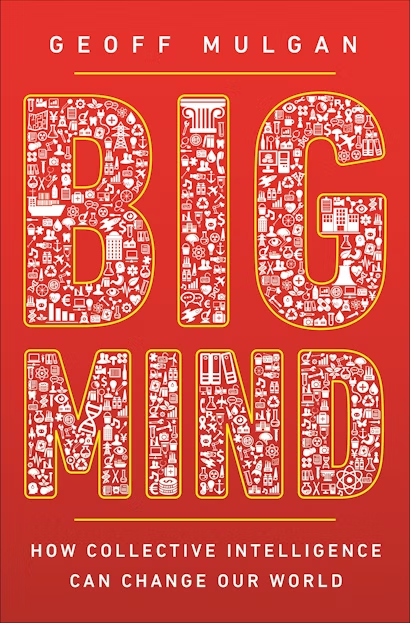
Image: Princeton University Press.

See also: 'AI' : 'group' : 'axes' : 'individual'

 Previously:
Big Mind: How Collective Intelligence Can Change Our World


Wednesday, November 12, 2025

The INDIVIDUAL ↔ GROUP axis

Looking at the axes of Hodges' model, specifically the INDIVIDUAL ↔ GROUP axis, I realise (as ever) there's more than meets the eye. 

The labels for the axes are placeholders. To a certain degree they are open, flexible. In the template (link and figure in the sidebar), the what should now be familiar labels are provided for guidance, and convenience.

The care, knowledge domains can be viewed as giant - compound placeholders, even as an opportunity to abstract away a lot of detail. In care delivery, as we concentrate on patient care, , clinical interactions, procedures ... we tend to do this in political terms. Until that is, we are jolted to the wider situation and the true realities of policy, law, and practice.

While the HUMANISTIC ↔ MECHANISTIC labels are fixed, I've often shown how the I ↔ G is itself situated, so you could variously have (titles & names to follow...):

person, self, I, individual, client, patient,
carer, student, nurse x, dr y, allied health z ..

|

nurse .., husband, wife, partner, kin, couple, guardian, friend, family, team, group, community, region, nation, populations, Planet

Usually, what we have is a ONE-TO-MANY relationship, that is 1:N.

In Hodges' model can we also say that the team is the 'individual' and the organisation the group?

Another thought regarding self-care. ... Some times this state might be concurrent with being a patient.

Part of the journey in a patient's recovery. But at some point the person does not need a professional and is indepedently self-caring. Care episodes are not what they used to be. Although when 'true' self-care is achieved, it might appear One-to-None, but this is not correct. Not correct, that is, if we can credit society acting as a safety net. Usually, it would be One-to-Family; if there is no family, then the One-to-Community should (must) be the placeholder of choice.

On self-care, and the vertical axis of Hodges' model, is this also a way to define sustainable health and social care?

See also: https://hodges-model.blogspot.com/2025/10/l-shaped-model.html

Monday, October 20, 2025

'Common Knowledge' c/o Steven Pinker

Steven Pinker's latest book When Everyone Knows That Everyone Knows...: 

is subtitled: Common Knowledge and the Mysteries of Money, Power, and Everyday Life.

It is 'common knowledge' that caught my attention. In health care we seek common knowledge on several levels:

person (patient, client) 🠜🠞 healthcare practitioner (whatever their training)
carer - guardian  🠜🠞  healthcare practitioner
person / carer  🠜🠞 team

If we think about the referral processes, interfaces, gateways that people have to negotiate on their way to the above, you see how hard-won common knowledge is.

Critically, the knowledge may be 'common' but how accurate is it?

For the team common knowledge is essential to ensure safety, understanding and continually assessing risk.

In healthcare (and education) for person-centredness we take note of what data is available, but simultaneously begin with a blank sheet. ...

Individual
|
      INTERPERSONAL    :     SCIENCES               
HUMANISTIC =========================  MECHANISTIC      
 SOCIOLOGY  :    POLITICAL 
|
Group


When Everyone Knows That Everyone Knows:
'Sometimes, though, private knowledge can no longer be contained even if it is desirable; sometimes something is so evident that it does not even need words to express it. The presidential debate brings to mind a joke Pinker tells about a man in the Soviet Union arrested by the KGB for handing out leaflets, which turn out to be blank sheets of paper. "What is the meaning of this?" they demand. The man replies, "What is there to write? It's so obvious!"' Kelly, p.9.


Pinker, S. (2025). When Everyone Knows That Everyone Knows...: Common Knowledge and the Mysteries of Money, Power, and Everyday Life. New York, NY: Scribner.

My source: Jemima Kelly, Life&Arts, FTWeekend, 20/21 September 2025. p.9; and BBC Radio 4 Start the Week - https://www.bbc.co.uk/programmes/m002k37y

Image source: https://stevenpinker.com/

Friday, October 17, 2025

Seeking postdoctoral researchers for ERC project IDENTITY ERROR

Dear Colleagues
Please help connect people in your network with this ERC-funded postdoc opportunity in our department.

"The project will combine computational modelling and group-based experiments to scale individual models of epistemic vulnerability (i.e., belief in misinformation/conspiracy theories) to a social level."

Many thanks,

Mike
________________________________

The ERC-funded IDENTITY ERROR project is hiring 2 Postdoctoral Researchers (hosted in the Psychology Department in UL). The project will combine computational modelling and group-based experiments to scale individual models of epistemic vulnerability (i.e., belief in misinformation/conspiracy theories) to a social level. There is a computational post that will require some knowledge of network analysis and/or agent-based modelling, and a social psychology post that will require experience conducting behavioral experiments. We are a supportive group of interdisciplinary researchers, and we do not expect either postdoc to have full knowledge of these methods. We only expect a willingness to learn and a curious attitude. Further details on each post can be found at the links below. The closing dates for applications are October 28th (computational postdoc) and November 3rd (psychology postdoc). 

Each post is estimated to last for 3 years. Contact paul.maher AT ul.ie for enquires.

Computational post: https://my.corehr.com/pls/esbsheulrecruit/erq_jobspec_version_4.jobspec?p_id=079248

Social Psychology post: https://my.corehr.com/pls/esbsheulrecruit/erq_jobspec_version_4.jobspec?p_id=079308
------------------------------

My source: Mike Quayle, Mike.Quayle AT UL.IE
https://www.jiscmail.ac.uk/cgi-bin/webadmin?A0=simsoc
SIMSOC Digest - 15 Oct 2025 to 16 Oct 2025 (#2025-169)

Monday, October 06, 2025

On models, gaps, deficits, neglect

This a.m. I responded to an email from -

the SDOH Listserv at https://listserv.yorku.ca/cgi-bin/wa?SUBED1=SDOH&A=1

- about a forthcoming book (news to follow). 

I replied, with thoughts (edited) that link to the post earlier today:

On the 'front' - or behind the line(s)?

As a community mental health nurse, I've always recognised (as best I can) the critical, power relation of psychiatry.

This is why I study - champion Hodges' model, because the -
  • medical model
  • bio-medical
  • bio-psycho-social models 
- are all inadequate (in the 21st C. and supposedly post-Institutional care?).*

Inclusion of the 'Political' domain in Hodges' model, is critical in the negotiation between the person and collective.

This is what opens up the wide, expansive 'front' in Hodges' model, where relations can be explored in abstract and concrete terms.

A point I'm currently working through (post - paper?): is it ironic that that education and health have acknowledged and try to mitigate(?) the 'deficit model', but in the very conceptual frameworks / models that these disciplines & professions deploy (esp. medicine?), there is a deficit* - manifest in were we are and how we Care today and tomorrow. This is further aggrevated as capitalism clearly has its way (counter-lobbying the health and care professions)?

*tantamount to neglect?

Despite the pioneering efforts and work of several leaders e.g. Virchow, and fields of medical sociology and public (mental) health.

See also - Joe Wicks: Licensed to Kill Channel 4 UK. 2000hrs 6th October 2025.

'Cereal'

Saturday, July 19, 2025

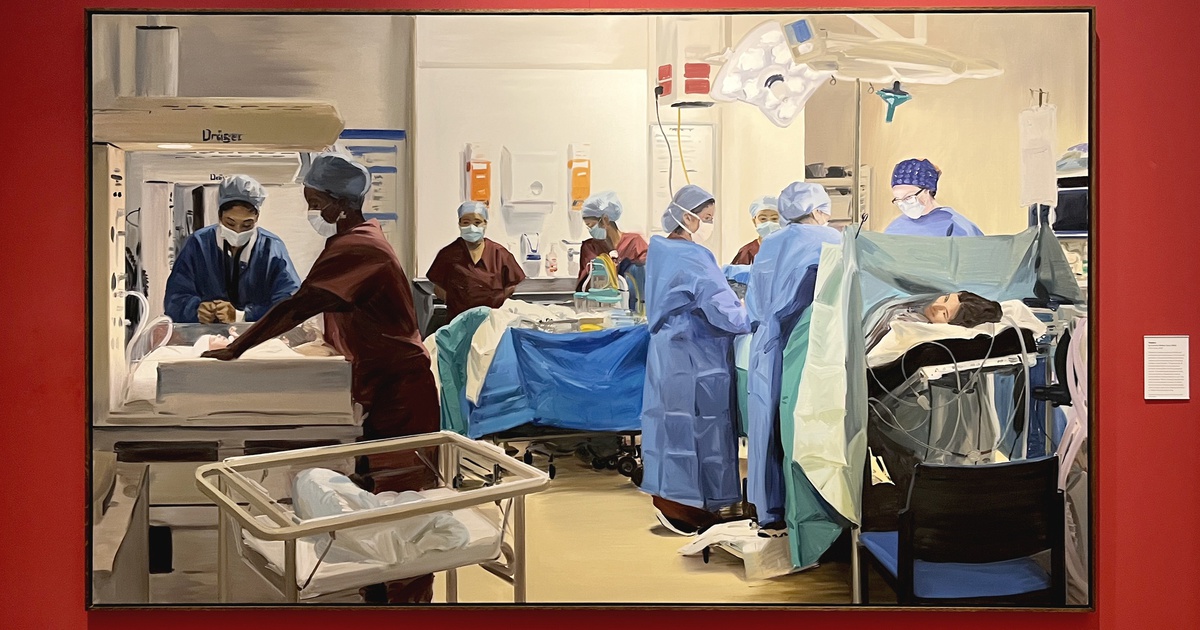
'Theatre' by Caroline Walker

Individual
|
      INTERPERSONAL    :     SCIENCES               
HUMANISTIC  --------------------------------------  MECHANISTIC      
 SOCIOLOGY  :    POLITICAL 
|


Image source: 
https://www.inglebygallery.com/news/7465-caroline-walker-the-scottish-national-portrait-gallery-theatre/

line of sight (seeing is believing) : 'care' : 'community' : 'theatre'

My source:
Harriet Baker, PAINT, FEED & PLAY, FT Weekend, Magazine. July 12 2025.  #1,133, pp.46-52.
https://www.ft.com/content/6e50181b-689e-4cd5-b084-37b311446e94

Great read too. The exhibition moves to Pallant House Gallery, Chichester from November 22nd.

Wednesday, January 08, 2025

Hodges' model: A person - Everyone else [x2!]

INDIVIDUAL
|
   INTERPERSONAL : SCIENCES              
humanistic ------------------------------- mechanistic
 SOCIOLOGY : POLITICAL   
|
GROUP


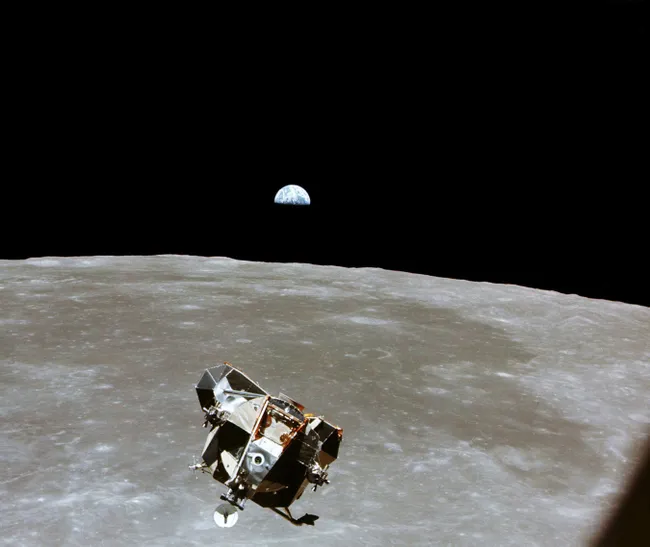
'Michael Collins, the astronaut who took this photo in 1969, is the only human, dead or alive, that isn't in the frame of this picture.' 

 (Image credit: NASA/Getty Images) 


“If the universe is meaningless, so is the statement that it is so… The meaning and purpose of dancing is the dance.”

'Alan Watts on our search for meaning and the antidote to our existential loneliness'


Image: https://www.digitalcameraworld.com/news/spaceman-who-photographed-every-living-being-but-himself-rip-michael-collins

Text: https://x.com/themarginalian/status/1876298178326069285

https://www.themarginalian.org/2016/11/01/alan-watts-wisdom-of-insecurity-3/

So good I'm repeating myself ... https://hodges-model.blogspot.com/2019/07/2-everyone-else-1-thank-you-michael.html

'dance' :: 'meaning'

Monday, December 09, 2024

Baseball: One of the games people play ... Fisher (2001) ii

Returning to Fisher's excellent book I mentioned an analogy from basket ball in discussion about Richard Paul's definition of critical thinking and 'thinking about your thinking'.
'Critical thinking is that mode of thinking - about any subject, content or problem - in which the thinker improves the quality of his or her thinking by skilfully taking charge of the structures inherent in thinking and imposing intellectual standards upon them. (Paul, Fisher and Nosich,1993, p. 4).' pp.4-5.
Fisher's daughter aged eleven wanted to learn how to play basket ball and attended coaching sessions. At the first the raw recruits were divided into two teams and with simplified rules set to play. Initially, getting the ball and in a position to score: shoot.

After the chaos, the coach had them practice shooting after he demonstrated how they had been playing. He explained and pointed out the basics of technique and 'drew attention to how he held the ball, where he looked, how he stood and so on.' p.5. Acknowledging their efforts, they subsequently moved on to passing, then guarding, or marking - practising each skill. 

This is a great analogy and can be applied to health, social care, medicine, nursing and other novices. Hodges' model is the basket ball, tennis, squash court, football, hockey pitch. You might move to a position to obtain an advantageous point of view. In reflective, critical thinking terms, additional data to support or negate a line of thought.

The axes of Hodges' model, serve as a scaffold to help structure our 'game player', and possibly better co-ordinate a group or team's efforts. The domains of Hodges' model cover the knowledge or subject bases that will relate to any context. Hodges' model is situated. If there is need to consider spiritual matters - experiences, then a conceptual journey ... at least, as befits an individual's or group's beliefs and purpose can be made. So forms if intelligence (emotional, cultural, spiritual ...) can also be factored in, as necessary.
 
Are there relational, logical, even mathematical standards that can be applied (formally, in theory) to our thinking? Does 'subject, content or problem' equate with 'situated'? Another book to pass on.

Fisher, A. (2001) Critical Thinking: An Introduction. Cambridge University Press, Cambridge, England. PB. 


Post: ... 'anyone for tennis'.

Sunday, December 08, 2024

Critical thinking: several definitions

Critical Thinking 
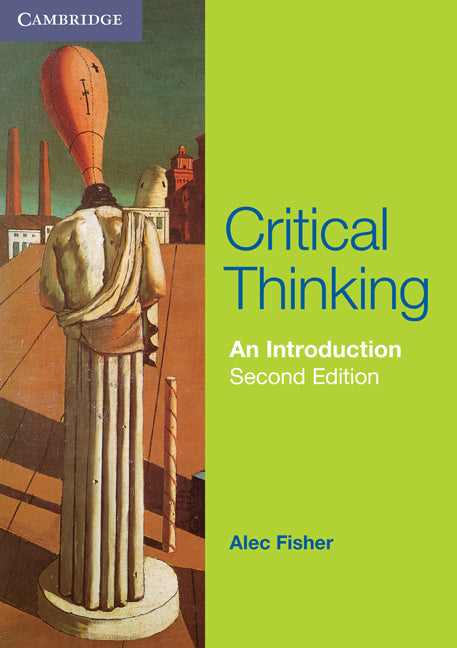
2nd Ed. Cover


An original purpose of Hodges' model was to facilitate reflection, and so help to develop practitioners who were also competent reflective practitioners, and critical thinkers.

Continuing to clear books, I've arrived at:

Fisher, A. (2001) Critical Thinking: An Introduction. Cambridge University Press, Cambridge, England. PB. 

Now in a 2nd edition (2011), my copy has several definitions of 'critical thinking' quoted below, with my emphasis.

There is a pdf of this 1st edition online which may be useful. The reward of the book, however, is in the discussion about each definition and how more recent work has built upon Dewey's legacy.  There is also a baseball analogy, which I will return to soon, or append here. I have omitted a definition by Richard Paul, which is nonetheless important to me, as it draws on meta-cognitive qualities:
"1.1.1 John Dewey and 'reflective thinking' ...

In fact, people have been thinking about critical thinking and have been researching how to teach it for about a hundred years In a way, Socrates began this approach to learning over 2,000 years ago, but John Dewey, the American philosopher, psychologist and educator, is widely regarded as the 'father' of the modern critical thinking tradition. He called it 'reflective thinking' and defined it as: 
"Active, persistent, and careful consideration of a belief or supposed form of knowledge in the light of the grounds which support it and the further conclusions to which it tends. (Dewey, 1909, p. 9)."' p.2.
 'Glaser defined critical thinking as:
(1) an attitude of being disposed to consider in a thoughtful way problems and subjects that come within range of one's experience; (2) knowledge of the methods of logical enquiry and reasoning; and (3) some skill in applying those methods. Critical thinking calls for a persistent effort to examine any belief or supposed form of knowledge in the light of the evidence that supports it and the further conclusions to which it tends. (Glaser, 1941, p.5).' p.3.
1.1.3 Robert Ennis - a widely used definition ...
'Critical thinking is reasonable, reflective thinking that is focused on deciding what to believe or do. (Cf. Norris and Ennis, 1989).' p.4.
Notice the emphasis on being 'reasonable' and 'reflective', which picks up on earlier definitions, but notice also that Ennis speaks of 'deciding what to do', which was not explicitly mentioned earlier; so decision making is part of critical thinking in Ennis's conception. Unlike Dewey's definition, this definition needs no further explanation

A final definition of critical thinking 
One last definition is worth reviewing. Michael Scriven has recently argued that critical thinking is 'an academic competency akin to defines it thus: reading and writing' and is of similarly fundamental importance. He defines it thus:
'Critical thinking is skilled and active interpretation and evaluation of observations and communications, information and argumentation. (Fisher and Scriven, 1997, p. 21).' p.10."

Friday, November 22, 2024

Ethics and the 'big picture'

'It has been my experience that many of the most successful and creative heads of major research labs around the country came to their place from other disciplines. For example, one prominent geneticist that I know has his Ph.D. in chemistry. He told me that coming to genetics from outside the discipline gave him an awareness of structures and values that were invisible to those laboring inside the established system. Much as one has critical insights into the ambience of a city or culture when one comes from outside as a foreigner, so also is there critical understanding of academic disciplines. Thus, one response to the add-on question is to reply that the material you are providing can make your students better scientists by giving them a more global, contextual perspective. A global, contextual perspective allows one to consider divergent research designs that approach a problem in many directions. This is sometimes called "big picture" thinking. Part of the big picture includes other scientific contexts. For example, biology is seen in the context of chemistry, and chemistry is seen in the context of physics. But it is more than that. It also includes values. Should I, as a scientist, pursue all questions with the same vigor? Are there some questions that should be avoided because of the social consequences of their results? Is the scientist compelled to think in terms of helping humankind or helping himself to a Nobel Prize in any way he can? All of these involve values and ethics. They are critical components to global big picture thinking. Such a perspective is a valuable tool for anyone seeking excellence in scientific research.' p.28.
Boylan, M., & Donahue, J. (2003). Ethics across the curriculum : a practice-based approach. Lexington Books. 

INDIVIDUAL
|
INTERPERSONAL : SCIENCES              
humanistic ------------------------------- mechanistic
SOCIOLOGY : POLITICAL   
|
GROUP

PERSONAL ETHICS
INDIVIDUAL INTEGRITY
MY EXPERIENCE
MY REFLECTIONS
INTERSUBJECTIVITY
PURPOSE
BELIEFS

CHARACTER EDUCATION
PROFESSIONAL EDUCATION

PROCESS
OBJECTIVITY
FACTS 
EMPIRICISM

'We define ethics as the process of reflection on the moral meaning of actions.' p.5.

'BIG PICTURE'
PROFESSIONAL EDUCATION


PRACTICE
COMMUNITY OF PRACTICE
ETHOS^ (Chap. 6)

'Ethics is not a discrete body of knowledge that one simply acquires for application and use in particular situations. It entails the ongoing appropriation of ideas of the good as they relate to the changig situations, contexts, and developments in individuals and groups lives. ^ Ethics reflects on actions the actions of individuals and groups.' p.5.


PROFESSIONAL BODIES
PROFESSIONAL STANDARDS
PROFESSIONAL & COMMERCIAL - ACCOUNTABILITY
PROFESSIONAL ETHICS
DUTY OF CARE
POLICY
LAW
JUSTICE

autonomy; nonmaleficence; beneficence; justice*


^Stackhouse, M. (1972) Ethics and the Urban Ethos: An Essay in Social Theory and Theological Construction, Boston: Beacon Press. (Chap. 6, Boylan & Donahue)

*Beauchamp, T. L., & Childress, J. F. (2013). Principles of biomedical ethics (7th ed.). Oxford University Press. (Chap. 6, Boylan & Donahue)

Monday, April 15, 2024

Dramatherapy ii - from Sociometry, Sociogram to Sociatry

Individual
|
      INTERPERSONAL    :     SCIENCES               
HUMANISTIC  --------------------------------------  MECHANISTIC      
 SOCIOLOGY  :    POLITICAL 
|
Group

A personal journey


"... Moreno soon began to seek ways of measuring the form and structure of relationships in groups. The techniques of sociometry which he invented have since been widely and successfully adopted by his successors, becoming an accepted field of social research in their own right. At its simplest, this approach relies on asking of the social grouping under investigation to indicate their relationship to each other so that, for example, a pattern of dominance (vertical structure) or affinity (horizontal structure) can be discerned. These measures may be committed to paper in diagram form (a sociogram) or expressed by the individuals arranging themselves in positions symbolising their relationships (an action sociogram)". p.106.


"More complicated interconnections and patterns can be demonstrated and the group asked to explore alternatives in order to recognise sources of conflict and misunderstanding and to modify them. Moreno foresaw a new discipline for which he coined the name 'sociatry' in which the social organisation rather than the individual is the object of the healer's endeavours, a truly 'group' psychotherapy". p.106.


Anticipating future theory-practice policy and education change.

Could the reduction in the options for student mental health nursing placements be compensated in-part by addressing the concurrent change in the range of therapeutic (modalities) interventions available?


Davies, M.H. Dramatherapy and Psychodrama, Chap. 5. pp.104-123. In Jennings, S. (Ed.), (1987) Dramatherapy. Theory and Practice for Teachers and Clinicians. Routledge, London. p.106.

Previously: theatre , space , diagram

Wednesday, February 28, 2024

HIFA Discussion: Alcohol Use Disorders - Do people understand the harms of alcohol?

Dear All (with further editing since posting)

The discussion, points, angles, questions ... are coming thick and fast it is difficult to keep up.

Many thanks for the summaries; and of course the discussion which archived also acts as a resource - repository:

https://www.hifa.org/news/hifa-announces-deep-dive-discussion-alcohol-use-disorders-starts-5-february-2024

I wonder whether the question: 
"Do people understand the harms of alcohol?" must always be placed in context?
It is radically different when asked of the tee-total, dry, safe drinker; and someone (still) actually in their alcohol drinking?

It occurs to me that alcohol, even more so than 'other' substance misuse (heroin...) represents what must be *the* contradiction, paradox in healthcare - except the tragic loss that is suicide.

Contrast substance misuse inc. alcohol, with 'help-seeking' and 'The Sick role'

https://www.england.nhs.uk/blog/ed-mitchell-2/

Plus, the (medical) sociology of the decision to consult/refer, and how in mental health (UK), the mental capacity act is apparently being misapplied ('policy-drift'?**):

https://www.lawsociety.org.uk/topics/blogs/are-mental-health-and-capacity-laws-at-risk-of-being-toxic

https://www.communitycare.co.uk/2017/08/23/flawed-use-mental-capacity-act-key-theme-safeguarding-adults-reviews-report-finds/

Individual

   |
      INTERPERSONAL    :     SCIENCES               
HUMANISTIC  --------------------------------------  MECHANISTIC      
 SOCIOLOGY  :   POLITICAL 
|
Group

continental drift

policy drift?


Previously, I highlighted how as a Community Psychiatric Nurse 1985-1995 (adult) .. if a patient/client was not working to control/reduce their alcohol consumption they may be 'counselled' re a pending discharge and referral back to their GP - family physician. In supervision with the team's manager they would want to know what is 'happening'. It being important not to create (social) dependency, or worse support someone in their alcohol misuse.

There was a sense, still is(?) that in substance misuse (across forms) - the individual has to reach 'rock-bottom', literally the 'gutter' that is the point they decide (really?)** to live, or carry on to suffer irreversible brain damage, or premature death. Regards the 'brain damage' it was a struggle for 45-60 minutes given the impact upon short-term memory, what time, .... is it indeed? When the patient was not living alone, how did the relative, family cope?

Is having to reach the gutter, the bottom, a trope/myth? In psychosis rather than assume the patient is beyond being reached prior to being medicated there are psycho-social interventions that can be commenced: being available / with. Here though this is usually 'first episode'. There is no analogue here, unless first admission to an in-patient unit is taken as a golden opportunity? But this also depends on its nature (funding, staffing - expertise), a general adult mental health ward, or specialist unit.

https://www.imdb.com/title/tt0048347/

What is the current strategy?

In terms of 'HIFA' - and the person that counts**, not only do they not have the 'information'; they do not have the EXISTENTIAL INFORMATION as it relates to them: 'Health Information for YOU'!

Again in Hodges' model we can contrast the dichotomy/polarisation of INDIVIDUAL :: GROUP.

The model's being situated; and able to encompass data, information, knowledge (facts, for example, and their delivery) - wisdom (Multi-contextual / transdisciplinary..).

I admire people who work in these services (learning disability and palliative care); as they must be severely tested as they retain an ability - the humanity - to 'see' the person whatever the patient's situation with their lack of awareness (capacity..?) and its critical salience.

Peter Jones
Community Mental Health Nurse and Researcher
Blogging at "Welcome to the QUAD"
http://hodges-model.blogspot.com/
http://twitter.com/h2cm
h2cmng at yahoo.co.uk

Location: It was just a cappuccino.

**Which points to the relevance of the POLITICAL care/knowledge domain in Hodges' model.

Sunday, July 30, 2023

Individual - Group and Rights: c/o Bond (1996)

INDIVIDUAL
|
     INTERPERSONAL    :     SCIENCES               
HUMANISTIC --------------------------------------  MECHANISTIC      
SOCIOLOGY  :   POLITICAL 
|
GROUP

"What this means is that it is necessary, or perceived as necessary, for each individual to protect his or her interests against the incursion of others, and the same for each group. Now this would not be possible if each individual did not have his or her own private or personal interests, and if each group did not have its own group interests, and that is undeniably true. Both individuals and groups are undeniably separate and different. Nevertheless, there is a common human interest in individuals and groups being decent to one another and respecting one another, and it would be better for every individual and every group if fear and adversarial competition could be eliminated. It is only because these things can never be completely eliminated, that universal solidarity can never be achieved, that we need the protection of rights, which, as has already been said (p.202 above), are always rights against. ...


SOCIETY - COMMUNITY

SOCIAL JUSTICE

sense of - SOLIDARITY

Rights are always adversarial, and provide deontic moral grounds for preventing actions or inactions that are contrary to the interests of the person or group whose rights they are. They are needed because such a danger will always continue to exist. This does not mean, of course, that universal solidarity, however unachievable, is not the ideal, for the closer we can get to it the better the interests of all individuals and all groups are served." pp.202-203.


Bond, E.J. (1996). Ethics and Human Well-Being: An Introduction to Moral Philosophy. Cambridge, Mass.: Wiley-Blackwell. p.202-203.


Tuesday, June 20, 2023

'Anthropologically strange'


INDIVIDUAL
|
INTERPERSONAL    :     SCIENCES               
HUMANISTIC --------------------------------------  MECHANISTIC      
SOCIOLOGY  :   POLITICAL 
|
GROUP

"Phenomenology focuses on the inter-subjective constitution of the social world and everyday social life. Schütz (1964), in a seminal essay on 'The Stranger', shows how a social group has its own cultural pattern of life - folkways, mores, laws, habits, customs, etiquette, fashions and so on - that, as far as its members are concerned, are taken for granted, are habitual and almost automatic.
Schütz's stranger provides a model for the ethnographer using participant observation. The ethnographer tries to treat the familiar world of 'members' as anthropologically strange, to expose its social and cultural construction. This is particularly demanding when a researcher is studying a group with which he or she is familiar, but represents an ideal attitude of mind for the researcher to pursue nevertheless." p.246.


 Researching Society and Culture


"Anthropological strangeness: The art or mental trick of making a social setting and behaviour within it appear as if the observer is encountered as a stranger. If applied to mundane 'taken-for-granted' events, this can lead to unusual and original insights." p.556, (Glossary).
This ethnographic idea 'strangeness' provides an extension to the role of Hodges' model as a template, a clean slate across disciplines, settings and contexts. A means to 'reset' conceptually, to clear the mind, mindset, attitudes and start afresh.

Walsh, D. (2012). Doing Ethnography. (Chapter 14. pp.245-262) In. Researching Society and Culture, Seale, C. (Ed.). 3rd edition. London: SAGE.

See also:

Schuetz, A. (1944). The Stranger: An Essay in Social Psychology. American Journal of Sociology, 49(6), 499–507. http://www.jstor.org/stable/2771547

Another book student bound.