Hodges' Model: Welcome to the QUAD: dimensions

Hodges' model is a conceptual framework to support reflection and critical thinking. Situated, the model can help integrate all disciplines (academic and professional). Amid news items, are posts that illustrate the scope and application of the model. A bibliography and A4 template are provided in the sidebar. Welcome to the QUAD ...

Showing posts with label dimensions. Show all posts

Wednesday, January 28, 2026

ii Math Without Numbers - final notes & obs

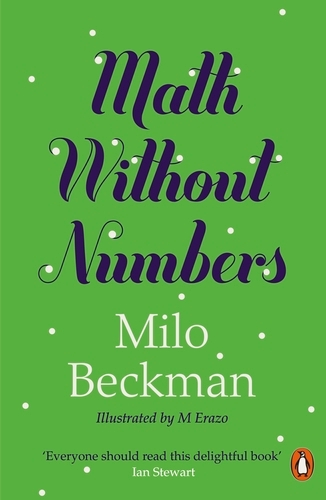
In Math Without Numbers the chapters and topics flow and slot in really well, even for novices. There is no index, the inclusion of which is a first-check usually. The book's appeal was its non-technical title and invitation reading the sleeve notes. The title throws up words and visuals, the latter, to repeat, are ably and simply furnished by M Erazo. Remaining notes to highlight (record here) include (and capture overthinking!):

Math Without Numbers

Reference to 'ideology space', 'conceptual space' and the role of visual analogies, idioms, and how 'the list of spaces to choose from is always the same.' ... pp.28 & 29. On page 30, 'When you say that gender is a spectrum rather than a binary, that's a topological claim: You're  saying gender space is one-dimensional (a line) rather than zero-dimensional (two separate points). 'Questions about which conceptual paradigm to use sometimes boil down to questions of dimensionality.' Discussion of an infinite continuum had me making an axis of Hodges' model warp, this way and that: concave-convex (p.59). Maps and correspondence is already well established, as per a new paper (abstract and thanks to follow 1st Feb):

S. Bettiol, P. Jones, H. A. Onyedikachi, and W. G. Kernohan, “Bridging Gaps in Oral Health Frameworks: Mapping With Hodges' Health Career - Care Domains - Model”, Journal of Public Health Dentistry (2026): 114, https://doi.org/10.1111/jphd.70034 

Interesting to read of general map facts, flowing substances inside a rigid container, and vector maps. A pencilled note to share:

'Because when you look at things in the abstract like this, dusting off the specifics of a situation to focus on underlying dynamics, you start to realize there are only so many different patterns and structures out there. These patterns and structures are called mathematical objects, and thinking about them is called math.' p.79

The chapter on (generalised) Algebra, forced me to reconsider the Socratic, guided discovery and arrival at the structure of Hodges' model. (lines & points : nodes & edges). For page 88, I noted 'generic' invites abstraction. Isomorphism is discussed. Again I tested this against Hodges' model. I've always found it helps to immerse oneself in a new vocabulary: so welcome (anew) - structures, fields, rings, groups, loops, graphs, lattices, orderings, semigroups, groupoids, monoids, magmas, modules . . . algebras, p.101. Some are named only, but on graphs raises questions ... p.103.

'How densely interconnected is it? How segregated into different cliques? Does it cut clean into two subgraphs, with no connections between them? Can it be drawn without any lines crossing? Are there any lone dots without any connections?' 

There's the matter of 'friend of a friend' who have broken out of the sociological domain. Other notes to self: Significance of concepts - patient-centred, service-centred? The distance between between (vertical, horizontal, diametric)? There are weighted graphs (p. 104) and acknowledgement of category theory (p.115). A chapter on modelling pp.161-175, and models p.164 & p.169 are just a selection of highlights on a marvellous tour.

A hidden puzzle in the book remains a mystery for me.

Milo Beckman (2021) Math Without Numbers. London, Penguin Books. Illustrated by M. Erazo.

Previously: 'math' : 'diagrams
Plus, now archived Science domain links: 
https://web.archive.org/web/20150414125339/http://www.p-jones.demon.co.uk/linksTwo.htm

Believe it or not, this 'diversion' does help my reading of Order and the Virtual

Sunday, January 25, 2026

'Maths Without Numbers' by Milo Beckman

'Before you go tell your loved ones that you read a book about math and learned that a square is a circle, keep in mind: Context matters. A square is a circle, in topology. A square is most certainly not a circle in art or architecture, or in everyday conversation, or even in geometry, and if you try to ride a bike with square tires you won't get far.' pp.7-8.

'Like a line:

(Illustration - pen drawing of a line, a 'C' and an almost closed circle.)

A line can be bent almost into a circle, but to finish the job we'd need to click the ends together--not allowed. No matter how you manipulate a line, you'll always have those two special points on either end, where the shape just stops. You can't get rid of end-points. You can move them around and stretch them apart, but the two end-points are an unchanging feature of the shape.

For a similar reason, a figure-eight is a different shape too. There aren't any end-points, but there's still a special point in the middle where the lines cross, where there are four arms reaching out instead of the usual two at any other point. Stretch and squeeze all you want, you can't get rid of a crossing-point either. p.9.

Math Without Numbers
'The circle (aka S-one) and the infinite line (named R-one) are the only manifolds in the first dimension. To avoid end-points, you either have to loop back around or just go on and on forever. And don't forget: Because all the shapes in topology are stretchy, this also covers any closed-loop shape and any goes-on-forever shape. It doesn't have to be literally a circle or a straight line.' p.16.

The third dimension, dough-type manifolds, is pretty well understood at this point, though it took a hundred years and a million-dollar prize to get there, and we still don't have a totally neat and clean classification like the lower dimension. In dimensions five and up, topologists use a set of techniques called "surgery theory" to operate on manifolds and construct new ones.

That just leaves dimension four.

I wish I could tell you what's going on in dimension four. I'm not sure there's anyone who really knows. It's a weird boundary case: too many dimensions to do visually, but not enough to use sophisticated surgery tools. There are entire textbooks dedicated to what little we know about four-manifolds, and I couldn't make sense of anything past the opening pages. A professional topologist once told me she'd wanted to work on four-manifolds as an undergraduate but was advised to steer clear.' pp.23-24.

"Like a line" ... Yes. Take two that cross. Then the universes open up. 

Milo Beckman (2021) Math Without Numbers. London, Penguin Books. Illustrated by M. Erazo.

Previously: 'surgery'

Wednesday, December 18, 2024

Hornberger (1989) 'Continua of Biliteracy'. Review of Educational Research

The axes of Hodges' model present a problem in:

  • theory
  • practice
  • evidence - research terms (data!).

The easiest to resolve is practice, which is were Hodges' model can lay claim to being a pragmatic solution. Of course, it isn't the axes that are the difficulty, it is the labels that Brian Hodges originally applied in the early-mid 1980's, followed by other users of the model since. From:

INDIVIDUAL <> GROUP - variations here in 'Welcome to the QUAD' [W2tQ] Patient <> Carer - Family : Client <> Health professional. You can progress to the "patient zero" and a population in an pandemic.

These are fundamental elements in clinical encounters, whether face-to-face, online, and across settings.

The same applies to the horizontal axis: HUMANISTIC <> MECHANISTIC.

As presented - in the sidebar, and the two-by-two table found in many posts - the model has a distinct dichotomous quality. It seems to set up, or invite opposition, or polarities. Sometimes I've viewed the axes as continua, but they are not graduated, incremental in a quantitative sense.

Do the axes of Hodges' model serve a need (do their work) by allowing the user to differentiate through opposition and relational appraisal (testing)? Perhaps, qualified in a respective profession / subject area, the user of Hodges' is employing other axes?

This brings us to intersectionality and the cognitive work of placing the person (couple, family, community ... biosphere) at the centre of our deliberations.

In biliteracy studies, Hornberger (1989) is perhaps more accurate in seeing a series of multidimensional and interrelated continua (p.273) which form a framework.

There are three figures in this paper and many other points of use:

"Contexts of biliteracy are defined, then, by these three continua. Any particular instance of biliteracy is located at a point of intersection among the three." p.280.

In health care this is readily understood given the varied contexts of the centre, the nexus of Hodges' model. When we say Hodges' model is situated, the centre of the model is the sweet and sour spot. For Hornberger, the context determines the use and significance of the continua.

This opens up Hodges' model as a potential tool to better understand the dimensions of diversity, inclusion and intersectionality.

Hornberger, N. H. (1989). Continua of Biliteracy. Review of Educational Research, 59(3), 271–296. https://doi.org/10.2307/1170183

No! This post hasn't been in draft since 1990. ;-)

Saturday, December 14, 2024

The Science of Conceptual Systems - and Hodges' model

Wallis, S.E. The Science of Conceptual Systems: A Progress Report. Found Sci 21, 579–602 (2016). https://doi.org/10.1007/s10699-015-9425-z

From the conclusion:
'The approaches presented here do not provide a ‘‘map’’ for advancing the sciences. Indeed, none is available because we are advancing across that new terrain. What it does provide is a compass suggesting a new and potentially exciting direction to travel. Historically/traditionally, scholars have travelled about the countryside of the social/behavioral land making useful observations and gathering interesting data. They have often staked claims regarding the importance of their terrain. They could not advance more purposefully because they were guided only by intuition. So, they did not know what direction was ‘‘forward’’ although it seemed to have something to do with empirical analysis. Today, with the creation of a new science, we have a new direction.

When we do have a choice between theoretical maps, generally, and metaphorically, this paper suggests that we should choose to create and use roadmaps with many dots connected by many lines; not maps with few disconnected dots.' p.594.

There is also a glossary [pp.594-599] that includes:
'Integral thinking

Understanding (or attempting to understand) the world from a transdisciplinary perspective where those many perspectives are interrelated'
'Integrative propositional analysis (IPA)

Combined processes of qualitative and quantitative analysis involving rigorous hermeneutic deconstruction of propositions found in formal texts including the rigorous reintegration of propositions from those texts following a structured methodology. Also a process of meta-analysis for investigating conceptual systems to determine the Complexity of conceptual systems (diversity of concepts) and the Systemicity of the conceptual system (connectedness between concepts)'

'Mental model 

A representation within one’s mind about how the world works. Useful for understanding and engaging the world and for making predictions'

'Parsimony 

Generally, the understanding that a theory is better when it is smaller. Or, as small as possible while including ideas that are necessary or useful. Ockham’s Razor is a common example'

INDIVIDUAL
|
INTERPERSONAL : SCIENCES              
humanistic ---------------------------- mechanistic
SOCIOLOGY : POLITICAL   
|
GROUP

more SUBJECTIVE

more OBJECTIVE
QUALITY

QUANTITY


'Reflexive dimensional analysis (RDA) 

A process for creating a unified conceptual system from multiple conceptual systems through a process of categorization, abstraction, dimensionalization, and the identification of causal connections'
'Theory 

An ordered set of assertions. Weick (1989, p. 517. Drawing on Southerland)'
Cited above: 
Weick, K. E. (1989). Theory construction as disciplined imagination. Academy of Management Review, 14(4), 516–531.

Previously:
terrain : landscape : line-of-sight (with overlap; of interest in itself)

Wednesday, February 02, 2022

Carvalho - "The Paths to Narrow Identities" 2021

"The Dasgupta-Goyal Model of Narrow Identities"

Seeking the logic(s) in the 'health career' model


 Self - Individual - Person
|

 INTERPERSONAL    :     SCIENCES               
HUMANISTIC ----------------------------------  MECHANISTIC
SOCIOLOGY  :   POLITICAL 
|
Community - Group - Population


"DG recognize that narrow identities form through social interactions and that groups play an important role in this process. This is a major advance. Because narrow identities are an equilibrium phenomenon they cannot be undone through individual will and right thinking alone. Specifically, DG’s model consists of a finite population of individuals, N, and two groups, A and B. Individuals and groups are ex ante identical. Individuals can choose to join one or both of the groups. Only the extensive margin (membership) is considered, not the time or effort devoted to each group. The payoff from joining group k ∈{A, B} is increasing in the size of group k and is also a function of the size of the other group k k. An individual i is said to have a narrow identity if i joins only one of the groups. Society can be said to have narrow identities when each individual i N joins exactly one group. Note that narrow identities can exist in a monomorphic equilibrium (where all individuals join one group) or a polymorphic equilibrium (where different individuals join different groups)." p.79.


Jean-Paul Carvalho. The Paths to Narrow Identities. Erasmus Journal for Philosophy and Economics,Volume 14, Issue 2,Winter 2021, pp. 77–86. https://doi.org/10.23941/ejpe.v14i2.615 

The above paper is part of an "ARTICLE SYMPOSIUM on “Narrow Identities”.

'health career' - life chances. 

My source: @PhilosL @LiverpoolPhilos


Tuesday, December 22, 2009

Care is a 4 perspective business ...

NVIDEA Quadro NVS 450Health care as practised in whichever sector prides itself on being business-like and professional. As we are often reminded health care costs. Health care is a business and like finance a very serious one.

On the computer graphics card notice the four display ports? This card - the NVIDIA® Quadro® NVS 450 is apparently capable of driving up to four 30" displays and is designed to meet the needs of today’s most demanding business user.

I wonder if there is another application that could also utilise
four perspectives? What about the business of care?


Sunday, November 08, 2009

The art and science of nursing: the poetry of caring

http://alikaragoz.net/index.php?showimage=234
Another quote:

... The best translators seem to have an extra ear, indeed, have to have an extra ear, for the literary dimensions and possibilities of their own language. Translation can draw the poet out of someone who may not have realised the poet in himself. The response to poetry is in us all but it takes an extra talent to turn response to invention, to hear and speak echo in a fresh voice. ...


George Szirtes, The Times, Words with a fresh voice, 7 November 2009, p.8.


Original image source with thanks: Alikaragoz.net