Hodges' Model: Welcome to the QUAD: topology

Hodges' model is a conceptual framework to support reflection and critical thinking. Situated, the model can help integrate all disciplines (academic and professional). Amid news items, are posts that illustrate the scope and application of the model. A bibliography and A4 template are provided in the sidebar. Welcome to the QUAD ...

Showing posts with label topology. Show all posts

Wednesday, January 28, 2026

ii Math Without Numbers - final notes & obs

In Math Without Numbers the chapters and topics flow and slot in really well, even for novices. There is no index, the inclusion of which is a first-check usually. The book's appeal was its non-technical title and invitation reading the sleeve notes. The title throws up words and visuals, the latter, to repeat, are ably and simply furnished by M Erazo. Remaining notes to highlight (record here) include (and capture overthinking!):
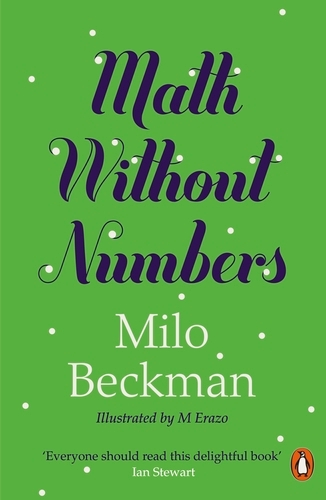
Math Without Numbers

Reference to 'ideology space', 'conceptual space' and the role of visual analogies, idioms, and how 'the list of spaces to choose from is always the same.' ... pp.28 & 29. On page 30, 'When you say that gender is a spectrum rather than a binary, that's a topological claim: You're  saying gender space is one-dimensional (a line) rather than zero-dimensional (two separate points). 'Questions about which conceptual paradigm to use sometimes boil down to questions of dimensionality.' Discussion of an infinite continuum had me making an axis of Hodges' model warp, this way and that: concave-convex (p.59). Maps and correspondence is already well established, as per a new paper (abstract and thanks to follow 1st Feb):

S. Bettiol, P. Jones, H. A. Onyedikachi, and W. G. Kernohan, “Bridging Gaps in Oral Health Frameworks: Mapping With Hodges' Health Career - Care Domains - Model”, Journal of Public Health Dentistry (2026): 114, https://doi.org/10.1111/jphd.70034 

Interesting to read of general map facts, flowing substances inside a rigid container, and vector maps. A pencilled note to share:

'Because when you look at things in the abstract like this, dusting off the specifics of a situation to focus on underlying dynamics, you start to realize there are only so many different patterns and structures out there. These patterns and structures are called mathematical objects, and thinking about them is called math.' p.79

The chapter on (generalised) Algebra, forced me to reconsider the Socratic, guided discovery and arrival at the structure of Hodges' model. (lines & points : nodes & edges). For page 88, I noted 'generic' invites abstraction. Isomorphism is discussed. Again I tested this against Hodges' model. I've always found it helps to immerse oneself in a new vocabulary: so welcome (anew) - structures, fields, rings, groups, loops, graphs, lattices, orderings, semigroups, groupoids, monoids, magmas, modules . . . algebras, p.101. Some are named only, but on graphs raises questions ... p.103.

'How densely interconnected is it? How segregated into different cliques? Does it cut clean into two subgraphs, with no connections between them? Can it be drawn without any lines crossing? Are there any lone dots without any connections?' 

There's the matter of 'friend of a friend' who have broken out of the sociological domain. Other notes to self: Significance of concepts - patient-centred, service-centred? The distance between between (vertical, horizontal, diametric)? There are weighted graphs (p. 104) and acknowledgement of category theory (p.115). A chapter on modelling pp.161-175, and models p.164 & p.169 are just a selection of highlights on a marvellous tour.

A hidden puzzle in the book remains a mystery for me.

Milo Beckman (2021) Math Without Numbers. London, Penguin Books. Illustrated by M. Erazo.

Previously: 'math' : 'diagrams
Plus, now archived Science domain links: 
https://web.archive.org/web/20150414125339/http://www.p-jones.demon.co.uk/linksTwo.htm

Believe it or not, this 'diversion' does help my reading of Order and the Virtual

Sunday, January 25, 2026

'Maths Without Numbers' by Milo Beckman

'Before you go tell your loved ones that you read a book about math and learned that a square is a circle, keep in mind: Context matters. A square is a circle, in topology. A square is most certainly not a circle in art or architecture, or in everyday conversation, or even in geometry, and if you try to ride a bike with square tires you won't get far.' pp.7-8.

'Like a line:

(Illustration - pen drawing of a line, a 'C' and an almost closed circle.)

A line can be bent almost into a circle, but to finish the job we'd need to click the ends together--not allowed. No matter how you manipulate a line, you'll always have those two special points on either end, where the shape just stops. You can't get rid of end-points. You can move them around and stretch them apart, but the two end-points are an unchanging feature of the shape.

For a similar reason, a figure-eight is a different shape too. There aren't any end-points, but there's still a special point in the middle where the lines cross, where there are four arms reaching out instead of the usual two at any other point. Stretch and squeeze all you want, you can't get rid of a crossing-point either. p.9.

Math Without Numbers
'The circle (aka S-one) and the infinite line (named R-one) are the only manifolds in the first dimension. To avoid end-points, you either have to loop back around or just go on and on forever. And don't forget: Because all the shapes in topology are stretchy, this also covers any closed-loop shape and any goes-on-forever shape. It doesn't have to be literally a circle or a straight line.' p.16.

The third dimension, dough-type manifolds, is pretty well understood at this point, though it took a hundred years and a million-dollar prize to get there, and we still don't have a totally neat and clean classification like the lower dimension. In dimensions five and up, topologists use a set of techniques called "surgery theory" to operate on manifolds and construct new ones.

That just leaves dimension four.

I wish I could tell you what's going on in dimension four. I'm not sure there's anyone who really knows. It's a weird boundary case: too many dimensions to do visually, but not enough to use sophisticated surgery tools. There are entire textbooks dedicated to what little we know about four-manifolds, and I couldn't make sense of anything past the opening pages. A professional topologist once told me she'd wanted to work on four-manifolds as an undergraduate but was advised to steer clear.' pp.23-24.

"Like a line" ... Yes. Take two that cross. Then the universes open up. 

Milo Beckman (2021) Math Without Numbers. London, Penguin Books. Illustrated by M. Erazo.

Previously: 'surgery'

Sunday, December 21, 2025

Disciplinary bridges ... how's your sense of direction?

As an advocate for Hodges' model, I've acquired an affinity for inter- multi- transdisciplinary bridges, especially medical sociology, those leading towards the mathematical, and human geography. An old but significant influence is:

Chapman, K. (1979). People, pattern, and process: an introduction to human geography. London: Edward Arnold.

Chapman begins with the concept of distance, speed of movement and the consequence of the shrinking world. Our ability to move faster has radically altered the total travel time: from what was a 50 mile walking-day. In chapter 2, 'A Conceptual Framework' refers to:

  • Decision making - the basic mechanism
    • The Spatial Context
    • The Content of Space
  • Dimensions of Space
  • Spatial Process - Causality in Time and Space

Overall, the book also takes me back to a paper I cited in 2007: Bell jars and bell curves

I'm sure the 'School of Geography' at Leeds is unrecognisable today from that of the 1980s. But the referenced paper in the 'Bell jars..' post:

Macgill, S.M. (1984). Structural Analysis of Social Data, A Guide to Ho's Galois Lattice Approach and A Partial Re-Specification of QAnalysis, Working Paper 416, School of Geography, University of Leeds. Abstract 1985

- still gives me an itch I can't scratch. 

 I could not fully understand, or follow, the print quality doesn't help, but it captured my imagination (perhaps that is enough?).

Chapter 9 stands out with 'Spatial Pattern' pp.203-234, 9.1.1 Topologic Structures, pp.205-209. Here, Chapman explains and has examples of connectivity matrices, with three indices to calculate the connectivity in a graph. All grist for the mill.

Happy Solstice too!

Thursday, October 30, 2025

In Browder, 'care' is mentioned over 150 times!

OK - so now you're teasing ...

'Surgery theory investigates the homotopy types of manifolds, using a combination of algebra and topology. It is the aim of these notes to provide an introduction to the more algebraic aspects of the theory, without losing sight of the geometric motivation.' Ranicki, 2001. 
'IV. Surgery and the Fundamental Theorem

In this chapter we develop the techniques of surgery for constructing normal cobordisms and use them to prove the Fundamental Theorem. The ideas of surgery have their origins in the theory of 2-manifolds, in the process of "cutting off handles", and in general, in the theory of Marston Morse of non-degenerate critical points of differentiable functions.' Browder, 1972.

In Browder, care is mentioned over 150 times!

'Poincaré' that is.

individual
|
INTERPERSONAL : SCIENCES
humanistic -------------------------------------------  mechanistic
SOCIOLOGY : POLITICAL
|
group-population


'The Classifying Spaces for Surgery
and Cobordism of Manifolds'

Try to - follow the language* ...

"Follow the money!"


Ranicki, A. (2001) An introduction to algebraic surgery. Surveys on Surgery Theory, Volume 2, edited by Sylvain Cappell, Andrew Ranicki and Jonathan Rosenberg, Princeton: Princeton University Press, 2001, pp. 81-164. https://doi.org/10.1515/9781400865215-005

Browder, W. (1972) Surgery and the Fundamental Theorem. In: Surgery on Simply-Connected Manifolds. Ergebnisse der Mathematik und ihrer Grenzgebiete, vol 65. Springer, Berlin, Heidelberg.
https://doi.org/10.1007/978-3-642-50020-6_4

Madsen, I. H., and Milgram, R.J., (1979) The Classifying Spaces for Surgery and Cobordism of Manifolds. Princeton University Press.

Image: https://m.media-amazon.com/images/I/41THEeVvpdL.jpg

*concepts!

Wednesday, December 28, 2022

Paper - "The concept of legal space: A topological approach to addressing multiple legalities"

 INDIVIDUAL
|
 INTERPERSONAL    :     SCIENCES               
HUMANISTIC --------------------------------------  MECHANISTIC      
SOCIOLOGY  :   POLITICAL 
|
GROUP

"5 An early reference to topology in psychology has been developed by Kurt Lewin, Principles of Topological Psychology (McGraw-Hill, New York, 1936). Linking literature and topology, Angus Fletcher, The Topological Imagination: Spheres, Edges, and Islands (Harvard University Press, Cambridge, MA, 2016). For an overview of philosophical approaches related to topology, see Daniel Parrochia, Mathematics and Philosophy (Wiley, Chichester, 2018) Ch 11. Using a topological approach to law, Müller-Mall (n 4). This last contribution constructs a topological approach for assessing perspectives in law (such as reflected in judicial decisions on a certain legal question) and situating them within ‘reference frames’ (in particular 117 et seq)." p.520.

"Law is fragmented ‘along issue-specific rather than territorial lines’, as exemplified by regulatory regimes for environmental and health issues or the private regulation of the cyberspace and of transnational commercial activities.20 Some authors have described this as a ‘deterritorialization’ of law.21 One reason for such a deterritorialization is the increasing amount of regulatory objects that cannot, or can only with difficulty, be linked to any territory – particularly salient in the case of digitalized data and its fluid location." p.522.

"... the notion of legal space suggested here comprises various features that are guided by concepts from topology, a branch of mathematics that analyses the qualitative nature of spaces. This approach has been adopted in an interdisciplinary manner, including in various disciplines of social science."5(See above). pp.519-520.


Global Constitutionalism


Burchardt, D. (2022). The concept of legal space: A topological approach to addressing multiple legalities. Global Constitutionalism, 11(3), 518-547. doi:10.1017/S2045381722000041

Friday, December 23, 2022

What precedes/follows mis- dis- malinformation, fake news...?

"Sartori (1970: 1034) put it well when he wrote almost fifty years ago: ‘We badly need information which is sufficiently precise to be meaningfully comparable. Hence we need a filing system provided by discriminating, i.e., taxonomic, conceptual containers. If these are not provided, data misgathering is inevitable; and statistical, computerized sophistication is no remedy for misinformation.’ Turnheim et al. (2015) agree when they write that a structured dialogue among practitioners of different approaches is needed to better understand processes and pathways of sociotechnical change. Similar calls for more inclusive, comparative, cross-disciplinary research have come recently from many researchers (e.g. Castree, 2016; Sovacool et al., 2015; Stern et al., 2016; Viseu, 2015; Webster, 2016)." p.704.

"Borrowing from a mix of disciplines, including history, evolutionary economics, institutional theory and STS, the approach suggests that diffusion or transitions occurs through interactions among three levels: the niche, the regime, and the landscape. The niche refers to a radical innovation that is emerging to gain diffusion or adoption, to move from invention and innovation to viable market introduction (Grin et al., 2010). The regime refers to the incumbent sociotechnical system that the niche is potentially affecting or replacing; such regimes contain cognitive, regulative, and normative institutions (Geels, 2004). The ‘landscape’ refers to exogenous developments or shocks (e.g. economic crises, demographic changes, wars, ideological change, major environmental disruption like climate change) that create pressures on the regime, which in turn create windows of opportunity for the diffusion of niche-innovations."

Sovacool, B. K., & Hess, D. J. (2017). Ordering theories: Typologies and conceptual frameworks for sociotechnical change. Social Studies of Science, 47(5), 703–750. https://doi.org/10.1177/0306312717709363

"Users online tend to acquire information adhering to their worldviews, to ignore dissenting information and to form polarized groups around shared narratives. Furthermore, when polarization is high, misinformation might easily proliferate."

Cinelli, M., Quattrociocchi, W., Galeazzi, A. et al. The COVID-19 social media infodemic. Sci Rep 10, 16598 (2020). https://doi.org/10.1038/s41598-020-73510-5
[Reference numbers removed in quotation.]

 See also:

'landscape'

'socio-technical'

'habitus'

Saturday, December 17, 2022

Domain walls ...

"A domain wall is a type of topological soliton that occurs whenever a discrete symmetry is spontaneously broken. Domain walls are also sometimes called kinks in analogy with closely related kink solution of the sine-Gordon model or models with polynomial potentials.[1][2][3] Unstable domain walls can also appear if spontaneously broken discrete symmetry is approximate and there is a false vacuum.

A domain (hyper volume) is extended in three spatial dimensions and one time dimension. A domain wall is the boundary between two neighboring domains. Thus a domain wall is extended in two spatial dimensions and one time dimension.

Important examples are:

  • Domain wall (magnetism), an interface separating magnetic domains
  • Domain wall (optics), for domain walls in optics
  • Domain wall (string theory), a theoretical 2-dimensional singularity."

    https://en.wikipedia.org/wiki/Domain_wall


 INDIVIDUAL
|
 INTERPERSONAL    :     SCIENCES               
HUMANISTIC --------------------------------------  MECHANISTIC      
SOCIOLOGY  :   POLITICAL 
|
GROUP

conceptual spaces

threshold concepts

[#h2cm as] relational ontology

magnetism

optics

string theory

a space to tell stories of
and compare walls
seek openings
so many spaces of / to welcome

these walls:
are they necessary?
whose needs do they meet?
we know walls listen and talk too
who do they protect?
who do the respect?


Among the domain walls
are those that bring us together,
those that bring us - 'I' into being,
and yes, those that [try to] take us apart.


Inspiration:
Leslie Rosenberg, THE COSMOS IS MOSTLY MADE OF SOMETHING WE CANNOT SEE, Scientific American, January 2018, Volume 318, Number 1. pp.48-53.

Axioms, Domain Walls, and the Early Universe, P. Sikivie in Physical Review Letters, Volume 48. No. 17, pp.1156-1159; April 26, 1982.

Wednesday, February 10, 2021

data-verse 1 by Ryoji Ikeda

INDIVIDUAL
|
INTERPERSONAL : SCIENCES
HUMANISTIC----------------------------------------------- MECHANISTIC
SOCIOLOGY : POLITICAL
|
GROUP - COMMUNITY - POPULATION


My source: Ings, S. Sublime numbers, FTWeekend, Life&Arts, 30 Nov-1 Dec 2019, p.15.

Saturday, January 04, 2020

Review: v Kinchin's Visualising Powerful Knowledge to Develop the Expert Student

Still just in chapter 4 'Presenting the Curriculum'...

Threshold concepts are mentioned on page 57 but not explained (as yet).

There is interesting discussion of students being able to navigate their subjects. On levels of discourse and the role of textbooks. What do textbooks do? What do they not do?

I know this 'review' is a selective reading with my eye on Hodges' model, but the 'evidence' to support #h2cm really stands out. For example, on page 60, the curriculum as a political currency. So informative that I am looking forward to teaching opportunities in the Spring and the possibility of delivering a workshop in the autumn. Tufte is referenced in discussion on Powerpoint, bullet points and the form of notes. Powerpoint is also contrasted with concept mapping, as an affordance for learning.

At the heart of the book Chapter 5 'The Expert Student' is subtitled 'The Need to Manipulate Knowledge'. This gets to nub of the 'traditional' approach to much teaching, the regurgitation of facts. Figure 28, a concept map (of course), suggests and illustrates the dichotomy between competence (chains) and understanding (nets) but these together can make both learning and teaching a fluid, dynamic and rewarding experience (p.74). This is effectively what follows in models of expertise that also addresses the theory practice gap (p.76).

Kinchin's main point for me and what I've been aware of for too many years on W2tQ is that it is the knowledge connections between concepts that are more important than the concepts themselves (p.77). C/o Elvira et al. (2016), ten interrelated instructional principle for expertise development are listed (pp.76-79) and bear specific analysis here (including the content of Hodges' model within a new web environment - how I wish...!).

There's mention of a 'conceptual spine' which is great to read (p.83) but I think the challenge of education and the 21st Century calls for at least two [ Why settle for one! ;-) ]. The concept of 'resilience' is over-used of late (especially in mental health) and is diminished as a consequence. Perhaps, however a call for conceptual resilience AND assurance is very appropriate (testing this resilience is learning)?

'Moving between knowledge structures', that is, theory and practice should be an inevitable experience for students in their learning. Kinchin writes specifically on this with figures to match. On twitter of late (yes, my @h2cm 'bubble') there have been many tweets expressing concern about not just nurse recruitment and retention but student's too. Kinchin notes: "When students are interested or excited with the curriculum they are more likely to develop other positive emotions." (p.83). As I write this a New Year refresh is upon us. I have a template for Hodges' model pre-populated with content that doubtless needs updating. But with every new situation and patient encounter, there is a refresh, new learning to be sought with the patient/carer.

To be completed (but don't wait for me get your own copy!) ;-)

Roland Tormey (2014) The centre cannot hold: untangling two different trajectories of the ‘approaches to learning’ framework, Teaching in Higher Education, 19:1, 1-12.
DOI: 10.1080/13562517.2013.827648

Novak, J.D. and Symington, D.J. (1982) Concept mapping for curriculum development. Victoria Institute for Educational Research Bulletin, 48: 3–11.

Kinchin, I., (2016) Visualising powerful knowledge to develop the expert student. Rotterdam: Sense Publishers.


See also:

Intro post

Review One

Two

Three

Four

Six

Thanks to Brill for my review copy.

Saturday, December 21, 2019

Review: iv Kinchin's Visualising Powerful Knowledge to Develop the Expert Student

It seems there is no escape from 'learning styles'. Just when you thought they are dated and defunct like a Whac-A-Mole up they pop.

Here on serialists and holist - 'big picture' learners (p.37). Kinchin writes:

"Like the deep-surface binary, the holist-serialist dichotomy covers a diversity of perspectives, details of which can be analysed using concept mapping. Concept maps provide an indicator of a student's learning approach for a given context. Raynor and Riding (1997:21) have speculated that:

"The idea that 'style awareness' may help reach reach the 'hard to reach', and perhaps contribute to reducing failure generally by enhancing the learning process, is an elusive but tantalising prospect which clearly merits further attention.' (p.37)
Kinchin cites research on the influence of existing knowledge on learning. How students may simultaneously hold misconceptions and more acceptable (professional) conceptions. Perhaps a way to resolve the learning styles 'debate' is to have tools that can potentially cater for all learning styles? The chapter heading 'Patterns of Learning' points to other requirements, especially in respect of personal learning journeys. As Kinchin discusses conceptual ecologies. This is a very appropriate description for what Hodges' model provides (p.38); and a gestalt (p.43). The domains encourage 'travel' and exploration, as the student formulates a "cycle of concepts" (within one, or around several domains) a means to help integrate a context or situation. The domains of Hodges' model act as placeholders for several concepts simultaneously, whether contentious or not (p.38) or as a source of  'troublesome knowledge'." (p.37).

I've been drawn to Dewey and pragmatism in educational thought, given the accent on a natural and active approach to learning. Chapter 4 moves to Presenting the Curriculum (subtitle: hiding the discipline from view). This surely speaks to the interdisciplinary, interprofessional nature of education in the 21st Century and even the increasing instances(?) when transdisciplinary approaches are needed? Hodges' model predates Project 2000 and the shift of UK nurse education to degree pathways. Mid 1980s the model was created to facilitate curriculum design and Kinchin sees concept maps as evidencing curriculum design and a means to communicate design, communication and implementation.

Four reasons for use of concept maps in relation to curriculum design - summarised here:

1. Concepts maps support 'big picture thinking'. ...
2. Concept maps are embedded in contructivist learning theory ...
3. Concept maps support collaborative planning ...
4. Concept maps reduce the 'cognitive load' placed on teachers* ... (p.54).

I like to the emphasis in this book on structure. The concept maps - learning patterns and curricula, knowledge and very well referenced. 'Cumulative learning' could refer to cramming, committing facts to memory for regurgitation, but it doesn't. It is about student's "understandings integrate and subsume with previous knowledge, or 'segmented learning' where new ideas or skills are accumulated alongside rather than build on past knowledge." (p.55).

Not quite the center of the book, but page 56 introduces a key concept (in Chapter 7) in semantic gravity.

*This came up a lot generally - students too - within educational technology in MRES studies at University of Lancaster.

to be continued...

Roland Tormey (2014) The centre cannot hold: untangling two different trajectories of the ‘approaches to learning’ framework, Teaching in Higher Education, 19:1, 1-12.
DOI: 10.1080/13562517.2013.827648

Novak, J.D. and Symington, D.J. (1982) Concept mapping for curriculum development. Victoria Institute for Educational Research Bulletin, 48: 3–11.

Kinchin, I., (2016) Visualising powerful knowledge to develop the expert student. Rotterdam: Sense Publishers.


See also:

Intro post

Review One

Two

Three

Five

Six

Thanks to Brill for my review copy.

Monday, December 16, 2019

Review: iii Kinchin's Visualising Powerful Knowledge to Develop the Expert Student


Also aimed at general as well as readers in education, this is an accessible read. The book's compact size, eight chapters across 134 pages invites completion even though I took quite a few weeks.

Book reviews here are a bit 'unconventional' with the two axes I have to grind [ ;-) ]. Returning to chapter 2 momentarily and map topography. Kinchin explains how concept maps of various types can be better understood and evaluated - a process of 'topological normalisation' (p.27). On W2tQ I may sound like 'I have it in' for process and processes. I do, in the importance they seem to assume within project management. I do 'get this'. A focus on processes is inevitable and readily appreciated in Hodges' model.

No process then ... no time, sequences, events, change, movement, spatial references and so on ... Kinchin's inclusion of  'topological normalisation' is very constructive (imho) as it indicates a method (as with measuring concept maps) and suggests something beyond an algorithmic approach.

The phrase (inevitably?) reminded me of database normalization:

".. the process of structuring a relational database."
https://en.wikipedia.org/wiki/Database_normalization

So, topological normalisation and associated structures provides the icing.

Little wonder then that next up in chapter Kinchin's Table 1 lists the characteristics of

'Deep Learning' and 'Shallow Learning'

So cake and icing clearly.

On deep learning the first item is ''Linking new information with prior knowledge'. This is central in Hodges' model and the reflection (individual or group) and critical thinking that the model can help generate. With all the claims for VR AR, this (reflection / reflective practice facilitated by Hodges' model) is conceptually immersive (and a definition of learning?).

From this, another item is realised. As learners engage with content; find, 'own' and sustain their enthusiasm for their learning, understanding and the subjects and parts of the curriculum they find themselves learning within. The sum total is: structured networks of knowledge (p.36).

This gets even better with the subheading: 'Oppositional Binaries'.

Hodges' model provides two binaries - but (apologies - another time!) let's get back to the book.

While 'Deep learning' has its advocates, Kinchin quotes Tormey (2014:4) who warns:

'a framework that is simple enough to be a powerful metaphor may be too simple to adequately account for learning in different contexts' and that its blind acceptance by new entrants to the profession has 'imposed blinkers that make alternative conceptualisations invisible'.
Finding further evidence to support Hodges' model within this debate is invaluable.

to be continued...

Roland Tormey (2014) The centre cannot hold: untangling two different trajectories of the ‘approaches to learning’ framework, Teaching in Higher Education, 19:1, 1-12.
DOI: 10.1080/13562517.2013.827648

Novak, J.D. and Symington, D.J. (1982) Concept mapping for curriculum development. Victoria Institute for Educational Research Bulletin, 48: 3–11.

Kinchin, I., (2016) Visualising powerful knowledge to develop the expert student. Rotterdam: Sense Publishers.


See also:

Intro post

Review One

... Two

... Four

... Five

... Six

Many thanks to Brill for my review copy.

Sunday, September 22, 2019

c/o JAN: Formal Concept Analysis ... and an encouraging footnote

My source:


Andersson, N, Silver, H. Fuzzy cognitive mapping: An old tool with new uses in nursing research. J Adv Nurs. 2019; 00: 18. https://doi.org/10.1111/jan.14192

This tweet prompted a reply and further reflection, as I've been aware of FCA for quite a while. A math disability (but remote fascination?) precludes me really 'getting to grips' with this. As noted before on W2tQ, visualization in the humanities (social sciences) has still not realised its potential. Those researchers, professional workers ... who could benefit from its application, being in the 'humanities', often do not understand the underlying mathematics. Even though they are not necessarily that advanced (sixth-form - undergraduate?).

Over the years I have built up a small library of related papers and books. The Macgill (1984) paper referenced below, I started to 'read' and work through and got a short way. The print quality is rather poor and obviously dated, but that is not the problem. I will try again. Since the 1980s software has changed beyond the proprietary packages of MathCad, MathLab, Maple and Mathematica and collectively they should (must?) make these methods more accessible. Of course, I thought this with regards to the use of content management system for a website (yes, that one!). Again though it's not the tools, but my choice, time and focus.

I write this and it might only be intuition, but I'm not just sure, I know there is something here.

Seeing FCA in JAN's tweet I thought of a certain footnote even though on my copy the reference seems incomplete:

Kwong, C. P. A Topological Framework for Formal Concept Analysis, The Chinese University of Hong Kong.

On the first page the footnote reads:

"The adjective "formal" is used to emphasize the mathematical substance of the objects being studied, which may be left out when such a formality is superfluous."

As you can imagine this is quite a gift for me. In a way it suggests the following from a 2x2 matrix with keywords (concepts), to an arbitrary array:

individual
|
INTERPERSONAL : SCIENCES
humanistic ----------------------------------------------- mechanistic
SOCIOLOGY : POLITICAL
|
group - population

1001
1110
0001
1111

1101
0100
1010
0011

1111
0011
0011
0110

0110
1111
0000
0110

There is a worry here. When your formative nurse education and training stressed the need to shift from a task-oriented approach to individualised, then filling the domains of Hodges' model with '1's and '0's is a bona fide task-checklist - even if a binary one.

There is a response to that concern for another post; but before that there is another source c/o:

Johana Ramírez Gaviria (2015) Aspectos topológicos en el Análisis deConceptos FormalesTopological aspects in Formal Concept Analysis, Universidad Nacional de Colombia Facultad de Ciencias Exactas y Naturales Departamento de Matemáticas y Estadística Manizales, Colombia. p.6.
c/o Google, Spanish – detected, English
En [26] se plantean nuevos modelos para el FCA usando nociones de la topología algebraica. El contexto formal convencional es reemplazado por una matriz con entradas ”1” ó ”0” denominada matriz contexto, para construir una familia simplicial (familia concepto), de ahi se desprenden propiedades que relacionan la teoría de la topología algebraica con el FCA.

Cabe resaltar que hasta el momento no se ha trabajado en dotar de estructura topológica los contextos formales en el FCA generalizado, donde los datos de las tablas toman valores difusos en lugar de valores binarios como se tiene para el FCA clásico.
In [26] new models for the FCA are proposed using notions of the topology algebraic The conventional formal context is replaced by a matrix with “1” or "0" called context matrix, to build a simplicial family (concept family), from there properties that relate the theory of algebraic topology with the FCA.

It should be noted that so far no work has been done to provide a topological structure the formal contexts in the generalized FCA, where the data in the tables take values diffuse instead of binary values ​​as you have for the classic FCA. 
[26, reference is Kwong]
  The whole thesis would need translating, but I have a sense that this too is useful.

Working through papers, files, journals, books getting rid of, sorting, re-filing ... I'll see if I can add to the reading below.

Atkin, R. (1974). Mathematical Structure in Human Affairs. London, Heinemann.

Macgill, S.M. (1984). Structural Analysis of Social Data, A Guide to Ho's Galois Lattice Approach and A Partial Re-Specification of QAnalysis, Working Paper 416, School of Geography, University of Leeds.

Previous post:
Bell jars and bell curves


Thanks to @jadvnursing for this tweet in-particular and for RTs.
(Paper e-copy received with thanks c/o Neil Andersson, 25 Oct 2019.).

Friday, August 07, 2009

Birds in paper cages: Cognitive spaces with a little isotropy

In Consciousness Explained, Dennett (1991) provides further support for my belief in the significance of Hodges’ model:

Any of the things you have learned can contribute to any of the things you are currently confronting. That at least is the ideal. This feature is called isotropy by Fodor (1983), the power, as Plato would say, of getting the relevant birds to come, or at least to sing out, whenever they are needed. p.279.
Dennett highlights the fact that we are not isotropic. There are many often comedic instances in which people are slow or fail to fully appraise the significance of new data. This point reinforces the need and role for Hodges’ model providing not just one of Plato’s metaphorical aviaries (with knowledge in the form of the birds), but at least four (five - with spiritual claims to know-ledge).

Next spring I will return to the conceptual spaces paper I started and last saved in September 2008, how time flies! (I do finish stuff eventually - it's not easy this 'part-time' lark). As already posted on W2tQ there is more inspiration if needed. Drawing upon the cognitive science and computing literature the objectives of Peter Gardenfors’ book Conceptual Spaces are made clear from the outset:
'... is to show that a conceptual mode based on geometrical and topological representations deserves at least as much attention in cognitive science as the symbolic and associationistic approaches’. p.2 ....

'This is a book about the geometry of thought. A theory of conceptual spaces will be developed as a particular framework for representing information on the conceptual level.’ p.2.

Further reading:

Jerry A. Fodor (2000) The modularity of mind.

The Frame Problem Stanford Encyclopedia of Philosophy.
