Hodges' Model: Welcome to the QUAD: information disorder

Hodges' model is a conceptual framework to support reflection and critical thinking. Situated, the model can help integrate all disciplines (academic and professional). Amid news items, are posts that illustrate the scope and application of the model. A bibliography and A4 template are provided in the sidebar. Welcome to the QUAD ...

Showing posts with label information disorder. Show all posts

Monday, August 24, 2026

Workshop: 'Under Pressure: Character, Certainty, Conspiracy'

How people change (or fail to) under pressure, false certainty and misinformation

Institute for Ethics & Society Workshop - Thursday 3 September 2026

10:00 am – 4:30 pm (AEST)
In an age of outrage, algorithms and information overload, how do we become people of resilient character, humble conviction and wise discernment? Drawing on several funded research projects in Europe and Australia, this workshop explores how pressure exposes the heart and yet shapes the self, how self-righteousness quietly corrupts our capacity for knowledge and understanding of self and others, and how conspiracy theories and AI-generated “slopaganda” shape the way we see the world.

The IES is pleased to host this event on the occasion of Laura Candiotto’s visit to Sydney. Laura is Associate Professor of Moral Philosophy (Universities of Cagliari and Pardubice). She currently leads two research projects, including ‘Vicious Epistemic Cultures’ on the ethics of knowledge with a specific focus on emotional friction in revision responsibility, funded by the Czech Science Foundation. Laura is currently working on a monograph, Emotional Friction, and a co-edited collection entitled Vice Epistemology and the Philosophy of Emotions (Routledge).
 
SPEAKERS
Laura Candiotto (Cagliari and Pardubice) ‘Character revision under duress’
 
John Lippitt (Notre Dame IES and Pardubice) ‘Failures of receptivity: self-righteousness as a stealthy vice’
 
Adam Piovarchy (Notre Dame IES) ‘Conspiracy theories are Infohazards’
 
Mark Alfano (Macquarie) ‘Slopaganda’
 
Location:
The University of Notre Dame Australia,
NDS23/102 (Wilcox Mofflin Building)
46-52 Mountain Street Ultimo, NSW, 2007
 
Or online via Teams
For enquiries, Teams link and to RSVP:
Professor John Lippitt (john.lippitt AT nd.edu.au)


My source: Philos-L "The Liverpool List" is run by the Department of Philosophy, University of Liverpool https://www.liverpool.ac.uk/philosophy/philos-l/ Messages to the list are archived at http://listserv.liv.ac.uk/archives/philos-l.html. Recent posts can also be read in a Facebook group: https://www.facebook.com/PhilosL/ Follow the list on Twitter @PhilosL. Follow the Department of Philosophy @LiverpoolPhilos

Tuesday, April 28, 2026

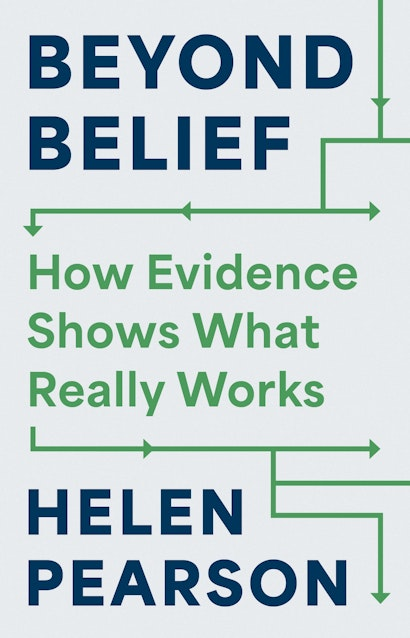
Book: "Beyond Belief - How Evidence Shows What Really Works"

Beyond Belief: How Evidence Shows What Really Works – out April 2026
Beyond Belief

INDIVIDUAL
|
     INTERPERSONAL    :     SCIENCES               
HUMANISTIC --------------------------------------  MECHANISTIC      
SOCIOLOGY  :   POLITICAL 
|
GROUP
BEYOND BELIEF

How Evidence Shows
What Really Works


Beyond Belief: How Evidence Shows What Really Works is a book by science journalist Helen Pearson, published by Princeton University Press.
 
My source: 
Pearson, H. Trials that quietly changed our lives, Life&Arts, FTWeekend, 18-19 April, 2026. p.2 

Previously: 'belief' : 'evidence' : 'information disorder

Wednesday, April 08, 2026

Raising the alarm on authoritarian rule c/o Life&Arts FT

INDIVIDUAL
|
     INTERPERSONAL    :     SCIENCES               
HUMANISTIC --------------------------------------  MECHANISTIC      
SOCIOLOGY  :   POLITICAL 
|
GROUP
I can think for myself!
 Yes.
  But, are you allowed to think?
EVERYBODY
        TO KENMURE
STREET^          

My Undesirable Friends:
Part 1


^It's a bit more 'local' - I think!
 
My source: Nicolas Rapold, Raising the alarm on authoritarian rule. Life&Arts, FTWeekend, 28-29 March 2026, p.12.

Previously: 'power' : 'politics' : 'authoritarian'

Tuesday, September 09, 2025

Hollowed out - aka 'No science here' ... 'Limited vision' ...

Individual
|
      INTERPERSONAL    :     SCIENCES               
HUMANISTIC  --------------------------------------  MECHANISTIC      
 SOCIOLOGY  :    POLITICAL 
|
Group


Policy. Public Protection. Vigilance. Monitoring:
Public (mental) health
is being (has been) hollowed out?
Discuss.


Image: https://sotamedialab.wordpress.com/2014/12/15/adjusting-perspective/

Sunday, August 10, 2025

"Readers! Where exactly does this go?"


Individual
|
      INTERPERSONAL    :     SCIENCES               
HUMANISTIC  --------------------------------------  MECHANISTIC      
 SOCIOLOGY  :    POLITICAL 
|
Group
?

?

?
?


Frankfurt, H. G. (2025). On bullshit. Anniversary Edition. Princeton University Press. https://press.princeton.edu/books/hardcover/9780691276786/on-bullshit

Friday, August 08, 2025

'White Coats Vs The White House' c/o BBC World Service

Individual
|
     INTERPERSONAL    :     SCIENCES               
HUMANISTIC  --------------------------------------  MECHANISTIC      
 SOCIOLOGY  :    POLITICAL 
|
Group


WHITE COATS


WHITE HOUSE


White Coats Vs The White House
The Documentary - 21 August 2025

'What is going on with US science? Science Journalist Roland Pease asks whether the rounds of cuts, reorganisations and political strong-arming can be weathered, and how they will likely affect us all.

80 years after Vannevar Bush proposed what became the pact between government and universities that led to decades of global scientific dominance, is the edifice being toppled?

Bush’s report “Science, The Endless Frontier” led to the unwritten pact between university scientists and government funding that underpinned US leadership until now. “Trust us with the money, we’ll give you the global scientific advantage”.'

continued: 

https://www.bbc.co.uk/programmes/w3ct81nr

Thursday, August 07, 2025

'Finding the Signal through the Noise' - WHO EARS

It is deprived communities who desperately want to do their best for family, but struggle to have access to and make sense of many sources of information. News and information not just through 'traditional' channels, but social media. Trying to be objective, non-judgemental it can still be surprising how TVs and smartphones are the key personal and furniture items.

Outside of London, Liverpool has a low uptake of immunisation against measles:

Liverpool, now has cases and a child's death from measles:

https://liverpool.gov.uk/council/public-health-liverpool/measles-on-the-increase/

https://www.liverpoolecho.co.uk/news/liverpool-news/alder-heys-plea-after-child-32050189

Located in-between, I often visit Manchester and Liverpool. I wonder now if I should visit Liverpool less. My daughter and her partner expecting their second child have a decision to make next year.

I noticed on X a reference to 'social listening'. This was missed while drafting a paper on COVID, technology, social media and information disorder. More positively, work on 'infodemic' was captured and posted. 

Blowing the dust of another draft, I will reassess this stream of work and seek specific literature, especially contributions to improved outcomes - public (mental) health.


McGowan B. S. (2022). World Health Organization's Early AI-supported Response with Social Listening Platform. Journal of the Medical Library Association : JMLA, 110(2), 273–275. https://doi.org/10.5195/jmla.2022.1398

See also:

Fryer, Jon. “Information Literacies – Learning, to Thrive in a Digital Age” IRMS Bulletin 230 (2022): 16-21.

Jones, P. (1996) Humans, Information, and Science, Journal of Advanced Nursing, 24(3),591-598.

Sunday, July 13, 2025

Global cost of silencing science BMJ ...

Editorials

Global cost of silencing science

BMJ 2025390 doi: https://doi.org/10.1136/bmj.r1370 (Published 10 July 2025)Cite this as: BMJ 2025;390:r1370

'Public trust in scientific integrity is eroded by the politicisation of institutions under Donald Trump’s US presidency. The implications extend far beyond American borders, striking at the core of how scientific knowledge is produced, disseminated, and trusted worldwide.

Recent directives seek to eliminate diversity, equity, and inclusion (DEI) initiatives, cut federal funding to critical health research agencies, and restrict references to gender, race, and climate science in official documentation. Scientific staff at federal agencies face mounting pressure to comply with politically motivated communication policies. Such institutional interference not only distorts scientific findings—it undermines the principles of transparency and editorial independence outlined in the International Committee of Medical Journal Editors (ICMJE) recommendations.1 As members of ICMJE we feel compelled to speak out.

The ICMJE underscores that “editors should preserve the integrity of the scientific record by critically evaluating manuscripts free from undue influence and without compromising scholarly values.”1 Yet, under the current administration, several US federal science agencies require pre-approval for external publications—a direct contravention of these editorial standards.2 This climate of control stifles open inquiry and discourages evidence based discourse, particularly when scientific conclusions diverge from political narratives.'
...

'Independent scientific communication is equally under threat. Increasing pressure on government researchers to avoid controversial topics or reframe findings to suit political narratives creates an institutional chilling effect. Self-censorship born of fear may be more damaging than overt censorship. Researchers, particularly early career scientists and those from under-represented backgrounds, may choose to abandon public communication or controversial areas of inquiry altogether. This trend further narrows the scope of scientific innovation, limits the range of perspectives reflected in research agendas, and ultimately harms health.'
...

'This is a call for science grounded in ethical principles and dedicated to the service of humanity. Scientific research, especially in medicine and public health, is inherently intertwined with social justice. Silencing DEI initiatives, censoring climate science, and delegitimising minority researchers is not neutrality—it is complicity in perpetuating harm.'
...

Footnotes

This article is being jointly published by The BMJ, Deutsches Ärtzeblatt, Journal of Korean Medical Science, Lancet, La Tunisie Médicale, Medwave, and New Zealand Medical Journal.

References

https://doi.org/10.1136/bmj.r1370

My source: https://x.com/bmj_latest/status/1944478436489134350

Thursday, November 21, 2024

'Fake news' - nothing new under the Sun

INDIVIDUAL
|

 INTERPERSONAL    :     SCIENCES               
HUMANISTIC --------------------------------------  MECHANISTIC      
SOCIOLOGY  :   POLITICAL 
|
GROUP


PD Reporter with "fake news" from an 1894
illustration by Frederick Burr Opper


Kruck, D. A 'ROYAL' BIT OF FAKE NEWS. Gibbons Stamp Monthly, August 2021, pp.28-30.

Image source:
https://aleteia.org/2018/02/09/fake-news-post-truth-and-technology-in-the-19th-century/

Thursday, June 06, 2024

"Is climate change affecting our mental health?" BBC & OU

"Heat waves and extreme weather aren't just affecting our physical lives, there's growing evidence they're impacting our mental health too."

Produced and directed by Lily Freeston, 29 May 2024

Individual
|
      INTERPERSONAL    :     SCIENCES               
HUMANISTIC  --------------------------------------  MECHANISTIC      
 SOCIOLOGY  :    POLITICAL 
|
Group


Thursday, April 18, 2024

Book: Digital Disinformation in Africa: Hashtag Politics, Power and Propaganda

Individual
|
   INTERPERSONAL   :     SCIENCES               
HUMANISTIC  --------------------------------------  MECHANISTIC      
 SOCIOLOGY  :    POLITICAL 
|
Group


Digital Disinformation in Africa


#Politics #Power #Propaganda


Source: Twi/X

Saturday, January 20, 2024

c/o Eliot Higgins: 'Moment of truth' or 'Movement to Critical Thinking'?

   moment

a : tendency or measure of tendency to produce motion especially about a point or axis

b : the product of quantity (such as a force) and the distance to a particular axis or point

https://www.merriam-webster.com/dictionary/moment


Here on W2tQ in posts applying Hodges' model I have tended to equate the subjective and the objective with the humanistic and mechanistic domains respectively. Of course, these mappings - conceptual placements are idealised. In reality there is a great deal of overlap. 

"Social media platforms such as X, once celebrated as democratising forces, are under even more scrutiny. The challenge isn't just rogue posts or unchecked algorithms. It reflects a deeper malaise, rooted in societal distrust, exacerbated by business models and perpetuated by reactive policies. The ramifications of disinformation spill on the streets with tangible, often devastating real-world consequences. 
These processes were already underway in 2014, when I founded the open-source investigative group Bellingcat." p.1. 
"The delicate balance between combating misinformation and ensuring digital freedoms remains elusive. ...

Addressing the root causes of disinformation requires a grassroots approach. Education stands at the forefront of this strategy. The idea is simple yet transformative: integrate open-source investigative and critical thinking into the curriculum. Equip the youth with the skills to navigate the labyrinthine digital realm, to question, analyse and verify before accepting or sharing information. ...

The potential of such a grassroots movement doesn't stop at school gates. Envision a world where universities become hubs of open source investigation, with national and international networks of students sharing methodologies, tools and insights. As these students move into their professional lives, they carry forward not just skills but a mindset - one that values critical thinking over blind acceptance." p.2.

Higgins, E. Moment of truth, Life&Arts, FT Weekend, 16-17 December 2023, pp.1-2.
 

 Individual
  |
    INTERPERSONAL    :     SCIENCES               
HUMANISTIC --------------------------------------  MECHANISTIC      
SOCIOLOGY  :   POLITICAL 
|
Group

mental well-being

critical thinking

education - learning

subjective
PSYCHO-

physical well-being

fact (checking)

digital media literacy

objective


social well-being

society

social impacts of info disorder


-POLITICAL
political well-being

policy - regulation

political impacts of info disorder


https://thestudentview.org/

https://citizenevidence.org/

Access to education to combat information disorder, through digital media literacy is essential. There are now many claimed forms of literacy, and informatics. Engaging students must not just rest with  universities and graduate level education; especially as the 'professions' are set to change and new ones arise.

Previous posts 'information disorder' , 'ignorance'.

Monday, July 10, 2023

5th Multidisciplinary International Symposium on Disinformation in Open Online Media


Call for Contributions

The Multidisciplinary International Symposium on Disinformation in Open Online Media (MISDOOM) is returning for its 5th edition on 21 and 22 November 2023. This time, the conference will be hosted by the National Research Center for Mathematics and Computer Science (CWI) at Amsterdam Science Park (Netherlands). MISDOOM values multidisciplinary research and is designed to be inclusive of different academic disciplines and practices.

The symposium provides a platform for researchers, industry professionals, and practitioners from various disciplines such as communication science, computer science, computational social science, political science, psychology, journalism, and media studies to come together and share their knowledge and insights on online disinformation.

My source - ERCIM NEWS posted previously:

https://hodges-model.blogspot.com/2023/07/ercim-news-134-xai.html

Thursday, January 05, 2023

Call for Papers: The Science of Trust Initiative -


Building and Restoring Trust in Science and Health Information across Patient, Community and Population Settings

 
Message(s) to HIFA alerting to, and response to a Call for Papers:
 
----- Forwarded message -----
From: Neil Pakenham-Walsh <neil.pakenham-walsh@ghi-net.org>
To: HIFA - Healthcare Information For All <hifa@hifaforums.org>
Sent: Friday, 16 December 2022 at 12:11:19 GMT
Subject: [hifa] Call for papers: Building and restoring trust in science and health information across patient, community and population Settings

I am forwarding this from our colleagues at Infodemic Management News, WHO.

Opportunities for action Call for papers: Building and restoring trust in science and health information across patient, community and population Settings

The Journal of Communication in Healthcare: Strategies, Media, and Engagement in Global Health seeks to solicit diverse perspectives and build a robust evidence base for a special issue on trust and misinformation as part of the journal’s Science of Trust Initiative. This special issue will explore topics across different health communication areas aimed at addressing issues fuelled by misinformation such as mistrust, social discrimination, and pervasive stigma. There is specific interest in submissions related to the science of trust that focus on interdisciplinary collaborations to promote social, policy, and/or behavioral change, address key root causes of health inequities, and can help forge the path forward for building and fostering trust. A good opportunity to showcase your latest achievements or research in infodemic management!

To read the call for papers and submit, it’s here. The deadline is 26 February 2022.

Dr Neil Pakenham-Walsh, HIFA Coordinator Healthcare Information For All Global Healthcare Information Network Working in Official Relations with the World Health Organization 20,000 members, 400 supporting organisations, 180 countries, 6 forums, 4 languages www.hifa.org neil AT hifa.org


----- Forwarded message -----
From: Neil Pakenham-Walsh <neil.pakenham-walsh@ghi-net.org>
To: HIFA - Healthcare Information For All <hifa@hifaforums.org>
Sent: Friday, 30 December 2022 at 10:06:18 GMT
Subject: [hifa] Call for papers: Building and restoring trust in science and health information across patient, community and population settings (4)

Dear Najeeb, Meena and all,

Najeeb: "I think this is a golden opportunity for HIFA to publish an article (possibly written by a number of key people in HIFA) and provide a leading statement that emphasizes the role of communication (good quality information) in healthcare for all." https://www.hifa.org/dgroups-rss/call-papers-building-and-restoring-trust-science-and-health-information-across-patient

Meena: "Very nice idea Najeeb and happy to be part of this project." https://www.hifa.org/dgroups-rss/call-papers-building-and-restoring-trust-science-and-health-information-3-hifa-paper

Yes indeed, the call for papers is specifically about 'Building and restoring trust in science and health information'. HIFA is uniquely positioned to explore this issue through dynamic multidisciplinary discussion.

My initial thought is that this could be done within the framework of our current collaboration with WHO and specifically the consultation we are planning for 2023: 'To identify best practices, opportunities and challenges from relevant health related stakeholders, towards pursuing universal access to reliable healthcare information'. https://www.hifa.org/projects/hifa-who-collaboration-plan Lack of trust is a huge challenge and it requires engagement from all stakeholders.

I would like to invite HIFA members and supporting organisations to comment and suggest next steps.

Best wishes, Neil

Dr Neil Pakenham-Walsh


----- Forwarded message -----
From: Najeeb Al-Shorbaji, Jordan <shorbajin@gmail.com>
To: HIFA - Healthcare Information For All <hifa@hifaforums.org>
Sent: Saturday, 31 December 2022 at 22:12:50 GMT
Subject: [hifa] Call for papers: Building and restoring trust in science and health information across patient, community and population settings (5) HIFA-WHO Collaboration

Dear Neil and all members of HIFA family

Happy New Year. The suggestion to invite comments from HIFA members is a logical one and fully supported. HIFA current collaboration with WHO should really be highlighted in this piece especially that WHO and HIFA have both a mission to make high quality information available and accessible by the world. Good quality, timely and accurate health information provided to people is the best prevention, protection and leads to good treatment of diseases. Hopefully this will make heath goals much more attainable. Lets go for it friends.

With kind regards.

Najeeb Al-Shorbaji, PhD, IAHSI

... Website: www.shorbaji.net Director, Knowledge, Ethics and Research WHO/HQ (Retired) e-Marefa Advisor President, Jordan Library and Information Association President, eHealth Development Association, Jordan President, Middle East and North Africa Association of Health Informatics IMIA Vice-President for MEDINFO 2023 Visiting Professor, Ain Shams University, Egypt Member of the International Academy of Pubic Health Scientific Council ORCID ID 0000-0003-3843-8430

----- Forwarded message -----
From: Peter Jones, UK <hifa@hifaforums.org>
To: HIFA - Healthcare Information For All <hifa@hifaforums.org>
Sent: Sunday, 1 January 2023 at 15:45:42 GMT
Subject: [hifa] Call for papers: Building and restoring trust in science and health information across patient, community and population settings (6) Hodges' model and information disorder

As highlighted before on HIFA over many years, Hodges' model can inform such a call for papers and project.

In several ways, including but not limited to - critique and representation of data, information, knowledge, wisdom (literacies - across all academic and professional disciplines):

Jones, P. (1996) Humans, Information, and Science, Journal of Advanced Nursing, 24(3),591-598.
Jones, P. (1996) An overarching theory of health communication? Health Informatics Journal,2,1,28-34.

Additional citation: IRMS Bulletin - November 2022
https://hodges-model.blogspot.com/2022/12/irms-230-h2cm-literacies.htm

"I am indebted to Peter Jones, who shared Hodges’ Health Career Model with the 2022 IRMS conference in Glasgow. Although originally used in a healthcare setting, this simple, two-axis intellectual model can be readily used to analyse any complex interaction between the individual and their environment – in this case, information literacies.

The diagram shows a number of distinct yet overlapping literacies that were potentially in play in our problem example, although there are likely to be many more – even emotional literacy played a part, with the frustrations of the young people in question causing them to dismiss potential solutions before they had been tried or even considered. Likewise, socio-political and socio-economic literacies may have been a factor – if you are unaware that something exists in the world due to blind-spots in your own cultural background then you cannot even begin to look for it."

Jon Fryer, "Information Literacies - Learning, to thrive in a digital age". IRMS Bulletin, Issue 230, November 2022. cc c (A membership journal)

During the summer and the "Communicating health research" thread on HIFA, I thought about 'information disorder' and the infodemic:

https://rm.coe.int/information-disorder-toward-an-interdisciplinary-framework-for-researc/168076277c [*see note below] I recalled this quote too - amid 'information overload'.

“Where is the wisdom we have lost in knowledge? Where is the knowledge we have lost in information?” ― T.S. Eliot, The Rock

As the evidence-base 'accumulates' there may be a questions about the life-cycle of research?

From implementation science to deimplementation: Patey et al. Implementation Science (2018) 13:134 https://doi.org/10.1186/s13012-018-0826-6

As an 'ecosystem' is it imperative that one (or more) part of 'data, information KNOWLEDGE wisdom' must wither on the academic (vine) database - reduced citation hence salience?

The aims and scope of a paper may also encompass the public's understanding of science. Frameworks and models of care/selfcare are needed that can simultaneously:

"... differentiate between science writing for the public and writing across communities of scientific practice. Described by its editors as an interdisciplinary journal, they argue it is a ‘transdisciplinary journal’"

from -Baram-Tsabari, Ayelet, Orli Wolfson, Roy Yosef, Noam Chapnik, Adi Brill, and Elad Segev. Jargon Use in Public Understanding of Science Papers over Three Decades. Public Understanding of Science, 29(6) (August 2020): 644–54. https://doi.org/10.1177/0963662520940501.

Hodges' model being situated can be used in contexts that are inter- multi- transdisciplinary and interprofessional (education).

If I can assist I'd be pleased to proof read, critique drafts, provide a figure / table using Hodges' model to illustrate the conceptual scope and associations of the work.

I may have also referred to agnotology - the study of ignorance, this should (must?) be a concurrent factor in research of literacy. If anyone has time to please read and comment on a near complete draft paper on: COVID-19, technology, society, Hodges' model, fake news misinformation dis- mal- also I'd be very grateful.

[ Since this message was posted to HIFA, I greatly appreciate an offer to read the draft, which should be complete mid-end of February ]

Happy New Year to all - wherever celebrated.

Peter Jones
Community Mental Health Nurse and Researcher
Warrington Recovery Team, NW England
http://twitter.com/h2cm

The call for papers link again:
https://think.taylorandfrancis.com/special_issues/science-trust-initiative/?utm_source=TFO&utm_medium=cms&utm_campaign=JPG15743

[*Note from HIFA moderator (NPW): Many thanks Peter, this publication looks interesting. The first paragraph of the executive summary sets the scene: 'This report is an attempt to comprehensively examine information disorder and its related challenges, such as filter bubbles and echo chambers. While the historical impact of rumours and fabricated content have been well documented, we argue that contemporary social technology means that we are witnessing something new: information pollution at a global scale; a complex web of motivations for creating, disseminating and consuming these ‘polluted’ messages; a myriad of content types and techniques for amplifying content; innumerable platforms hosting and reproducing this content; and breakneck speeds of communication between trusted peers.' I have invited the authors to join us.]
Friday, December 23, 2022

What precedes/follows mis- dis- malinformation, fake news...?

"Sartori (1970: 1034) put it well when he wrote almost fifty years ago: ‘We badly need information which is sufficiently precise to be meaningfully comparable. Hence we need a filing system provided by discriminating, i.e., taxonomic, conceptual containers. If these are not provided, data misgathering is inevitable; and statistical, computerized sophistication is no remedy for misinformation.’ Turnheim et al. (2015) agree when they write that a structured dialogue among practitioners of different approaches is needed to better understand processes and pathways of sociotechnical change. Similar calls for more inclusive, comparative, cross-disciplinary research have come recently from many researchers (e.g. Castree, 2016; Sovacool et al., 2015; Stern et al., 2016; Viseu, 2015; Webster, 2016)." p.704.

"Borrowing from a mix of disciplines, including history, evolutionary economics, institutional theory and STS, the approach suggests that diffusion or transitions occurs through interactions among three levels: the niche, the regime, and the landscape. The niche refers to a radical innovation that is emerging to gain diffusion or adoption, to move from invention and innovation to viable market introduction (Grin et al., 2010). The regime refers to the incumbent sociotechnical system that the niche is potentially affecting or replacing; such regimes contain cognitive, regulative, and normative institutions (Geels, 2004). The ‘landscape’ refers to exogenous developments or shocks (e.g. economic crises, demographic changes, wars, ideological change, major environmental disruption like climate change) that create pressures on the regime, which in turn create windows of opportunity for the diffusion of niche-innovations."

Sovacool, B. K., & Hess, D. J. (2017). Ordering theories: Typologies and conceptual frameworks for sociotechnical change. Social Studies of Science, 47(5), 703–750. https://doi.org/10.1177/0306312717709363

"Users online tend to acquire information adhering to their worldviews, to ignore dissenting information and to form polarized groups around shared narratives. Furthermore, when polarization is high, misinformation might easily proliferate."

Cinelli, M., Quattrociocchi, W., Galeazzi, A. et al. The COVID-19 social media infodemic. Sci Rep 10, 16598 (2020). https://doi.org/10.1038/s41598-020-73510-5
[Reference numbers removed in quotation.]

 See also:

'landscape'

'socio-technical'

'habitus'

Thursday, March 03, 2022

"Information Disorder:" c/o Wardle and Derakhshan (2017) The transmission of ritual ...

INDIVIDUAL
|
 INTERPERSONAL    :     SCIENCES               
HUMANISTIC -----------------------------------  MECHANISTIC    
SOCIOLOGY  :   POLITICAL 
|
GROUP


“The transmission view of communication is the commonest in our culture — perhaps in all industrial cultures... It is defined by terms such as ‘imparting,’ ‘sending,’ ‘transmitting,’ or ‘giving information to others.’ ...


... The ‘ritual view of communication’, by contrast, is not about “the act of imparting information but the representation of shared beliefs.” pp.14-15.


Wardle, Claire, and Hossein Derakhshan. 2017. “Information Disorder: Toward an Interdisciplinary Framework for Research and Policy Making.” 162317GBR. Council of Europe. https://edoc.coe.int/en/media/7495-information-disorder-toward-an-interdisciplinary-framework-for-research-and-policy-making.html.

Previously:

WHO: Infodemic Management News Flash Thursday 4 November 2021 #25