Hodges' Model: Welcome to the QUAD: opinion

Hodges' model is a conceptual framework to support reflection and critical thinking. Situated, the model can help integrate all disciplines (academic and professional). Amid news items, are posts that illustrate the scope and application of the model. A bibliography and A4 template are provided in the sidebar. Welcome to the QUAD ...

Showing posts with label opinion. Show all posts

Tuesday, April 28, 2026

Book: "Beyond Belief - How Evidence Shows What Really Works"
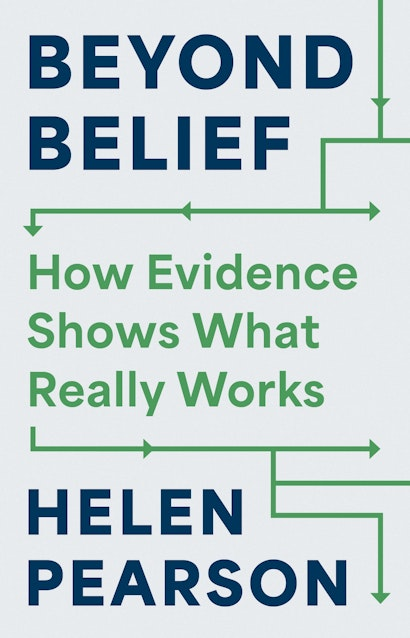
Beyond Belief: How Evidence Shows What Really Works – out April 2026
Beyond Belief

INDIVIDUAL
|
     INTERPERSONAL    :     SCIENCES               
HUMANISTIC --------------------------------------  MECHANISTIC      
SOCIOLOGY  :   POLITICAL 
|
GROUP
BEYOND BELIEF

How Evidence Shows
What Really Works


Beyond Belief: How Evidence Shows What Really Works is a book by science journalist Helen Pearson, published by Princeton University Press.
 
My source: 
Pearson, H. Trials that quietly changed our lives, Life&Arts, FTWeekend, 18-19 April, 2026. p.2 

Previously: 'belief' : 'evidence' : 'information disorder

Sunday, January 02, 2022

PHI MAGAZINE (Φ) - Liminal Issue [i]

 Submissions are OFFICIALLY open for our Liminal Issue.

PHI Magazine cover by Taudalpoi
The word ‘Liminal’ encompasses the quality of ambiguity or disorientation that occurs in the transitional stage of a process, boundary, or threshold. It comes from the Latin word līmen, relating to participants of rites of passage who no longer hold their pre-ritual status but have not yet begun the transition to the status they will hold when the rite is complete. During a rite's liminal stage, participants stand at the threshold. In many ways, this is where the world stands today.

We take all kinds of submissions: prose, photography, poetry, painting, opinion pieces, film or music—you make it, we want to publish it!

Submit to us before 14/02/2022 to be considered for our Liminal Issue.

For enquiries: submissions.phimag AT gmail.com

+++

WHAT IS PHI MAGAZINE (Φ)?

Φ Magazine is a quarterly publication aimed at showcasing the creative talents of Philosophy students across the globe outside the academic realm. Be it photography, painting, poetry, prose, or anything in between then it can find a place in the pages of Φ.

My source: 

Philos-L "The Liverpool List" https://www.liverpool.ac.uk/philosophy/philos-l/

@PhilosL @LiverpoolPhilos 

Thanks to Chiara at PHI Magazine for the cover image by Taudalpoi.

n.b. I will add a further post to relate the above call to threshold concepts and Hodges' model.

Monday, July 27, 2020

Survey: Dissertation on Artificial Intelligence and Record-keeping

My source:
records-management-uk AT jiscmail.ac.uk

Mon, 27 Jul at 14:10
 
Hi Everyone,

I hope everyone is doing well.

Thank you to everyone who has filled out my survey so far, the response has been fantastic. This is just a reminder that the closing date for the survey below is 3rd of August 2020.

As part of my Masters, I am writing a dissertation on the challenges faced by record-keepers in the digital age and how Artificial intelligence might be used to rectify these challenges.  I am currently conducting a survey to collect as many perspectives and opinions as possible from professionals working within the sector, where the data collected will form the basis of my dissertation research.

I would greatly appreciate you taking the time to complete my survey. There are 25 questions in total and it should not take more than 10-15 minutes to complete. All responses will be kept anonymous.

Please click the following link to start the survey: https://opinio.ucl.ac.uk/s?s=68574

Also, if you or your institution have implemented Artificial Intelligence and you have information that will help me in my dissertation please contact me via email: mohamed.tahayekt.19 AT ucl.ac.uk.

If you have any questions about this survey, or my research, please contact me at mohamedbentahayekt AT gmail.com or mohamed.tahayekt.19 AT ucl.ac.uk

Kind regards,

Mohamed Ben Tahayekt

Friday, January 17, 2020

Science and Critical Thinking: c/o New Scientist 2015*

individual
|
INTERPERSONAL : SCIENCES
humanistic ----------------------------------------------- mechanistic
SOCIOLOGY : POLITICAL
|
group - population
4. "That works for some, but all too often the reaction is: "I'll never need to use this once I've left school. That is being taken up by the Programme for International Student Assessment."

"critical thinking toolkits"

3. "... the desired combination of scientific literacy and critical thinking remains rare in public discourse. Perhaps that is because we hope that children will learn to evaluate claims rationally if we teach them science. ...

But mastery of the [scientific] facts alone is not enough for the internet age. Much of the copious online rhetoric is more viral than factual, so it is just as important that we know how to evaluate sources of information., and how to tell correlation from causation, and opinion from fact - in matters both obviously scientific and otherwise. "


1. "Here's a game to play next time you catch the news headlines. Count how many would dissolve away or be markedly different if the people writing them had evaluated the evidence more critically. Your count will probably be alarmingly high."

5. "But our societies still have a long way to go when it comes to reading between the headlines - or rewriting them."
2. "We have a long tradition of allowing civic affairs to be settled by persuasive rhetoric. That is inadequate for our modern society."

"a reflective citizen"

public understanding of
 terrorism, vaccination, climate change, chemical pollution ..


PISA is the OECD's Programme for International Student Assessment. PISA measures 15-year-olds’ ability to use their reading, mathematics and science knowledge and skills to meet real-life challenges.

My source:
Leader, Critical thinking, New Scientist, 12 December. 2015, 228: 3051. p.5.

*Yes, still also sorting magazines, papers, notes...
Blue (paper) bin repeatedly quite full.

Thursday, December 31, 2015

"Dual Legacies of a Health Career and a Baton to Match" BMJ Evidence Based Nursing Blog

Approached through twitter I was invited to write a blog post on a mental health nursing related topic of my choice. The final text manages to reflect the time of year, the time of my career, student's careers and the health career.

There is of course a great deal of other very informative content.


BMJ Evidence Based Nursing blog post

Twitter: EBNursingBMJ

Thanks to Gary Mitchell, Associate Editor.

Thursday, June 12, 2014

Psychiatric Bulletin - Letter: Psychiatry for medical students: need for a more holistic approach to teaching?

From: Psychiatric Bulletin -

http://pb.rcpsych.org/content/38/3/138.2.full

Kristina Rodney and Laura Wilkinson

Kristina Rodney and Laura Wilkinson are both ST4 medical students, Newcastle University, Newcastle, UK, email:k.rodney AT newcastle.ac.uk.

We are two medical students who wish to offer a perspective on undergraduate education and psychiatry.

During our student placement, we attended the old age psychiatry module at the Northern Deanery MRCPsych programme focusing on dementia and ethics. This was aimed at trainees and not specifically medical students but we were surprised to find that this was not above our level of knowledge. This prompted discussion of undergraduate psychiatry training more broadly, which we felt focused too heavily on the diagnosis of mental illness and less so on the holistic approach to the patient and their presentation as covered by the MRCPsych course. From our experience of undergraduate psychiatry we feel that the assessment by means of a logbook of conditions encourages students to find patients with a certain diagnosis, and in doing so overlooks the true essence of psychiatry. To our mind this incorporates the ability to consider all aspects of a patient’s life and formulating these, while demonstrating compassion for another person at a time of most need.

Through choosing a 6-week placement in old age psychiatry we have been able to explore the specialty more thoroughly and broadly than facilitated within the standard undergraduate programme, and we have realised how little of psychiatry we have been exposed to as undergraduates. We have become more aware of the importance of considering the patient’s personal and social circumstances alongside their diagnosis, and how these can influence each other. Specifically, the importance of a sound ethical approach to practice has been highlighted through the higher-level teaching we experienced, where the Mental Capacity Act was discussed in detail.

We believe that it would benefit undergraduates to experience a more realistic and rounded placement in psychiatry and truly consider the social implications of mental illness. As it currently stands, undergraduate education in psychiatry is oversimplified to focus on diagnosis and does not acknowledge the capabilities of medical students to adopt a holistic approach. An opportunity to consider all aspects of a psychiatrist’s role may encourage more students to consider a career in this field.

<>

I have contacted the authors of this letter to inform them of Hodges' model and its scope in assuring holistic and integrated care. The model could also facilitate curriculum development. The authors of the letter are not endorsing Hodges' model, I am seeking to highlight the need for such a resource.

Thanks to:
Lucy Alexander
Rights and Permissions Manager
Royal College of Psychiatrists

Monday, April 15, 2013

HSJ: The NHS and fundamental change ...

 ... governments typically try to will the end but not the means: they try to shift the habits of the NHS while protecting buildings and people; or in Lord Darzi's pithy phrase, they change "the anatomy of the NHS rather than its physiology". p.16.

Finding the pith in Hodges' model (and the problem of refactoring - where would you like to start?):

INTERPERSONAL : SCIENCES
SOCIOLOGY : POLITICAL

individual
PURPOSE
cognitive geography
(the 'physiology' of mindsets)
Anatomy & Physiology
PROCESS 
structure, buildings,geography
time, events, space
 (habituated - )
PRACTICE
(collective purposes)
team integration

the NHS (organisation)
POLICY
workforce, funding 
local, regional, national, global
group - population

Seddon, N. (2013) Opinion: Learning from international innovators, HSJ, 12 April. 123: 6346; 16-17.
