Hodges' Model: Welcome to the QUAD: decision-making

Hodges' model is a conceptual framework to support reflection and critical thinking. Situated, the model can help integrate all disciplines (academic and professional). Amid news items, are posts that illustrate the scope and application of the model. A bibliography and A4 template are provided in the sidebar. Welcome to the QUAD ...

Showing posts with label decision-making. Show all posts

Thursday, June 04, 2026

Individual and shared mental models c/o Proctor, & Vu, (2023).

The first day of the conference on 'Ecologies of Care' 4th-5th June is complete. It was helpful to contribute early and then focus on the programme. The questions and acknowledgement have made the (personal) effort worthwhile. Tomorrow also looks promising. There was an emphasis on attention which I tried to reflect and featured in a fascinating keynote by Professor Yves Citton. I will check the sources highlighted; and tomorrow, inquire about a point made re. use of socio in contrast to social.

Regards ongoing reading, perhaps, the evidence to support Hodges' model in practice is already out there? There might be a caveat, that the literature may suggest (if does not yet confirm) that if taught cross-curricula and professional groups then Hodges' model can function as a meta-model? 

What do you think of the following from a chapter on 'Social attention and team performance' (with my emphasis)? :

'... Other two-person team examples include doubles tennis partners and pairings of an airline pilot and copilot. Larger teams can be found in the numerous team sports surgical teams, busineses, and research teams of many scientific laboratories. For teams, coordinated performance is crucial, which becomes more difficult when teams extend to three or more people. As such, teams need to have shared mental models representing the team knowledge (Gardner et al., 2017), which support team situation awareness (Demir et al. 2017).
 
The concept of individual mental model refers to understanding a particular event on the basis of the activation of relevant schemas from long-term memory and, sometimes, simulation of possible scenarios (see also Chapter 10). Bower and Morrow (1990) pointed out that a crucial role in mental models is to shift and focus attention. ...
 
Shared mental models refer to collective understanding among team members of the task to be performed and how it can be accomplished. This understanding includes the responsibilities of the individual team members and dependencies between teammates on other members progress. The term team mental models is sometimes used when the context is teamwork that needs to be coordinated and executed (Jonker et al., 2010). The idea is that teams will perform better if they share mental models. ...
 
The surgery intern study illustrates that shared mental models are learned, leading to the question of how this learning can be facilitated.' p.368. ...
 
'Team leadership can be effective at getting members to be engaged in activities that will promote shared mental models. Boies and Fiset (2018) found evidence that leaders can facilitate the development of shared mental models by involving team members in the consideration of the to-be-accomplished task and their roles in its accomplishment. This involvement, again, likely directs members' attention to information relevant for achieving team goals and enables more domain-specific group discussion, which then furthers the emergence of a shared mental model. ...
 
Situation awareness is a broader concept than mental models, focusing on an explicit understanding of events and contextsShared situation awareness differs from individual situation awareness discussed in Chapter 9, in the information required for operators to have effective coordination (Chiappe et al., 2016). For example, paramedics delivering a patient to an emergency room need to coordinate with the hospital and its staff members to ensure that the hospital has the capacity and that the doctors receiving the patient have the vital information they need to treat the patient. Once the patient is in the emergency room, nurses, doctors and technicians need to coordinate with each other to make sure that the patient is being properly cared for.' p.369. 

Proctor, R. W., & Vu, K.-P. L. (2023). Social attention and team performance. In R. W. Proctor & K.-P. L. Vu, Attention: Selection and control in human information processing (pp. 343–374). American Psychological Association. https://doi.org/10.1037/0000317-012

Tuesday, April 28, 2026

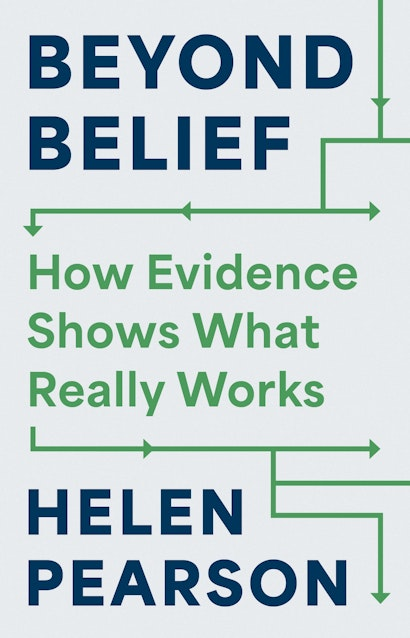
Book: "Beyond Belief - How Evidence Shows What Really Works"

Beyond Belief: How Evidence Shows What Really Works – out April 2026
Beyond Belief

INDIVIDUAL
|
     INTERPERSONAL    :     SCIENCES               
HUMANISTIC --------------------------------------  MECHANISTIC      
SOCIOLOGY  :   POLITICAL 
|
GROUP
BEYOND BELIEF

How Evidence Shows
What Really Works


Beyond Belief: How Evidence Shows What Really Works is a book by science journalist Helen Pearson, published by Princeton University Press.
 
My source: 
Pearson, H. Trials that quietly changed our lives, Life&Arts, FTWeekend, 18-19 April, 2026. p.2 

Previously: 'belief' : 'evidence' : 'information disorder

Wednesday, April 22, 2026

BCS SPECIALIST GROUP ON ARTIFICIAL INTELLIGENCE (SGAI) - Ethical and Legal Aspects of AI

The next in our series of free evening virtual seminars will be on Wednesday May 6th from 6 p.m. to 7.30 p.m. (UK time). The topic will be Ethical and Legal Aspects of AI.
 
The speakers will be

  • Prof. Bernd Stahl (University of Nottingham) on 'Artificial Intelligence for a Better Future - An Ecosystem Perspective on the Ethics of AI'
  • Prof. Dr. Griet Verhenneman (Ghent University, Belgium) on 'Patch Day in Brussels: How the EU AI Act ran into the unusual scenario of reform prior to application' and
  • Dr Uchenna Nnawuchi (Sheffield University) on 'The “Why” being Algorithmic Decision Making: Explainability as the Backbone of AI Governance'.
The seminar will be chaired by Dr. Carlisle George (Middlesex University).
 
The virtual seminar series is free and open to all. For further details and for the zoom link to use go to https://bcs-sgai.org/seminars/2026-05-06/.
 
Details of future SGAI events will be placed on the website at https://bcs-sgai.org as they become available. To register to be sent information about future SGAI events by email go to https://www.bcs-sgai.org/register/.
 
Max Bramer
Chair, BCS SGAI
----------------------------------------------------
Chair, British Computer Society Specialist Group on Artificial Intelligence
Emeritus Professor, School of Computing, University of Portsmouth, UK
http://www.maxbramer.org

My source: BCS SGAI list

Tuesday, March 17, 2026

Be careful - the laws you wish for ...

INDIVIDUAL
|
    INTERPERSONAL    :     SCIENCES               
HUMANISTIC --------------------------------------  MECHANISTIC      
SOCIOLOGY  :   POLITICAL 
|
GROUP


LETHAL AUTONOMOUS 
WEAPON SYSTEMS


laws


Reminder: The FT View, Iran and the rising perils of AI in warfare, FTWeekend, 14-15 March, 2026, p.10.

Tuesday, March 10, 2026

Did Mr Hodges ever say "Welcome to my World?" (i)

The source for the post:

'Move Over LLMS! AI Legends Yann LeCun and Alex LeBrun
Debut AMI Labs' Bold Ambitions for World Models in Healthcare

- reminds me that Hodges' model provides a potential 'World Model'. Not just one world, but (seriously and non-trivially) several, in the form of the  ...

  • Nurse's
  • Student's*
  • Patient's
  • Carer's
  • Team Leader's / Managers
  • and yes the team's too - the sum total of all that effort. ...

 Hodges' model is applicable in assessment, planning, interventions, evaluation and review. The key of course, is as was as computers first arrived on wards and clinics: the human users of Hodges' model.

Of course, each comes with their own, hard won (see what I did there!) model, that needs extending by several intensive years of study. 

Situated and person-centred, Hodges' model can assist all its users, to 'incorporate the learned dynamics of the environment', however it presents: medicine anyone? What about surgical, psychiatry, paediatrics, orthopaedics, or gynaecology? You get my drift?


Wenninghoff, N., Schwammberger, M. (2026). Interpretable World Model Imaginations as Deep Reinforcement Learning Explanation. In: Guidotti, R., Schmid, U., Longo, L. (eds) Explainable Artificial Intelligence. xAI 2025. Communications in Computer and Information Science, vol 2578. Springer, Cham. https://doi.org/10.1007/978-3-032-08327-2_7  

 *And not necessarily a student nurse, but possibly medical, social work, psychology, probation, ... ai!

Mr Brian E. Hodges (RIP)

Thursday, January 29, 2026

Paper: 'Intra-Personal Compromises'

ARGUMENTA

Issue 21

November 2025

https://www.argumenta.org/issue/issue-21/

Intra-Personal Compromises  

Juha Räikkä

University of Turku 

Abstract

The most usual philosophical questions about compromises have been those related to inter-personal compromises, in which parties are compromising with each other, rather than intra-personal compromises, which are often psychologically demanding. This paper aims to fill the gap in the discussion and briefly analyze the nature of intra-personal compromises. The starting point here is the assumption that inter-personal compromises cannot be made without intra-personal compromises, although intra-personal compromises are common even when they are not linked to inter-personal compromises. The main question addressed in the paper is whether the intra-personal compromises that we accept in all kinds of contexts are similar to those intra-personal compromises that we make when we compromise with others. I argue that they are more or less similar, although there are also some distinctive features in intra-personal compromises that are involved in inter-personal compromises. When a person makes an intra-personal compromise in the context of an inter-personal compromise she is forced to act under uncertainty, as she cannot know beforehand what options are really available. The price of the compromise is known only after the negotiation process. This is a special feature, or so I will claim. 

Keywords: Inter-personal compromise, Intra-personal compromise, Bargaining, Uncertainty. 

Räikkä, R. 2025, “Intra-Personal Compromises”, Argumenta 11, 1, 149–162.
https://www.argumenta.org/wp-content/uploads/2026/01/Argumenta-11-1-Juha-Raikka-Intra-Personal-Compromises.pdf
 

For a long time I have viewed the INTERPERSONAL domain of Hodges' model as being concurrent, interchangable, working as the INTRAPERSONAL domain. This paper is a helpful discovery, c/o Philos-L "The Liverpool List" which is run by the Department of Philosophy, University of Liverpool https://www.liverpool.ac.uk/philosophy/philos-l/

There are several examples/cases discussed. While brief, a HOSPITAL CEO example is relevant to studies for Hodges' model, as with, a CRITICAL CITIZEN:

'The above examples are rather similar but have small differences. In the ‘Judge’ example, the overriding principle is based on the importance of institutional rules. In the ‘Hospital CEO’ example, the main concern and the strongest value is pragmatic. In the ‘Critical Citizen’ example, the question is about omission rather than action.' p.157. 

The observation about the CEO speaks volumes, across public and private health sectors (and social care?). There is no discussion of reflection, reflexivity, or critical thinking explicitly. But individual, and collective distinctions, and impacts are explored, especially responsibility and mutuality. Three arguments precede concluding remarks. Further progress might be made exploring and relating these to the concepts of bargaining, uncertainty and compromise through Hodges' model and identity: both person-al and organisational?

Friday, December 19, 2025

ii Learn your lines and the hyperplanes will follow

With these lines, partitions, axes and domains in mind, when a clinical practitioner is presented with a new person, whether as a patient, client, or carer ... they can, using Hodges' model (and other tools!) approach their assessment in an open and receptive manner.

This means that the information provided by the 'patient' can be readily fielded, captured whatever the context and situation.

As noted previously, my study of Hodges' model began in the late 1980s. Application in my work as a community mental health nurse, with an interest in informatics followed quite naturally(?). Primed as I was, for various reasons to carry this forward, I also carried a mathematical learning disability. At the risk of getting bogged down in my thought, use and approach to Hodges' model I need a challenge.

Mathematics is the challenge for me. It's fascinating how we have in-built 'calculators' that can help us catch a ball, and judge fairly well where to throw a ball for interception. There seems then to be an informal or naïve  mathematics, at work unconsciously. Does the same apply to Hodges' model? If so, how can I isolate, and identify it?

  • Is it represented somewhere, implicit in Hodges' model itself?
  • Is it (once again) to be found in the user of the model?
  • Is it (more likely, and obviously) a combination of these two?
  • Or, is it a product of the system, or a series of systems? 

I was reminded of what is a Sober toy, several years ago:

Is Hodges' model a selection machine?

All four original purposes of Hodges' model:

  1. Person-centred, integrated and holistic care;
  2. To bridge the theory - practice gap;
  3. To facilitate reflection and reflective practice;
  4. To support curriculum development;

- are concerned with conjunction and choice, selection. So is life itself through distinction, difference, and differentiation.

Hodges' model is a selection machine, that is both fhuman and machine driven.

A clinician may obtain the referral information through an email, a history of previous contacts can be retrieved from a clinical information system; the context and purpose supporting access to the information.   

A whole series of blog posts describe the role of Hodges' model to help assure parity of esteem across mental and physical health. What does this mean in practice?

For the practitioner, they take selected data from the referral, a history - if available, an initial telephone contact, a conversation with a colleague who remembers the person re-referred and starts to populate Hodges' model. What are the psychological concepts that arise? What are the physical?

If a referral in whatever form, or a database record can be viewed as a bag-of-words, then Hodges' model is a collection of care concepts. Four bags then. Sets or classes. An experienced user of Hodges' model may position care concepts that throws attention on the INDIVIDUAL↔GROUP axis. Lying between the INTRA- INTERPERSONAL and SCIENCES domains, this axis (like all the others) earns its keep. There is work to be done that is also of interest in machine learning:

'A support vector machine (SVM) is a supervised machine learning algorithm that classifies data by finding an optimal line or hyperplane that maximizes the distance between each class in an N-dimensional space.

SVMs were developed in the 1990s by Vladimir N. Vapnik and his colleagues, and they published this work in a paper titled "Support Vector Method for Function Approximation, Regression Estimation, and Signal Processing"1 in 1995.' 

https://www.ibm.com/think/topics/support-vector-machine

Strange to think that perhaps the VERTICAL axis and others in Hodges' model are not precisely S-N-E-W in their bearing? There may also be several vectors at work in fact?

Image: c/o https://www.ibm.com/think/topics/support-vector-machine

The word 'naïve' has been bubbling away for a good-many years. A close colleague Silvana Bettiol, Univ. of Tasmania kindly read my draft on Hodges' model as a mathematical object, and mentioned the introduction points to Bayes theorem even if informally. Even in those initial 'clinical' encounters (and social meetings, that attend to empathy, rapport and engagement...) complex judgements are being made, beliefs tested, from what is often partial and disparate sources of information.

Checking other leads led to Frequentist and Bayesian Approaches

'Statistical inference is a series of methods used to make decisions and draw conclusions based on available data. There are two primary approaches for inference: Frequentist and Bayesian. Each framework relies on a different philosophical perspective on probability and modeling, leading to different techniques and interpretations. Each has its own strengths and drawbacks, so understanding the distinctions between them is vital for researchers, data scientists, and statisticians who aim to choose the most suitable approach for their specific analysis.'
https://www.statology.org/comparing-frequentist-and-bayesian-approaches/

More reading required and threads to run.

Earlier this week I posted re. Cromer's book -

Cromer, A. (1997) Connected Knowledge: Science, Philosophy, and Education, Oxford: Oxford University Press

Before passing the book on, p.198, Chapter 8 notes, #4:

'"Understanding" is a commonly used English word which has no precise meaning. It's sometimes taken to mean the ability to apply knowledge to new situations. In this sense, it is a very high-level skill. Benchmarks for Science Literacy says, "Learning to solve problems in a variety of subject-matter contexts, if supplemented on occasion by explicit reflection on that experience, may result in the development of a generalized problem-solving ability that can be applied in new contexts' (American Association for the Advancement of Science, 1993)." The key word here is "may." 'We really don't know how to help students develop a generalized problem-solving ability, or whether there is such an ability apart from mere knowledge of many different problem-solving strategies. Whatever the case, since we do know how to teach students to solve specific, problems. this should be the primary focus of science education' p.198.

Ack. IBM.

Thursday, December 18, 2025

Learn your lines and the hyperplane will follow i

Take an empty [rectangular] space (A4 paper in landscape)

Blank! Isn't it?

Take a line. Yes, call it that.

Divide the space vertically, and equally, in two. 

Do this again but horizontally.

You can call these lines, partitions if you wish?

Or, as per adopted convention here, axes.

Now, there are four empty spaces.

These spaces can be called quadrants, planes, or domains. The latter term usually adopted here.

Labels can be decided, and assigned to the axes and the resulting domains.

Given a purpose, in practice (initially) the 'empty' spaces have the ability to assign significance to what may be placed within them.

Such decisions are non-trivial, in the sense that context and situation determine what follows, influenced by objective and subjective considerations.

The domains can contain concepts, or keywords with decisions driven by categorical reasoning.

The content of the domains can also be viewed as classes and sub-classes.

ii to follow (with revision here?)

Wednesday, December 10, 2025

Problem solving, case formulation and policy formulation

On W2tQ this year, and possibly in a previous paper, or conference presentation, I've stated that the nursing process is basically a problem solving algorithm. Nothing profound there of course. 

'Problem solving' is a developmental threshold and an evolutionary skill obvious in humans, with learning passed on across generations. Evidence of problem solving in animals and nature is becoming increasingly apparent; with examples over recent decades of problems solved not witnessed before.

In healthcare, and psychotherapy more specifically, we shift to case formulation. Again a step-wise process to arise at a sufficiently complete rationale for therapy. Ideally, this extends beyond the individual. As an parent, grandparent, guardian, teacher, supervisor ... teaches a child so therapy is an opportunity for learning and, it must be added, unlearning.

Returning to (and passing on):

Hague, R., & Harrop, M. (2007). Comparative Government and Politics (7th ed.). New York, NY: Palgrave Macmillan.

Chapter 18 (pp.377-395) concerns 'Public Policy'. Clearly, here there is a shift from the individual to the collective, population and citizenry. The chapter's second page on 'Initiation and Formulation' quickly provides a flowchart 'Figure 18.1 Stages of the policy process'. Box 18.1 informs readers about 'Rational and incremental models and policy-making' (p.380):
'The key contrast between the two models is this. The rational model views policy formulation as emerging from a systematic search for the most efficient means of achieving defined goals. By contrast, the incremental model sees policy as emerging from a compromise between actors who have goals which are ill-defined or even contradictory. Where the rational model seeks the best policy in theory, an incremental framework seeks out a practical policy acceptable to all the interests involved.' p.380.
The book highlights Simon (1983) as a source for the rational or synoptic model:
 
Simon H.A. (1983) Reason in human affairs. Oxford: Basil Blackwell.

Plus, for the incremental model:

Lindblom, C.E. 1979. Still muddling, not yet through. Public Administration Review 39: 517–526.

If needed, online, you will find accounts and diagrams on problem solving, the nursing process, case formulation and policy formulation. That's quite a family is it not? 

While not referred to as explicitly today, the nursing process (now routinized) should address parity and integrate care across mental and physical health. The individual (person, patient) should be assessed and care planned with their social and community context taken into account. Collaboration in care should help assure that this is indeed the case. The nursing process in the sociological domain acknowledges the role of parents, guardians, and families as informal carers. The social care sector can also be represented and further the objectives of a more open and integrated care community as per the local situation. While not added to the sciences domain; case formulation should also factor in the physical and political. 

Politically, are all instances of problem solving, and formulation recognised for their importance and influence on outcomes and effectiveness, economy, efficiency (another 'box' p.357), plus efficacy? Are services politically afforded the resources, as defined across the domains of Hodges' model required to deliver, improve and change (achieve sustainability, educational, preventive)? 

The elephant here of course are the determinantS. Ultimately, all these forms of problem solving should be at 'home' in the political domain, but they are rarely there. It is not just the practitioner who can make the difference - be the difference.

Enough of l-implementation

Policy needs to be fit for 21st century purposes, and not hollowed-out but allowed out - beyond the legislative walls where it can make a real difference.

individual
|
INTERPERSONAL : SCIENCES
humanistic -------------------------------------------  mechanistic
SOCIOLOGY : POLITICAL
|
group-population

Nursing process

Case 
formulation

Nursing process

Nursing process

Case 
formulation


Policy
formulation


Tuesday, September 02, 2025

12TH ANNUAL TANZANIA HEALTH SUMMIT 2025 (reminder)

THEME: "Harnessing Data Utilization and Technologies to Accelerate Universal Health Coverage"

INTRODUCTION 

Healthcare systems are evolving worldwide through the integration of health data and technologies. This integration is crucial for advancing Universal Health Coverage (UHC), particularly in developing nations. Data forms the foundation, encompassing patient information, treatments, and outcomes. Technologies on the other hand serve as tools like cloud storage, IoT devices, and blockchain that enable efficient data collection and processing. AI, a subset of digital technologies, then transforms this data into actionable insights through machine learning and predictive analytics, improving healthcare delivery and decision-making. The healthcare AI market's projected growth of 36.8% CAGR from 2025 to 2030 (Matsukatov, 2024) reflects its potential to revolutionize healthcare delivery, from diagnosis to resource allocation. Tanzania exemplifies how this integration impacts developing healthcare systems - with its UHC service coverage index expected to exceed 48% by 2025, the country is working to bridge healthcare access and quality gaps (WHO, 2025). The upcoming 12th Tanzania Health Summit will address how these components work together in low-resource settings. The focus will be on practical applications: health technology platforms for data management, technology infrastructure for connectivity, and AI-driven analysis for disease prediction. This integrated approach shows how developing nations can leverage technologies to accelerate progress toward comprehensive healthcare coverage despite the current resource constraints. 

CONTEXT 

Tanzania's healthcare system exemplifies both the challenges and opportunities in leveraging digital technology to achieve Universal Health Coverage in sub-Saharan Africa. With a doctor-to-patient ratio of 1.3:10,000 (against WHO's recommended 1:1,000), the country has strategically embraced digital innovation to bridge critical healthcare gaps (WHO, 2025). The Tanzania Digital Health Strategy (2019-2024) serves as the blueprint for this digital transformation, focusing on three key areas: health information systems, electronic medical records (EMRs), and data-driven decision-making (Ministry of Health, Tanzania Digital Health Strategy; 2019-2024). This initiative has shown measurable progress, with EMR deployment reaching 66.57% of healthcare facilities nationwide (PORALG, 2025). The implementation of DHIS2 (District Health Information System 2) has enhanced national health data collection and analysis, notably improving disease outbreak response capabilities.

Conference details 
Text: Concept note

Thursday, April 10, 2025

'Best Interests' - Audio Drama by Sasha Hails


by Sasha Hails


Peter Polycarpou (Read by), Gerard McDermott (Read by), Jonathan Forbes (Read by), James Lailey (Read by), Alex Tregear (Read by), Susie Riddell (Read by), Elaine Caxton (Read by)


A BBC Radio 4 dramatisation


'Two new dramas which get inside the emotional realities of dealing with ethical dilemmas. When a confused young man with no I.D. and a Doctor Who fixation is brought into hospital, the staff have clear rules about how decisions can be made on his behalf. But when he starts to make his own wishes clear, are they right to listen?

Starring Gunnar Cauthery, Clare Perkins, Simon Bubb, and Carl Prekopp. With Peter Polycarpou, Gerard McDermott, Jonathan Forbes, James Lailey, Alex Tregear, Susie Riddell and Elaine Claxton. Script Consultant: Jim Blair, St George's Healthcare NHS Trust. Produced and directed by Jonquil Panting.'


My source: 

Jim Blair @jimgblair - https://x.com/jimgblair/status/1906993515038429252

Saturday, February 15, 2025

'Life's compass' ...

'... I have been thinking a lot about the responsibilities of leadership. How do people in positions of power reach decisions and do they fully consider the consequences of these decisions? In questioning how someone chooses to lead, I'm also asking how that individual navigates the possible courses of action, and what kind of compass is being used to guide them. It has made me think about how any of us choose to navigate our way through life and where we look for a sense of direction. I wonder what we might change about the choices we make if we were more reflective about what serves as a compass in our lives.'

'"The Invention of the Compass" is attributed to an anonymous painter of the late 16th century, although there exists a roughly contemporaneous plate of the same title, and of an almost identical image, engraved by the Dutch artist Jan Collaert the Elder. In the original painting an old man with a long white beard, and dressed in a voluminous red and brown cloak, sits behind a large table in the centre of a room. As well as a canopied bed and another desk spread with books and scientific instruments, there is a model, or vision perhaps, of a carrack sailing ship hanging from the ceiling. There is also a large round compass device that sits heavy on the floor on the left foreground of the canvas. ...'

'It is as if this painting (Caravaggio) intended to serve as a compass, helping to move our steps and actions in the direction of caring for others. This is a powerful idea, and it suggests that all images contain that potential to influence how we live. Where we choose to direct and keep our gaze to some extent can determine how we permit our lives to be guided, if not in a physical sense then toward a value system that can end up having an impact on the way we engage with the wider world.' (My emphasis)

Ack. Enuma Okoro, Life's compass, The art of life, Life&Arts, FTWeekend, 1-2 February 2025. p.2. (Still need to subscribe, marvellous reading!)


Caravaggio, The Seven Works of Mercy


The Invention of the Compass


INDIVIDUAL
|
      INTERPERSONAL    :     SCIENCES               
HUMANISTIC  --------------------------------------  MECHANISTIC      
 SOCIOLOGY  :    POLITICAL 
|
GROUP

moral compass
personal values
my choices

maps - compass
position - navigation
direction - distance
degrees of freedom

the public
the public good
group think


leadership
power
political freedom


Enuma Okoro, Life's compass, The art of life, Life&Arts, FTWeekend, 1-2 February 2025. p.2.

Images: 

New Inventions of Modern Times [Nova Reperta], The Invention of the Compass, plate 2
https://collectionapi.metmuseum.org/api/collection/v1/iiif/659663/1403273/main-image

By Caravaggio - Unknown source, Public Domain, https://commons.wikimedia.org/w/index.php?curid=10286196

Previously:

'compass' :: 'map'

Friday, December 20, 2024

New citations - Practice Without Theory: A Philosophical Inquiry into Contemporary Nursing in South Asia

It is always welcome news when I learn of a paper (Asmat, 2024) recognising and citing Hodges' model from the nursing and wider literature. In this case an educational journal, focussed upon health and social care:

Kainat Asmat (2024). Practice Without Theory: A Philosophical Inquiry into Contemporary Nursing in South Asia: Nursing Practice without Theory. International Journal of Practice-based Learning in Health and Social Care. 12. 125-131. 10.18552/ijpblhsc.v12i2.1068. 

I have quoted at length, but it is good to have a different 'excuse' (not just extending the tail of a relevant book, or paper). ... 

'Similarly, Hodges' Health Career Model exemplifies its use as a tool for reflection during clinical assessments, care planning, and decision-making processes (Doyle & Jones, 2013). The model encourages nurses to reflect on their practice through multiple lenses, ensuring a comprehensive understanding of patient needs and care strategies. The Interpersonal domain emphasizes the relational aspects of nursing, including communication and empathy. The Sociological domain highlights the impact of societal factors and social determinants on health. The Scientific domain focuses on evidence-based practice and the integration of scientific knowledge into care. Finally, the Political domain addresses the influence of healthcare policies and organizational structures on contemporary nursing practice. In contemporary nursing practice, a nurse might use Hodges’ model to provide holistic and personalized care by considering the patient's social background, the scientific basis of their care, interpersonal dynamics, and relevant political or policy-related factors. According to Jones (2017), using conceptual models like Hodges' can greatly enhance nurses' critical thinking, fostering a reflective and engaged nursing workforce.' p.126.

'Collectively, nursing theory remains a cornerstone of contemporary nursing practice, providing an essential framework that guides clinical decision-making, promotes critical thinking, and supports reflective practice. Peter Jones, in his seminal works, underscores the critical role of theoretical models in enhancing nursing practice. His insights provide compelling evidence for the continued relevance of theory in contemporary practice. In "Humans, Information, and Science", Jones (1996a), articulates the interrelationship between human factors, informational processes, and scientific principles in healthcare. He argues that nursing, as a discipline, uniquely integrates these elements to form a comprehensive approach to patient care. This integration is fundamental in moving beyond task-oriented care towards a practice that is reflective and evidence-based. Jones emphasizes that without a theoretical foundation, contemporary nursing practice risks becoming fragmented and superficial, lacking the depth required for truly effective patient care. Similarly, in "An Overarching Theory of Health Communication",  Jones (1996b) explores the necessity of robust communication theories in healthcare. He posits that effective communication is not merely a skill but a complex process grounded in theoretical understanding. This perspective is particularly relevant to nursing, where communication is pivotal in patient interactions, interdisciplinary collaboration, and health education. Jones’ work illustrates that theoretical frameworks in communication enhance nurses' ability to engage with patients and colleagues thoughtfully and effectively, fostering better health outcomes and professional practice. Jones’ analyses reinforce the argument that nursing theory is indispensable in contemporary practice. Likewise, McEwen and Wills (2021) also highlight that nursing theory is integral to the development of nursing as a discipline. They assert that without the theoretical underpinnings, nursing risks regressing to a technical occupation devoid of critical thinking and judgment that characterize nursing professional practice. Thus, the survival and progression of nursing as a distinct profession depend on the continued integration and application of theory in contemporary nursing practice.' p.127.

In addition, the short conclusion is supportive and encouraging for ongoing efforts. As with all discovered citations thus far, I'm not sure of how Kainat Asmat located the publications on Hodges' model? A literature search - no doubt, or perhaps the blog's sidebar listing? The selection made, fits the author's purpose. 

Over the years, I've tried to indicate the scope and scale that Hodges' model can 'reach'. Especially in self-care, family, local, global and planetary health. Now, c/o Asmat (2024), Hodges' model has a much valued connection with South Asia. The required scope of Hodges' model (its inter- and transdisciplinary potential^) is also conceptual, referred to previously as holistic bandwidth. Hence the model's relevance and potential in theory and practice.

Many thanks to Kainat Asmat and the journal's editorial team.*

I will read again and return to the paper in our New Year.

Listed in the bibliography:

Doyle, M., Jones, P. (2013). Hodges’ Health Career Model and its role and potential application in forensic mental health nursing. Journal of Psychiatric and Mental Health Nursing. 20, 7, 631-640.
http://onlinelibrary.wiley.com/doi/10.1111/j.1365-2850.2012.01961.x/abstract

Jones, P. (1996a) Humans, Information, and Science, Journal of Advanced Nursing, 24(3),591-598. https://onlinelibrary.wiley.com/doi/abs/10.1046/j.1365-2648.1996.23321.x

Jones, P. (1996b) An overarching theory of health communication? Health Informatics Journal,2,1,28-34.

Where I have now added this paper.

^Still on the agenda as a paper; as with 'revisiting' 1996a. Happy to support others in referencing, or writing more specifically about Hodges' model (a case study, mapping exercise?); especially student nurses, carers and personnel in social care and early career researchers. To which, I'd better add later career nurses, allied disciplines, nurses returning to practice (surely a UK and global policy focus?) and proof of reading (your choice of course on the paper, chapter, book...); and reflection for continuing professional development (CPD). If you're still unsure, it was a relief to put the 'pen' down, well writing is still a major challenge (and pain) here. 

*And, of course - Brian E. Hodges RIP - too.
https://hodges-model.blogspot.com/2023/08/brian-e-hodges-r-i-p.html

Wednesday, November 20, 2024

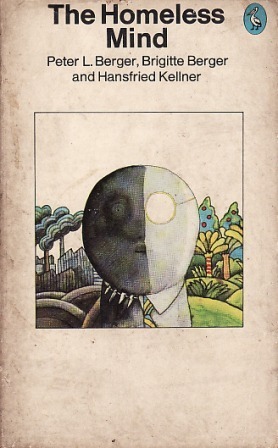
Hello? Is anyone there? 'The Homeless Mind'

individuality
|
INTERPERSONAL : SCIENCES              
humanistic ------------------------------- mechanistic
SOCIOLOGY : POLITICAL   
|
group

'Put differently, the componentiality of the cognitive style pertaining to technological production extends to identity. Again, a specific kind of double consciousness develops. In this case the dichotomy is between concrete identity and anonymous identity. The individual now becomes capable of experiencing himself in a double way: as a unique individual rich in concrete qualities and as an anonymous functionary. This dichotomization in the subjective experience of identity makes it possible for the individual to establish subjective distance vis-à-vis certain features of this identity.9 

For example, the individual will now experience that portion of his identity that contains his anonymization as a 'worker' as being 'less real' than his identity as a private person or family man. Since each portion of identity relates to specific roles, it now becomes possible for the individual to perform some of these roles 'tongue in cheek'. The componentiality of identity, as the componentiality of social relations, makes possible an 'engineering' practice. This time what is involved is the 'engineering' of one's own self. Those aspects of identity that a defined as 'more real' must be protected against threats coming from the 'less real' components of identity.' p.37-38.


Helpful reference to ideas of multi-relational synchronization and institutional vectors and how our mind's became homeless.

Also encouraging, even though 'historic', discussion on life plans and life planning.

'A basic presupposition is that life careers are not firmly fixed but are at least relatively open. Put simply the individual is faced with a number of alternative careers, especially in his " younger years, and therefore must make decisions about these available options. It is possible for the individual to imagine, himself as having different biographies. This possibility has both positive and negative consequences for the emotional economy of the individual. Positively, it may give him a feeling of frees dom to shape at least certain parts of his life. Negatively, it increases the likelihood of frustration regarding specific careers One is, after all, less likely to resign oneself to a particular situation if one believes that other situations are, in principle, possible.' p.67.
'Implicit in this scale of probabilities is a general 'sociology', on whatever level of theoretical sophistication. The individual has a `map of society' within which he can locate and project himself in terms of both past biographical recollection and future projects. The individual's life is perceived as a trajectory across this 'map'. There is also a large body of factual knowledge, most of which is 'weighted' in terms of the individual's life plans. Thus if a particular career appears to the individual as a realistically plausible project, he will have more factual knowledge about it than about a career in which he can participate only in pragmatically irrelevant fantasy. In other words, a good deal of background knowledge is related to 'anticipatory socialization'. p.68.
'However vaguely this may be defined, there is the underlying concept of life plan, both for the individuals and for the a family unit. This life plan is the totalization of all the relevant timetables, their grand sum and their integrative meaning In modern society, such life planning has become a value in itself. Its absence is commonly an occasion for reproach. The family unit thus operates as a life-planning workshop.' p.69.

'There is a general expectation of justice. It is expected that everyone in the relevant category - as, for example, those en-titled by law to a passport - will receive equal treatment. It is, of course, understood that certain persons may be excluded from this relevant category - for example, resident aliens or convicted criminals. It is also understood that the bureaucratic procedures may codify certain preferences, for example, in favour of diplomats or other people travelling on urgent government business. Once the categorial system has been established, however, the presumption of equality holds within each category. In the most general way, bureaucracy is expected to conform to the Roman principle suum cuique. An implication of this is that there will be no favouritism or any other intrusion of personal bias in the bureaucrat's handling of each client's case. The bureaucrat is expected to handle every case sine ira et studio. In other words, there is the general expectation that bureaucracy will operate impersonally and with 'affective neutrality'.2 These considerations bring us to an important point: unlike anything discussed in the preceding chapter, the cognitive style of bureaucracy contains a moral quality, not just as a limiting factor (after all, there are also moral assumptions about technological production - for example, that no one will be killed in the course of it), but as an intrinsic part of its own structure of consciousness. The source for this moral element is probably to be sought in the primary social location of bureaucracy in the political sphere.' pp.52-53.


Berger, P. L., Berger, B., & Kellner, H. (1973). The homeless mind: Modernization and consciousness. Penguin. 

Cover image: https://www.goodreads.com/book/show/3368465-the-homeless-mind

9 This is an amplification, by way of phenomenological description, of what Erving Goffman has called 'role distance'.

2 This term was coined by Talcott Parsons.

See also: 'homeless'

Wednesday, August 07, 2024

"How did you get that answer? Show your working out!"

As students of - math, maths, mathematics (pick one!) or arithmetic, algebra - know only too well: Learning, no doubt, through a series of prompts, especially if numerically challenged:

The way you derived your answer is an important - the most important part of the exercise. It is the exercise in most cases.

As may be apparent here on W2tQ, in addition to visual methods, mind-mapping, diagrams and computers, the professional basis for the study and the draw of Hodges' model was models of care and nursing theory. I've blogged previously about if we stress the theoretical, this variously invites yawns, and critique (always welcome), if not ridicule from outside.

In practice we seem struggle to do the ideal. This is one aspect of the theory-practice gap; bridging this gap was one reason for the creation of Hodges' model. What the student health professional learns in the  class/lecture theatre/online, may not be reflected and realised 100% in practice. 

On clinical placements the real-world intervenes, upsetting the academic comforts. Suddenly the armchair hypotheses do not sit so comfortably. Reality bites. Are there enough staff, is the skill-mix 'ideal'. Patients present their own variables. Which are also often at least binary (and invariably more), to include carers, family, with prior experiences. There are specific life experiences and situations of the patient; and yes, in plural.

Competence with paperwork, the electronic health record (EHR) is key to a student's progress:

From communication skills, establishing a therapeutic relationship (yes, so 'old school'?), enabling and concurrent with care assessment, care planning, intervention and evaluation. Plus, the 'writing' of the same including all the processes, messages received, clinical team meetings, allocations, supervision. All the while being mindful of ethics, professionalism and accountability.

Regarding theory: I do wonder; are we missing something? Something that artificial intelligence may (will) pick-up eventually (quite quickly in-fact!). With the legacy of largely abandoned nursing theories, models of care, health frameworks … do we need to look at theory in a more literal (yes, idealised) form? To have any chance of success do we need to leave behind what we have thus far? In addition to science, nursing, medicine are often described as an art. Even if this theoretical treatment is impressionistic surely it is worth trying - to be creative, innovative, to hypothesise and speculate on the edge?

Can we use Hodges' model, or another 'tool' you might care to propose even more suited to the purpose? 

Throwing caution to the wind: this is a theoretical exercise. It may be based upon sand? Then so be it! If there is a practical, pragmatic and practice-based application that would be marvellous. Why does this matter? The rationale here is driven by the fact that health has its feet, or draws every-other-breath in the humanities. Yes, evidence is grounded in science, anatomy, physiology, life sciences and the rest. The humanistic care - knowledge domains need, demand their own unique theoretical space. A sandpit to play with a theoretical language. And make no mistake, the sand is already hurting these eyes.

There are malign agents who would deny any practical benefits of such an effort, and yet this should be in prospect. This should be an outcome to follow in the near future (although delayed by COVID). In fact it is a necessity, a requirement even, given attention and prioritisation of the SDGs, and the determinants of health,. Add to this the politics of health, and health in politics and the world🌍🌎🌏🌐today; full implementation, achievement and ongoing development will costs billions (trillions of dollars) and once-and-for-all a long-term perspective. 

There is a now, a holistic need to show your working out. How you have arrived at your answer. 

Monday, May 06, 2024

Book: "The Unaccountability Machine: Why Big Systems Make Terrible Decisions - and How The World Lost its Mind"

Individual
|
      INTERPERSONAL    :     SCIENCES               
HUMANISTIC  --------------------------------------  MECHANISTIC      
 SOCIOLOGY  :    POLITICAL 
|
Group
mind . . .

- and there was I ...

I always thought heat rises?

'heat sinks'

minima - maxima

'accountability ...
... 
...
...
... sinks'


Felix Martin (2024) Computer says no, Life&Arts, FTWeekend, 6-7 April 2024, p.9.

Friday, April 19, 2024

Call - Special issue: Learning from Multiple Data Sources for Decision Making in Health Care

The increasing availability of digital data, along with recent developments in Artificial Intelligence, especially in the Machine Learning and Deep Learning fields, led the scientific community to debate whether data alone is sufficient for decision making and scientific exploration. We focus the attention on the healthcare domain, where peculiar issues affect data: indeed, data are usually collected under heterogeneous conditions (i.e., different populations, regimes, and sampling methods), suffer missingness – very often not at random – and their use is strongly constrained by privacy issues. In such a complex setting, this special issue challenges computer scientists to contribute to the above debate by designing and developing innovative methodological approaches, for solving complex decision-making problems in health care, leveraging on observational data.

Topics of interest include, but are not limited to, the following with an emphasis on novel generalizable methods applied to the healthcare domain:

  • Causal discovery from multiple data sets.
  • Federated causal discovery.
  • Causal discovery from heterogeneous data sets.
  • Transportability of causal models and inference.
  • Neuro-symbolic approaches to learn from heterogeneous data sources.
  • Continual learning on streams from multiple data sources.
  • Computational intelligent strategies to support causal inference.
  • Edge computing for decision making in healthcare.
  • Integrative AI methodologies.
  • Distributed inference methods.
  • Continual Learning.
  • Knowledge Discovery and Integration.
  • Combination of deductive approaches with ML models.
  • Combination of ontologies and/or knowledge-bases with ML to support decision making.

Peer Review Process:

All submitted papers will undergo a rigorous peer-review process featuring at least two reviewers. All submissions should follow the guidelines for authors available at the Journal of Biomedical Informatics website (http://www.elsevier.com/locate/yjbin). JBI’s editorial policy outlined on that page will be strictly enforced by special issue reviewers.

Note that JBI emphasizes the publication of papers that introduce innovative and generalizable methods of interest to the informatics community. Specific applications can be described to motivate the methodology being introduced, but papers that focus solely on a specific application are not suitable. A few examples of papers focused on methods previously published in JBI include: Kyrimi, et al. [1], Huang, et al. [2], Kocbek et al. [3], Houston et al. [4], García Del Valle et al. [5], Graudenzi et al. [6] and Sims et al. [7].

In particular, the authors of [1] showed the relevance of causal models and expert knowledge to develop credible models, i.e., capable of achieving good predictive performances when transported from the study cohort to the target population. Furthermore, [2] tackles the relevant issue of partially overlapping variables when data are collected from multiple data sources. This problem is extremely relevant both in theoretical and practical terms for decision making in the healthcare sector.

The contribution provided in [3] stressed the importance of working in a multi-source context by demonstrating how the linking of different repositories can improve the overall understanding of patients' conditions. Similarly, in [4] the authors extended this concept by introducing a methodology to evaluate to audit the data quality of the sources exploited by healthcare information systems. Then, in [5] the multi-source concept is transferred within the multi-modal environment and the authors surveyed the importance of considering different modalities to obtain a better disease understanding.

The works in [6] and [7] focuses on the importance of data. In [6] a data integration framework is defined for characterizing the metabolic deregulations that distinguish cancer phenotypes, by projecting RNA-seq data onto metabolic networks without the need for metabolic measurements; in [7] a biomedical informatics method is introduced that uses multiple public health data sources to perform surveillance of methadone-related adverse drug events. Interestingly, even if patient data are not linked between different data sources, results show that the integration of multiple public data sources can capture more cases and provide more clinical details than individual data sources alone.

Key requirements for JBI ML papers in addition to presenting novel methods (not simply application of existing methods to a new healthcare domain) are as follows: 1) projects must have clinicians involved in research question/problem formulation, defining input data, and assessing the results. 2) An explanation (with clinicians) of how the proposed method would fit into the clinical workflow is expected. It must be translational to practice. 3) Data sets should preferably be collected from hospitals after the research question was formulated, thus avoiding the use of available data (MIMIC) to define a very wide research problem that could potentially be answered with available open datasets (as an example: detecting if someone has COVID from Chest X-Rays would not be acceptable, as the gold standard test is the laboratory test). 4) As for explainability, SHAP values and related diagrams would not be enough: the paper should clearly describe and explain how clinicians use the visualization to make decisions. For further details please refer to https://www.sciencedirect.com/journal/journal-of-biomedical-informatics/publish/guide-for-authors.
Submission process, Questions, and References 

My source: 
https://aixia.it/en/gruppi/hc/