Hodges' Model: Welcome to the QUAD: Search results for compass

Hodges' model is a conceptual framework to support reflection and critical thinking. Situated, the model can help integrate all disciplines (academic and professional). Amid news items, are posts that illustrate the scope and application of the model. A bibliography and A4 template are provided in the sidebar. Welcome to the QUAD ...

Showing posts sorted by relevance for query compass. Sort by date Show all posts

Saturday, February 15, 2025

'Life's compass' ...

'... I have been thinking a lot about the responsibilities of leadership. How do people in positions of power reach decisions and do they fully consider the consequences of these decisions? In questioning how someone chooses to lead, I'm also asking how that individual navigates the possible courses of action, and what kind of compass is being used to guide them. It has made me think about how any of us choose to navigate our way through life and where we look for a sense of direction. I wonder what we might change about the choices we make if we were more reflective about what serves as a compass in our lives.'

'"The Invention of the Compass" is attributed to an anonymous painter of the late 16th century, although there exists a roughly contemporaneous plate of the same title, and of an almost identical image, engraved by the Dutch artist Jan Collaert the Elder. In the original painting an old man with a long white beard, and dressed in a voluminous red and brown cloak, sits behind a large table in the centre of a room. As well as a canopied bed and another desk spread with books and scientific instruments, there is a model, or vision perhaps, of a carrack sailing ship hanging from the ceiling. There is also a large round compass device that sits heavy on the floor on the left foreground of the canvas. ...'

'It is as if this painting (Caravaggio) intended to serve as a compass, helping to move our steps and actions in the direction of caring for others. This is a powerful idea, and it suggests that all images contain that potential to influence how we live. Where we choose to direct and keep our gaze to some extent can determine how we permit our lives to be guided, if not in a physical sense then toward a value system that can end up having an impact on the way we engage with the wider world.' (My emphasis)

Ack. Enuma Okoro, Life's compass, The art of life, Life&Arts, FTWeekend, 1-2 February 2025. p.2. (Still need to subscribe, marvellous reading!)


Caravaggio, The Seven Works of Mercy


The Invention of the Compass


INDIVIDUAL
|
      INTERPERSONAL    :     SCIENCES               
HUMANISTIC  --------------------------------------  MECHANISTIC      
 SOCIOLOGY  :    POLITICAL 
|
GROUP

moral compass
personal values
my choices

maps - compass
position - navigation
direction - distance
degrees of freedom

the public
the public good
group think


leadership
power
political freedom


Enuma Okoro, Life's compass, The art of life, Life&Arts, FTWeekend, 1-2 February 2025. p.2.

Images: 

New Inventions of Modern Times [Nova Reperta], The Invention of the Compass, plate 2
https://collectionapi.metmuseum.org/api/collection/v1/iiif/659663/1403273/main-image

By Caravaggio - Unknown source, Public Domain, https://commons.wikimedia.org/w/index.php?curid=10286196

Previously:

'compass' :: 'map'

Tuesday, December 10, 2024

Webinar: 11 December - Universal Health Coverage (UHC) Day 2024

"The UHC Compass and Social Participation:
empowering patient organisations to hold governments
 accountable for universal health coverage"

Register for the UHC Compass launch!

To mark Universal Health Coverage (UHC) Day 2024, IAPO will officially launch the UHC Compass at an exciting webinar titled "The UHC Compass and Social Participation: empowering patient organisations to hold governments accountable for universal health coverage" on 11 December 2024, from 11:30 to 13:00 GMT via Zoom.

The webinar will be conducted in English with simultaneous interpretation into Spanish.

Panellists include:
  • Dani Mothci – International Alliance of Patients’ Organizations (IAPO) 
  • Dr Pamela Cipriano – UHC2030 & International Council of Nurses
  • Lara Brearley – Special Programme on Primary Health Care Universal Health Coverage - Life Course, World Health Organization
  • Dumiso Gatsha – Success Capital NGO & Civil Society Engagement Mechanism for UHC2030 (CSEM)
  • Nicola Bedlington – Global Patient Think Tank & Millwater Partners
  • Smitha Sadasivan – Global Patient Think Tank, Inclusive Health Policy, Disability Rights India Foundation & CSEM 
  • Paul Mendoza – Psoriasis Philippines and Psoriasis Asia Pacific & IAPO
The UHC Compass is a dynamic tool created by patients for patients, empowering local leaders and communities to advance universal health coverage (UHC). In the context of the World Health Assembly resolution on social participation and UHC Day 2024, this session will explore how the Compass can serve as a tool to hold governments accountable for investing in UHC.

Co-created by the Global Patient Think Tank (GPTT), a diverse group amplifying the patient voice in the UHC movement, the Compass is proudly hosted by IAPO. Our mission is to ensure this resource reaches and benefits our global network of patient organisations.

Join us to discover how the UHC Compass can help make UHC a reality for everyone!

Learn more & register [https://www.iapo.org.uk/node/15686] Share https://iapo.cmail19.com/t/d-fb-sfiudt-iuqjytrli-o/ Tweet https://iapo.cmail19.com/t/d-tw-sfiudt-iuqjytrli-b/ Share [https://iapo.cmail19.com/t/d-li-sfiudt-iuqjytrli-h/]

[http://www.iapo.org.uk]

The International Alliance of Patients’ Organizations is registered in England and Wales as charity no.1155577 and company limited by guarantee no.08495711.

Registered office: Hounslow House, 7 Bath Road, Hounslow TW3 3EB, UK.

It is also the IAPO's 25th Anniversary.
More details at:

https://www.iapo.org.uk/node/15687

I will post again in the New Year.

My source: HIFA

Previously: compass : UHC : patients

Thursday, December 10, 2009

Nursing human rights and Int. Human Rights Day: fao Sir Gerry Robinson

On last nights BBC Two TV program: Can Gerry Robinson Fix Dementia Care Homes?

- amongst the angst his visits and engagement with several care homes provoked Sir Gerry highlighted the need for a moral compass and compassion. The themes I expected to find were there: the need for person-centered care, knowledge of the clients and their backgrounds, being occupied and having access to a secure environment when the weather permits, staff morale and the level of staff training and competence. Although not necessarily 'enjoyable' viewing the program was very good in raising awareness and included either directly or indirectly:


person-centered care, attitude,
memory loss,
vulnerable individuals, training, risk, assessment, review, motivation to change, interpersonal skills,
motivation, listening, life skills, knowledge and skills, feedback,
aggression, agitation, change,
measures, rapport, empathy, +ve care, boredom, diurnal variation of mood,
personal choice & autonomy
physical environment,
colour, decor, noise, outside access,
physical security, nutrition, tasks,
processes, measures
'dementia care mapping',
routine, meal times, time,
physical risk - falls, mobility,
assessment, care files (paper!),
bed occupancy,
staffing : resident ratios,
models of care
the residents, visitors, family, love,
social attitudes, dignity and respect, relationships, social values, personal-social history, engaged activities, involvement, 'social' norms, inclusion,
community - institution, being valued by others, distraction
records, freedom,
care funding costs / weekly charges,
funding, inspection, consultancy, audit, legislation, rules (meals), pay, investment, business, staff morale, recruitment and retention, financial risk, confidentiality, plans and initiatives, management style, qualifications, standards

Today 10 December 2009 is also International Human Rights Day. To many people elderly care issues in a Western democracy may seem a world away from 'human rights' as per:
  • false imprisonment
  • denial of justice, law and order
  • political repression
  • freedom of expression
  • education and health for all
  • discrimination
  • ....
- and yet the situations that arise within nursing, health, social care are never far from ethical and human rights concerns:
  • Mental capacity
  • Consent
  • Physical restraint
  • Mental health law
  • Environmental health law
  • Conscientious objection
  • Medicine and nursing in the armed forces
  • Equity and equality
  • Accessibility
  • ....
Moral dilemmas can and do arise in any and all of the care domains of Hodges' model and all combined (the spiritual). In addition to a moral compass, it seems we need a compass in nursing in order to be compass-ionate.

Hodges' model can provide a compass.

A compass to help navigate open waters, new coastlines and the uncharted corners and recesses of human nature.


Additional links: Amnesty International

POLITICAL care domain resources


Compass image: http://clipart-for-free.blogspot.com/2008/07/compass-rose-clipart.html

Friday, March 01, 2019

i) A map as well as an app: A De Facto Map of Health

A consulting - interview room 


Patient:
This all seems quite complicated!

:Healthcare Practitioner
Yes, I can understand that. It is complex and complicated. You're having to take a lot of information in. And.., crucially make a decision that is right for you, as well informed as can be.

Has the app helped?

Patient:
Yes, sure. The app has helped - being in touch with other people - with similar experiences and yet different experiences and stages.

:Healthcare Practitioner
You don't sound fully convinced there..?

 Patient:
Well, someone with a relative - you know...? A health practitioner, erm.. Jo! Well, Jo argued that while the app is useful, for both the community and auto upload of tests... Jo made a joke too: "we need a map as well as an app".

:Healthcare Practitioner
A map - like on your phone? 

Patient:
Well no, not exactly. Jo said in medicine and healthcare there's long been talk and work on 'maps of medicine', atlases of various kinds and maps of where disease outbreaks are - I suppose.

:Healthcare Practitioner
Ah, yes of course. Maps are central in public [ mental ;-) ] health.
I'm not sure how a map can help here - beyond the app?

Patient:
When I said it's complicated - and yes complex too - we discussed how bizarre it is that with something so perplexing on so many levels there's no map! Not even a compass to get your bearings. 

:Healthcare Practitioner
A compass? How on Earth would that help?
 
Patient:
To center things. The whole cussed situation. To weigh up what needs to be thought about, discussed, given up and even grieved for.

:Healthcare Practitioner
I see.
Patient:
Yes, and that's an important point too - as a compass can help orientate us both. And ... are we focussed on your clinical priorities or my domestic and social circumstances. A compass and a map might help capture the context and 'my' health career insofar as what is happening to my life chances at present? ... Yes, I've been reading a bit...

:Healthcare Practitioner
This sounds quite an idea but I'm not sure where we'd begin. Perhaps we can pull some people together to discuss this? When you mentioned centering things in a way that would also help 'ground' things too. The small matters of money and politics that are sat with us already! 
What do you think?

Patient:
Well actually, I think we've got a starting point!

Thursday, August 05, 2021

The view from Wigan Pier* ...

or, Greetings from WN4.

Camilla Cavendish's focus in the weekend FT is health, social care and related policy. In a recent opinion piece on junk food she writes:

"Which is more Orwellian, I wonder: adding 1p to a bag of crisps, or letting companies go on turning us all into junk food addicts, while the cost of treating diet-related diseases soars? Long before we were engulfed in a torrent of junk, George Orwell wrote in The Road to Wigan Pier: 'The peculiar evil is this, that the less money you have, the less inclined you feel to spend it on wholesome food.' Now, processing techniques have made unhealthy food cheaper than many healthy alternatives."
Several months ago, reading a book review: Doom looped, by Douglas Alexander on Niall Ferguson's Doom: The Politics of Catastrophe, (Life&Arts, 1-2 May, 2021, p.9) the conclusion closes:

"The inherent unpredictability of what lies in wait for us all around the next corner means that, notwithstanding Ferguson's brilliance and breadth of scholarship, this immensely readable book is a better lens than it is a compass."
From the local and national to the international and beyond - we must encompass  planetary health.  Even on a rainy day, the view from Wigan Pier is clear: Hodges' model can provide a compass and a lens.

Cavendish, C. (2021) It is time to stem the tide of junk that reaches British plates, A tax on sugar and salt in food would be a global first and is more necessary than ever. Opinion, FTWeekend, 17-18 July, p.12.

'lens' on W2tQ 

'compass' 

'corner(s)' [ How many corners are there in Hodges' model? How many when you add 'the spiritual'? ]

'line-of-sight'

*You can have your pie and eat it! ;-)

Monday, July 21, 2025

"Passport please!"

Press release

'Innovator passports’ set to accelerate cutting-edge NHS care

The move is a key part of the government’s Plan for Change and its 10 Year Health Plan, which will transfer power to patients and transform how healthcare is delivered, creating an NHS fit for the future.

For too long, cutting-edge businesses avoided working with the NHS and went elsewhere, weighed down by slow timelines and reams of processes. Now, organisations will be able to join up with the NHS quicker than ever before through the removal of needless bureaucracy. Not only is this better for patients but also for our NHS and economic growth.

A ‘one-stop shop’ thorough check from the NHS will now allow businesses to get to work as quickly as possible and deliver on what matters most to patients across the country. It means NHS patients will get more effective treatments and support quicker, and the NHS will make the most of its finite assessment resource, all while businesses are given a boost through the government’s industrial strategy.

Treatments including special wound dressings - already reducing surgical site infections by 38% at Barking, Havering and Redbridge University Hospitals - could be adopted more widely, benefiting patients across the country.

At Barts Health NHS Trust in London, use of antimicrobial protective coverings for cardiac devices has cut infections and saved over £103,000 per year. At University Hospitals Dorset, adopting rapid influenza testing reduced bed days and antibiotic use, freeing up vital resources.

The new passport will eliminate multiple compliance assessments, reducing duplication across the health service. It will be delivered through MedTech Compass, a digital platform developed by DHSC to make effective technologies more visible and widely available.

MedTech Compass will make these innovations and the evidence underpinning them clear to buyers within the NHS.

The initiative builds on the government’s drive to slash waiting lists and ensure people have access to health and care when and where they need it under the Plan for Change.

Wes Streeting, Secretary of State for Health and Social Care, said: 

For too long, Britain’s leading scientific minds have been held back by needless admin that means suppliers are repeatedly asked for the same data in different formats by different trusts - this is bad for the NHS, patients and bad for business. 

These innovator passports will save time and reduce duplication, meaning our life sciences sector - a central part of our 10 Year Health Plan - can work hand in hand with the health service and make Britain a powerhouse for medical technology.

Frustrated patients will no longer have to face a postcode lottery for lifesaving products to be introduced in their area, and companies will be able to get their technology used across the NHS more easily, creating a health service fit for future under the Plan for Change.

Dr Vin Diwakar, Clinical Transformation Director at NHS England, said:

We’re seeing the impact improvements to technology are having on our everyday lives on everything from smartwatches to fitness trackers - and we want to make sure NHS patients can benefit from the latest medical technology and innovations as well.

The new innovator passports will speed up the roll-out of new health technology in the NHS which has been proven to be effective, so that patients can benefit from new treatments much sooner.

It also forms an important element of the industrial strategy through the upcoming Life Sciences Sector Plan, which will turbocharge Britain’s life sciences sector and cement the UK’s position as a global innovation leader.

MedTech Compass helps speed up decision-making in trusts, allowing technology to scale faster - making it easier for trusts across the country to find, assess and adopt proven technologies that improve and speed up patient care.

The passports mean that once a healthcare tool has been assessed by one NHS organisation, further NHS organisations will not be able to insist on repeated assessments, reducing the need for local NHS systems to spend their limited resources on bureaucratic processes that have already been completed elsewhere.

The digital system will act as a dynamic best buyer’s guide, making it easier for trusts to compare products side-by-side in one place.


Read the full press release:
https://www.gov.uk/government/news/innovator-passports-set-to-accelerate-cutting-edge-nhs-care

In my source (below) Laura Hughes also notes:
'However, the Financial Times has reported on calls by frontline workers for basic NHS infrastructure to be brought up to a minimum standard before politicians extol the virtues of cutting-edge tech.

Matthew Taylor, head of The NHS Confederation, which represents health managers, said not all NHS organisations were at the same stage of digital maturity, which would "affect their ability to either innovate or implement preapproved innovation in this passport model."'


Individual
|
      INTERPERSONAL    :     SCIENCES               
HUMANISTIC  --------------------------------------  MECHANISTIC      
 SOCIOLOGY  :    POLITICAL 
|
Group
innovation

personal passport

awareness of existing state / processes

innovation

'innovation passport'

duplication

innovation

public safety

waiting lists / times

accountability - standards - assurance

innovation

bureaucracy - multiple Trusts

procurement
of infrastructure and innovation -
cutting-edge technology


Laura Hughes NHS use of medical innovations streamlined. FTWeekend, 2 July, 2025, p.3.
https://www.ft.com/content/1d025579-990a-4d58-9e0b-6d0d29d27dab

Previously:

Wednesday, January 10, 2007

Hodges model: What is it? [2] It’s an interface...

A further response to the “What is Hodges' model?” question is that the model is an interface. We tend to think of the word interface as a modern invention, referring to an information solution or computer system aspect that conjures up hopes of qualities like ‘user-friendly’, ‘open’, ‘accessible’ and ‘uncluttered’.

2001 A Space Odyssey - Ape bone toolsOf course technology is not new, interfaces have been around for several millions of years, as realised in Clarke’s 2001. More recently, someone recognised the need for a H.H.I.: human-horse interface and reins were born (or emerged).

Just like the courage, patience and skill needed to manage horses, the same applies to sociotechnical interfaces realised in software (and hardware). If you don't listen and whisper and get it wrong, the rider could have the whip out, someone might be thrown and even if you do reach the finish line you’ll be chasing dust (even worse than that the dust may have settled!).

In the 1980s writing some (very BASIC) educational software (see, a,b,c below) on the Sinclair ZX81 and BBC microcomputer, this word interface even then demanded your attention. Interfaces present many challenges; they should be fit-for-purpose, safe! (health, air-traffic control...), logical, structured and organised (usually), also self-explanatory or self-describing if possible. In short intuitive and many would now also demand some 'intelligence'.

Those four perspectives from the house of ideas I mentioned the other day, that were combined into the ship or yacht's sails is a powerful analogy for another reason. It's an example of economy of effort – otherwise why bother? Bringing those four disciplines together folds space and time. We can start to relate items in one disciplinary domain (perspective) with others. Previously disparate disciplines are suddenly more accessible. (I'm not sure if that last line is a sentence, but never mind isn't accessibility a feature of interfaces?)

This is NOT just about creating an overview. In interface speak it can be fairly easy to create a quick and aesthetically pleasing 'front end'. If that's what is needed fair enough, but Hodges' model - while simplistic in appearance - is much deeper than that.

globe & compassWith reins in hand and sails trimmed our forebears shaped history, with a compass in mind the possibilities for travel are endless.


# TITLE PUBLICATION YEAR ISSUE WORDS
a) CAPA: COMPUTER AIDED PATIENT ASSESSMENT Sinclair ZX81, advertised in Nursing Mirror c.1982
b) THE NURSING PROCESS - CAL program BBC Micro published by Open Software Limited (OSL) 1983
c) HAEM (see 4 below) BBC Micro - (OSL) 1984
1 CAPA: Computerised Patient Assessment Nursing Times (BBC micro program - OSL) 1986 82, 36 1500
2 Thunderbirds are Go? (Impact of technology in society - disasters, macro-engineering) Popular Computing Weekly 1988 500
3 Modems are Cheap, it's the phone bills that hurt Popular Computing Weekly 1989 500
4 HAEM: Computer Aided Learning: Creating A Program (Described production of a BBC micro program on blood and blood groups) Nursing Times 1989 85,5 1500
5 Information Technology is Good For You!
(Effects of information technology)
IT in Nursing, BCS-Nurs. Specialist Grp. 1989 1,1 2000
6 Creating a Community Mental Health IS (Creation of a community mental health resource centre - a
multidisciplinary research project)
IT in Nursing and Paper at BCS NSG Conference 1990 2,4 2000
7 The Ins and Outs of a small mental health IS (et al.) as per 6 HC91 Conference Paper 1991 2000
8 Nursing: All in the mind (and machine?)
(Models of nursing and computing)
British Computer Society -Nursing Specialist Group Conference Paper 1992 2000
9 Community Mental Health: IT in the Buffer Zone
(co-author: David Beckingham)
Healthcare Computing 92 Conference (Poster) 1992 500
10 Computerised Models of Nursing
(Data types in nursing - opportunities and problems)
HC93
Conference Paper
1993 2000
11 Using a Semantic Network to Represent Nursing Terminology
(project for B.A. (Hons).
Supervisor J Kirby - Medical Informatics Group)
BCS-NSG
Conference Paper
1993 2000
12 Nursing: All in the mind (and machine?) IT in
Nursing
1993 5,4 2000
13 An Enthusiast's View of CAL
(Problems in production of CAL - Simulation effects of Nuclear
Weapons - conversion of GWBASIC to BBC BASIC from BYTE (with original author's permission - J Fanchi))
IT in
Nursing
1994 6,2 2000

Wednesday, February 20, 2019

The Compass Rose in Care


*"A compass rose
is a diagram of
directions that is located
on every map or globe."


individual
|
INTERPERSONAL : SCIENCES
humanistic ----------------------------------------------- mechanistic
SOCIOLOGY : POLITICAL
|
group


The Health Career rose
is a diagram,
a conceptual map of care 
that can be located within every 
care plan and health record?


*Source: https://slideplayer.com/slide/5847408/


Thursday, November 09, 2017

Due South - 360 degree perspectives


Andy Goldsworthy "Touching North" (1989)

Being a cultural theorist the concept of ‘the south’ is particularly interesting to me (as are the other points of the compass, since they are often set in binaries and have values attached to them when set in opposition – for example the North/South divide in Britain). Coverley begins the introduction by showing us a 17th century map of the south pole and then describes the work by the artist Andy Goldsworthy entitled Touching North (1989) (see below). Touching North was situated at the North Pole, with the four individual parts of the sculpture facing each other and also outwards, with holes in the centre providing them with an opening which enabled them a space accessible from anywhere and everywhere. Coverley says that the sculpture “demonstrates how the directions of the compass may effectively be rendered meaningless: emerge through any of the four arches and one finds oneself heading south” (page 9). From:
http://particulations.blogspot.co.uk/2016/12/south-by-merlin-coverley.html


INDIVIDUAL
|
interpersonal : science
humanistic --------------------------------------- mechanistic
sociology : political
|
GROUP and POPULATION


N


S

NORTH?


SOUTH?


Photo: "Touching North" from:
http://beautifuldecay.com/wp-content/uploads/2014/01/goldsworthy-andy-1989-touching-north.jpg

Additional link:
http://www.goldsworthy.cc.gla.ac.uk/

Wednesday, September 24, 2025

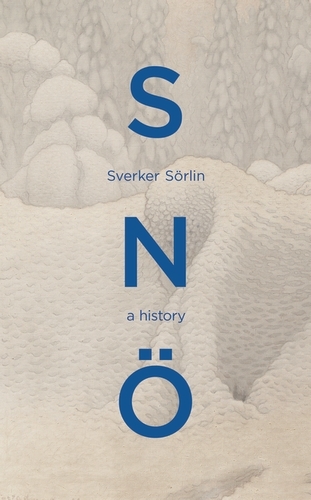
Book: SNÖ

'Snow. A single word, for an infinite variety of water formulations, frozen in air. The study of snow is physics, chemistry, meteorology, anthropology, geography, poetry and art. It is hope – annually renewed. And it is history, too.

Earth saw its first snowfall 2.4 billion years ago. The world's oldest skis, made by hand five thousand four hundred years old, pre-date the pyramids of ancient Egypt. To humanity, snow has variously been an ally and an adversary; an inspiration to countless artists and a place of breathtaking tragedy and survival. But it’s always been there. And now it is melting. 
In 1927, the snow was already more than nine metres deep on Japan's Mount Ibuki when a remarkable 230cm fell in 24 hours, bringing about the greatest depth of snow - 11.82m - ever recorded. Yet it is a fact today that, ironically not only has this mountain's resort been forced to close due to lack of snow, most people in the world have never been near snow: never felt the soft crunch of snow underfoot, never held snow to see it melt in their hands, let alone stood on a pair of skis.'  continued ...
Individual
|
      INTERPERSONAL    :     SCIENCES               
HUMANISTIC  --------------------------------------  MECHANISTIC      
 SOCIOLOGY  :    POLITICAL 
|
Group


compass defined

compass unified

mental expanse

beauty

memory

lived experience

signature of change

sadness

signifier
SNÖ by Sverker Sörlin

culture

poetry - arts

social history

shared loss

recreation - leisure

Two kids.
Uncles! In car, drenching
us driving through slush in the gutter 😎


Sverker Sörlin, Elizabeth DeNoma (Translator) (2025). SNÖ - A History. London: Doubleday.
https://www.penguin.co.uk/books/467833/sno-by-sorlin-sverker/9781529947878


My source: Clark, P. A gear shift to adapt to a warming world. Books. Genre Round-Up, Environment.  Life&Arts. FT Weekend. 23/24 August 2025. p.10.

John Denver - Season Suite (Full) The Suite is in this order:
  1. Summer
  2. Fall
  3. Winter
  4. Late Winter, Early Spring (When Everybody Goes to Mexico)
  5. Spring

Sunday, February 27, 2022

Endurance: Trapped in the ice (and other thoughts ..?)

"'What the ice gets, the ice keeps,'*

... said Ernest Shackleton of his ship Endurance as he saw it lost to the Antarctic. History came eerily close to repeating itself on Monday when the Endurance 22 expedition, which is searching for Shackleton's lost ship, became stuck in the Weddell Sea. The mission ran into trouble overnight when the SA Agulhas II, a South African icebreaker, became trapped and the temperature plummeted to minus 10C. The historian Dan Snow, who is on the expedition, said it happened on the spot where Shackleton's ship was last seen in 1915.

Unlike Endurance, which sank after months stuck in the ice, modern technology allowed Agulhas II to escape in hours. Its crane held a container full of aviation fuel over the side and swung it back and forth to wriggle the ship free.

It is late summer in Antarctica and winter is coming, meaning the team's time is limited. 'In a few weeks, it all starts freezing up,' said Mensun Bound, the director of exploration. 'In a few days we have to get our tails out of here.'" p.23.
<>

When person-centred, integrated, and holistic care is the mission; care that takes into account physical and mental health, demands additional degrees of freedom to assure success. If we get stuck, by a blank page, or too much information then swinging the axes into thought plus the dichotomies inherent in the health career model, can come to our rescue and facilitate creativity and progress.


     Self - NORTH - Person

|
 INTERPERSONAL    :     SCIENCES               
EAST - HUMANISTIC -----------------------------------  MECHANISTIC - WEST^    
SOCIOLOGY  :   POLITICAL 
|
Community - SOUTH - Population   

'south'

https://hodges-model.blogspot.com/search?q=south


My sources:

Image: The Times.

22 February 2022, BBC Radio 4, PM, 1743 Dan Snow interviewed by Evan Davis, Antarctica expedition to discover Endurance.

Plus: Blackburn, J. Shackleton quest stuck in ice that sank Endurance, The Times, 23 February, 2022, p.23. https://www.thetimes.co.uk/article/endurance-22-nearly-meets-same-fate-as-shackleton-ship-after-becoming-trapped-in-ice-wxmjbtxbk

* Is climate change going to subvert many timeless quotations?
^
'Proper' east and west in relation to Hodges' model [discuss]?

Monday, December 16, 2024

Fragile: This way up - Frozen goods!

Apollo 17 'Blue Marble' Photograph
 
Apollo 17 1972 NASA Original Blue Marble Photograph

Or, some water 'heading your way' ...
'NASA’s archival designation for it is AS17-148-22727, and the original image was taken upside down with the South Pole at the top. In its myriad reproductions, it’s flipped up to match what we would normally expect to see.'

Text: https://www.thephoblographer.com/2013/12/09/behind-blue-marble/


Does the model still 'work' -

Group
|
 POLITICAL        :     SOCIOLOGY  
MECHANISTIC --------------------------------------  HUMANISTIC
            SCIENCES       :    INTERPERSONAL
|
Individual
POLITICAL

SOCIOLOGY

SCIENCES

INTERPERSONAL


- this way ...?

Image source: https://www.forum-conquete-spatiale.fr/t15428-apollo-17-1972

Prompt for 'Blue Marble' - Plate 1 in Brotton, J. (2024) The Four Points of the Compass: The Unexpected History of Direction, London: Allen Lane.

Previously: 'compass'

A planet is not just for Christmas.

Friday, March 03, 2023

Prof. Steven Clayman - The Rime of the Ancient Geometer


The Rime of the Ancient Geometer

by Steven Clayman

‘Squaring the circle’ is an ancient problem in geometry, of constructing a square with the same area as a given circle using only a compass and straightedge. The task is mathematically impossible, but nonetheless attracted many ardent cranks and charlatans over the centuries.


While some doth boast and many said it,
Verily I claim the credit.
For having lastly squared the circle,
I quaff thy praise lest some young Turk’ll.

Perchance that thou art not impressed,
Behold what I shall now attest:
It came to pass (this may seem pompous)
With naught but straightedge and a compass.

Unleash thy fettered lauds and laurels!
I fancy most the sweets and florals.
But giveth not thy full devotion:
I’ve well-nigh wrought perpetual motion.


© STEVEN CLAYMAN 2023
[With thanks.]

Steven Clayman is a Professor in the Department of Sociology at UCLA.

Philosophy Now, February/March 202. p.17.


There is a way to 'square the circle' :: the many circles of life and death in care - can be 'squared' - using Hodges' model.

#AnExerciseInCare

#CareIsASetOfValues

Saturday, February 01, 2014

Care pathways: 15 minutes on Monday - how far is that?

On Monday I have a quick visit for 15 minute slot on care pathways at an interprofessional study day for 2nd and 3rd year students.

After the short presentation I'll ask the question of what difference the students can make to the patient's care pathway. There may be value in continuing the 'journey' metaphor?

They can ensure the care pathway is well-documented (otherwise it doesn't exist, and travel on it never happened) they can check it is accessible (an achievable goal) and that it does not trip anyone up (we don't do - iatrogenic).

There are further tests: is it navigable, tried and tested, a safe (evidenced-based) route? As the student's contemplate a major step in their health career, we really need them to focus on the health career of the persons in their care.

[ There won't be time for this: but do we need to wait until the 'end' for the outcome and capturing that (feedback). Or can do we this verbally, incrementally (positive impact on quality)? ]

I could ask them all to stand and make like sign-posts, but for the risk of poked eyes. It's true though, sign-posting is an important job, but how we do that is another post (the value of self-discovery as learning).

Once medically fit the key thing should be checking the person's (not viewing them totally as patient) wayfaring skills.

OK, who took my care pathway?

Can they read the map (are they health literate)? Can they find a map? Do they have a stay-well, recovery and well-being ... compass (a conceptual framework, an app, care plan)? If there literally is no self-care pathway under the patient at present, then the student can help them and their carer if necessary to find or create this compass - across the required care domains.

THEN this person (potential future patient) can avoid having to step off their self-care pathway and onto the health care pathway. You see there's a risk and a cost in that particular transfer.


Image source: http://www.farlandgroup.com/customer-journey-mapping/

Saturday, June 29, 2024

Book for review: iv "Philosophy of Care - New Approaches to Vulnerability, Otherness and Therapy"

Don't worry this is not a chapter-by-chapter review. Having cast the stone that is Hodges' model we will skip a few times.

The use of footnotes varies from chapter to chapter. They inform the text, in several instances being quite illuminating. Beside the footnote (1/3 of a page) I noted - 'baby, cacophony, perception - brain - not overwhelmed but can't ignore' (p.41). Stoicism is the focus in chapter 3; perception, fields, manifold, circles of care, self, time, situation! We have field, subfields, domains.
"Perception is always about a diagnosis of the situation in which the living being finds itself. ...

... perception is always about finding one's "whereabouts" or one's "location" in life's journey." p.42.

On the features of perception, 4/4: "might be termed the breadth or width of the perceptual field." p.42. 

"As pointed out above, all perception has the structure of a compact, continuous, and uninterrupted manifold. In other words, it forms what we have termed a field. But the perceptual field  could contain nothing but the "bare bones" of "inert" qualia, (a manifold of simple qualities impinging themselves upon the perceiver)." p.42. 

The author, Jorge de Carvalho continues another view of qualities that take place in "each given moment". This is the challenge of salience, what is significant? How to 'read' in care: the spoken, the unspoken? 

Developing notes on Hodges' model as a mathematical object, Hodges' model in its basic form as a template, I'm proposing as an empty set. The structure of Hodges' model, its two axes instantiate the "bare bones". In programming/instruction terms ... Hodges' model provides INITIALISATION. A reset. This can act as a prompt for learners to acknowledge the person - the other and consider 'unconditional positive regard'. There's polarity too (p.46) and each living being lives in its own global field, in its own global 'map' - in its own geography" (p.49). Physical geography and the change 'there' is giving rise to cogeographical (a neologism?) disruption - eco-anxiety and climate-angst. 

Psycho-geography: the polarity of our times?

Another note, amongst Hierocles' circles is 'reflex arc'. So many feedback loops, cascades to worry about. 

As Jorge de Carvalho writes: 'what we are talking about is a very complex field of fields. ... described both as a compass rose and as a framework of concentric circles" (p.51). [There's a relay race, a torch relay in ancient terms p.54. Care is the object that is passed on. I've a dual-shaped baton to pass on.]

Care is more than perception (p.52), care presupposes a degree of activity or action. I like the acknowledgement of 'vigilant waiting' too. For me this draws in the importance of communication; Watzlawick's Five Axioms of Communication. After all, what happens to all these perceptions? There's vulnerability, fragility and care for the sheer existence and the whole content of a given being (p.56). Jorge de Carvalho, deploys a series of numbered points which helps reading. Page 60's footnote had me drawing circles, unborn at the centre: as one. But the collective unborn in another rough circle. Eachtimeness: I like this Stoic formulation through circles. Fourthly, we arrive at pure care. I'm still pondering on ".. there is no absolute either/or dichotomy between care and its opposite" (p.61). Integration is also here, an issue for modern times, a legacy problem from ancient times?

Luis Mendes's chapter I must read again. The abstract includes:
"Three fundamental aspects will be identified: (a) the need to consider self-existence from a global point of view; (b) the need for an axis for that life-view; (c) the need for correspondence between self-existence and life-view. Apparently, this structure is formal and arbitrary. Secondly, I will analyse the structure of despair. Three fundamental aspects will be analysed: (α) the requirement for a life-view which can be applied to the totality of subjective existence; (β) the requirement for an unconditioned instance of meaning; (γ) the requirement for the exclusion of the possibility of failure." p.79.
I'm sure Kierkegaard has featured in Philosophy Now, and The Philosophers' Magazine. Mendes' focus is arbitrariness. The hypothesis is well explained (p.80) structure of care. There's much for me here: care, life-view (health career - life chances), "a global understanding maps the world" (p.81), existential map, fulfilment, meaning (of course!). Reading -
"So, a life-view needs to be stabilized, to have unity. It needs an instance that works as an axis and as a point of support. We need something to support our life" (p.83).
I could have jumped up, waved and shouted "OVER HERE!" Would Kierkegaard have been pleased? Perhaps I should have read Kierkegaard, not Michel Serres (please see bibliography in the sidebar)? Still time (fingers x'd); especially if there's any interest in the form of co-author(s)? Care is full of ideals. Mendes through Kierkegaard gives my  project encouragement: "Truth is to live for an idea." p.84. Not necessarily truth but the idealism in care, including identity. It is helpful in care to be reminded of the ideal as a calling, hence motivation (intrinsic and extrinsic) is still key. If you're intrinsically motivated, devoted to your chosen vocation, is your pay that important - to the government/organisation that employs you? A shame this is so often lost to political leaders; who, given their chosen vocation, exhibit a markedly short memory.

Braga, J. & Santiago de Carvalho, M. (Eds.), (2021) Philosophy of care: New approaches to vulnerability, otherness therapy. Springer. 

Many thanks again to Springer for my copy, especially given a follow-up request, well post-publication date.

Individual
|
      INTERPERSONAL    :     SCIENCES                   
HUMANISTIC  --------------------------------------  MECHANISTIC      
 SOCIOLOGY  :    POLITICAL 
|
Group

personal courage

relational - (emotional) care

despair - fulfilment

motivation

ideals

unity - stability

maps

compass - orientation

models - frameworks

geography

life as a whole

society - community of practice

external validation

extrnisic motivation


sustainable development goals

policy

accountability

failure (courage here - political convictions?)


See also:

body & soul - Book: Philosophy of care: New approaches to vulnerability, otherness therapy


Book for review: iii "Philosophy of Care - New Approaches to Vulnerability, Otherness and Therapy"

Saturday, August 15, 2015

In order to listen... 4 holistic care...

As we 'listen' to patients, carers and others in need of care - verbally and non-verbally - we need for safety's sake to be aware of our starting point and where we are heading. Even if only roughly, amid raw emotions, pain, confusion, fear and hope - that next step must be a safe one.

Is there a logic to the steps being taken? There may not be. Sometimes it is listening and being there. There may not be a clear destination, but how will we know when we have arrived at that point in-between? If the way becomes unclear, what signs do we read that might point to the need for an extra hand on the tiller?

Do we have the tools to remain oriented? Is there a compass-4-care? A re-source to map the journey we are both being taken upon?

If listening is but a part of holistic care, is there a tool we can utilise to integrate these many and yet unique journeys?


Source - title:
Alicea-Planas, J. (2015). Listening to the Narratives of Our Patients as Part of Holistic Nursing Care. Journal of Holistic Nursing, Volume XX, Number X, XXXX. doi:10.1177/0898010115591396

Monday, October 15, 2007

Blog Action Day: h2cm around the water whole

Today is Blog Action Day when bloggers unite, posting on the key theme of the environment:

+

It is often said that the planet 'Earth' should be renamed such is the surface area covered by water. Water has long been the reason for life to congregate.

H20: the planet-wide religion of life.

For people water means settlement, hence the fear that in future it is water resources that will drive conflicts.

As we try to get to grips with the environmental issues and their solutions conceptual frameworks like h2cm can help bring everyone and everything together.

Around the water holeThink of Hodges' model as a watering hole.

People, communities, nations arrive there. Peering into the water we see ourselves and our neighbours.

TI:ME to share, if not barefoot TI:ME to kick off the shoes, touch the Earth and reflect:

ONE & MANY
MANY & ONE

From the four corners of the compass some of Earth's travellers arrive together. Others approach alone. Yet others will claim their arrival is spiritual. Whichever knowledge domain is the point of arrival, this provides the primary context.

The 21st century is the century of context: SITUATION

Flora + Fauna = 1

Flora + Fauna + Earth = 1

h2cm is not the starting point. We must bring experience, birth and death and all that is in-between to help solve our problems: transform attitudes. While we may be reaching for the stars there is nowhere to run.

Gaia
taps our shoulder with increasing insistence. Who will turn and look her in the eye? The dare increases in magnitude moment by year. Avoidance of Nature’s gaze will not serve to protect, because we are already turning to shades of grey.

Comets were cast in the role of Hermes, the harbingers of tomorrow. Today, the appearance of contrails near the horizon is striking, so comet like; especially as they buzz the sun. In addition to finding h2cm there, what other messages are writ large in the sky? When will we once again see the stars reflected in the water hole?


Thursday, December 27, 2018

The WEF Nexus: Water - Energy - Food

“Due to the flexibility of the nexus concept, its application in empirical studies has best served to expand, rather than direct, study scope. Insights tend to be high-level, while identified actionable management and policy proscriptions are not broadly applicable. We found no clear methodology uniting nexus studies, and a lack of improvement of resource management and governance outcomes.” p.5.
"The great breadth of the WEF nexus provides an intellectual home for an expansive array of research objectives, methods, and conclusions. This has produced some valuable scholarship but simultaneously limits overall insights and lessons that can be drawn from empirical nexus work. Our review identified some high-level insights and commonalities related to the definition of the WEF nexus (centring on linkages between WEF systems), the motivations for empirical nexus study, the importance of economics and governance in the nexus and nexus analyses, and the role of social and physical factors in constructing nexus interdependencies. Beyond these, however, the findings and specific technical and policy solutions proposed in the reviewed studies are difficult to synthesize as they lack coherence." p.14.
Galaitsi, S., Veysey, J. and Huber-Lee, A. (2018). Where is the added value? A review of the water-energy-food nexus literature. SEI working paper. Stockholm Environment Institute, Stockholm.

"In this light, the ‘nexus’ has gained significant interest as a potentially effective approach for considering the interdependencies between WEF security and climate change at various scales. Put simply, a nexus is defined as one or more connections linking two or more things. The term is widely used (e.g. the environment — development nexus, the population —migration nexus, etc.)." p.445-446.
"Analytical eclecticism* is characterised by the following: (i) a pragmatic ethos that targets the world of policy and practice; (ii) interest in wide-scoped problems (in contrast to narrowly defined theoretical dilemmas) that ‘incorporate more of the complexity and messiness of particular real-world situations’, and (iii) the aim of providing complex causal stories that account for multiple causal mechanisms predominantly explored in isolation within particular research traditions (Sil and Katzenstein 2010, 412). Notwithstanding the potential of transdisciplinary approaches and analytical eclecticism, some still argue that more research and criticaltheoretical engagement is required to advance the nexus (Harris and Lyon 2014)" p. 452.

Leck, H, Conway, D, Bradshaw, M, and Rees, J (2015), Tracing the Water–Energy–Food Nexus: Description, Theory and Practice. Geography Compass, 9, 445–460. doi: 10.1111/gec3.12222.

*My emphasis and with some reformatting '-' breaks.

 Hodges' model and reference to 'nexus'

With thanks to Stockholm Environment Institute