Hodges' Model: Welcome to the QUAD: perspective

Hodges' model is a conceptual framework to support reflection and critical thinking. Situated, the model can help integrate all disciplines (academic and professional). Amid news items, are posts that illustrate the scope and application of the model. A bibliography and A4 template are provided in the sidebar. Welcome to the QUAD ...

Showing posts with label perspective. Show all posts

Saturday, June 20, 2026

ii Thoughts re. Ecosia's AI Chat 'answer'

The previous post has been updated, to the prompt is added:

 'Please provide sources and references.

[If you are new here, and too Hodges' model please see the bibliography in the sidebar.] 

A 'human' reading (still) makes me wonder if the 'answer' is what I want to hear (as a user)? Is it worrying that the first provides a 'Conclusion' the latest does not. The table is helpful as I believe that Hodges' model has a role across research (and political!) -isms through methodologies and methods. The model can also encompass ('eat'!) aspects of scale, or level.

The reply still gives me quadraphonic joy (if read out-loud). Not only are the domains recognised, but the LLM/agent ai takes the intrapersonal / interpersonal in its stride (from the blog?). Subjects related to each of the domains are given in brackets. 

There is of course a bias (several) in the prompt, as the care domains were never intended to be comparable. It is positive that each domain is seen as having its own specific scope and function. Over twenty years notes were started on a paper on Hodges' model and its role/function in helping to define 'scope of practice'. Significantly, in the UK the rise of associate positions across disciplines has provoked much debate, vitriol (on X and union and lobbying) and soul searching in certain professional groups. Given the increasing importance of the global health and social care workforce this trend is reflected globally. A situation set to be extended with uncertainties and tensions exacerbated by artificial intelligence in practice.

Before 'explaining' the asymmetries (in points 1-4) it seems the domains are complementary (for all their differences), and provide a holistic underpinning for the model as a whole (my reading).

1. Scope and Focus 

Interesting, how the science and sociology domains are described as broad. Perhaps I am underestimating the depth/density of sociology, after all folk theory is found there? Unfortunately, we can also add a myriad of conspiracy theories? Sociology can also lay claim to quite a few constructions of its own. Including aesthetics as a bridge to architecture and design(?).

On 'X', Hodges' model has been described negatively as inviting / fostering generalism. So, this is a bad thing? Is it not strange then that your Advanced Nurse Practitioner, Consultant doctors (all specialities) and students cross-curricula can all use Hodges' model? The fact that my own responses were never engaged has helped train my thought. Here the relevance of the model to students and continued professional development is made through generalizable knowledge.

The response to the political domain is supportive, acknowledging resource allocation and the distinction between individual and collective (see for example):

S. Bettiol, P. Jones, H. A. Onyedikachi, and W. G. Kernohan, (2026) Bridging Gaps in Oral Health Frameworks: Mapping With Hodges' Health Career - Care Domains - Model, Journal of Public Health Dentistry. 1–14, https://doi.org/10.1111/jphd.70034.  

I've seen tweets today regards IQ reductions in younger people. This is one reason for support of the top-left mental domain being designated as 'Intrapersonal – Interpersonal'. Our interpersonal skills and awareness are surely dependent upon our achieving a given level of inner mental life? Encouraging to see how subjectivity and objectivity is assigned too. Although, I think I'm in an echo chamber!

2. Epistemological Differences

In arguing for a model of health and social care that goes beyond:

  • medical model;
  • bio-medical model;
  • bio-psycho-social model.

Reading 1-2 from the perspective of the Intrapersonal – Interpersonal domain you see how limiting this is, if an individual in a mental health/illness/mental capacity context can only point to sciences and sociological domains. Indeed, they may be relying guardians and advocates as they are unable to does this and raise the political matter of their rights. Without the POLITICAL domain (or as a result of it - neglect, structural racism) there is no law enshrining independent advocacy...

3. Practical Application in Care

To care is to act. Think about triage and emergency response.

Now in the 21st century 'care' must include self-care, health and social care, and (delayed or not you decide?) planetary care.

This necessitates a change of mindset at an individual and collective level. Consider the literacies that (again) young people must master to be effective, productive and happy citizens tomorrow?

So the following is a gift (in my eyes): 

"This means the intrapersonal-interpersonal domain is not just another 'content area' but a lens through which all other domains are experienced and integrated."

4. Hierarchy of Integration

'While the domains are conceptually equal in Hodges’ model' ..

This is interesting in itself.

[There does seem a emphasis upon the Intrapersonal – Interpersonal domain in this answer?]

This is quite a step, as the idea of a nexus and integration are picked up; and pointing to what are the determinants of health:

'For example:

  • A scientific understanding of depression (e.g., serotonin levels) must be interpreted through the intrapersonal experience of the individual.
  • A sociological analysis of healthcare disparities must be understood through the political structures that enable or inhibit change.
  • A political decision about resource allocation must be filtered through intrapersonal values and priorities.'

I'm pleased I did this, as long as I'm not being trapped in an epistemological cocoon: otherwise known as a circle. Apart from a few occasions, I have not used AI/LLMs, perhaps it is time to explore more? I'd like to preserve my naivety, especially were maths is concerned. I'm not sure of what baggage I may pick up and lack the knowledge to interpret?

Previous post:  https://hodges-model.blogspot.com/2026/06/h2cm-domains-symmetry.html
Friday, June 19, 2026

[Updated] AI Chat: Are the domains of Hodges' model comparable?

In drafting a future post: 'The Sciences: points, lines, angles and perspectives on domains', I thought I would ask Ecosia's AI Chat a related question, here is the (quick) prompt and reply:

PROMPT: 
In Hodges' model there are four care, or knowledge domains. The four domains are the sciences, sociology, political, and intrapersonal – interpersonal domain. In terms of potential content are these domains comparable, or is there an essential asymmetry? Please provide sources and references.

(I have saved the prompt for future reference and refinement.)

RESPONSE: [updated 21st June 2026]


Hodges’ model (also known as the Health Career Model or h2cm) is a conceptual framework that organizes knowledge and care into four quadrants, each representing a distinct domain of human experience and knowledge. These domains are:

  1. Sciences (empirical, biological, and physical sciences)
  2. Sociology (social structures, relationships, and community)
  3. Political (power, policy, governance, and resource allocation)
  4. Intrapersonal – Interpersonal (psychological, emotional, and relational aspects of the self and others)

Are the Four Domains Comparable or Asymmetrical?

The four domains in Hodges’ model are not strictly symmetrical in terms of their content, scope, or application. While they are presented as equal in structure (each occupying one quadrant of the model), their potential content, theoretical foundations, and practical implications can vary significantly. Here’s why:

1. Differences in Scope and Focus

  • Sciences (Quadrant 1):
    This quadrant focuses on empirical, measurable, and biological aspects of health and care, such as anatomy, physiology, and pathophysiology. Its content is often highly specialized, technical, and evidence-based, rooted in natural sciences like biology and chemistry.

    • Example: The role of hormones in stress response or the pathophysiology of diabetes.
  • Sociology (Quadrant 2):
    This quadrant addresses social structures, culture, and community dynamics. Its content is broader and more interpretive, drawing from sociology, anthropology, and social psychology.

    • Example: The impact of socioeconomic status on health outcomes or the role of family support in recovery.
  • Political (Quadrant 3):
    This quadrant examines power, policy, governance, and resource distribution. Its content is highly contextual and often contested, influenced by political science, economics, and public policy.

    • Example: The effect of healthcare policies on access to services or the role of advocacy in shaping health priorities.
  • Intrapersonal – Interpersonal (Quadrant 4):
    This quadrant focuses on individual psychology, emotions, and relationships. Its content is highly subjective and variable, drawing from psychology, psychotherapy, and ethics.

    • Example: A patient’s personal beliefs about illness or the dynamics of a therapeutic relationship.

2. Differences in Methodology

  • Sciences and Political domains often rely on quantitative methods (e.g., experiments, statistical analysis, policy evaluations).
  • Sociology and Intrapersonal domains frequently use qualitative methods (e.g., interviews, case studies, ethnography).
  • This methodological diversity can create asymmetry in how knowledge is generated, validated, and applied.

3. Differences in Practical Application

  • Sciences and Political domains  are often system-level and influence macro-level decisions (e.g., clinical guidelines, healthcare policies).
  • Sociology and Intrapersonal domains are more individual- or community-level, focusing on personalized care, cultural competence, and therapeutic relationships.
  • This can lead to asymmetry in impact, where some domains (e.g., Political) shape broad systems, while others (e.g., Intrapersonal) focus on direct human experience.

4. Theoretical Foundations

  • The Sciences and Political domains are grounded in positivist and structuralist theories, emphasizing objectivity and external reality.
  • The Sociology and Intrapersonal domains are influenced by interpretivist and constructivist theories, emphasizing subjectivity and lived experience.
  • This theoretical diversity can create asymmetry in how knowledge is perceived and valued in different contexts.

Is There an Essential Asymmetry?

Yes, there is an essential asymmetry in the potential content of the four domains. While the model presents them as equal in structure, their content, methods, applications, and theoretical foundations are not interchangeable. The domains complement each other but serve different purposes in understanding and delivering care.

Sources and References

  1. Conceptual Overview of Hodges’ Model:

  2. Theoretical Foundations:

  3. Discussions on Asymmetry and Complementarity:

Summary Table: Asymmetry in Hodges’ Model Domains

DomainContent FocusMethodologyTheoretical FoundationLevel of Application
SciencesBiological, empirical dataQuantitativePositivistMacro (systems, clinical)
SociologySocial structures, communityQualitative/QuantitativeInterpretivist, StructuralistMeso (groups, communities)
PoliticalPower, policy, governanceQuantitative/QualitativeStructuralist, Critical TheoryMacro (systems, policy)
Intrapersonal-InterpersonalPsychology, emotions, relationshipsQualitativeConstructivist, HumanisticMicro (individual, relational)

PROMPT: 
In Hodges' model there are four care, or knowledge domains. The four domains are the sciences, sociology, political, and intrapersonal – interpersonal domain. In terms of potential content are these domains comparable, or is there an essential asymmetry?


In Hodges’ model, the four care (or knowledge) domains are:

  1. Sciences (biological, physiological)
  2. Sociology (social, cultural, environmental)
  3. Political (legal, policy, organizational)
  4. Intrapersonal – Interpersonal (psychological, emotional, relational)

These domains are not strictly comparable in terms of content, scope, or function. Instead, they represent complementary perspectives that together form a holistic framework for understanding human health, well-being, and care. Here’s why there is an essential asymmetry between them:

1. Scope and Focus

  • Sciences and Sociology are broad, well-established academic disciplines with extensive theoretical and empirical foundations. They provide generalizable knowledge about biological processes and social systems.
  • Political is more narrowly focused on power structures, governance, and resource allocation. While critical for systemic change, it is less about individual experience and more about collective frameworks.
  • Intrapersonal – Interpersonal is deeply personal and subjective, focusing on individual psychology, emotions, and relationships. It is less about universal laws and more about unique, context-dependent experiences.

This makes the intrapersonal-interpersonal domain inherently asymmetrical compared to the others, as it deals with subjectivity and variability rather than objective or structural phenomena.

2. Epistemological Differences

  • Sciences, Sociology, and Political domains rely on external observation, measurement, and analysis. They are rooted in positivist or structuralist traditions, where knowledge is often generalized.
  • Intrapersonal – Interpersonal is rooted in interpretivist and phenomenological traditions, where knowledge is co-created through subjective experience and dialogue. It resists universal generalization.

This creates a fundamental asymmetry in how knowledge is produced and validated across the domains.

3. Practical Application in Care

  • The Sciences, Sociology, and Political domains provide frameworks for action (e.g., medical treatments, social policies, legal rights). They are instrumental in shaping systems and interventions.
  • The Intrapersonal – Interpersonal domain is transformative—it shapes how individuals perceive, interpret, and respond to care. It is the domain where meaning is made and agency is exercised.

This means the intrapersonal-interpersonal domain is not just another “content area” but a lens through which all other domains are experienced and integrated.

4. Hierarchy of Integration

While the domains are conceptually equal in Hodges’ model, in practice, the intrapersonal-interpersonal domain often acts as the nexus where the other domains intersect. For example:

  • A scientific understanding of depression (e.g., serotonin levels) must be interpreted through the intrapersonal experience of the individual.
  • A sociological analysis of healthcare disparities must be understood through the political structures that enable or inhibit change.
  • A political decision about resource allocation must be filtered through intrapersonal values and priorities.

This integrative role makes the intrapersonal-interpersonal domain asymmetrical in function, even if not in formal status.

Conclusion: Essential Asymmetry

The four domains are not comparable in content or function. Instead:

  • The Sciences, Sociology, and Political domains provide structural and systemic knowledge.
  • The Intrapersonal – Interpersonal domain provides subjective and relational knowledge, which is essential for meaning-making and agency.

The asymmetry arises from the epistemological and practical differences between objective/systemic knowledge and subjective/experiential knowledge. Hodges’ model emphasizes that all domains are necessary, but they operate in fundamentally different ways.

Monday, September 08, 2025

ii Editorial: Persistent Positive Change in Challenging Times ...

To Howden's editorial it's worth highlighting that Hodges' model is situated. So, whether the 'challenge' that is faced is individual, or collective Hodges' model can help to identify the issues, problems, strengths, opportunities, threats, where we are, where we would like to be and more. Surely, reflection, critical thinking is about confiming, or regaining our perspective, correcting our orientation or improving alignment and synchronisation with others? The time this entails, whether exercised on paper, or cognitively (yes, humans thinking is still an option) this is equivalent to a time-out even if momentary. This can be critical in clinical encounters, were emotions are raised, or there is risk of escalation.

So whether the challenge is personal, lived experience, bullying, finance, physical, or mental health, simulation (fidelity, testing), ethical ...; or collective (a team) - service and organisational change, major incident, policy, clinical or management supervision, whistleblowing, public / patient engagement, complaints and challenging relationships; Hodges' model is a tool (one of many) to call upon.

It could be the context causes you to focus on one or two care (knowledge) domains. Or, there is a need to step back in order to 'see' the big picture (integrated care, risk assessment, holistic care, psychosocial view ...) - the spiritual too.

While Hodges' model is simple, please consider this: there aren't many tools that can facilitate articulation and dissemination of the 'big picture' in a form that is (imho) readily transferable and translatable.

Howden, S. (2025). Editorial: Persistent Positive Change in Challenging Times. International Journal of Practice-based Learning in Health and Social Care, 13(1), ii-iii.

Saturday, September 06, 2025

Scholarship in Arnold Wesker's 'The Friends'

... n'just t'lethee know that's, scholrship up int North ...

'MANFRED. Our trouble, Crispin, us lot, the once-upon-a-time bright lads from up north, is that we've no scholarship. Bits and pieces of information, a charming earthiness intelligence and cheek, but-not scholarship. Look at these books here. (He picks up a pile and throws them round him.) Renan, Taine, Kirkegaarde, Wittgenstein, Spengler, Plato, Jung, Homer, Vico, Adorno, Lukacs, Heine, Bloch-you've not heard of half of them, have you? And half of them, two-thirds, I'll never read. Do you know, new knowledge disrupts me. Because there's no solid rock of learning in this thin, undernourished brain of mine, so each fresh discovery of a fact or an idea doesn't replace, it undermines the last; it's got no measurement by which to judge itself, no perspective by which to evaluate its truth or its worth; it can take no proper place in that lovely long view of history scalloped out by bloody scholarship, because each new concern renders the last one unimportant. No bloody scholarship, us. And when I sometimes get a feeling that two people in love or one man afraid of death might be a supreme consideration, along comes this man with his 'we are moving into phases of creative disorder' and his 'everywhere the lines are blurred' and I've no defence. He sounds so right, I think, and besides-he's got scholarship. What's 'silly loving' and 'banal dying' in all that? Evil? You want me to confess to the knowledge of evil? I confess it. I say it-evil! So? And what  shall I do with that bit of knowledge?' p.18.

 WESKER, Arnold. The Friends. London: Jonathan Cape, (1970). Hardcover. First edition.

Tuesday, July 22, 2025

Mary Kelly - Post-Partum Document

From a visit to Liverpool Tate 13.6.2008:

 (Experimentum Mentis III: Weaning from the Dyad)

Individual
|
      INTERPERSONAL    :     SCIENCES               
HUMANISTIC  --------------------------------------  MECHANISTIC      
 SOCIOLOGY  :    POLITICAL 
|
Group


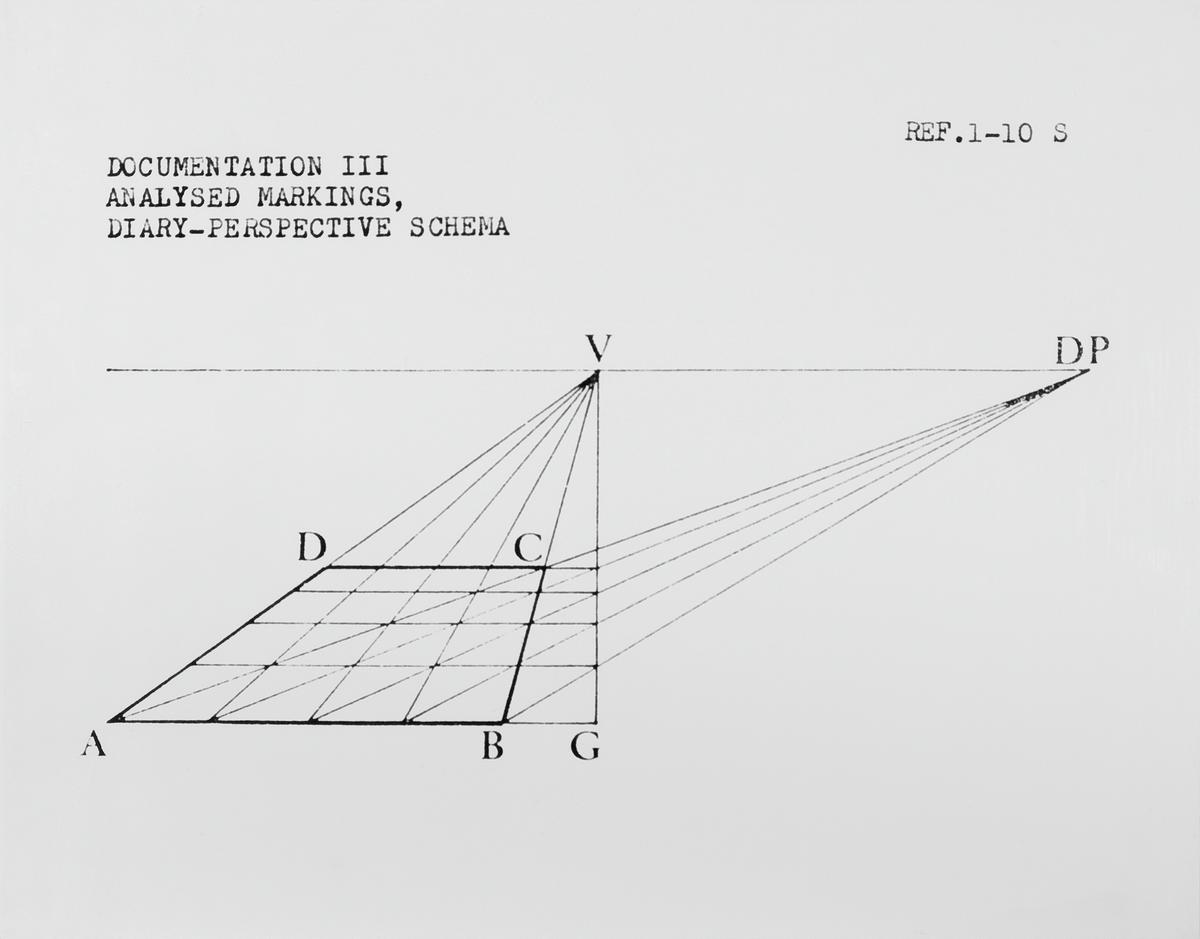
Post-Partum Document. Documentation III: Analysed Markings And Diary Perspective Schema (Experimentum Mentis III: Weaning from the Dyad)

1975, Mary Kelly  © Tate 

'Chalk and crayon drawings by Mary Kelly’s son are overlayed with transcriptions, annotations and reflections based on their interactions as he began nursery. These panels are the third group of a six-part series, each documenting a formative moment in Kelly’s son's early life. Kelly has stated that Post-Partum Document is not ‘autobiographical’. She instead uses her story to suggest ‘an interplay of voices – the mother’s experience, feminist analysis, academic discussion, political debate’. The work subverts romanticised depictions of the mother-child relationship, presenting the experience as inevitably bound up with societal norms and gendered expectations.'

See also: Mary Kelly

  dyad : perspective : art

Wednesday, January 08, 2025

Hodges' model: A person - Everyone else [x2!]

INDIVIDUAL
|
   INTERPERSONAL : SCIENCES              
humanistic ------------------------------- mechanistic
 SOCIOLOGY : POLITICAL   
|
GROUP


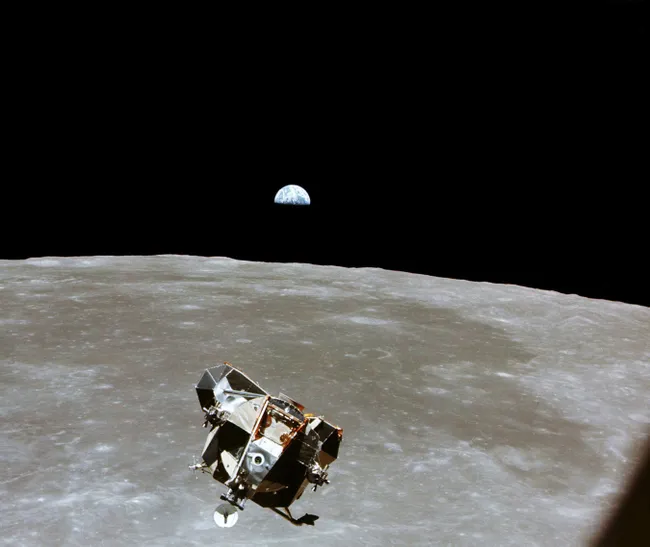
'Michael Collins, the astronaut who took this photo in 1969, is the only human, dead or alive, that isn't in the frame of this picture.' 

 (Image credit: NASA/Getty Images) 


“If the universe is meaningless, so is the statement that it is so… The meaning and purpose of dancing is the dance.”

'Alan Watts on our search for meaning and the antidote to our existential loneliness'


Image: https://www.digitalcameraworld.com/news/spaceman-who-photographed-every-living-being-but-himself-rip-michael-collins

Text: https://x.com/themarginalian/status/1876298178326069285

https://www.themarginalian.org/2016/11/01/alan-watts-wisdom-of-insecurity-3/

So good I'm repeating myself ... https://hodges-model.blogspot.com/2019/07/2-everyone-else-1-thank-you-michael.html

'dance' :: 'meaning'

Monday, December 16, 2024

Fragile: This way up - Frozen goods!

Apollo 17 'Blue Marble' Photograph
 
Apollo 17 1972 NASA Original Blue Marble Photograph

Or, some water 'heading your way' ...
'NASA’s archival designation for it is AS17-148-22727, and the original image was taken upside down with the South Pole at the top. In its myriad reproductions, it’s flipped up to match what we would normally expect to see.'

Text: https://www.thephoblographer.com/2013/12/09/behind-blue-marble/


Does the model still 'work' -

Group
|
 POLITICAL        :     SOCIOLOGY  
MECHANISTIC --------------------------------------  HUMANISTIC
            SCIENCES       :    INTERPERSONAL
|
Individual
POLITICAL

SOCIOLOGY

SCIENCES

INTERPERSONAL


- this way ...?

Image source: https://www.forum-conquete-spatiale.fr/t15428-apollo-17-1972

Prompt for 'Blue Marble' - Plate 1 in Brotton, J. (2024) The Four Points of the Compass: The Unexpected History of Direction, London: Allen Lane.

Previously: 'compass'

A planet is not just for Christmas.

Thursday, January 11, 2024

Identity - a combination of forms and (hence) experiences

Continuing to sort books, magazines ... I realised in the autumn that I'd need to return to issue #72 of The Philosopher's Magazine and its theme of  '50 New Ideas'. ...

INDIVIDUAL
  |
     INTERPERSONAL    :     SCIENCES               
HUMANISTIC --------------------------------------  MECHANISTIC      
SOCIOLOGY  :   POLITICAL 
|
GROUP

"Who are you? Who am I? Are we persons and if we are, are we the same persons we were yesterday? What does our being persons consist in? These are the sorts of questions philosophers try to answer on the nature of personal identity, the persistence question. The persistence question is often considered the question of personal identity: what are the conditions under which a person who exists at time t1 is identical to a person who exists at time t2?" p.51.

"A new wrinkle in this debate is owed to Lynne Rudder Baker: the not-so-simple view of personal identity. Baker identifies persons with 'the first-person-perspective'. The answer to the question 'who am I?' is that I am the perspective I have of myself, and my persistence conditions are first-personal." p.52. [Grain, K.]


"Microscopes have revealed an invisible world to us and whether from secondary school science or probiotic yoghurt adverts most of us are now familiar with the idea that our bodies host a plethora of variously beneficial bacteria. These tiny creatures, which live inside us, contribute to our lives; they help us digest food and bolster our physiological defences against harmful presences - other bacteria and viruses. These 'endo-symbionts' participate in our living activity, just as we contribute to theirs in providing them with nutrients and a stable environment. The philosophical question this raises - belied by the talk of 'our' bodies and 'our' insides - is: where exactly do our organic boundaries lie?" p.49. [Ferner, A.M.]

Social foundation / scaffold
Political foundation / scaffold


Ferner, A.M., Organic identity, pp.49-50 - and 

Grain, K., Personal identity, pp.51-52 -

In The Philosopher's Magazine, "50 New Ideas", 1st Quarter 2016. Issue 72.

There is a 'simple' take-away message (thought!) here. It is the way, through its structure that Hodges' model provides a means to reflect, critique, debate and relate the self with the collective: and situate them and other concepts.

See also:
Nov. 2023: Hodges' model - as 'a' philosophy c/o TPM