Hodges' Model: Welcome to the QUAD: Liverpool

Hodges' model is a conceptual framework to support reflection and critical thinking. Situated, the model can help integrate all disciplines (academic and professional). Amid news items, are posts that illustrate the scope and application of the model. A bibliography and A4 template are provided in the sidebar. Welcome to the QUAD ...

Showing posts with label Liverpool. Show all posts

Tuesday, August 11, 2026

Philosophical Counselling - Reading group: Taylor 2002 'Central Value of Philosophical Counseling'

In addition to Kantian Desert (this p.m.) it is proving helpful to join a reading group on Philosophical Counselling. Being able to combine clinical and therapy experience* with philosophy is a welcome and rather overdue development. The reading for tomorrow (online for me I hope) is: 

Taylor J.S. (2002) The Central Value of Philosophical Counseling. International Journal of Philosophical Practice. 1 (2):1-9.

ABSTRACT: The title of this paper is deliberately ambiguous. It could refer either to the central value that philosophical counseling has for philosophy in general, or else it could refer to something (such as personal autonomy, or personal well-being) that philosophical counselors believe to be of value, and that they are able to help their clients pursue. In fact, this paper will be addressing both of these topics in order to demonstrate
the links that hold between them, and, in so doing, will attempt to further elucidate the nature of philosophical counseling itself.

Taylor (and related papers) also joins the dot (object?) that is Hodges' model, for example (with my emphasis):

'In this vein philosophical counseling is viewed as a Socratic drawing out of the knowledge that the client already possess, and that may be revealed through the careful questioning of a well-trained practitioner of the elenchic method.' pp.1-2.

I've long used guided discovery, by which the students (usually)/audience co-produce the model through a discussion.

'However, the difference between Socrates as a seeker after truth and the philosophical counselor as a professional who helps his or her client map out his or her own world-view in order to address particular problems that he or she is concerned with should not be overstated.' p.2.

'Furthermore—and perhaps most galling of all to philosophical counselors—academic philosophers often seem to view philosophical counseling as not being “real” philosophy at all, but more perhaps a species of social work, or an unsophisticated variant ofpsychotherapy.' p.4.

'Again, this information may be used by the counselor to help the client reflect more acutely upon her own views concerning the morality of abortion.' p.6.

'Given these two senses of “autonomy” it appears that the philosophical counselor is most concerned with enhancing autonomy in the second, Millian, sense of this concept. This is because philosophical counselors often try to aid persons in making decisions (or discoveries) about what it is that they really want to do, what their personal value-system or world-view really consists of.' p.11. 
(A contribution to person-centredness? Critical thinking is also noted by Taylor.)

 See also: https://www.igpp.org/english

 *Including, counselling, family, cognitive and behavioral therapies, plus psychosocial intervention.

Monday, August 10, 2026

Reading group: Kantian Justice - KantianDESERT

Dear all,

The KantianDESERT project's reading group will return on Tuesday 11th August, from 12-1:30 UK time. We will be starting to read Joseph de la Torre Dwyer's 2020 book 'Chance, Merit, and Economic Inequality'. The first session will focus on the Introduction and chapter 2.

The reading group will take place both in-person in Liverpool, and online via Teams. All are welcome. Please email: erc.kantiandesert.ukri AT liverpool.ac.uk if you'd like to attend and we can send you the room details/invite/reading.

My source: Kantian DESERT list and Philos-L "The Liverpool List". Messages to the Philos-L are archived at 
http://listserv.liv.ac.uk/archives/philos-l.html. Follow the list on Twitter @PhilosL. Follow the Department of Philosophy @LiverpoolPhilos

[n.b. With apologies for short-notice. PJ ].

Sunday, August 31, 2025

Play - “The Ballad of Crooked Lane” 6th & 7th Oct.

Media Release - 

Blind Poet’s Life to be Celebrated in New Play. 

The life of Edward Rushton, Blind Poet and key figure in the Campaign against Slavery, will be spotlighted in a new production by Valley Theatre Drama Group in Liverpool. The play – entitled “The Ballad of Crooked Lane” – is set on the day Rushton, now well into middle age, awaits eye surgery to regain his sight. While waiting, he goes over his eventful life with his friend and biographer, William Shepherd, the Minister of Gateacre Chapel.

“Rushton was a larger-than-life character,” says writer and director Tom Mclennan. “The story is that he lost his sight going below deck to help sick African captives on their way to the plantations. I first read about him in Bill Hunter’s biography “Unsung Hero” and have always felt his life deserves more recognition.”

Apart from campaigning against the slave trade – not always a popular thing to do in those days, since a large amount of Liverpool’s wealth was based on the evil triangular trade – Rushton was also instrumental in establishing the Liverpool School for the Blind, one of the first in the country, as well as being at the forefront of efforts to end the notorious pressgangs that terrorised coastal neighbourhoods, intent on kidnapping sailors for the British Navy.

“The Ballad of Crooked Lane” will be performed as part of a double bill along with Day Sheehan’s “Wake” for the Liverpool Fringe on Monday October 6th, 7.30pm, at Valley Theatre n Netherley, and on Tuesday 7th October, 7.30pm, at The Studio Beyond, 63 Wood Street, Liverpool L1 4AL

Entrance for the Valley Theatre event is free (pay a donation if you like it). Tickets for the Studio Beyond are £8/£6 and can be bought from:

https://store.makeitwrite.org/product/balladandwake/

I read a part for this at Valley Theatre, very interesting and will look to see a performance.

See also: Edward Rushton: Who was this blind revolutionary?
https://www.bbc.co.uk/news/blogs-ouch-29957645

My source: https://www.philosophyinpubs.co.uk/

Currently reading, Arnold Wesker's 'The Friends'.
https://www.arnoldwesker.com/plays/the-friends/index.html

Sunday, August 24, 2025

Nothing new under the Sun . . .

"The quadrangle is the token of a new humanity. The square is to us what the cross was to the early Christians". 

Theo van Doesburg

Tate Liverpool visit 13th June 2008.

Tuesday, July 22, 2025

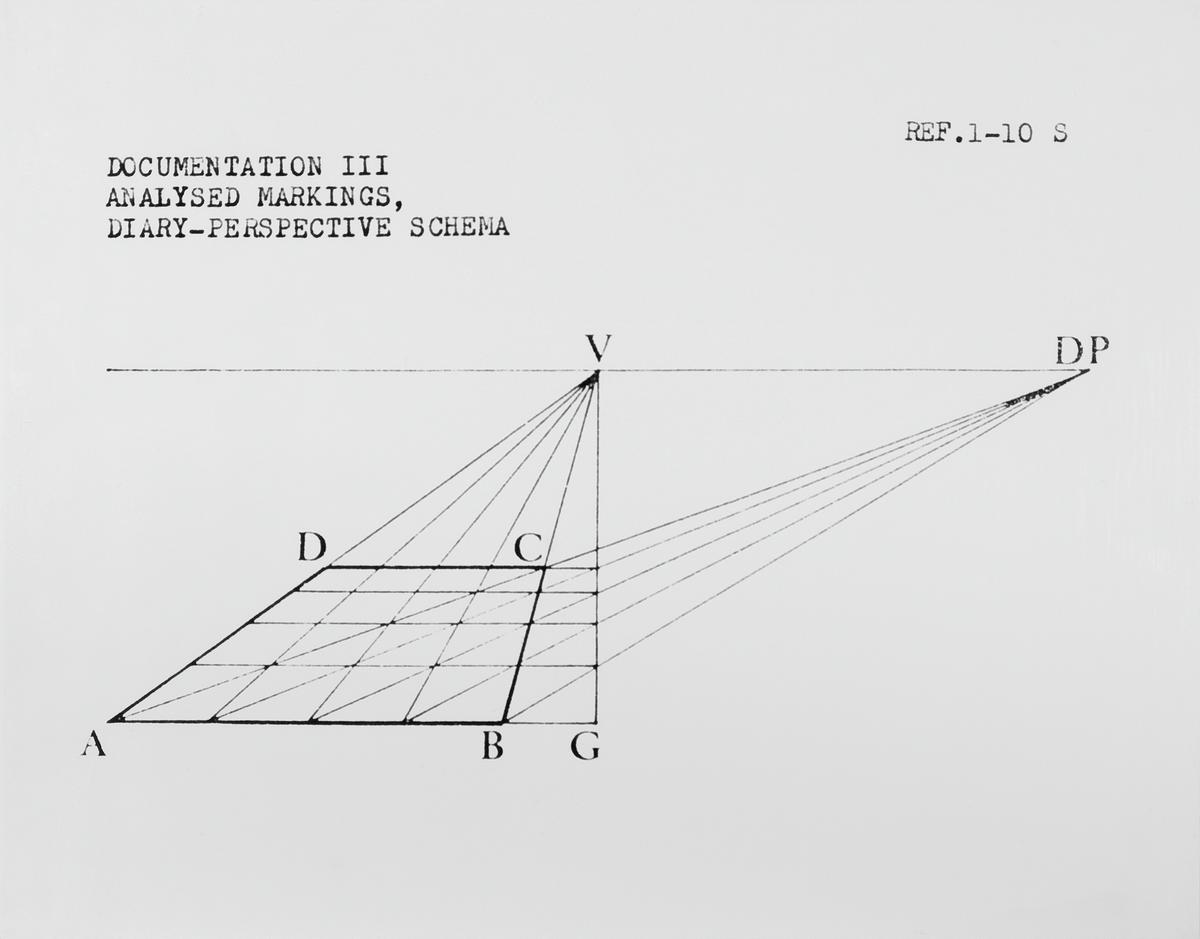
Mary Kelly - Post-Partum Document

From a visit to Liverpool Tate 13.6.2008:

 (Experimentum Mentis III: Weaning from the Dyad)

Individual
|
      INTERPERSONAL    :     SCIENCES               
HUMANISTIC  --------------------------------------  MECHANISTIC      
 SOCIOLOGY  :    POLITICAL 
|
Group


Post-Partum Document. Documentation III: Analysed Markings And Diary Perspective Schema (Experimentum Mentis III: Weaning from the Dyad)

1975, Mary Kelly  © Tate 

'Chalk and crayon drawings by Mary Kelly’s son are overlayed with transcriptions, annotations and reflections based on their interactions as he began nursery. These panels are the third group of a six-part series, each documenting a formative moment in Kelly’s son's early life. Kelly has stated that Post-Partum Document is not ‘autobiographical’. She instead uses her story to suggest ‘an interplay of voices – the mother’s experience, feminist analysis, academic discussion, political debate’. The work subverts romanticised depictions of the mother-child relationship, presenting the experience as inevitably bound up with societal norms and gendered expectations.'

See also: Mary Kelly

  dyad : perspective : art

Friday, May 16, 2025

Theatre - the best way to learn ...

Pardon me, while I stay local - in Liverpool . . . 

I've always been interested in drama since school days (aged 13-14) and playing Francis Nurse in Arthur Miller's Crucible. Recent reading (inc. Theatre of the Absurd, The Shifting Point), see 'drama' - with more to follow) encouraged me to find out more. As a community mental health nurse on a visit, I've sometimes thought of this script being written as we engage with each other. Framed within  interpersonal skills and the society 'outside', there's a sense in which a screenplay is also writ large. 

The fact of whether the session is therapeutic, progressive, person-centred, structured, ethical, purposeful, has tea and custard creams ... is the drama of course.

In a way the creators of formal psychotherapies are playwrights - directors:

After all, they keep producing 'original' therapy manuals, don't they?


In the new year I noticed a community message about a theatre group Valley Theatre Group, planning a 'Living Newspaper' for a drama festival that took place last month. There is another performance next month in Liverpool, as per the edited message below:

People have been asking what’s going on and when for our Hope Street performances June 6-8th. So here’s the details.

W
e start each evening with the play about a 1930s Socialist Theatre group, “Unity”. (Cast: Peter Merrill, Ted Grant, Steve Donegan, Meggan Pye, Day Sheehan and Donna Lauder)

Then, on Friday 6 June, in the second half, we have our first Living Newspaper. This is the one that has most of the sketches submitted by outside writers and developed at the workshops. Then on Saturday 7th, second half, we have the Leverhulme group (The one that won the award at the festival) with their Living Newspaper. Finally, on Sunday 8th, in the second half, we have the last of the Living Newspapers, the one with slightly longer pieces like Scouse Man. This final one also has an original sketch from a 1930s Living Newspaper, the Munich Pact.

Tickets are on sale at the Hope Street Theatre website (link below) and from Ticket Quarter. Please come along and try to get other people along as well.  It'll be a good night's theatre! 

Thanks for all your support. The WTM team

Ticket link:  www.hopestreettheatre.com

Phone: 0344 561 0622

Monday, August 12, 2024

Laws of Form - Society, Conference, and Journal (to follow)

Finding out last minute at the end of last week, I attended the Laws of Form Conference at the Old Library, Liverpool University, 19 Abercromby Square L69 7ZN, UK. It was 17 minutes away by rail, so I made the short walk from Lime Street Station, as pre-existing commitments allowed.

The Society, devoted to the ideas and work of George Spencer-Brown is quite new 2023. I was greeted with a welcome that actively encourages the widest range of ideas as relates to LoF, the AGM also revealed future plans.

Laws of Form Books: Source lof50.com 

I've been on the LoF mail list for many years and every so often I've replied to themes that also touch thinking on Hodges' model. Now trying to look at Hodges' model more formally, learning of the conference I had to attend.

At the close today the vote of thanks expressed for the support of University of Liverpool and West DenHaag was shared here.


After the introduction, the first session by Andrew Crompton, of The Alternative Natural Philosophy Association, How to Make a Horse Vanish included insights into the scope of George Spencer-Brown's thought, combining philosophy, design, and architecture with great visuals. All the sessions were interesting, helpful and stimulating, including several that were technical detailing applications of Laws of Form:

".. Spencer-Brown has pointed out that he discovered an arithmetic that underlies Boolean algebra. This arithmetic is the Spencer-Brown Calculus of Indications generated by the mark <> (here written in typographical form) subject to the relations of calling, <><>=<>, and crossing, <<>> = , where, in crossing, the two marks are erased in the plane of writing. .." 
KEYNOTE Louis H Kauffman, Arithmetic in 'Laws of Form' - also Weds 7th Aug

Even though I could not understand the approach, listening to purposes, application and and the terminology is useful. 

I was online Thursday, and only followed the first two sessions. I have been exasperated with the various -isms, a response possibly shared with Jonathan Mize, Mind, Your Business: Reimagining business, art and science:

"The world is aching for a fresh approach to how we interact with one another. A popular prescription for our ailment is some type of new “ism,” some meticulously engineered set of dictums that propose to “fix society” once and for all. In this paper, I offer no “isms,” no grand new paradigms and no set of rules that humanity “must follow,” lest they slip into oblivion. What I offer is something very simple—a re-seeing of our approach to our everyday lives, a lifting of the vision from the “ills” and the “evils” of the world to the potential for our collective creation and experience. ..." Thurs 8th Aug.

Secondly, Diego Lucio Rapoport Campodonico, presented The Geometry and Topology of the Primal Distinction: Phenomenology and cosmo-sociomorphisms. If the public's understanding of science can be represented as a morphism, then it was extended here so I will explore.

There was a slide in the session of Florian Grote, Playing the Game of Counting to Two: On the question of requisite re-entries in communication including artificial intelligence (Friday 9th August)that I could immediately relate to Hodges' model:

"In the poem which provided the title for the book Only Two Can Play This Game, James Keys (1971) aka George Spencer-Brown provides the reader with a thorough reflection on the unlikely inevitability of a communicative – a social – world."

I can't cover all the examples of interest, but over the years systems, systems theory invariably crop up. Through the UKSS and Open University I have come across people with ties to the Schumacher Inst.. This thread continued 10th Aug, with Laws of Context with Philip Franses.

Hans Rudolf Straub's The Form and the Bit as Basic Building Blocks of Information: A comparison stood out as a source of reading conjoining LoF and informatics.

Marcus J. Carney's talk (also Sat 10th) Letting Go. The Form of Mourning reminded me of what does a single discipline mean when it uses the term 'applied'? Nursing a cold I didn't want to use the mic, but I think Marcus's work could support theory given the attention on trauma-informed care and therapy at present. There were obvious immediate connections in the abstract, borne out (well delivered!) in his presentation.
"Threnos in antiquity was understood as the activity of mourning. S. Freud dichotomised mourning with melancholia, entangling both in libido. A. and M. Mitscherlich took this up in the 1960s for the German people post Holocaust as their “inability to mourn”. J. Ruesen tried “Trauer” in this context again in the 1990s as “mourning humaneness”, bloating its abstraction. While M. Rothberg introduced the notion of “implicated subject” to the field/s of historical violence and injustices to modify R. Hilberg’s perpetrator-victim-bystander triad in 2019, the German “Historikerstreit 2.0” was raging, but not about Rothberg’s “implication”, yet about his 2009 concept of “multidirectional memory”, wherewith he demonstrated how the Holocaust had enabled the articulation of other histories of victimisation at the same time that it had been declared "unique" among human-perpetrated horrors, while uncovering the more surprising fact that public memory of the Holocaust emerged in part thanks to postwar events that seemingly had little to do with it."
As noted in a previous post, there's also the approach of Parallel Histories. You wonder from where dialogue can follow: Israel and Palestine ... but it must. On Wednesday the recent rioting impinged on proceedings with directions to close earlier and dining plans impacted. 

After too many years I must explore George Spencer-Brown's Laws of Form and try to apply it to Hodges' model as an additional and alternative theoretical resource.

The GSB Society have a forthcoming journal which I will post about here as details follow.

The next conference is in 2026 and will be based in Cambridge - a great prospective source of ideas.

Saturday, January 27, 2024

125 Years: 1899-2024 Free Issues at Liverpool University Press


2024 marks the 125th anniversary of LUP’s formation and we are pleased to bring you a new selection of free to read journal issues to celebrate.

With one complete issue of each journal available to read for free, this collection captures the breadth and scope of the research that our journals publish, and the growth of LUP from its formation in 1899. We hope that you enjoy reading them.

Visit our Free Issues page to read free content Indexing and Archiving.

Issues included this year

THE INDEXER

In this issue, 39.1, Paula Clarke Bain touches on the experience of reading during a pandemic in her review of Piranesi by Susanna Clarke, alongside a final article from a series on active eBook indexes. Gord Ripley and Gordon Adshead offer a tour of their online index database, Libris Canadiana, whilst Peter Rooney discusses the creation of an index for the Mueller report, a highly anticipated US government document that was published without an index. Ælfwine Mischler also explains the complexities of indexing Arabic names, and Walter Greulich continues his series about how to create embedded indexes using Word and, Pilar Wyman reports on the project updating indexing standards in the US.

Read this issue for free >

ARCHIVES

In this issue, 56.1, C.R.J Currie article discusses tenants’ copies of court rolls in England and Wales before 1400 using research in 38 repositories to analyse 176 copies of seigneurial court rolls, whilst Rory MacLellan analyses a new set of First World War diaries for the Mesopotamia campaign. Mathodi Freddie Motsamayi looks at preserving South African community archives in a context of Ubuntu alongside book reviews by Russell E. Martin, J.P. Salley, Christine Jackson, Tracey Logan, Karen Mailley-Watt, and Arike Oke.

Read this issue for free >

COMMA

In this issue, 2019.1, discusses the remarkable work of Charles Kecskeméti, head of the secretariat of the International Council on Archives (ICA) for 41 years, from 1957 to 1998, alongside Mandy Banton who explores the problems and solutions of shared archival heritage, reporting on the EGSAH panel at the Yaounde Conference. Wang Xiangnyu and Han Jiabao also undertake research on celebrity archives held by provincial archives in China, whilst Joan Boadas i Raset discusses the management of photographic heritage.

Read this issue for free >

Browse the full collection of free to read issues for 2024 >

Best wishes,
Alice Burns
alice.burns AT liverpool.ac.uk

On behalf of Liverpool University Press

My source:
https://www.jiscmail.ac.uk/cgi-bin/webadmin?A0=RECORDS-MANAGEMENT-UK 

Sunday, January 22, 2023

Philosophy in Pubs - Liverpool Weds 25th Jan 7.30pm

Subscribed to Philosophy in Pubs for many years, I've posted to the list also in the distant past, but I've never attended a meeting. This past week I noticed a message about a new subgroup - Young Philosophers - in Liverpool from Mike (phone numbers removed). Below, I've posted some of the online chat:

On Saturday, 14 January 2023 at 14:38:50 GMT, <info AT philosophyinpubs.co.uk> wrote:
Hi everybody,
 
Its Mike from the Keith's PIP and the young philosophers group.
I am currently re-launching the latter as a new PIP group at
Thomas Rigby's in town
(23-25 Dale St, Liverpool L2 2EZ)
 
The first meeting of the Philosophy group will be
Wednesday evening the 25th January at 7.30pm.
Please come along, all welcome, all ages.
 
If you need anymore  information, please email me (email below) or call me on ...
 
Thanks
Mike Green.
michaelljohngreen AT gmail.com 

This piqued my interest, given my love of Liverpool (born in Walton) and the question of at what age can younger people - children be introduced to Hodges' model?

I replied expressing interest in the possibility of contributing, once the group is established, or as a 'starter for 10', seeking critique as to what sense young philosophers would make of the model.

Responding with an introduction to Hodges' model, and expression of interest, Paul and Rob replied as per below, to which I've tried to add some clarification.

Rob's thoughts are very helpful. The upshot is, I'm looking f/w to a full day in Liverpool this Wednesday, meeting Mike, Paul, Rob and possibly others before the meeting starts at 7.30pm.

Paul's message (intended for me):

info AT philosophyinpubs.co.uk
Sunday, 15 January 2023 at 13:00:12 GMT
Subject:
Re: New PIP group!

Hi Mike, Peter

Yes, you seem to be part of quite a sizeable group of people on our general members/mailing list that have not gotten round to attending one of the groups yet. But that's okay, absolutely no need for apologies, your interest is appreciated anyway.

I've had a quick glance at your attachments; found what I read very interesting and would like to know more. I don't think I've heard of the Hodges' model, or at least not in relation to what we generally practice (Community of Enquiry method).

It's great that you would like to contribute or provide a session regarding the Hodges' model, but I'm not sure if doing that would fit well with this particular opening meeting of a new PIP group. Having said that, I could be very mistaken, and an introduction in the manner you mention, might be a great way to get people thinking and herald a fruitful meeting. The meeting is due to start at 7.30pm - (meetings usually take one and a half to two hours), but if you like I could meet you there half an hour earlier. Let me know.

We have something called the Enquiry Development Series (EDS) running at the moment. It's a monthly Online event which is run for PIP members and others to learn/refresh their undertanding and practices. You would be most welcome to attend.

Best regards,

Paul ...

PS: I have cc'd some members of the EDS in with this reply.

From Rob:

On 2023-01-16 12:44, fappyhealing02 AT yahoo.co.uk wrote:

Hi Everyone,

From my very limited reading on Hodge's model. It seems to be concerned with very similar issues to those of PIPs and the CofE community, which is an expression of prior analysis, critique and reflection coming from people like Dewey, Postman, Freire, Lipman and so on. I have a basic grasp of the model as a conceptual framework and a means to better care and understanding across society. What I don't seem to have picked up so much is a more fully developed methodology rooted in practice and realisation of these ideas.

This leads me wonder whether this model/framework is mainly conceptual, with limited  methodological guidance towards how the ideas in the framework are to be expressed and realised. PIPs is at the stage where it has a very successful methodology which realises and expresses in practice the ideas that Hodge points to, along with the philosophy of education eluded to earlier and various other frameworks such as the Paul and Elder model of critical thinking.

So, we have the history and philosophical education from Socrates onwards, the comes a distillation of these ideas into a framework or model, which is where we find Piaget, Bloom, Paul and Elder, along with Hodge and others. These models then have to be cashed out in practice. At this point, we are now thinking about methodology, there is of course connection, influence and overlap with the history, philosophy and subsequent frameworks. Methodologies vary from being barely formed to being well formed and robust. I would say PIPs and CofE have a well formed and somewhat robust methodological practice. It has been well tested and critiqued for over 40 years in different countries, communities and contexts. It has stood the test of time with a good pedigree. Matt Lipman was a key figure in developing a methodology out of his research into philosophy of education and various frameworks/models. However the methodology he produced to deliver in practice was something of a prototype rather than the more fully formed, finished article. Through time and careful reflection people like R Sutcliffe and Karin Muris took Lipman's methods improved and polished them into the practice we see and use 40 years later. This is of course still developing along democratic and dialogic lines.

In the case of Edward De Bonno, Paul and Elder, Illich and Dewey we find some powerful insights, some partially formed models and some fully formed models but not that much guidance on how to implement these ideas. Yes, they provide some ideas and pointers on how to go about the realisation of these things in practice but methodology on the whole is pretty sparse. I guess it's a case of focussing on a specific group of concerns comes at the cost of other concerns, though, I don't want to take this too far and slip into zero-sum thinking. Anyway, based on limited understandings I'd provisionally put Hodge in this category of well formed model, limited methodology in terms of the nuts and bolts of how to best realise the model in practice.

Questions I'm left with:

Is the distinction between model and methodology a significant and useful one here - why? Yes/No, because...?

Given our current point of development and understanding, by doing what we do, are we already cashing out a good deal of the key ideas in Hodge's model?

Could we just clarify what Hodge's model is a model of?

Do I need some help in understanding Hodge better in terms of both 'model' and 'methodology'?

This isn't to say we should not draw inspiration and ideas or take time to explore and experiment with Hodge's model, just that I need to be clearer about what it is, what it's trying to do, how it is going to do it. Once more secure with this, I feel I'd be in a better position to make more competent judgements and recommendations about its uses and benefits.

Best wishes,

Rob

My reply:

Subject: Re: New PIP group!

Thanks for the messages - just caught up I think...

I wondered originally Mike - about your young philosopher's group and once established asking the group the questions that Rob has posed and responded to.

I'm seeking critique, not proposing that Hodges' model is adopted by PIP.

The questions posed by the model - might gainfully exercise younger minds, and provide me with some pointers - which I would make clear (from ethics / consent perspective).

I greatly appreciate Rob's thoughts*.

A question I have educationally is from what age (literacy level) which Hodges' model #h2cm might be taught (discovered?).

I'd be pleased to come through on the 25th Mike and Paul, arriving a bit earlier.

I'll get to Liverpool early a.m. train and make a day of it.

As per Rob, I'm still asking these questions of the model and enjoying the journey ... so, briefly in response:

There is no methodology associated with the model, it is 'agnostic' (whatever that means).

The model is situated - so clinically, the way the model is used is influenced by the patient, client, carer, student, manager ...

The model can provide a relational ontology - it incorporates several polarities, dichotomies, oppositions and instrumentally can facilitate dialectic engagement.

It can be applied (imho) for a variety of research and philosophical stances, standpoints - Qual , Quant, Mixed-methods ... all the -isms?

As you will no doubt appreciate, in education and health care (especially) we need *evidence-based* interventions.

In seeking possible theoretical underpinnings for #h2cm think (as Rob suggests) of the model as a giant conceptual corpus (drawing from Tim Berners-Lee's giant global graph).

The axes of the model represent the (conceptual) holistic bandwidth of the situation.

The model can wax and wane as per the context (scale, scope). In a reductive sense I see the four (care) knowledge domains as four 'conceptual spaces' (Gärdenfors).

h2cm can also find a 'home' in the semantic web and in education - the idea of 'threshold concepts' (Meyer and Land).

There is another tool, but this calls for a logician - if not a totally erroneous idea?

[ Note diametric oppositions in the model: e.g.
  • public understanding of science;
  • the extent of visualization in the humanities;
  • mental health (the self) and the State (politics, law) current Psycho-Economic crisis. ]
*ROB - and all - I'd be pleased to post your thoughts / response on the blog, if this is appropriate with links and text on PIPs.

I hope this helps and look f/w to next week - thanks for your interest too.

Best to all.

Peter
====

Clearly not the last word. Look f/w to Wednesday and learning more.

Monday, October 03, 2022

@LJMU @UniofGreenwich @UniNorthants et al. *

Re. new Climate Change degrees ...

What do your students and faculty need to know
to nurture that green knowledge domain,
and turn the other domains green?

INDIVIDUAL
|
 INTERPERSONAL    :     SCIENCES               
HUMANISTIC --------------------------------------  MECHANISTIC      
SOCIOLOGY  :   POLITICAL 
|
GROUP
MENTAL HEALTH
CONNECTION
ATTITUDE
BELIEFS - SPIRITUAL
ADVERTISING (mental pollution)?
[meta-] ETHICS
ECOCIDE
ACTIVISM
EDUCATION - LIFELONG LEARNING
LITERACY - INFORMATICS SKILLS
...

BIOSPHERE
POLLUTION
EXPOSURE - EXPOSOME
THERMAL REGULATION
WATER CYCLE ... AGRICULTURE
GEOPHYSICS, GEOGRAPHY
MEGA-ENGINEERING
PHYSICAL HEALTH
URBAN - RURAL
METRICS, MONITORING
...

SOCIAL HISTORY
SOCIAL MEMORY, ARTS
QUALITY OF LIFE
WAYS OF LIFE - Communities (Nations!)
SOCIAL DETERMINANTS OF HEALTH
SOCIAL JUSTICE
'home-land' -
DISPLACEMENT - RESETTLEMENT
SOCIAL COHERENCE
SUSTAINABLE DEVELOPMENT GOALS
...
POLICY, LAW
PROTECT FUTURE PEOPLES
COP X, UN, UNESCO ...
REGULATION
TRANSFORMATION OF ECONOMICS
- CIRCULAR ECONOMICS
SUSTAINABILITY
COMMERCIAL DETERMINANTS OF HEALTH
FORCED MIGRATION
POLITICAL CHANGE (LONG-TERM)
...

What do they need to believe,
envision and be able to do,
to help transform the World?

My source: Nicola Woolcock, Universities offer first climate change degrees, The Times, March 23, 2021,p.16.

*Hope it is going well, and while we really need it to - this is, of course, a responsibility for us all.

Thursday, January 31, 2019

6th Health and Justice Summit: safety with continuity i

Whilst I am using Hodges' model (h2cm) to 
reflect on the 1st day of this event no 
endorsement should be inferred...

My exposure to forensic - prison nursing is trivial in contrast to the emotions, policy, issues, contention and hence importance that just the word 'prison' provokes. This statement can can be summarised in one point that was made this afternoon. That is, how any duty of care to prisoners must be balanced with the public's perception* of what should and should not be done. The word important is a moot one when the the aim is to stress the risk of being forgotten. Prison health is surely in danger of being lost within the Russian doll of mental health. Mental health that was (still is?) also the Cinderella service of health care? I refer to history in celebration since while there was mention of pressure of staff, long shifts, not feeling valued, heightened risk there was no shroud waving. Attending today was refreshing in the expressed passion, pride and enthusiasm that I heard; even while some of slides showing older and newer prison interiors and rooms - cells - were sobering (as they are supposed to be*).

My forensic experience is limited to time as a student nurse, making numbers up, on Ward 17 at Winwick. Visiting a medium secure unit to liaise and 'communicate' about the National Programme for IT and co-writing a paper on the Hodges' model in forensic settings. I have long wondered about the model being used educationally with groups in primary care, looking at stress and vulnerability, resilience, staying well ... and perhaps more selectively with this population. A strength here is the model's use: explicit - explained and shared or used implicitly guiding the 'teacher' or (more properly?) facilitator. We invest in 'life story' interventions for people with dementia. What about the 'life stories' of prisoners? It not the matter of their life story, but their lack of understanding of that story? What tools are there to help make sense of their 'health career' the life chances encountered and experienced in their lives?

https://equallywell.co.uk/
The keynotes this morning emphasised the facts and figures of the physical health of prisoners with severe mental illnesses [SMI] and the work of Equally Well. Amid many health problems the focus is upon obesity and smoking cessation.

Dr Alan Cohen from Equally Well, reported on surveys and analysis of national QOF data comparing the prevalence of people with SMI in ten long-term conditions. As per the summit website: “The physical health of those with a severe mental illness is held up as one of the last significant health inequalities. This presentation will explore some of the data that underpins that inequality. This will describe how it can be used to enhance services, through the development of a national learning network. Equally Well.”

There are plans for an evaluation phase of the work and other audits. Dr Cohen almost had me ask a question, with regards to some people having three health problems across least and most deprived populations. How can this be explained?

The second keynote c/o Stephen Watkins confirmed (for me) the history of mental health beds (below) and how ongoing studies and graphs can illustrate processes across prisons. How long do prisoners have to wait for mental health transfer and remission? Diagnoses, across gender, ethnicity and outcomes were also presented.

Stephen Watkins NHS Benchmarking

Stephen Watkins NHS Benchmarking

I will post soon on the workshops I attended. As is often found with satellite sessions the choice is difficult at times.

Tomorrow I must ask someone about 'social care' input. I have had cause to liaise with palliative care and local hospices recently, dementia and cancers. A question concerning a very literal form of 'in-reach' was asked for me. With four people to follow up with tomorrow, great organisation and day 2 to follow it will be a 'breeze' getting out of bed - even if that breeze is chilly...


individual
|
INTERPERSONAL : SCIENCES
humanistic ----------------------------------------------- mechanistic
SOCIOLOGY : POLITICAL
|
group


primary care
:::
Society: SOCIAL (care): Family interface ::::::
:::

Prison Health
--------------  INTERFACE -------------
Prison Service


individual
|
INTERPERSONAL : SCIENCES
humanistic ----------------------------------------------- mechanistic
SOCIOLOGY : POLITICAL
|
group

personal autonomy


OPEN door
CLOSED door
Mechanistic: 'Lock' 'Up'
Ability to step on the grass


Family involement
(What do they know?)


prison experience
in-validates the 'person'
narrows - restrains - autonomy


Reflective exercises: define 'continuity' as per Hodges' model?

What is the bandwidth of autonomy across the domains of Hodges' model?

Contrast the return to society of prisoners and service veterans?


Sunday, January 27, 2019

RCGP’s 6th Health & Justice Summit: Safety through Continuity

Perhaps I will see you in Liverpool, UK later this week? 
I will be taking notes and look forward to reporting here.
A 2-day summit organised by the RCGP Secure Environments Group in partnership with, Broadmoor, Ashworth, and Rampton high secure hospitals, Spectrum, Care UK, NHS England, Martindale Pharma, Nottinghamshire Healthcare NHS Foundation Trust, Betsi Cadwaladr University Health Board, HMP Berwyn, West London NHS Trust, Mersey Care NHS Trust.

Following on from our successful event in Glasgow in 2017, we are now focusing on ‘Continuity of Care – safety through continuity’ as this year’s theme. We recognise the need to embolden the links between primary and secondary care for people resident in secure settings and are looking to showcase examples of good practice on how we can improve on care transition to the community.

The first day will broadly address physical health in secure mental health environments, and the second day will address the health needs of people in other custodial environments such as prisons, immigration removal centres and YOI’s.

If you are registered as a delegate for the event, please register which workshop you would like to attend via the link below:

www.convenzis.co.uk/6th-health-justice-summit-safety-through-continuity-registration/

<>

n.b. There are two papers listed in the bibliography (please see the sidebar) that show how h2cm is applicable to this specialist field.

Sunday, August 21, 2016

Self: Inside and Outside the Boxes c/o Tate Liverpool Maria Lassnig

individual
|
INTERPERSONAL : SCIENCES
humanistic -------------------------------------------  mechanistic
SOCIOLOGY : POLITICAL
|
group-population


Let there be no - 'Invisible Rooms' - in the Art and Science of Care

Visited Tate Liverpool, 1000-1230 today.

Tuesday, December 02, 2014

Friday, June 20, 2014

after Mondrian: Journey with Hodges through Politics, Sciences and Intrapersonal ...

Prompt: Tate email

Subject: "Journey with Mondrian through Paris, London and New York"


individual
INTERPERSONAL : SCIENCES
humanistic ------------------------------------------- mechanistic
SOCIOLOGY : POLITICAL
group

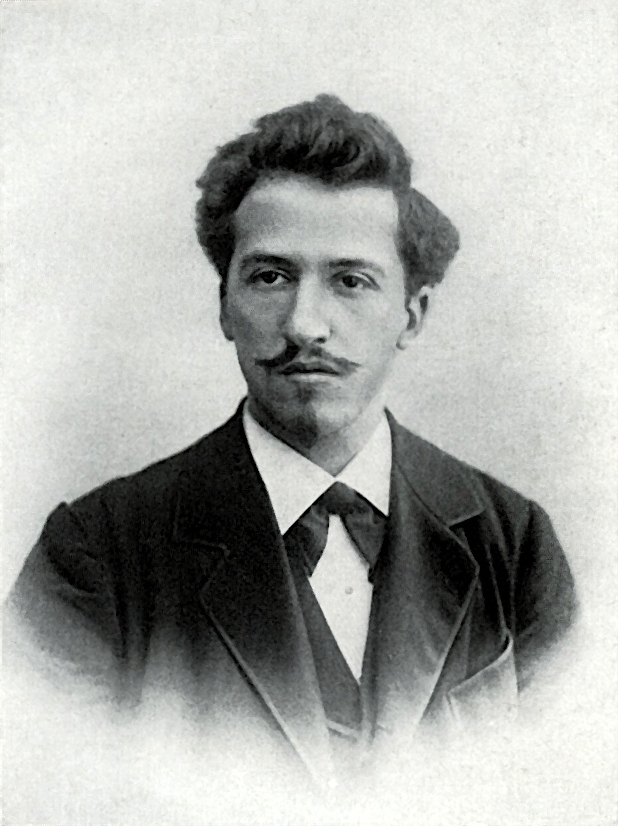
Piet_Mondriaan
Cubo Grande
Photograph by Dominique Mulhem.
https://www.reddit.com/user/sverdrupian/


Image sources (from top left clockwise):
https://upload.wikimedia.org/wikipedia/commons/8/83/Piet_Mondriaan.jpg
https://www.pinterest.co.uk/ordep13/
http://www.fondationtanagra.com/en/article/mily-doll-by-gege/page/but-darling 
https://www.reddit.com/r/MapPorn/comments/2ocwh3/world_map_in_the_manner_of_piet_mondrian_948730/

Monday, August 06, 2012

reVision Launch, 20th September 2012, Liverpool, UK

My source: MHHE list

Invitation to the Launch of reVision (formerly The Joint Forum)

We are a coalition of radical activists who believe in the social model of mental health.
We are seeking to be a voice for change by promoting and exploring knowledge and understandings of the social, economic and political causes of mental distress, and by proposing socially derived alternatives to medicalised approaches.

 Our vision is a society in which the social causes of mental distress are understood and treated with socially based solutions that improve individual lives and bring about wider social change.

We are launching our organisation on Thursday 20th on September 2012
At Liverpool John Moores University, Room 5.04, Avril Robarts, 79 Tithebarn Street,
Liverpool, L2 2ER from 1.00 to 4.00pm

We will be welcoming new members to the organisation at the launch, and are looking for people who seek radical alternatives to psychiatry and who have a critical, political understanding of the social causes of mental distress.

Our keynote speakers will be:

  • Helen Spandler, member of Asylum and contributer to Critical Psychiatry
  • Malcolm Kinney, Senior Lecturer in Mental Health Social Work: LJMU
  • Phil O’Hare, Senior Lecturer: School of Social Work: UCLAN
  • Naphtali Titus Chondol, mental health activist
  • Jackie Patiniotis, freelance researcher with a particular interest in women’s mental health and working to end violence against women and girls

Please email ... to confirm your attendance.

Friday, November 21, 2008

Blackmarket for Useful Knowledge and Non-Knowledge No.11

Pick Your Brains and Expand Your Non-Knowledge here!


Hi, we hope you can make it down to the Bluecoat on Saturday 29 November for this final Liverpool Live 08 event, on the last weekend of the Liverpool Biennial...

Blackmarket for Useful Knowledge and Non-Knowledge No.11 is a lively installation full of hustle, bustle and brains which will have 50 experts sitting at numerous individual tables, sharing their knowledge with members of the audience over thirty minute one-to-one sessions. The Blackmarket event is free, and members of the public can listen in to any of the conversations, or for £1 (or even €1), you can book an expert for your own private half hour dialogue. Get to the check-in early though, or you may find yourself having to do some serious bribing and bartering to get near your expert of choice!

This unique art installation takes traditional methods of knowledge transfer out of the stuffy archives and hushed library reading rooms, and throws them into an arena of discussion and banter, taking on the buzz of market stalls and stock exchanges. Blackmarkets have so far taken place in Berlin, Vienna, Istanbul, Warsaw, Hamburg and Graz.

The topic for the Liverpool edition is: ‘ON WASTE. The Disappearance and Comeback of Things and Values.’ Experts have been invited from the diverse fields of garbology, ecology, philosophy, economy, pathology, entomology and alchemy (those who know how to make gold from dirt).

More information about the event is available on our website and you can also download the full list of experts who will be present on the night:

Please feel free to forward this e-flyer to anyone you think might be interested in coming along.

Kind regards,
Phil
Phil Olsen
www.thebluecoat.org.uk

Mobile Academy is a project by Hannah Hurtzig with changing partners, based at HAU, Berlin. Presented in association with the Live Art Development Agency. Supported by Arts Council England, Liverpool Culture Company and the Goethe Institute Manchester. www.mobileacademy-berlin.com

=======================================
Wish I could make this, great idea and No. 11 already. ....!

My source: Philosophy In Pubs list