Hodges' Model: Welcome to the QUAD: exhibition

Hodges' model is a conceptual framework to support reflection and critical thinking. Situated, the model can help integrate all disciplines (academic and professional). Amid news items, are posts that illustrate the scope and application of the model. A bibliography and A4 template are provided in the sidebar. Welcome to the QUAD ...

Showing posts with label exhibition. Show all posts

Tuesday, May 26, 2026

By Helen Frankenthaler - 'A Green thought in a Green Shade'

individual
|
INTERPERSONAL : SCIENCES
humanistic ------------------------------- mechanistic
SOCIOLOGY : POLITICAL
|
group
 
Helen Frankenthaler: A Green Thought in a Green Shade, 1981
119 × 156 1/2 in. (302.3 × 397.5 cm). Acrylic on canvas


© 2026 Helen Frankenthaler Foundation, Inc. / Artists Rights Society (ARS), New York

Image used with kind permission of The Helen Frankenthaler Foundation - and with thanks.
My source: Phoebe Evans. Opening Shot, FT.com/HTSI FTWeekend. 23rd April, 2026, p.13.
 
Gagosian. Helen Frankenthaler: The Moment and the Distance
April 30–July 2, 2026 West 21st Street, New York 
 

Monday, April 13, 2026

AI-2026 46th SGAI International Conference on Artificial Intelligence CAMBRIDGE, ENGLAND, DECEMBER

THIRD CALL FOR PAPERS AND POSTERS

The proceedings of the AI-20xx conference series are now published by Springer in Lecture Notes in Artificial Intelligence (LNAI), a sub-series of the distinguished Lecture Notes in Computer Science (LNCS) series of conference proceedings.
AI-2026: Cambridge, UK, December 15th-17th 2026
Organised by BCS SGAI: The British Computer Society Specialist Group on Artificial Intelligence (a EurAi Member Society).
The leading series of UK-based international conferences on Artificial Intelligence and one of the longest running AI conference series in Europe.
CALL FOR CONTRIBUTIONS
AI-2026 is the forty-sixth SGAI International Conference on Innovative Techniques and Applications of Artificial Intelligence.
The scope of the conference comprises the whole range of AI technologies and application areas. AI-2026 reviews recent technical advances in AI technologies and shows how these advances have been applied to solve business problems. Key features are:
  • Papers will be published by Springer in the Lecture Notes in Artificial Intelligence (LNAI) subseries of the popular Lecture Notes in Computer Science (LNCS) series (www.springer.com/lncs).
  • Papers are invited in two streams. The Technical Stream presents the best of recent developments in AI, covering a wide range of technical areas. The Application Stream is the largest annual showcase in Europe of real applications using AI technology.
  • It is expected that the best papers will be reprinted in expanded form in a special issue of an international journal.
  • A mixture of full papers (maximum 14 A4 pages) presented orally and short papers (maximum 6 A4 pages) presented as posters. Papers of both kinds will be included in the proceedings.
  • Prizes for best paper and best student paper in each stream and best presented short/poster paper.
  • Invited keynote lectures.
  • The first day comprises tutorials and workshops to provide greater depth in selected topics. (Separate one-day registration for this day is also available.)
  • A panel session on a topical subject.
  • An 'AI Open Mic' session to allow delegates to have their say about any aspect of AI.
  • In addition to the formal sessions, the conference programme includes a welcome reception and a Gala Dinner.
AI-2026 offers a valuable opportunity to keep up to date with developments in AI and to share experiences in the practical issues of developing AI systems.
FAIRS '26, the eighteenth annual forum for AI research students will immediately precede the AI-2026 conference at Peterhouse College on Monday December 14th, 2026. The aim of FAIRS is to support student members of the AI community providing advice and feedback on their research plans and work. This event is free of charge for research students except for a contribution towards the cost of refreshments and lunch in the College and no conference registration is required.
IMPORTANT DATES
  • Paper/Poster Submission: Friday 26th June 2026
This deadline is considerably later than for previous conferences in this series and will not be extended.
  • Notification of Acceptance: Tuesday September 1st 2026
  • Camera Ready Paper: Monday 14th September 2026
CONTRIBUTIONS
Contributions presenting original work in AI are invited for both the technical and the application stream. Contributions may be submitted either as full papers of up to fourteen A4 pages for oral presentation or as short papers of up to six A4 pages for poster presentation.
  • Technical Stream
Areas of interest include (but are not restricted to): knowledge engineering; semantic web; constraint satisfaction; intelligent agents; machine learning; model based reasoning; verification and validation of AI systems; natural language understanding; speech-enabled systems; case based reasoning; neural networks; genetic algorithms; data mining and knowledge discovery in databases; knowledge representation, inference and reasoning; robotics and pervasive computing; qualitative and temporal reasoning; knowledge management; AI languages and environments; robotics and pervasive computing; large language models.
  • Application Stream
Case studies are welcomed describing the application of AI to real-world problems. Papers in recent years have covered all application domains, including commerce, manufacturing and government, and every major AI technique. In addition to case studies and specific applications of AI, we would welcome papers that discuss issues such as managing the transfer from research to production of AI-based products. Papers are selected to highlight critical areas of success (and failure) and to present the benefits and lessons of value to other developers. Submitted papers should make these points clear.
  • Short Papers for Poster Presentation
Short papers are intended for the presentation of work which meets the high standards of the conference, but which is more topical and preliminary than the work presented in full papers. They provide an excellent forum for disseminating new developments and latest work in progress, especially suited to PhD students. Work submitted in the form of full-length papers that fall short of the standard for oral presentation will automatically be considered as candidates for reworking as short papers for poster presentation.
  • Submission of Papers
Final versions of accepted papers must be prepared in either Microsoft Word or Latex together with a copy in PDF format. Initial versions of papers should be submitted in PDF format only and uploaded to the conference website by the deadline given above. Instructions for authors and templates for both Word and Latex are given at
In order for an accepted paper to be published at least one author must register for the conference and undertake to attend and present the paper in person. Presenting authors will be asked to register for the conference at the discounted speakers' rate when they return the final camera-ready versions of their papers.
  • Tutorials & workshops
The Conference Committee invites proposals for tutorials and workshops to be presented on the first day of the conference. These should be directed in the first instance to the Tutorial/Workshop Organiser.
  • Prizes
There are prizes for the best paper and best student paper submitted in each stream, chosen by the relevant program committee, and also a prize for the best presented short/poster paper, awarded on the basis of delegate voting.
All further information including details of the conference committee, program committees, paper format and uploading instructions is given on the conference website.
ALL CORRESPONDENCE SHOULD BE SENT BY EMAIL TO THE CONFERENCE SECRETARIAT:
sgai-conference AT bcs.org.uk

My source: BCS-SGAI

Thursday, December 04, 2025

Yuki Kihara: Darwin in Paradise Camp - The Whitworth, Manchester

3 October 2025 – 1 March 2026

'A visually stunning exhibition centring Indigenous, queer worlds by Japanese-Sāmoan artist Yuki Kihara.
The Whitworth is proud to present Yuki Kihara’s acclaimed installation Paradise Camp (2022), first presented at the Aotearoa New Zealand Pavilion in the 59th Venice Biennale in 2022, and a new video work, Darwin Drag (2025).

Kihara delves into art histories and archives to unpick the effects of colonialism on the peoples and ecologies of the Pacific. Her visually compelling projects centre and empower the Fa’afafine and Fa’atama in Sāmoa, traditional yet marginalised third gender communities to which the artist belongs. In this exhibition, Kihara focuses on two celebrated Western figures – French modernist artist Paul Gauguin and evolutionary biologist Charles Darwin (1809-1882) – who each shaped Western understandings of the Pacific.

Paradise Camp responds to famous paintings of Tahiti and its people by French modernist artist Paul Gauguin (1848-1903). Through archival research, Kihara links Gauguin’s paintings to colonial photographs taken in Sāmoa. Described by Kihara as an act of 'upcycling', she recreates Gauguin’s compositions in a series of 12 resplendent high definition photographs, shot on location in Upolu Island. Collaborating with Fa’afafine models and production crew, Kihara repurposes these cultural artefacts to speak to, and from, queer Indigenous worlds in a profound gesture of reclamation.'

My source:

Josh Lustig. Yuki Kihara, Gallery, FT Magazine, November 22, 2025, #1152. pp.12-13.

Saturday, November 08, 2025

COP30: Seeking change shopping in the far North & SOUTH

individual
|
INTERPERSONAL : SCIENCES
humanistic -------------------------------------------  mechanistic
SOCIOLOGY : POLITICAL
|
group-population


'John Kørner (born 1967, Danish): Understanding the Impact of Architecture, 12, 2020

Lithograph

Kørner pursues his artistic practice through various media, including painting, printmaking, ceramics, installations, sculpture, videos and theatre work. Throughout his career he has tackled contemporary global issues such as migration, war, and systems of production and consumption. He refers to these as 'Problems' that form an ongoing process of enquiry in his work. In his series of paintings and prints Understanding the Impact of Architecture (begun in 2014) he explores the way architecture influences, impacts and interacts with people and their environment. This print from the series addresses blind consumerism and its effect on the fragile Nordic landscape. It was made at Edition Copenhagen which along with Borch Editions is the other major print workshop in Denmark.

Acquisition supported by AKO Foundation, 2023,7056.2'

Text and my source: British Museum Room 90

Nordic noir
works on paper from Edvard Munch to Mamma Andersson


Exhibition
 / 09 October 2025 – 22 March 2026

See previously: 'care architecture' : 'architecture'

Tuesday, September 30, 2025

Rachel Jones: Gated Canyons

As mentioned, with three co-authors, we're writing a paper on dental health, and policy frameworks viewed through the (quadratic?) lens of Hodges' model. The exhibition - 'Rachel Jones: Gated Canyons' ends on October 19 (with my next London visit 6-8 November*), so I won't be able to visit now. It's not as if there are key ideas to be found there that will now be missed, but it does sound and look interesting: and - who knows?

Individual
|
      INTERPERSONAL    :     SCIENCES               
HUMANISTIC  --------------------------------------  MECHANISTIC      
 SOCIOLOGY  :    POLITICAL 
|
Group


On the paper, we are now revising so fingers x'd. This exhibition has toured, so I will of course 'watch the spaces'.

My source: Durrant, N. first night. A tasty body of work. The Times. August 1 2025. p.10.

Thursday, September 04, 2025

Parity of Esteem: It's all smoke and mirrors ...

Having just visited the National Gallery and an exhibition on Millet:

https://www.nationalgallery.org.uk/exhibitions/millet-life-on-the-land

Dr Sanil Rege on twitter provided:


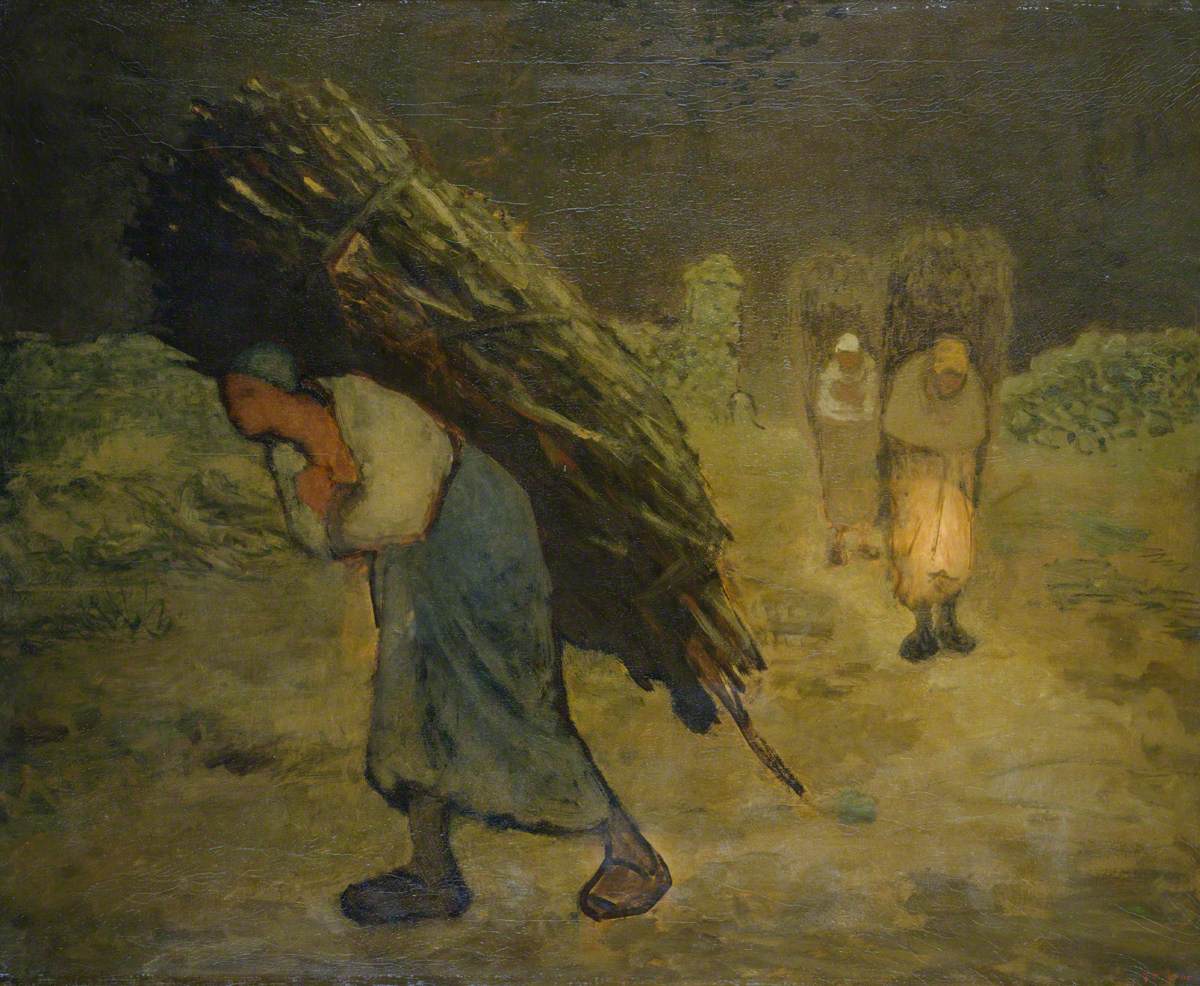
Seeing, and reading (again?) about 'The Faggot Gatherers' I couldn't help but see socio-economic history enacted:

'Two women are taking a short rest from gathering tree branches for sale as firewood. The older woman’s hunched back and clawed hands betray a lifetime of physical toil. The setting is the forest of Fontainebleau, south of Paris, close to the village of Barbizon. Millet was an exponent of Realism, a movement that rejected historical art and idealisation in favour of a truthful view of contemporary reality.'

Text: https://www.nationalgalleries.org/art-and-artists/232271
Winter, The Faggot Gatherers Jean-François Millet (1814–1875) National Museum Cardiff

The National Gallery's accompanying text reads:

'Three women are on their way home trom the forest of Fontainebleau. One of its entrances, the Porte aux Vaches, is visible at the back right. The staggering scale of their loads threatens to overwhelm them in their stumble homewards. The scene evokes Millet's 1851 letter to his biographer Alfred Sensier, in which he described how seeing 'a poor figure laden with a faggot reminded him of the constant fatigue of people's lives.
While the painting is unfinished, the elemental figures are typical of Millet's vork. The extreme simplification of their forms results in austere silhouettes.'

Mental illness has always been a facet of humanity, evidence of trephination from prehistoric times and across cultures and geographies bears testimony to the mind - body divide. Life was brutish physically too. What chance did the weakest stand? If, that is a broken bone: you could be left behind? But perhaps we underestimate the knowledge and experience of our ancient ancestors. Knowledge gained and passed orally, culturally, even before written history. Perhaps too, we struggle to understand how early humanity expressed itself beyond the big-stick of nature and the struggle for survival as the hominids that led to 'us' were winnowed down?

Even as recent as the 19th century life was hard. As the notes above attest, Millet's work seeks to record the sheer physicality of labour, even as the industrial age emerged. The advent of the industrial revolution brought its own pressures and privations, as pastoral life is replaced with change work at home (spinning cotton) to urban and factory growth. 

Severe mental illness would have been institutionalised in poor houses, religious and charitable organisations. Parity of esteem is grounded, to some extent in the questions: "What happened to you?", or "How are you feeling today?" In Millet's work the physical cost and strain stands out. While in the L'Angelus there is debate about prayer, or grief. What is visible usually speaks first, and stands for itself. This is why self-awareness, reflection, critical thinking, observational and interpersonal skills are important; and why mental health nursing calls for specific knowledge and skills. And, in psychiatry too, even when the same is contested.

Image source: Oil on carvas Lent by Amgueddfa Cymry - Museum Wales. Bequeathed by Gwendoline Davies in 1952.

Tuesday, July 22, 2025

Mary Kelly - Post-Partum Document

From a visit to Liverpool Tate 13.6.2008:

 (Experimentum Mentis III: Weaning from the Dyad)

Individual
|
      INTERPERSONAL    :     SCIENCES               
HUMANISTIC  --------------------------------------  MECHANISTIC      
 SOCIOLOGY  :    POLITICAL 
|
Group


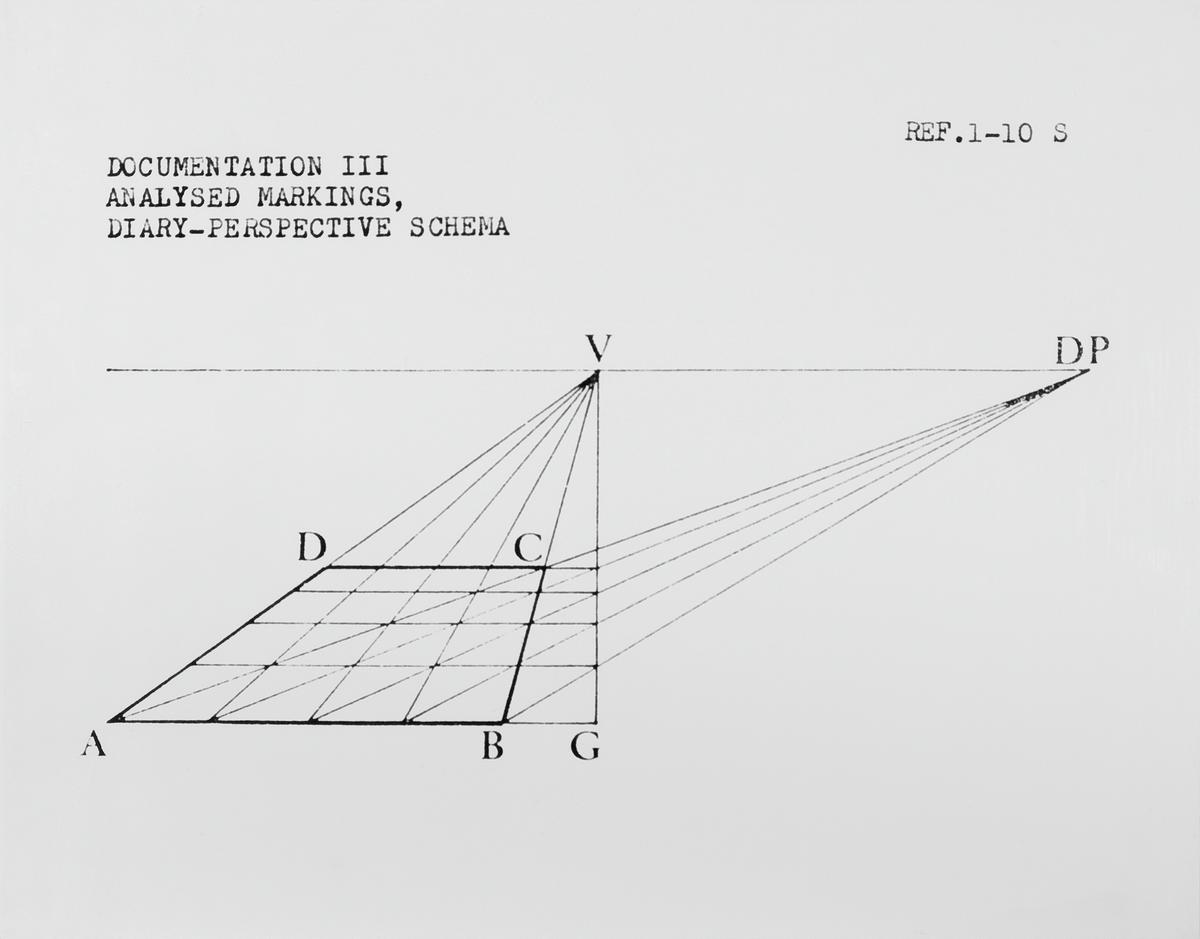
Post-Partum Document. Documentation III: Analysed Markings And Diary Perspective Schema (Experimentum Mentis III: Weaning from the Dyad)

1975, Mary Kelly  © Tate 

'Chalk and crayon drawings by Mary Kelly’s son are overlayed with transcriptions, annotations and reflections based on their interactions as he began nursery. These panels are the third group of a six-part series, each documenting a formative moment in Kelly’s son's early life. Kelly has stated that Post-Partum Document is not ‘autobiographical’. She instead uses her story to suggest ‘an interplay of voices – the mother’s experience, feminist analysis, academic discussion, political debate’. The work subverts romanticised depictions of the mother-child relationship, presenting the experience as inevitably bound up with societal norms and gendered expectations.'

See also: Mary Kelly

  dyad : perspective : art

Friday, July 04, 2025

Diagrams - AMO/OMA at Prada Foundation Venice

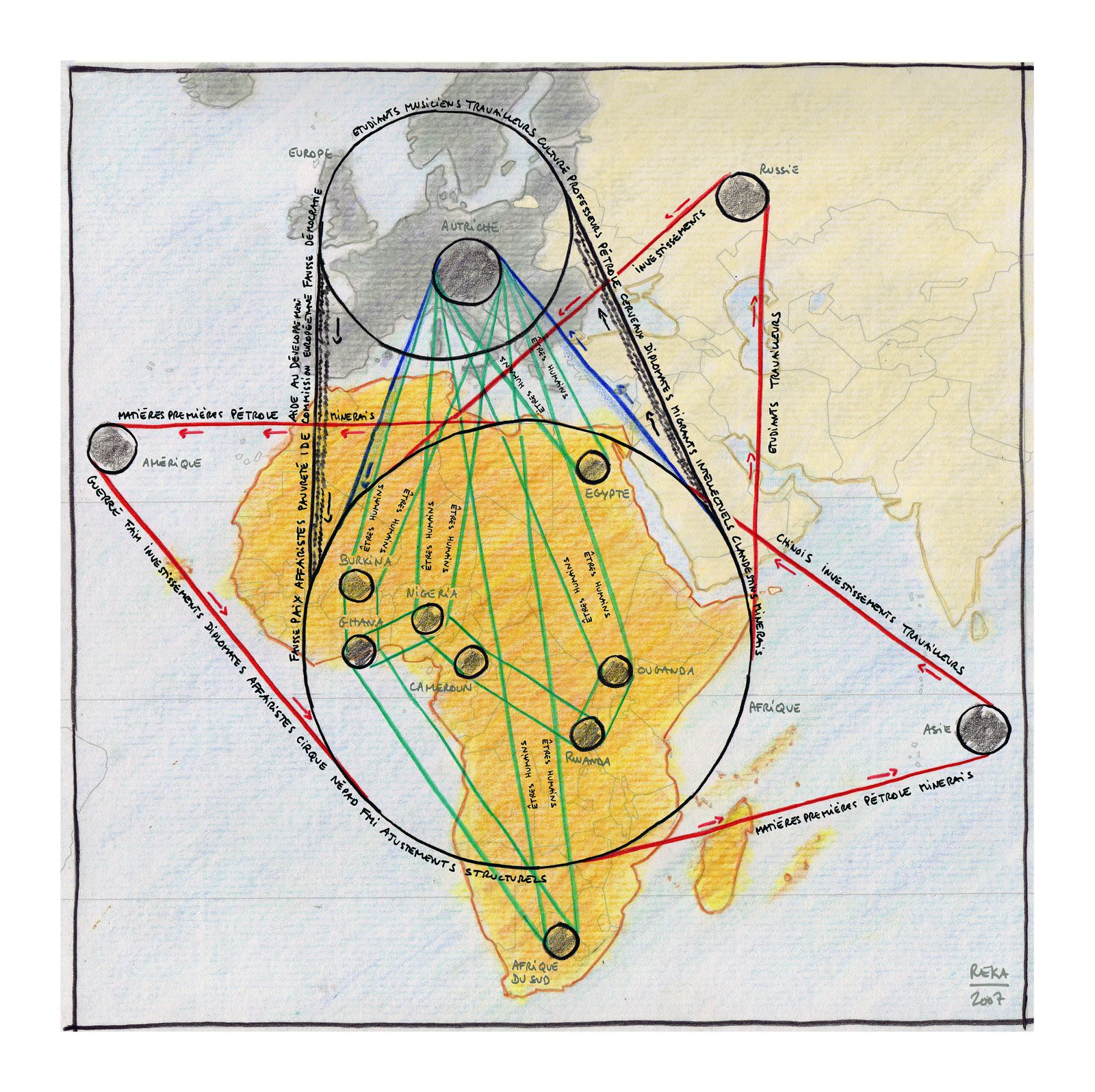
"There is no such thing as an innocent map, observes Philippe Rekacewicz in his catalogue essay that accompanies Diagrams, a new exhibition at the Prada Foundation in Venice.

A renowned cartographer, the Paris-born Rekacewicz is well aware of his medium's capacity to transform narratives for good and ill. His own work includes maps that illustrate the deaths of migrants as they bid for new lives in Europe. "A map," Rekacewicz continues, "is above all a social and political act - and therefore inherently subjective."' p.5.

Individual
|
      INTERPERSONAL    :     SCIENCES               
HUMANISTIC  --------------------------------------  MECHANISTIC      
 SOCIOLOGY  :    POLITICAL 
|
Group
Am I Free?

My history ...
Philippe Rekacewicz / The African big wheel, 2007
The wheel symbolizes permanence and continuity in the context of a profoundly unequal exchange, drawing, color pencil and ink, exhibition copy.
Courtesy Philippe Rekacewicz
(Image credit: Philippe Rekacewicz)

SOCIETY

... is our history ...

Freedom

National & International Law

Justice


'Other pictures are equally revealing for what they conceal. Consider the diagram entitled "Universal commercial history", a visual analysis drawn up by the Scottish engineer William Playfair in 1805 which traces the rise and fall of global wealth since 1500 BC against what he terms "Remarkable Events Relative to Commerce". Playfair, who is said to have invented the pie chart, includes moments such as "Rome founded" "Mahomet's Flight" and "America discovered". He never mentions slavery.

With such a broad-brush approach, lacunae are inevitable. It is a shame that the work of Viennese social scientist Otto Neurath - who, along with his wife Marie and colleague Gerd Arntz, invented the Isotype (International System of Typographic Picture Education) - is not on show. Based on pictograms, Neurath's Isotypes are an lmportant forerunner to the digital vernacular (from emojis to icons) so familiar to us today. Nor does the exhibition include maps of the devastation of Gaza since October 2023, such as those made by investigative research agency Forensic Architecture, which are proving among the most critical diagrams of our time.' p.5.

Philippe Rekacewicz - https://www.grida.no/resources/10988

My source:
Rachel Spence. Hidden truths in the best laid plans. Diagrams | What charts, maps and graphics can - and can't - tell us. Collecting, FTWeekend. 26-27 April 2025. p.5. 
With many thanks acknowledging length of quotation.

Image source:
https://www.wallpaper.com/architecture/oma-amo-diagrams-prada-foundation-venice

See also: 'icon' : 'symbols' : 'diagram' : 'map' : 'Forensic Architecture'

Archived listing Links II Sciences - inc. 'Diagrams' & 'Visualization I' and 'II': 

Tuesday, July 01, 2025

Exhibition: V&A Design and Disability - to 15th Feb 2026

There is a lot of informative, creative and surprising insights through this V&A exhibition website, and related (well executed web designs), by Conor Foran for example. 


Individual
|
      INTERPERSONAL    :     SCIENCES               
HUMANISTIC  --------------------------------------  MECHANISTIC      
 SOCIOLOGY  :    POLITICAL 
|

I will look to post again at the year's end and try to visit the V&A in September, or November.

Image: https://www.vam.ac.uk/exhibitions/design-and-disability

Ack. and thanks to Conor Foran & V&A.

See also: 'clinical' in -

My source:
Emily Cronin. 'You have to be your own inspiration', Life&Arts, FTWeekend, 7-8 June 2025, p.4.

Wednesday, May 15, 2024

Yves Klein 'Anthropométrie sans titre'

Individual
|
      INTERPERSONAL    :     SCIENCES               
HUMANISTIC  --------------------------------------  MECHANISTIC      
 SOCIOLOGY  :    POLITICAL 
|
Group


Anthropométrie sans titre (ANT 43),
c1960 © Courtesy of Lévy Gorvy Dayan


My source: Rotraut to Baya Simons. My husband, Yves Klein, FT Weekend, HTSI, 11 May 2024. pp.23-24.

Yves Klein and the Tangible World is at Lévy Gorvy Dayan until 25 May, levygorvydayan.com

Saturday, March 30, 2024

"Jason and the adventure of 254" c/o Wellcome Collection

"A work by artist Jason Wilsher-Mills is displayed at the Wellcome Collection ahead of the opening of a solo exhibition at the London museum. "Jason and the adventure of 254" reimagines the gallery space as a hospital ward and features huge sculptures, illustrations and interactive dioramas that draw on the artist's experience of becoming disabled at the age of 11.

The exhibition's title alludes to 2.54pm at Pinderfields Hospital, Wakefield, on August 1 1980, when Wilsher-Mills watched from his hospital bed as his parents were told he was suffering from an autoimmune condition brought on by a bout of chicken pox.

The free exhibition opens tomorrow (21st March) and runs until January." p.2.

INDIVIDUAL
|
      INTERPERSONAL    :     SCIENCES               
HUMANISTIC  --------------------------------------  MECHANISTIC      
 SOCIOLOGY  :    POLITICAL 
|
GROUP


'Figure in the bed', 2024, part of Jason and the Adventure of 254, an exhibition by Jason Wilsher-Mills at Wellcome Collection. Gallery Photo: Benjamin Gilbert. Attribution-NonCommercial 4.0 International (CC BY-NC 4.0).


Body of work, Artist relives diagnosis, Financial Times, 20 March 2024, p.2. 

Previously - 'beds'

Wednesday, August 02, 2023

"Rational Concepts" 1977 by Norman Dilworth

"Rational Concepts" 1977 by Norman Dilworth. Tate
© Norman Dilworth

Hodges' model: seeking rational* concepts to deliver person-centred, integrated care and make sense of subjective and objective realities.

ARTIST Norman Dilworth 1931 – 2023 [Born in Orrell, Wigan]
MEDIUM Screenprint on paper
DIMENSIONS Image: 600 × 600 mm
COLLECTION Tate
ACQUISITION Purchased 1981
REFERENCE P07424

[NOT ON DISPLAY]

Tate: https://www.tate.org.uk/art/artworks/dilworth-rational-concepts-p07424

*Irrational too.

I sketched Dilworth's image on 5th March at Tate Liverpool, the exhibition: "Keywords. Art, Society and Culture in 1980s Britain" from 28 Feb 2014 to 11 May 2014.

Saturday, August 13, 2022

"Suffering in Silence" c/o David Robertson

 INDIVIDUAL
|

   INTERPERSONAL    :     SCIENCES               
HUMANISTIC --------------------------------------  MECHANISTIC      
SOCIOLOGY  :   POLITICAL 
|
GROUP
David Robertson www.davidrobertsonprintmaker.com QEST Scholar Instagram.com/multiple_of_one
Suffering in Silence, 2018. Woodcut, each 2000 x 910 mm.
Installation: 2400 x 5500 x 5500 mm


"David Robertson’s immersive print installation explores the stigma around mental health and the difficulties men have in reaching out for help. Consisting of 25 life-sized men, the figure is a self-portrait but is representative of any man. Formed of tally marks, each mark representing an individual." ...
[my emphasis].

The Holburne Museum:
https://www.holburne.org/events/holburne-open-david-robertson/

Image: With thanks to David Robertson

David Robertson
www.davidrobertsonprintmaker.com
QEST Scholar
Instagram.com/multiple_of_one 

My source: Printmaking Today Summer 2022, 31:122, p.7.
https://www.cellopress.co.uk/page/printmaking-today

Wednesday, March 16, 2022

Raisonnement circulaire ...?

INDIVIDUAL
|
 INTERPERSONAL    :     SCIENCES               
HUMANISTIC --------------------------------------  MECHANISTIC      
SOCIOLOGY  :   POLITICAL 
|
GROUP

"Essential oils: Meditation 626, a sculpture by Seo Young-Deok made from bicycle chains, is part of an exhibition of Korean art at London's Opera Gallery until April 18", The Times, March 11, 2022, p.12.


"Essential oils: Meditation 626, a sculpture by Seo Young-Deok made from bicycle chains, is part of an exhibition of Korean art at London's Opera Gallery until April 18", The Times, March 11, 2022, p.12.

Image source: Seo Young-Deok


Friday, February 11, 2022

c/o GPonline: "Social prescribing patients curate art exhibition at leading Cornish gallery"

"The ‘What Lies Behind’ exhibition, a recent display in Newlyn Art Gallery, saw 10 patients from Morrab Surgery in Penzance select works of art from Arts Council national collection of more than 8,000 pieces.

The group were asked to choose pieces that reflected their personal response to the pandemic. The works on display included textiles, sculpture, prints and paintings by artists including Pablo Picasso, Henry Moore and Chila Burman.

The project came about during lockdown after Morrab Surgery’s social prescribing link worker Ellie Moseley realised that many of the patients in the practice that she was working with had an interest in the arts." [ On GPonline ].


  Self - Individual - Person
|

 INTERPERSONAL    :     SCIENCES               
HUMANITIES - ARTS ----------------------------------  SCIENCES
SOCIOLOGY  :   POLITICAL 
|
Community - Group - Population
Personal expectations (care, medicine...)

Emotional wellbeing

Person-centred care

Social prescribing as a care intervention
'What lies behind' exhibition, Newlyn Art Gallery
Social prescribing
as a care policy needs
community resources
(to match).

Amid health policy calls
for innovation and
 sustainable healthcare systems and services; the community remains the sustainable resource (if not neglected).

Funding -
... ££ $$ €€ ¥¥ ฿฿ ₫₫
₴₴ ₪₪ ₽₽ ₹₹ ₩₩ ...
local :: global health.


My source: @ActivateEurope

https://twitter.com/ActivateEurope/status/1491751271539351562?s=20&t=ZQHyHs2a9--xJpmJDzrdHQ

@GPonlinenews

Monday, February 15, 2021

The Human Touch ...

INDIVIDUAL
|
INTERPERSONAL : SCIENCES
HUMANISTIC----------------------------------------------- MECHANISTIC
SOCIOLOGY : POLITICAL
|
GROUP - COMMUNITY - POPULATION

how to touch another person's mind

if 'seeing is believing',
touch is ... ...

physical touch
making a mark
leaving a trace


how distant       nature's touch?
yet
weather's touch is Constant

may I ... touch ...

policy touches
how light & legitimate
a State's touch?


Sooke, A. A reminder of how important it is to touch, The Daily Telegraph, 15 January, 2021, p.24.

Saturday, December 26, 2020

National Felt Service: Art - Sciences - Health

individual
|
INTERPERSONAL : SCIENCES
humanistic ----------------------------------------------- mechanistic
SOCIOLOGY : POLITICAL
|
group


Gabaldoni, A. (2020) Soft Touch, The Sunday Times Magazine. 6 December, pp.48-55.

https://www.sewyoursoul.co.uk/shop/


Saturday, August 29, 2020

Reflecting in the Garden: c/o Anish Kapoor

individual
|
INTERPERSONAL : SCIENCES
humanistic ----------------------------------------------- mechanistic
SOCIOLOGY : POLITICAL
|
group - population
Anish Kapoor, Installation view, 2020
Houghton Hall, Norfolk, UK


See also: https://hodges-model.blogspot.com/search?q=kapoor

 My sources:

Campbell-Johnston, R. (2020) As maddening as it is mesmerising, The Times, Visual Art, Friday, July 10, p.10. 

Revely-Calder, C. (2020) The pomposity's still there, but so are the moments of magic, The Daily Telegraph, Friday, July 10, p.25.


Friday, July 17, 2020

Ecovisionaries: The Royal Academy - Nov 23 - Feb 23 2020

Late autumn I received news of an exhibition that sounded right-up my street - down in London.

Eco-Visionaries at The Royal Academy.

Without wishing to sound grandiose, I see myself as an 'eco-visionary' in several respects:

  • yes, as a white, middle-class male and would-be environmental do-gooder;
  • yes, as this is the perspective that Hodges' model fosters;
  • yes, because now we all need to be eco-visionaries.

As this post's title shows, the exhibition had a short run. Probably a norm in London, but from the NW of England not straightforward but then there was great news and a golden opportunity.

The RA was organising a symposium:

Confronting a Planet in a State of Emergency: Eco-Visionaries Symposium

Sat 22 Feb, 10am-6pm
From futuristic visualisations of a world without humans, to innovative ways of measuring toxicity in cities, creative research into the climate crisis is proving essential for imagining solutions. Join us for a full day of presentations and discussions looking at how we can protect and understand our environment now and in the future. 

And! There was a call for abstracts. Just the thought of a symposium makes me go wobbly, so could I imagine this: actually being an eco-visionary and presenting at the RA! Goodness me.


On twitter I read of many people's efforts to present and publish. I've tried for the Planetary Health event and been unsuccessful but will try again. To those people who try, I say: If you've a message, a resource - keep trying.

Previously on W2tQ [ Waste not, want not ... ], I recycled an 'Item for discussion' that was not accepted last year for RCN Congress, so once again:

Abstract:

In healthcare we are and must be in permanent readiness for emergency situations. Education, continuing professional development, theory and practice are all predicated on lifelong learning and safety. Triage is applied in a practised, reflex manner. This paper will explain how we can better critique the climate emergency and debate solutions using a resource created in healthcare. Healthcare must not only respond to extreme levels of demand, but it is itself demanding. Practitioners and learners must provide safe, high quality care; which must be holistic to achieve a person-centred focus, a positive lived-experienced and integrated outcome. Health is a dedicated Social Development Goal (3), this paper reveals a map of all seventeen.

Despite the proclamations of technophiles, technology alone cannot deliver solutions, a socio-technical perspective is essential. Health and health care systems achieve this by being situated. The climate change emergency highlights not just the interdependency of people to the-ir environment, but the biosphere as a whole. We take health for granted until something goes 'wrong' and now the weather is 'wrong'. This paper addresses: “Creative approaches to conveying information on climate change, air pollution or other environmental issues” but can potentially represent all the symposium's themes. Does this matter? It does in terms of finding not only solutions, but reconciling socio-economic, political groups, global dependencies, issues and vested interests.

The environment needs nursing now.

Health professions will not take kindly to the 'system' placing the climate crisis at their feet and proclaiming “triage this!” Ironically, (bar mass-extinction events) since life emerged the 'system' that really matters is self-regulating. The first example of self-care is vested in Gaia. Eco-vision calls for vision of scale. This paper will share a care architecture worthy of eco-vision and the visionaries we must all aspire to be ...

Title:

A Unique Space: a Care Architecture for Person, Population and a Planet

I'm sure the above can be re-purposed, since alas, it was also unsuccessful. I knew the chances were slim. Hearing the speakers and panel discussions, this is clearly their forte and all very well qualified as Eco-Visionaries. The organisers were very gracious and encouraging, which helped to temper the disappointment. I was offered a complimentary place at the symposium and and was informed there would be Q&A, so I would have chance to highlight the model behind the abstract.

I arrived in London on the Thursday before and visited the exhibition Friday 21st - the last day. It was stimulating, challenging, thought-provoking and upsetting - a video of a giraffe being shot. If shock was the intention: it worked.

With a white rhino in the exhibition and an elephant in the lecture theatre called 'COVID' the symposium appeared full the day after.

I will defer to The Guardian's Oliver Wainwright's review of the exhibition:

Eco-Visionaries review – the salt flats will die and the jellyfish shall rise

I asked several questions / raised points at the symposium, but I suspect for many of us the weeks and months of disruption since disrupted the positive momentum that I at least left with - which is a pity.

I hope the RA Architecture team re-visit this theme. Not so much that I can try to submit again, but more to perfect the technique of framing Hodges' model within a question.

The exhibition and symposium were very good for learning and I really appreciate the opportunity to attend.