Hodges' Model: Welcome to the QUAD: mood

Hodges' model is a conceptual framework to support reflection and critical thinking. Situated, the model can help integrate all disciplines (academic and professional). Amid news items, are posts that illustrate the scope and application of the model. A bibliography and A4 template are provided in the sidebar. Welcome to the QUAD ...

Showing posts with label mood. Show all posts

Thursday, October 16, 2025

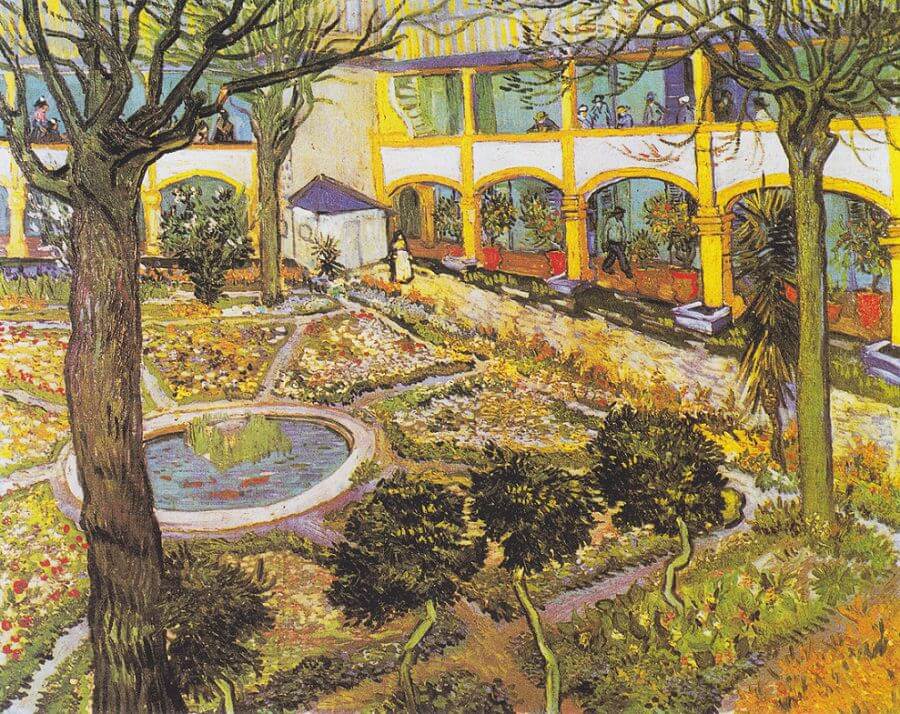
Recovery, Rehabilitation, Reablement by Van Gogh

Individual
|
      INTERPERSONAL    :     SCIENCES               
HUMANISTIC =========================  MECHANISTIC      
 SOCIOLOGY  :    POLITICAL 
|


My source: Van Gogh exhibitions (at least two); and Robin Lane Fox. Two years in Provence, House&Home, FTWeekend, 11/12 January 2025. p.10. 

Image source: https://www.vincentvangogh.org/the-asylum-garden-at-arles.jsp

Tuesday, June 10, 2025

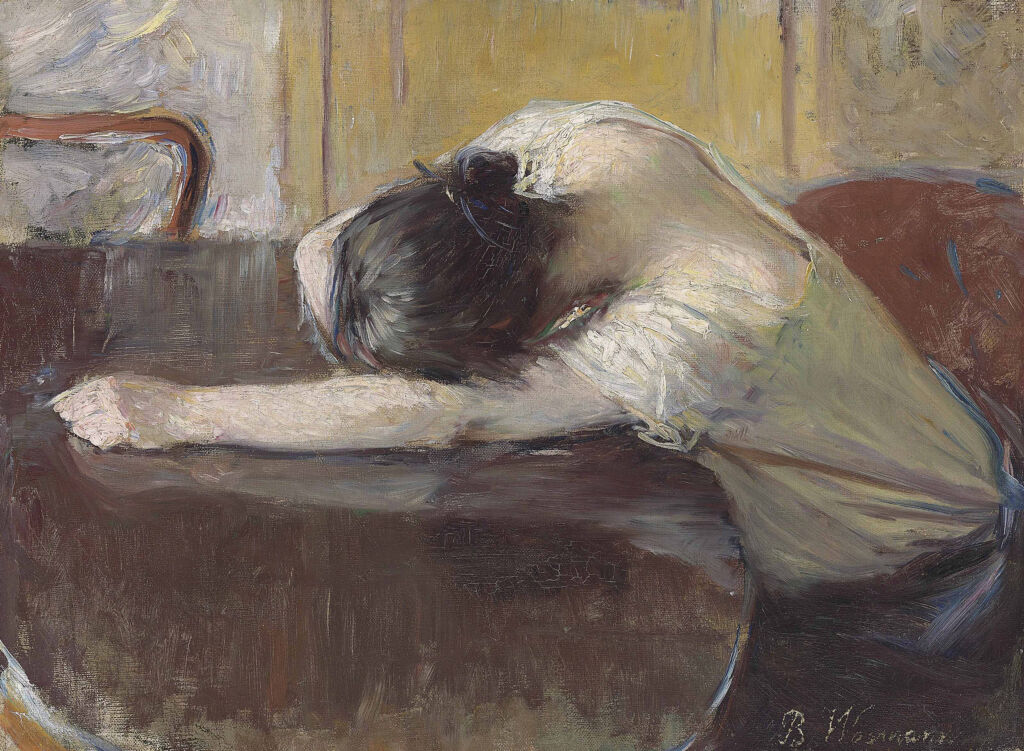
"Despair" by Bertha Wegmann

individual
|
INTERPERSONAL : SCIENCES
humanistic ------------------------------- mechanistic
SOCIOLOGY : POLITICAL
|
group
Despair by Bertha Wegmann (Danish, 1847 – 1926)


Okoro, E. A time to rest and recharge. The Art of Life: Life&Arts, FTWeekend. 17-18 May 2025. p.2.
https://www.ft.com/content/6c2d4362-a464-45e4-8288-a80d5e8a730f

See also: https://en.wikipedia.org/wiki/Bertha_Wegmann

How Bertha Wegmann communicated the 19th-century female experience. Christie's

Image: https://high.org/collection/despair/

Thursday, June 05, 2025

World Happiness Report 2025

WORLD HAPPINESS REPORT 2025


. . . and looking ahead to WHR 2026 . . .


Prof Lord Richard Layard

Editor, World Happiness Report

In World Happiness Report 2024, we presented evidence of a concerning decline in the wellbeing of young people in Western industrialised countries.

Obviously, a child’s wellbeing matters for the same reason that any individual’s wellbeing matters. But wellbeing among children and adolescents is also critical since it is the best predictor of how happy said child will be in their subsequent life – with a higher predictive power than the qualifications which they might obtain.


There has been much debate about the reasons for such a downward trend, with many competing theories and policy recommendations. However, one explanation has captured public and political attention more than any other: social media.


Also in 2024, Jonathan Haidt, a social psychologist at New York University’s Stern School of Business, published The Anxious Generation, arguing that the decline in youth wellbeing is driven by a transition from a play-based childhood to a phone-based childhood. The book has been a best-seller and sparked heated debate, both in academia and the wider world.


As editors of the World Happiness Report, we have followed this debate closely, concerned that rigorous science was being overshadowed by shallow media narratives.


In World Happiness Report 2026, we see an opportunity to bring all sides of the debate together to establish the facts, clarify disagreements, and provide decision-makers with a balanced assessment of what we know, what we don’t know, and what should be done.


We’re encouraging researchers from across the world to submit chapter proposals focusing on the relationship between social media and subjective wellbeing before the deadline of Sunday 15 June. Full details are available on the World Happiness Report website.


My source: Email from info AT worldhappiness.report

Previously: 'happiness'

Tuesday, June 03, 2025

Self, ego, life and death

The INDIVIDUAL - GROUP axis continues to fascinate:


individual
|
INTERPERSONAL : SCIENCES
humanistic ------------------------------- mechanistic
SOCIOLOGY : POLITICAL
|
group

SELF - IDENTITY - PERSONHOOD

ego superego id

mood - depression - mania

psychoactive substances

ego death - reset, reconstitition, re-birth?

NATURE

 personhood -
rivers, mountains, trees, land

medicine(s)

psychedelics

cultural identity, knowledge

social history, practices

corporate personhood

law 'person'


See also:

Pahnke, Walter N. “The Psychedelic Mystical Experience in the Human Encounter with Death.” The Harvard Theological Review 62, no. 1 (1969): 1–21. http://www.jstor.org/stable/1509131.

Adler, Nathan. “Ethics, Ethos, and Actualization: The Paradigm of the Antinomian Therapies.” Issues in Criminology 5, no. 1 (1970): 85–99. http://www.jstor.org/stable/42912546.

Blainey, Marc G. “Forbidden Therapies: Santo Daime, Ayahuasca, and the Prohibition of Entheogens in Western Society.” Journal of Religion and Health 54, no. 1 (2015): 287–302. http://www.jstor.org/stable/24485257.

Nail, Thomas. “How to Read the Nature of Things.” In Contemporary Encounters with Ancient Practice, edited by Abraham Jacob Greenstine, Ryan J. Johnson, and Dave Mesing, 1st ed., 299–321. Edinburgh University Press, 2025. http://www.jstor.org/stable/10.3366/jj.17381661.21.

Corporate personhood
https://en.wikipedia.org/wiki/Corporate_personhood

Tuesday, July 18, 2023

studium and punctum c/o Rose (2012)

'Care' as a Photograph - duality . . .

Visual Methodologies
"It is as if the Photograph always carries its referent with itself, both affected by the same amorous or funereal immobility, at the very heart of the moving world; they are glued together, limb by limb, like the condemned man and the corpse in certain tortures." [Barthes 1982: 5-6] p.121.

 "The referent is there in photographic images in ways it is not in other sorts of visual imagery, Barthes argues. And a result, he suggests that photographs can be interpreted in two ways. First, there is a level of the studium, which is a culturally informed reading of the image, one that interprets the signs of the photographs. But he says that some photographs produce a different response, which is a second kind of reading, by containing what he called a punctum. A punctum is unintentional and ungeneralisable; it is a sensitive point in an image which pricks, bruises, disturbs a particular viewer out of their usual viewing habits. And he went so far as to suggest that 'while the studium is ultimately always coded, the punctum is not [Barthes 1982: 51]. That is, there are points in some photographs that escape signifiers and shock the viewer with their 'intractable reality' [Barthes 1982: 119]. And while shock is something that most adverts aim to achieve, it is the case that recent advertising is relying more and more, not only on the transfer of meaning between signs, but on the evocation of a feeling or a mood attached to a brand that is difficult to analyse using semiological terminology." p.122.


On twitter* @h2cm over the years I've noted a certain stance, an aversion even, to generalist approaches in nursing (as suggested apparently by Hodges' model). The simplicity of Hodges' model in its template (basic) form belies how the model can address both generalist and specialist practice and theory. Bluntly: choose your domain; slice, dice and drill as you wish. 

Rose's reference to Barthes, in-particular studium and punctum stands out. We can equate the former with the situation as found, the clues provided in the referral details, the initial cues, data and information gleaned upon assessment. What might be expected, so to speak, including assumptions. 

But the punctum, may be described - interpreted in person-centred (yet professionally balanced) terms. Especially in assessment, planning, intervention and evaluation. The punctum signifies salience: what is important to this person. If the academic emphasis is upon ‘reflection in action’, ‘reflection on action’, ‘single loop learning’ and ‘double loop learning’ (Schön, 1987), can the punctum represent empathy, rapport, the sustenance of dignity and respect, an individual's sense-making? 

Our photograph, taken through Hodges' model is comprised of four frames. The photograph is  compound, and with several exposures it can be animated.^ When played, it reveals a hint, a fraction, an interval in an individual's (potential) health career. A light upon the several-fold determinants of health and their influence and impact upon life chances experienced and exercised to date - and to follow (climate change). 
 

Rose, G. (2012). Visual Methodologies: An Introduction to Researching with Visual Materials (3rd ed.). London: Sage. PB. [Now in 5th edition.] Image - Amazon.

Schön , D. (1987). Educating the reflective practitioner. San Francisco, CA: Jossy Bass. 

*Yes, I know.

^The Producer - Director depends on your Spiritual stance.

Rose (2012) now with student nurses [on placement from Chester University].

Saturday, March 04, 2023

International Women’s Day: Kalia Vandever - "Temper The Wound"

 INDIVIDUAL
|
 INTERPERSONAL    :     SCIENCES               
HUMANISTIC --------------------------------------  MECHANISTIC   
SOCIOLOGY  :   POLITICAL 
|
GROUP

Temper
the
Wound

Wound

Wound


Kalia Vandever

BBC Radio 3: J to Z International Women’s Day Special

Saturday, February 18, 2023

"163 Days"

 INDIVIDUAL
|
 INTERPERSONAL    :     SCIENCES               
HUMANISTIC --------------------------------------  MECHANISTIC   
SOCIOLOGY  :   POLITICAL 
|
GROUP

163 Days - Hannah Hodgson
Poetry in [not in] motion


“Hannah Hodgson takes us to the paradoxical heart of poetry itself: to be held inside a pain both intensified and soothed by the sheer brilliant presence of the poet’s mind.” – Caroline Bird

Hannah Hodgon is an award-winning poet and a palliative care patient. In her compelling debut collection 163 Days, she uses a panoply of medical, legal, and personal vocabularies to explore what illness, death and dying does to a person as both patient and witness.  

163 Days is the length of Hannah’s longest period of hospitalisation to date. In this long poem, she probes various truths, personal and medical; truths which clash like a tray of dropped instruments in a silent operating theatre.

The speaker is a teenager on the cusp of adulthood. Doctors struggle to diagnose her complex conditions. Through daily, diary-like poems we see the children’s ward through Hannah’s eyes. It is decked out in primary colours. Volunteer clowns visit. At seventeen she is ‘too old’ to be here, ‘too young’ to move to the adult ward.

The mundanity of hospital life is marbled by a changing landscape of mood, hope and loss. Her symptoms are painful. She has numerous tests and procedures to keep her alive long enough to figure out what’s wrong. A gap yawns between the person she is, and the person in her medical notes.

In ‘Aftercare’, Hannah navigates the worlds of both nightclubs and hospice care as she embarks on a new version of her life as a disabled adult. 163 Days is an important collection, in which Hodgson’s true voice takes poetry into difficult places.

Listen to the BBC radio play adaptation of 163 Days on the New Creatives website here.

163 Days by Hannah Hodgson, Seren Books ISBN-13: 9781781726471
Publication Date: Monday, March 28, 2022

My source:
Hannah's book in Kirkby Lonsdale, The Book Lounge 17th February 2023.

Saturday, August 13, 2022

"Suffering in Silence" c/o David Robertson

 INDIVIDUAL
|

   INTERPERSONAL    :     SCIENCES               
HUMANISTIC --------------------------------------  MECHANISTIC      
SOCIOLOGY  :   POLITICAL 
|
GROUP
David Robertson www.davidrobertsonprintmaker.com QEST Scholar Instagram.com/multiple_of_one
Suffering in Silence, 2018. Woodcut, each 2000 x 910 mm.
Installation: 2400 x 5500 x 5500 mm


"David Robertson’s immersive print installation explores the stigma around mental health and the difficulties men have in reaching out for help. Consisting of 25 life-sized men, the figure is a self-portrait but is representative of any man. Formed of tally marks, each mark representing an individual." ...
[my emphasis].

The Holburne Museum:
https://www.holburne.org/events/holburne-open-david-robertson/

Image: With thanks to David Robertson

David Robertson
www.davidrobertsonprintmaker.com
QEST Scholar
Instagram.com/multiple_of_one 

My source: Printmaking Today Summer 2022, 31:122, p.7.
https://www.cellopress.co.uk/page/printmaking-today

Friday, February 11, 2022

c/o GPonline: "Social prescribing patients curate art exhibition at leading Cornish gallery"

"The ‘What Lies Behind’ exhibition, a recent display in Newlyn Art Gallery, saw 10 patients from Morrab Surgery in Penzance select works of art from Arts Council national collection of more than 8,000 pieces.

The group were asked to choose pieces that reflected their personal response to the pandemic. The works on display included textiles, sculpture, prints and paintings by artists including Pablo Picasso, Henry Moore and Chila Burman.

The project came about during lockdown after Morrab Surgery’s social prescribing link worker Ellie Moseley realised that many of the patients in the practice that she was working with had an interest in the arts." [ On GPonline ].


  Self - Individual - Person
|

 INTERPERSONAL    :     SCIENCES               
HUMANITIES - ARTS ----------------------------------  SCIENCES
SOCIOLOGY  :   POLITICAL 
|
Community - Group - Population
Personal expectations (care, medicine...)

Emotional wellbeing

Person-centred care

Social prescribing as a care intervention
'What lies behind' exhibition, Newlyn Art Gallery
Social prescribing
as a care policy needs
community resources
(to match).

Amid health policy calls
for innovation and
 sustainable healthcare systems and services; the community remains the sustainable resource (if not neglected).

Funding -
... ££ $$ €€ ¥¥ ฿฿ ₫₫
₴₴ ₪₪ ₽₽ ₹₹ ₩₩ ...
local :: global health.


My source: @ActivateEurope

https://twitter.com/ActivateEurope/status/1491751271539351562?s=20&t=ZQHyHs2a9--xJpmJDzrdHQ

@GPonlinenews

Thursday, October 31, 2019

Lucian identity ii

INDIVIDUAL
|
INTRA- INTER-PERSONAL : SCIENCES
HUMANISTIC ----------------------------------------------- MECHANISTIC
SOCIOLOGY : POLITICAL
|
GROUP

Lucian Freud, Interior with Hand Mirror (Self-Portrait), 1967.
Oil on canvas. 25.5 x 17.8 cm. Private collection.
© The Lucian Freud Archive / Bridgeman Images.
Painting
as
Process


process
as
painting


See also:

Post: Lucian identity i

Lucian Freud Archive
http://lucianfreud.com/index.html

Royal Academy Lucian Freud: The Self-portraits
https://www.royalacademy.org.uk/exhibition/lucian-freud-self-portraits

My source:
Campbell-Johnston, R. The secrets that still lie in the paint-strewn lair of Lucian Freud, The Times, Saturday Review, October 19 2019, pp.4-5.

Lucian identity i

INDIVIDUAL
|
INTERPERSONAL : SCIENCES
HUMANISTIC ----------------------------------------------- MECHANISTIC
SOCIOLOGY : POLITICAL
|
GROUP
Lucian Freud, Self Portrait, c.1956 (oil on canvas)
Painting

Process

peer (painting)

peer supervision

"... [Lucian Freud's] most precious works are perhaps his unfinished portraits. ... The two painters [Francis Bacon] often used each other as models preferring to depict each other’s psychological states rather than physical. ...

Then there is the unfinished self-portrait from around 1956. (Image #4 in the slideshow) These paintings should be looked at as precious gifts that offer an unprecedented access to Freud’s very personal process. Notice how his loose pencil marks, more like broad guidelines for the final portrait gain volume and become imbued with emotion at the hand of the master. You can see that Freud started each portrait with the most expressive feature of the human face – the eyes, and moved radially outwards from there."
 With my emphasis and image source:
 http://www.galleryintell.com/lucian-freud-portraits-kunsthistorisches-museum/
See also:

Lucian Freud Archive
http://lucianfreud.com/index.html

Royal Academy Lucian Freud: The Self-portraits
https://www.royalacademy.org.uk/exhibition/lucian-freud-self-portraits


My source:
Campbell-Johnston, R. The secrets that still lie in the paint-strewn lair of Lucian Freud, The Times, Saturday Review, October 19 2019, pp.4-5.

Tuesday, October 22, 2019

"2020" A Musical (and Global?) Vision c/o Richard Dawson

individual
|
INTERPERSONAL : SCIENCES
humanistic ----------------------------------------------- mechanistic
SOCIOLOGY : POLITICAL
|
group - population

2020: Richard Dawson
anxiety, mood
mental health
PROCESSes

23 June 2016
data = 'evidence'*

Results

Votes %
Leave 17,410,74251.89%
Remain 16,141,241 48.11%
Valid votes 33,551,983 99.92%
Invalid or blank votes 25,359 0.08%
Total votes 33,577,342 100.00%
Registered voters/turnout 46,500,001 72.21%
 
SOCIETY

 THE high STREET

PRACTICE BREXIT

(Let's call it -) PREPARATION ?

folks- MUSIC -onomy

"permanent sickie"
Civil Service / Servant
BREXIT
 AUSTERITY
BRIT    AIN
ENG LAND
FR EN CH
"state-of-the-nation"


In using Hodges' model in clinical, educational and many other contexts (informatics a prime example) I have associated 4P's, one with each care, or knowledge domain of the model:

SCIENCES - process
INTRA- INTERPERSONAL - purpose
SOCIOLOGY - practice
POLITICAL - policy

https://richardmichaeldawson.bandcamp.com/album/2020

*I've no axe-to-grind, but am all too aware of the primacy of 'data' and evidence.

Wikipedia: Brexit referendum


Friday, February 23, 2018

Depression Worskhop: c/o and with thanks to AffecTech

As posted last September I enjoyed an evening at the launch of AffecTech at Lancaster. This post is prompted by a tweet:

I should add that this post is not intended to represent an endorsement by AffecTech but there is an opportunity to reflect and show how Hodges' model can be used.  I contacted the researchers who - in the spirit just mentioned - kindly forwarded higher resolution images. Of course, not being present at the workshop a lot of information is lost. The reference to art is interesting in itself. It is difficult to capture the context of the whole workshop but - as per the tweet - a short article sets the scene:

AffecTech Design Workshop: Discussion on Cross-disciplinary Methods for Depression Treatment

I have provided two examples of Hodges' model mapping the contents of the workshop. The first,  covers Figure 1: Concept maps of depression causes and symptoms. I don't have a key so there may be the thoughts of several individuals - as per the colours and codes on the flipcharts. Some terms are immediately not only cross-disciplinary but multicontextual in terms of their everyday meaning, for example, darkness, falling, stuck-ness, negative spiral (thoughts, actions), imprisonment mentally, physically, and politically due to dependency, financial constraints.

individual
|
INTERPERSONAL : SCIENCES
humanistic --------------------------------------- mechanistic
SOCIOLOGY : POLITICAL
|
group
Unreachable hope                                     Pain
                                          Weight - burdened
       Immobility - motivation
                  DEPRESSION    Anxiety
DESPERATION                                          Stuck
                Darkness    Grief             Falling
Insomnia
      Negative filter         No hope
Nowhere
  Negative spiral                             Lack of
interest and motivation
Internalising rage   Suppressed emotions
Anger Not being listened to                  Darkness
Pain
Im-mobility 
Physical decline Weight

Stuck
Chained/Locked


to go
energy

imprisonment
Darkness
Imprisonment – Social Isolation

No support

Hiding

Loneliness
Imprisonment – Powerlessness?

Loss of control

Next, I have examined the text immediately following and mapped this [my emphasis] to the model.

individual
|
INTERPERSONAL : SCIENCES
humanistic ----------------- THE SYSTEM --------------- mechanistic
SOCIOLOGY : POLITICAL
|
group
Identified, general state of lack of interest as a main symptom of depression (lack of energy, negative spiral), and as one of the obstacles for technology-based treatment of it.

Therapist input: the emotion regulation component of the system should be suggestion-based (promoting novelty in the patient daily routine). system should be able to continuously monitor* (and predict) the user mood

should have an appealing and trust-worthy interface from which it can communicate with the user and modifying his/her immediate context.

If depressed - the agent engages the user in a discussion in which a range of emotion regulation techniques is proposed to him/her.
Includes: (i) modifying environment (light changes, playing music); (ii) recommending activities; (iii) proposing mindfulness exercises; (iv) engaging the user in a discussion; or (v) recommending the user to look for the support of a friend.

Further, at the end of each day the user and the agent discuss progress made over recent days, and define small steps that could be taken in the near future.

Requirement for a pro-active intervention system, and engage the user as soon as (or better just a bit before) a critical situation is detected.

System should: *real time - 'always on'? provide daily feed-back to the user (giving a sense of incrementally overcoming problems).

Low-fidelity prototype of a system that meet these requirements. Composed of two components: (i) wrist-band device worn by the user that monitors the user mood; and (ii) an assistive agent that is responsible for the emotion regulation system component.


Working principle of system - wrist-band devices communicates to the agent when the user is in a depressed mood (- use of biosensors)


Should strive to connect the user with his/her close friends. 

Emotion regulation techniques - (v) recommending the user to look for the support of a friend (see above).


The above is provided as a 'pause for thought'. I'm no expert on NLP, but I am acutely aware of the power of the words we use. And how what is said to patients, carers can be returned as a sizzling hot potato that may reveal: great foresight in what you have missed; a major lack of understanding of a situation and treatment plan; and (then) as follows a need for urgent educational intervention. In applications such as this - care needs to be taken in when and were particular words are used. 'Treatment' is in the title, but can be a loaded term as understood by the patient, client, carer, or user. People will say, "No it isn't - this is a 'balanced' approach." but herein risks lie.

Services should be non-ageist and yet culturally if you survey treatment and related terms - from a decennial perspective I wonder what you would find? I have patients who refer to Dr Google and will challenge and ask about their care and if not satified seek further opinions - a fresh pair of eyes; and others who are quite institutionalized in respect of passively accepting what is 'prescribed'. This may be reflected in the length of their mental 'health career' and their previous mental health history.

Please note the inclusion of THE SYSTEM above in the axes and domains of Hodges' model. This is non-trivial. 

At the end of the day (and the start of the night - for someone with depression?) what is the system? I'm not being awkward, but the 'system' in research can become a lay-by. As a compound term it is shorthand, but obviously we need to focus on the elements, constituents and what glues the system together: coherence. As an example, how often in IT project are 'Requirements' the sought after token that signifies "We are on the right track!"? The focus from the above is laudable being clearly person- patient-centred. Is there more that can be said about the system and requirements in the social and political domains? Is there a way also for the agent to figure higher up the design ecosystem (hierarchy)? This is no doubt were the hard work matters - theory, practice - the thesis!

Given the complexity of the (design, care, technical, global...) problems we face I do believe that Hodges' model may serve a purpose in helping to sustain, or ‘recover’ the context – of a situation. This is the purpose of stories of course. The aim of AffecTech's project here is no less than detecting a critical situation. Perhaps this is the truth of 'integrated health records' from wrist device, to agent, patient's record and health services'? It is brilliant to see such initiatives getting underway they are the future....

 (I may add to this post in coming days - weeks.)

With thanks to Alan Cole and Andrea Patane of AffecTech at Lancaster University.
Saturday, November 11, 2017

Happiness! Happiness! ...

individual
|
INTERPERSONAL : SCIENCES
humanistic --------------------------------------- mechanistic
SOCIOLOGY : POLITICAL
|
group

Purpose 
(One of the 4P's in Hodges' model)
Joy
Satisfaction

The Blue Zone


Quality of Life -
4 All?

World Happiness Report 2017

Saturday, September 30, 2017

"Kind of Blue" Balance in all Things?

individual
|
INTERPERSONAL : SCIENCES
humanistic --------------------------------------- mechanistic
SOCIOLOGY : POLITICAL
|
group

Albrecht Dürer, Melencolia I (1514)


"Writing three decades ago about Austrian literature, the German author WG Sebald made a case for melancholia as a form of resistance. It was tempting, he said in Die Beschreibung des Unglücks (“The Description of Disaster”), to see the drive to describe misery as reactionary. But in fact, it could be much more productive and radical: “Melancholia, the contemplation of the dismal plight we are in, has nothing in common with the desire to die . . . Describing the dismal plight we face contains the possibility of overcoming it.”


My source:
Feigel, L. (2017) Kind of blue. FT Weekend, Life&Arts, 23-24 September. p.9.

"Lara Feigel is the curator (with John-Paul Stonard) of ‘Melancholia. A Sebald Variation’, an exhibition that runs in King’s College London’s Inigo Rooms from 21 September - 10 December."

Image:
Albrecht Dürer [Public domain], via Wikimedia Commons
https://commons.wikimedia.org/wiki/File%3AMelencolia_I_(Durero).jpg

Saturday, March 26, 2016

Hodges' model: Evidence-Based Integrated Healthcare - Policy, Mental Health & Research Funding

individual
|
INTERPERSONAL : SCIENCES
humanistic ---------------------------------------  mechanistic
SOCIOLOGY : POLITICAL
|
group

Mental health research 3%
Quarter of all health costs


Medical Research...
2011-2014 
33% rise in mental health related incidents dealt with by the police
Council..

£801.4 million for projects -
mental health allocated £21.8 million

Funding also via other bodies -
National Inst. for Health Research


My source: Bennett, R. (2016) Research fund spends 3% on mental health. The Times, 25 March 2016. p.24.


Sunday, March 23, 2014

Sensing Spaces: Care architecture - memories of choice

Good architecture is often invisible,
but it allows whatever is happening in that space to
be the best experience possible.

Pezo von Ellrichshausen


Good architecture may have something in common with good health; it is something that can be taken for granted. When things go awry and are wrong then architecture and health suddenly impose upon us, a major intrusion.

As I may have mentioned before, in the past I've been asked how I've managed entering such and such care facility for so long. Within health there is recognition of heartsink patients. There are still heartsink buildings too. Not purpose built, seemingly either all narrow dark corridors, interrupted when doors let in shafts of light and assault dignity and privacy; or large 'lounges' that still invite armchairs to be flung against walls.

Architecture like this is not invisible. Walls are walls, blanc, flat and solid. Pictures removed due to safety concerns. Two holes and exposed plaster testify to what? Now, after six months....?

Even for the confused there are few potential found spaces, spaces to sit, stand, be; spaces towards which some personal impetus might have a person gravitate. A space of relative quite, looking out on some-thing relaxing even if not a small garden feature.

"Where's Joan, her friend's here to see her?"
"It's OK, I know where she'll be."

Royal Academy: Sensing Spaces
Education guide