Hodges' Model: Welcome to the QUAD: time

Hodges' model is a conceptual framework to support reflection and critical thinking. Situated, the model can help integrate all disciplines (academic and professional). Amid news items, are posts that illustrate the scope and application of the model. A bibliography and A4 template are provided in the sidebar. Welcome to the QUAD ...

Showing posts with label time. Show all posts

Friday, September 18, 2026

Euclidean or Projective Care?

How many dimensions does a written - narrative record have?

Sketching out some ideas, I asked the question on Google and as usual an AI Overview response followed - snippet:
AI Overview

A physical written record has two primary spatial dimensions (length and breadth/width) as a flat document, or three dimensions (including thickness or depth/height) when considering its physical form or binding. [1, 2]

In archival and Records Continuum theory, a written record exists dynamically across four conceptual dimensions: [1, 2].

I put the question to the Records Management list with the above snippet and received several useful suggestions and sources. Perhaps I can share that at a future point? 

Acutely aware of not pursuing maths and category theory for its own sake, the query was driven by an attempt to look at Hodges' model in mathematical terms. Starting, rather obviously with the models structure and axes. When the model is assembled, as per many posts, the vertical axis:

INDIVIDUAL
|
GROUP

- shouts out the issue of parity and the distinction between mind and body. It does this at the individual and collective level. If we were to draw a silo, a cylinder springs to mind, and there are specific reasons for silos adopting this shape. Descartes gives us the perfect excuse, in the ongoing legacy. 

     Mathematical Visions

The question above came up from Joan L. Richards book 'Mathematical Visions' (c/o Lancaster Univ. library). Euclidean and the emergence of projective geometry is described. There is an interplay between 2D and 3D representation, that made me think about the health record and its dimensions. Not in a dataset sense (multi-dimensional), more generally and concretely(?). A patient's record on paper has physical dimensions (A4), there is a flow. An EHR has its virtual dimensions (discuss!). Abstractly the content is a time machine. At some point in a health encounter it is a literal 'history', the level of detail in accord with the context. The record might present the problem, premorbid situation, diagnosis, current state, observations and prognosis and much more.

I can revisit this, Richards provides a series of figures. We progress from two distinct circles (my silos) through to examples with a discussion of continuity and projection that sees the circles touching, then intersecting. This is a radical axis.

Richards, Joan L. (1988), Mathematical Visions: The Pursuit of Geometry in Victorian England, Boston: Academic Press, ISBN0-12-587445

Book cover: Amazon.

Monday, August 17, 2026

'Becoming family with place' - Wooltorton et al. (2020)

The second R&E piece 'spoke' immediately of distance, peoples - their societies, culture, heritage and communities, plus place and connection to land, landscape, water, fauna, flora and sky.

individual
|
INTERPERSONAL
: SCIENCES             
humanistic ------------------------------- mechanistic
SOCIOLOGY : POLITICAL   
|
group


Spirit

Sense of Belonging


PLACE


PEOPLE

family

Place and Planet 
are lost here.
Look at what 'country'
 means and does here.


Wooltorton, Sandra, Collard, Len, Horwitz, Pierre, Poelina, Anne & Palmer, David. (2020). Sharing a place-based indigenous methodology and learnings. Environmental Education Research. 26. 1-18. 10.1080/13504622.2020.1773407. 
https://www.tandfonline.com/doi/full/10.1080/13504622.2020.1773407.

My source: Wooltorton et al. (2020) 'Becoming family with place'. Resurgence & Ecology,  Issue 322. 2020. pp.34-35.

See also:

Jones, P. (2008) Exploring Serres’ Atlas, Hodges’ Knowledge Domains and the Fusion of Informatics and Cultural Horizons, IN Kidd, T., Chen, I. (Eds.) Social Information Technology Connecting Society and Cultural Issues, Idea Group Publishing, Inc. Chap. 7, pp. 96-109.

Hayward, B.A. (2020), Mental health nursing in bushfire‐affected communities: An autoethnographic insight. Int J Mental Health Nurs. doi:10.1111/inm.12765 

Previously: 'Australia' : 'Indigenous' : 'South' : 'landscape'

Friday, August 14, 2026

Sometimes it can take an old model ...


'Sometimes it can take an old model, 
to build a new one, 
that makes the existing model obsolete.'

To borrow from Buckminster Fuller.                         

 
Resurgence & Ecologist, Sept/Oct 2020, Issue 322, p.33.

Thursday, July 16, 2026

How is your Odyssey (thus far ...)?

THE ODYSSEY

As a tool for lifelong learning Hodges' model must be capable of providing a structure through which a narrative can woven. A person's career, as in work, is another distinct example. And again the 'health career' through health, illness, physical and mental trials and tribulations is perhaps the prime example. As the example, it forms the basis of myth underpinning the world's cultures, pre- and ancient histories.

Tomorrow, is the day of "Two Odysseys". No: this is not 2001, 2010, 2061 or 3001.

One odyssey, heads off to the South West, to a place where the land ends, apparently. Memories to be made, a story to unfold.

The other, is based on a voyage: an incredible tale, an epic journey - the epic (in the west). This ODYSSEY will be found in the cinema (and not on a phone, TV, PC, laptop ...); and vitally also in an amazing book. Recounting, what was originally the oral tale of Odysseus on his fantastical 10-year journey home after the Trojan War.

Hodges' model provides a structure to weave this narrative, the twists and turns of patients, carers, students and personnel - all the narrative forms.

Image: https://www.rottentomatoes.com/m/the_odyssey_2026

See also: The Hero's Journey and Joseph Campbell

Tuesday, June 30, 2026

'Oh Thomasina!' Such a drama in a diagram

Arcadia

Last evening I really enjoyed a performance of Tom Stoppard's Arcadia at the Duke of York's, or soon to be - The Tom Stoppard Theatre:

Act I, Scene 2  

'Septimus ... You should no more grieve for the rest than for a buckle lost from your first shoe, or for your lesson book which will be lost when you are old. We shed as we pick up, like travellers who must carry everything in their arms, and what we let fall will be picked up by those behind. The procession is very long and life is very short. We die on the march. But there is nothing outside the march so nothing can be lost to it. The missing plays of Sophocles will turn up piece by piece, or be written again in another language. Ancient cures for diseases will reveal themselves once more. Mathematical discoveries glimpsed and lost to view will have their time again. You do not suppose, my lady, that if all of Archimedes had been hiding in the great library of Alexandria, we would be at a loss for a corkscrew? ...'^ p.20.

 Act II, Scene 3

'Lady Croom We are intruding here - this will not do, Mr Hodge. Evidently, nothing is being learned. (To Noakes) Come along, sir! 

Thomasina Mr Noakes - bad news from Paris! 

Noakes Is it the Emperor Napoleon? 

Thomasina No. (She tears the page off her drawing block, with her "diagram" on it) It concerns your heat engine. Improve it as you will, you can never get out of it what you put in. It repays eleven pence in the shilling at most. The penny is for this author's thoughts. 

She gives the diagram to Septimus who looks at it.' p.74
...
Now Septimus retrieves his book from Thomasina. He turns the pages, and also continues to study Thomasina's diagram. ... 

Septimus Why does it mean Mr Noakes's engine pays eleven pence in the shilling? Where does he say it? 

Thomasina Nowhere. I noticed it by the way. I cannot remember now. 

Septimus Nor is he interested by determinism -------

Thomasina Oh... yes. Newton's equations go forwards and backwards, they do not care which way. But the heat equation cares very much, it goes only one way. That is the reason Mr Noakes's engine cannot give the power to drive Mr Noakes's engine. 

Septimus Everybody knows that. 

Thomasina Yes, Septimus, they know it about engines! 

Pause. He looks at his watch 

Septimus A quarter to twelve. For your essay this week, explicate your diagram. 

Thomasina I cannot. I do not know the mathematics. 

Septimus Without mathematics, then.' p.75.

 
Tom Stoppard, (1993) Arcadia (Playscript), Faber & Faber, pb. ISBN 9780571169344.
https://www.faber.co.uk/product/9780571169344-arcadia/

My text source:
https://collegearts.yale.edu/sites/default/files/attachments/arcadia_by_tom_stoppard.pdf 

^ n.b. This was therapeutic, but I still mourn the losses from Alexandria and other libraries ... today.

Tuesday, May 26, 2026

By Helen Frankenthaler - 'A Green thought in a Green Shade'

individual
|
INTERPERSONAL : SCIENCES
humanistic ------------------------------- mechanistic
SOCIOLOGY : POLITICAL
|
group
 
Helen Frankenthaler: A Green Thought in a Green Shade, 1981
119 × 156 1/2 in. (302.3 × 397.5 cm). Acrylic on canvas


© 2026 Helen Frankenthaler Foundation, Inc. / Artists Rights Society (ARS), New York

Image used with kind permission of The Helen Frankenthaler Foundation - and with thanks.
My source: Phoebe Evans. Opening Shot, FT.com/HTSI FTWeekend. 23rd April, 2026, p.13.
 
Gagosian. Helen Frankenthaler: The Moment and the Distance
April 30–July 2, 2026 West 21st Street, New York 
 

Friday, April 17, 2026

Ann Hutchinson Guest (Obit.), 'Authority on dance notation ... '

'Although there are many forms of dance notation going back to Pierre Beauchamp's system for Baroque dance in the 1680s, Nijinsky had developed his own cryptic version. Ann Hutchinson Guest first tried to reconstruct his work in 1956 after the choreogapher's widow, Romola, gave her his notes. "I spent years trying to work it out," she said, adding with a laugh: And I'm supposed to be the leading authority on dance notation in the world. She told how Nijinsky had revised his notes many times, often contradicting himself. 'We couldn't get anywhere. Romolo was furious. She said it was taking much too long."
    Hutchinson Guest studied dozens of different dance notation systems, translating many of them into Labanotation, a system developed in the 1920s by Rudolf von Laban who was a central figure in European modern dance. According to a  press report in 1954: "The printed Labanotation page looks like a combination of hieroglyphs, pictographs, Morse dots-and-dashes, đoodles, and a musie score turned on edge" 
    It was not until 1980 that she and Claudia Jeschke, a dance historian, succeeded in cracking Nijinsky's code after finding a copy of his annotated score in the British Library.'
Register, The Times.

My source: Ann Hutchinson Guest (Obit.), 'Authority on dance notation known for reconstructing Vaslav Nijinsky's scandalous ballet, L'Après-midi d'un faune'. Register, The Times. 20 April, 2022, p.48.
https://www.thetimes.com/uk/obituaries/article/ann-hutchinson-guest-obituary-hkw8z88ns


INDIVIDUAL
|
     INTERPERSONAL    :     SCIENCES               
HUMANISTIC --------------------------------------  MECHANISTIC      
SOCIOLOGY  :   POLITICAL 
|
GROUP
abstraction
representation
interpretation
observation - translation
code - formalism

body (bodies)
symbols - forms
dance
choreography
movement - 4D - time

group
ensemble
'anthropological composition?'
'diagnostic grouping'?
social - cultural category . . .

'collective power & attention 
evinced as time'
'The stage: the space for health'^

Hutchinson Guest in 1956
 Source: The Times.


'Dance has been called moving architecture, a truth which the complexities of contemporary choreography may mask. Not only does the dancer's body form shapes and groups of dancers form moving or static designs, but also group arrangements carve up the stage space, establishing areas of open as well as enclosed space which are significant in their changes and contrasting effects.

While the rccording of movement on paper-dance notation-does not look like movement (disregarding primitive stick figure drawings), there is an "architecture" in the sequence of graphic symbols used to record dance patterns. Over the centuries many different devices have been used to capture dance steps on paper. What are the elements that have to be represented?

The process of dance notation requires reducing four-dimensional movement (time being the fourth dimension) to a two-dimensional surface. The parts of the body in action have to be defined, as does the form of movement involved (flexion, extension, rotation, directional placement) and the duration of each in relation to the overall time structure. In group dances the relationship of dancers to one another must be determined and recorded, as well as their location on stage and their paths of travel. In a dance score each performer is like a small orchestra-arms, legs, head, torso, etc. in motion-this is then multiplied by the number of dancers who are performing individual sequences.'


Guest, A. H. (1990). Dance Notation. Perspecta, 26, 203–214. https://doi.org/10.2307/1567163

^Health is always performed in the political domain, make no mistake (excuses, or exceptions). It is not:
  1. Acknowledged, masked - covered by the 'set design' (see #2 below);
  2. Implied in the medical, biomedical, bio-psycho-social model;
  3. The intermission is neither the time, or place, to reflect upon and critique the political in health :: health in politics.

Previously: 'dance' : 'architecture' : 'movement' 
 : 'notation'

Wednesday, February 25, 2026

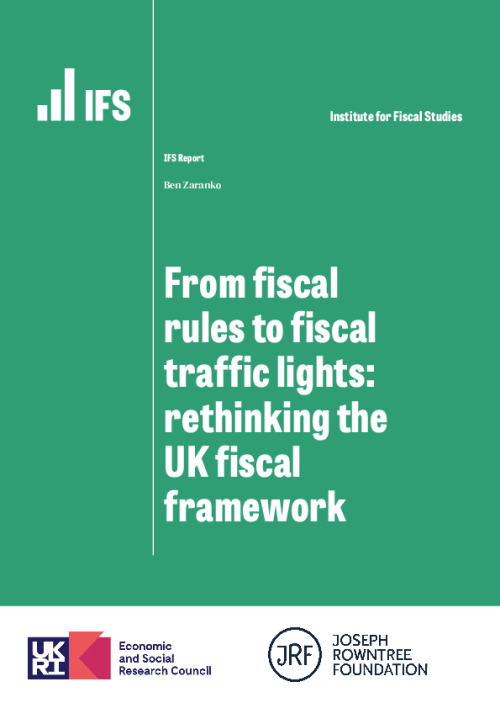
IFS Report: 'From fiscal rules to fiscal traffic lights: rethinking the UK fiscal framework'

'In other words, the current framework means that macroeconomic volatility is mainlined into policy volatility, which adds unnecessarily to economic uncertainty and makes good policymaking less likely. There is also a problem of asymmetry: when the forecast improves, any additional ‘headroom’ is typically treated as free money and happily spent. Yet when the forecast worsens, the rules tend to get changed or ‘gamed’: Chancellors of all political stripes have proved adept at promising future tax rises or spending cuts which are unlikely to be delivered, but which allow them to meet the letter of their rolling fiscal targets. 

All this is to say, the current framework is not delivering good outcomes. It is not achieving sustainable public finances, it has limited credibility with financial markets, and it is not creating the conditions for good policymaking or for a high-quality public debate about the important issues at play. It seems likely that any framework, left in place for long enough, will start to create problems in practice, as unhelpful norms emerge and actors find ways to game the system. Just as the tendency of HM Treasury to fudge its forecasts in the 2000s was one reason for the creation of the OBR as a corrective mechanism, the dysfunction around the current framework necessitates a change in thinking and approach.'

INDIVIDUAL
|
    INTERPERSONAL    :     SCIENCES               
HUMANISTIC --------------------------------------  MECHANISTIC      
SOCIOLOGY  :   POLITICAL 
|
GROUP
'Fixation upon -

lived
[ equilibrium ]
experience


'RAG'
assessment of patients in mental health services - caseload management


 fiscal headroom'
GOOD - BAD
PASS - FAIL
Equilibrium
Outcomes 
Public Policy
 
Interviews
 
sustainable public finances
 
good policymaking
(here)

high-quality public debate

Cost of Living


Report: IFS

Policy
Office for Budget Responsibility


My source: Valentina Romei, IFS urges end to fixation on fiscal 'headroom', Financial Times, 19 February, 2026, p.3.

Images: IFS

Monday, January 19, 2026

iv Book: Bill Ross - 'Order and the Virtual'

'The Philosophy and Science of Deleuzian Cosmology'

Systemists will find much here: 'principle of least action', 'principle of least resistance', equilibrium, open / closed systems, and entropy. A useful question is posed: 'Is complexity increasing? Is that average complexity across the universe; or the complexity of the most complex object? Deleuzes's Difference and Repetition is quoted:

'The values of implication are centres of envelopment. These centres  are not the intensive individuating factors themselves, but they are their representatives within a complex whole in the process of explication. ...' (p.255-6)'

Reading this I immediately thought of Bohm, who followed shortly after (still in Chapter 1!). In chapter 1, 'Chaos' could be read as Cosmos, hence the term rolling them together - chaosmos. This is the tract from which existence and becoming arise (re-reading). Deleuze's awareness of physics and quantum theory and its influence on his work is discussed, with chapter 2 providing continuity reaching to Leibniz (and 'The Calculating God'), also contributing is 'the complete concept', 'principle of sufficient reason', 'intensive individuating factors' and 'principle of identity of indiscernibles', for example. Even while the context is metaphysics (and it is not!), (for me) this seemingly presages a comprehensive health assessment:

'The necessity in question is the necessary inclusion of all predicates pertaining to an individual in the complete concept of that individual.' p.24.

There are several 'completes' to be unwound, and so better understood. Ross provides a key. This isn't a book to read and pass-on to a student, second-hand bookshop. It really deserves re-reading, mandatory here - to get hold of the ideas and interplay of Deleuze, Ross's understanding and it must be said interpretation, that also calls upon Dan Smith's Essays on Deleuze, (EUP) and directly Leibniz's work. 

'The complete concept idea of predication is furnished to map faithfully onto these principles concerning the nature of things.' p.26.

The expanse of thought and literature from across the channel, 'French Theory' has long tempted, teased and taunted (not-quite as severely as mathematics!). At least here you can get a sense of the traffic in thought and ideas. Deleuze is difficult (in-/compossibilities, kuklos exothen ...), until you relate: becoming over being, difference over identity, and creation over representation. Order and the Virtual helps in this task. Delueze is 'embedded' in the mechanics of complexity, and mathematics, but Deleuze and Ross can see - across - to the humanities (virtual and actual). 

'Lastly, while mathematical concepts are frequently adopted to illuminate Deleuze's argument, they should not be taken as metaphorically representative of processes in the world; this would be to ignore the broadside and extended attack on representation as a mode of thinking as such which occupies so much of Difference and Repetition. Rather, they serve as a particularly direct example of the differential processes to which all phenomena - natural, social, psychological are subject. In an unambiguous sense, it is eminently possible for problems prompting a mathematical response to express themselves in altogether different domains - natural, social, etc. The problem is, so to speak, a common root of all domains.' p.39.

Still grappling, I noted integration, actualization, parity of esteem, maths - the linear and non-linear. It seems Deleuze was challenged by the question of integration. Leibniz's contribution of the calculus is acknowledged. History and even the present remain preoccupied with finding boxes. Ross explains how for Deleuze, we should not discount turbulent phenomena that cannot be simply integrated, written off as random disorder.

If we associate complication, with implication and explication, do we invite two-fold (as a minimal - keyhole) 'surgery': (re-)constructive and destructive? Thank you Mr Ross. I see now, how the (infinity →) continuum will not be exhausted. Exploring axioms for Hodges' model, and what is axiomatic, I must check Albert Lautman's model of dynamic structuration, especially when set (against / with?) the problematic mode:

'The two modes relate to each other dialectically - a period of exploration followed by the resulting period of axiomatisation. Deleuze recognises both modes and their respective utility, but for his philosophy the problematic mode is by far the more important.' p.41.

Do our boxes still have a purpose? To tame the situation - at hand/mind/virtual?

More to follow here ...

Bill Ross (2024) Order and the Virtual: The Philosophy and Science of Deleuzian Cosmology. Edinburgh: Edinburgh University Press. 
https://edinburghuniversitypress.com/book-order-and-the-virtual.html

Tuesday, January 13, 2026

iii Book: Bill Ross - 'Order and the Virtual'

'The Philosophy and Science of Deleuzian Cosmology'

My book 'reviews' are unconventional in that they are not journal fare (format and quality-wise...); the book, or my reading of it - invariably refers to Hodges' model. I could argue that is not my fault, but a quality, something built in to the model. Anyway, what of the physical book itself?

The cover image is a marvel: Stone Quartet 1 by Patrick Haughton. 
[ Did someone say 'quartet'!* 😉]

Cover design by www.paulsmithdesign.com

Typeset in 10.5/13 Sabon, the fonts and styling through the book is clear, and easy to read (without regard to the technical content). The paper is thick, the quality contributing to a high contrast. 

The contents:

Abbreviations
Preface by Robin Durie and David Webb
1. Chaos
2. Entropy and the Complete Concept in Leibniz and Deleuze
3. Order
4. Order as Complexity
5. Sufficient Reason as Dissymmetry and the Evolutionary Paradigm

Conclusion
Notes
Bibliography
Index

The EUP website only lists four chapters for Order and the Virtual, but the book clearly has five. The conclusion is similarly omitted online: running from pp.175-181, I wish I'd written it.

That nursing and healthcare practice are bound up in philosophical considerations, values and ethics is fairly obvious. Care dilemmas would arise, calling for a multidisciplinary approach, and cross-disciplinary advice. Through this book, Bill Ross keeps highlighting for me, the way that once the uniform is donned, or the clock denotes an inbetweenness '0900-1700' for community staff, philosophy goes on the back-burner. The heat of the issue, and first rule of first-aid is felt, but it is not the primary concern. There is an international group of scholars for philosophy in nursing (and journal), but practitioners have, by definition - a job to do. If time is chaos and complexity (or appears as), then in health it is continuity, avoiding disruption and more often trying to 'heal' it.

Although Hodges' model presents as a symmetry; it is anything but. If we wish to symmetry-break, Hodges' model may assist. The flux and dynamics of care [insert your context] means that Hodges' model constantly changes its shape, form. Not as an objective statement, but an interpretation. Bill Ross's discussion on Nietzchean chaos and the superior principle of sufficient reason, demands and rewards a close reading (as does the whole text). Whether it is chaos, equilibrium, law and possibility cognitive - conceptual spaces invite ergodic (a cyclic) exploration. The mix of Deleuze and Leibniz's system makes for complex ideas, one probably needs to swim in. The book's first chapters are deep, technical but also inviting. There are encouraging links to psychotherapeutic thought, in the philosophy of difference, and how this is recognised, and change negotiated.

The scale is cosmological, with a section on ergodicity; and (inevitably) time, as per the quotation (p.10):

'Everything which happens and everything which appears is correlated with orders of differences: differences of level, temperature, pressure, tension, potential, difference of intensity. Carnot's principle says this in one way, Curie's principle in another, Gilles Deleuze (DR, 222)' (DR - Difference and Repetition).
There is a ponderous sense when assessment is routinized: assessment must be comprehensive. Do: tick all the boxes. Don't miss anything! How many levels of assessment should there be? If you want this number of assessments, what should I leave out? It is fascinating how we can frame time, not just 'set' against the axes of  Hodges' model, but a product of lifestyle, bio-physics, and even bio-psycho-social-politics. Is back to Earth - back to the individual? Not now. Contrast chronological and pathological time and not just for humanity. Ross follows Deleuze, Poincare, Neitzche and others in the long-term diagnosis of the universe, no less. A heat-death: the anti-fever. Now there's the collective, while in mental health, a diagnosis (or two ...) is still (often) contested, at least on twitter/X.

'The distinction for me is that metaphysics lives in that plane above where the concepts are not tied specifically to one field, but remain free to mobilise the salient questions as they play out among several fields.' p.15.

I don't think this just applies to metaphysics, but the extent (now) to which problems (clinical and generally) are multi- inter- and transdisciplinary (Ross acknowledges the pragmatic). Otherwise, with each step across a disciplinary boundary, our concepts lose their meaning, and the ergodic action (the around and around, back and forth ... our models and frameworks) is more akin to a drunken random-walk.

More to follow ...

Bill Ross (2024) Order and the Virtual: The Philosophy and Science of Deleuzian Cosmology. Edinburgh: Edinburgh University Press. 
https://edinburghuniversitypress.com/book-order-and-the-virtual.html

*And is that the fifth domain floating above?

The preface is titled 'Playing Cortázarian Hopscotch':
https://en.wikipedia.org/wiki/Hopscotch_(Cort%C3%A1zar_novel)

There is also a brief  'Series Editor's Preface'

Sunday, January 04, 2026

Biology, axioms, teleology and knowledge c/o Cox & Forshaw (2012)

'Teleological ideas generally have a rather bad reputation in science, and it's easy to see why. In biology, a teleological explanation for the emergence of complex creatures would be tantamount to an argument for the existence of a designer, whereas Darwin's theory of evolution by natural selection provides a simpler explanation that fits the available data beautifully. There is no teleological component to Darwin's theory - random mutations produce variations in organisms, and external pressures from the environment and other living thing determine which of these variations are passed on to the next generation. This process alone can account for the complexity we see in life on Earth today. In other words, there is no need for a grand plan and no gradual ascent of life towards some sort of perfection. Instead, the evolution of life is a random walk, generated by the imperfect copying of genes in a constantly shifting external environment. The Nobel-Prize-winning French biologist Jacques Monod went so far as to define a cornerstone of modern biology as "the systematic or axiomatic denial that scientific knowledge can be obtained on the basis of theories that involve, explicitly or not, a teleological principle".
As far as physics is concerned, there is no debate as to whether or not the least action principle actually works, for it allows calculations to be performed that correctly describe Nature and it is a cornerstone of physics. It can be argued that the least action principle is not teleological at all, but the debate is in any case neutralized once we have a grasp of Feynman's approach to quantum mechanics. The ball flying through the air 'knows' which path to choose because it actually, secretly, explores every possible path.' pp.52-53.


Cox, Brian, and Jeff Forshaw. (2012) Quantum Universe, the: Everything That Can Happen Does Happen. London: Penguin Books Ltd.

See also: 

Jacques Monod - https://www.informationphilosopher.com/solutions/scientists/monod/

Harrison, Peter. 2022. 'The History of Science and Theology', St Andrews Encyclopaedia of Theology. Edited by Brendan N. Wolfe et al. https://www.saet.ac.uk/Christianity/TheHistoryofScienceandTheology

Greslehner GP. "Molecular Biology"- Pleonasm or Denotation for a Discipline of Its Own? Reflections on the Origins of Molecular Biology and Its Situation Today. Biomolecules. 2023 Oct 12;13(10):1511. doi: 10.3390/biom13101511. PMID: 37892193; PMCID: PMC10605324.

Previously: 'axiom' : 'biology' : 'corner'

Friday, January 02, 2026

Nothing new under the Sun ...

 ... unless you're a 'health' service, or gathering dust on a shelf

January. Is the time of Janus: we look forward and back.

In April, this blog 'Hodges' model: Welcome to the QUAD - W2tQ' will be twenty years young. A blog post will follow with some metrics and statistics, although the 'analytics' that accompany many websites is not the main objective here. Preceding W2tQ and that first post, was the now archived website:

https://web.archive.org/web/20150316193042/http://www.p-jones.demon.co.uk/index.htm

Running from 1998-2015, the site's emergence ran as per:

Taught and applied Hodges' model on
 Community Psychiatric Nursing Certificate course 1987-1988.
Using the model in my practice and sharing with colleagues.
Gaining online access 1997.

Finding the Nursing Theory Development Site - NTDS 
(no longer available)
which was at https://www.ualberta.ca/en/index.html 
Meeting Brian Hodges at Manchester Met. University in May 1997.
Publishing the website in 1998.

Listed at the NTDS was a broad range of models of nursing and nursing theories. Brian's model, as anticipated was missing. I asked about Brian Hodges's model being added as a resource. Back then I thought, and still do, that Brian's work deserves recognition and more importantly, actually being used by practitioners and learners. It was a shame I thought, that such a person-centered and integrative model should be sat on a shelf (like other great ideas) gathering dust?

Still limping along in theme, functionality and accessibility, at least W2tQ has outlived the original website.

Academia and professional bodies across healthcare disciplines stress the need for research in practice. As a consequence, I've wondered about the pool of research questions that a healthcare, nursing, community nurse might have in mind? Ready and waiting, for those instances when specific funding materialises for a project. How many of these questions might feature as recurring characters? Once articulated, there for a new team member, are several starter-questions, a primer, to encourage exploration and critical thought. (Of course, a researcher needs to frame the question themselves; even if they do not 'own' them - public, patient engagement in research?).

With sustainability still on the political agenda (whatever the media suggests), is there a plan gathering dust, for the redesign, no less, of the National Health Service? Having squandered the demographic dividend of the 1950-1980s, how do we create concurrent health caring and preventive/educational services and systems?

Now, there is a project that Hodges' model could assist with! Better check the shelves (floppy disks!) and blow the dust-off real quick!

Thursday, October 16, 2025

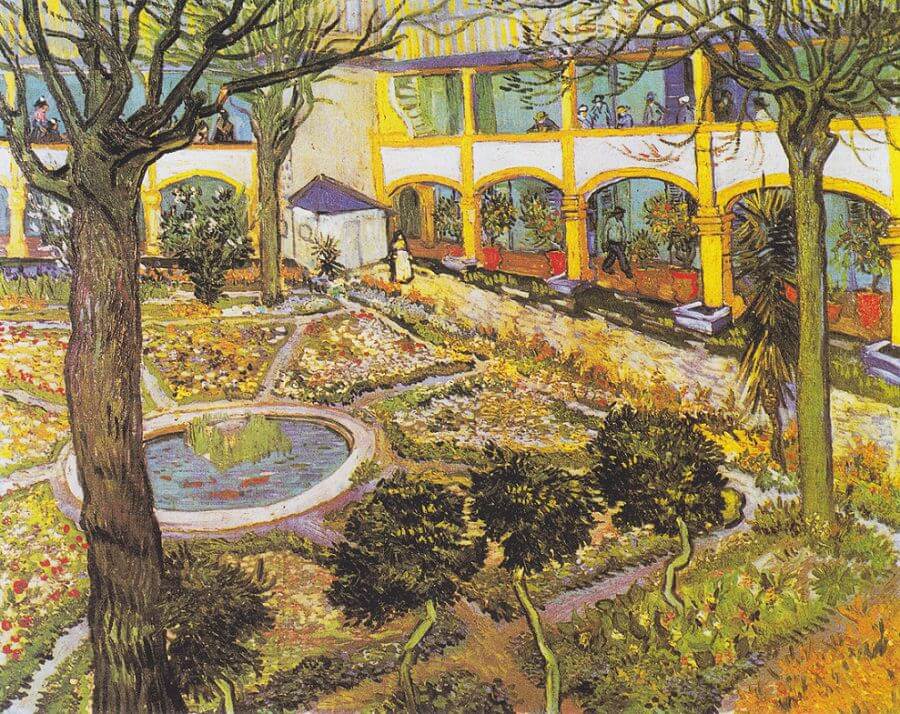
Recovery, Rehabilitation, Reablement by Van Gogh

Individual
|
      INTERPERSONAL    :     SCIENCES               
HUMANISTIC =========================  MECHANISTIC      
 SOCIOLOGY  :    POLITICAL 
|


My source: Van Gogh exhibitions (at least two); and Robin Lane Fox. Two years in Provence, House&Home, FTWeekend, 11/12 January 2025. p.10. 

Image source: https://www.vincentvangogh.org/the-asylum-garden-at-arles.jsp

Monday, October 13, 2025

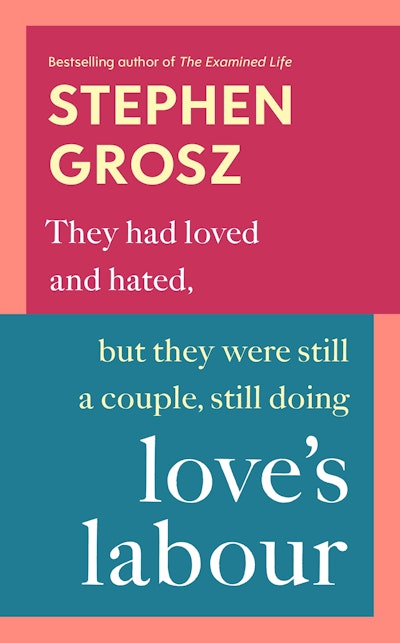
Book: Love's Labour by Stephen Grosz

They had loved and hated,
but they were still a couple, 
still doing love's labour ...

Luminous and necessary stories from the psychoanalyst's consulting room; on desire, heartbreak and learning how to love.

When it comes to love why do we find things so difficult? Drawing on over forty years of candid and surprising conversations with his patients, Stephen Grosz asks, what gets in the way of our falling in love? And what must we do to stay there? Penguin UK.
<>
'Ravi, a maths lecturer, is tormented by his wife Sonal's supposed infidelity, but won't look at the CCTV - even though that might reveal her to be innocent. This chapter has a sting in its tail when 19 years later Grosz is contacted by Sonal. She is dying of cancer and Ravi is cruelly neglecting her. Grosz feels that he missed a vital clue all those years ago, concerning Ravi's ingratitude and envy.

This moment of "failure" on Grosz's part forms an aspect of this small book's power. It shows that the psychoanalyst is not a machine, and the process is fallible. But it is also a testament to human complexity. When he hasn't understood the patient sufficiently, Grosz brings the case to his supervisor, and we, the reader, are witness to their exchange.' Life&Arts, FTWeekend.
Individual
|
      INTERPERSONAL    :     SCIENCES               
HUMANISTIC =========================  MECHANISTIC      
 SOCIOLOGY  :    POLITICAL 
|
My source: Kathy O'Shaughnessy. The hard work of seeing ourselves. Books, Life&Arts, FTWeekend, 27-28 September 2025, p.11.


Iamge: https://cdn2.penguin.com.au/covers/400/9780701188979.jpg

Monday, September 29, 2025

Raven Chacon - graphical musical scores

Individual
|
      INTERPERSONAL    :     SCIENCES               
HUMANISTIC  --------------------------------------  MECHANISTIC      
 SOCIOLOGY  :    POLITICAL 
|
Group
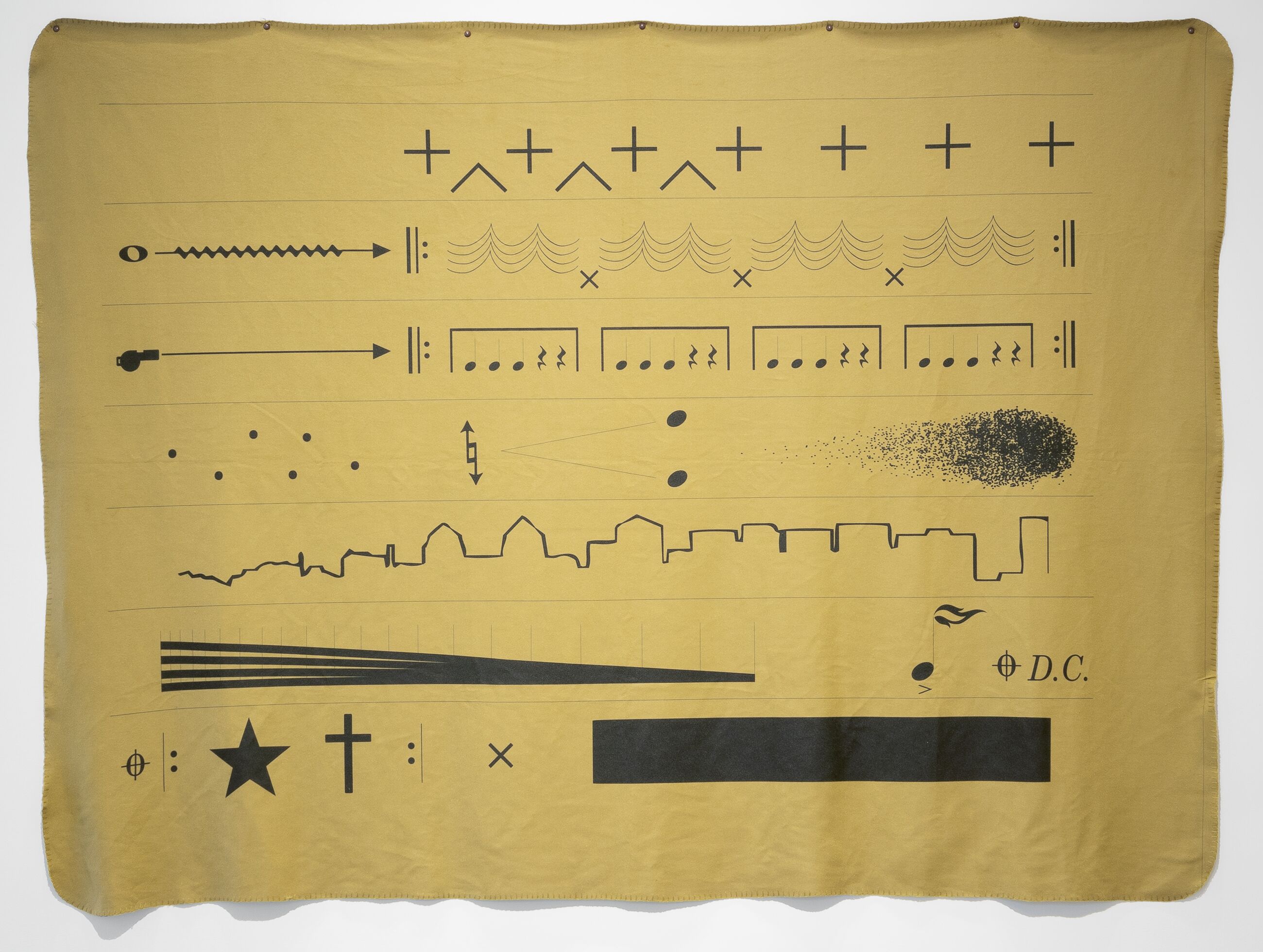
'The artist and composer Raven Chacon, 46, who grew up in Albuquerque and now divides his time between the city and upstate New York, used to explore these lava fields as a youngster, ingesting psychoactive plants such as jimson weed and searching for petroglyphs on the sides of rocks. Some - spirals, zigzags and dotted lines, for example - have found their way into the graphic musical scores for which he is now known. When I visited him in Albuquerque, he drove me out to see them.'
Raven Chacon, American Ledger No. 1 (Army Blanket), 2020. Graphic score


My source: Griffin, J. Sound of a different music. Life&Arts. FT Weekend. 24/25 February 2024. p.17.

Image: ECHOES OF A PLACE - Raven Chacon on transforming land, memory and political resistance into sound: https://www.hauserwirth.com/ursula/echoes-of-a-place-raven-chacon/

See also: RAVEN CHACON - https://spiderwebsinthesky.com/

https://en.wikipedia.org/wiki/Raven_Chacon

Previously: 'music'

Friday, September 26, 2025

Book: Atlas of Finance

Individual
|
      INTERPERSONAL    :     SCIENCES               
HUMANISTIC  --------------------------------------  MECHANISTIC      
 SOCIOLOGY  :    POLITICAL 
|


Dariusz Wójcik, James Cheshire, Oliver Uberti. (2024). Atlas of Finance: Mapping the Global Story of Money. Yale University Press. https://atlasoffinance.com/

Previously: 'atlas' : 'finance' : 'visualization'

My source:Guthrie, J. Tresure maps. Life& Arts. FT Weekend. 26/27 October 2024. p.12.

Monday, September 15, 2025

The sands of time are running out ...

... ironic, when the place you most
need blue-sky and long-term thinking,
innovation and action is becoming a desert ...

Individual
|
      INTERPERSONAL    :     SCIENCES               
HUMANISTIC  --------------------------------------  MECHANISTIC      
 SOCIOLOGY  :    POLITICAL 
|
Group


Image(s) © Harry Haysom

With thanks to HARRY HAYSOM - DESIGN & ILLUSTRATION -
and for being able to edit and apply this work to Hodges' model.

Visiting bookshops regularly, following the media and https://harryhaysom.co.uk/

 - I realise I'm more aware of Harry's brilliant work than I thought.

https://www.instagram.com/harryhaysom

My source: FT Magazine, January 4/5 2025. p.10.

Friday, July 25, 2025

Good luck Suns & Daughters . . .

Individual
|
      INTERPERSONAL    :     SCIENCES               
HUMANISTIC  --------------------------------------  MECHANISTIC      
 SOCIOLOGY  :    POLITICAL 
|
Group

'The sun may be on its lonesome now - its closest neighbour is 4.2 light years away - but that wasn't always the case. Once upon a time it had close family. After their birth in the same cloud of dust and gas that formed our solar system, these solar siblings scattered hundreds of light years apart in the MilkyWay. In May, astronomers reported the first one: a star called HD 162826.

"It looks like the sun, but a little-bit bluer," says Ivan Ramirez at the University of Texas at Austin, who led the study. It's also warmer than the sun and 15 per cent more massive. The star is about 110 light years away, and you can see it with the aid of a pair of binoculars in the left arm of the constellation Hercules.'

Hercules Historical View

'To find its family ties, Ramirez's team combed through galactic archaeology studies, which model the motions of the Milky Way. These predictions laid out where sibling stars would be now if they had formed in the same place as the sun. Though they spread out in different directions, their positions still give away their birthplace, Ramirez says.

He narrowed down the search area to 30 stars, and then looked at them closely to find a family resemblance. Only HD 162826 had a similar chemical make-up to the sun. A separate team led by Eric Mamajek at the University of Rochester in New York also studied the star and found it is the same age
as the sun, as would be expected for two stars born together. Even more tantalising, HD 162826 is already in a catalogue of stars that might harbour planets.'

Science
funding


Rebecca Boyle. Strangest star. New Scientist. 20 September 2014: 223, 2987, pp.38-41.

Image: Sadalsuud, CC BY-SA 3.0, via Wikimedia Commons.

Tuesday, July 01, 2025

Exhibition: V&A Design and Disability - to 15th Feb 2026

There is a lot of informative, creative and surprising insights through this V&A exhibition website, and related (well executed web designs), by Conor Foran for example. 


Individual
|
      INTERPERSONAL    :     SCIENCES               
HUMANISTIC  --------------------------------------  MECHANISTIC      
 SOCIOLOGY  :    POLITICAL 
|

I will look to post again at the year's end and try to visit the V&A in September, or November.

Image: https://www.vam.ac.uk/exhibitions/design-and-disability

Ack. and thanks to Conor Foran & V&A.

See also: 'clinical' in -

My source:
Emily Cronin. 'You have to be your own inspiration', Life&Arts, FTWeekend, 7-8 June 2025, p.4.