Hodges' model: The Atlas of Care/Knowledge Domains
individual
|
INTERPERSONAL : SCIENCES
humanistic ------------------------------------------- mechanistic
SOCIOLOGY : POLITICAL
|
group-population

See Europe as never before!
|

Excited to announce that we have funding for a +3 studentship in the UCL Department of Geography for the project “An Atlas of Health and Social Inequalities”. The research will be carried out in association with the Health Foundation and will comprise the creation of a range of innovative datasets presented through a series of ground-breaking maps and graphics. The project will centre on the Health Foundation’s Social and Economic Value of Health: Place programme, which is designed to generate new knowledge about the ways in which the physical and mental health of a population shapes their social and economic outcomes. The Health Foundation have funded a number of research projects already that focus on understanding the relationship between a given population’s health and the health of individuals within that population.
The PhD will benefit from insights from these projects and focus on the creation of a nationwide atlas to demonstrate the social and economic value of health. It will produce a series of research-led maps created from innovative and granular datasets to demonstrate the new ways that health data can be visualised. These will convey a range of variables including health metrics such as mortality, self-reported health, prevalence of specific health conditions, and social and economic outcomes including employment, pay, structural changes to industrial sector composition and social fragmentation.
The work will be supervised by myself (James.Cheshire AT ucl.ac.uk) and Dr Anwar Musah (a.musah AT ucl.ac.uk), to whom enquiries may be directed. The successful applicant will hold a First or Upper Second Class honours degree in a quantitative social science or computer science discipline and/or similar Masters qualification.
For further details on eligibility etc please see here.
CLICK HERE TO APPLY (Deadline 4th April)
My source: Spirit of 1848
I've received the proof for the book chapter to appear in:
Or, to be more precise -
"Which nations have North Korean embassies? How many countries have bigger economies than California? Who drives on the “wrong” side of the road? And where can you find lions in the wild?
Brilliant Maps - Book
In Brilliant Maps for Curious Minds, you’ll learn all this and much more. One hundred visually arresting maps strike a balance between sobering analysis (number of executions by state) and whimsical insight (the countries of the world where there aren’t any McDonald’s).
Thought-provoking and flat-out fun, this one-of-a-kind atlas—compiled by the editor of the popular Brilliant Maps website—makes surprising connections that illuminate the contours of culture, history, and politics. Brilliant Maps for Curious Minds will change the way you see the world—and your place in it".
We have found that the value to individuals has come not only from the final artifact (the diagram), but even more from the thinking that goes into its creation (if the person draws his own), and the conversations and reflections sparked by discussing the CareMap with others. This recent news article gives some insight into this: Caregivers Draw Support By Mapping Their Relationships.
Of course, the point I’m making is true for any graph, diagram, etc.!
Also, your readers would likely appreciate a link to this page, which has more information on drawing a CareMap:
https://atlasofcaregiving.com/drawing-using-caremap/
Rajiv Mehta
CEO, Atlas of Caregiving (www.atlasofcaregiving.com)
Board member, Family Caregiver Alliance (www.caregiver.org)
Co-organizer, Quantified Self (www.quantifiedself.com)
Published today [UK ]
 |
| Mapping It Out |

An interdisciplinary field, technology and culture, or social informatics, is part of a larger body of socio-economic, socio-psychological, and cultural research that examines the ways in which technology and groups within society are shaped by social forces within organizations, politics, economics, and culture. Given the popularity and increased usage of technology, it is imperative that educators, trainers, consultants, administrators, researchers, and professors monitor the current trends and issues relating to social side of technology in order to meet the needs and challenges of tomorrow.
Social Information Technology: Connecting Society and Cultural Issues provides educators, trainers, consultants, administrators, researchers, and professors with a fundamental research source for definitions, antecedents, and consequences of social informatics and the cultural aspect of technology. This groundbreaking research work also addresses the major cultural/societal issues in social informatics technology and society such as the Digital Divide, the government and technology law, information security and privacy, cyber ethics, technology ethics, and the future of social informatics and technology, as well as concepts from technology in developing countries.
"For us, the human body defines, by natural right, the space of origin and of distribution of disease: a space whose lines, volumes, surfaces, and routes are laid down, in accordance with a now familiar geometry, by the anatomical atlas. But this order of the solid, visible body is only one way—in all likelihood neither the first, nor the most fundamental—in which one spatializes disease. There have been, and will be, other distributions of illness. When will we be able to define the structures that determine, in the secret volume of the body, the course of allergic reactions? Has anyone ever drawn up the specific geometry of a virus diffusion in the thin layer of a segment of tissue? Is the law governing the spatialization of these phenomena to be found in a Euclidean anatomy? After all, one only has to remember that the old theory of sympathies spoke a vocabulary of correspondences, vicinities, and homologies, terms for which the perceived space of anatomy hardly offers a coherent lexicon. Every great thought in the field of pathology lays down a configuration for disease whose spatial requisites are not necessarily those of classical geometry." p.3. | |
"The exact superposition of the ‘body’ of the disease and the body of the sick man is no more than a historical, temporary datum." p.3. |

Faced as we are with climate change, mass extinctions of species, global pandemics, there is probably no more pressing theme today than that of nature. It is, however, not at all clear what we mean by ‘nature’, and whether discourse about nature is even meaningful today. Many speak of the ‘death of nature’ while at another extreme we find the exhortation toward a ‘re-enchantment’ of [by] nature. What the conference aims to explore is the place of religious experience within this our current situation.
Nature philosophy, including environmental ethics, but also the revival in Schellingian themes and the rediscovery within Phenomenology of the question of nature (Merleau-Ponty, Heidegger, Husserl), questions any unidirectional subject/object relation to nature. Nature is that in which we find ourselves as human beings and despite our molding of our environments, according to such a view, the human engagement with the world itself embodies nature. The emphasis on embodiment shows not alone the limits of dualisms, but also the commonality of the human with the natural world in which we are and breathe. The inter-subjective experience of such being in nature and the inter-corporeal being with animals and plants around us is reflected in the sacramentality of religious observance from totemic rituals to the Christian Eucharist.
Inspired by the overcoming of dualisms of body and mind and nature and freedom deriving from the Phenomenology and Schelling, we can re-examine the religious sense of nature as containing sacredness. This religious sense can be understood metaphysically as an intuition of reality appearing as unapproachable. Phenomenologically, the question as to the source of this sense of the inapproachable and sacred can be understood in terms of feelings of awe (e.g., Otto). Not alone can nature be a source or locus of religious experience, but it may also be the case that religious affectivity gives us access to nature beyond the objectifying and instrumentalizing tendencies of Modernity. In this respect, we can think of the phenomenologies of life (Bergson, Tymieniecka, Henry), which explore modes of appearance of nature beyond the dualities of mechanism and vitalism. These accounts draw on – explicitly or implicitly – religious motifs such Christian notion of life as Christ, Vedantic life as Sat (Truth of Being, identical with self-consciousness and fullness), or Islamic God as truth or reality (al-Haqq), as well as other concepts across many traditions which are connecting life and nature. These motifs can be understood as compatible with the growing movement of panpsychism in the philosophy of mind (Strawson, Goff, Chalmers, Nagel) and the philosophy of life in biology (Varela, Maturana, Wilson).
Living through a pandemic it is important to hear [here?] attend to the core meaning of the word – pan demos, concerning all the people. Just as nature is everywhere, so any discourse about dwelling in nature (eco-logy) must be seen to concern the totality of human experience, in the sense of the full richness of its diversity. One manner in which such diverse experience can be understood is the way in which nature is experienced as a temporal phenomenon. This is clear already in the experience of the cyclicality of the seasons. It is also manifest in the current sense of ecological crisis which draws on a religious sensibility that has remained present in different guises through Modernity, namely the eschatological. In attempting to think nature with respect to religious experience, we are thinking within the intersection of temporal strands: mortal time, conscious time, cyclical, indefinite time, eternal, creative ‘time’. Understood eschatologically or messianically this relation is one in which ending is woven into the fabric of time: time as ending, transforming of past in the present and the opening up of a new future, time of forgiveness, repentance, grace and judgement (kairos)."
While dualistic thinking is positive as a means to explain Hodges' model, if a form of thinking (reasoning as ego-defence) is relied upon to excess and not balanced by other evidence then this can contribute to psychological problems. As Johnson (1994) also indicates, the three forms of thinking we are discussing in this series of posts are progressive. Compared to dualistic, Johnson states that multiplistic and relativistic thinking represent a more complex level. Appreciating that there are other sources for answers, possibly more than one answer and a need to relate things together.
Dualistic thinking epitomizes the categorical invitation that Hodges' model affords. In its most primitive form it has to be ready to hand and with the mind in an instant it is: the duality of fight or flight. A reflex arc circumvents the dualistic in an effort of instant reduction to survival.
Of course, the model is not intended to encourage thinking in extremes, polarised and absolutist. This property*, however, affirms the model's potential as a health promoting, educational and self-care resource.
There is another form of dualism that is given to us by life not model. It is the dichotomous variety that often influences and shapes attitudes to others, discourse and debate within our many cultures, politics and religious affairs.
The additional set of axes related to disciplines, for example, psych-social - referred to in the previous post [II] tempers the risks above in two ways:
In Five Senses, Serres does not overtly discuss mortality, loss, depletion and omission (Connor, 1999). Management consultants advise that to succeed ‘think outside the box’, but the population pyramid is casting an ever larger shadow, highlighting an ageing population and the box is frequently found full and yet empty? Plaques disconnect, disable the memory; the critical biological box no longer registers and connects. The noise that counts, the background bioelectrical hum is disrupted or absent. Memories once ready to roll downhill, surfing the wave of potential are inaccessible, if marshalled at all. Wither the neural crossroads; the informatique mote in Hermes’ eye?
Our older people, those not yet ephemeral have become peripheral, their personal space an adjunct to furniture. New quantities in life, beg questions of quality, especially quality of care and what it means to care. The concept of self, person-hood is a prime distinguishing factor in terms of describing the attitudes of cultures and communities to older adults and memory loss. In the developed nations the debate continues: is this the price of a long life, or a way of life? In a search for the locus of informatics: the sign on this door reads deep informatics. Listen carefully, as inside the seniors are cared for at home (touched*) remotely courtesy of telecare solutions. The values here of course extend from inappropriate use of informatics to lack of access to such services (Barlow et al., 2006). ...

*For Serres touch is the interface.
We must ensure remote care is not a total substitute for face-to-face interaction.
Barlow, J., Bayer, S., Curry, R. (2006). Implementing Complex Innovations in Fluid Multi-Stakeholder Environments: Experiences of ‘Telecare’, Technovation, 26, 3, pp.396-406.
Connor, S. (1999). Michel Serres’ Five Senses.
Retrieved May 19, 2007, from http://stevenconnor.com/5senses.html
From submitted chapter: Exploring Serres’ Atlas, Hodges’ Knowledge Domains and the Fusion of Informatics and Cultural Horizons - forthcoming...
P.S. Sorry about the two posts today - trying to figure some things out...
A decade ago Groffman, et al., (2006) stated that ecological thresholds can be 'troublesome' in being important but in having no practical application. Threshold concepts are not, however alone; there are also threshold questions (Halldén and Lundholm, 2009). The answers to these questions are critical to global sustainability and planetary boundaries (thresholds) - an ongoing research effort (Rockström et al., 2009).
|
|
"In the mid- 1990s, Michel Serres was already registering the devastating impact of ‘dense tectonic plates of humanity’ on a hitherto ‘mute world’.1 Our excesses, he writes, have awoken the ‘mute, passive, obscure things’ around us that had ‘obediently slumbered’, but will now respond to us with violence.2 In such discourse we recognize the now common tropes of thresholds and tipping points, often deployed by climate scientists and echoed by scholars who assert that humans are now truly ‘geological agents’ in their impact on the planet.3 ... |
|
... Getting to grips with the consequences of human activity for the Earth’s systems is unarguably an essential step in forging policies to mitigate the damage. But in the political urgency that shapes many debates about climate change, there is a risk, as Dipesh Chakrabarty points out, that ‘humans emerge as the subject of the drama of the Anthropocene’ while geological time fades from view.4 An emphasis on human agency may simply lead us full circle, back to the anthropocentric conception of a docile Earth made up of inert matter, only stirred by our own excesses, and waiting to be saved or destroyed by its human inhabitants." p.31. |
See also:
Jones, P. (2008) Exploring Serres’ Atlas, Hodges’ Knowledge Domains and the Fusion of Informatics and Cultural Horizons, IN Kidd, T., Chen, I. (Eds.) Social Information Technology Connecting Society and Cultural Issues, Idea Group Publishing, Inc. Chap. 7, pp. 96-109.
Consider also - 'deep' within Hodges' model:
DEEP space, time, ecology, links, design ... DEEP CARE.
The draft paper on cardiovascular nursing, first episode psychosis, research methods and Hodges' model is just about finalised; at 4700 words, 4 figures (one illustration of the model, plus three 2x2 tables) and 42 references.
One of the oldest drafts is c. 2013; in mitigation I completed an MRES in-between. This is on case formulations, diagrams and Hodges' model and is quite near completion. Although now of course the references and literature need to be re-examined. There's a new rationale to pick this up - and it connects with work below.
Another effort morphed into two papers, following an initial inquiry with a journal (lost in the email archive). The focus is Threshold concepts, Liberty Protection Safeguards - a change from DoLS, the care context is nursing homes and the residential sector applying Hodges' model.
This draft has served a purpose, forming the basis of a presentation to the virtual Threshold Concepts Conference last year. News will follow soon regards next year:
9th Biennial Threshold Concepts Conference (I really miss the Specialist Group on TCs in Health, but also appreciate the time such a commitment takes.)
Last summer, seduced by reference to 'advanced studies' (and a call that presented a broad door, sufficient to get h2cm through) I responded to a call on technology, and society. Liaising with the editor, we added - COVID-19 and Hodges' model. Before I knew it, I'd amassed more than 12,000 words in six weeks. The comments even when far from final draft, were poor. No encouragement at all. Contact was lost, blanked in fact: the paper slept.
Months later, picking it up again, I can see why. It was poor.
I've taken some -ve critique previously. Welcome it in fact: so the Earth-bound vacuum was rude.
When working on the Michel Serres paper:
Jones, P. (2008) Exploring Serres’ Atlas, Hodges’ Knowledge Domains and the Fusion of Informatics and Cultural Horizons, IN Kidd, T., Chen, I. (Eds.) Social Information Technology Connecting Society and Cultural Issues, Idea Group Publishing, Inc. Chap. 7, pp. 96-109.
- some rather negative feedback proved the spur to the final work - that I think (and been told) is coherent, engages and 'delivers'(?).
This will be the result again, but the chain reaction has to be tempered and channeled.
Clear the desk - clear the desk! I am my own worst enemy...!
The latest paper, and its being co-authored has proved an enormous help, in time management, discipline and focus (despite COVID intervening):
Jones P, Wirnitzer K. Hodges’ model: the Sustainable Development Goals and public health – universal health coverage demands a universal framework. BMJ Nutrition, Prevention & Health 2022;0:e000254. doi:10.1136/bmjnph-2021-000254
Out of the technology, society text, a structured work - maybe two - will materialise.
 |
| Swiss army knife |
After wittering on about legacy problems in nursing, and health care for quite a while, I've wondered about an original purpose Hodges' model - that of curriculum design, planning, development. As ever, it is just one tool in the toolkit, but regards nursing curricula, mental health nursing, the general Vs specialist distinction Hodges' model can be the ubiquitous Swiss army knife:
Noting and replying to threads on twitter, Hodges' model can help articulate the arguments for the future of mental health nursing as a distinct pathway of study, discipline, and profession.*
So if you're struggling to complete a paper, keep going!
That mention, back in 2009 of a 'future website' is embarrassing though.
*A post re. the BBC Panorama TV expose will follow in the future.
Despite an academic affiliation, without any (part-time) tutoring hours this past year, it may be difficult to avoid article processing fees (APCs). A shame as I believe that Hodges' model can address this call (below) in a somewhat novel manner.
If anyone is interested in exploring a writing project framed around Hodges' model and employing a relational - diagrammatic approach please let me know.
The exercise would be greatly enhanced by:
- Engaging with one of more academics, adept in formal methods (maths, logic..?) and keen to apply their talents within the social sciences - humanities.
- And, exploring the possibility of working with early career researchers, including from developing nations, independent and 'late career'(!) scholars would also be very welcome.
Previously:
Jones, P. (2004) Viewpoint: Can informatics and holistic multidisciplinary care be harmonised? British Journal of Healthcare Computing & Information Management, 21, 6, 17-18.Compassionate Futures for Collective Well-Being
Academic Editors: Karin Hannes (KU Leuven) and Natalia Martini (KU Leuven)New issues (open access): Public Participation Amidst Hostility: When the Uninvited Shape Matters of Collective Concern https://www.cogitatiopress.com/socialinclusion/issue/view/419 Violence, Hate Speech, and Gender Bias: Challenges to an Inclusive Digital Environment https://www.cogitatiopress.com/socialinclusion/issue/view/415
My source: https://www.jiscmail.ac.uk/cgi-bin/webadmin?A0=COMPLEXITY-PRIMARY-CARE
Q. What is the appeal and relevance of Michel Serres to the Health Care Domains Model [h2cm]?
c/o Fred Manrique / UPTC

.jpg#/media/File:James_Lovelock,_2005_(cropped).jpg) |
| Lovelock in 2005: Wikipedia |
Over the past 10-20 years I've become more aware of the distance from scholars and people whose work is relevant to Hodges' model. Distance in the sense of their concomitant 'celebrity', hence the issue of how to make contact; and the stage of their career and my discovery of their relevance. Three people come to mind ...
I've long admired the work of James Lovelock, and when writing on ecological themes in -
Jones, P. (2008) Exploring Serres’ Atlas, Hodges’ Knowledge Domains and the Fusion of Informatics and Cultural Horizons, IN Kidd, T., Chen, I. (Eds.) Social Information Technology Connecting Society and Cultural Issues, Idea Group Publishing, Inc. Chap. 7, pp.96-109.
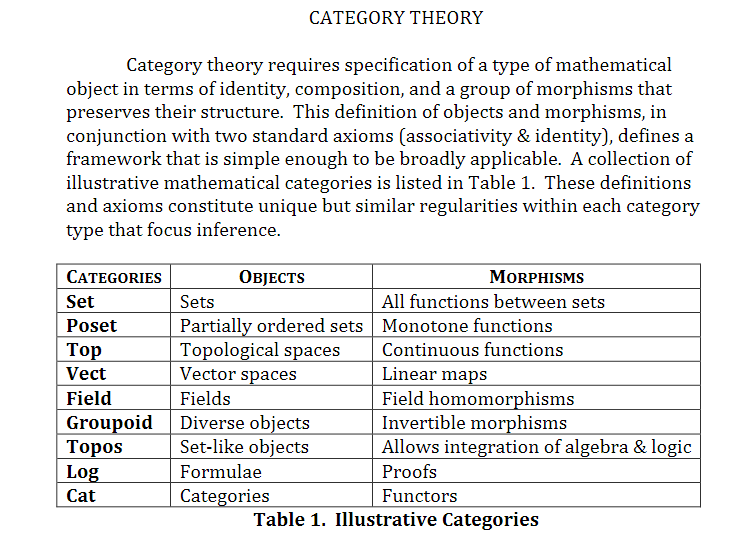
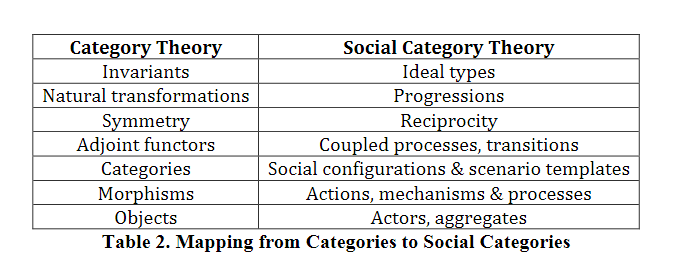
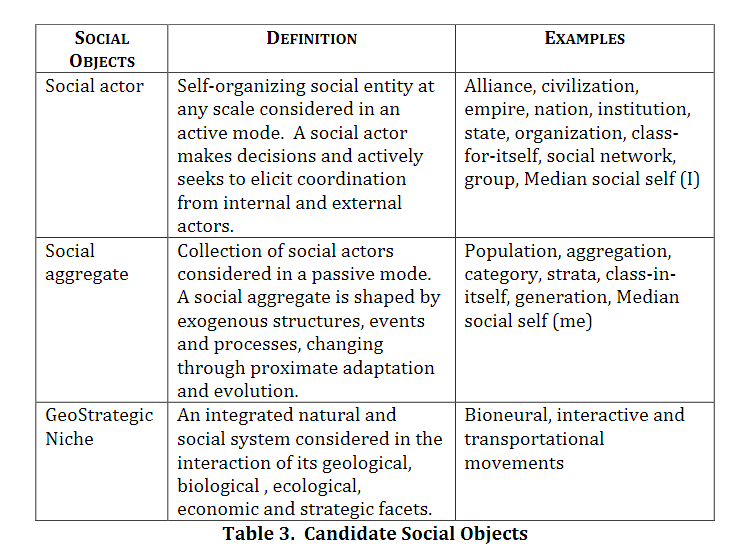


 |
| Brian E. Hodges - c/o Brian's family. |
Born in Liverpool, NW England, UK.
Community Mental Health Nurse NHS, Part-time Lecturer,
Researcher Nursing & Technology Enhanced Learning
Registered Nurse - Mental Health & General
Community Psychiatric Nursing (Cert.) MMU
PG Cert. Ed.
BA(Joint Hons.) Computing and Philosophy - BIHE - Bolton
PG(Dip.) Collaboration on Psychosocial Education [COPE] Univ. Man.
MRES. e-Research and Technology Enhanced Learning, Lancaster Univ.
Live and work in NW England - seeking a global perspective.
The views expressed on W2tQ are entirely my own, unless stated otherwise.
Comments are disabled.
If you would like to get in touch please e-mail me at
h2cmng AT yahoo.co.uk
 orcid.org/0000-0002-0192-8965





.jpg)