Hodges' Model: Welcome to the QUAD: mentoring

Hodges' model is a conceptual framework to support reflection and critical thinking. Situated, the model can help integrate all disciplines (academic and professional). Amid news items, are posts that illustrate the scope and application of the model. A bibliography and A4 template are provided in the sidebar. Welcome to the QUAD ...

Showing posts with label mentoring. Show all posts

Wednesday, February 14, 2024

Distance: Shoulders and ships that pass ...

James Lovelock, 2005 (cropped).jpg
Lovelock in 2005: Wikipedia

Over the past 10-20 years I've become more aware of the distance from scholars and people whose work is relevant to Hodges' model. Distance in the sense of their concomitant 'celebrity', hence the issue of how to make contact; and the stage of their career and my discovery of their relevance. Three people come to mind ... 

I've long admired the work of James Lovelock, and when writing on ecological themes in -

Jones, P. (2008) Exploring Serres’ Atlas, Hodges’ Knowledge Domains and the Fusion of Informatics and Cultural Horizons, IN Kidd, T., Chen, I. (Eds.) Social Information Technology Connecting Society and Cultural Issues, Idea Group Publishing, Inc. Chap. 7, pp.96-109.
- I wondered about trying to contact Dr Lovelock. As the majority of people are aware his thought and books, especially the Gaia hypothesis with Lynn Margulis caught the public's imagination from first publication and through the 1970s. Was there a Horizon TV programme? James Lovelock's influence was not just in ecology, but also earth (planetary) sciences through work for NASA. In early 2021 I thought I would reach out, through his most recent book and publisher/agent. I passed a message, which was forwarded but I never heard anything more.

As a nurse - with experience in older adult community mental health, I was acutely aware that this senior gentleman - in every sense of the word - may not want to be mithered by a scouser*, now living near Wigan Pier. I stressed not wanting to disturb the Dr. I also thought, given Dr Lovelock being of independent mind - a maverick, he might on the contrary love to be disturbed. 

Sadly, I was too late, hearing the news of Dr Lovelock's death in 2022. Of course, I was seeking validation (and still am) for the project here. I can't help thinking though, that Dr Lovelock really would have 'got' Hodges' model.

James Lovelock: BBC Radio 4 The Life Scientific

<>

Philosophy has long been an interest B.A.(Joint Hons.) Comp./Phil.. In a way you have no choice as a nurse, especially trained in mental health and general nursing: the theory and practice invariably touch reality, consciousness, perception, subjectivity, objectivity, knowledge, being, perception, data, information, time and so on.

Once acquainted with Hodges' model, scale is the dimension that asserts itself. I wrote about this and referenced Mario Bunge in about 1998, on the old, now archived website:

https://web.archive.org/web/20100329050839/http://www.p-jones.demon.co.uk/infintro.htm

Scale is a constant and multicontextual focus, but interest was piqued once again as I try to look at Hodges' model mathematically (yes, who am I trying to kid!) - as an object and relationally. I was reminded of Prof. Bunge's work noting a paper that included 'isomorphic-ism':

Bunge, M. (1969). Corrections to “Foundations of Physics”: Correct and Incorrect. Synthese, 19(3/4), 443–452. http://www.jstor.org/stable/20114653

https://link.springer.com/article/10.1007/s10838-021-09553-7

Mahner, M. Mario Bunge (1919–2020): Conjoining Philosophy of Science and Scientific Philosophy. J Gen Philos Sci 52, 3–23 (2021). https://doi.org/10.1007/s10838-021-09553-7

There may be a brief email exchange with Prof. Bunge, a request for a paper or two. Any emails are now stored (CD-ROM and portable drive) in a Turnpike folder, an old email client. Last year I was disappointed again, to learn of Dr Bunge's passing in 2020. His focus on science, philosophy, and systems - hard / soft is also very informative.

<>

More recently, I came across the fascinating work of David Sallach, one paper (a conference from 2012) includes:
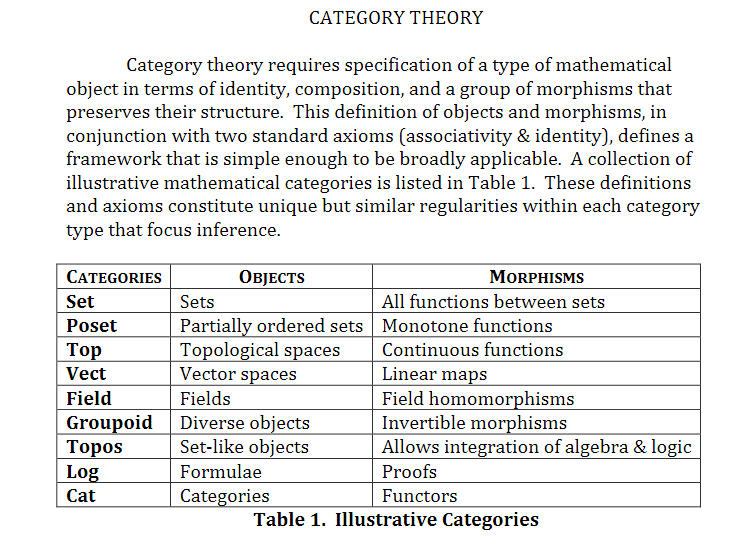

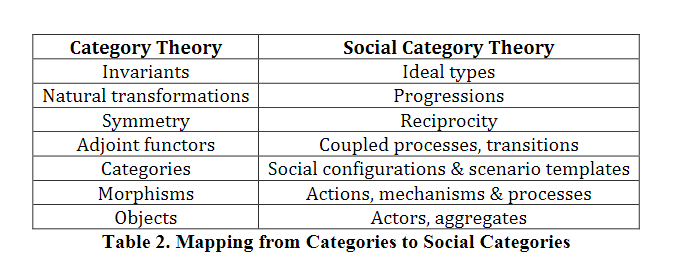
Sallach, D.L. Categorical Social Science: Theory, Methodology and Design. September 2012
Conference: Fourth World Congress on Social Simulation. Taipei, Taiwan.
https://www2.econ.iastate.edu/tesfatsi/Sallach2012CategoricalSoSci4.WCSS-SS.pdf

Plus, developed further in table 2:

If time permits as an exercise, please consider Sallach's table 3 below. It may be interesting to map this to the domains of Hodges' model(?) [template]:
:
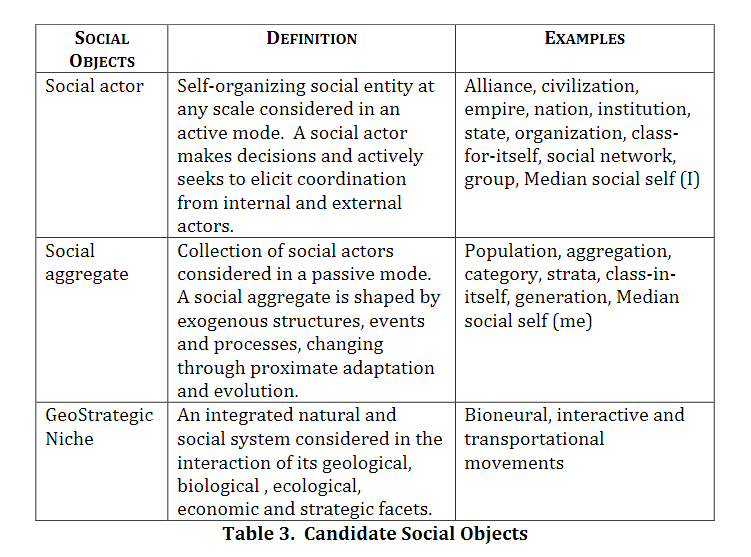
If you can see the potential utility of Hodges' model, you may also appreciate why Sallach's paper  resonates. Having emailed Dr Sallach, without reply, I did some checking. More sad news followed.

I, and no doubt many people will continue to discover and appreciate the legacy left behind by the above and many other pioneers. 

<>

I must acknowledge - Enid Mumford - whose work on socio-technical systems continues to inform my study and application of Hodges' model. This includes recognition of the many x-disciplinary bridges (or, barricades?) that can be found within Hodges' model. 

Clearly, much reading still to do.
<>

Returning to Hodges' model as a mathematical object, the 'distance' above is suddenly interstellar (and yes, sudden, as in faster than light!). I'm following videos, papers, and specific work-streams by  universities (I won't mention presently...) seeking to apply category theory to the social sciences. This suggests, at least, I'm not (completely!) wasting my time. If you have thoughts yourself on Hodges' model, the journey from Sallach's tables 1 - 2 not just 3, I'd be delighted to hear from you. 

There is another approach I will share this (N) spring. This author - researcher I have been able to contact.

*Scouser - https://en.wikipedia.org/wiki/Scouse
(Re. Liverpool - further post to follow).

James Lovelock image:  Bruno Comby, CC BY-SA 1.0, via Wikimedia Commons.

Wednesday, September 06, 2023

Ability Today's Accessible Online Dip. in Journalism - Launches Next Course


Hello 

Ability Today's ADJ Launches Next Diploma Course

I hope this email finds you well.

We're really excited to announce the doors for our Academy for Disabled Journalists (ADJ) Diploma Course in partnership with the National Council for the Training of Journalists (NCTJ) are now open for disabled individuals for the third year.

This initiative aims to break down barriers in the media industry and make journalism more inclusive. We are offering accessible online classes, featuring a wide range of topics such as reporting, writing, editing, and multimedia journalism, all while accommodating the unique needs and challenges faced by disabled students.

WE NEED YOUR HELP TO SPREAD OUR MESSAGE TO AS MANY DISABLED INDIVIDUALS AS POSSIBLE.

Please access our press release by clicking the button below 👇🏼

Get the press release here

Would you please share this with your network to help us reach as many potential students who we can support on their journey into journalism?

We also welcome any further involvement you may wish to have in this program, such as offering mentorship, resources, or scholarships.

Should you have any questions or require additional information, please don't hesitate to contact me directly at grant AT abilitytoday.com.

Here is a link to our academy page with a short promotional video and further details:

abilitytoday.com/diploma-in-journalism/

twitter.com/ADJnews/status/

Best

Grant


Thursday, December 22, 2022

Global Learning for Health Equity Network: Call for Proposals

Dear Colleagues,

I hope you have been well! I’m reaching out to share that the University of Maryland Baltimore, School of Nursing’s Global Learning for Health Equity Network recently opened a call for proposals that might be of interest to you and your network.

With support from Robert Wood Johnson Foundation, we are awarding planning grants to help US communities find inspiration from low and middle income countries around the world for advancing equity in health, housing, education, and more.

Whether your organization already has a country it wants to learn from in mind or it’s just curious to explore global ideas that may advance health equity, this opportunity will provide grantees at any stage of their global learning journey with mentorship, resources and funding.

Potential applicants are invited to submit applications  the deadline is February 8, 2023. 

Would you be open to helping us amplify our call? We would love it if you could forward the link to our CFP to your network.

Let me know if you have any questions.  Want to learn more about global learning……See our webpage for more information. https://www.umaryland.edu/gl4hen/


Thanks so much.

Best regards and greetings of the season,

Yolanda Ogbolu

ogbolu AT umaryland.edu

Global Learning for Health Equity Network

University of Maryland, Baltimore
655 W. Lombard Street
Baltimore, MD 21201

My source: GANM

Sunday, November 10, 2019

Psyche: Amid the Mind and Stars

INDIVIDUAL
|
INTRA- INTER-PERSONAL : SCIENCES
HUMANISTIC -------------------------------------------------- MECHANISTIC
SOCIOLOGY : POLITICAL
|
GROUP
"The Greek origin of the word psyche (breath) is well known but psyche also referred to life as action or as soul, some special force or spirit which entered living creatures. ... It was natural that when psychology and and medical psychology became established with institutions, they would wish for armorial bearings and it was logical that some representation of psyche should be incorporated. ... Some psychiatrists would consider mind to be an epiphenomenon of brain function, many of whose mysteries will eventually yield to scientific and clinical investigation and most would consider the emergent subjective experiences as important in determining behaviour. The current motto "Let Wisdom Guide" is certainly suitable whatever interpretation or meaning is given to Psyche and whatever direction psychiatry may take in the future." p.429,431.

James, F.E. (July 1991). "Psyche". Psychiatric Bulletin. 15 (7): 429–31. doi:10.1192/pb.15.7.429


Artist's concept of the asteroid 16 Psyche
which is thought to be a stripped planetary core.
Image credit: Maxar/ASU/P. Rubin/NASA/JPL-Caltech


Psyche Revived by Cupid’s Kiss
 Antonio CANOVA (1757 – 1822)
Marble - H. 1.55 m; L. 1.68 m; D. 1.01 mMR 1777
Paris, Musée du Louvre

© 2010 Musée du Louvre / Raphaël Chipault
Political mythology:
Government pronouncements on psyche?

Monday, October 16, 2017

'Virtuous Practice in Nursing' Research Report c/o The Jubilee Centre


6Cs

individual
|
INTERPERSONAL : SCIENCES
humanistic --------------------------------------- mechanistic
SOCIOLOGY : POLITICAL
|
group
individual character                virtues and values
philosophy         ethics        courage         
commitment             [moral
selection / recruitment criteria
     caring         attitudes       compassion
reflective practice-think, think, think?
knowledge and skills
subjective - 'soft'?
time, pressures, tasks, robotic
competence
vacuum]             
theory -(ethical)- practice
gap
evidence-based care 
objective - 'hard science'?
e-learning platforms-things to read, read, read?
(professional) socialisation
role modelling
mentoring         practice
patient's experience    communication
public perception, media
public involvement

patient/person-centeredness
policy
Professional bodies

autonomy     whistleblowing      advocacy   
 career pathway, education and training, organisational culture, appraisal and development of staff
management, business, finance*

See also 'Virtuous Medical Practice' plus others*

Saturday, March 14, 2015

The Willis Commission on Nursing Education [ i ]

from the commission website:

The Willis Commission has now published its full report into the future of nursing education.

See the key findings from the report below (with my emphasis)
  • Patient centred care should be at the heart of all pre-registration nursing education and continuing professional development.
  • There were no shortcomings found in nursing education that could be directly responsible for poor standards of care or a decline in care standards.
  • Nurses and their organisations must stand up to be counted on the challenge of poor care and loss of public confidence in order to restore professional pride.
  • Nursing education needs to imbed patient safety and dignity as a top priority.
  • Better evaluation of and research into nursing education programmes is necessary to ensure a programme that is fit for purpose.
  • The future nursing workforce requires nurses to work in a variety of settings.
  • Recruitment campaigns need to widen their diversity in order to encourage the widest, best possible range of applicants.
  • Health care service providers must fully support nursing education.
  • Universities need to recognise nursing as a practice and research discipline.
  • Attention needs to be paid to developing a strategic understanding of the nursing workforce as a whole and as a UK-wide resource.
View the full report here (1,105kb)


Previous posts:
The Willis Commission on Nursing Education [ii]
The Willis Commission on Nursing Education [iii]

Thursday, March 13, 2014

Is it a Ship, Mars Mission I, a Biscuit, IPO, or Cyber Attack ...?

No!

It's a 3rd year student nurse, 
several in fact
launched 
on their careers.

It is quite a poignant life changing and affirming moment for everyone involved. Of course, there are instances were qualification is problematic, but this is about the +ve.

For the student of course, this represents a great achievement and the realisation of the responsibilities that suddenly apply. This is tempered by preceptorship as mentor and sign-off mentors remind and reassure.

Our students have jobs and this is heartening to hear. They really are off and up-and-running.

There are graduation celebrations and parties to follow for them, but this past week I wondered about another way to signify this literally professional defining event. A way that accompanies and yet transcends the final page 'sign-off' that clearly does carry volumes of meaning and learning.

There was a fleeting thought that I shared: should I form an arch with the student's mentor for the student to pass through? A laugh.

Heaven forbid that this week and day should be for any student an anticlimax. Speaking of heaven there are of course pledges out there. Which also includes:

Nursing is an art;
and if it is to be made an art,
it requires as exclusive a devotion,
as hard a preparation,
as any painter's or sculptor's work;

for what is the having to do with
dead canvas or cold marble,
compared with having to do with the
living body - the temple of God's spirit?

It is one of the Fine Arts;
I had almost said
the finest of the Fine Arts

- Florence Nightingale, 1868.
http://www.florencenightingaleexhibit.com/

As I would like to pass on the (twinned-)baton that is Hodges' model, could there be a form of words that can reflect the entry of a new nurse into our midst; an exchange of words that captures the moment for the student, the mentors, nursing and the public we care for and with?

This may seem twee, archaic, a nod to times of formality, the sense of duty, vocation and hierarchy. This wouldn't be about hierarchy, experience yes. It would be reflexive, a dialogue between these 'professionals' that acknowledges the student's rite of passage, the present moment and the collective future of nursing, of caring and their position in time and the professions' values.

Thursday, December 12, 2013

Critical Thinking - Gaining knowledge: Beginners + Experts = audience?

Clearing through books last month with several bound for the charity shops I came across Critical Thinking in Nursing: An Interactive Approach, by Rubenfeld & Sheffer, with the following table (p.30):


BEGINNERS EXPERTS
Ways of:

Gaining Knowledge Assigned readings and asking authoritiesMultiple written and verbal sources, and experience
Thinking DualisticRelativistic
Using rules Context freeSituation dependent
Looking at situations NarrowBroad

The table is not remarkable in its theme, but it is a useful prompt for Hodges' model and future studies. The concepts listed might help illustrate how Hodges' model can support learning. In addition to having an individual focus the model can consider any situation, hence the claim that the model is 'situated'. As stated previously person centeredness is not a given. It does not follow, nor is it achieved just because 'person centered' features several times in care philosophies and policies. The person must be put at the center of the model and then each of the domains considered together with the spiritual dimensions.

I'm also reading a nursing informatics book (posts and review to follow) that discusses casuistic ethics, that is case-based reasoning. While the utility of casuistry is debated in nursing, the need to consider the individual is always paramount. A prime example of the focus on the individual is the programme Inside the Ethics Committee on BBC Radio 4. Central to ethics are the frequent dilemmas that arise in health and social care, the difficult moral choices and dichotomies that must be faced. The model can be used in a context free way, that is considering rules in general; and also employed in specific contexts, such as a best interest meeting for a person recently moved into a residential care facility and distressed by the experience.

There are many dichotomies that can be identified in the basic model, and to a certain extent they reflect the dualistic thinking of the beginner as they build an understanding of particular fields of health care. As learners progress they integrate the concepts they encounter and are then able to associate these and relate them to prior learning, the current case and generate hypotheses that may also be predictive. Hodges’ model can frame and help represent student encounters be they narrow or broadening (recognising patterns). Gaining knowledge may need particular attention by the student (mentor and lecturer) in terms of the student's strategies for creating and protecting opportunities as a beginner and competent practitioner.

As a sign-off mentor I’ve become acutely aware – as required - of a learner’s level of skills and knowledge. What is their level of competence? What is their level of situational awareness? How are they progressing through their learning according to previous mentors and their own goals, learning objectives and evaluation? The concept of emotional intelligence is not new and still has the attention of researchers. Perhaps this could also inform questions for research into Hodges’ model as students elaborate their initial representations of nursing care, skills and knowledge through their course and ongoing as experts. Is emotional intelligence central to compassion in nursing? Encompassing all of these ‘ways’ in the table is reflection. This is not just for reflective practice but an ability to critique one's own practice and that of others.

The table is also helpful at this time considering future content and content types and the potential audience of a new website. The challenge is to emulate the table above in the way it reduces, simplifies very complex educational matters. Yesterday afternoon I was able to attend a very helpful two hour research clinic in Lancaster, following this I must (still) reduce the above questions and also recognise my own biases.

Rubenfeld & Sheffer (1994) Critical Thinking in Nursing: An Interactive Approach. 1st Edition, Lippincott Williams and Wilkins.

Thursday, May 09, 2013

Jordan JNC Conference: Mental health and stigma, Student nurse's aptitude and the MDGs

There were a great many fascinating talks at the conference in Amman. The following caught my attention:

Dr Heyam Dalky on Perception and Coping with Stigma of Mental Illness: Arab Families' Perspectives

Since I trained in the late 1970s there has been a marked positive change in the social stigma associated with medical and mental health conditions. People are by and large more enlightened regards epilepsy for example. Although perhaps some of the progress can be related to medication, medicine management and community follow-up. Mental health professionals and services are aware of the potential damage that a diagnosis of 'schizophrenia' can inflict on young adults. Despite any sense of progress I might see, there is much still to be done as campaigns such as Time To Change attest.

It was very useful then to revisit the historical development of thought in stigma. Dr Dalky also shared global insights into stigma perception within families by citing research in a range of countries; for example, in Jordan, Morocco, Sweden, Germany, China, Malaysia, and Ethiopia.

Within Hodges' model the individual, as in the self, is given a pivotal and yet mobile place (transferable from the top of the model to the center) this led me to the concept of self-stigma (Corrigan, 2009) as I draft a paper on h2cm, case formulation and diagrams.

In her presentation Dr Dalky notes:

  • Link and Phelan (2001) defined stigma as the co-occurrence of the components of: 
    • labeling, stereotyping, separation, status loss, and discrimination.
  • “self-stigma” or “stigma perception,” is the extent to which individuals believe others stigmatize them because of who they are.
They say travel broadens the mind and listening to this presentation you really see the difficulties, objectives and aspirations that not only practitioners share but families and our clients too.

Heyam F. Dalky, PhD, RN, Jordan University of Science & Technology, Irbid, Jordan
 

Ever since my engineering aptitude was measured in the mid 1970s by predicting the movement of a series of gears I've always held a special place for aptitude and attitude, as reflected here on W2tQ.

Mrs. Maxie Andrade, et al. presentation Aptitude Towards Nursing: Is it Measurable? highlighted a central challenge within nurse education.

Nurse training represents a major personal investment for the student (their family too in many cases), the educational institutions and societies concerned. As a sign-off mentor I assess third year students on their final placement. This is a great responsibility that is usually a privilege, but it can be a frustration at the loss entailed for a failing student.

Mrs Andrade defined aptitude:
Is a condition, a quality or a set of qualities in an individual, which is indicative of the probable extent to which one will be able to acquire under suitable training some knowledge, skill or composite of knowledge, understanding and skill

Ref: Mangal S L. General Psychology. Fifteenth reprint. New Delhi: Sterling Publishers Pvt. Ltd; 2008.
The main questions:
Do nursing students possess the required ability (aptitude) to become an effective nurse?
What abilities do we really expect from nursing students?
The development of a tool to measure aptitude was described, reviewing the literature. Are there any existing tools within nursing? What exactly should a tool measure? Statistics and results were listed. This was a very interesting presentation and of particular interest to me.

Mrs. Maxie Andrade, Asst. Professor, Manipal College of Nursing Manipal, Manipal University


There was also a reminder of the time left to achieve the Millennium Development Goals [MDGs] c/o Prof. Hester C. Klopper's keynote: The nursing education tipping point: Forces of change. 
Less than 1,000 days and that was last month.

One thing I noticed and a sign of the issues in the Eastern Mediterranean is that the JNC conference website has proved unavailable at times. It is accessible as I post this.

Andrade M. Perceptions of health care consumers, deliverers and nurse educators on nurses, nursing practice and nursing education system. Manipal University, Manipal: 2010. (Dissertation work).
Andrade M. Choice of nursing career: Pleasure or pressure. International Journal of Nursing Education. 2012; 4(1); 42-44. 

Corrigan, P.W., Larson, J.E., Rüsch, N. (2009). Self-stigma and the “why try” effect: impact on life goals and evidence-based practices. World Psychiatry. 8(2): 75–81.

Monday, April 22, 2013

Jordanian Nursing Council 4th International Nursing Conference “The Tipping Point: Creative Solutions to Health and Nursing Challenges”

Well, I arrived in Amman for this conference at midnight and have not been this far east before. It is certainly different and there is much to look forward to.

I panicked slightly in Istanbul briefly reading the boarding time on my e-ticket as the flight time. So, I was looking for 1920, but the flight was 2020 and not yet displayed.

The hotel Le Meridien is excellent, my driver last night and the staff are very friendly. I was told on the 35 minute trip from airport to hotel that events nearby have impacted on tourism. People have had to seek other work as many tourist offices have closed. At breakfast it does give you pause to wonder about what is happening not all that far away.

I've not checked the conference venue yet. There's a reception this evening and workshops ongoing through today. I opted for:

4
15:00-18:00
Nicola McHugh, MSc, MA, RN
Understanding and Using Research in clinical Nursing Practice

In preparation we've been asked to read:

Seers, K. et al., (2008). A randomised controlled trial to assess the effectiveness of a single session of nurse administered massage for short term relief of chronic non-malignant pain. BMC Nursing, 7:10 doi:10.1186/1472-6955-7-10. http://www.biomedcentral.com/1472-6955/7/10

Two workshops are recorded - an approach to consider for the future - as with using Skype.

Although only two days long there are a great range of concurrent sessions, amongst them:
  • Differences in Perception Between Nurses and Patients Related to Patients’ Health Locus of Control Ayman M. Hamdan-Mansour
  • Fostering Global Citizenship in Nursing Education: The Role of the United Nations Mary E. Norton 
  • Aptitude Towards Nursing: Is it Measurable? Maxie Andrade 
  • Comparison of Structure, Process, and Outcomes of Healthcare Service Provision between Advanced Community Nurse Practitioner and General Nurse Practitioner Noppawan Piaseu
  • Development of a Multimedia Computer -Assisted Learning with Integrated Content of Anatomy and Physiology for Enhancing Nursing Students’ Skills on Physical Examination in Adult: Head and Neck Examination Chularuk Kaveevivitchai
  • Assessment of Nursing Students' of Azad Islamic University of Saveh' Perception about Importance of Caring Behaviors Based on Caring Model of Watson Lida Nikfarid
My presentation is tomorrow afternoon and on Wednesday I'm chairing a session.

More to follow on this and some reading ...

Monday, August 22, 2011

Drupalcon London - Day 1 Education Open Space #drupalEdu

Today at Drupalcon London there was an Education Open Space organised by Mixel:

http://groups.drupal.org/node/152964

Amongst many discussions and points raised is the state of play of 'learning environments', LMSes, SCORM ..... and where / how Drupal might fit in?

In terms of engaging the wider education community this p.m. I suggested the Digital Humanities community as one who could benefit from Drupal's capabilities with media, extensibility and other positive qualities. This evening I received a message from Digital Humanities developer list about CMSes and Drupal 7. How timely! So this post is based on the flag waving there - already some very helpful replies inc. CMS course or content - and on http://www.digitalhumanities.org/humanist/.

Mention was also made of previous meetings outside of a Drupalcon and within (e.g. 2009). What can we learn from the organizers of other sessions? Of course at Drupalcon 'education' must compete for a slot with the other submissions.

mixel et al. are using #drupalEdu

The table I joined was on LMSes and other points. On one level I don't need an LMS, but on another I do. I need to manage the learning experience of users on a new Drupal driven website. Drupal offers a great many educational modules. Do I need SCORM? What is the latest on such standards? What needs to be in the h2cm learning core?

h2cm is an item on the [cross ;-) ] curriculum, it is not a curriculum. 

Mention was made of current and target knowledge and how we get from the one to the other. I also liked the mention of designing learning experiences. This is where (for me) h2cm comes in: in a care situation what is the current - target knowledge taken across the four* - care - knowledge domains? h2cm isn't vested in managing the administration of learning experience, but I believe it can play a positive role in facilitating reflection and the design of learning experiences.

I hope some momentum can be gained. Education is a massive edifice, but if interested parties can nudge and pass around #drupalEdu that's got to help?

* Five with the spiritual domain.

Saturday, March 13, 2010

Drupal musings 2: Drupalese and Nursese - help or hinder

Drupal logo
As I repeatedly wade into the blue Drupal waters and then run out again (the water's hot) I note ongoing conversations at Drupalversity, Drupal dojo, Drupal-kata and similar forums about the challenge of learning Drupal. (I know the cure. That - is so simple, just do it: CREATE A SITE!)

On Drupalversity a comment by Becky Kinney caught my attention as Becky also refers to Drupalese. There's been discussion about how learners can make progress getting to grips with Drupal, but then because they lack prerequisite knowledge and skills the learning materials / instructions lapse into Drupalese.

Coming to Drupal is like nursing in so far as experiential learning is helpful. Any programming experience may help (or hinder), at the very least newbies (do I hate that term?) will be familiar with how websites appear to work, in the same way that would-be nurses are aware of the effects of infection, trauma, basic healing processes and treatments, what it feels like to be 'sick' to some degree, symptoms and signs. There's a point though that with a burgeoning new vocabulary of nursing, medical and care terms this challenge also becomes Nursese.

That reference above to help or hinder is similar to nurses who work as care support workers initially, or part-time. There is a risk (which should not exist these days) that prior to starting formal nurse training they may pick up bad habits. Drupal is no different in the sense that it is complex and there are several ways to achieve the same outcome, but which is the most effective, efficient, future proof, safe and secure. ...?

Hodges' model can help nurse learners, but what about Drupal learners - this one included?

Not a chance.

A conceptual framework is not going to help here. While Hodges' model does have socio-technical credentials, it is no software engineering shoe-horn, life jacket...

It will take (several) new Drupal websites to exercise the beast, my mind, fingers and what I hope is a potential community out there. Time for another paddle and reddened feet ...