Hodges' Model: Welcome to the QUAD: experts

Hodges' model is a conceptual framework to support reflection and critical thinking. Situated, the model can help integrate all disciplines (academic and professional). Amid news items, are posts that illustrate the scope and application of the model. A bibliography and A4 template are provided in the sidebar. Welcome to the QUAD ...

Showing posts with label experts. Show all posts

Sunday, May 03, 2026

Global Experts call for Paradigm Shift in Medicine, Health and Education to Save Lives and Fight escalating Health Crisis

ACCESS NEWS WIRE – for PRESS RELEASE on Tuesday, 28. April 2026

A global consortium of 64 experts (72 entities, 5 continents) unveiled two coordinated consensus plus policy brief reports, outlining a science‑driven roadmap to confront escalating health crises and to tackle the growing burden of noncommunicable diseases (NCDs—including cardiovascular diseases, cancer, diabetes, etc.: 75% of global deaths; 82% in low-/middle income countries; 90% of all death in European region).

The centerpiece is HEAL—Healthy Eating & Active Living, ideally whole‑food plant‑predominant/vegetarian-vegan diets & daily exercise outdoors/active mobility—as the minimum, first‑line standard in health and care. The authors urge immediate action on Prevention-over-Treatment and reforming education and human‑relevant science (drug failure rate from animal studies is 90-95%, and as high as 99.6% for Alzheimer disease), with a rapid shift from disease‑centered reaction to person‑centered, lifestyle‑first cure and care.


Figure 1. HEAL means choosing a whole-food, plant-predominant (ideally vegan) diets coupled with daily exercise outdoors/in nature to kick-start better health. Credit: iStock/LightFieldStudios.


Sustainable health is for free but cannot be downloaded or prescribed—it must be lived daily and earned across lifetime through informed lifestyle choices, with HEAL as starting point. As childhood-entrenched health literacy lasts a lifetime; embedding HEAL from primary to tertiary education is the policy priority of our generation.” —Lead author Katharina Wirnitzer | PHT, University of Innsbruck & CCCTIM


Foto 2. Katharina Wirnitzer/Keynote on Vegan Diet in Sports. Credit: ©Katharina Wirnitzer.

Why change is imperative.

  • The paradox: Despite rising health spending and scientific advances, public health gains lag while ever-growing NCDs. The expert panel offers 101 consensus statements and a 10‑step policy roadmap to act across the lifespan—from individual behavior to population‑level change.

  • Why HEAL, and why now: HEAL combines Healthy Eating (whole‑food, plant‑predominant; preferably vegetarian/vegan) with Active Living (regular, ideally daily, including outdoor activity and active mobility). Evidence shows synergistic benefits beyond either alone, reducing reliance on drugs and surgery while improving resilience and sustainability of health systems.

  • Prevention-First (3:1): The reports recommend prioritizing prevention, health maintenance, and health promotion over treatment by 3:1 (Figure 3), making healthy choices the easy, first‑line intervention and reserving medicalized treatment for specific indications.

  • Education and workforce: Embed HEAL from primary through tertiary education and continuously upskill healthcare and education professionals to deliver evidence‑based lifestyle counseling, routine assessment, and monitoring. Improve meal standards and support active mobility in schools and public spaces.

  • Human‑relevant science: Accelerate the transition to non‑animal, human‑relevant methods for basic and preclinical research and for efficacy, safety and toxicity testing through funding priorities, validation, and regulatory adoption.

  • Policy roadmap: Apply Health in All Policies (HiAP) to link individual choices with systemic supports (Figure 4); invest in supportive defaults (healthy public catering, active transport, public‑space design, community HEAL programs); embed HEAL in curricula; and track outcomes with robust evaluation to scale what works.


Every dollar/euro invested in evidence-based prevention saves multiples in treatment. HEAL is the smartest first investment a health system can make.” —Bernd Haditsch | ÖGK – Austrian Health Insurance Fund, Prevention Unit
Obesity is a disease with powerful drivers. HEAL gives every patient a proven, first-line foundation to reclaim their health.” Fatima Cody Stanford | Harvard Medical School & MGH
A doctor who cannot counsel patients on the Power of Lifestyle, especially on food and movement, is only half-equipped. Lifestyle education in medical school is the missing foundation of modern medicine. Helping our patients to eat a more plant-strong diet is the most powerful healing medicine we can prescribe.”
Michael Klaper | Moving Medicine Forward
Plant-forward diets provide a powerful opportunity to concurrently improve health and wellbeing for people, farmed animals and the environment.“ Andrew Knight | Griffith University


Figure 3. Four areas-of-action, balanced 3:1, to achieve lifelong health. Credit: ©Katharina Wirnitzer.


Given its cost-effectiveness, Traditional, Integrative, and Complementary Medicine will be the evidence-based mainstream of tomorrow’s global healthcare.” Tomáš Pfeiffer | ITCIM & SANATOR
Treatment alone will not sustain health systems. HEAL connects prevention, lifestyle medicine and integrative care to advance salutogenesis on a planetary scale. We must invest far more in creating health.” 
—Georg Seifert |
WHO CC & CCCTIM, Charité Universitätsmedizin Berlin

The science clearly shows that, when it comes to human health, animal protection is a win-win.
Given human health’s complexity, and
since animal testing virtually fails to cure human diseases, human-relevant methods already outperform animal experimentation and must therefore be implemented with priority in science, with funds going to human-focused research.
Citizens in the EU and US have spoken clearly in favor of this transition.
HEAL can prevent many diseases, avoiding the need for animal studies altogether
.“
Merel Ritskes-Hoitinga | Universities Aarhus & Utrecht; Doris Wilflingseder | Vetmed Uni Vienna, Aysha Akhtar | Center for Contemporary Sciences, Corina Gericke & Gaby Neumann | Doctors Against Animal Experiments


Figure 4. Systemic application of HEAL to reach target groups and improve personal and public health across micro (individuals/families), meso (communities), and macro (state/government/federal policy) levels, ensuring optimal vertical and horizontal permeability and integration. Credit: ©Katharina Wirnitzer.

Key Actions at a Glance.

  • Make HEAL the universal starting point and minimum, first‑line prevention standard.

  • Implement lifestyle‑first counseling before routine prescriptions.

  • Prioritize Prevention-over-Treatment with an 3:1 balance.

  • Mandate lifestyle education in schools; embed HEAL across tertiary programs.

  • Continuously upskill professionals for evidence‑based lifestyle counseling and monitoring.

  • Accelerate adoption of human‑relevant methods to end animal experiments in research, education and regulatory testing.


Figure 5. The Power of Lifestyle: Start with the dual HEAL approach across 6 interconnected areas to improve health and well-being. Credit: ©ACLM. Graphic modification: ©Katharina Wirnitzer (permission: 24.11.2021).


Contact for further information

Katharina C. WirnitzerProfessor for Sports Public Health with a special focus on Child Public Health

Email: katharina@wirnitzer.at | Cell: +43 (650) 5901794

University College of Teacher Education Tyrol (PHT), Innsbruck, Austria

Wednesday, June 25, 2025

ICN - Definition of 'Nursing' & 'a Nurse'

Renewing the Definitions of
 'Nursing' and 'a Nurse'  


 Defining 'nursing' and 'a nurse' has always had a place in both theory and practice. This is one thing that can bridge the theory-practice gap, but still needs to be explained and made sense of. Especially when the values that underpin our definitions are challenged by social, political, physical and attitudinal change.


Of course see the report for the latest definitions. 


Previously:

'nursing' : 'nurse' : 'definition' :


Individual
|
      INTERPERSONAL    :     SCIENCES               
HUMANISTIC  --------------------------------------  MECHANISTIC      
 SOCIOLOGY  :    POLITICAL 
|
Group

PERSON-CENTRED CARE 
Ack. Identity of Others
Balance Subjective - Objective 

Care for and Compensate for
Emotional and Psychological Needs

Knowledge and (Interpersonal) Skills

Emotional labour, Compassion, Courage

Self-Awareness - Competence (recognise limits), When/If stressed :: Act for Safety of All, Please See your Strengths too! Commitment

Active Listening - Attention
Mentor Students - Newly Qualified Nurses

Philosophical stance Ethics & Values

Exercise Emotional Literacy

Collaborate when possible
Supoport Self Care improve Health Literacy
PERSON-CENTRED CARE
Care for and Compensate for Physical Needs 

Skills and Knowledge of Sciences, Technology, Devices, treatments, drugs, procedures, processes

Seek Evidence-based Care and Record

Observational Acuity
Situational Awareness
Anticipate Needs

Foster SELF CARE -
'See' Strengths, Recovery'
- and PLANETARY HEALTH

Be aware of Information Disorder

Assure Parity of Esteem

Document Care - Gather Data for Reporting/Research/Outcomes

Consider Patient's/Individual's
Journey - Health Career
PEOPLE-CENTRED - Inclusive

Seeing Others and Promote Wellbeing of Colleagues inc. All Students/Newly Qualified Professionals

Understand (your) Community 
as Resource & needing Care

Recognise Family - Friends but ensure Confidentiality
Exercise Empathy & Rapport

Seek Public Involvement

Public Safety & Protection

Maintain Professional Confidentiality

See Person as a 'Whole' - Integrate Care

Advocate for Social Justice
Exercise Duty of Candour

Seek Psychological Safety for all Team

Work Relationally within/across  Communities of Practice - Foster Therapeutic Relationships

Envision Patient at 'Home' in the Community - Seek re-housing placement as early as possible
SERVICE-CENTRED CARE
Advocate for Equity, Equality in Access to Care and Universal Health Coverage

Seek to Assure Safety of Self, Colleagues
 & Public (1st Rule of 1st Aid) esp. in Conflict Environments - Refugees/Migrants

Nursing - Profession - Registered
Protected Occupational Title

Seek Supervision & Feedback
Manage Services
Seek to Improve Quality - Monitor Policy

Security of Care Environment, Data, Record, Confidentiality (Vigilance across the domains*)

Practice as per Professional Standards, 
Code of Conduct

Ack./work to reduce impacts of ALL Determinants of Health to increase Sustainability

Accountability - Transparency

Continuing Professional Development

Revalidation of Registration/Licensing

Advocate for Future Generations - Humanity
Population & Biospheric Health


*This is why nursing, being a nurse is 'emotional labour'.

Hodges' model can be embedded within the SPIRITUAL, as per cultural and situational context.

P.S. By the way, if anyone asks - you can just be 'a nurse'.


White, J., Gunn, M., Chiarella, M., Catton, H., Stewart, D., (2025). Renewing the Definitions of 'nursing' and 'a nurse'. Final project report, June 2025. International Council of Nurses.
https://www.icn.ch/resources/nursing-definitions/current-nursing-definitions

Wednesday, June 12, 2024

Scaling-up Health Arts Programmes: Effectiveness Research (Sold Out!)

This event is located in London, it is sold-out and not online. Coming across the symposium on twitter and learning that the research has run its course prompted me to think about the life-cycle of projects, research (big and small); ever important, of course, in the dissemination of research results, outcomes and benefits.

More details are provided on the 'Sold Out' event link and in the image below:

https://www.eventbrite.co.uk/e/collaborating-to-scale-implement-established-arts-and-health-programmes-tickets-874119594237


Why bother to post this? We can't be all-knowing in terms of research / project calls. This means I've noticed how we often learn of initiatives and opportunities at their close. News of citations for Hodges' model arrive is invariably after-the-fact, the fact being the 'study' as a whole. So is the dissemination more haphazard than it needs to be? A silly question, but have all the research councils, academia in general looked at research 'alerts'. What about the Government? Especially in response to citizen science, patient engagement, public involvement? Is this an application begging for a digital solution? Perhaps there is one (several) out there already? In human resources there is employee on-boarding, orientation and there's off-boarding, or there's supposed to be the leaver's questionnaire and exit interview. Beyond the final research report what is the situation: marks out of 10?

This looks a great initiative, especially the participation, collaboration and creativity generated. Below I've related some relevant concepts within Hodges' model: embedded within the spiritual.

Individual
|
      INTERPERSONAL    :     SCIENCES               
HUMANISTIC  --------------------------------------  MECHANISTIC      
 SOCIOLOGY  :    POLITICAL 
|
Group

ipseity, identity

Health: parity of esteem - mind::body

my lived experience, efficacy

ideas, perspective, interpretation

body - movement, physio..

objects, media, physical reality

time, place, space

information sharing

art forms: fine, dance, drama, music ...

collective - collaborative creativity

shared motivation, public awareness

participant identification (biases?)


policy (national - regional, local)

research funding

physical accessibility - transport

funding distribution


My source:
https://x.com/TheNCCH/status/1798020326007472407

I also realise the access limitations presented here on a blog commenced in 2006.

Wednesday, February 14, 2024

Distance: Shoulders and ships that pass ...

James Lovelock, 2005 (cropped).jpg
Lovelock in 2005: Wikipedia

Over the past 10-20 years I've become more aware of the distance from scholars and people whose work is relevant to Hodges' model. Distance in the sense of their concomitant 'celebrity', hence the issue of how to make contact; and the stage of their career and my discovery of their relevance. Three people come to mind ... 

I've long admired the work of James Lovelock, and when writing on ecological themes in -

Jones, P. (2008) Exploring Serres’ Atlas, Hodges’ Knowledge Domains and the Fusion of Informatics and Cultural Horizons, IN Kidd, T., Chen, I. (Eds.) Social Information Technology Connecting Society and Cultural Issues, Idea Group Publishing, Inc. Chap. 7, pp.96-109.
- I wondered about trying to contact Dr Lovelock. As the majority of people are aware his thought and books, especially the Gaia hypothesis with Lynn Margulis caught the public's imagination from first publication and through the 1970s. Was there a Horizon TV programme? James Lovelock's influence was not just in ecology, but also earth (planetary) sciences through work for NASA. In early 2021 I thought I would reach out, through his most recent book and publisher/agent. I passed a message, which was forwarded but I never heard anything more.

As a nurse - with experience in older adult community mental health, I was acutely aware that this senior gentleman - in every sense of the word - may not want to be mithered by a scouser*, now living near Wigan Pier. I stressed not wanting to disturb the Dr. I also thought, given Dr Lovelock being of independent mind - a maverick, he might on the contrary love to be disturbed. 

Sadly, I was too late, hearing the news of Dr Lovelock's death in 2022. Of course, I was seeking validation (and still am) for the project here. I can't help thinking though, that Dr Lovelock really would have 'got' Hodges' model.

James Lovelock: BBC Radio 4 The Life Scientific

<>

Philosophy has long been an interest B.A.(Joint Hons.) Comp./Phil.. In a way you have no choice as a nurse, especially trained in mental health and general nursing: the theory and practice invariably touch reality, consciousness, perception, subjectivity, objectivity, knowledge, being, perception, data, information, time and so on.

Once acquainted with Hodges' model, scale is the dimension that asserts itself. I wrote about this and referenced Mario Bunge in about 1998, on the old, now archived website:

https://web.archive.org/web/20100329050839/http://www.p-jones.demon.co.uk/infintro.htm

Scale is a constant and multicontextual focus, but interest was piqued once again as I try to look at Hodges' model mathematically (yes, who am I trying to kid!) - as an object and relationally. I was reminded of Prof. Bunge's work noting a paper that included 'isomorphic-ism':

Bunge, M. (1969). Corrections to “Foundations of Physics”: Correct and Incorrect. Synthese, 19(3/4), 443–452. http://www.jstor.org/stable/20114653

https://link.springer.com/article/10.1007/s10838-021-09553-7

Mahner, M. Mario Bunge (1919–2020): Conjoining Philosophy of Science and Scientific Philosophy. J Gen Philos Sci 52, 3–23 (2021). https://doi.org/10.1007/s10838-021-09553-7

There may be a brief email exchange with Prof. Bunge, a request for a paper or two. Any emails are now stored (CD-ROM and portable drive) in a Turnpike folder, an old email client. Last year I was disappointed again, to learn of Dr Bunge's passing in 2020. His focus on science, philosophy, and systems - hard / soft is also very informative.

<>

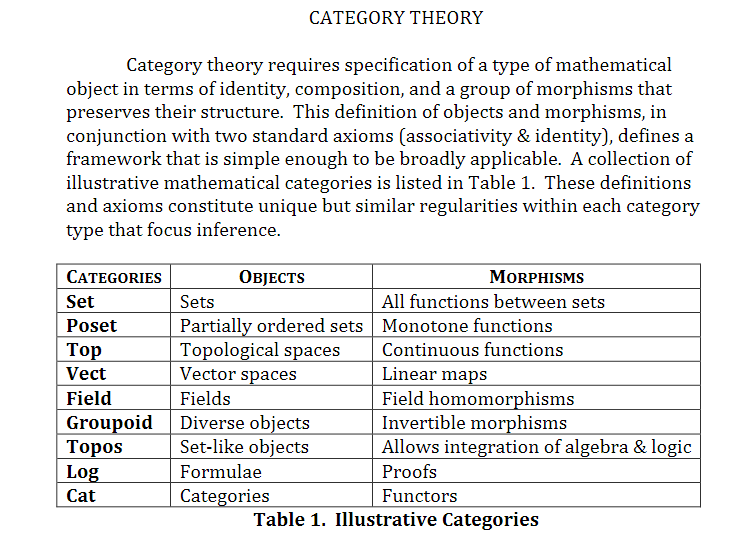
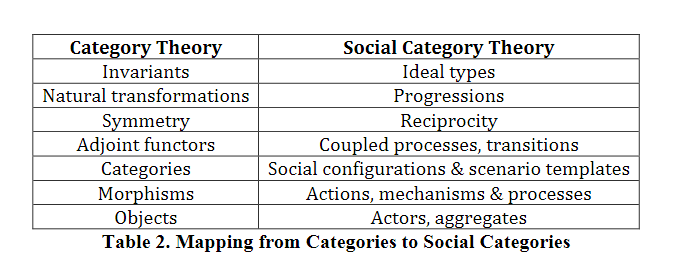
More recently, I came across the fascinating work of David Sallach, one paper (a conference from 2012) includes:


Sallach, D.L. Categorical Social Science: Theory, Methodology and Design. September 2012
Conference: Fourth World Congress on Social Simulation. Taipei, Taiwan.
https://www2.econ.iastate.edu/tesfatsi/Sallach2012CategoricalSoSci4.WCSS-SS.pdf

Plus, developed further in table 2:

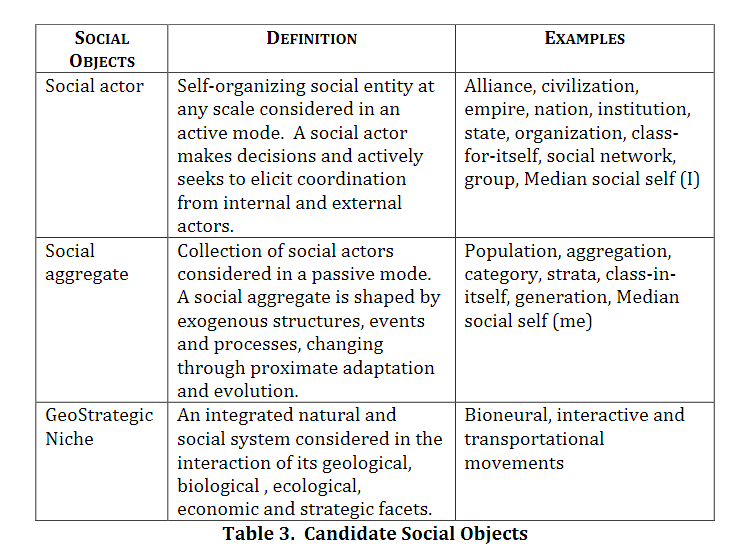
If time permits as an exercise, please consider Sallach's table 3 below. It may be interesting to map this to the domains of Hodges' model(?) [template]:
:

If you can see the potential utility of Hodges' model, you may also appreciate why Sallach's paper  resonates. Having emailed Dr Sallach, without reply, I did some checking. More sad news followed.

I, and no doubt many people will continue to discover and appreciate the legacy left behind by the above and many other pioneers. 

<>

I must acknowledge - Enid Mumford - whose work on socio-technical systems continues to inform my study and application of Hodges' model. This includes recognition of the many x-disciplinary bridges (or, barricades?) that can be found within Hodges' model. 

Clearly, much reading still to do.
<>

Returning to Hodges' model as a mathematical object, the 'distance' above is suddenly interstellar (and yes, sudden, as in faster than light!). I'm following videos, papers, and specific work-streams by  universities (I won't mention presently...) seeking to apply category theory to the social sciences. This suggests, at least, I'm not (completely!) wasting my time. If you have thoughts yourself on Hodges' model, the journey from Sallach's tables 1 - 2 not just 3, I'd be delighted to hear from you. 

There is another approach I will share this (N) spring. This author - researcher I have been able to contact.

*Scouser - https://en.wikipedia.org/wiki/Scouse
(Re. Liverpool - further post to follow).

James Lovelock image:  Bruno Comby, CC BY-SA 1.0, via Wikimedia Commons.

Saturday, September 24, 2022

More pennies - drop ... A personal note

*

Quite a while back on twitter, someone took exception as I replied to a tweet. The specifics aren't important, what is, is how much I take for granted here. 

The suggestion was that h2cm is, gives credence to, accentuates ... the 'general' at the expense of the specific, specialist, advanced. This [Hodges' model] is BAD.

As regards Hodges' model this is plain false, wrong.

Are specialists, advanced practitioners 'born' fully formed?

As I have always tried to remember my days as a Nursing Assistant, we must remember students and across disciplines.

Some comments, by new students on placement also on twitter suggest this is sadly, not the case.

I think I replied again in the thread, highlighting h2cm's open, situated, context driven potential.

In reality people on twitter are patient; I'm muted; the cliques, click away; whatever. As I churn out the same images and phrases.

What I need to do [yes, I know!], and will from now on, is qualify 'generic conceptual framework' (which on a Saturday night [UK] is probably a turn-off for many 😘).

As your knowledge grows, and is pruned by new learning, experience (and time) so your conceptual knowledge and vocabulary changes - expertise.

Hodges' model can reflect this.

So, if you are a specialist - and new here - WELCOME! 

Here are four pools, choose yours and by all means: DIVE IN.

Don't worry. IT IS SAFE.

At least, you won't hit the bottom, and you may not even find the sides. 😉

If your field is theology, the spiritual - well, well, you are in for a real treat.

*I love this journey^

^to follow ...


Tuesday, December 21, 2021

ERCIM News No. 128 Special Theme: "Quantum Computing"

Dear ERCIM News reader,

ERCIM News No. 128 has just been published at https://ercim-news.ercim.eu/

The Special Theme of this issue highlights the promising future of quantum computing in Europe. This special theme has been coordinated by our guest editors Shaukat Ali (SIMULA) and Sølve Selstø (Oslo Metropolitan University).

Thank you for your interest in ERCIM News. Feel free to forward this message to anyone who might be interested.We are also happy if you follow us and talk about us on twitter @ercim_news and other social media.


Next issue:
No. 129,  April 2022
Special Theme: "Fighting Cyber Crime" (submissions welcome!)

Announcements in this issue:


Call for Proposals: Dagstuhl Seminars and Perspectives Workshops Schloss Dagstuhl – Leibniz-Zentrum für Informatik is accepting proposals for scientific seminars/workshops in all areas of computer science, in particular also in connection with other fields. 


FMICS 2022: 27th International Conference on Formal Methods for Industrial Critical Systems
Warsaw, 14-16 September 2022


3rd International Workshop on Quantum Software Engineering (Q-SE) in conjunction with the 44th International Conference
on Software Engineering (ICSE 2022), Pittsburgh, PA, USA, 21-29 May 2022


ERCIM "Alain Bensoussan" Fellowship Programme - postdoctoral fellowships available at leading European research institutions.
Simple application procedure. Next application deadlines: 30 April and 30 September 2022


ERCIM News is published quarterly by ERCIM, the European Research Consortium for Informatics and Mathematics. With the printed and online edition, ERCIM News reaches more than 10000 readers.

Peter Kunz                      	
ERCIM Office
2004, Route des Lucioles
BP93
F-06902 Sophia Antipolis Cedex

join the ERCIM Linkedin Group
https://www.linkedin.com/groups/81390/
See also:

DORNELL: A Multimodal, Shapeable Haptic Handle for Mobility Assistance of People with Disabilities, pp.45-46. https://project.inria.fr/dornell/
 
RDf-star: Paving the Way to the Next generation of Linked Data, p.52.
 
Privacy, Data Quality & More in Data Spaces, p.53.
 
Restoring Prehension in People with Tetraplegia - A fruitful Collaboration between Research and Industry, p.55.
 

Thursday, May 20, 2021

Dementia research meets motorsports: Innovation Accelerator

Are you an early career researcher with an interest in dementia?

Would you like the chance to collaborate, innovate and compete?

Race Against Dementia and the DEMON Network, in partnership with Cranfield University, are inviting applications to participate in our Innovation Accelerator. This unique event will bring together teams of early career dementia scientists and similar stage experts from the motorsport industry, create diversity of thinking and break down ‘silos’ that currently exist between institutions and disciplines.

You will have the opportunity to think big and outside the box, develop ambitious ideas and learn from experts in the motorsports industry and other commercial enterprises with track records of rapid progress and innovation.

Ultimately, you will pitch to secure a hypothetical £20k seed funding prize. This competitive workshop will prepare you as an innovator to create successful applications for dementia research funding. It is also an opportunity to network and develop collaborative relationships.


More detail including how to apply.

My source: DEMON network.


Thursday, December 05, 2019

Review: i Kinchin's Visualising Powerful Knowledge to Develop the Expert Student

If there are sources to help understand Hodges' model and even contribute and provide evidence for a 'theory' then this book is one to add to the shelf.

Consequently this is the first of several posts (and other book reviews?):

Kinchin's Visualising Powerful Knowledge to Develop the Expert Student and related books
As mentioned Kinchin's book was brought to my attention through the Threshold Concepts forum. More on this to follow. Kinchin begins by noting how academics who teach at universities are there because they are subject experts. This is not just their knowing a lot, but the way this knowledge is organised (structured) and understood. This facilitates their engagement in the field to help extend knowledge further and the discipline they teach. Kinchin cites Goldsmith et al. (1991):
"To be knowledgeable in some area is to understand the interrelationships among the important concepts in that domain." p.4.
There is an immediate opportunity here, to note that Hodges' model in providing four domains is encouraging and facilitating the identification, association, understanding (meanings) across the model's domains that for novices simultaneously increases their vocabulary.

Kinchin's book seeks to address what is often a marked gap, between academics as subject matter experts and their ability to teach or present the content of 'what they know'. While teachers (and nurse mentors) are preoccupied with a student's competence, this book also considers the competence of teachers to teach. Kinchin reports how a great deal of teaching appears designed to keep students as 'perpetual novices'. I had an image here of Benner's theory pushing from one side; while teaching custom & practice (Powerpoint, linear, chains - of theory) pushes from the other. Why are students being taught, why are they learning? Reference to tell-memorise-test-forget in order to pass exams, seems the end-game, the outcome that student are now (potentially) paying for.

At this point in writing the review, I come across an omission. There is no index, but what appears a comprehensive list of references is provided. I found what I was looking for quickly enough - reference to 'bulimic learning' on p.7. Students gorge on information only to regurgitate it for exam purposes. This means it is undigested, not learned and integrated into the student's existing knowledge base and other concurrent learning. While science is applied in terms of evidence through research, teachers often seem reluctant to apply the very same principles.
"One of the problems in moving from 'traditional' teaching models towards 'effective' models is perhaps the lack of accessible tools with which to support the change from the non-learning of inert knowledge to the meaningful learning of powerful knowledge." p.7
Teachers and teaching provoke many adages, especially in health education; the 'differences' between those who practice, those who teach and those dedicated to research who eschew teaching preferring research. As the references suggest, Kinchin cites the literature, in this case the 'politics of reluctance'. Ideally all should apply, teaching, teachers, research and researchers married and allied together. There is a tendency (as ever) to stereotype and dichotomise. Some teach because they are lousy researchers; when it should be the case that teachers teach the way they research (p.10).

Chapter 1 is "The Framework - Linking Key Ideas" central is the approach and resource provided by Novak and Symlington in 1982 using the concept map. With a small library of papers and books, Novak is in there, Tony Buzan's mind-mapping approach - which is different and other sources. From the start, examples of a concept map framework are provided pp. 3,4,6 ... While very critical of 'traditional' teaching, Kinchin is sympathetic to the reality many teachers face and empathetic of teaching as the poor cousin. There are teachers aspiring to be 'active' teachers and effect change.

to be continued...

Novak, J.D. and Symington, D.J. (1982) Concept mapping for curriculum development. Victoria Institute for Educational Research Bulletin, 48: 3–11.

Kinchin, I., (2016) Visualising powerful knowledge to develop the expert student. Rotterdam: Sense Publishers.

See also:

Intro post

Review Two

Three

Four

Five

Six

Thanks to Brill for my review copy.

Monday, November 11, 2019

Book: Visualising Powerful Knowledge to Develop the Expert Student

A Knowledge Structures Perspective on Teaching and Learning at University

Following Professor Friel's book on Climate Change and the People's Health, I've another to review with just 33 pages left to read.

Another short book at 134 pages it has been read by-and-large whilst in casualty (3 times in 6 days), waiting and shifting between ambulance triage, X-Ray, Zones 1-3 to being warded, or not (warded now); with a family member. This probably accounts for the fact that while reading I've noticed some word errors, but not pencilled the margin. I think there are 3-4 thus far. (Usually) Proof-reader-Pete, I'll watch and record any others. This is not a major problem from a gift of book, that was brought to my attention on the Threshold Concepts Discussion list. Blogging over the years, I've probably referred to many 'gifts' granted through academia, books, journals and study in ideas and influences that can further Hodges' model. Here is another and as the book covers below reveal - what is the first book in a trilogy.

Constructionism clearly has a role to play in studying Hodges' model. Professor Kinchin from the outset prompts me to see limitations. Limitations not in Hodges' model, far from it; but the limitation and challenge of time to really focus on the model and where, how and why it 'fits' and 'sits' within theory, practice, discourse and research. I am sure it does in a way beyond the rendering of 2x2 tables on W2tQ. I've been aware of CMap and other software for many years - decades even. As my source indicates, threshold concepts figure here. I look forward to writing this review in the next few weeks, including ramifications for my study of Hodges' model and the impact upon future teaching I might pursue as a tutor.


https://profkinchinblog.wordpress.com/tag/pedagogic-frailty/


Kinchin, I., 2016. Visualising powerful knowledge to develop the expert student. Rotterdam: Sense Publishers.

See also:

Review One

Two

Three

Four

Five

Six

Thanks to Brill for my review copy.

Wednesday, October 30, 2019

The Rosamund Snow Scholarship for Patient-Led Research

INDIVIDUAL
|
INTERPERSONAL : SCIENCES
HUMANISTIC ----------------------------------------------- MECHANISTIC
SOCIOLOGY : POLITICAL
|
GROUP
(real) Subjective?

Rosamund

Patient / Carer's experience


(real) Qualitative?
Subjective ------ Research ------ Objective

Disciplinary - Professional
 language and jargon

Change

Qualitative ------ Research ------- Quantitative
Snow, PhD

"The Sociology of health and illness"

Patient-Led Research

Co-Production of Research

'What happens when patients know more than their doctor?'

Medical sociology

Unequal power dynamics
of the
clinical consultation

The politics of self-management

Challenges of advocacy

Scholarship

Funding

The Rosamund Snow Scholarship for Patient-Led Research
"Rosamund Snow, who died in February 2017, had type 1 diabetes. After completing a Master’s degree in Social Sciences at King’s College London, she went on to study for a PhD in the patient experience of diabetes. She became a respected academic at the University of Oxford, undertaking research and teaching medical students about the importance of the patient perspective. She believed passionately in patients working alongside clinicians to produce research and teaching that is informed by the (often under-valued) expertise in what it is like to live with an illness. She used her own expertise from experience to question and challenge norms of medical practice, always striving to improve patient care. After her death, Rosamund’s family generously donated funding to Green Templeton College at the University of Oxford, to allow others to be trained to continue the work she started." [ Source: #RSSPLR ]

My source: with thanks @trishagreenhalgh

Wednesday, October 23, 2019

Commentary: Global health journals need to address equity, diversity and inclusion c/o BMJ Global Health

HICs: high-income countries
LMICs: low-income and middle-income countries


individual
|
INTERPERSONAL : SCIENCES
humanistic ----------------------------------------------- mechanistic
SOCIOLOGY : POLITICAL
|
group - population

Individual experience

&

values

Leader


Task - EDITING - Process

< PARACHUTE >
----------------
RESEARCH

LOCATION
 global south

Leadership

Roles

INCLUSION - DIVERSITY

Community of Practice

Collective Values

Values

LMIC - expertise HIC

Colonialism
Figure 1
Global health editors and editorial board members according to location, gender and group. Group 1 included editors-in-chief, or those in leadership roles; group 2 included senior, deputy or associate editors; and group 3 included editorial board or advisory board members. HICs, high-income countries; LMICs, low-income and middle-income countries.


Nafade V, Sen P, Pai M. Global health journals need to address equity, diversity and inclusion. BMJ Global Health 2019;4:e002018

Tuesday, July 02, 2019

GGI launches Special Interest Group on Governance at EHMA 2019

... with EHMA conference themes

individual - self
|
INTERPERSONAL : SCIENCES
humanistic ----------------------------------------------- mechanistic
SOCIOLOGY : POLITICAL
|
group - population

personalisation
(starts here?)
identity
(assured by self,  proxy, or advocate)

digital transformation
(with socio-TECHNICAL benefits)

sustainability
(energy, amenities, transport, logistics;
across all four domains and the spiritual dimension)
integration
(social care, physical, mental health, across all four domains and including spiritual dimension)

SOCIO-technical

Value-based care (measures, outcomes, policy development ...)

Left to right: Andy Payne, Laura Botea and Ian Brandon at EHMA 2019 Annual Conference – Espoo, Finland.


Good Governance Institute – European Health Management Association (EHMA) Good Governance Institute Special Interest Group on Governance


My source:
https://twitter.com/GoodGovernInst/status/1145982812962590720

Wednesday, June 20, 2018

Would you like to help design a new risk assessment tool?

On Tuesday, 19 June 2018, 19:06:42 GMT+1, Charlotte Christiane Hammer, UK wrote:

We are looking for experts in the fields of health protection and humanitarian aid who are interested in helping us with the content validation for a new risk assessment tool for communicable diseases in humanitarian emergencies. The validation will be in the form of a short interview (between 20 and 35 minutes) via Skype during which you will have the opportunity to examine the tool and comment on it. If you are interested or know anyone who might be interested, please send us an email and we will give you further details regarding the project and the consent procedure. Your help is greatly appreciated. Please also forward this email to any colleagues who might be interested.

Kind regards,
Charlotte Hammer

Charlotte Christiane Hammer, MA, MPH
PhD Candidate

Health Protection Research Unit in Emergency Preparedness and Response
University of East Anglia
c.hammer AT uea.ac.uk

Related post - Dec 2017  
My source:
HIFA: Healthcare Information For All: www.hifa.org
HIFA Voices database: www.hifavoices.org

Saturday, July 29, 2017

No Body... No Mind...

Hodges' model: an open conceptual space for the naive beginner and expert alike...

individual
|
INTERPERSONAL : SCIENCES
humanistic --------------------------------------- mechanistic
SOCIOLOGY : POLITICAL
|
group
NO BODY...!?NO MIND...!?


"I also find it helpful to be both expert and naive. Following Shunryu Suzuki’s saying, “in the beginner’s mind there are many possibilities; in the expert’s mind there are few,” I find it helpful to approach each client with an attitude of “we don’t really know anything about this, let’s explore it together.” On the other hand, clients expect (and have a right to expect) some level of expertise and the fact as clinicians is we do have a body of knowledge which is valuable. By being both “expert and naive,” simultaneously teacher and student, we can model a kind of being-with-a-problem, which is most paradoxical but most essential: I (and you) are both healthy and ill, distressed and just fine." p.23.
Rosenbaum, R., & Shahar, Golan. (2012). Thoughts on Mrs. T: No Body, No Mind. Journal of Psychotherapy Integration, 22(1), 19-26.

Saturday, July 22, 2017

The harmony of opposites: to relativize the continuous / discontinuous dualism by Michel Lussault

"If we accept a somewhat schematic presentation, we can estimate that the modern Western knowledge system has been deployed on the basis of opposition couples conceived as expressing unquestionable dualities. These couples organized thought, all its activities, under all its regimes including the knowledge of expertise and the knowledge of common sense, and they constituted a kind of cognitive dogmatics; That is to say, they made it possible to define the very relevance of the problems that could be posed. From these dualities, and for a long time from these dualities alone, it has been permitted and legitimate to pose a number of social, political and cultural problems and then to find ways of solving these problems. In view of our integration into the cultural space of the modern West, we all know and experience the prevalence of these antagonistic duos which have structured the thought and continue, albeit in a somewhat more discreet way, -tender." *
Google translation French to English from:

LUSSAULT, Michel. L’harmonie des contraires : pour relativiser le dualisme continu/discontinu In: Continu et discontinu dans l’espace géographique [online]. Tours: Presses universitaires François-Rabelais, 2008 (generated 22 July 2017). Available on the Internet: <http://books.openedition.org/pufr/2398>. ISBN: 9782869063198. DOI: 10.4000/books.pufr.2398.

Original:
"On peut estimer, si l’on accepte une présentation un peu schématique, que le système de connaissance moderne occidental s’est déployé à partir du fondement constitué par des couples d’opposition conçus comme exprimant des dualités incontestables. Ces couples ont organisé la pensée, toutes ses activités, sous tous ses régimes y compris les savoirs d’expertise et les savoirs du sens commun, et ils ont constitué une sorte de dogmatique cognitive ; c’est-à-dire qu’ils ont permis de définir la pertinence même des problèmes qui pouvaient être posés. À partir de ces dualités, et pendant longtemps de ces dualités seulement, il a été autorisé et légitime de poser un certain nombre de problèmes sociaux, politiques, culturels et de trouver ensuite des modes de résolution de ces problèmes. Nous connaissons et éprouvons tous encore, compte tenu de notre insertion dans l’espace culturel de l’Occident moderne, la prégnance de ces duos antagonistes qui ont structuré la pensée et continuent, fût-ce de façon un peu plus discrète, de la sous-tendre."
* sous-tendre - 'to underlie it'?


Tuesday, July 18, 2017

Relativistic - Thinking checks and balances [V]

Effective nurses aspire to be time travellers.

Why should flash traders have all the adventure?

They also need to think relatively and be relativistic thinkers, the latter as described by Johnson (1994). If this sounds like faster than light travel in a sense it is, or at least it should seem like. Meeting the patient as they or someone reaches for the phone to seek help: is obviously taking the anticipation of care needs to the relativistic extreme - so what is this about?

This page at JHU "Perry’s Scheme – Understanding the Intellectual Development of College-Age Students" lists how Perry's formulation is reduced from nine to four levels of development:
  1. Dualism – knowledge is received, not questioned; students feel there is a correct answer to be learned.
  2. Multiplicity – there may be more than one solution to a problem, or there may be no solution; students recognize that their opinions matter.
  3. Relativism – knowledge is seen as contextual; students evaluate viewpoints based on source and evidence, and even experts are subject to scrutiny.
  4. Commitment within relativism – integration of knowledge from other sources with personal experience and reflection; students make commitment to values that matter to them and learn to take responsibility for committed beliefs. There is recognition that the acquisition of knowledge is ongoing activity.
Previous posts from January 2016 - with links supplied below - have reflected on dualistic and multiplistic thinking. I'm still exploring how work in educational psychology might inform my own. Picking up this thread again how does Hodges' model engender and contribute to relativistic thinking? Relativistic thinking as relates to Hodges' model is about a journey and not just one as item #3 above suggests. The student's journey may fly-by in time, but it is long and quite dense. Learners must negotiate lectures, self-study, simulation, patient, carers and public encounters, learning journals, clinical placements, assessed work and assessments, student-mentor sessions and all that the curriculum entails. Within the student's career there are innumerable situations and contexts if we cared to count them.

Responding to #3 Hodges' model can encourage immersion in a given context that presents a learning opportunity. They can also evaluate the situation as the care domains provide an epistemological platform from which to take in viewpoints and in the care domains scrutinize the knowledge that is shared and found through study. This includes the knowledge of experts. Whatever the care domain as a platform and viewport the student finds themselves in they should find a tendency to anticipate the other vistas nearby. Not only that but cognitively if not literally the patient and family when relevant can be with them. For person-centred care isn't just a matter of what is relativistic, but quantum too. 'Where' the patient is: so we are too.

Johnson, D.D. (1994). Dualistic, Multiplistic, and Relativistic Thinking as it Relates to a Psychology Major. Honors Theses. Paper 202.
http://opensiuc.lib.siu.edu/uhp_theses/202/

See also:
William Perry's Scheme of Intellectual and Ethical Development
A journey along the 9 "Perry" positions (as modified by Belenky et al. 1986) by William J. Rapaport

Thinking checks and balances [I]

Dualistic- thinking checks and balances [II]

Dualistic- thinking checks and balances [III] (or: The-hyphen)

Multiplistic - Thinking checks and balances [IV]

Wednesday, May 18, 2016

Hodges' model - draft paper on case formulation informed by Rainforth and Laurenson (2014)

The following is from a literature review by Rainforth, M., & Laurenson, M. (2014) for a draft paper on Hodges' model and case formulation [CF]. They do not refer to diagrams, but two models are included and the role of modelling. The paper is supportive for Hodges' model within mental health, forensic care and supervision more generally.

Crowe et al. (2008) suggest an advantage of CF is its ability to create understanding of service user needs regardless of their diagnostic classification. Thus an emphasis on the link between training provision, training outcomes and treatment plans is needed so practitioners understand the frameworks for conceptualizing mental distress whilst also being able to recognize the expertise of the service user in CF development.
...
A goal of the person-specific evaluation of CF is the development of an intra-individual statistical prediction model for actuarial prediction tailored to the specific issues and life circumstances. The essence of CF is its ability to provide shared understanding of a person’s presenting problems through theoretical explanation of assumed causes and maintaining factors, so appropriate interventions can be utilized (p.208).

Rainforth, M., & Laurenson, M. (2014). A literature review of Case Formulation to inform Mental Health practice: Case formulation in mental health practice. Journal of Psychiatric and Mental Health Nursing, 21(3), 206–213. http://doi.org/10.1111/jpm.12069