Hodges' Model: Welcome to the QUAD: Africa

Hodges' model is a conceptual framework to support reflection and critical thinking. Situated, the model can help integrate all disciplines (academic and professional). Amid news items, are posts that illustrate the scope and application of the model. A bibliography and A4 template are provided in the sidebar. Welcome to the QUAD ...

Showing posts with label Africa. Show all posts

Thursday, October 01, 2026

Paper - 'Women's voices in rural Malawi: antenatal care research and community learning'

Dear HIFA colleagues,

My friend, Ted Lankester, suggested I share my recently published research with this community.

The paper, published in PLOS Global Public Health, explores women’s perceptions of pregnancy and antenatal care in Chizenga village, Chikwawa, Malawi. It arose from my MSc dissertation at the Liverpool School of Tropical Medicine, with co-authors Deborah Nyirenda and Terry Kana.

Through interviews with 14 pregnant women, we explored how understanding of antenatal care interacts with transport costs, distance, nutritional constraints, gender dynamics and experiences of respectful and disrespectful care. Women also expressed a desire for more community-based education and outreach.

The full open-access paper is available here: https://doi.org/10.1371/journal.pgph.0005515

Layton H, Nyirenda D, Kana T (2026) A qualitative study to explore women’s perceptions of pregnancy and antenatal care in Chizenga village, Chikwawa, Malawi. PLOS Glob Public Health 6(9): e0005515. https://doi.org/10.1371/journal.pgph.0005515

Their accounts inspired me to develop the Sangalala Maternal Health Partnership Programme with local partners, through The Reach Foundation UK. Our first cohort (39 women and 1 man) has recently completed the programme in Uganda, and we are now learning from participants’ experiences to strengthen it.

I would welcome members’ experiences of making maternal health information accessible and useful in rural communities, particularly where information needs sit alongside practical barriers to accessing care.

I promised the women who participated that I would help raise their voices. Sharing their perspectives and learning from this community is one way I hope to honour that promise.

Best Wishes,

Helen

HIFA profile [and my source]: Helen Layton is a Nurse and Global Health Consultant; Founder & Clinical Director, The Marula Institute; Co-founder & Executive Director, The Reach Foundation UK/Spain. My professional interests include maternal and child health, global health equity, respectful maternity care, community-led health education, and translating research into practice. As Co-founder and Executive Director of The Reach Foundation UK and Founder and Clinical Director of The Marula Institute, I am particularly interested in strengthening health systems, workforce education, safe care for children with complex needs, and ensuring women’s and families’ voices inform care. 
Helen AT cathcom.org

Saturday, September 05, 2026

UN votes to adopt new world map to reflect Africa's true size | BBC News

UN tells the world: Stop making Africa look small

'By 164 votes to one, Member States on Friday endorsed a resolution promoting map projections that more accurately reflect the true size of continents – the culmination of an African-led campaign against the 16th-century Mercator projection, still the most widely used map in the world. 

The United States cast the sole vote against, dismissing the initiative as part of a “radical ideological project.” 

Six countries – Estonia, Georgia, Lithuania, Moldova, Serbia and Ukraine – abstained. 

The resolution does not ban the Mercator projection or impose a replacement. Instead, it encourages governments, schools, international organizations and technology companies to use the Equal Earth projection and other so-called equal-area maps when relative size matters, and to teach the limitations of any flat map in representing a spherical planet.'

Continued ... UN


Previously: 'cartography'

Wednesday, August 26, 2026

South Sudan Medical Journal - August 2026


Dear Reader,

The August 2026 issue is online here; we thank all the copyeditors and reviewers who helped prepare these papers. If you are submitting a manuscript, remember to read our Author’s Guidelines first.

We are looking for volunteers to join the Editorial team. Email us if you have time and editing skills.

Editorial

Can the Ebola Zaire vaccine stop Bundigunyo virus? Edward Kenyi


RESEARCH ARTICLES
Assessment of airborne fungi in the emergency and traumatology departments of University Hospital Centre, Sidi Bel-Abbes, Algeria Derouicha Matmour, Samia Merad, Yassine Merad, Achwak Bendouida, Zoubir Belmokhtar, Zakaria Merad, Mohamed Amine Boumelik, Benali Beghdadli, Othmane Ghomari 

Maternal and nutritional factors associated with early childhood development in rural Indonesia Hadi Ashar, Mohammad Zen Rahfiludin, Sri Achadi Nugraheni, Dwi Hapsari Tjandrarini

Observed outcomes and costs of laparoscopic versus open cholecystectomy in Juba, South Sudan Mayen Achiek, Jingo Faride, Mohamed Ibrahim, Abraham Mafair Kezekia, Chep C. Chep, Garang D. Nyuol, Ajak M. Dhel, George Lefteri

Stakeholders’ perspectives on determinants of health financing in South Sudan: a qualitative assessment Jonathan Majok, Gabriel Loi, Solomon Dut, Aluel Ayom, Thiey Kuethpiny, David Ngor, Sarah Nyannyot

Predictors of unsuccessful treatment outcomes among adults with pulmonary tuberculosis in a resource-limited setting Tri Agus Yuarsa, Malehah Mohd Noh, Richard Avoi, Meryl Grace Lansing, Putra Agina Widyaswara Suwaryo 

Assessment of the understanding of evidence-based medicine among undergraduate medical students in Gadarif University, Sudan Khalid Mohammed Ali, Ozaz Yagoub, Inshirah Mustafa, Tarig Fadelelmoula
 
Environmental health risks associated with open dumping practices in Central Kalimantan, Indonesia: an observational study Nawan, Septi Handayani 

Assessing the quality of health facilities providing antenatal care services in Bor, South Sudan John Thon Pandak Kuot, Shalini Ninan Cherian

Prostate cancer awareness and factors influencing screening among men at St. Francis Referral Hospital, Tanzania Theresia A. Karuhanga, Zeinabu Awardh Sharif, Antony Magoda, Philbert Madoshi 

CASE REPORTS 
Long-standing aspirated foreign body in a child complicated by pneumothorax and empyema Gawar Gel, Juma Deng, Justin Rubena

Clinical rabies in an HIV-positive pregnant mother with surviving newborn Ayol Mac Ayol

BACKCOVER: WHO: Guidelines for the management of pregnant and breastfeeding women in the context of Ebola virus disease

FRONT COVER IMAGE: The grown fungal colonies on SDA media collected from different types of samples. (Article on page 149)

Thanks to everyone who supports SSMJ. Tell your colleagues they can join our mailing list here.

The SSMJ team

Email: southsudanmedicaljournal AT gmail.com
Website: http://www.southsudanmedicaljournal.com
Follow us on X: @SSMedJournal and our Facebook Group.

Our mailing address is:

South Sudan Medical Journal
Health and Social Sciences Research Institute, Juba
South Sudan
Copyright (C) 2026 South Sudan Medical Journal All rights reserved.

Thursday, July 23, 2026

Call for submissions for good practices c/o HIFA

Share your good practice and help strengthen the health system

The Health Systems Trust (HST) invites submissions of good practices for inclusion in the Good Practices Repository. Healthcare workers, programme managers, districts, facilities, academic institutions, non-governmental organisations (NGOs), private-sector partners, industry partners and community organisations are implementing effective solutions to address health system challenges and improve health outcomes. Many of these valuable experiences remain undocumented and are therefore not widely shared or adapted by others facing similar challenges. The Good Practices Repository has been established to identify, document, and share effective practices that can support learning, adaptation, and health system improvement across the country. Most importantly, the real value of sharing good practices lies in its potential to create an exponential effect across the health system. When successful approaches are documented and shared, they can be adapted and implemented in multiple settings thereby extending their impact far beyond the original site. In this way a single innovation or improvement can catalyse widespread change which can accelerate learning and drive improvements in the health space across the country.

What is a Good Practice?

A good practice describes an intervention, programme, service, innovation, policy or approach that has demonstrated effectiveness in addressing health challenges and improving outcomes. Good practices are typically evidence-informed, make use of available resources and has the potential to be adapted, scaled or replicated in other settings.

Submissions may relate to one or more of the following areas:

  • Health priorities
  • Maternal, newborn, child and adolescent health
  • HIV, TB and sexually transmitted infections
  • Non-communicable diseases
  • Mental health
  • Environmental health and climate change
  • One Health
  • Antimicrobial Resistance
  • Health system strengthening
  • Leadership and governance
  • Health financing
  • Digital health and health information systems
  • Human resources for health
  • Service delivery and quality improvement
  • Emergency and disaster preparedness
  • Environmental health and climate change
  • Antimicrobial resistance
  • Medicines, technologies and supply chain management
  • Community and implementation approaches
  • Community engagement and participation
  • Health promotion and disease prevention
  • Multisectoral collaboration and partnerships
  • Knowledge translation and evidence use
  • Equity-focused and people-centred approaches
  • Other Areas
  • Other initiatives that contribute to improved health system performance, health outcomes, or population wellbeing.

Who can submit?

Submissions are welcome from organisations, institutions, programmes, and partnerships involved in the planning, delivery, management, evaluation, or support of health services, including:

  • National, sub-national, regional, district, and local health authorities
  • Public sector programmes and units
  • Non-governmental, civil society and community-based organisations
  • Academic and research institutions
  • Professional bodies and associations
  • Private-sector organisations and industry partners contributing to health system strengthening, service delivery, innovation, or public health programmes
  • Multi-sectoral partnerships and collaborative initiatives
  • Development partners, multilateral agencies, and international organisations

Assessment criteria

  • Submissions will be assessed against an adapted World Health Organization (WHO) Good Practice criteria, including:Demonstrated effectiveness
  • Efficient use of resources
  • Relevance to a priority health system challenge
  • Sustainability
  • Ethical soundness
  • Potential for adaptation or replication
  • Innovation (optional but desirable)

Why submit?

  • Selected practices will:Be featured in the Good Practices Repository
  • Contribute to shared learning
  • Receive national visibility and recognition
  • Support evidence-informed policy and programme development
  • Provide opportunities for replication and scale-up
  • Showcase the achievements of health system implementers and partners
  • Contribute to sustained efforts at improving various tiers of the health system

Submission requirements

Complete submission template including the following information:

  • Executive summary
  • Background: Description of the challenge addressed
  • Intervention: Description of the intervention or practice
  • Approach: Implementation process
  • Key achievements: Results and outcomes achieved (describe outcome measures and metrics for success of the programme/intervention/tool)
  • Lessons learnt: Description of lessons learnt which can inform replication in other contexts
  • Sustainability considerations
  • Supporting materials, where available
  • Only complete submissions containing sufficient information for assessment will be reviewed.

Submissions are accepted on a rolling basis. Feel free to submit throughout the year.

How to submit: Submissions can be completed online through the Good Practices Repository submission portal:

https://www.goodpractices.hst.org.za/for-authors

[n.b. PJ - The link supplied does not appear to work, there is a submit option through the above page.]

For further information, please contact: GoodPractices AT hst.org.za

HIFA profile: Maryam Rumaney currently works as a freelance scientific and English language editor. In addition, she offers consulting services to the laboratory industry. mbrumaney AT gmail.com

HIFA - Healthcare Information For All

View this contribution on the web site

Tuesday, July 07, 2026

Choose to Treat appeal, 7–14 July 2026


Donate here between 7–14 July and your donation will be doubled! 

'Water is scarce in Mauritania and people have little choice but to bathe, wash clothes, care for their animals, and cool off in the same pools. But the water that brings relief also carries schistosomiasis, a parasitic disease that silently damages the kidneys, stunts growth, impairs learning, and steals futures.

Through our collaboration with the Ministry of Health, Amadou (pictured*) received treatment, and he recovered. But many children in Mauritania still require it. Without continued access to treatment, Amadou and thousands like him remain at risk every time they enter the water.

When people cannot avoid exposure, access to safe, effective treatment is their best protection. A single donation can help protect children like Amadou and support their health at a critical stage in their childhood.' ... 'Choose to Treat appeal'


Previous related posts: 'neglected tropical diseases' : 'SDGs'

Sunday, June 07, 2026

Book: "The Elements of Power"

individual
|
INTERPERSONAL
: SCIENCES             
humanistic ------------------------------- mechanistic
SOCIOLOGY : POLITICAL   
|
group
logicical OR
 

the periodic table
|
mining
|
elements
COBALT


the 'table' ...

family

communities


CHILD LABOUR
 
power 


“A tale of rapacious colonialism, Cold War spy games, dazzling technical innovation, big business rivalry, big power geopolitics . . . Niarchos has produced an unflinching, landmark work on the nature of extractive capitalism.” —Patrick Radden Keefe, New York Times best-selling author of Empire of Pain and Say Nothing

Epic, shocking, and deeply reported, The Elements of Power tells the story of the war for the global supply of battery metals—essential for the decarbonization of our economies—and the terrible, bloody human cost of this badly misunderstood industry


'Congo is rich. Swaths of the war-torn African country lack basic infrastructure, and, after many decades of colonial occupation, its people are officially among the poorest in the world. But hidden beneath the soil are vast quantities of cobalt, lithium, copper, tin, tantalum, tungsten, and other treasures. Recently, this veritable periodic table of resources has become extremely valuable because these metals are essential for the global “energy transition”—the plan for wealthy nations to wean themselves off fossil fuels by shifting to sustainable forms of energy, such as solar and wind. The race to electrify the world’s economy has begun, and China has a considerable head start. From Indonesia to South America to Central Africa, Beijing has invested in mines and infrastructure for decades. But the U.S. has begun fighting back with massive investments of its own, as well as sanctions and disruptive tariffs. ...'

https://www.penguinrandomhouse.com/books/709025/the-elements-of-power-by-nicolas-niarchos/

My source: James McConnachie, The dirty truth behind our 'clean energy' cars, saturday review, The Times, 17 January 2026, p.13.

Previously: 'mining' : 'corruption' : 'Africa' 

Sunday, May 24, 2026

South Sudan Medical Journal Vol 19 No 2 May 2026


Dear Reader,

The May 2026 issue is online here; we thank all the copyeditors and reviewers who helped prepare these papers. SSMJ is indexed by African Journals Online (AJOL) – go here to see who reads us.


Editorial 

  • Ebola: The Bundibugyo virus is back Edward Eremugo Kenyi

RESEARCH ARTICLES

  • Risk factors in glaucoma: Insights from a prospective case–control study, Belagavi, India Asawari Kabure, Bhushan Kulkarni, Shilpa Kodkany, Murigendra Hiremath
  • OV16 antibody seropositivity reveals persistent onchocerciasis transmission and cross-border risk in Magwi County, South Sudan: a population-based survey Ezbon WApary, Yak Yak, Benson Ojara, Wilson Ladu, David Oguttu, Ian Hennessee, Pita Jane, Johan Willems, Thok Chol, Kamulete Horasio, Okot William, Amanya Jacob
  • Prevalence of urinary schistosomiasis in communities along the River Niger Basin areas, North-Central Nigeria Nyamngee Amase, Ikpe Raphael Terlumun, Kayode Yusuf Abel, Sulaiman Mariam Kehinde, Akanbi II Aliu Ajibola
  • Developing a communicable and infectious diseases research agenda in South Sudan: A multi-stakeholder prioritisation approach Amanya Jacob, Ezbon WApary, Dhieu Daniel, Atemthi Dau, Matur T. Tieng, John Rumunu, Cicilia Konga, Bol Atem, Betty Eyobo, Robert Napoleon, Joseph Panyuon, Kenneth L Sube, Kon Alier, Joseph Lako, John Suraj, Abuelguasim M. Hassan, Mapuor Areu, Lazarus Atem, Aja Kuol, Pizzi Wilson, Achcer Adup Mou
  • Determinants of disaster preparedness among public health facilities in Juba City, South Sudan Dumba Samuel Kenyi, Muthoni Mwangi Eunice, Musa Olouch
  • Evaluating the role of the health information system infrastructure in enhancing data quality in Central Equatoria State, South Sudan Matur T. Tieng, Karani Magutah, Joseph Muchiri
  • Impact of developmental stimulation education on maternal knowledge and caregiving practices in stunting: a longitudinal study Ning Iswati, Azizan Omar, Sukhbeer Kaur Darsin Singh, Putra Agina Widyaswara Suwaryo 
  • Holding the line: lived experiences of mental health, moral injury, and organizational support among public-health professionals in the Rohingya Camp, Bangladesh — phenomenological study Md. Ruhul Amin
CASE REPORTS 
  • Endoscopic endonasal repair of post-traumatic sphenoid sinus cerebrospinal fluid leak with encephalocele Justin Rubena, Khalid Coco, Francis Swaka, Othwonh Twong 
  • A rare pathological feature of portal vein thrombosis complicated by portal hypertension and haematemesis Hamidine Illa, Ganiou Tidjani Kabirou, Amadou Magagi Mahamane Ibrahim, Maman Brah Moustapha, Soumaila Abdou, Habou Garba Abdoul Malik, Adamou Harissou

REVIEW ARTICLE

  • Interpersonal and community-level factors influencing intimate partner violence in South Sudan: a literature review Nyinypiu Tong Chol Adong 

SHORT COMMUNICATIONS

  • Letter to the Editor J. Clarke McIntosh
  • Letter to the Editor Eluzai A. Hakim
  • News from the Gordon Memorial College Trust Fund Eluzai A. Hakim

BACKCOVER: CDC Poster: Flu or Ebola? 

Thanks to everyone who supports SSMJ. Tell your colleagues they can join our mailing list here.

The SSMJ team
Email: southsudanmedicaljournal AT gmail.com
Website: http://www.southsudanmedicaljournal.com
Follow us on X: @SSMedJournal and our Facebook Group,

Friday, May 15, 2026

Tanzania Health Summit (THS)

Hello Peter Jones,

Warm greetings from the Tanzania Health Summit (THS).

As we prepare for the 13th Tanzania Health Summit, scheduled for 5th–7th October 2026 at Mlimani City Conference Center, Dar es Salaam, we are excited to share key opportunities and updates for your participation.

Abstracts Submission is underway, submit before 1st June.

We invite researchers, innovators, and professionals to submit abstracts aligned with this year’s theme:

“Building Health Sovereignty and Strengthening
Health Systems in a Changing Global Order.”

This is your opportunity to showcase impactful work and contribute to national and global health conversations.

Elizabeth & her Colleagues story about their wish to present at THS: 

SUBMIT YOUR ABSTRACT NOW!!!

Early Bird Registration is Still Open

Secure your spot at a discounted rate by registering early. Take advantage of this limited-time offer and be part of Tanzania’s largest healthcare gathering.

My source: Email - THS

Tuesday, May 05, 2026

iii Picking up sticks: when axes matter

It is one thing for us to break the stick, but quite another from a concept's perspective. They are accustomed to the dynamics at work, when as search terms they are exploded, or not. And, not just any concept but one that can be unique. Consider the concept, and how or where it finds itself [ in Hodges' or another model ]? Let us use the intra-INTERPERSONAL domain, as an example, and ask:

  1. Is 'mood' fixed by the I-axis alone?
  2. Does the humanistic axis have a role in where in the doomain the user of Hodges' model places 'mood'?
  3. Acknowledging person-centredness, if the patient/client had a view, to what extent would this agree (with annonymity assured) with the professional's judgement, or a relatives / guardian?
  4. What is as a result, 'mood' has become 'very low mood'? (To continue in this vein , invites complication, but we will continue.)
  5. Introducing the 'Other' whatever their role and relationship, pushes us to the humanistic, but whether this is achieved in a person-centred manner (triage excluded) is a matter of opinion and judgement (evaluation).

If mood is fixed by the I-axis then if we determine the issue is 'low mood' are we introducing a combined quantitative and qualitative dimension, a continuum, at the selected point in the interpersonal domain? Writing previously about threshold concepts, I wondered, and proposed compound threshold concepts. There is a progression from the patient's subjective self-assessment, to in all likelihood of an objective measure being introduced, so spanning two domains. Definition of 'compound' aside; there is a compound structure at work.

What points 1-5 above reveal is triangulation. When it is argued that Hodges' model facilitates navigation as per my presentation on 21st April, this is a strategy from mixed-methods research in practice. Many years ago, Hodges' model was described as a 'cognitive periplus', reflecting the way ancient mariners initially charted the coastlines creating the first map, as per their culture and dispora. In the west more recently the value of social approaches and activities, especially in mental health. Care navigation is a role. Literally sign-posting to individually suited (which must be stressed) activities, resources, and agencies. So, in Hodges' model what are our three triangulation points? They are:

  1. Axial;
  2. Intra- InterDomain; 
  3. Person-centred. 

Perhaps, we can describe 1-2 as conceptual anchors at least when dealing with a concept, while #3 is more about approach, values and philosophy. So, there is something of a 'cheat' going on, because each one is compound:

1. Axial: The axial is comprised of four points. The axes create a Cartesian plane (figure). And, as far as a patient is concerned, they mark off a point on the respective Individual and Humanistic-Sciences parts of the axes. This form of triangulation point can claim a general conceptual precision (language) in the applied terminal labels; but what happens in-between can be patently fuzzy. A mix of what may be objective and subjective.

2. Intra- Interdomain: This may be the most imprecise triangulation point. It appears the axes of Hodges' model are composite (figure). They have two-sides as a boundary. To be pedantic, in our example, one plays to the interpersonal domain, the other the sciences.

[The relationship between the axis and the domains in Hodges' model, is far from unique; but I wonder if there is something else here?]

2. Person-Centred: There is a paradoxical nature to person-centred(ness). It is also nebulous in nature, and yet in care it is definitive in practice (safety, purposes, values, professionalism, competency, ...).  It forms locus which can also be classed as a traingulation point, at the centre of the model. This is the point around which Hodges' model is built. This captures the individual's (life, care) context and situation, all influenced by their life chances as consequent health - and other - careers. Salience and our attention^ is key. Is it possible to frame our purpose(s)?

^A focus for [N] autumn.

Marrakech, Le Jardin Secret. 24th April. 1000-1830.

Saturday, April 25, 2026

MAACAL: Statues Also Breathe

Catharsis Arts Foundation in collaboration with Obafemi-Awolowo University and 108 students, 2022

This exhibition presents a collaboration between Obafemi-Awolowo University, 108 students from all across Nigeria, and the families of the Chibok girls who were kidnapped by Boko Haram in 2014. 

Inspired by the iconic terracotta heads of Ife, it was initiated by artists Prune Nourry and Ade Bantu and seeks to raise awareness on the plight of the missing girls, and to highlight the diversity of Nigerian culture. . . .

On Thursday I visited MAACAL - Museum of African Contemporary Art Al Maaden, an art gallery  I first read about in FTWeekend Life&Arts, not long after first visiting Marrakech in 2023.

The main exhibit presents itself straight away after entering:

Statues Also Breathe, exhibition view, Art Twenty One, Lagos, Nigeria
 ©Dohdohndawa Photography/DDD Studios

A short but touching film in the gallery bears testimony to the fact many 'school girls' are still absent. Repetition is standard method in design. In today's manufactured world you might think what is so special about this? Until you are there physically, and walk through them. You see each one, a who: unique, an individual, a person taken away from where they belong.

As a white man from NW England, there was a moment when I realised: I was on the same continent where this had happened and is ongoing. Searching Youtube reveals other related videos concerning the exhibitions. It's strange watching them again as a check on their availability. A short video of an event to launch three new installations earlier this year is worth watching. Unfortunately, my phone failed until I got back to Marrakech, so I've no photos. I've three works in mind though.

I walked there, and back after trying to sort a taxi with a lovely couple from Germany and their son. Some taxis are limited to carry three persons. This is what arrived. The sun, even behind clouds that day, and flights taking off from the airport helped my sense of direction. The girls, seeking an education, did not have these means of navigation.

The garden at MAACAL was small but lovely. I hope to return one day, and well before then . . .

Tuesday, April 21, 2026

WCCS26: World Conference on Complex Systems 20-22nd April

It was good that today I could relax a little sooner than I expected with my presentation delivered over lunch time instead of 1730. To recap, at the 6th edition conference theme of:

“Navigating Contemporary Complexity:
Transdisciplinary Approaches to Economic, Social, Political, and Environmental Challenges”

- my talk (I added "Hodges' model" in the slides):

'Hodges’ model: PRESENTING a UNIVERSAL and SIMPLE CONCEPTUAL WORKBENCH to SITUATE and ENCOMPASS COMPLEXITY'

This after arriving back from a conference dinner near Marrakech at 0100, but the event at Chez Ali was different and most enjoyable. 

I'm conscious that unlike other speakers I (still!) did not have 'data' to share and discuss. Equations have been necessary over the first two days. But overall all sessions have proved accessible. From comments received Hodges' model was understood and deemed relevant. One delegate noted how the visual nature of Hodges' model was apparent, the illustrations revealed the model more clearly than a verbal description the evening before.

There were two questions. I eventually recalled awareness of Franco Basaglia, the Italian pioneer of community mental health and mental health law in Italy. Another questions concerned were I though the arts, drama and culture sit, or fit in Hodges' model? I suggested a search of the blog for posts tagged 'art', 'theatre', or 'culture'; with a warning that it can be a bit of a rabbit-hole.

Discussion, in-sessions and outside have proved refreshing, and not just as a welcome change from 'world news'. There were reminders too of early career researchers, professionals, and policymakers and the need to phone home.

While I pack for a transfer to Marrakech tomorrow afternoon, I will reflect and look to add more here.

In adition to data, I need new angles so I am not self-plagiarizing; hence the attempt to see Hodges' model as a mathematical object.

Many thanks to the WCCS26 Committee for being able to participate and share this model made in the 20th century for the challenges of the 21st.

More to follow and in the meantime, you can read the programme yourself.

Thursday, April 09, 2026

Book: 'Complexity in Health Care - A Paradigm Shift for Clinical Practice'

This book was published in 2023, so I am most grateful to Daniela and colleagues at SpringerNature for the review copy. My reading will also inform both the presentation I've to deliver, and the learning during the conference's three days and the rest of a visit to Morocco.

With a 15 minute talk and 5 minutes for questions, I have 15 slides. The final one, is a listing of sources, plus this book:

1. Estrada, E., Submitted (2026) Emergent Geometry in Complex Systems from Relational Dynamics. I. The Classical Setting.
https://ifisc.uib-csic.es/en/publications/emergent-geometry-in-complex-systems-from-relation/
2. Napoli, P.H., Fischer, B., Salati Marcondes de Moraes, G.H. et al. (2026). When complexity does not mean chaos: nonlinear dynamics of entrepreneurial ecosystems. J Technol Transf  https://doi.org/10.1007/s10961-025-10314-7
3. Hylin MJ, Kerr AL, Holden R. Understanding the Mechanisms of Recovery and/or Compensation following Injury. Neural Plast. 2017;2017:7125057. doi: 10.1155/2017/7125057. Epub 2017 Apr 20. PMID: 28512585; PMCID: PMC5415868.
4. Zanin, M., Papo, D. (2020) Assessing functional propagation patterns in COVID-19. Chaos, Solitons & Fractals 138, 109993
5. Braithwaite J, Ellis LA, Churruca K, et al. Complexity Science as a Frame for Understanding the Management and Delivery of High Quality and Safer Care. 2020
6. Bergström, J., & Dekker, S. W. A. (2014). Bridging the Macro and the Micro by Considering the Meso: Reflections on the Fractal Nature of Resilience. Ecology and Society, 19(4), art22. https://doi.org/10.5751/ES-06956-190422
7. Rickles, D., Hawe, P., & Shiell, A. (2007). A simple guide to chaos and complexity. Journal of Epidemiology & Community Health, 61(11), Article 11. https://doi.org/10.1136/jech.2006.054254
8. Miller, K. (2007). From Fears of Entropy to Comfort in Chaos: Arcadia, The Waste Land, Numb3rs, and Man’s Relationship With Science. Bulletin of Science, Technology & Society, 27(1), 81-94.
9. Frankel, Steven & Thurber, Steven & Bourgeois, James. (2023). Complexity in Health Care: A Paradigm Shift for Clinical Practice. Cham: Springer. 10.1007/978-3-031-14949-8.

Also pointing to the bibliography in the sidebar and the template link. 

More to follow ...

Monday, March 09, 2026

Human-Technology Lecture Series – 25 March

Dear Colleagues,

The BCS Sociotechnical Specialist Group and the STEIN-UX Research Group at UWL are launching the online Human-Technology Lecture Series, connecting critical perspectives on digital technologies and design with insights about people, organisations and society.

Our first lecture is:

Thinking Language, Fast and Slow: Speed, Data, and Decolonial Inquiry

📅 25 March 2026
🕛 12:00–13:00 (UK time)
💻 Online
🎟 Free to attend

Speaker: Dr. Lindsey DeWitt Prat, whose work explores how language, culture and technology intersect in the development of AI systems.

Talk Synopsis:

As language increasingly becomes training data for AI, timing begins to shape power. Decisions about datasets are made quickly, while their consequences unfold over much longer horizons. What does it mean to design responsibly with — rather than after — underserved language communities?

Drawing on industry work with African languages and large language models, alongside research examining how AI data is produced globally, the talk reflects on why anthropological, participatory and human-centred approaches need to be integrated early in technological development.

Register here:
https://www.eventbrite.co.uk/e/thinking-language-fast-and-slow-speed-data-and-decolonial-inquiry-tickets-1983958108108?aff=oddtdtcreator

Best wishes,
José

Professor José Abdelnour Nocera
School of Computing and Engineering
Head of Sociotechnical Innovation and User Experience Research Group
University of West London
St Mary’s Road, Ealing – London W5 5RF
... and my source via the SOCIOTECH list.

Wednesday, December 31, 2025

‘Life & health’: overview of global health, climate crises, SDGs and Africa Agenda 2030

26 December, 2025 

Afrihealth Optonet Association (AHOA) proudly announces its Maiden ‘Life & Health’ Symposium, a landmark convening designed to inspire dialogue, innovation, and collective action around one of the most pressing issues of our time: “Overview of Global Health, Climate Crises, SDGs and Africa Agenda 2030.” This inaugural symposium represents AHOA’s commitment to shaping forward-looking conversations that connect health, environment, and sustainable development across Africa and beyond.

The world is experiencing an unprecedented convergence of health challenges and climate-related crises. Rising temperatures, extreme weather events, environmental degradation, and biodiversity loss are reshaping disease patterns, food systems, water security, and livelihoods. These realities disproportionately affect low- and middle-income countries, particularly in Africa, where fragile health systems and socioeconomic inequalities amplify vulnerability. The ‘Life & Health’ Symposium seeks to interrogate these realities and offer integrated, actionable pathways aligned with the Sustainable Development Goals (SDGs) and Africa Agenda 2030.

At the heart of the symposium is a bold premise: health is both a driver and an outcome of sustainable development. Achieving good health and well-being (SDG 3) is inseparable from progress on climate action (SDG 13), clean water and sanitation (SDG 6), zero hunger (SDG 2), sustainable cities (SDG 11), and reduced inequalities (SDG 10). By convening experts across disciplines, the symposium will explore how these interconnected goals can be pursued through coordinated policies, resilient systems, and inclusive partnerships.

The Maiden ‘Life & Health’ Symposium is designed as a multi-stakeholder platform, bringing together policymakers, health professionals, climate experts, development practitioners, civil society leaders, academics, youth advocates, and the private sector. Participants will engage in high-level discussions, evidence-based presentations, and solution-oriented exchanges that bridge science, policy, and practice. The symposium will also provide a space for emerging voices and community perspectives, ensuring that local realities inform global ambitions.

A key focus of the symposium is Africa’s Agenda 2030, which contextualizes global commitments within the continent’s development aspirations. Africa stands at a pivotal moment: with a rapidly growing youth population, expanding urban centres, and increasing climate exposure, the choices made today will define health and development outcomes for decades. The symposium will highlight opportunities to harness Africa’s demographic dividend, promote climate-resilient health systems, and foster innovation that aligns with the continent’s priorities.

Participants can expect rich thematic sessions addressing:

I. Global health trends and emerging risks in a changing climate;

II. Climate-sensitive diseases and the future of prevention and preparedness;

III. Universal Health Coverage (UHC) in the context of climate resilience;

IV. Policy coherence and governance for integrated SDG implementation;

V. Financing and partnerships for sustainable health and climate action; and

VI. Youth leadership and community engagement as catalysts for Agenda 2030.

Beyond knowledge exchange, the symposium is action-oriented. It aims to catalyze policy-relevant recommendations, foster cross-sector partnerships, and inspire practical initiatives that can be scaled across regions. Afrihealth Optonet Association envisions the symposium as a springboard for sustained collaboration, research, advocacy, and capacity-building that advance health equity and climate justice.

The ‘Life & Health’ Symposium also reflects AHOA’s broader mission to promote evidence-informed decision-making and civil society leadership in health and development. By creating a recurring platform for dialogue and learning through the 52 Sessions in the 2026 ‘Life & Health’ Dialogue Series, AHOA seeks to strengthen the role of civil society in shaping inclusive policies, amplifying marginalized voices, and holding stakeholders accountable to shared commitments.

As the world accelerates toward 2030, time is of the essence. The interlinked crises of health and climate demand urgency, innovation, and solidarity. AHOA’s Maiden ‘Life & Health’ Symposium offers a timely opportunity to rethink silos, align strategies, and recommit to a future where people and planet thrive together, a future that will always seek to ‘Leave No One Behind’.

Afrihealth Optonet Association warmly invites policymakers, practitioners, scholars, development partners, youth leaders, and all stakeholders committed to sustainable development to be part of this historic inaugural symposium, as well as partner with AHOA through the 2026 Dialogue Series. Together, we can deepen understanding, strengthen partnerships, and chart a resilient pathway toward better health outcomes, climate resilience, and the realization of the SDGs and Africa Agenda 2030.

Continued - with links (and my source):

https://www.hifa.org/dgroups-rss/%E2%80%98life-health%E2%80%99-overview-global-health-climate-crises-sdgs-and-africa-agenda-2030

And - Happy New Year to All!

Sunday, December 28, 2025

Feedback on Hodges' model in 'mathematical' terms

Through HIFA, I noticed an introduction by a new subscriber - Mr James Twahirwa; and noted a maths-oriented skillset:

'HIFA profile: James Twahirwa works on Research and data analysis in Rwanda. He is deeply interested in contributing to the global effort to improve health equity through reliable, accessible information. His background in statistics, data analysis, and research methods equips him to support evidence-based decision-making and strengthen health systems.

By email, I got in touch seeking an independent reading of the draft h2cm-maths paper (part 1).

Prior to this, Mr Twahirwa kindly made the following observations on Hodges' model which he is happy for me to post here:

==============

Dear Peter Jones 

I find your work interesting and really well-positioned.

Overall impression

Your work is intellectually ambitious and unusually well-positioned. You are attempting something that many disciplines struggle with: creating a unifying conceptual framework that can bridge practice, theory, and abstraction without collapsing into reductionism. The fact that Hodges’ model originates in nursing and has sustained relevance across decades already gives it credibility as a practice-informed epistemic structure, not just a diagram.

Your effort to reinterpret it through mathematics and category theory is especially interesting, because health economics often suffers from exactly the fragmentation your work seeks to address: disconnected models of behavior, outcomes, ethics, and systems.

1. The 2x2 structure aligns naturally with health systems thinking

Health economics constantly balances dualities such as:

  • Individual vs population
  • Clinical outcomes vs social value
  • Quantitative evidence vs lived experience
  • Efficiency vs equity

A 2x2 framework provides a powerful way to hold these tensions without collapsing them into a single metric. This is one reason cost-effectiveness frameworks often feel incomplete. Hodges’ model appears capable of holding multiple dimensions of value simultaneously.

2. Conceptual clarity over mathematical dominance

Health economics has increasingly recognized that mathematical rigor alone does not guarantee insight. Your attempt to treat Hodges’ model as a conceptual object rather than a predictive algorithm is aligned with modern critiques of over-formalization in economics and health policy.

Where your work could be strengthened

1. Clarify the “mathematical” claim carefully

From a health economist’s perspective, the risk is not that the model lacks mathematics, but that readers may misunderstand what kind of mathematics is being invoked.

You may want to explicitly distinguish between:

  • Mathematics as computation or formal proof
  • Mathematics as structural reasoning (relations, mappings, constraints)

Making this distinction early will help avoid criticism that the model is “not really mathematical,” while still defending its rigor.

2. Connect to applied decision-making

To attract health economists and policy researchers, it may help to show how Hodges’ model could:

  • Frame health technology assessment decisions
  • Structure evaluations of complex interventions
  • Support mixed-methods research designs

Even one concrete example (e.g., health service redesign, chronic disease management, or resource allocation) would strengthen its practical relevance.

3. Position the work in relation to existing frameworks

Your work resonates with, but is distinct from:

  • Systems thinking in health
  • Capability approach (Sen, Nussbaum)
  • Complex adaptive systems
  • Multi-criteria decision analysis

Explicitly stating how Hodges’ model complements or improves upon these will help readers locate it intellectually.

I hope this feedback may be of help

Happy festive season.

=================

Thank you Mr James Twahirwa. These comments are very helpful. You have identified the many strengths of Hodges' model and its uses. On the mathematics, you make many points for me to address and balance in terms of the overall intent and content of this 'project'.

Mr Twahirwa is now in possession of the draft paper. Any further thoughts are always welcome. While rather remote from clinical practice (a debate in itself) health economics is ultimately grounded in health services and health systems development. So this perspective provides a critical counterbalance to my clinical (business) as usual approach.

Point #1 is a primary motivating factor for this 'project'. I'm sure I can use structure as an anchor, while acknowledging that Hodges' model is a conceptual model, an idealisation. Additional feedback regards reasoning, decision making and Bayes also apply here:
[ ii Learn your lines and the hyperplanes will follow ].

In Point #2 I may be able to leverage research, drawing from #1:

'Mathematics as structural reasoning (relations, mappings, constraints)'.

Point #3 will be considered in-part through April's complexity conference; and revisiting former work on systems.

Both points #2 and #3 may find their home in a second paper (part 2), but this is fine, as it may support a step-wise workflow, and something akin to a logical progression(?).

As posted before any assistance greatly appreciated.

Monday, December 01, 2025

Abstract accepted: 6th World Conference on Complex Systems - WCCS 2026

April, 20-22, 2026

Mohammed VI Polytechnic University, Ben Guerir-Marrakech, Morocco

About Us

Building on the success of previous editions, we are delighted to announce WCCS26, organized by the Chair of Complexities ∞ Humanities - UM6P and the Moroccan Society of Interdisciplinary Studies, with technical sponsorship from IEEE. This conference remains a premier international platform where researchers and Ph.D. students come together to share cutting-edge research, address emerging challenges, and explore new frontiers in complex systems and interdisciplinary science.

WCCS26 fosters collaboration and debate on the most advanced methodologies and approaches for understanding, modeling, simulating, predicting, and mastering societal, ecological, biological, and engineered complex systems. By bringing together experts from diverse disciplines, the conference bridges theory and real-world applications, driving scientific progress and innovation.

Join us for a stimulating exchange of ideas at WCCS26!

WCCS26 Theme :

Navigating Contemporary Complexity:
Transdisciplinary Approaches to Economic, Social,
Political, and Environmental Challenges

Conference Topics (But not limited to...) :

  • Foundations and Approaches to Complex Systems
  • Social and Economic Complexity
  • Complexity in the Anthropocene
  • Biological Complexity: From Cells to Societies
  • Complexity in Health and Medicine
  • Philosophical Dimensions of Complexity
  • Complex Systems With Artificial Intelligence
  • Complexity in Emerging Technologies
  • Grand Challenges in Complexity Science

Continued at: https://wccs-conference.org/wccs26/#call

See also: 'complexity'

n.b. I am attending (unsponsored) as an independent scholar and researcher; and by abstract alone.

Thursday, November 20, 2025

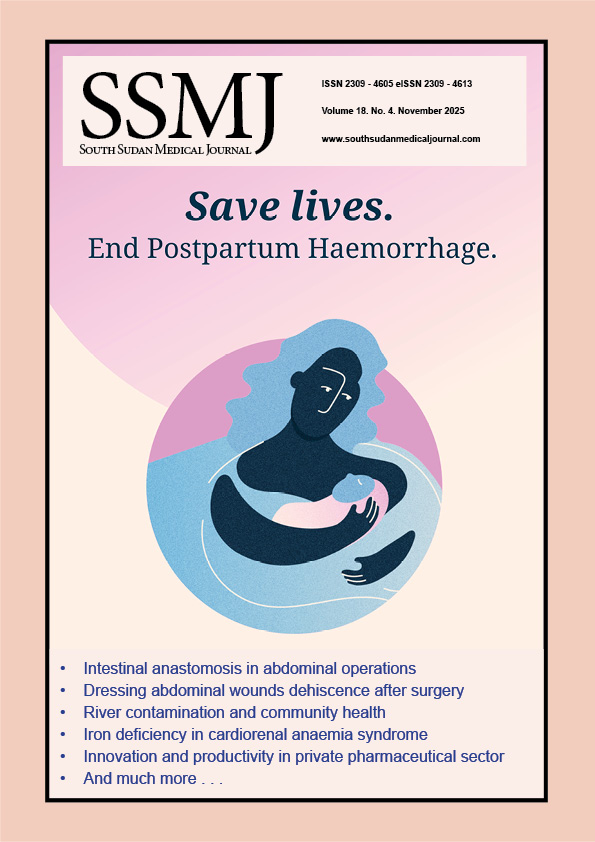
South Sudan Medical Journal - November 2025

SSMJ Vol 18 No 4 November 2025

 Dear reader,

The full issue of our November 2025 issue is now online; this is a bumper issue featuring 14 full articles and other news items, listed below. We thank the copyeditors and reviewers who helped prepare these papers. Let us know if you would like to join the Editorial team. We need you if you have time and editing skills.
 
Editorial

Research Articles

  • Comparative study between classical two-layer and one-layer extra-mucosal intestinal anastomosis in elective and emergency abdominal operations. John Chol Ajack, Galal Abouelnagah, Haytham Fayed
  • Comparison of improvised negative pressure wound therapy and conventional wound dressing in abdominal wounds dehiscence after surgery. Nasra Lichika, Edward Ketson Msokwa, Alphonce Chandika
  • River contamination and community health: mining impacts in rural central Kalimantan, Indonesia. Nawan, Septi Handayani, Agnes I. Toemon, Hepryandi L. D. Usup, Seth Miko, Joni Rusmanto
  • Iron deficiency in cardiorenal anaemia syndrome in Dodoma, Tanzania Gidion Edwin
  • Guerrilla investors: Firm-level innovation and productivity in South Sudan’s private pharmaceutical sector Garang M. Dut
  • Paediatric deaths at Al-Sabbah Children’s Hospital, Juba, South Sudan – an audit Zechariah J. Malel, Garang Dakjur Lueth, Mary Poni Jackson, Nicolas Kazimiro Sasa
  • Prevalence of anaemia among pregnant women attending the antenatal clinic at Bor State Referral Hospital. Mark Kuoi Jongkuch Kuoi and Shalini Ninan Cherian
  • The impact of dietary compliance on diabetic foot ulcer healing: A cross-sectional study. Dadi Santoso, Rajesh Kumar Muniandy, Putra Agina Widyaswara Suwaryo

Review Articles

  • Personal determinants of gender-based violence: a review of intimate partner violence in South Sudan. Nyinypiu Adong
  • Misdiagnosing Muslims: The hidden risk of using the CAGE questionnaire in some Islamic contexts. Anas Ibn Auf and Sayed Halaly
  • Impact of healthcare worker training on paediatric tuberculosis detection and reporting: A systematic review. Suryanti Chan, Hamzah Hamzah, Miftahul Falah

Case Reports

  • Lupus nephritis overlap syndrome in a male with albinism: A case report. Adam Gidion Edwin, Baraka Alphonce, Sabina Mmbali, Alfred Meremo
  • Rare isolation of Pseudomonas mendocina from a postoperative wound in a diabetic patient: A case report. Vimal Kumar Karnaker, Asem Ali Ashraf, Bhadra Jyothikumar

Short Communications

  • News: Physicians Association of South Sudan and Association of Gynecologists and Obstetricians of South Sudan. Sudan

Back Page: Supporting Wet Nursing During Emergencies
 
Articles in SSMJ are indexed by Scopus, African Journals Online (AJOL), and the Directory of Open Access Journals (DOAJ), and as well as being on our website. SSMJ is included in the EBSCO scientific research collection.
 
Thanks to everyone who supports SSMJ. Tell your colleagues they can join our mailing list here.
 
The SSMJ team
Email: southsudanmedicaljournal AT gmail.com
Website: http://www.southsudanmedicaljournal.com