Hodges' Model: Welcome to the QUAD: Search results for cartography

Hodges' model is a conceptual framework to support reflection and critical thinking. Situated, the model can help integrate all disciplines (academic and professional). Amid news items, are posts that illustrate the scope and application of the model. A bibliography and A4 template are provided in the sidebar. Welcome to the QUAD ...

Showing posts sorted by relevance for query cartography. Sort by date Show all posts

Saturday, August 21, 2021

"Mapping Beyond Cartography" - to Situated Cognitive Maps

"... the ‘spatial turn’ in the humanities has been partially overtaken by an ‘object turn’ in which relations between things are not primarily considered in spatial terms." pp. 53-54.


Individual
|

INTERPERSONAL : SCIENCES
humanistic ------------------------------------- mechanistic
SOCIOLOGY : POLITICAL
|
Group

"Tuters (2010), for example, calls for ‘post-locative practices’ that move beyond a ‘mannerist situationism’ to emphasize ‘situated’ rather than located media. This requires replacing ‘the concept of geographic location as the core concept of locativity, with the more relational notion of proximity, not only in relation to place but also in relation to matters-of-concern’ (2012: 275). This shift is advantageous in that it allows that locative media (or some successor form of it) might address relations and phenomena that are not fixed to terra firma, but it also suggests that space has become completely irrelevant, that geographic maps might, as Tuters suggests, be replaced by cognitive maps (2012: 274). p.63.


"... even in a world without the surefooted sense of grip that cartography once provided, I want to suggest that there are other ways by which to find some sense of orientation. In unfamiliar territory and without a map, the wayfarer draws on the tales of travellers who have gone before, surveys the shape of the landscape with an eye for landmarks, builds cairns where there are none, and eventually learns how to triangulate between them and make some kind of map –whether cognitive, sketched or plotted. In a situation in which the maps we increasingly inhabit subject us to a form of colonization, there seems no alternative but to ‘map or be mapped’." p.383.

"For Edward Tufte, computer-generated visualizations of data are simply the latest iteration of a brand of ‘cognitive arts’ that includes maps, alongside mathematical projects, scientific charts and diagrams, and even MRI scans (1990: 40)." P.173.

"Indeed, for Fredric Jameson, post-modernity’s ‘un-map-ability’ is its key defining characteristic: ‘this latest mutation in space—postmodern hyperspace—has finally succeeded in transcending the capacities of the individual human body to locate itself, to organize its immediate surroundings perceptually, and cognitively to map its position in a mappable external world (1991: 83). This crisis of representation in cartography calls for new kinds of maps; for Jameson, a form of ‘cognitive mapping’ that might allow the individual to locate themselves not just spatially, but economically, culturally and politically." p.82.

Daniel James Frodsham, April 2015. Mapping Beyond Cartography:The Experimental Maps of Artists Working with Locative Media. PhD thesis. University of Exeter. https://ore.exeter.ac.uk/repository/bitstream/handle/10871/19185/FrodshamD_TPC.pdf

Thursday, July 17, 2025

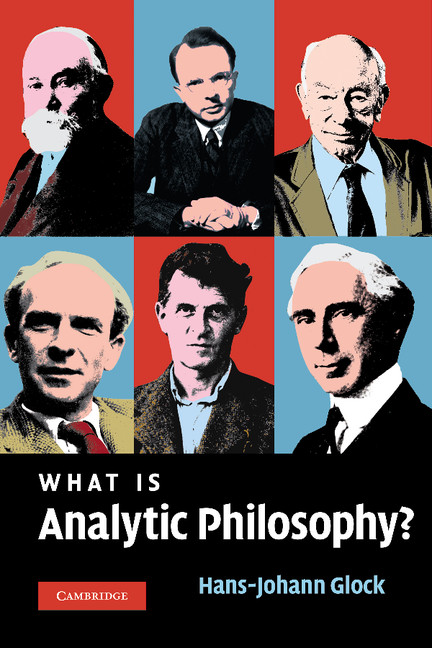
Ryle's 'logical geography'

I like the way Ryle apparently analogised philosophy to cartography.*

'Similarly, Ryle advocated that philosophy should chart the 'logical geography' of our concepts. In The Concept of Mind he argued that the Cartesian dualism of mind and body results from 'category-mistakes': it treats mental concepts which signify behavioural dispositions as if they referred to processes that are just like physical ones, only more ethereal. Ryle rejected Wittgenstein's therapeutic image according to which 'the philosopher treats a question like a disease' (1953: §255). Yet he accepted that philosophy is a meta-discipline which does not 'talk sense with concepts' but tries to 'talk sense about concepts' (1949: 9-10). The paradox of analysis disappears since the task is not to provide novel information about a realm extrinsic to us. According to Wittgenstein, philosophy reminds us of rules that we have mastered in practice but which mislead us in the course of philosophical reflections. According to Ryle, it takes us from the knowledge how to use words to an explicit knowledge that they are used according to certain rules. Either way, analysis is not a trivial pursuit, because the explanation of philosophically interesting concepts is complex and rich, especially when it places these concepts in their diverse contexts (everyday, scientific, philosophical).' p.43.
Hans-Johann Glock. 2008. What is analytic philosophy? Chapter 2. Historical survey. pp.21-60. CUP. Pb. 
https://www.cambridge.org/us/universitypress/subjects/philosophy/philosophy-general-interest/what-analytic-philosophy

* 'Ryle analogises philosophy to cartography. Competent speakers of a language, Ryle believes, are to a philosopher what ordinary villagers are to a mapmaker: the ordinary villager has a competent grasp of his village, and is familiar with its inhabitants and geography. But when asked to interpret a map of that knowledge, the villager will have difficulty until he is able to translate his practical knowledge into universal cartographic terms. The villager thinks of the village in personal and practical terms, while the mapmaker thinks of the village in neutral, public, cartographic terms.[20]: 440–2 '. https://en.wikipedia.org/wiki/Gilbert_Ryle

I've wondered about 'cogeography' - combining cognition and geography, even care cartography. There is also of course psycho-politics, geo-psychiatry and psycho-geography ...

Hopefully a more current text would be more diverse.^

Wednesday, June 09, 2021

Cognitive Cartography Is ...

individual
|
 
 INTERPERSONAL : SCIENCES
humanistic ----------------------------------------------- mechanistic
SOCIOLOGY : POLITICAL
|
group
Cognitive Cartography is ..


Physical


and Social.


https://www.scientificamerican.com/article/in-search-of-the-brains-social-road-maps/

Schafer, M., Schiller, D., The Brain's Social Road Maps, Scientific American, 322: 2, FEB 2020. pp.22-27.

https://www.scientificamerican.com/article/in-search-of-the-brains-social-road-maps/

Previously:

https://hodges-model.blogspot.com/2009/07/cogeographic-or-cogneographic-concepts.html

Monday, July 07, 2014

Book: The social atlas of Europe

See Europe as never before!


The social atlas of Europe
Dimitris Ballas, University of Sheffield
Danny Dorling, University of Oxford
Benjamin Hennig, University of Oxford

"An insightful look at today's Europe - through the underlying realities that Europeans live every day, all brought to life in charts and maps that reveal the human geography of this vitally important area of the world." Robert B. Reich, University of California at Berkeley.

The social atlas of Europe is the first human geography atlas to consider the European economy, culture, history, human and physical geography as a single land mass and a more unified European people. It provides an accessible overview of Europe and a human geography contribution to debates about a wide range of topics. It includes:

- Maps on over 80 topics ranging from life expectancy, greenhouse gas emissions to Eurovision Song Contest voting patterns
- Uses innovative full colour visualisation methods
- Explores Europe's society, culture, economy, politics and the environment
- State-of-the-art Geographical Information Systems (GIS) and new human cartography techniques

More information about the book is available on its website www.europemapper.org

Available at the special price of £19.99 (plus p&p) at
https://policy.bristoluniversitypress.co.uk/the-social-atlas-of-europe
Kathryn King
Marketing Manager
Policy Press, University of Bristol
www.policypress.co.uk


My source: EUROPEAN-SOCIOLOGIST list at JISCMAIL.AC.UK

Saturday, January 16, 2010

Compass-ion and care cartography

Are you a -

Care surveyor?
Care commissioner?
Care architect?
Care assessor?
Care appraiser?
Care philosopher?
Care manager?
Care publicist?
Care gatekeeper?
Care journalist? Care mentor? Care ecologist? Care informatician?
Care provider?
Care student?
Care planner?
Care archivist?
Care governor?
Care wright?
Care cartographer?
or is that - Care mapper?
....

or just a -

CAREr?

What c+mpass do you use to navigate the CARE -

curriculum
reflections
dialogues, records, policy, IT systems,
access
outcomes ...
?

Wednesday, February 22, 2023

"In all flat maps (and I am one)" - Donne

'Discordia concors' - 'Concordia discors' ... plus ... 'Site map'*

"Drawing both on the medieval Mappae mundi and the Ptolemaic tradition revived in the Renaissance, the recurrent cartographic motif in John Donne’s poetry well reflects the preoccupations of a revolutionary period in the history of Western cartography. Yet, for all its cosmic magnitude, Donne’s poems, both holy and secular, are turned, not so much towards an exploration of the world as towards an exploration of the Self as the ultimate object of reflection." [Abstract].


Ladan Niayesh, All flat maps, and I am one”: Cartographic References in the Poems of John DonneÉtudes Épistémè [Online], 10 | 2006, Online since 01 October 2006, connection on 22 February 2023. URL: http://journals.openedition.org/episteme/955; DOI: https://doi.org/10.4000/episteme.955

 INDIVIDUAL
|
 INTERPERSONAL    :     SCIENCES               
HUMANISTIC --------------------------------------  MECHANISTIC   
SOCIOLOGY  :   POLITICAL 
|
GROUP

"Let us take as a first example one of the last poems written by Donne, "Hymn to God my God, in my Sickness", composed either during one of the poet’s serious illnesses in 1623 or alternatively shortly before his death in 1631 ..."


"... Here the poet compares himself, as he lies on his sick-bed, or possibly his death bed, to a flat geographical map studied by his physicians who are compared to cartographers: "my physicians by their love are grown / Cosmographers, and I their map, who lie / Flat on this bed" (ll. 6-8), and later "In all flat maps (and I am one)" (ll. 14)."

The global
Psycho-Social-Geo-Political
legacies and future?


"Yet for all its symbolic Noachid and Christian background, Donne’s cartographic imagery has room for the latest scientific contributions. Newly discovered territories are directly named here: "is the Pacific Sea my home?" (l. 16), "Anyan, and Magellan, and Gibraltar" (l. 18). And if this metaphorical map is a flat one — "In all flat maps (and I am one)" — it is solely for the sake of commodity, as this flat shape actually stands for an acknowledged and accepted spherical reality: "west and east / In all flat maps (...) are one" (ll. 13-14)."


*I found some irony in 'site map' being the final map on the journal's webpage.

Sources:
 
London July 2022 Foyles, Waterstones and other bookshops:
Super-Infinite: The Transformations of John Donne (Hardback)
https://www.faber.co.uk/product/9780571345915-super-infinite/

BBC Radio 4 Super-Infinite by Katherine Rundell [Episode 3]

Previously on W2tQ: 'maps'

Saturday, February 11, 2012

Call for chapters - Human centric visualization: Theories, methodologies and case studies

[Shortened for length from original post to ubicomp.org]

*** CALL FOR CHAPTERS  ***
Proposal due: Feb 24, 2012
Notification due: March 09, 2012
Full chapter due: June 15, 2012

A book edited by Tony Huang (CSIRO ICT Centre, Australia), to be published by Springer: www.springer.com
Web: http://www.wikicfp.com/cfp/servlet/event.showcfp?eventid=19780%A9ownerid=14065

1. Introduction
Visualizations (diagrams) are produced for people to make sense or interact with them. Rapid advances in display technology and computer power have enabled researchers to produce visually appealing pictures or compelling visual environments to end users. However, the effectiveness of those pictures in conveying embedded information to the users and impact of visual environments on humans have not been fully understood.
This book addresses issues related to design, evaluation and application of visualizations from a human centric perspective. This cutting-edge book is an edited volume whose contributors include experts worldwide, from diverse disciplines including psychologist, artists, engineers and scientists.
Academics, students, engineers and consultants will find this book useful for both research and engineering purposes.

2. Recommended topics include, but are not limited to, the following:
Part I: Introduction and overview

Current status and future challenges of visualization methods
Current status and future challenges of human centric visualizations research
Survey of evaluation methods in visualization
Survey of theories, frameworks, models, heuristics and design principles for visualization

Part II: Theories, models, frameworks, heuristics and design principles for human centric visualization

Theories of visual thinking, diagram perception, cognition and reasoning and their applications
Latest developments toward theories of visualization
Latest development of frameworks, models, heuristics and design principles for visualization
Applications of the theories, frameworks, models, heuristics and design principles
Adaptations and applications of theories from other domains in visualization

Part III: Methodologies for design, development and evaluation of human centric visualization
Approaches and practices of visualization design
Evaluation methods
Measurement metrics
Taxonomies of tasks
Design and evaluation frameworks
Development and validation of methodologies
Application of methodologies
Lessons learned and experience obtained in developing and applying methodologies

Part IV: Case studies of human centric visualization

Human factors (e.g., memory, cognitive ability, gender, individual differences)
Visual perception and cognition
Visual analytics
Social, cultural aspects of visualization
Implications of new technologies (e.g., displays, new media) on humans
User experience
Implications of interactive methods on humans
Implications of new visualizations on humans
Roles of human in collaborative visualization
Use of visualizations for decision making, learning, business, software engineering, science, security, biology, design, construction, cartography, etc.
Visualization in virtual reality/mixed reality/augmented reality
Case studies and evaluations of interfaces, systems and prototypes of visualizations
Lessons learned and experience obtained in evaluating and designing visualizations
....
4. Important dates

Proposal due:  February 24, 2012  (Proposal has no length limits, usually should include motivations, method, contributions and a brief outline of the full chapter)
Notification: March 09, 2012
Full chapter due: June 15, 2012
Full manuscript due to publisher: August 1, 2012
Book publication: October 1, 2012

5. Contact

All submissions and inquiries should be sent to:
Tony Huang ...

Monday, August 15, 2016

Paper: Using Typography to Expand the Design Space of Data Visualization

New Issue of She Ji.
The Journal of Design, Economics, and Innovation

Using Typography to Expand the Design Space of Data Visualization

Abstract

she ji
This article is a systematic exploration and expansion of the data visualization design space focusing on the role of text. A critical analysis of text usage in data visualizations reveals gaps in existing frameworks and practice. A cross-disciplinary review including the fields of typography, cartography, and coding interfaces yields various typographic techniques to encode data into text, and provides scope for an expanded design space. Mapping new attributes back to well understood principles frames the expanded design space and suggests potential areas of application. From ongoing research created with our framework, we show the design, implementation, and evaluation of six new visualization techniques. Finally, a broad evaluation of a number of visualizations, including critiques from several disciplinary experts, reveals opportunities as well as areas of concern, and points towards additional research with our framework.


Tuesday, June 25, 2024

Book for review: iii "Philosophy of Care - New Approaches to Vulnerability, Otherness and Therapy"


Before moving beyond Pierron's 1st chapter (the whole book is very worth reading), there is much that reminds me of institutional care:

https://winwickremembered.org.uk/

Recognition of the sub-standard cockroach 'co-habiting' environment away from the entrance corridor, quality of life, task oriented, de-personalising, stagnant, passive, pervasive sense of hopelessness and helplessness. There was a chink of light. 

As registered mental health student's we were on a crusade. Carrying a torch, lit outside in the community to help open the doors to community care.

 On trips outside, gradually the institutional skin sloughed off, to reveal the person - the individual came alive (even through medication). 

'Bill' had a sense of humour, a lovely smile. He'd had the prospect of another life. So many people there for so long: too long. Potential unrealised?

"To be in contact with the other in care is not to exercise a hold over them." p.16. 

The problem is - within institutions this can be forgotten and lost:
"To suspect a substituting mode of solicitude (cf. Heidegger) of being a highhanded charitable hold over someone invites one to consider the ethical and political fecundity of a solicitude which looks ahead. To think through this alternative would amount to unmasking the mechanisms of domination, whether voluntary and involuntary - naturalisation of roles, masculine domination, organisational violence, etc, - at work in care. Doing so politicizes care, enabling it to overcome that democratic optimism which doesn't want to recognize that violence is part of human history (Merleau-Ponty 1996: 124-125), that violence insinuates^ itself into care relations, and, as such, comes under the sway of what Merleau-Ponty called the 'maleficence of living among many' (maléfice de la vie à plusieurs)." p.16. 

^The need to be aware of subtle abuse

My notes for chapter 2 'From an Anthropology of Vulnerability to the Ethics of Care' by João Maria André, reflects a lot on relationality, and maps which I've drawn: "(identity is always dialogical identity)" and "how we map ourselves". Again this helps my (other) current reading and draft work. There's time here, plus "there is no such thing as abstract vulnerability - vulnerability is necessarily concrete". p.25. I don't think André mentions future generations but I've added a note; 'I-we' too. There's a triple axis, and more encouragement as Tronto and Gilligan feature. Heidegger's reference to Hyginus' Fable 220 (in which Care moulds man out of clay, Jove grants it spirit, and Earth gives him body, with Care being assigned the task of keeping him alive." (Gaia?) p.26.

As in chapter 1, and previously reviewed text 'General Psychotherapy', the term 'constellation' appears. In chapter 2 it is expanded (with reference to Corine Pelluchon); leading us to "appreciation of the world, and self-care as care for the world" p.29. So, planetary health too. With Hodges' model purposed (1/4) to help bridge the theory - practice gap; this perennial problem exhibits existential relevance here (p.27). We by-passed biopolitics on page 17, but  the interrelation of psychosocial and other examples informs the text (philosophy). As I scribbled, Hodges' model is simultaneously a space for resonance and unconditional positive regard (pp.30-31). Authors inevitably find themselves deliberating upon dualisms, Descartes of course, plus Spinoza and others. Entralgo is nails the duality: "the aim of caring is to lead the I from being 'a body that says I' to a learning how to progressively become, and define itself as, 'a body that says we'". p.35.

Braga, J. & Santiago de Carvalho, M. (Eds.), Philosophy of care: New approaches to vulnerability, otherness therapy. Springer. 

Many thanks again to Springer for my copy.

Individual
|
      INTERPERSONAL    :     SCIENCES                   
HUMANISTIC  --------------------------------------  MECHANISTIC      
 SOCIOLOGY  :    POLITICAL 
|
Group

relational

'I' - mind 

individual vulnerability

intention

affection - as movement


climate change

'I' - body

maps - cartography

Planetary Health

action - movement


We

context

equity - equality

social vulnerability


We

policy

bio-POLITICS

accountability of government(s)


See also:
body & soul - Book: Philosophy of care: New approaches to vulnerability, otherness therapy
