Hodges' Model: Welcome to the QUAD: behaviour

Hodges' model is a conceptual framework to support reflection and critical thinking. Situated, the model can help integrate all disciplines (academic and professional). Amid news items, are posts that illustrate the scope and application of the model. A bibliography and A4 template are provided in the sidebar. Welcome to the QUAD ...

Showing posts with label behaviour. Show all posts

Wednesday, September 30, 2026

cfp Special issue: Int. Journal of Social Robotics "Towards Ethical Deception in HRI"

Dear colleagues, 

We would like to invite you to submit your works at the special issue on "Towards Ethical Deception in HRI" in International Journal of Social Robotics whose submission deadline is 19 December 2026. 

The special issue explores the design and ethical implications of robot deception in human–robot interaction, emphasising autonomy, well-being, and the protection of vulnerable populations. 

Read below further information, and please do not hesitate to contact us if you have any questions. 

Kind regards,
Alessandra Rossi 

Alessandra Rossi, PhD 
Assistant Professor Fellow of the Higher Education Academy Department of Electrical Engineering and Information Technologies - D.I.E.T.I. 
University of Naples Federico II Via Claudio, 21, 80125 - Naples, Italy 

w-page: https://alessandrarossi.net 
e-mail address: alessandra.rossi @ unina.it 
e-mail address: a.rossi @ herts.ac.uk

This Topical Collection focuses on deception in human-robot interaction and its ethical implications. In particular, robot deception is a complex yet potentially beneficial strategy. Intentional behaviours such as white lies or deliberate errors can foster trust, reduce distress, and improve therapeutic or educational outcomes. Robots may strategically omit information to maintain psychological stability or simulate imperfections to appear more relatable. While deception in human–robot interaction remains ethically controversial, its applications can enhance empathy, engagement, and learning. Ultimately, the capacity for controlled, prosocial deception highlights the need to reconsider moral frameworks governing social robotics, emphasizing the potential for nuanced, emotionally adaptive interactions.

This collection aims at exploring a design-centred and ethical-centred development of robotic deceptive behaviours for a successful human-robot interaction that, at the same time, is ethically acceptable and respect the autonomy and well-being of population, specially vulnerable individuals such as older people, patients and children. This Topical Collection is open to a broad audience from academia and industry researching social robotics, robot ethics, cognitive science, psychology, and philosophy of technology. It aims to attract an interdisciplinary audience that includes academics, industry researchers, designers, and policy-makers interested in exploring the integration of deceptive techniques in designed-centred and ethics-centred HRI. By collecting works addressing disciplinary and methodological boundaries, this collection seeks to promote a shared understanding of how social robots might responsibly employ complex behavioural strategies in human-centred contexts, such as education, healthcare and service.

Submission guidelines

All papers must be prepared in accordance with the Submission Guidelines. Articles for this Topical Collection should be submitted via our submission system, Editorial Manager. During the submission process you will be asked whether you are submitting to a Collection, please select "Towards Ethical Deception in HRI" from the dropdown menu.

Submitted papers should present original, unpublished work, relevant to one of the topics of the Topical Collection. All papers will be evaluated on the basis of relevance, significance of contribution, technical quality, scholarship, and quality of presentation by at least two reviewers. It is the policy of the journal that no submission, or substantially overlapping submission, be published or be under review at another journal or conference at any time during the review process. Final decisions on all papers are made by the Editors-in-Chief.

My source: https://www.bcs-sgai.org/?section=server

Sunday, August 23, 2026

Measuring Behavior 2027

The next Measuring Behavior conference will take place from 28 to 30 April, 2027, in Düsseldorf, Germany. Düsseldorf is in a region with a high concentration of behavioral research across a variety of fields both in universities and industry. It is easy to reach by international trains and flights. It is a city combining innovative modern architecture with a historic city centre. The conference will take place in the Clayton Hotel, which is in the Little Tokyo region of Düsseldorf, with its distinctive Japanese flavor. We will be hosted by the Heinrich Heine Medical University and the location is within easy walking distance of the central station.

The Scientific Program Committee invites you to submit proposals for oral presentations and posters at Measuring Behavior 2027 (Düsseldorf, 28-30 April).

All papers will be refereed through double-blind peer review and the proceedings will be published by the conference (with ISBN and DOI) and available online after the conference. In addition, selected papers will be invited to submit for a special edition of a journal.

Submissions for oral presentations and posters must be written in English following the style guide for Measuring Behavior 2027 publications. Due to the multidisciplinary nature of the conference, we are flexible about the submission length. We accept submissions from at least one to maximum seven pages long for oral papers and about one page for posters. You also need to prepare a short (maximum 1000 characters, preferably shorter) abstract for the website.  
You can submit from the Submission page of the website. The deadline is 6th November 2026.

Tutorials and Demonstration Showcase submissions are free format and also have a later deadline (4 February 2027).

The
Call for Symposia is open until October 9th should you want to organise a series of presentations or an interactive workshop.

If you think a colleague might be interested in this Call for Symposia, you can also send them this PDF.

On behalf of the Measuring Behavior 2027 conference chairs,


Sabine Bischoff, Irena Krüger and Antonella Pomè (Heinrich-Heine-University), Gernot Riedel (University of Aberdeen) & Andrew Spink (Noldus Information Technology).

n.b. Early days, but I hope to attend and participate with a co-presenter.
Please do visit their site for full details. PJ

Saturday, July 25, 2026

vi WCCS26: World Conference on Complex Systems 20-22nd April

April and WCCS26 seems an age ago, but the motivational impetus provided by this experience has been ongoing.

Luis Comolli - Best Paper Award 
for Emergence in Designed Agroecosystems:
Collective Dynamics in a Perennial Multi-Species 
Agroforestry Network

At the closing ceremony there was an award for the best paper which was awarded to Luis Comolli for:

Emergence in Designed Agroecosystems: 
Collective Dynamics in a Perennial Multi-Species Agroforestry Network

Sat by Luis, I offered to take his photo to which he agreed - so better late than never! And: Well done Luis!

My presentation on the 21st April was part of:

Parallel Session 2
Track 1 - Agent-Based and Social Complexity
Session chair: Helena Knyazeva

    ▪ Peter Jones
Presenting a Universal and Simple Conceptual Workbench to Situate and Encompass Complexity

    ▪ Nisrine Jarmoune and Bouchra Lebzar
The Ontology of Behavior: Formalizing the Institutional Project as a Complex System
    
    ▪ Lionel Scotto d’Apollonia, Florian Charvolin, Lise Verlaet, Deborah Nourrit, Dominique Deveaux, Elisabeth Sénégas and Nourdine Bara
Participatory Action Research with and for Society: The Case of “Oasis of Fraternity”

▪ Harvey Spencer Sánchez-Restrepo, Jorge Louçã, Martha Belén Carmona-Soto and Sofialeticia Morales-Garza
Topological Patterns of Academic Success: Insights from Complex Network Analysis

To be clear there was a great deal in all the sessions (see below!). I noticed in Nisrine Jarmoune's presentation, however, more specific conceptual overlap in terms of the individual, collective - groups, behaviour and institutions, with reference to ontology and philosophy. Several mathematical concepts also arose and since April online discussion has proved very interesting. In the near future I hope to report on how ideas develop and may be taken further, both for Nisrine's PhD studies and my work on Hodges' model.

We are considering, especially with the options to participate available -

https://www.measuringbehavior.org/
'The next Measuring Behavior conference will take place from 28 to 30 April, 2027, in Düsseldorf, Germany. Düsseldorf is in a region with a high concentration of behavioral research across a variety of fields both in universities and industry. It is easy to reach by international trains and flights. It is a city combining innovative modern architecture with a historic city centre. The conference will take place in the Clayton Hotel, which is in the Little Tokyo region of Düsseldorf, with its distinctive Japanese flavor. We will be hosted by the Heinrich Heine Medical University and the location is within easy walking distance of the central station.'
https://www.measuringbehavior.org/call-for-symposia-mb2027-2/

Going back to the Monday, the closing Keynote Speaker: Abdelmajid Ibenrissoul 

Public Decision-Making and Complexity: What Rationality for Evaluation?

- provided fascinating insights and economic history:

Abdelmajid Ibenrissoul - Public Decision-Making and Complexity: What Rationality for Evaluation?

There remains much to follow up, seek understanding and see how this relates to Hodges' model.

More details to follow.

I have noticed the main website for WCCS appears to be unavailable? I will check.

Thursday, June 18, 2026

Evidence sent to Cumbria Police about 61 baby deaths at church-run home c/o ITV News

'Some babies born with disabilities were denied medical help because they were judged unadoptable, as ITV News Social Affairs Correspondent Sarah Corker reports


Evidence has been submitted to Cumbria Police in connection with allegations of historical abuse at a church-run mother and baby institution where more than 60 newborn babies died, following an ITV News investigation.

A new report by Dr Michael Lambert, an historian of the welfare state at Lancaster University, has outlined a high infant death rate at St Monica’s home in Kendal.

The report concluded that the deaths were due to a combination of failings, including inadequate facilities, malpractice and poor care from those delivering babies and a lack of oversight from the church and state.

Analysis of public health records, alongside birth and death certificates, indicated that children with disabilities born at the mother and baby home were deemed "un-adoptable" and denied modern medical care, according to the new research.'

◇

individual
|
INTERPERSONAL
: SCIENCES             
humanistic ------------------------------- mechanistic
SOCIOLOGY : POLITICAL   
|
group
emotional neglect and abuse
 grief, trauma and guilt
 shame
 
physical neglect and abuse
 high infant death rate
inadequate facilities
malpractice


mother and baby  
social / societal punishment 
public health 


 institutions
 criminal investigation
 records              


Source: ITV: NW News and https://www.itv.com/news/2026-06-09/evidence-sent-to-cumbria-police-about-61-baby-deaths-at-church-run-home

Thursday, June 04, 2026

Individual and shared mental models c/o Proctor, & Vu, (2023).

The first day of the conference on 'Ecologies of Care' 4th-5th June is complete. It was helpful to contribute early and then focus on the programme. The questions and acknowledgement have made the (personal) effort worthwhile. Tomorrow also looks promising. There was an emphasis on attention which I tried to reflect and featured in a fascinating keynote by Professor Yves Citton. I will check the sources highlighted; and tomorrow, inquire about a point made re. use of socio in contrast to social.

Regards ongoing reading, perhaps, the evidence to support Hodges' model in practice is already out there? There might be a caveat, that the literature may suggest (if does not yet confirm) that if taught cross-curricula and professional groups then Hodges' model can function as a meta-model? 

What do you think of the following from a chapter on 'Social attention and team performance' (with my emphasis)? :

'... Other two-person team examples include doubles tennis partners and pairings of an airline pilot and copilot. Larger teams can be found in the numerous team sports surgical teams, busineses, and research teams of many scientific laboratories. For teams, coordinated performance is crucial, which becomes more difficult when teams extend to three or more people. As such, teams need to have shared mental models representing the team knowledge (Gardner et al., 2017), which support team situation awareness (Demir et al. 2017).
 
The concept of individual mental model refers to understanding a particular event on the basis of the activation of relevant schemas from long-term memory and, sometimes, simulation of possible scenarios (see also Chapter 10). Bower and Morrow (1990) pointed out that a crucial role in mental models is to shift and focus attention. ...
 
Shared mental models refer to collective understanding among team members of the task to be performed and how it can be accomplished. This understanding includes the responsibilities of the individual team members and dependencies between teammates on other members progress. The term team mental models is sometimes used when the context is teamwork that needs to be coordinated and executed (Jonker et al., 2010). The idea is that teams will perform better if they share mental models. ...
 
The surgery intern study illustrates that shared mental models are learned, leading to the question of how this learning can be facilitated.' p.368. ...
 
'Team leadership can be effective at getting members to be engaged in activities that will promote shared mental models. Boies and Fiset (2018) found evidence that leaders can facilitate the development of shared mental models by involving team members in the consideration of the to-be-accomplished task and their roles in its accomplishment. This involvement, again, likely directs members' attention to information relevant for achieving team goals and enables more domain-specific group discussion, which then furthers the emergence of a shared mental model. ...
 
Situation awareness is a broader concept than mental models, focusing on an explicit understanding of events and contexts. Shared situation awareness differs from individual situation awareness discussed in Chapter 9, in the information required for operators to have effective coordination (Chiappe et al., 2016). For example, paramedics delivering a patient to an emergency room need to coordinate with the hospital and its staff members to ensure that the hospital has the capacity and that the doctors receiving the patient have the vital information they need to treat the patient. Once the patient is in the emergency room, nurses, doctors and technicians need to coordinate with each other to make sure that the patient is being properly cared for.' p.369. 

Proctor, R. W., & Vu, K.-P. L. (2023). Social attention and team performance. In R. W. Proctor & K.-P. L. Vu, Attention: Selection and control in human information processing (pp. 343–374). American Psychological Association. https://doi.org/10.1037/0000317-012

Tuesday, May 19, 2026

RCN Congress: Ebola, privacy and 'care bundles'

The first discussion at RCN Congress #RCN26 on Nursing as a STEM profession, or STEAM, with the arts added, became a resolution:

https://www.rcn.org.uk/congress/congress-events/nursing-as-a-stem-profession-2026

This was marvellous as it touched so many aspects that Hodges' model readily encompasses.

There is scope for the addition of emergency items:

https://www.rcn.org.uk/congress/Submit-an-emergency-agenda-item

Yesterday I wondered about the latest ebola outbreak, national and international aid^. Plus, privacy, having noticed a stream on twitter regards the NHS and a contract with Palantir. Yes, 'X' as a source is a problem, but concerns about access to confidential clinical information is found in the quality press. What does the Information Commissioner's Office say? Well, it seems there is a history:

https://icosearch.ico.org.uk/s/search.html?collection=ico%7Esp-search&query=PALANTIR&profile=_default

While searching for 'care bundles' I came across this:

 'The scope and force of medical privacy is further supported by a secondary layer of protections based in sectoral and other forms of regulation. Anti-discrimination laws, disability rights, and employment law, for example, all recognize and operate to preserve medical privacy by restrictions of use of medical information outside of the medical setting. 

 These intersecting normative strands of medical privacy, derived from different sources, together form a set of norms designed to protect a bundle of interests that is essential to the maintenance of an effective healthcare system that encourages and protects appropriate care-seeking and treatment. Whether and how technological changes in the collection, storage, and processing of data affect the construct of medical privacy is a pressing question. Just as a bell cannot be unrung, erosion of the sphere of medical privacy is unlikely to be restored.' p.330.

I realised over the past twenty years or so I've paid less attention to the fact that sections of a population, those often most in need of healthcare will not engage, be care-seeking - if they have no faith and trust in how their information is managed and protected. Minority groups, the digitally excluded (whether by choice, or literacy, economics) the influence of media are all vulnerable. Protection of data and the integrity of health services and systems is surely a matter of professional import both clinically and informaticians? As a registrant, I've always put it to student nurses that they should be aware of what happens to the data they as a registered nurse, enter in the electronic health record.

Pierce, R. (2018). Medical Privacy: Where Deontology and Consequentialism Meet. In B. van der Sloot & A. de Groot (Eds.), The Handbook of Privacy Studies: An Interdisciplinary Introduction (pp. 327–332). Amsterdam University Press. https://doi.org/10.2307/j.ctvcmxpmp.17
 
^What, only one sentence? Yes, but I'm still worried; geography - distance now matters little. While, on the other-hand: care-seeking...?
 
Previous posts: 'ebola' : #RCN26

Tuesday, December 09, 2025

In search of socio-political logics

'The logic of appropriateness refers to actions which members of an institution take to conform to its norms. For example, a head of state will perform ceremonial duties because it is an official obligation. By contrast, the logic of consequences denotes behaviour directed at achieving an individual goal such as promotion or re-election.' p.87.

individual
|
INTERPERSONAL : SCIENCES
humanistic -------------------------------------------  mechanistic
SOCIOLOGY : POLITICAL
|
group-population


'Institutions are far more than the theatre within which the political drama unfolds; they also shape the script (Peters, 1999). This emphasis within the institutional framework on the symbolic or ritual aspect of political behaviour contrasts with the view of politicians and bureaucrats as rational, instrumental actors who define their own goals independently of the organization they represent.' p.87.


'Further, institutions bring forth activity which takes place simply because it is expected, not because it has any deeper political motive. When a legislative committee holds hearings on a topic, it may be more concerned to be seen to be doing its job than to probe the topic itself. Much political action is best understood by reference to this 
logic of appropriateness rather than a logic of consequences. For instance, when a president visits an area devastated by floods, he is not necessarily seeking to direct relief operations or to achieve any purpose other than to be seen to be performing his duty of showing concern. In itself, the tour achieves the goal of meeting expectations arising from the actor's institutional position. "Don't just do something, stand there", said Ronald Reagan, a president with a fine grasp of the logic of appropriateness.' pp.86-87.


See also: 'drama' : 'bridges'

Hague, R., & Harrop, M. (2007). Comparative Government and Politics (7th ed.). New York, NY: Palgrave Macmillan.

Peters, B. Guy. (1999). Institutional theory in political science: the new institutionalism. London: Pinter.

Saturday, August 30, 2025

Revisiting "patient career"

Almost a decade ago I posted:

Medical Sociology: The Importance of 1894....2015 patient career - health career

- which was prompted by:

McKinlay, J.B. (1971) The concept “patient career” as a heuristic device for making medical sociology relevant to medical students. Social Science and Medicine, 5(5), 441-460.
https://pubmed.ncbi.nlm.nih.gov/5160599/

McKinlay's abstract reads:
Abstract

Increasingly it is being suggested that the behavioural sciences can contribute to medical education and should be incorporated into the medical curriculum. Evidence for the development of this view in Great Britain can be found in the recommendations of the recent Royal Commission on Medical Education and the submissions of various bodies to it. Given that the behavioural sciences in general and medical sociology in particular, can contribute in a positive way to the medical curriculum this paper attempts to: (a) draw together and crystallize some of the major problems inherent in past attempts to organize and include the behavioural sciences in the medical curriculum; (b) devise some criteria for determining the behavioural science content of the medical curriculum; (c) outline and discuss one possible course in medical sociology utilizing, as an organizing framework, the concept “patient career”.
Brian Hodges created his eponymous model with curriculum planning, design and development as a key purpose. In the early-mid 1980s nursing was looking forward to becoming a degree, undergraduate course of study.

McKinlay's use of 'patient career' (and others) can obviously be associated with the impact of life chances upon a person's health career. 

Individual
|
      INTERPERSONAL    :     SCIENCES               
HUMANISTIC  --------------------------------------  MECHANISTIC      
 SOCIOLOGY  :    POLITICAL 
|
Group


'While discussing the relationship between the medical and social sciences, and the role of the social scientist in teaching and research in medicine, Butler groups the range of medical topics which have been studied sociologically into four main categories [l4]. These are,

the sociology of illness,
the sociology of health,
the sociology of medical care
and the sociology of healing.' p.443.^


McKinlay sees these categories as too comprehensive. Although within the SOCIOLOGICAL domain of Hodges' model this is a 'start'? McKinlay proceeds to identify specific difficulties presented to educators, which include (in summary and with my emphasis):
'(a) The failure to identify needs, specify objectives and devise criteria
(b) The failure to distinguish between perspectives

'Very generally, the behavioural sciences can be said to be conccrned with the description and explanation of the health and illness behaviour of groups and social categories, whilst medicine (especially clinical medicine) aims at the understanding and successful treatment of individual patient cases. By working exclusively on the basis of (or failing to take account of) these separate perspectives, meaningful dialogue between behavioural scientists and medical students has been made extremely difficult.'

(c) The failure to distinguish the audience
(d) The failure to take account of temporal location
(e) The failure to provide a conceptual framework

Most courses in the behavioural sciences either offered or proposed, to a greater or lesser extent, tend to ressemble a sort of shopping list. For example, the courses offered by Badgley, Martin et al., and those proposed by the Society for Social Medicine and the Royal Commission all reflect this "'shopping list" charactcristic. After working down the list it is assumed that students will have the technical goods required. It is, of course, difficult for students undertaking these "shopping list" courses to reflect on where they have been, appraise their current position, or consider where they may be going.
Two further general problems seem to be inherent in many of the attempts to systematize the field of medical sociology, and to some extent are associated with some of the problems already outlined. 
(f) The problem of trying to cover too much [Which lists 18 topics for 2nd year students.]
 (g) The problem of omitting important areas' pp.443-445.
McKinlay then, is similarly preoccupied with the curriculum (for medical students):
'This section is concerned primarily with devising criteria which, given the finite amount of teaching time available, will offer some guidance in determining what aspects or areas of medical sociology should be given priority for teaching in the medical curriculum.' p.445.
This work from the 1970s surely invites reflection upon the meaning of 'progress'? 

^My formatting.

More to follow...?

Saturday, April 26, 2025

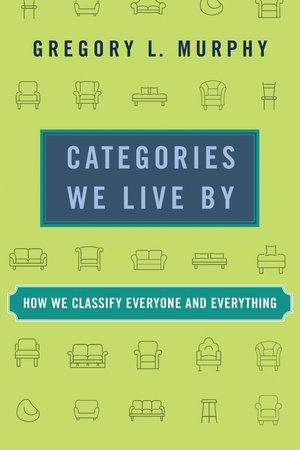
'Categories are destiny' Freud p.6. of 'Categories we live by'


Reading and enjoying for review:

Murphy, Gregory L. Categories we live by: how we classify everyone and everything. Cambridge, MA: The MIT Press, 2024.

Let's start at the beginning -
'Nowadays we are suspicious of categories, especially categories of people. Gender, ethnic, racial, and class categories are seen as a source of discrimination and inequity. If we saw each person as a unique individual, perhaps we wouldn't have all the problems caused by racism, sexism, and all the other -isms that afflict society.
In spite of these problems, I will argue that we cannot get rid of categories in general. They simplify and distract us from individual identities, which can be bad, yet if we didn't have them, we would find it impossible to navigate the world and deal with its incredible diversity.' p.7.


Reading what follows also from the book's introduction, I thought about public sector funded (socialist)  healthcare and the private provision:

'So, my sweater and my hair might both be brown, so we can say that they are both in the category of brown things. They are equivalent in the sense that I call both of them "brown." However, the category of brown things is not very interesting. When you know that something is in that category, you know exactly one thing about it-its color. There's nothing else to be known. Maybe the brown thing is alive or maybe it's inanimate; maybe its microscopic or maybe it's as big as a planet; maybe it moos or maybe it sings oI maybe it is silent. The category doesn't tell you any of those things These single-criterion categories are kind of degenerate. Yes, items that share the criterion (brownness, being three inches long, taking at least half an hour, or whatever) are equivalent, but only in the one property that defines the category. Indeed, you can define trivial categories that only have one ridiculous feature in common, like things that you have touched in the last forty-nine seconds, or objects that are exactly fifteen miles from Cincinnati. Those are not categories that people form, because they are not useful.' p.11.
There is much ongoing debate about parts of the UK's NHS being 'sold-off' - taken-over by private companies with consequences for the quality of care, e.g. cataract services:

https://www.theguardian.com/society/article/2024/jul/10/eye-doctors-say-private-cataract-operations-have-hurt-the-nhs?CMP=share_btn_url

Having worked for the NHS - now NHS Professionals since 1977, the current problems faced by the service and experienced by some patients, carers, friends and family members is upsetting.

Murphy's observation contrasting the utility of categories at the individual and collective level is a great opener. Especially for the basic structure of Hodges' model and the vertical axis.

I've written previously(?) how I think that it is true, throughout my career even as a ward manager (there were some exceptions!) and community MH nurse, I/we have been cocooned from having to be concerned about the budget. When you stop and think about it, how do the 'things' in the category of economics impinge on the biomedical, biopsychosocial model? The ward was a mechanism; it kind-of run itself, which for change agents (those who use the word transformation a lot) is an ongoing issue. The two categories that matter - even as they are global - are illness and prevention. The NHS puts supertankers to shame, in its inability to pivot - turn.

At the end of the day (and night - 24/7/365!) though healthcare must be paid for.

Murphy's explanation about degenerate categories is fascinating too (and this is just the intro!). It sees me (in danger of making a category mistake) as I think about singletons, and 'degenerate' as applies in mathematics, and the debate of finance. The tension of seeing the individual as a unique being, in order to be person-centred, but the service, the system would place them in all in the category of 'payer'.

Viewed across the funding divide, is the other inevitably viewed as degenerate? On page 80 now. More to follow. I'm still kicking all this around; while the government kicks the 'can' of social care down the road.

Many thanks to MIT Press for the review copy.

Wednesday, April 16, 2025

AI, Beliefs, Helplessness, Misinformation ...

Viewing this debate and SDGs both as information spaces, and mental health/illness can provide some insights.

'Learned helplessness' is an established phenomenon in psychological studies and history.

Adam Grant in Life&Arts, FTWeekend 29-30 March 2025, p.2. 

( https://adamgrant.net/book/think-again/ )
writes in 'HOW TO UNLEARN HELPLESSNESS'
'Many people believe that in a world of echo chambers and misinformation, it's not possible to talk anyone out of their convictions. They`re wrong. Even a bot can do it.

In recent experiments psychologists recruited thousands of Americans who believed in unfounded conspiracy theories ranging from the moon landing being faked to 9/11 being an inside job. After the participants described their views, the psychologists randomly assigned some of them to discuss these views with an AI chatbot that was prompted to refute them.

After less than 10 minutes of conversation with a ChatGPT-based LLM, more than a quarter of participants felt uncertain about their views - and those doubts persisted two months later. Short exchanges were even enough to move the opinions of strong believers.

Why? It's not just that ChatGPT has access to infinite knowledge. It turns out that AI chatbots are better listeners than the average human. The researchers found that chatbots were persuasive because they presented information that directly challenged the reasons behind people's beliefs.'
Also helpful, as per discussion to consider AI as a new / emerging 'information space' as a literal frontier, a new territory with unknowns that businesses wish to conquer and the public must learn to trust - even as users. What knowledge - understanding is needed of what is happening in the 'box'?

Once again (within Hodges' model) we can potentially draw in (ask questions of - all) the literacies:

3Rs, information, IT, media, culture, spiritual, financial, health, sciences, civic - national, international...

This also means to what extent are existing imbalances in parity of esteem - between the mind and body dichotomy perpetuated, even increased?

It is not surprising that there is an imbalance, in the distribution of datasets - LLMs on huggingface:

https://huggingface.co/docs/hub/en/datasets

e.g. INTRA- INTERPERSONAL [MIND]

BioBert 1.1
UCI ML Drug Review dataset - Subset 
LOST arXiv:2306.05596 [cs.CL]
Mindwell https://doi.org/10.1007/978-981-97-3601-0_34

SCIENCES [BODY]

eScience kidney factomics (PubMed titles)
BioBert 1.1
SAVSNET sample (VetCN) - Important in terms of Zoonotic diseases and planetary health*.

Image datasets: 
Lung Cancer IQ-OTH/NCCD 
Surface Crack Detection 
Oxford-IIIT Pet 
BreastMNIST 
DermaMNIST 
PneumoniaMNIST 
BloodMNIST 
RetinaMNIST

There is overlap also.

Ack. *As mentioned late 2024, the datasets were discussed at: https://www.bcs-sgai.org/health2024/

'ChatGPT (40) Differentiating reliable information from misinformation (12)'

Tuesday, April 15, 2025

The 'animal' in Hodges' model ii

The two pairs of eyes in Hodges' model are provided through the model's two axes

HORIZONTALLY: the humanistic and mechanistic.

VERTICALLY: the individual and the group.

Hodges' model: Axes & Domains
Structure AND Content :: Fight OR Flight

Before delving into this though, let's revisit the model as a template.

Structure aside, Hodges' model acts as a conceptual blank sheet. Overall, the model is also an aide-mémoire. It can prompt us to 'where' we've been, where we need to go in our data gathering, assessment, planning, interventions, evaluations: personal history, family, work and leisure. In an interview how does the patient, client, carer, student ... negotiate the domains of Hodges' model? The model can guide us in what is said, what is omitted - for whatever reason, what is significant within all this; AI-assisted or not.

These two 'horizontal' eyes prompt us to attend to safety, your own, the patient / client and other people in the vicinity. In terms of responding to 'fight', obviously this does not mean you are looking for a fight, but of course you have to be able to defend yourself. Metaphorically, Hodges' model can represent the sword and shield. We are in a fight for justice to secure health services for individuals, families, and the population.

On the side - vision for flight, what is humanistic and mechanistic.

Then, in the vertical axis, there is vision for fighting, for the individual, and the group - population.

In this interplay of person and collective, I'm reminded of Odysseus and the shout "Nobody did it!" (with other sources). It never ceases to amaze, the frequency of this conclusion throughout local, national and global politics?

The individual nightmare of Cyclops; and collective nightmare of the Panopticon.

In mental health nursing you quickly learn about the anatomy^, physiology and psychology of anxiety. Not necessarily simultaneously, but the jig-saw is there to be completed, at least as far as you can as a 1st year student - whatever your health discipline. The pieces that matter (literal keys to action) are provided by the patient, client, carer. ...

In a way it is too late when people are referred to mental health services. Too late for prevention, but given the incoherence between:

  • health systems (as usually found & founded)
  • government policy -
    • state of nutrition - food
    • advertising of foods, beverages
    • life style choices
    • education - health literacy
      • individual
      • family
      • community
      • national (curricula)
  • NHS? National Health Illness/Disease Service
- this isn't a surprise.

Whatever an individual's sensory capacities and abilities we need to do better. With tools to facilitate situational awareness, and realise an individual's and community's potential to learn and prosper.

^Anatomy? How many of us take for granted our limbs are 'there': ready to react?

Previously: The 'animal' in Hodges' model i

Original source - prompt:
Doniger, Wendy. The Rise and Fall of Warhorses. The New York Review of Books. April 10, 2025. Volume LXXII, Number 6. pp.17-19.

Friday, April 11, 2025

The 'animal' in Hodges' model i

The New York Review of Books


'The fact that a horse has his eyes on the sides of his head identifies horses as animals of flight rather than fight, in contrast with animals like tigers, who have their eyes in the front.' p.17.


Hodges' model has two pairs of 'eyes'.

Can you see them?


Hodges' model: Axes & Domains
Structure AND Content :: Fight OR Flight

Doniger, Wendy. The Rise and Fall of Warhorses. The New York Review of Books. April 10, 2025. Volume LXXII, Number 6. pp.17-19. https://www.nybooks.com/issues/2025/04/10/

Tuesday, April 01, 2025

c/o A.Word.A.Day: Hodges' model - Walk the (dual!) chalk line

A.Word.A.Day

with Anu Garg

'Having a tool is like having a superpower in your pocket. With the right gadget, you can do much more than what arms and legs alone allow -- build a magnificent pyramid, lift water from deep below, or even predict whether you’ll need an umbrella tomorrow.


And not all tools need wires, batteries, or instruction manuals. Sometimes, a simple device can save labor -- a lever, a pulley, a piece of string dusted with chalk -- can save hours of sweat and toil.'

chalk line


Tuesday, February 04, 2025

Do you ..."Fit the Description" ?


'4. RACIST VALUES EMBEDDED IN "AI" 
Racial prejudices have been found embedded in "AI" and algorithmic systems, including carceral systems which use surveillance techniques, facial recognition, and predictive metric to determine policing tactics, sentencing, and punishments. In 2018, demonstration of a Amazon`s Rekognition facial imaging system made false identification matches to 28 different congresspersons, linking their images to pictures found in mugshot databases (Snow 2018). This outcome is entirely explicable. First, digital cameras and imaging systems see Black and brown faces - and particularly the faces of Black and brown women - less well (Buolamwini and Gebru, 2018). Next, most existing facial recognition systems are trained on mugshot databases. Third, as Black people are over-policed, with many young Black men being spuriously said to have "Fit the Description," the mugshots of Black people are entered into police databases at a disproportionate rate. Then, those databases are used to train algorithmic surveillance systems on how to search for "predictors of criminality." We have even taught these systems to search for particular skin tones (Joseph and Lipp, 2018).' p.248.
INDIVIDUAL
|
      INTERPERSONAL    :     SCIENCES               
HUMANISTIC  --------------------------------------  MECHANISTIC      
 SOCIOLOGY  :    POLITICAL 
|
GROUP

FIT the DESCRIPTION?

FIT the DESCRIPTION?

FIT the DESCRIPTION?

FIT the DESCRIPTION?


Damien Patrick Williams (2024) Disabling AI: Biases and Values Embedded in Artificial Intelligence, (Chap. 17) 246-261. In. Handbook on the Ethics of Artificial Intelligence. David J. Gunkel (Ed.). Cheltenham, UK: Edward Elgar Publishing Ltd. ISBN: 978 1 80392 671 1245
https://www.e-elgar.com/shop/gbp/handbook-on-the-ethics-of-artificial-intelligence-9781803926711.html

Posts with review to follow.

Tuesday, January 28, 2025

Sticky Categories and Their Negative Consequences c/o Mikulak et al.

Category - Theory and Practice

Hodges' model -
A model for care in whatever situation, care environment*.

 
Individual
|
      INTERPERSONAL    :     SCIENCES               
HUMANISTIC  --------------------------------------  MECHANISTIC      
 SOCIOLOGY  :    POLITICAL 
|
Group
'I'
Me
My name is . . .
I am a person.
I am an individual.

Even if I don't thank you,
there may be someone out
there who thanks you for
acknowledging, confirming,
sustaining, preserving and
respecting my identity.

Even if I don't ask you
for your name please share
it with me, when you feel
 the time is right.

Together ...

[Abstract] "‘Behaviours that challenge others’ are attributed to 20% of people with learning disabilities. These behaviours are not a diagnosis, it is something people are labelled with. We conducted qualitative interviews with social care staff in the UK within four models of care: independent supported living, residential nursing home, Shared Lives, and living with family and attending a day opportunities centre*. We examine how the category of ‘behaviours that challenge others’ is produced, applied, and contested in adult social care settings. We demonstrate its stickiness and discuss its stigmatising consequences. How behaviours are understood, felt, and talked about matters for the support people with learning disabilities receive and maps onto their consequent inclusion or exclusion from society. We point out the harms the category carries for people who receive it and argue that it should be abandoned." p.110.


"Labeling theory suggests that labels lead to stigma, through changing how a group is perceived by others and supporting stratification (Haft et al. 2023). According to Link and Phelan (2001: 383), stigma ‘exists when elements of labeling, stereotyping, separating, status loss, and discrimination co-occur in a power situation that allows these processes to unfold’ (emphasis added). The acceptance of categories as valid and important differences is described by the labeling element of stigma (Link and Phelan 2001). Here, we attend to how this ‘labeling’ aspect of stigma interacts with its other mechanisms in the category of ‘behaviours that challenge others’." p.112.


"Emotions are not private, rather, they ‘circulate between bodies and signs’ producing meanings and creating ‘the surfaces or boundaries of bodies and worlds’ (Ahmed 2004b: 117); thus, affect is always distributed (Wetherell 2015). We propose the category—and the labeling process behind it—should be understood within an ableist (Campbell 2009) distribution of affect and politics of emotion; one that subordinates the experiences of people with learning disabilities through establishing the ‘truth’ of the reading as external and mediated through the emotions of people without learning disabilities. ‘Behaviours that challenge others’ (and synonyms of the category) are inherently relational but also reflect and reproduce existing power imbalances. We suggest their stickiness rehearses and reinforces the ableist politics of emotion that positions people with learning disabilities as ‘less human’ (Goodley 2021) and at times as monstrous. The category is a product of this politics, one that repeats its rehearsed, sticky associations, making the reading of the proximity of people with learning disabilities in the present a result of histories marked by dehumanization. The method of categorizing people through labels also makes them more susceptible to what McClimens has described as ‘reauthoring’, with collective histories ‘presented in a way that condones or even justifies their current situation’ (2007: 259)." p.113.


Mikulak, Magdalena, Sara Ryan, Elizabeth Tilley, Susan Ledger, Lisa Davidson, Pam Bebbigton, and Dawn Wiltshire. 2024. “Sticky Categories and Their Negative Consequences: People with Learning Disabilities and ‘Behaviours that Challenge Others’.” Scandinavian Journal of Disability Research 26(1): 110–123.
DOI: https://doi. org/10.16993/sjdr.1069 (with my emphasis)

I have cited Mikulak et al. in 1/2 papers submitted yesterday after revision on: threshold concepts, deprivation of liberty, residential care and Hodges' model.

Wednesday, December 11, 2024

Reith Lectures: Gwen Adshead - 4 Questions about Violence

Individual
   |
      INTERPERSONAL    :     SCIENCES               
HUMANISTIC  --------------------------------------  MECHANISTIC      
 SOCIOLOGY  :   POLITICAL 
|
Group
Is there such a thing as Evil?

What is the relationship between trauma and violence?

Is violence normal^?

Can we change violent minds?


^'normal' -isation.

Tuesday, October 29, 2024

What are the characteristics of living a life?

What about Nationhood?

Citizenship?

[Spiritual ( Sciences, Sociology, Intra- Interpersonal, Political )]


person(hood) individual
|
INTERPERSONAL : SCIENCES
humanistic ------------------------------- mechanistic
SOCIOLOGY : POLITICAL
|
group


speak
see

hear


speak
hear
see


speak
hear
see


Source: Various since 2021 - image 'X'.

Women's rights in Afghanistan: An ongoing battle
https://www.europarl.europa.eu/thinktank/en/document/EPRS_BRI(2023)747084

Afghanistan: No future without women’s participation
https://news.un.org/en/story/2024/09/1154721

Thursday, October 24, 2024

Case formulation - Theory and Practice

 Still sorting papers, I've discovered copies of slides from the COPE course University of Manchester on Case Formulation by John McGovern.

An original purpose for Hodges' model is to help bridge the theory-practice gap.

The slides include -

  • content: ingredients - preliminary formulation
  • a means of understanding an individual's problems and distress in line with cognitive behavioural theory
  • hypothesis to explain acquisition, and maintenance of problem
  • not piecemeal

ROLE OF CASE FORMULATIONS

Bridge between theory and practice

a flexible tool for guidance

an explanatory framework to share with the patient

How types of formulation can be related to situations (Hodges' model is situated) - inference chain.

Comprehensive formulation - reflects the template that supports data gathering

inc. core beliefs - conditional beliefs

Questions for Preliminary Formulation

Main Ingredients - includes social support/relationships/employment/finances

(so this touches on determinants)

Choosing Treatment Targets

group exercise and summary

Sunday, October 13, 2024

Dramatherapy 2 - Personal identity

'Dramatherapy helps make sense of the world. Just as Goffman (1971) regards society as dramaturgically constructed, for the social presentation of selves, so Kelly (1955) describes a process in which individuals 'try on for size' various views of themselves as perceived by other people, in order to select the ones which allow them to carry on social relationships with one-another. Understanding of the other person is achieved by the process of construing his or her world, or 'construct system'. Kelly uses the notion of constructs and construct systems to describe cognitive structures. A construct is basically way of registering the degree to which an idea is present in relation to other ideas:

A construct is like a reference axis, a basic dimension of appraisal, often unverbalised, frequently unsymbolised, and occasionally unsignified in any manner except by the elemental processes it governs. Behaviourally it can be regarded as an open channel of movement, and a system of constructs provides each man with his own personal network of action pathways, serving both to limit his movements and to open up to him passages of freedom which otherwise would be psychologically non-existent.
(Kelly, 1955:199)' p.164.

'The multifarious ingredients of dramatherapy, like those of a theatrical event, are not haphazard. They are closely related, either by similarity or difference, to one another. Where there is confusion, this too is distinguished: it is confusion as opposed to order. Structure is employed in a conscious or intentional way, in order to reveal its true identity as the means by which we perform the fundamental action of relating things, in order to plot our movements in the world we live in. By allowing us to distinguish from, structure permits us to relate to. Certainly, the mechanism of perception performs this action without any conscious intention on our part; drama, and dramatherapy, is consciously contrived to assist it in its critical function, helping it to achieve a particular kind of clarity, by providing it with the raw material for involvement with the objects of perception.'
p.167-168.

EVALUATING THE EFFECT OF DRAMATHERAPY ON THOUGHT-DISORDER

Construct Theory rests upon the proposition that ideas hang together in a trustworthy way because people's behaviour is basically consistent. If people behave inconsistently, the thinking which they induce will lose its articulation, because the sense we make of life demands continual validation from the people and events we base it on. Thus, confused experience of relationship is, at its most fundamental level, the same thing as confused thinking; when our ideas begin to lose their coherence this is because, for us, other people have begun to come apart'. When they no longer fit the model we have of reality, the model itself loses its precise definition. At this point, Kelly suggests, we make our model more vague in order to preserve its identity as a model of reality: reality is blurred, so our model is imprecise. Unfortunately, it may become too inexact to function as a means of communication with the world of people and events it is intended to represent. The task of therapy is to provide evidence of the world's conformity to the individual's model, thus validating that individual's constructs. Because a person's disordered thinking is primarily concerned with the way they construe people, it must be done personally; because it is the result of experience over a considerable time, it must be done systematically, or 'serially`.
pp.171- 172.

Note to self: 'It is' :: 'It is - as if ?'. p.166.

individual
|
INTERPERSONAL : SCIENCES
humanistic ------------------------------- mechanistic
SOCIOLOGY : POLITICAL
|
group

I


I


Greek theatre masks

Institutional masking


Grainger, R. Dramatherapy and thought-disorder. Chapter 11. In Jennings, S. (Ed.), (1992) Dramatherapy. Theory and Practice 2. London: Routledge.
(Apologies, punctuation in the above may not be accurate, and I no longer have the text.)

Friday, October 11, 2024

Spontaneity - have we lost something?

. . . asking for a friend … of course . . . 

Creative therapy
'Moreno states that in the evolution of man, spontaneıty  appeared 'before libido, memory and intelligence .. .. In effect it is generally discouraged and thwarted by our cultural  mechanisms. Many of the problems of the psyche and social difficulties suffered by humanity are attributable to an insufficient development of spontaneity. For this reason the art of teaching people to use their spontaneity is the most beneficial thing to be learned in any of our educational institutions.' He also pointed out that anxiety indicates a loss of spontaneity.
A 'cultural conserve' (Moreno) is the end product of a cultural endeavour, the fixed conserve or preserve of culture  the contents of all the libraries, the teaching in all the schools, the knowledge acquired by a child in the home or at school, what is given by radio, television, the theatre, the  cinema, books, lectures - all the 'conserves' of the past creativity of others offered to the intellect.' p.142.


Jennings, S. (1983) Creative therapy. Banbury: Kemble Press edition. (Image: c/o Amazon)

#ChildDevelopment #Attention #Cognition #Play #Adolescence #Curiosity #Innovation #Life #Serendipity #Literacy #Media #DigitalTechnology